
Toyota Tundra Tire and Wheel Package: What to Consider Before Buying
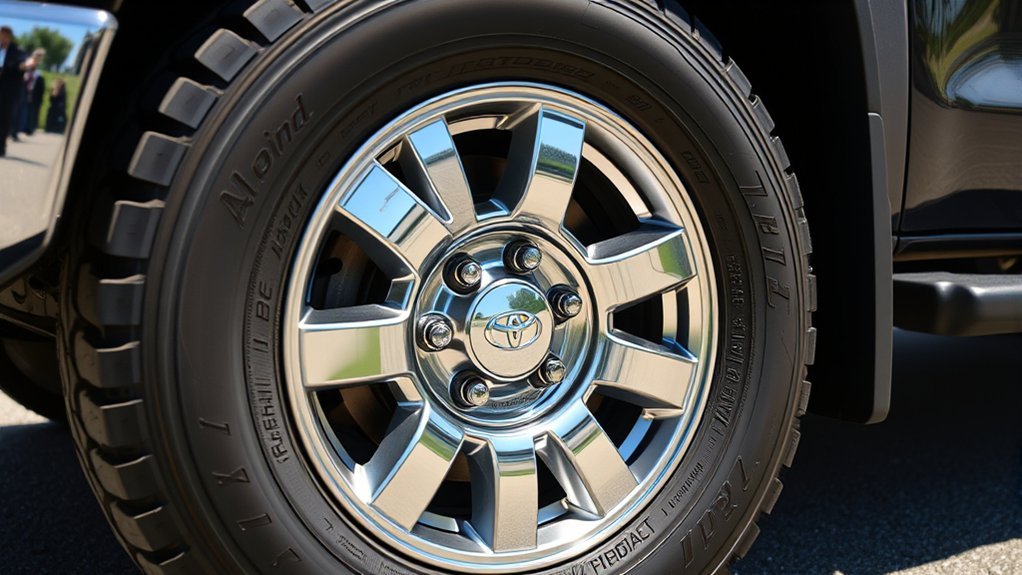
Choosing a tire and wheel package for your Toyota Tundra requires more than matching a tire diameter to a wheel you like. Your model year, trim, suspension, brake package, wheel width, offset, tire load rating, and intended use all affect fitment. Check these details before ordering so you avoid rubbing, warning lights, poor handling, or an unsafe load rating.
Last updated: July 17, 2026 · Reviewed for fitment accuracy and tire-safety guidance.
Quick Answer
Start with the tire size and cold pressure on your Tundra’s driver-door placard. Match or exceed the original tire load capacity, confirm wheel load rating and brake clearance, and treat offset as part of the complete wheel geometry. Larger tires may need suspension, liner, alignment, TPMS, and speedometer adjustments.
Key Takeaways
- Verify your exact model year, trim, drivetrain, factory wheel size, and suspension before shopping.
- Do not use a single offset number as a universal Tundra fitment rule.
- Match or exceed the factory tire load capacity and confirm the wheel’s load rating.
- Check brake, suspension, frame, fender, mud-flap, and body clearance at full steering lock.
- Include TPMS hardware, mounting, balancing, alignment, shipping, and possible recalibration in your budget.
Identify Your Tundra Before Choosing a Package
Tundra wheel and tire fitment changes by model year, trim, drivetrain, suspension package, and brake configuration. Before comparing products, record the following information:
- Model year and trim: For example, SR5, Limited, Platinum, 1794 Edition, TRD Pro, or Capstone.
- Drivetrain: Confirm whether the truck is 2WD or 4WD.
- Current suspension: Note any leveling kit, lift, aftermarket upper control arm, spacer, or lowered component.
- Factory tire information: Read the Tire and Loading Information label on the driver’s door or door jamb.
- Current wheel markings: Check wheel diameter, width, offset, and part number when available.
- Intended use: Daily driving, towing, snow, work sites, trails, mud, sand, or mixed use.
The National Highway Traffic Safety Administration recommends using the owner’s manual or driver-door tire label to identify the manufacturer-specified tire size and cold inflation pressure. The maximum pressure molded into a tire’s sidewall is not the vehicle’s normal recommended pressure.
Warning: Never choose a tire with less load-carrying capacity than the original specification. Confirm both the tire load rating and the wheel load rating, especially if you tow or carry heavy cargo.
[Products Worth Considering]
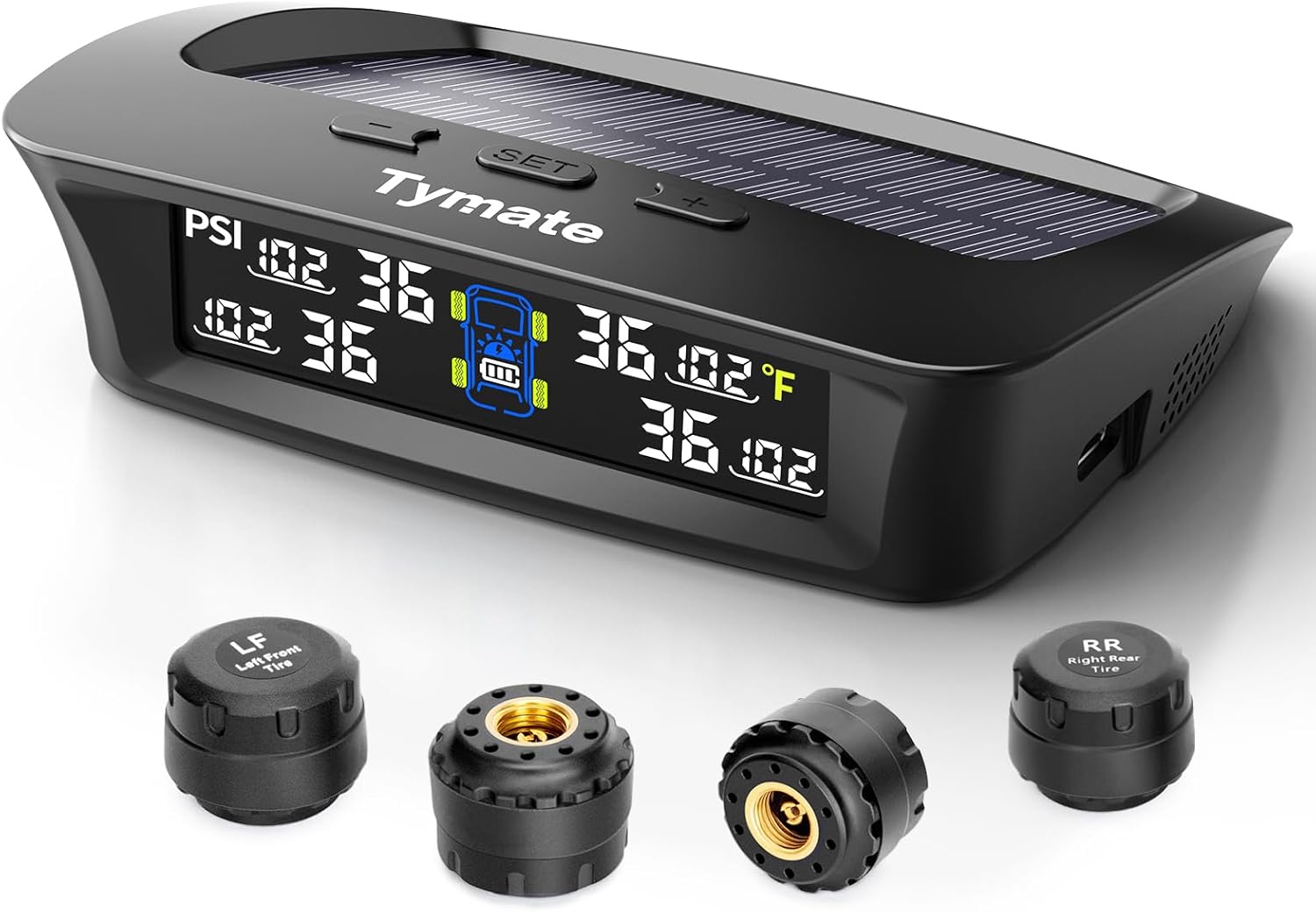
The Tymate TM3 RV TPMS delivers real-time tire pressure monitoring from 0 to 144 PSI with accurate readings and dependable wireless communication. It includes four external sensors with pre-pairing, six alarm modes for rapid leak, pressure extremes, temperature, and signal loss, plus an easy-reference setup for alert thresholds. Solar and USB-C charging help keep the display powered, while the color LCD and adaptive backlight improve visibility for safer driving and towing.
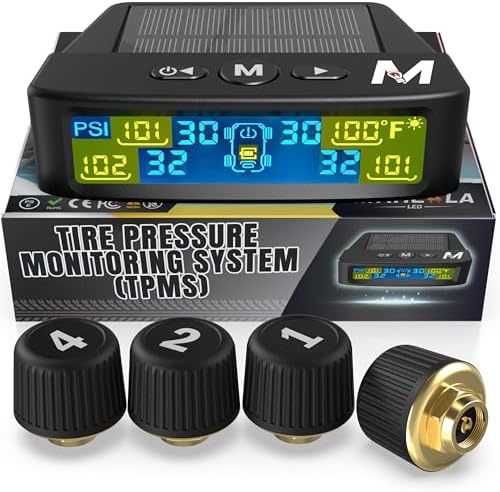
Marcala’s TPMS set of four sensors helps you monitor tire pressure and temperature in real time while driving, with updates every second. The bright color LCD uses auto-dimming for easy viewing, powered by dual solar and USB charging, and offers six alarm modes. Built for trailers, RVs, campers, trucks, and towing setups, the sensors support monitoring 1-4 wheels up to 98 PSI with IP67 waterproof protection.
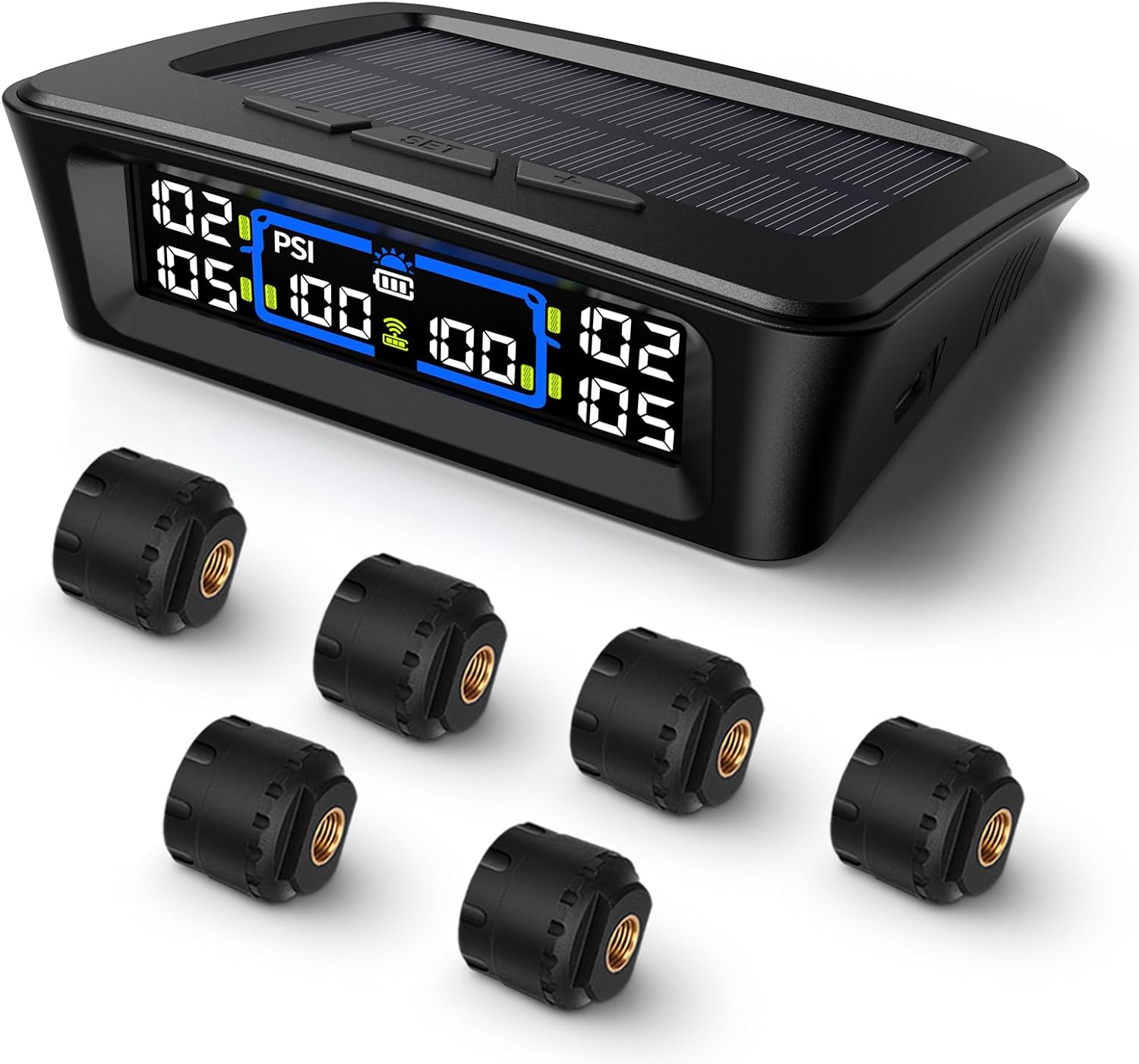
The Tymate TM12 RV TPMS delivers real-time tire pressure and temperature monitoring with a stable 433Hz display for safer long-distance driving. It supports simultaneous monitoring across vehicle and trailer zones, includes six alarm modes for pressure, temperature, leakage, battery, and signal loss, and features easy DIY installation with auto calibration. Power is supplied via USB-C charging or solar recharging, with a wide 0–144 PSI range and up to 50 ft signal coverage for RVs and towable trailers.
What Tire Sizes Fit Your Toyota Tundra?
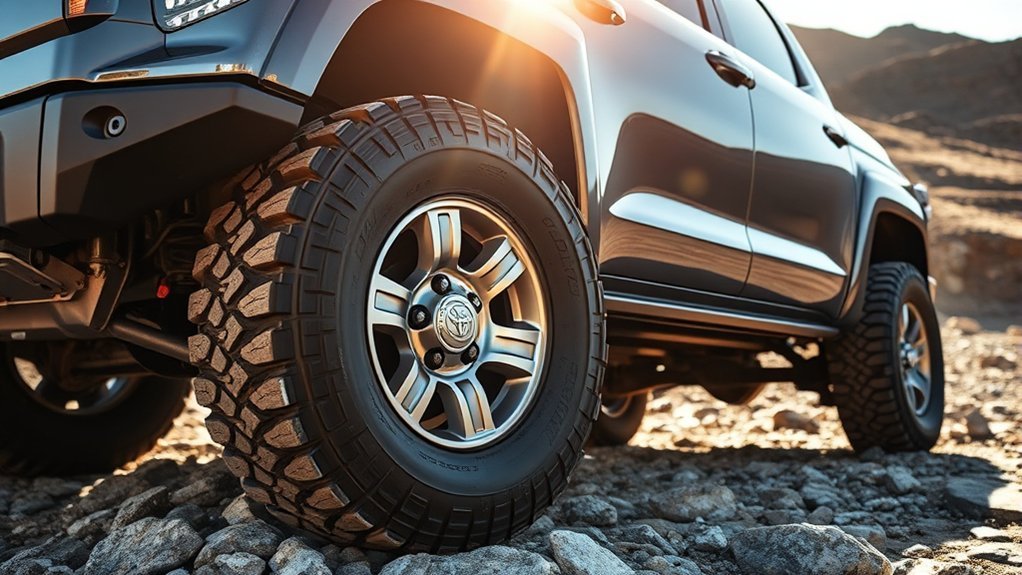
The safest starting point is the factory size listed for your exact truck. Toyota currently offers different factory wheel diameters across Tundra trims. For example, the 2026 Tundra lineup includes 18-, 20-, and 22-inch wheels, depending on the configuration.
Aftermarket tire sizes are often described as 33-, 34-, or 35-inch tires. Those labels are rounded categories, not exact measurements. A metric tire’s nominal diameter can be estimated from its width, aspect ratio, and wheel diameter.
| Tire Size | Calculated Nominal Diameter | Common Description | Important Note |
|---|---|---|---|
| 285/70R17 | About 32.7 inches | Often called a 33 | A 17-inch wheel must clear the brakes on your exact Tundra. |
| 275/65R18 | About 32.1 inches | Roughly a 32-inch tire | Actual dimensions vary among tire models. |
| 295/70R18 | About 34.3 inches | Often called a 34 | May require clearance work depending on the truck and wheel. |
| 325/60R18 | About 33.4 inches | Wide 33-inch category | Its width can create more clearance problems than its diameter. |
These calculations are estimates. The tire manufacturer’s specification sheet provides the measured overall diameter, section width, approved wheel-width range, tread depth, weight, load index, and revolutions per mile for a specific tire.
A tire may clear while the truck is parked but rub during steering, braking, articulation, or suspension compression. Never approve a package from diameter alone.
Evaluating Tire Clearance and Fitment Requirements
Clearance must be checked on both the inner and outer sides of the wheel-and-tire assembly. A wider tire can contact the upper control arm or frame on the inside and the fender liner, bumper edge, mud flap, or body mount on the outside.
Before accepting a larger package, check these areas:
- Upper control arm and suspension components
- Brake caliper, brake hose, and wheel barrel
- Frame and body mount
- Front and rear portions of the fender liner
- Mud flaps and splash guards
- Bumper and lower valance
- Wheel-well clearance during suspension compression
- Spare-tire location under the truck
The installer should test the truck with the steering turned fully left and fully right. Clearance should also be checked with the suspension loaded or compressed. Leave enough space for tire flex, mud, snow, stones, and normal movement.
Pro Tip: Ask the installer to document the wheel width, offset, tire’s measured dimensions, and narrowest clearance point. This gives you useful information if you replace the tires or change the suspension later.
How to Ensure Proper Wheel Offset and Backspacing for Your Tundra Tires
Wheel offset measures the location of the mounting surface relative to the wheel’s centerline. Positive offset generally moves the wheel inward. Lower or negative offset generally moves it outward.
Neither direction solves every rubbing problem:
- More inward placement can improve fender coverage but reduce clearance to the upper control arm, frame, or suspension.
- More outward placement can improve inner clearance but increase fender poke, liner contact, steering scrub, and stress on wheel bearings or steering components.
Backspacing describes the distance from the wheel’s mounting surface to its inner edge. It changes with both offset and wheel width. Two wheels with the same offset can have different inner clearance if their widths differ.
Do not shop by offset alone. A complete fitment description should include:
- Wheel diameter
- Wheel width
- Offset
- Backspacing
- Bolt pattern
- Center-bore size
- Lug-seat shape
- Wheel load rating
- Tire size and measured section width
Fender flares can cover additional tire poke and help control debris, but they do not create suspension clearance, correct alignment, or make an incompatible wheel safe.
Checking Load Rating, Bolt Pattern, and Wheel Hardware
A wheel can physically bolt onto a truck and still be unsuitable. Confirm every specification before installation.
Tire Load Index and Load Range
The load index represents how much weight one tire can support at the required pressure. Tires with the same dimensions can have different load indexes. Some Tundra applications use passenger-type tires, while others use XL or LT tires.
Choose a replacement that meets or exceeds the load capacity required for your truck. Do not assume that a stiffer LT tire is automatically better. LT tires can add weight and ride stiffness, and their correct pressure may need professional calculation for the vehicle’s load.
Wheel Load Rating
The wheel must also support the truck’s axle load. Compare the wheel manufacturer’s rated capacity with your Tundra’s Gross Axle Weight Ratings. Avoid wheels that lack a clearly published load rating.
Bolt Pattern, Hub, and Lug Nuts
Verify the bolt pattern for your exact model year. Also confirm the center bore, hub-centric ring requirements, stud engagement, and lug-seat design. Conical, radius, and flat-seat lug nuts are not interchangeable unless the wheel manufacturer specifically approves them.
Brake and Caliper Clearance
Wheel diameter alone does not prove brake clearance. Spoke shape, barrel profile, wheel width, and offset also matter. This is especially important when considering a wheel smaller than the factory diameter.
Why Quality Tires Are Key to Your Tundra’s Performance
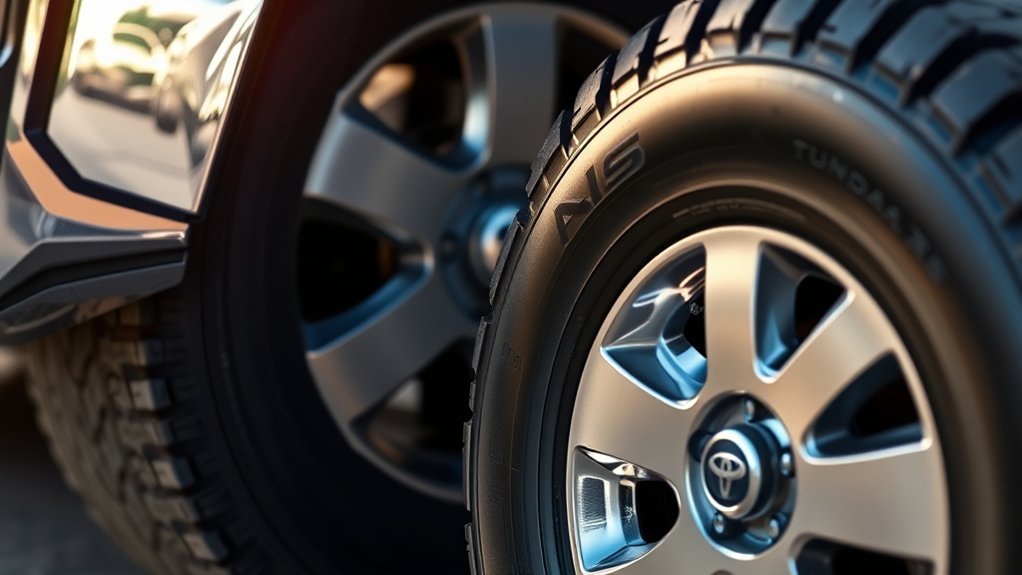
A suitable tire should match your actual driving conditions, not simply have an aggressive appearance. Compare wet braking, snow capability, tread durability, road noise, sidewall construction, weight, and load capacity.
Highway-Terrain Tires
Highway-terrain tires usually suit daily driving, long trips, and frequent towing on paved roads. They often prioritize ride comfort, predictable wet handling, lower noise, and reduced rolling resistance.
All-Terrain Tires
All-terrain tires balance road use with gravel, dirt, and moderate trail driving. Some carry the three-peak mountain snowflake symbol, but that symbol does not make every all-terrain tire equivalent to a dedicated winter tire on ice.
The BFGoodrich All-Terrain T/A KO2 remains familiar to many truck owners, but the All-Terrain T/A KO3 is BFGoodrich’s current-generation line. Brand and model should still be chosen by exact size, load rating, climate, noise tolerance, and use.
Mud-Terrain Tires
Mud-terrain tires use larger tread voids for loose surfaces. They can create more road noise, steering vibration, rolling resistance, and wet-pavement tradeoffs. They make the most sense when frequent off-road use justifies those compromises.
Winter Tires
Dedicated winter tires use compounds and tread designs intended for cold conditions. They can provide better cold-weather performance than a typical all-season or all-terrain tire, particularly on packed snow and ice.
Quality does not automatically mean better fuel economy. Tire width, tread pattern, inflation, construction, weight, and compound all influence rolling resistance. A heavier and more aggressive package can reduce fuel economy even when it is well made.
Choosing Tire and Wheel Styles for Your Toyota Tundra
Choose wheel diameter and construction according to how you use the truck.
- Smaller wheel with a taller sidewall: Usually provides more sidewall cushioning and rim protection, but the wheel must clear the brakes.
- Larger wheel with a shorter sidewall: Can sharpen steering response and create a street-oriented appearance, but may reduce impact cushioning.
- Cast aluminum: Widely available in many designs and price levels.
- Flow-formed or forged aluminum: Can provide a favorable strength-to-weight balance, depending on the design and rating.
- Steel: Often simple and repairable after minor bending, but can be heavier and may have limited brake clearance or offset options.
Compare actual wheel weight and load rating instead of choosing by material alone. A heavy package increases rotating and unsprung mass, which can affect acceleration, braking, steering feel, and suspension response.
Essential Modifications for Installing Larger Tires on Your Tundra
Larger tires may require changes, but the required work depends on the exact truck and package. A leveling kit or lift can create vertical space, yet it may not solve contact at the body mount, frame, control arm, bumper, or rear of the fender liner.
Possible fitment work includes:
- Minor repositioning or trimming of a plastic fender liner
- Mud-flap or splash-guard adjustment
- Alignment correction
- Aftermarket upper control arms designed for the suspension setup
- Bump-stop or suspension-travel evaluation
- Speedometer or system recalibration when supported
- TPMS sensor installation and registration
- Spare-tire relocation if the larger spare does not fit
Warning: Do not treat a body-mount chop, structural cutting, or welding as a routine do-it-yourself clearance fix. Use a qualified fabrication shop that understands vehicle structure, corrosion protection, alignment, and local inspection requirements.
Have the alignment checked after suspension changes or when the new package changes ride height or steering geometry. Uneven camber, caster, or toe can quickly damage expensive tires.
[Products Worth Considering]

RVMATE dual-axle RV tire covers help shield your tires from sunlight, snow, rust, and dirt to keep them in better condition in harsh weather. Made with heavy-duty waterproof, UV-resistant 420D Oxford fabric, they provide strong shading and help reduce wear. They install easily by placing the cover on the wheel and fastening the rope for a stable fit.

Keep RV, trailer, or truck dual-axle tires protected with waterproof, UV-resistant covers that help guard against sunlight, snow, rust, and dirt. The dual tire covers are easy to install with a rope/bungee fastener for a stable fit that won’t easily slip. Designed for 27–30 inch diameter wheels, they help maintain tire condition through harsh weather.
How Larger Tires Affect Driving and Truck Systems
Changing overall tire diameter or wheel-and-tire mass can affect more than appearance.
- Speedometer and odometer: A larger rolling circumference can make the truck travel farther than the displayed speed or distance suggests.
- Effective gearing: Taller tires reduce effective gear multiplication, which can make acceleration feel slower.
- Braking: Heavier or taller tires can increase the work required to slow the truck.
- ABS and stability control: Significant diameter changes can influence systems that compare wheel speed and vehicle behavior.
- Driver-assistance systems: Ride-height or alignment changes may require inspection or calibration.
- Fuel economy: Extra weight, width, aerodynamic exposure, and aggressive tread can increase fuel use.
- Spare compatibility: A much smaller spare can create a large rotational difference, especially on a driven axle.
Michelin’s tire-size guidance notes that wheel-and-tire diameter changes can affect gearing, braking, traction and stability systems, and speedometer readings.
Towing, Payload, and Tire Pressure Considerations
If you tow or carry heavy loads, focus on capacity before appearance. Confirm the truck’s GVWR and front and rear GAWR labels, then verify that each tire and wheel can support the expected axle load.
Added accessories and a heavier spare also count against the truck’s available payload. A tire’s maximum sidewall pressure is not a recommendation to inflate every tire to that number. Use the vehicle placard for the factory setup and obtain qualified load-and-inflation guidance when changing tire type or capacity.
Check pressure when the tires are cold. Inspect the spare as well. TPMS is a warning system, not a substitute for regular pressure checks.
How to Budget for Your Wheel and Tire Package
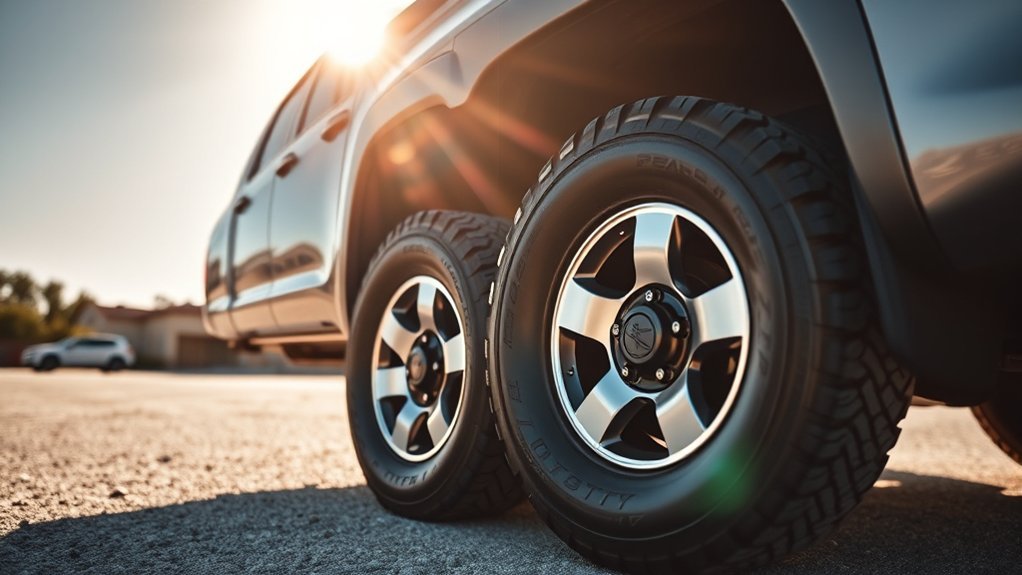
Package prices vary widely, so compare complete installed quotes rather than advertised wheel or tire prices. Include every required item:
- Four tires and four wheels
- A matching full-size spare, when needed
- TPMS sensors, service kits, and programming
- Correct lug nuts or wheel locks
- Hub-centric rings when approved and required
- Mounting and road-force or standard balancing
- Shipping and oversized-item fees
- Taxes and disposal fees
- Alignment
- Suspension or clearance modifications
- Speedometer or system calibration
- Fender flares or mud-control accessories
- Future replacement availability for the same wheel and tire
Ask whether the quote includes installation, balancing, TPMS setup, and a fitment guarantee. Review return conditions before mounting the tires, because mounted wheels and tires may have more restrictive return policies.
Where to Find Quality Wheel and Tire Packages for Your Tundra
You can buy a package from a Toyota dealer, tire retailer, wheel specialist, local truck shop, or community marketplace. The best source is one that can verify the complete fitment and support you if the package vibrates, rubs, or triggers a warning.
Trusted Retailers Online
Large online retailers and fitment-focused sellers, including businesses such as Custom Offsets, may offer broad inventories and mounted packages. Before ordering, confirm that the seller has matched your exact year, trim, suspension, wheel width, offset, tire size, and brake package.
Request written confirmation of:
- Brake and suspension clearance
- Wheel and tire load ratings
- TPMS compatibility
- Required lug hardware
- Expected fender poke
- Known rubbing or modification requirements
- Shipping-damage and return procedures
Local Specialty Shops
A qualified local shop can inspect the truck, measure its current setup, test-fit a wheel, and check clearance after installation. This is valuable when the truck has a lift, leveling kit, aftermarket control arms, or previous body modifications.
Ask whether the shop can perform alignment, TPMS registration, road-force balancing, and post-installation reinspection.
Community Marketplace Options
Community forums, Facebook Marketplace, and local classifieds may provide used takeoff wheels or complete packages. Used parts require a careful inspection.
Check used wheels for:
- Cracks, bends, corrosion, and welded repairs
- Damaged lug seats or enlarged stud holes
- Correct part numbers and dimensions
- Missing center caps or special hardware
- Evidence of repeated air loss
Check used tires for:
- DOT manufacturing date
- Uneven wear, cupping, cuts, cracks, or bulges
- Improper repairs or sidewall patches
- Matching size, model, load rating, and tread depth
- Open safety recalls through the NHTSA recall system
Do not rely only on a seller’s statement that a package “came off a Tundra.” Confirm the exact generation, trim, wheel specifications, and tire condition.
Final Fitment Checklist Before You Buy
- Truck year, trim, drivetrain, and suspension confirmed
- Door-placard tire size and cold pressure recorded
- Tire load index and speed rating verified
- Wheel load rating verified
- Wheel diameter, width, offset, and backspacing confirmed
- Bolt pattern, center bore, lug seat, and stud engagement confirmed
- Brake-caliper template or test fit completed
- Inner and outer clearance checked
- Full-lock and suspension-compression clearance considered
- TPMS sensors and programming included
- Spare-tire size and storage checked
- Alignment and calibration needs included
- Complete installed price and return policy obtained in writing
Frequently Asked Questions
What brand of tires is best for a Toyota Tundra?
No single brand is best for every Tundra. Choose according to your climate, road use, towing load, noise tolerance, and off-road needs. Compare the exact tire’s wet traction, snow rating, weight, load index, measured dimensions, warranty terms, and replacement availability.
What is the Toyota Tire and Wheel Protection Plan?
Toyota Financial offers optional Tire & Wheel Protection products that may cover eligible tire or wheel damage caused by specified road hazards. Gold and Platinum options, availability, exclusions, claim authorization, and term limits can vary. Review your customer agreement and participating-dealer requirements before relying on the coverage.
Will 35-inch tires fit a stock Toyota Tundra?
Do not assume they will. Fitment changes with model year, trim, tire width, measured diameter, wheel width, offset, suspension, and alignment. Some combinations require liner work, suspension changes, or more involved clearance modifications. Test full steering lock and suspension compression before approving the setup.
What wheel offset is best for a Toyota Tundra?
There is no universal best offset. The correct choice depends on wheel width, tire width, suspension clearance, fender coverage, brake design, and desired stance. Compare complete wheel geometry and use a verified fitment for your exact truck.
Can I install 17-inch wheels on a newer Tundra?
Only if the exact wheel clears the brake calipers and all suspension components. Current factory offerings start at larger diameters, and diameter alone does not prove compatibility. Use a brake-clearance template or physical test fit before mounting tires.
Do I need an alignment after installing new wheels and tires?
A basic same-size replacement does not always change alignment, but an inspection is worthwhile if the old tires wore unevenly. Get an alignment after changing ride height, suspension parts, control arms, or steering geometry, and whenever the truck pulls or the steering wheel is off-center.
Should I use the pressure printed on the tire sidewall?
No. The sidewall normally lists a maximum pressure associated with the tire’s rated load, not the truck’s recommended daily operating pressure. Use the cold pressure on the vehicle’s tire-information label for the factory setup and obtain professional guidance for a substantially different tire type or load requirement.
Conclusion
The right Toyota Tundra tire and wheel package must fit the complete truck, not just the wheel opening. Start with the driver-door placard, match the required load capacity, and verify wheel width, offset, brake clearance, hardware, and TPMS compatibility. Treat larger tires as a system change that may affect clearance, gearing, braking, alignment, payload, and electronic systems.
A verified package may cost more than an untested combination, but it reduces the risk of rubbing, vibration, premature wear, warning lights, and buying the wrong parts twice. Get the final specifications and installed price in writing before the tires are mounted.
Sources
- NHTSA TireWise — tire sizing, placard pressure, maintenance, tread, recalls, and replacement guidance.
- Toyota 2026 Tundra — current factory wheel offerings by trim.
- Toyota Owner’s Manuals — vehicle-specific tire, TPMS, spare-tire, and safety instructions.
- Michelin Changing Tire Size or Specifications — safety considerations for non-factory tire sizes.
- BFGoodrich All-Terrain T/A KO3 — current-generation all-terrain product information.
- Toyota Financial Tire & Wheel Protection — available plan types, general benefits, limitations, and eligibility information.

Related Articles
Do Bigger Tires Void a Toyota Tundra Warranty? Magnuson-Moss Act Explained
Bigger tires might not void your Toyota Tundra warranty, but understanding the Magnuson-Moss Act is crucial—discover how to protect your investment effectively.
Read More
Toyota Tundra Tire Rack Setup: Garage Storage Ideas for Seasonal Sets
Better tire storage for your Toyota Tundra awaits—discover essential tips to maximize space and protect your seasonal sets in the garage!
Read More
How Oversized Tires Affect Your Toyota Tundra Warranty: What Dealers Say
Discover how oversized tires can impact your Toyota Tundra warranty and what dealers really think—are you risking your coverage?
Read More