
Tundra TPMS Light Flashing Then Stays On: What the Pattern Means
If your Tundra’s TPMS light flashes and then stays on, treat it as more than a simple low-pressure reminder. A steady tire-pressure light usually means one or more tires may be underinflated, but a light that flashes at startup and then turns solid often points to a TPMS system malfunction, such as a failed sensor, weak sensor battery, unregistered sensor ID, or communication problem.
Quick Answer
A Tundra TPMS light that flashes and then stays on usually means the tire pressure monitoring system has a fault, not just low tire pressure. First check all tires cold against the driver-door placard. If pressures are correct and the light still flashes, the truck likely needs TPMS sensor diagnosis or relearn service.
Key Takeaways
- A steady TPMS light usually means low tire pressure; a flashing light that turns solid usually points to a system malfunction.
- Always check tire pressure cold using the Tire and Loading Information Label on the driver-side door area, not the pressure molded on the tire sidewall.
- Some Tundra years may reset after pressure correction, but sensor replacement often requires TPMS ID registration or an OBD relearn.
- Do not ignore a TPMS warning. A severely low, damaged, or visibly flat tire can cause unsafe handling or tire failure.
At a Glance
| Time Required | 10 to 30 minutes for pressure checks; longer if sensor diagnosis or relearn is needed. |
| Difficulty | Easy for pressure checks; moderate to advanced for TPMS sensor programming. |
| Tools Needed | Accurate tire-pressure gauge, air compressor, owner’s manual, and a TPMS scan tool if sensors need diagnosis. |
| Cost | Pressure checks are usually free if you own a gauge; sensor diagnosis, programming, and replacement vary by shop and sensor type. |
What’s Up With My Tundra’s TPMS Light?
Your Tundra’s TPMS light can tell you two different things depending on how it behaves. If it comes on and stays solid, one or more tires may be below the recommended cold inflation pressure. If it flashes when you start the truck and then stays on, Toyota says something in the tire pressure monitoring system may not be working properly and the vehicle should be inspected. You can read Toyota’s general TPMS guidance here: Toyota Tire Pressure Monitoring System support.
The most common causes include a weak TPMS sensor battery, a damaged sensor, an unregistered replacement sensor, a sensor that cannot communicate with the TPMS receiver, or tire pressure that was corrected without proper initialization. Cold weather can also lower tire pressure enough to trigger a steady warning light, especially overnight.
Warning: If one tire looks low, flat, damaged, or has a bulge, do not keep driving to “see if the light goes away.” Pull over safely, check the tire, and use the spare or roadside help if the tire is unsafe.
Steady vs. Flashing TPMS Light
| Light Behavior | Most Likely Meaning | What To Do First |
| Comes on and stays solid | One or more tires may be underinflated. | Check all tire pressures cold and inflate to the driver-door placard. |
| Flashes, then stays solid | The TPMS system may have a malfunction. | Check pressures first, then have the sensors scanned if the light returns. |
| Turns on after new tires or wheels | Sensors may not be registered or compatible. | Ask the shop to verify sensor IDs and perform the correct relearn. |
Causes of a Blinking TPMS Light
When your Tundra’s TPMS light blinks, the system may not be receiving valid information from one or more tire sensors. That can happen even if the tires are properly inflated.
- Weak or dead sensor battery: TPMS sensors are sealed inside the wheel. When the internal battery fails, the sensor usually needs replacement.
- Damaged sensor: Tire mounting, corrosion, valve-stem damage, or impact can damage the sensor.
- Unregistered sensor ID: New sensors often need to be registered to the truck’s ECU before the system can read them.
- Wrong or incompatible sensor: An aftermarket sensor may need programming before installation.
- Pressure set before initialization: If the system was initialized when pressures were wrong, it may keep warning you.
- Spare tire issue, if monitored: Some vehicles monitor the spare. If your Tundra does, a low or faulty spare sensor can trigger a warning.
The Toyota Tundra uses a direct TPMS design on many model years, which means sensors inside the wheels send pressure data to the vehicle. TPMS tool manufacturer ATEQ notes that 2009–2019 Tundra sensor service can require an OBD relearn to transfer new sensor IDs to the vehicle ECU: ATEQ Toyota Tundra TPMS diagnostic information.
Check Tire Pressure Before You Reset Anything
Start with tire pressure because it is the fastest and safest thing to rule out. Use an accurate tire-pressure gauge when the tires are cold. NHTSA says the correct cold tire pressure is listed on the Tire and Loading Information Label on the driver-side door edge or B-pillar, or in the owner’s manual: NHTSA TireWise tire safety guide.
Pro Tip: Do not inflate your Tundra tires to the maximum PSI printed on the tire sidewall. That number is not the vehicle’s recommended operating pressure. Use the driver-door placard unless your owner’s manual or tire professional gives a specific load-based adjustment.
- Park on level ground and let the tires cool for at least three hours if possible.
- Find the recommended cold tire pressure on the driver-side door label.
- Check all four tires with a gauge.
- Check the spare if your Tundra has a full-size spare or if your model monitors it.
- Inflate any low tire to the placard pressure.
- Inspect for nails, cuts, sidewall bulges, or uneven wear.
- Drive normally for a short distance only if all tires are safe and properly inflated.
TPMS helps warn you about underinflation, but it does not replace monthly tire-pressure checks with a real gauge.
Steps to Reset Your Tundra TPMS System
Resetting the TPMS only helps when tire pressure has been corrected and the system needs to relearn the baseline. It will not repair a dead sensor, damaged sensor, wrong sensor, or unregistered sensor ID.
[Products Worth Considering]

EVOULTES heavy duty tire inflator with an integrated gauge delivers accurate pressure readings from 10–120 PSI, helping you inflate, deflate, and check tires in one tool. The 16.5-inch extended dual-head air chuck with swivel base reaches hard-to-access dual wheel valves on trucks and RVs. A brass trigger core and side-mounted air release valve make operation smooth, with standard 1/4" NPT threading and quick-connect compatibility for easy setup.
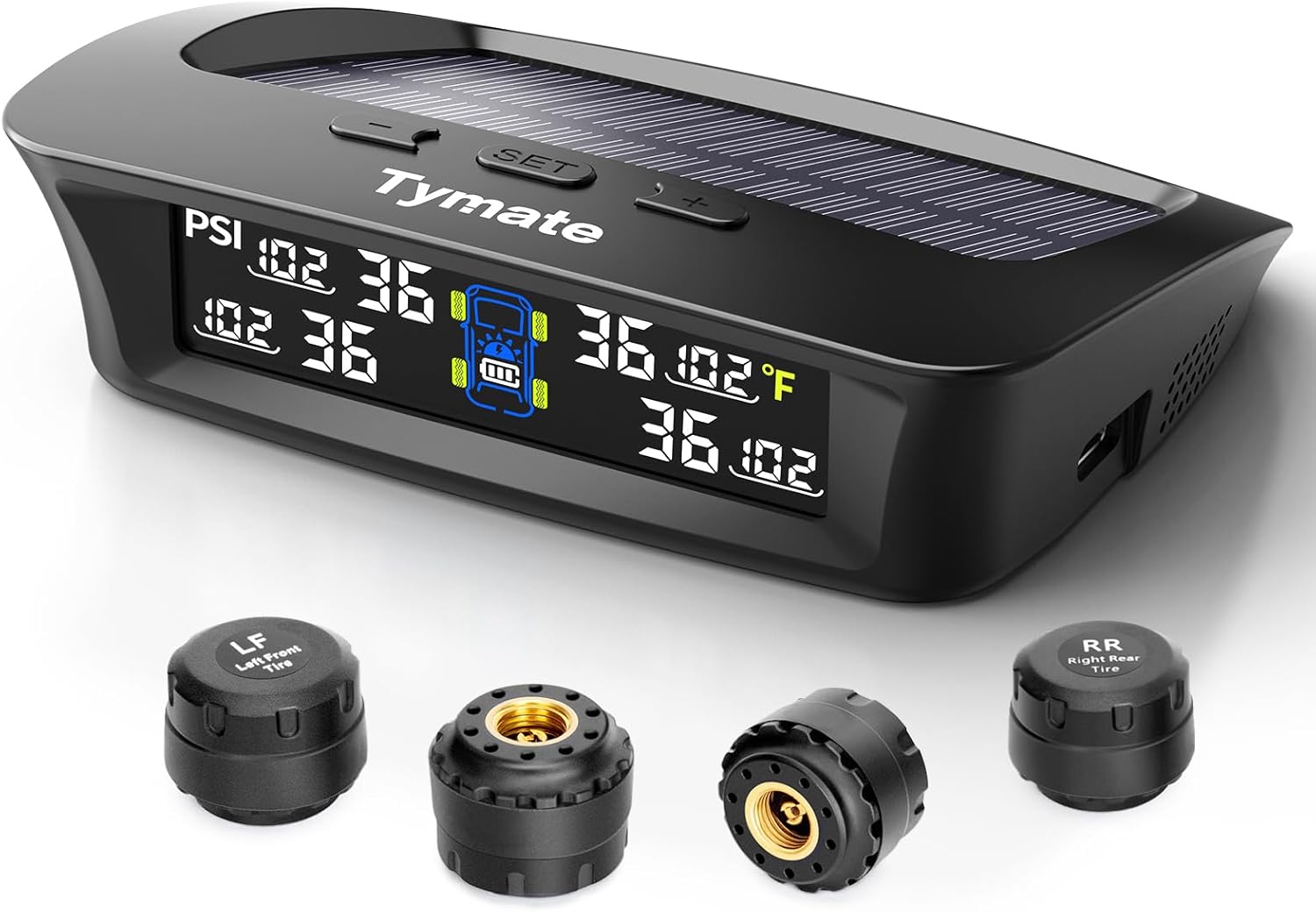
The Tymate TM3 RV TPMS delivers real-time tire pressure monitoring from 0 to 144 PSI with accurate readings and dependable wireless communication. It includes four external sensors with pre-pairing, six alarm modes for rapid leak, pressure extremes, temperature, and signal loss, plus an easy-reference setup for alert thresholds. Solar and USB-C charging help keep the display powered, while the color LCD and adaptive backlight improve visibility for safer driving and towing.

This portable cordless tire inflator delivers up to 160 PSI with fast 17 L/min airflow to help you quickly top up tires and get back on the road. It features dual power mode, running on a 21V rechargeable battery or a 12V DC adapter for convenient roadside use. An automatic shut-off with digital pressure gauge helps prevent overinflation, and a built-in LED light improves visibility in low-light conditions.
Use the Correct Reset Method for Your Model Year
Some Tundra models have a TPMS set or reset button. Others may use a settings menu, a scan tool, or an OBD relearn after sensor replacement. Check your owner’s manual first because Toyota changed features and displays across model years.
| Situation | Best Next Step |
| Light came on after cold weather | Check and correct cold tire pressure, then drive normally and recheck. |
| Light stayed on after tire rotation | Verify pressures and follow the owner’s manual reset or initialization procedure. |
| Light flashes after new sensors | Have the sensor IDs programmed or relearned with a compatible TPMS tool. |
| Light flashes every startup | Scan the sensors and TPMS codes instead of repeatedly resetting the system. |
If Your Tundra Has a TPMS Reset Button
If your owner’s manual shows a TPMS reset or set button, use it only after setting every tire to the correct cold pressure. The common Toyota-style process is to turn the ignition on without starting the engine, hold the TPMS set button until the warning light blinks, and then allow the system time to initialize. Your exact steps may vary, so follow your manual over generic advice.
If the Light Flashes After Reset
If the TPMS light flashes again at the next startup, stop trying to reset it. A flashing-then-solid light usually means the system cannot complete its self-check. A tire shop or Toyota service department can use a TPMS scan tool to read each sensor, verify sensor IDs, check battery status where supported, and look for communication faults.
How Cold Weather Affects Tundra Tire Pressure
Cold weather can make a properly inflated tire read lower the next morning. That can trigger a steady TPMS warning even when nothing is broken. The fix is simple: check the tires cold and inflate them to the placard pressure.
Do not ignore the light just because the weather changed. A cold-weather warning can still reveal a slow leak, nail puncture, or tire that was already close to the low-pressure threshold.
How to Check Your Tundra’s Tire Pressure and Sensors
After you confirm tire pressure, look for sensor-related clues. If your Tundra displays individual tire pressures, compare the dash reading with your handheld gauge. One missing reading, one tire that always shows blank, or a light that flashes at every startup can point to a sensor or registration problem.
- One tire reads blank: That sensor may be dead, damaged, or not communicating.
- All tires read correctly but the light flashes: The system may have a stored fault or receiver issue.
- Light started after new wheels: The new sensors may not be compatible or registered.
- Light started after tire service: A sensor may have been damaged during mounting or the relearn was not completed.
Note: A basic OBD-II code reader may not read TPMS sensor data. Many TPMS faults require a dedicated TPMS scan tool or Toyota-compatible diagnostic software.
[Products Worth Considering]

The JACO FlowPro Tire Inflator measures, inflates, and airs down tires up to 100 PSI with battery-free operation and ±2% accuracy after calibration. It features a glowing pressure dial for night visibility, a heavy-duty steel build with a hybrid hose, and a precision push-to-inflate thumb trigger. The patented Lightning Air Chuck locks on for a secure seal, and the kit includes quick-connect hardware for easy inline use with your air compressor.
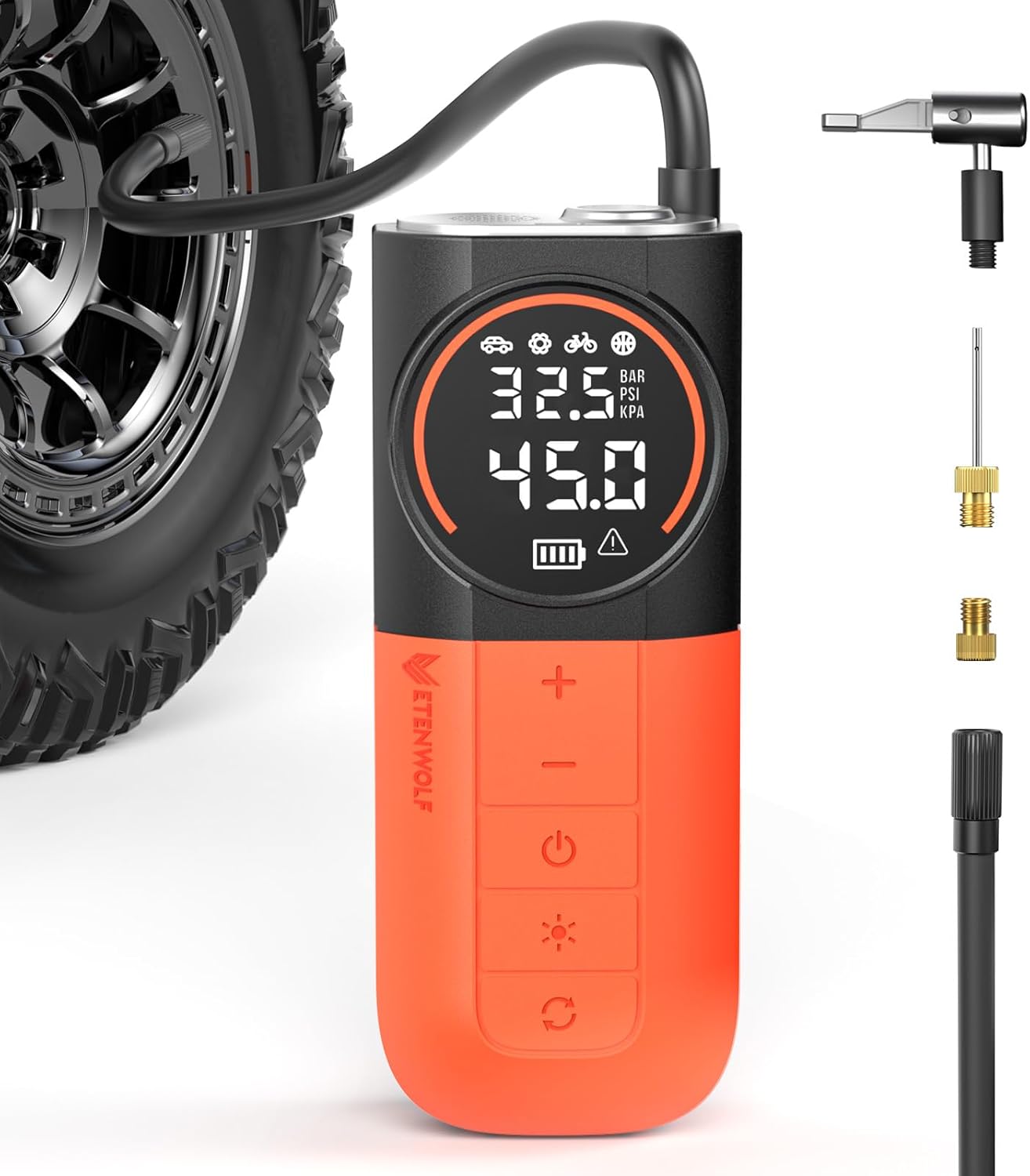
The ETENWOLF S1 cordless tire inflator delivers ultra-fast inflation with up to 160 PSI and a 20 L/min airflow for quicker tire top-offs. Its 5200mAh battery and cooling system support inflating many tires and sports balls on a single charge, while the digital pressure gauge and multi-unit display help you reach the right pressure accurately. With preset modes, pressure memory, an auto-stop feature, and an LED flashlight, it’s built for easy roadside and everyday use.
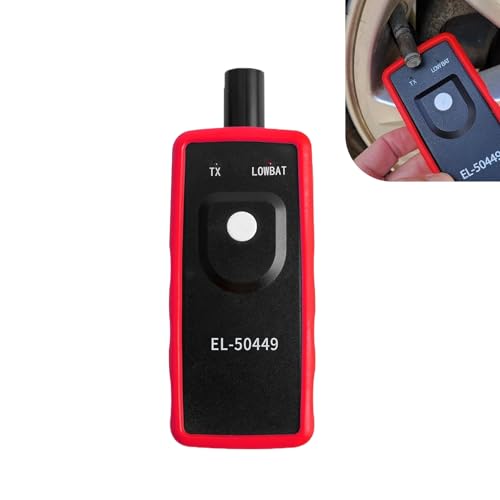
Key Functions: This tpms relearn tool is for vehicles with direct TPMS. It activates sensors, clears dashboard warning lights, and checks for bad or low-power sensors. It is compatible with many major vehicle brands.
Signs You Need Professional Help With Your TPMS
You can handle pressure checks at home, but some TPMS problems need a shop. Get professional help if the light keeps flashing after you confirm the tires are properly inflated.
Common Sensor Malfunctions
- The TPMS light flashes at every startup and then stays on.
- One tire pressure reading is missing or clearly wrong.
- The warning started right after new tires, wheels, or sensors were installed.
- The shop installed sensors but did not complete a relearn or ID registration.
- The spare tire is monitored and its pressure or sensor has not been checked.
Persistent Warning Lights
| Warning Light Situation | Action Needed |
| Flashing light followed by steady light | Scan TPMS sensors and check for sensor battery, ID, or communication faults. |
| Light stays on despite correct pressure | Verify the system baseline and check for stored TPMS faults. |
| Light appears after sensor replacement | Confirm sensor compatibility and complete the proper relearn procedure. |
| Light blinks intermittently | Check for weak sensor batteries, signal issues, or receiver faults. |
Inconsistent Tire Pressure Readings
Inconsistent readings can come from a failing sensor, an incorrect sensor location, or a sensor that was programmed with the wrong ID. If your dash shows one tire in the wrong position after rotation, the truck may need a relearn. If one reading disappears completely, the sensor may need replacement.
Cost Considerations for TPMS Sensor Replacement
TPMS repair cost depends on the sensor type, wheel design, labor rate, and whether the shop must diagnose, replace, program, or relearn one or more sensors. A simple pressure correction costs little or nothing. A sensor replacement usually includes the sensor, valve service parts, tire dismounting or bead-breaking labor, programming, and relearn time.
Ask for an itemized quote before approving the repair. A clear quote should show whether the shop is replacing one sensor or all sensors, whether the new sensors are OEM or programmable aftermarket sensors, and whether relearn service is included.
[Products Worth Considering]

【Compatibility 】This tire pressure sensor valve stem (TPMS) are compatible with Audi, for BMW, for Toyota, for Honda, for Mazda, for Dodge, for Chevrolet, for Chevy, for Ford, for Hyundai, for Infiniti, for Chrysler, for Jaguar, for Volvo, for Jeep, for Acura, for Peugeot, for Land Rover Valve Stem.
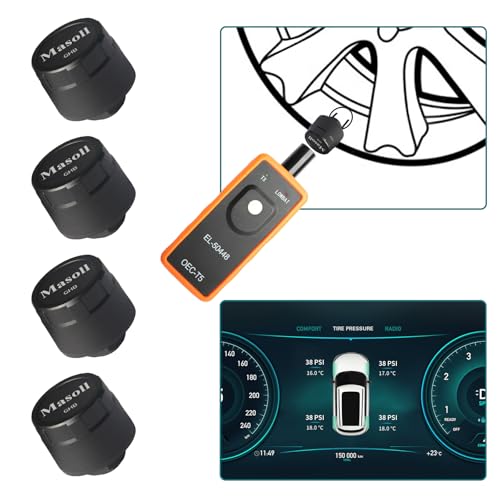
【Compatibility】Masoll TPMS sensor set of 4 is Compatible with GM branded vehicles manufactured after 2006, including Chevy Chevrolet Buick Cadillac GMC Pontiac, please scroll down to product description for complete vehicle list.

Applicabe for Audi;for BMW;for Toyota;for Honda;for Dodge;for Chevrolet;for Ford;for Hyundai;for Infiniti;for Chrysler;for Jaguar;for Volvo;for Jeep;for Acura.
Frequently Asked Questions
Can I drive with the TPMS light on?
Check the tires first. If any tire is visibly low, damaged, or unsafe, do not keep driving. If all tires are correctly inflated and the light is flashing because of a TPMS malfunction, drive cautiously to a tire shop or Toyota service center and manually monitor pressure until it is fixed.
How often should I check tire pressure?
Check tire pressure at least once a month and before long trips. NHTSA recommends checking all tires, including the spare, when they are cold. Cold means the vehicle has not been driven for at least three hours.
What tools do I need to reset TPMS?
For a basic pressure-related warning, you need a tire-pressure gauge and air compressor. For sensor replacement, missing readings, or a flashing light, you may need a TPMS scan tool, OBD relearn tool, or Toyota-compatible diagnostic software.
Will changing tires affect the TPMS system?
Changing tires can affect TPMS if a sensor is damaged, replaced, installed in a new wheel, or not registered correctly. After installing new sensors, many Tundra models need the sensor IDs programmed or relearned before the warning light clears.
Can I use a regular tire gauge for TPMS?
Yes. A regular tire-pressure gauge is the right tool for checking actual tire pressure. TPMS warns you when something is wrong, but a gauge tells you the real PSI. Use a quality gauge and compare the reading with the driver-door placard.
Why does my Tundra TPMS light come on when it gets cold?
Cold air lowers tire pressure. If your tires were already near the warning threshold, a cold morning can trigger the TPMS light. Check the tires cold and inflate them to the pressure listed on the driver-side door label.
Conclusion
If your Tundra’s TPMS light flashes and then stays on, start with the basics: check every tire cold, inflate to the driver-door placard, and inspect for damage. If the light keeps flashing after the pressures are correct, the problem is probably inside the TPMS system rather than inside the tire itself.
A reset may help after a pressure correction, but it will not fix a dead sensor, damaged sensor, unregistered sensor, or communication fault. When the warning keeps returning, have the sensors scanned and relearned by a qualified tire shop or Toyota service department.
Sources
- Toyota Support: Tire Pressure Monitoring System — backs up Toyota TPMS warning-light behavior and inspection guidance.
- NHTSA TireWise Tire Safety Guide — backs up cold tire-pressure checks, placard pressure guidance, and TPMS maintenance limits.
- NHTSA: June Is Tire Safety Month — backs up monthly tire-pressure checks, cold-pressure guidance, and spare-tire checks.
- Federal Register: FMVSS No. 138 Tire Pressure Monitoring Systems — backs up the purpose of TPMS as a warning system that supplements regular tire maintenance.
- ATEQ TPMS: Toyota Tundra 2009–2019 Diagnostic Information — backs up direct TPMS design and OBD relearn considerations for listed Tundra model years.

Related Articles
Toyota Tundra Tire and Wheel Package: What to Consider Before Buying
Unlock the secrets to choosing the perfect tire and wheel package for your Toyota Tundra—essential tips await to enhance your ride.
Read More
Do Bigger Tires Void a Toyota Tundra Warranty? Magnuson-Moss Act Explained
Bigger tires might not void your Toyota Tundra warranty, but understanding the Magnuson-Moss Act is crucial—discover how to protect your investment effectively.
Read More
Toyota Tundra Tire Rack Setup: Garage Storage Ideas for Seasonal Sets
Better tire storage for your Toyota Tundra awaits—discover essential tips to maximize space and protect your seasonal sets in the garage!
Read More