
TPMS Sensor Battery Life: How Long They Last and Signs of Failure
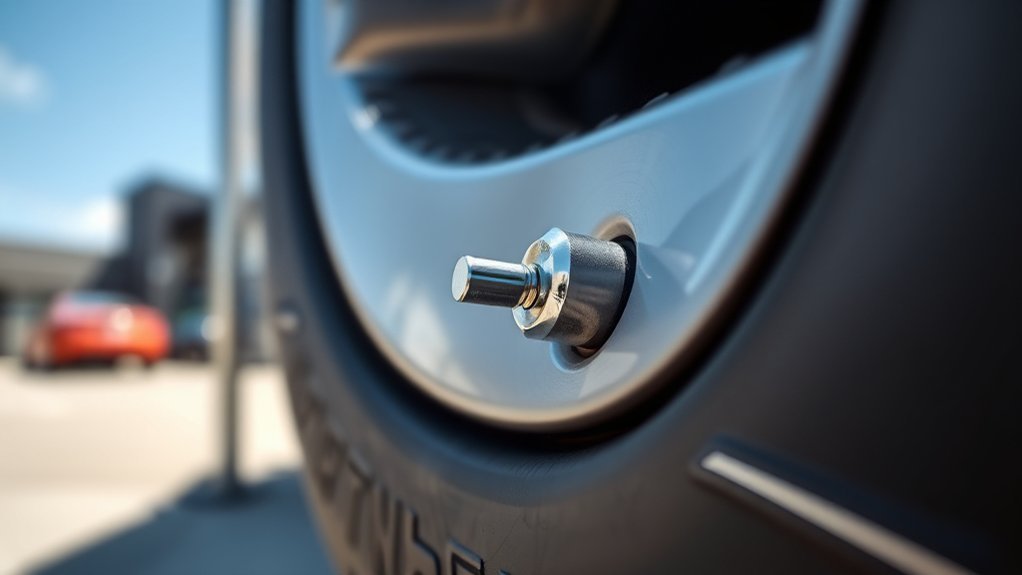
TPMS sensors can last for years, but they do not last forever. If your tire pressure light starts flashing, stays on after you inflate the tires, or returns after every startup, the problem may be a weak sensor battery, a damaged sensor, a relearn issue, or low tire pressure that still needs attention.
Quick Answer
Many direct TPMS sensors last about 5 to 10 years, with around 7 years being a common service-life estimate. The battery is usually sealed inside the sensor, so a dead battery normally means replacing the sensor, not recharging or replacing only the battery.
Key Takeaways
- Direct TPMS sensors often last 5 to 10 years, depending on sensor design, climate, mileage, and driving conditions.
- A solid TPMS light usually means low tire pressure. A flashing light for about 60 to 90 seconds, then solid, usually means a TPMS malfunction.
- A dead TPMS battery usually requires sensor replacement because most original sensors have sealed batteries.
- If one old sensor fails, the other sensors may be close behind, so replacing all four can make sense during tire service.
At a Glance
| Time Required | 5 minutes to check tire pressure; 30 to 90 minutes for professional sensor diagnosis or replacement |
| Difficulty | Easy for pressure checks; moderate to professional for sensor replacement and relearn |
| Tools Needed | Accurate tire pressure gauge, air compressor, owner’s manual, and a TPMS scan tool for sensor diagnosis |
| Cost | Pressure check is usually free or low cost; sensor replacement cost varies by vehicle, sensor type, and labor |
Understanding TPMS Sensor Battery Life
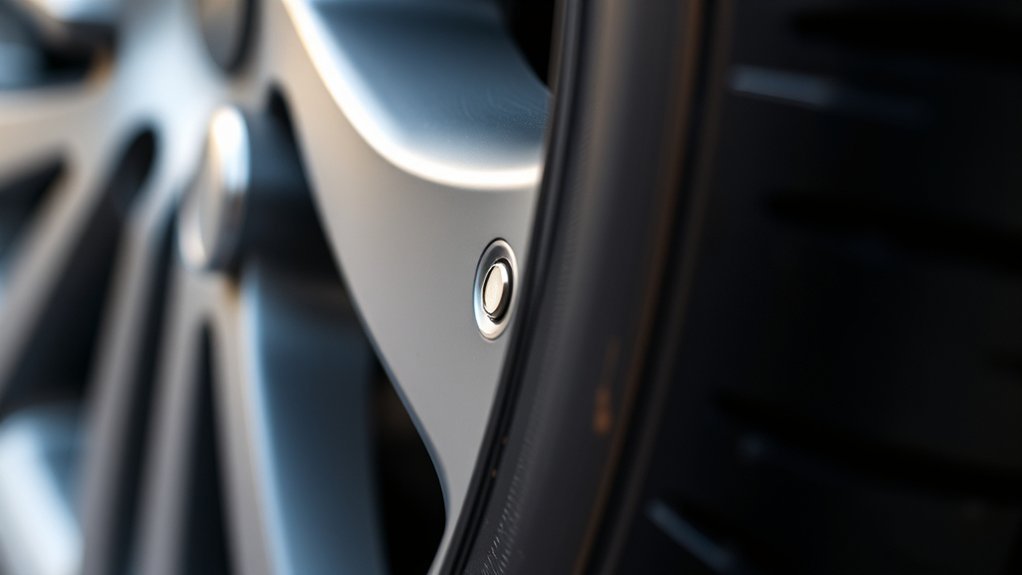
A TPMS sensor battery powers the small pressure sensor inside many wheel-mounted tire pressure monitoring systems. These are called direct TPMS systems because they measure tire pressure from inside the tire and send that information to the vehicle.
In many vehicles, the TPMS battery is sealed inside the sensor. Once that battery dies, the usual repair is to replace the whole sensor. You normally cannot open an original equipment sensor, replace a coin cell, seal it again, and expect it to work reliably inside a tire.
Battery life depends on the sensor design, how often the sensor transmits, driving frequency, heat exposure, corrosion, and physical damage. Most drivers can expect many direct TPMS sensors to last about 5 to 10 years, but some fail sooner and some last longer.
Note: If your vehicle uses an indirect TPMS, it may not have battery-powered wheel sensors at all. Indirect systems estimate tire pressure changes using wheel-speed or other vehicle data.
Direct vs. Indirect TPMS: Why It Matters
Before you blame a sensor battery, you need to know which type of TPMS your vehicle uses. The National Highway Traffic Safety Administration explains that TPMS can monitor tire pressure through sensors in the tires or through wheel-speed and other vehicle sensors.
| TPMS Type | How It Works | Battery Concern? |
|---|---|---|
| Direct TPMS | Uses a pressure sensor/transmitter at each monitored wheel. | Yes. Each wheel sensor usually has a sealed battery. |
| Indirect TPMS | Uses wheel-speed data and other vehicle signals to detect pressure changes. | Usually no wheel-sensor battery to replace. |
Direct systems can often identify the specific tire with low pressure. Indirect systems may need a reset or calibration after you inflate tires, rotate tires, or change tire sizes. Check your owner’s manual if you are not sure which system your vehicle uses.
How Long Do TPMS Sensors Last?
Most direct TPMS sensors last about 5 to 10 years in normal driving. A practical planning number is around seven years, especially if the sensors are original and your vehicle is already due for new tires.
The federal TPMS standard focuses on warning drivers about significant underinflation and system malfunctions, not on setting a universal sensor battery lifespan. Under 49 CFR 571.138, compliant systems must warn when tire pressure reaches the standard’s low-pressure threshold and must also warn when a malfunction affects the system.
Average Lifespan Estimates
A common real-world range for direct TPMS sensors is 5 to 10 years. Some sensors fail earlier because of heat, corrosion, impact damage, or poor installation. Others keep working beyond that range, especially in mild conditions.
Use age as a clue, not a guarantee. If your vehicle is 8 to 10 years old and still has the original TPMS sensors, a flashing TPMS light is more likely to point toward a failing sensor, dead battery, or communication issue.
Factors Influencing Longevity
Several factors can affect how long a direct TPMS sensor lasts:
- Heat exposure: Long-term heat can shorten the life of batteries and electronics.
- Driving frequency: Sensor transmission strategy varies, but more active use can affect battery drain.
- Road salt and corrosion: Corrosion around valve stems can damage sensor hardware.
- Improper tire service: A tire machine, broken valve stem, wrong service kit, or metal cap can damage the sensor.
- Tire sealants: Some sealants can interfere with sensors if they contact the sensor body.
Signs of Battery Depletion
A weak or dead TPMS sensor battery often shows up as a system malfunction, not as a normal low-pressure warning. Common signs include:
- The TPMS light flashes for about 60 to 90 seconds after startup, then stays on.
- A tire pressure reading disappears from the dashboard display.
- A scan tool cannot read one sensor, or shows a low battery or no-signal code.
- The light returns after tire pressure has been corrected and the system has been reset or relearned.
Warning: Do not ignore a TPMS light. A solid light can mean a tire is significantly underinflated, and driving on an underinflated tire can cause overheating, tire failure, poor handling, and longer stopping distance.
Signs Your TPMS Sensor Battery Might Be Failing
The dashboard light gives you the first clue, but it does not always tell you the exact cause. Use this guide before assuming the battery is dead.
| Sign | What It Usually Means | What To Do |
|---|---|---|
| Solid TPMS light | One or more tires may be significantly underinflated. | Check all tires with a gauge and inflate to the door-placard pressure. |
| Flashes, then stays on | TPMS malfunction, possibly a dead sensor battery, damaged sensor, or communication issue. | Have the system scanned with a TPMS tool. |
| Light comes on in cold weather, then turns off | Tire pressure may be near the warning threshold and dropping overnight. | Set cold tire pressure correctly and recheck monthly. |
| One pressure reading is missing | One sensor may not be transmitting. | Scan that wheel sensor and inspect the valve stem. |
What to Do When You See a Blinking TPMS Light?
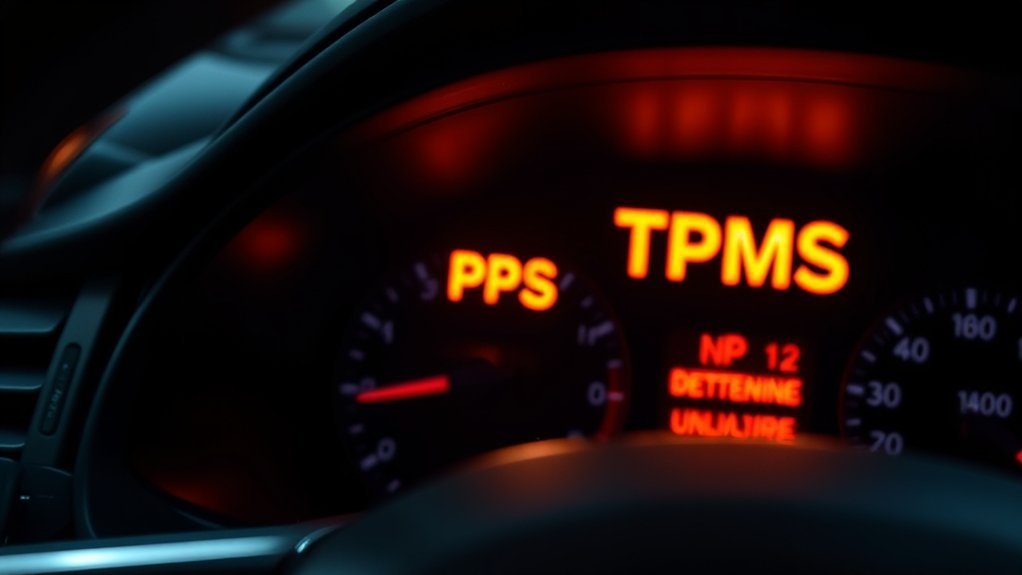
When the TPMS light flashes for about 60 to 90 seconds and then remains on, treat it as a system malfunction. The system may not be able to detect or report low tire pressure correctly until the issue is fixed.
- Check tire pressure first. Use an accurate gauge, not just the dashboard display.
- Inflate tires to the vehicle placard pressure. The correct pressure is usually on the driver’s door placard, not the tire sidewall.
- Drive as directed by the owner’s manual. Some systems need a short drive to update readings.
- Reset or relearn the system if required. Indirect systems and some direct systems need a reset after pressure correction or tire rotation.
- Schedule a TPMS scan if the light returns. A shop can identify a dead sensor, wrong sensor ID, damaged valve stem, or receiver issue.
The NHTSA TireWise guidance says a flashing warning followed by continuous illumination can indicate a malfunction, and the pattern may repeat at each startup until the problem is corrected.
[Products Worth Considering]
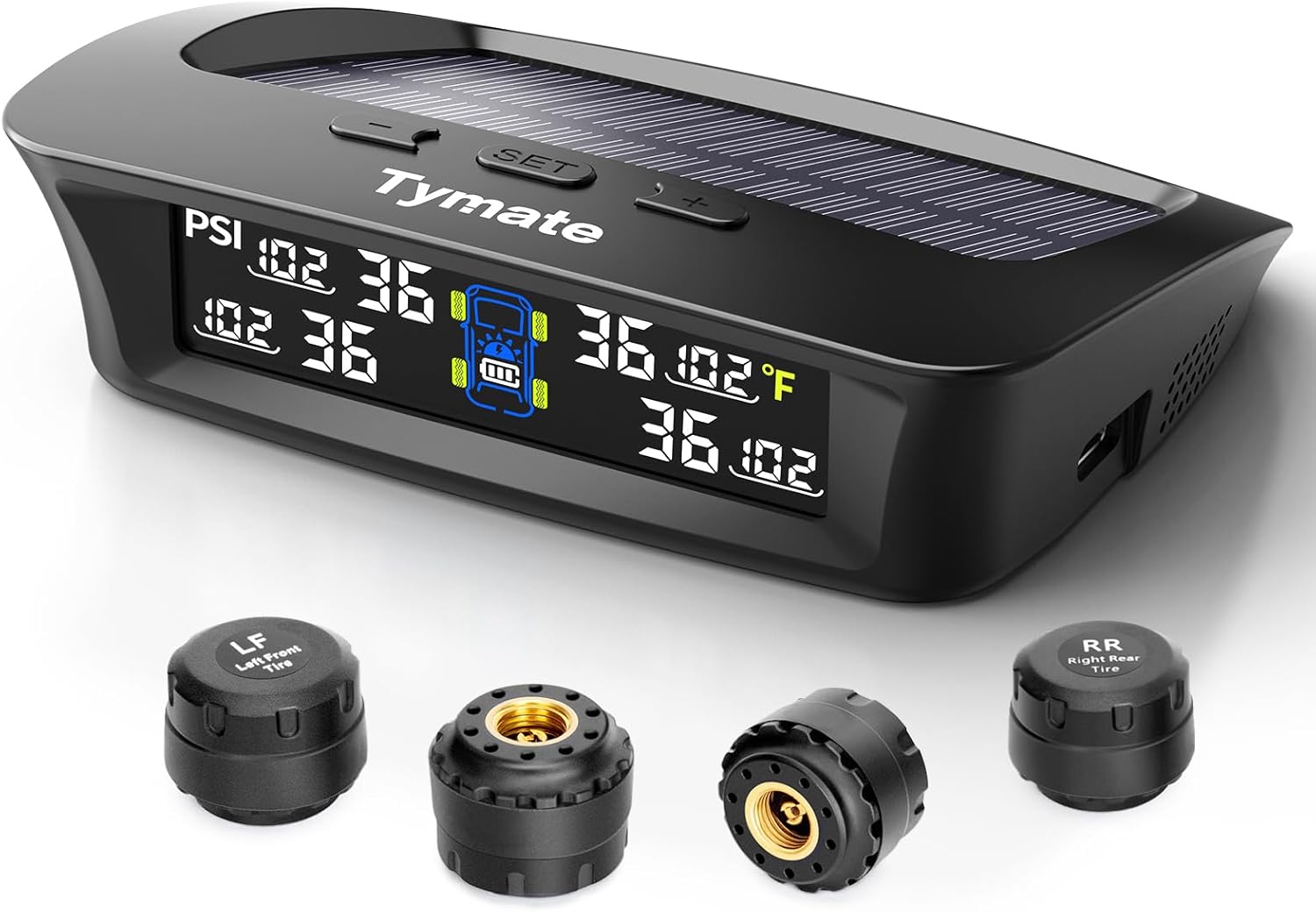
The Tymate TM3 RV TPMS delivers real-time tire pressure monitoring from 0 to 144 PSI with accurate readings and dependable wireless communication. It includes four external sensors with pre-pairing, six alarm modes for rapid leak, pressure extremes, temperature, and signal loss, plus an easy-reference setup for alert thresholds. Solar and USB-C charging help keep the display powered, while the color LCD and adaptive backlight improve visibility for safer driving and towing.
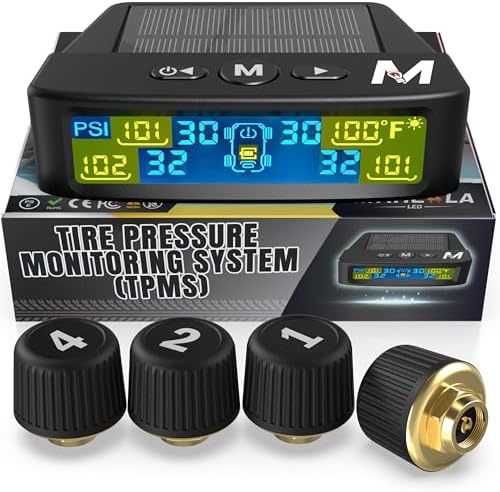
Marcala’s TPMS set of four sensors helps you monitor tire pressure and temperature in real time while driving, with updates every second. The bright color LCD uses auto-dimming for easy viewing, powered by dual solar and USB charging, and offers six alarm modes. Built for trailers, RVs, campers, trucks, and towing setups, the sensors support monitoring 1-4 wheels up to 98 PSI with IP67 waterproof protection.
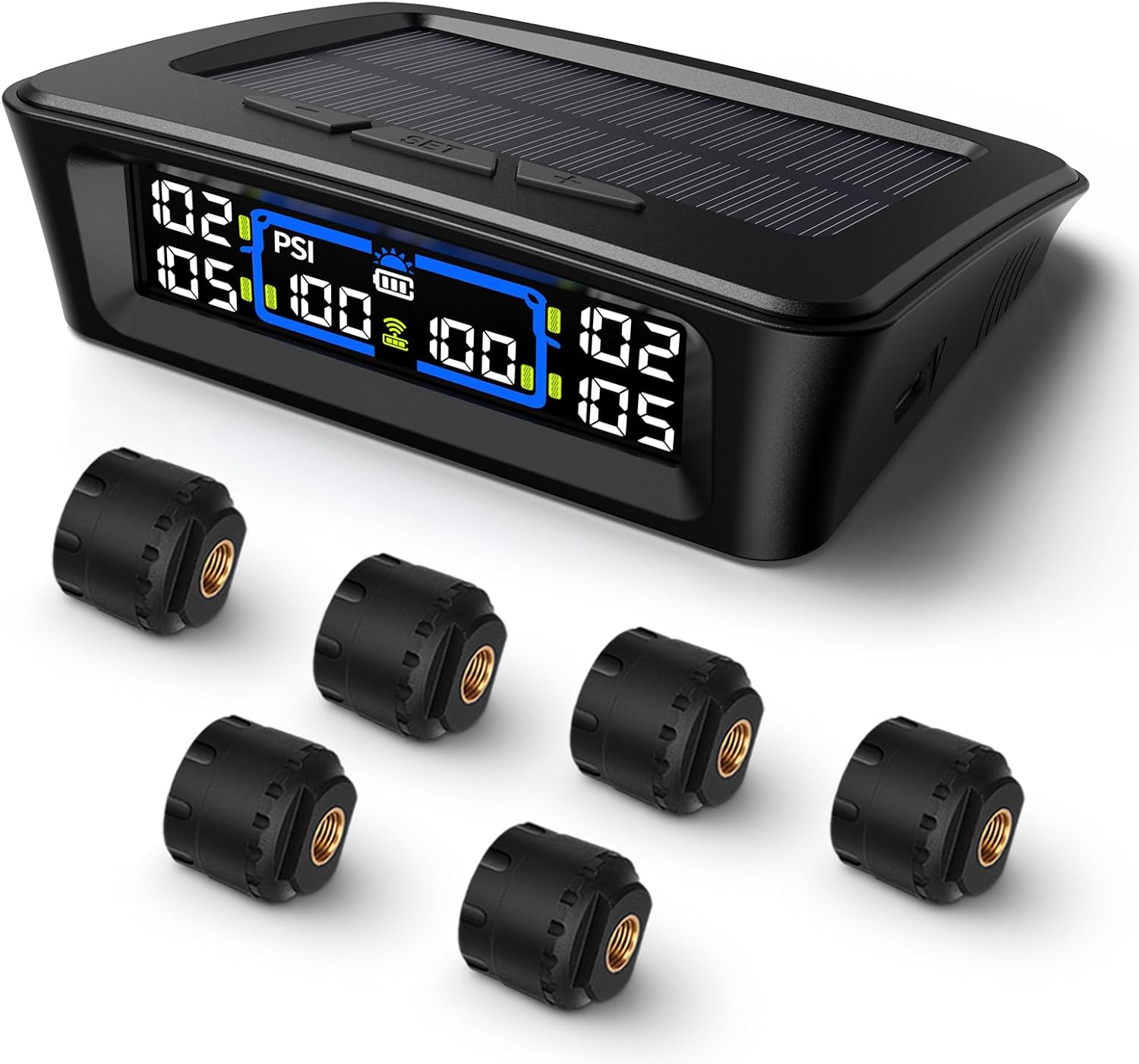
The Tymate TM12 RV TPMS delivers real-time tire pressure and temperature monitoring with a stable 433Hz display for safer long-distance driving. It supports simultaneous monitoring across vehicle and trailer zones, includes six alarm modes for pressure, temperature, leakage, battery, and signal loss, and features easy DIY installation with auto calibration. Power is supplied via USB-C charging or solar recharging, with a wide 0–144 PSI range and up to 50 ft signal coverage for RVs and towable trailers.
Driving Habits That Impact TPMS Sensor Performance
Driving habits can affect TPMS sensor life, but the effect depends on the sensor design. Some sensors transmit more often when the vehicle is moving, while others conserve power when parked or at steady speed.
Stop-and-go driving, rough roads, pothole impacts, off-road use, and frequent tire service can increase the chance of sensor damage or communication issues. Long highway drives are usually easier on the hardware, but heat buildup, tire pressure, and wheel balance still matter.
Good habits help prevent avoidable TPMS problems:
- Check pressure monthly with a gauge.
- Use the cold tire pressure listed on the driver’s door placard.
- Replace leaking valve stems or service kits during tire changes.
- Avoid metal valve caps unless they are approved for your sensor stems.
- Tell your tire installer if your vehicle has banded or unusual TPMS sensors.
Key Environmental Factors Affecting TPMS Battery Life
Environment matters because TPMS sensors live inside or near the wheel, where they face heat, moisture, vibration, road salt, and tire-service stress.
Temperature Effects on Battery
Heat is one of the biggest enemies of electronics and small batteries. Hot climates, long highway trips, heavy braking, and high wheel-end temperatures can shorten sensor life over time.
Cold weather affects TPMS in a different way. It may not kill the battery, but it can reduce tire pressure enough to trigger a warning light. If your light appears on cold mornings and turns off after driving, check the pressure when the tires are cold and adjust it to the vehicle placard value.
Driving Conditions Impacting Lifespan
City driving, rough pavement, potholes, road salt, and off-road use can expose TPMS sensors to more stress. Wheel impacts can damage the sensor body, valve stem, or internal electronics. Corrosion can also make future service harder.
Vehicles that see frequent tire changes may also face higher risk of sensor damage if the technician does not use the correct service procedure. That is why TPMS valve stems, grommets, nuts, caps, and cores should be handled as sensor-specific parts.
Why Regular TPMS Inspections Matter
Regular TPMS inspections matter because they catch small issues before they become repeated warning lights or unsafe tire pressure problems. Newer vehicles have TPMS, but the system does not replace basic tire maintenance.
NHTSA recommends monthly tire pressure checks with an accurate gauge and reminds drivers that TPMS only warns when a tire is significantly underinflated. You should still check pressure, treadwear, and visible damage on a routine schedule.
- Before long trips: Check all tires, including the spare if your vehicle has one.
- During tire rotation: Confirm whether the system needs a relearn.
- During tire replacement: Ask the shop to test sensor battery status and signal strength.
- After wheel replacement: Confirm the new wheels are TPMS-compatible.
Pro Tip: If your tires are already off the wheels for replacement and the sensors are 7 to 10 years old, ask the shop to test all sensors before remounting the tires. This can save duplicate labor later.
Should You Replace One or All TPMS Sensors?
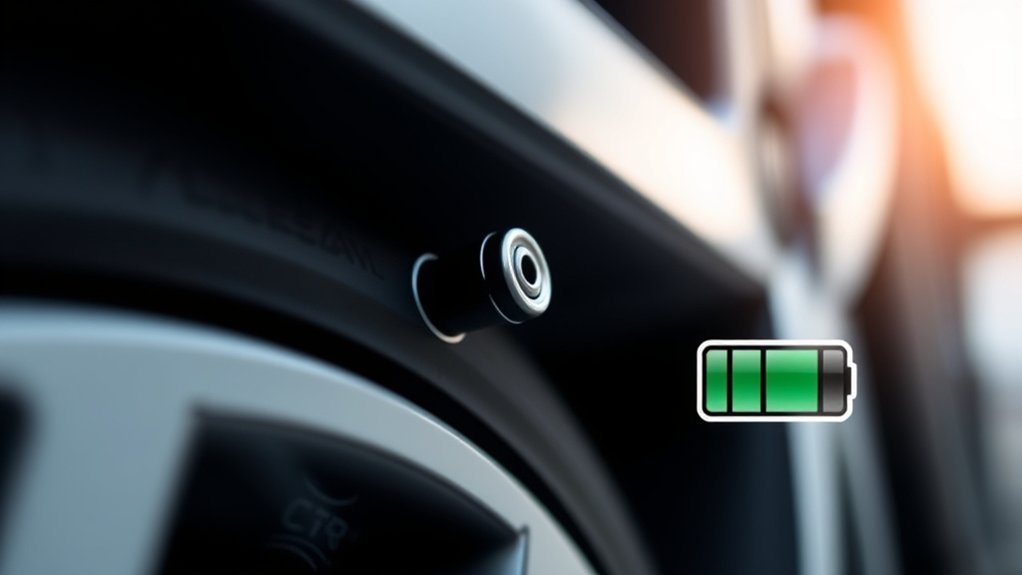
You can replace only one TPMS sensor if one sensor is damaged, has a dead battery, or fails a scan. This is the lowest-cost repair when the other sensors are newer and test well.
Replacing all sensors can make sense when:
- The vehicle still has its original sensors and is 7 to 10 years old.
- One sensor battery has died and the other sensors are the same age.
- You are already buying new tires and the tires are off the wheels.
- You want to reduce the chance of another sensor failing soon after the repair.
Do not replace all sensors automatically without diagnosis. A TPMS light can also come from low tire pressure, a relearn issue, a damaged valve stem, incompatible wheels, a spare tire sensor, or a receiver problem.
[Products Worth Considering]

This roadside assistance kit helps drivers and passengers in urgent situations after an accident or breakdown, providing practical support while waiting for help. It includes a lightweight, compact tire inflator for fast inflation of standard vehicle tires, plus reinforced jumper cable protection for safer handling. Ideal for winter weather, road trips, camping, and travel, with everything stowed neatly in a trunk bag.

【Fits for GM】Masoll TPMS sensor compatible for most GM vehicles after 2006, including but not limited to Chevy Silverado Colorado Impala Tahoe, GMC Yukon Sierra Terrain, Buick Allure Enclave Encore Envision, Cadillac ATS CTS XTS etc. Please refer to the applicable model to check if the tire sensor fits for your vehicle model and year
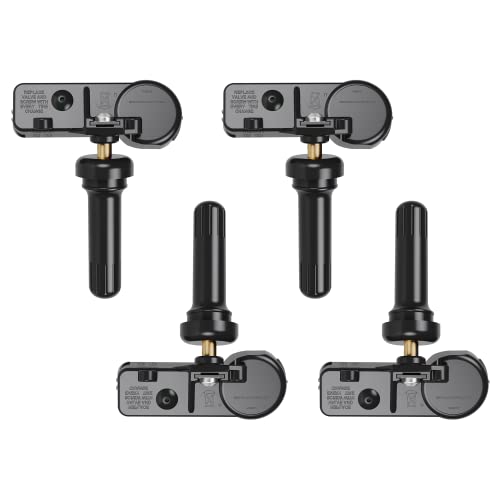
PREFECT REPLACEMENT:The tire pressure monitor system (TPMS) is 100% Brand new Compatible with most GM branded vehicles manufactured after 2006.including GMC Chevy Buick Cadillac
What Happens During TPMS Sensor Replacement?
Replacing a direct TPMS sensor usually involves more than swapping a small part. The tire often has to be removed from the wheel or partially broken down, depending on the sensor style and wheel design.
A typical service includes:
- Scanning the sensors to confirm which one failed.
- Removing the tire from the wheel or breaking the bead.
- Replacing the sensor and using the correct valve stem or service kit.
- Inflating the tire to the correct pressure.
- Programming or relearning the sensor ID if the vehicle requires it.
- Confirming the TPMS light turns off after the required drive cycle or reset.
Some aftermarket sensors must be programmed before installation. Others copy the original sensor ID. The correct method depends on your vehicle, sensor brand, and TPMS tool.
[Products Worth Considering]
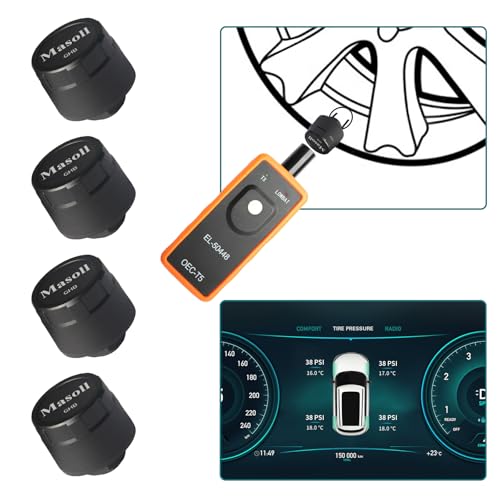
【Compatibility】Masoll TPMS sensor set of 4 is Compatible with GM branded vehicles manufactured after 2006, including Chevy Chevrolet Buick Cadillac GMC Pontiac, please scroll down to product description for complete vehicle list.

【Compatibility 】This tire pressure sensor valve stem (TPMS) are compatible with Audi, for BMW, for Toyota, for Honda, for Mazda, for Dodge, for Chevrolet, for Chevy, for Ford, for Hyundai, for Infiniti, for Chrysler, for Jaguar, for Volvo, for Jeep, for Acura, for Peugeot, for Land Rover Valve Stem.

Direct replacement - the components in this tire pressure monitoring system valve kit are designed to match the original parts required to service the TPS on specified vehicles
Simple Ways to Make Your TPMS Sensors Last Longer
You cannot recharge a sealed TPMS sensor battery, but you can reduce preventable sensor problems. Focus on protecting the sensor hardware and keeping tire pressure correct.
- Check tire pressure monthly. This prevents underinflation and reduces false assumptions about sensor failure.
- Use plastic or approved valve caps. Wrong metal caps can corrode onto some stems.
- Replace service kits during tire changes. Grommets, seals, nuts, and valve cores can wear or corrode.
- Avoid unapproved tire sealants. Some products can coat the sensor and affect readings.
- Use a qualified tire shop. TPMS sensors can break if tire equipment is positioned incorrectly.
- Relearn the system after rotation if required. This keeps wheel-location readings accurate.
Good tire care helps the whole system work better, but it will not stop a sealed battery from eventually reaching the end of its life.
The Role of TPMS Sensors in Overall Vehicle Safety
TPMS sensors support vehicle safety by warning you when tire pressure drops too low. Low tire pressure can increase heat, reduce fuel efficiency, shorten tread life, and affect handling and stopping performance.
Still, TPMS is a backup warning system, not your primary tire-maintenance plan. The safest approach is to check tire pressure monthly, inspect tread and sidewalls, and respond quickly when the light comes on.
TPMS helps warn you when pressure is significantly low, but an accurate tire gauge is still the best tool for routine tire pressure checks.
Frequently Asked Questions
How long do TPMS sensors last?
Many direct TPMS sensors last about 5 to 10 years. Around 7 years is a common planning estimate, but the actual lifespan depends on sensor design, heat, mileage, road conditions, and service history.
Can TPMS sensor batteries be replaced?
In most original direct TPMS sensors, the battery is sealed inside the sensor. When the battery dies, the normal repair is to replace the whole sensor and relearn or program it to the vehicle.
Does a solid TPMS light mean the sensor battery is dead?
Usually, no. A solid TPMS light most often means one or more tires are significantly underinflated. Check tire pressure first. A flashing light that later stays solid points more toward a TPMS malfunction.
Why does my TPMS light flash for a minute and then stay on?
That pattern usually means the TPMS has detected a malfunction. Possible causes include a dead sensor battery, damaged sensor, wrong sensor ID, incompatible wheel, relearn issue, or receiver problem.
Should I replace one TPMS sensor or all four?
Replace one sensor if only one failed and the others are newer or test well. Consider replacing all four if the sensors are original, more than 7 years old, and the tires are already being replaced.
Do all vehicles have TPMS sensor batteries?
No. Direct TPMS systems usually use battery-powered wheel sensors. Indirect TPMS systems use wheel-speed and other vehicle data, so they usually do not have a battery-powered sensor in each wheel.
Conclusion
TPMS sensors usually give you years of service, but direct sensors eventually fail when their sealed batteries wear out or the sensor hardware gets damaged. For many vehicles, 5 to 10 years is a realistic lifespan range, with about 7 years being a smart point to start watching for warning signs.
If your TPMS light is solid, check tire pressure first. If it flashes for about a minute and then stays on, have the system scanned before replacing parts. When your tires are already off the wheels and the sensors are old, replacing all sensors at once can save time and reduce repeat service visits.
Sources
- NHTSA TireWise: Tire Safety Ratings and Awareness — supports TPMS warning-light meanings, monthly tire pressure checks, and tire safety guidance.
- 49 CFR 571.138: Tire Pressure Monitoring Systems — supports federal TPMS performance and malfunction-warning requirements.
- Tire Rack: Different Types of Tire Pressure Monitoring Systems — supports direct vs. indirect TPMS explanations and wheel-sensor context.

Related Articles
Toyota Tundra Tire and Wheel Package: What to Consider Before Buying
Unlock the secrets to choosing the perfect tire and wheel package for your Toyota Tundra—essential tips await to enhance your ride.
Read More
Do Bigger Tires Void a Toyota Tundra Warranty? Magnuson-Moss Act Explained
Bigger tires might not void your Toyota Tundra warranty, but understanding the Magnuson-Moss Act is crucial—discover how to protect your investment effectively.
Read More
Toyota Tundra Tire Rack Setup: Garage Storage Ideas for Seasonal Sets
Better tire storage for your Toyota Tundra awaits—discover essential tips to maximize space and protect your seasonal sets in the garage!
Read More