
Metric vs Flotation Tire Sizing: How to Compare and Convert for Trucks
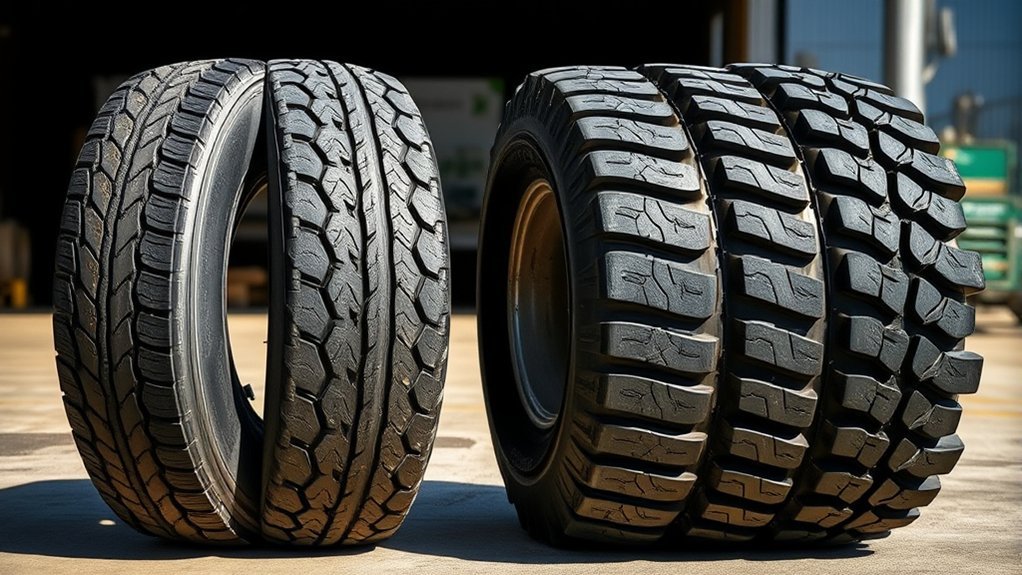
Metric and flotation tire sizes describe the same tire in two different ways. Metric sizes use millimeters and a sidewall percentage, while flotation sizes use inches for overall diameter and width. Once you know how each system works, you can compare truck tires more safely and avoid buying a size that looks close on paper but does not fit your vehicle.
Quick Answer
Metric tires list section width in millimeters, sidewall height as an aspect ratio, and rim diameter in inches. Flotation tires list overall diameter, section width, and rim diameter in inches. Conversion is possible, but it is approximate, so always confirm load rating, rim width, clearance, and the tire maker’s specs before buying.
Key Takeaways
- A metric size such as 265/70R17 means 265 mm wide, 70% aspect ratio, radial construction, and a 17-inch wheel.
- A flotation size such as 33×12.50R15 means about 33 inches tall, 12.50 inches wide, radial construction, and a 15-inch wheel.
- Conversion charts are starting points, not final fitment proof, because actual tire dimensions vary by brand, tread, load range, rim width, and inflation pressure.
- The closest metric-style comparison for a 33×12.50 tire is usually around 305–315 mm wide, not 285 mm wide.
- Before switching sizes, check your vehicle placard, owner’s manual, rim width, load index, speed rating, brake clearance, suspension clearance, and spare-tire fit.
At a Glance
| Time Required | 5–10 minutes to compare sizes; longer if you need to verify wheel and suspension clearance. |
| Difficulty | Easy for size math; moderate for real-world fitment. |
| Tools Needed | Tire sidewall, owner’s manual, driver-door tire placard, calculator, and tire manufacturer spec sheet. |
| Cost | Free to calculate; professional fitment advice may be worth it before buying oversized tires. |
What You Need to Know About Tire Sizing
Truck tire sizes usually appear in either metric format or flotation format. A metric size such as 265/70R17 tells you the tire’s width in millimeters, the sidewall height as a percentage of that width, the construction type, and the wheel diameter. A flotation size such as 33×12.50R15 tells you the tire’s nominal overall diameter, section width, construction type, and wheel diameter in inches.
Major tire manufacturers and safety groups explain tire sidewall markings the same basic way: the number group identifies size, construction, load, and speed information, while the vehicle placard and owner’s manual tell you what sizes the vehicle maker recommends. For safety, start with the size on your driver-door placard or the size approved in your owner’s manual before moving to a taller or wider tire. You can confirm the basic sidewall format with Goodyear’s tire size chart, Continental’s sidewall guide, and NHTSA’s TireWise guidance.
Warning: Do not choose a replacement tire by diameter alone. A tire that is close in height can still have the wrong load rating, speed rating, rim-width range, or clearance for your truck.
[Products Worth Considering]

This VEVOR tire bead breaker uses a slide-hammer impact and wedge tip to separate tire beads from rims quickly and efficiently without damaging hub surfaces. The long handle and sturdy steel construction help reduce user strain while providing reliable, portable tire changing for cars, trucks, and more. Ideal for home mechanics and repair shops handling multiple vehicle tire sizes.

This spare tire tool kit is designed for the 2004 to 2018 Ford F-150 to help you loosen and tighten wheel lug nuts and manage the spare tire and provided jack functions from underneath the vehicle. It includes the lug nut wrench and extension pieces plus a convenient storage carrying case for organized transport. The jack itself is not included.

Camco Trailer Aid Plus tandem tire ramp lifts your trailer for quick, safe tire changes with ample clearance from its 5 1/2-inch lift. It helps you change a flat tire without unloading cargo, making roadside and routine maintenance more efficient. The heavy-duty, waterproof and rustproof polymer design supports up to 15,000 lb and is built for easy portability and storage.
Key Differences Between Metric and Flotation Tires
The biggest difference is not that one system is automatically stronger, softer, or better. The difference is how the tire size is written. Metric sizing uses a width and sidewall percentage. Flotation sizing uses overall diameter and width in inches, which is often easier to visualize for off-road trucks.
| Metric Tires | Flotation Tires |
|---|---|
| Example: 315/70R17 | Example: 35×12.50R17 |
| Width is shown in millimeters. | Overall diameter and section width are shown in inches. |
| Sidewall height is calculated from the aspect ratio. | Sidewall height is estimated from overall diameter minus rim diameter. |
| Common on passenger, SUV, light-truck, and heavy-duty truck tires. | Common on off-road, light-truck, mud-terrain, and some agricultural-style applications. |
| Best evaluated by load index, load range, tread design, and vehicle fitment. | Best evaluated by actual measured diameter, width, load rating, tread design, and clearance. |
Flotation tires often use a wider footprint, which can help on sand, mud, snow, loose dirt, or field surfaces. In agriculture, reducing contact pressure with larger footprints, lower approved inflation pressures, duals, tracks, or flotation tires can help limit topsoil compaction when used correctly. Penn State Extension notes that tire pressure, axle load, tire size, and footprint all affect soil compaction, so flotation benefits depend on the full setup, not the tire label alone.
How to Read Flotation Tire Sizes
Flotation tire sizes are written in a simple inch-based pattern: overall diameter x section width R rim diameter. The size 33×12.50R15 breaks down like this:
- 33 = nominal overall tire diameter in inches.
- 12.50 = nominal section width in inches.
- R = radial construction.
- 15 = wheel or rim diameter in inches.
Some flotation sizes also include LT, such as 33×12.50R15LT. That means the tire is built as a light-truck tire. You may also see a load range and service description on the sidewall. Those markings matter because they tell you whether the tire can carry the required load at the proper pressure.
Tire Size Breakdown
Using 33×12.50R15 as the example, the tire is designed for a 15-inch wheel and is nominally about 33 inches tall. The estimated sidewall height is half of the difference between the overall diameter and the rim diameter:
(33 − 15) ÷ 2 = 9 inches of sidewall height
That number is useful for comparison, but it is not a final installed measurement. A tire labeled 33 inches may measure slightly shorter or taller depending on the brand, tread pattern, rim width, load, and inflation pressure.
Understanding Construction Types
The letter in the tire size tells you the tire’s construction. R means radial construction, which is the standard for most modern passenger and light-truck tires. Some specialty, agricultural, trailer, or industrial tires may use bias or diagonal construction markings instead.
Do not choose a tire only because it is radial or only because it is flotation-sized. For real-world use, compare the complete tire: load index, load range, speed rating, tread type, rim-width range, ply rating terminology, actual diameter, and the manufacturer’s intended application.
Breaking Down Metric Tire Sizes: What Do the Numbers Mean?
A metric tire size such as 265/70R17 has four main parts:
- 265 = section width in millimeters.
- 70 = aspect ratio, meaning the sidewall height is 70% of the section width.
- R = radial construction.
- 17 = wheel or rim diameter in inches.
Some truck tires include LT before the size, such as LT265/70R17. Many also include a service description after the size, such as 121/118S. The numbers are load indexes, and the letter is the speed symbol. The Tire Industry Association explains that load index and speed symbol are part of the sidewall information used to identify carrying capacity and speed capability.
To convert a metric tire size into an approximate flotation-style size, use this formula:
- Width in inches: section width ÷ 25.4
- Sidewall height in inches: (section width × aspect ratio ÷ 100) ÷ 25.4
- Overall diameter in inches: rim diameter + (2 × sidewall height)
Example for 265/70R17:
- Width: 265 ÷ 25.4 = 10.4 inches
- Sidewall: (265 × 0.70) ÷ 25.4 = 7.3 inches
- Overall diameter: 17 + (2 × 7.3) = 31.6 inches
So, a 265/70R17 is roughly a 32×10.50R17 when written in flotation-style terms. The closest real tire size depends on what manufacturers actually sell and what your truck can safely fit.
Flotation Tire Conversion: A Simple Guide
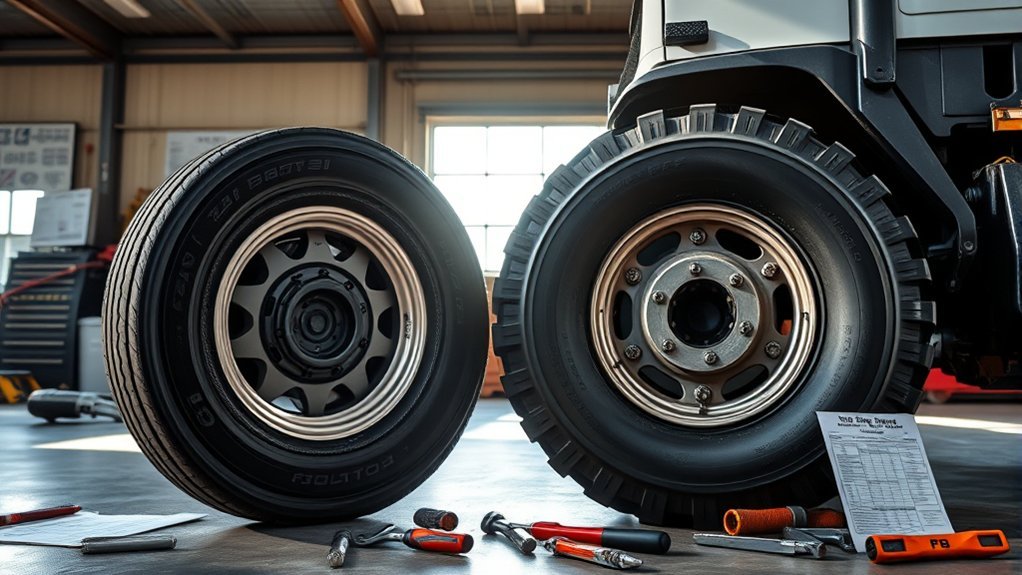
Conversion is best used as a comparison tool, not a buying decision by itself. Use the math to narrow your options, then verify the specific tire model’s published dimensions.
Common Conversion Sizes
| Original Size | Approximate Converted Size | Important Note |
|---|---|---|
| 265/70R17 | About 32×10.50R17 | Common stock-size truck comparison. |
| 285/70R17 | About 33×11.50R17 | Often compared with 33-inch off-road sizes. |
| 315/70R17 | About 34.4×12.40R17 | Often rounded toward 35×12.50R17, but check actual specs. |
| 33×12.50R15 | Roughly around 305–315 mm width, depending on available aspect ratio | Not a good match for 285/75R15; 285 mm is much narrower. |
| 35×12.50R17 | Often compared with 315/70R17 | Actual height may be slightly under or over 35 inches. |
Note: A flotation-to-metric conversion rarely lands on a perfect factory size. Choose the closest available tire only after checking the tire maker’s measured diameter, section width, tread width, approved rim width, and load rating.
Measuring Flotation Tires
If you already have the tire, measure it only as a rough check. A mounted, inflated, loaded, or worn tire can measure differently from a new tire on the manufacturer’s measuring rim. For buying decisions, the manufacturer’s spec sheet is more reliable than a tape measure on a used tire.
When comparing flotation and metric sizes, look at these dimensions:
- Overall diameter: affects ride height, gearing, speedometer reading, and wheel-well clearance.
- Section width: affects fender clearance, suspension clearance, steering clearance, and wheel offset needs.
- Rim diameter: must match your wheel exactly.
- Approved rim-width range: must match the wheel width you plan to use.
- Load and speed rating: must meet or exceed what your truck requires.
Why Choosing the Right Tire Matters for Your Truck
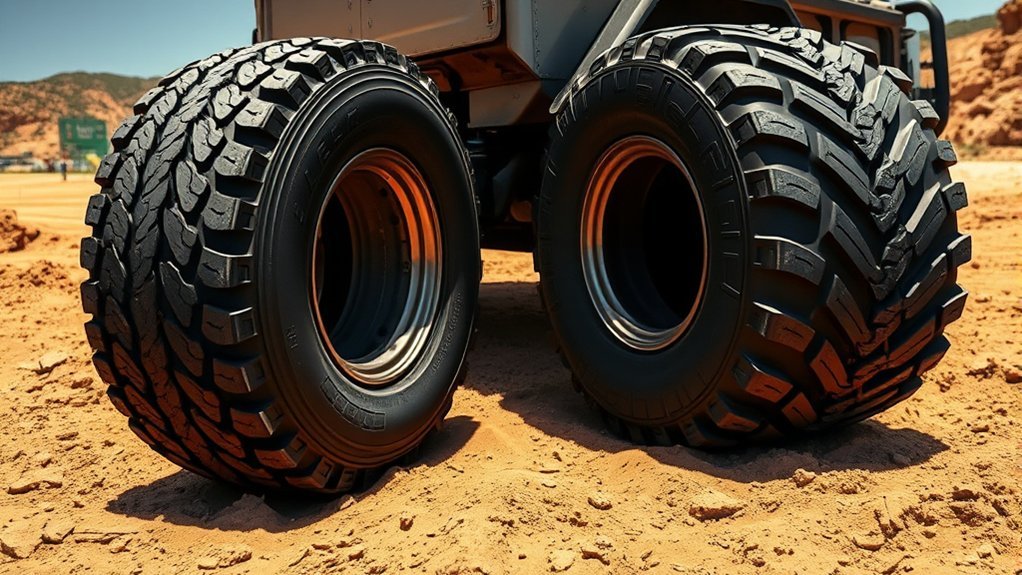
The right tire size affects more than appearance. It can change steering feel, braking behavior, towing stability, ride comfort, axle gearing, speedometer accuracy, fuel use, and how much stress the tire carries under load.
Before moving from a metric size to a flotation size, check:
- Vehicle placard and owner’s manual: confirm the manufacturer-approved tire size and pressure guidance.
- Load index and load range: make sure the tire can carry your truck, passengers, cargo, and trailer tongue weight where applicable.
- Speed rating: do not drop below the rating required for your vehicle and use.
- Wheel width: confirm the tire’s approved rim-width range.
- Clearance: check fenders, mud flaps, control arms, sway bars, brake lines, and full-lock steering clearance.
- Spare tire fit: a larger tire may not fit in the factory spare location.
- TPMS and inflation: use correct cold inflation pressure for the tire and load, not guesswork.
NHTSA advises using the original tire size or another size recommended by the vehicle manufacturer. If you are changing diameter or width, a tire professional can help confirm that the new size is safe for your wheels, load, and vehicle systems.
[Products Worth Considering]

Universal magnetic jack pad with aluminum grooved design to protect vehicle pinch welds during lifting. Durable nylon pad inserts are upgraded and secured with screws to resist damage and keep in place. Designed to fit most single vehicle pinpoint welds for safer, stable jacking when changing tires, repairs, or performing oil changes.

Mount your spare tire directly to the inside wall of an enclosed trailer or garage to save space and keep your tire secure. This wall-mount spare tire carrier is designed for universal trailer tire fit and includes a fixed plate and chute for convenient screw replacement. Nylon insert hex lock nuts help prevent the tire from falling off, and wing hardware enables faster load and unload during maintenance.
Debunking Myths: What You Need to Know About Flotation Tires
Myth 1: Flotation tires are always better off-road. A wider footprint can help in sand, mud, snow, and soft soil, but tread pattern, tire compound, sidewall strength, weight, pressure, and vehicle setup matter too.
Myth 2: Metric tires are always highway tires. Many all-terrain and mud-terrain tires use metric sizing. The size format does not decide the tire’s job; the tire design does.
Myth 3: A 33-inch tire always measures exactly 33 inches. Tire sizes are nominal. Published measured diameter can differ by brand, tread pattern, load range, and measuring rim.
Myth 4: Load range C, D, or E alone tells the whole load capacity. Load range is useful, but the tire’s load index, max load marking, inflation requirements, and vehicle placard are what you need to confirm safe carrying capacity.
Myth 5: One conversion chart is enough. Charts help you compare, but the final answer comes from the tire manufacturer’s specs and your vehicle’s fitment limits.
Comparing Performance: Flotation Tires vs. Metric Tires
Performance depends on the tire model, not just the sizing system. Still, the format can hint at how the tire is commonly used.
- Highway driving: Many metric truck tires offer predictable handling, broad size availability, and easy replacement options.
- Off-road driving: Flotation sizes are popular when drivers want a taller, wider tire that is easy to visualize, such as 33-inch or 35-inch fitments.
- Towing and hauling: Use load index, load range, and inflation tables instead of relying on size format alone.
- Soft surfaces: A wider approved footprint can help the tire ride on top of loose material instead of digging in, but too much width can hurt winter slush performance or cause clearance problems.
- Ride comfort: Sidewall height, load range, inflation pressure, casing design, and wheel diameter all affect ride quality.
The safest tire conversion is not the one that looks closest in a chart; it is the one that matches your truck’s load needs, wheel specs, clearance, and manufacturer guidance.
Tips for Selecting the Best Tires for Your Needs
Use this quick process when comparing metric and flotation tire sizes:
- Start with your current tire size. Read the full sidewall, including LT/P prefix, load index, speed rating, and load range.
- Convert the dimensions. Use the metric formula or flotation breakdown to estimate overall diameter and width.
- Compare real specs. Check the manufacturer’s measured diameter, section width, tread width, and recommended rim width.
- Check the vehicle. Confirm fender, suspension, brake, steering, and spare-tire clearance.
- Match the load. Make sure the tire’s load capacity is suitable for your truck and how you use it.
- Choose the tread for the terrain. Highway, all-terrain, mud-terrain, winter, and agricultural-style tires solve different problems.
- Recheck pressure after installation. Use correct cold inflation pressure based on the vehicle and load, not just the number molded as maximum pressure on the sidewall.
Pro Tip: If you are choosing between two close sizes, pick the one with confirmed manufacturer specs and safer clearance instead of the one that simply rounds to the more popular flotation number.
Frequently Asked Questions
What is the difference between metric and flotation tire size?
Metric tire sizes show width in millimeters, sidewall height as an aspect ratio, construction, and rim diameter. Flotation sizes show nominal overall diameter, section width, construction, and rim diameter in inches. Both describe tire dimensions, but they use different starting points.
How do you convert metric tire sizes to flotation sizes?
Divide the metric width by 25.4 to get width in inches. Then multiply width by the aspect ratio to get sidewall height, convert it to inches, double it, and add the rim diameter. For example, 265/70R17 is about 31.6 inches tall and 10.4 inches wide, so it is roughly comparable to a 32×10.50R17.
Is 285/75R15 the same as 33×12.50R15?
No. A 33×12.50R15 is nominally 33 inches tall and 12.5 inches wide. A 285/75R15 is about 31.8 inches tall and 11.2 inches wide by standard tire math. It is noticeably narrower and shorter, so it should not be treated as the direct equivalent.
Are flotation tires better for off-road driving?
They can be better on soft surfaces because many flotation tires are wider and easier to compare by overall diameter. However, tread pattern, compound, sidewall strength, tire pressure, vehicle weight, and clearance matter just as much as the flotation size label.
Can I replace metric tires with flotation tires?
Yes, but only if the flotation tire fits your wheels, has enough load and speed capacity, clears the suspension and body, and is appropriate for your vehicle. Always check the tire placard, owner’s manual, and manufacturer specs before making the switch.
Why do tire conversion charts sometimes disagree?
Charts may round to different common sizes, and tire labels are nominal. Two tires with the same listed size can have different measured diameters and widths. Manufacturer spec sheets are the best source for final comparison.
Conclusion
Metric and flotation tire sizing are easier to compare once you understand what each number means. Metric sizes use millimeters and aspect ratio; flotation sizes use inches for overall diameter and section width. The safest approach is to calculate the approximate match, compare real manufacturer specs, and verify load rating, rim width, speed rating, inflation guidance, and vehicle clearance before buying. A good tire choice should fit your truck, carry the load safely, and match the terrain you actually drive.
Sources
- Goodyear Tire Size Chart — supports metric and high-flotation tire size format explanations.
- Continental: How To Read Your Tire Sidewall — supports aspect ratio, construction, rim diameter, load index, and speed rating explanations.
- Tire Industry Association: Reading a Tire Sidewall — supports sidewall marking, load index, and speed symbol guidance.
- NHTSA TireWise — supports tire safety, tire ratings, and replacement-size caution.
- NHTSA Tire Safety Brochure — supports using the vehicle placard, owner’s manual, or recommended replacement size.
- Penn State Extension: Avoiding Soil Compaction — supports flotation, tire pressure, footprint, and soil-compaction context.

Related Articles
Toyota Tundra Tire and Wheel Package: What to Consider Before Buying
Unlock the secrets to choosing the perfect tire and wheel package for your Toyota Tundra—essential tips await to enhance your ride.
Read More
Do Bigger Tires Void a Toyota Tundra Warranty? Magnuson-Moss Act Explained
Bigger tires might not void your Toyota Tundra warranty, but understanding the Magnuson-Moss Act is crucial—discover how to protect your investment effectively.
Read More
Toyota Tundra Tire Rack Setup: Garage Storage Ideas for Seasonal Sets
Better tire storage for your Toyota Tundra awaits—discover essential tips to maximize space and protect your seasonal sets in the garage!
Read More