
Toyota Tundra 1st Gen (2000–2006) Tire Size Chart: Every Trim Covered
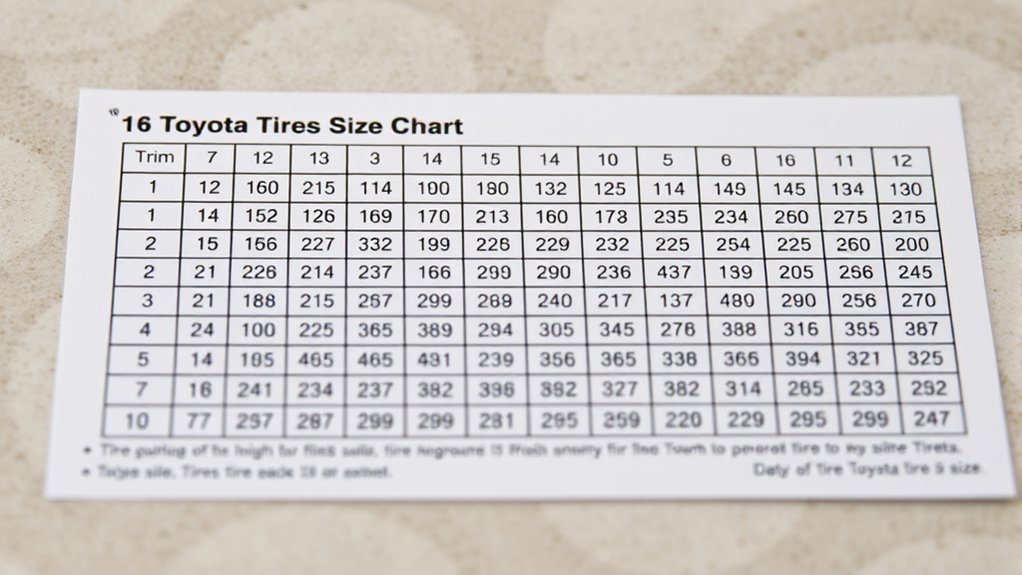
For your Toyota Tundra 1st Gen (2000–2006), you’ll find two main stock tire sizes: 245/70R16 and 265/65R17, varying by trim level. The base models stick to the 245 size, while higher trims roll on the 265. It’s essential to take into account load capacity, ride quality, and the right tire pressure—35 psi for 245s and 30 psi for 265s. Want to optimize your ride even further? There’s more to explore about tire selection and upgrades.
Understanding Tire Specifications for the Tundra 1st Gen
When you’re looking to understand tire specifications for the Toyota Tundra 1st Gen (2000–2006), it’s essential to grasp the meaning behind tire sizes and their implications for performance. The stock sizes, like 245/70R16 and 265/65R17, indicate sidewall construction and aspect ratios that affect your ride quality. The 70% and 65% ratios show how the sidewall height relates to tire width, influencing handling and comfort.
If you’re considering upgrades, tires such as 275/70R16 can fit well with a leveling kit, enhancing your Tundra’s stance without major modifications. However, keep tire load in mind; larger tires might alter your vehicle’s load capacity. Stock tire pressure recommendations, typically between 30-35 psi, play a significant role in optimizing performance and safety. Understanding these specifications will empower you to make informed decisions for your Tundra’s performance and aesthetics.
Decoding Tire Size Numbers for Your Tundra
Decoding tire size numbers for your Toyota Tundra can seem challenging, but understanding this essential aspect of vehicle maintenance is key to enhancing performance. Tire sizes are typically formatted like 265/70R16, where 265 indicates the tire width in millimeters, 70 is the aspect ratio reflecting the sidewall height as a percentage of the width, and 16 denotes the rim diameter in inches.
Here’s a quick reference table:
| Component | Description | Impact on Performance |
|---|---|---|
| Tire Width | 265 mm (example) | Wider tires enhance traction |
| Aspect Ratio | 70% of tire width | Affects ride comfort and handling |
| Radial Construction | “R” indicates radial design | Provides superior traction performance |
Understanding these elements helps you select the right tire, ensuring ideal wheel backspacing to prevent rubbing while maintaining stability and performance.
Tundra Stock Tire Sizes by Trim (2000–2006)
Understanding tire sizes is essential for optimizing your Toyota Tundra’s performance, especially when considering the stock options available across different trims from 2000 to 2006. The tire size variations reflect the trim differences effectively, with base models featuring 245/70R16 tires, while higher trims come with 265/65R17 options. Each stock tire serves a purpose, with the 245/70R16 supporting a load index of 106, accommodating up to 950 kg (2094 lbs), and the 265/65R17 rated at 110, supporting 1060 kg (2337 lbs).
Maintaining the correct tire pressure is vital—35 psi for the 245/70R16 and 30 psi for the 265/65R17. The rim sizes also differ: 7Jx16 for the former and 7.5Jx17 for the latter. Remember, all trims share a common bolt pattern of 6×5.5 (6×139.7 mm), ensuring compatibility across the lineup.
Choosing the Best Tire for Your Tundra’s Driving Conditions
When it comes to choosing the best tire for your Tundra, consider the type of terrain you’ll be tackling and the weather conditions you often face. If you’re hitting off-road trails, a wider tire can boost traction, while a highway-focused tire can improve efficiency and handling. Balancing these factors will guarantee you get the most out of your Tundra, no matter where the road takes you.
Tire Type Selection
Selecting the right tires for your Toyota Tundra can considerably impact your driving experience, especially as different conditions demand different tire types. Understanding tread pattern importance can help you choose wisely, so consider your typical driving environments.
| Tire Type | Ideal Conditions | Longevity Tips |
|---|---|---|
| All-Terrain | Mixed on/off-road | Maintain proper pressure |
| Mud-Terrain | Off-road/mud | Regularly inspect tread wear |
| Highway | On-road/smooth | Rotate tires regularly |
For off-road challenges, go for tires with aggressive tread patterns for enhanced traction. If you’re upgrading tire sizes, keep within a 3% diameter increase to avoid rubbing. Always verify your tires can handle the load ratings needed for safety.
Weather Considerations
Driving your Toyota Tundra in varying weather conditions requires careful consideration of tire choices to secure peak performance and safety. All-terrain tires are ideal for versatile performance, offering adequate grip on wet or slippery surfaces, especially in rain or snow. If you often venture off-road, mud-terrain tires provide superior traction and durability, essential for muddy conditions. Pay attention to tread patterns—deeper treads enhance traction in snow and mud, while shallower patterns improve handling on dry pavement. Don’t forget to maintain proper tire pressure, as underinflated tires can compromise handling and tire longevity factors. Finally, consider seasonal tire changes to ensure you’re prepared for each unique driving condition your Tundra may encounter.
Driving Terrain Factors
Choosing the right tire for your Toyota Tundra depends heavily on the terrain you plan to tackle. The right tire can enhance your vehicle’s off-road capabilities and overall tire performance. Here are key factors to take into account:
- Terrain Type: For rocky or muddy conditions, opt for larger tires like 275/70R17 for better traction.
- Weather Conditions: In snowy or icy conditions, all-terrain tires in the 265mm to 285mm range offer superior grip.
- Load Rating: Verify your tire choice can handle the Tundra’s weight, especially if you’re upgrading for heavy-duty applications.
Guidelines for Upgrading Your Tires
Upgrading the tires on your Toyota Tundra can greatly enhance its performance and aesthetic appeal, but it’s crucial to follow some key guidelines. First, aim for a maximum overall tire height increase of 3% to avoid rubbing and maintain ideal vehicle function. For stock 16″ rims, the largest tire size is 275/70 R16, while 17″ rims can accommodate 265/70 R17 and 275/65 R17 without modifications. If you’re considering a leveling kit, larger options like 265/75 R16 for 16″ rims become available.
Always check tire pressure to guarantee safety and performance. Additionally, selecting the right tread patterns can substantially affect traction and handling. When opting for aftermarket wheels, pay attention to backspacing and offset to prevent suspension interference. By following these guidelines, you’ll not only enjoy a smoother ride but also elevate your Tundra’s appearance and capability.
Avoiding Rubbing Issues With Larger Tires
When you decide to enhance your Toyota Tundra with larger tires, understanding how to avoid rubbing issues is vital for maintaining a smooth ride. Here are some effective rubbing prevention techniques to keep in mind:
- Tire Width Considerations: Stick to a maximum width of 275mm and limit height increases to 3% to prevent rubbing against your vehicle’s frame or fender liners.
- Upgrade Rims: Consider upgrading to 17″ rims after installing a leveling kit. This gives you better clearance, especially when using wider tires.
- Check Backspacing and Offset: Verify your aftermarket wheels have compatible backspacing and offset. Incorrect specifications can worsen rubbing against suspension components.
Regularly check for signs of rubbing during full steering lock, particularly with larger tires like 285/75 R16. By following these tips, you can enjoy your Tundra’s enhanced capabilities without compromising comfort.
Recommended Tire Brands for the Tundra 1st Gen
When it comes to selecting tires for your 1st Gen Tundra, opting for reliable brands like Nitto, Michelin, Goodyear, and BFGoodrich can greatly enhance your driving experience. You’ll find all-terrain options such as the Nitto Terra Grappler and performance tires like the Michelin LTX A/T, both designed to tackle diverse conditions. Remember, choosing the right tire not only boosts performance but also guarantees safety and comfort on your journeys.
Top Tire Brands
Choosing the right tires for your 1st Gen Toyota Tundra (2000–2006) can greatly enhance both performance and safety on the road. Here are some top tire brands to take into account:
- Michelin LTX M/S2: Offers excellent all-season traction and durability, making it ideal for varied driving conditions.
- Goodyear Wrangler SR-A: Known for its improved grip and handling, this tire is perfect for light off-roading adventures.
- Bridgestone Dueler H/L Alenza Plus: Provides a quiet ride and enhanced fuel efficiency while maintaining good traction.
All-Terrain Options
For those seeking versatility in their 1st Gen Toyota Tundra, all-terrain tires can greatly enhance your driving experience. Recommended sizes like 275/70 R16 for 16” rims and 265/70 R17 or 275/65 R17 for 17” rims guarantee superior performance without lifting your ride. Brands like NITTO, BFGoodrich, and Goodyear stand out for their durability and impressive off-road capabilities. Choosing tires with the right tread patterns is essential; you’ll want a design that balances on-road comfort with off-road traction. If you’re considering larger tires, up to 285/75 R16 on 16” rims is possible with a leveling kit. Remember to monitor tire pressure, typically around 30-35 psi, to maintain peak performance and traction on any terrain.
Performance Tires Available
If you’re aiming to boost your 1st Gen Toyota Tundra’s performance, selecting the right tires is essential. Quality performance tires not only enhance grip but also help manage tire wear patterns, giving you a smoother driving experience. Here are three top brands you should consider:
- NITTO – Known for the Mud Grappler and Ridge Grappler, these tires offer aggressive tread for excellent traction across diverse terrains.
- BFGoodrich – The All-Terrain T/A KO2 provides a perfect blend of on-road comfort and off-road capability.
- Goodyear – Renowned for durability, their tires support your Tundra’s weight while providing remarkable performance tire benefits.
Choosing the right tire will transform your driving experience, ensuring you get the most out of your Tundra.
Keeping Your New Tires in Top Shape
While it might seem simple, keeping your new tires in top shape is crucial for both safety and performance. Start with regular tire pressure checks, confirming they’re within the recommended 30-35 psi range. This simple tire maintenance tip can enhance fuel efficiency and grip on the road. Rotate your tires every 5,000 to 7,500 miles to promote even wear and extend their lifespan.
Don’t forget to inspect tread depth. If it dips to 2/32 inches or less, it’s time for a replacement to maintain traction. Additionally, keeping your tires aligned and balanced is critical; check alignment every six months to prevent uneven wear and improve handling. Finally, clean your tires and rims regularly to remove debris and brake dust, which can lead to deterioration. By embracing these tire care essentials, you’ll guarantee a smoother, safer ride for years to come.
Frequently Asked Questions
What Is the Load Capacity for Tundra 1st Gen Tires?
The load capacity for your Tundra’s tires varies by size and load ratings, typically ranging from 1,500 to 3,000 pounds. Confirm tire compatibility to maximize performance and safety in your driving experience.
Can I Use Winter Tires on My Tundra?
Yes, you can use winter tires on your Tundra. They enhance tire performance during winter driving, giving you confidence on icy roads. Just make sure they’re the right size for your truck’s specifications. Stay safe out there!
How Often Should I Rotate My Tires?
You should rotate your tires every 5,000 to 7,500 miles. This tire maintenance tip helps even out wear. Keep an eye on tire wear indicators to guarantee your safety and extend tire life effectively.
What Tire Pressure Is Recommended for the Tundra?
For your Tundra, you’ll want to keep tire pressure around 30-35 psi. Regularly check it, like a watchful guardian, and use tire maintenance tips to guarantee longevity. Tire pressure monitoring helps keep you rolling smoothly!
Are There Any Tire Warranty Options Available?
Yes, there are tire warranty options available. When considering tire upgrade options, remember to check the warranty details. Regular tire maintenance tips can also enhance longevity and performance, ensuring you maximize your investment.
Conclusion
To sum up, understanding your Toyota Tundra’s tire specifications isn’t just about numbers—it’s key to enhancing your driving experience. You might think stock tires are good enough, but the right upgrades can greatly improve performance and safety. Whether you’re off-roading or cruising the highway, choosing the right tire makes all the difference. Don’t overlook this essential aspect of your truck; invest in quality tires, and you’ll see the benefits in comfort and handling right away.

Related Articles
Toyota Tundra 3rd Gen (2022–2025) Tire Size Chart: SR to Capstone
A comprehensive tire size chart for the Toyota Tundra 3rd Gen reveals essential options from SR to Capstone—discover which tires best suit your driving needs!
Read More
Toyota Tundra 2nd Gen (2007–2021) Tire Size Chart: Factory Specs by Trim
Perfect your Toyota Tundra 2nd Gen's performance with our tire size chart; discover the best specs for each trim and unlock peak potential!
Read More
Toyota Tundra Tire Size by Year and Trim: Complete Reference Chart
Check out our comprehensive guide to Toyota Tundra tire sizes by year and trim—discover the perfect fit for your truck today!
Read More