
How to Recycle or Donate Old 4Runner Tires Responsibly
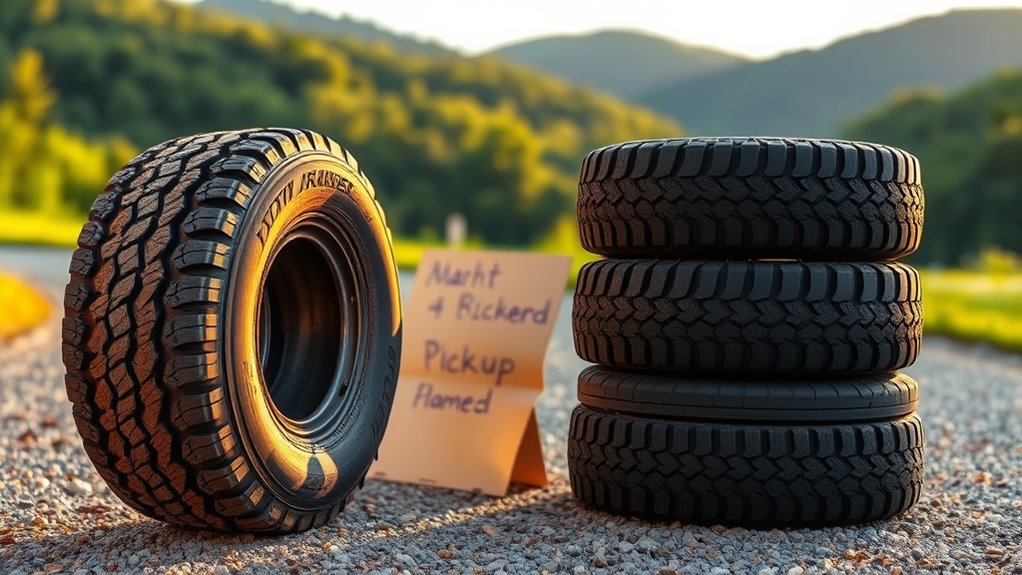
Old Toyota 4Runner tires are usually easy to dispose of once you know which local facility accepts passenger or light-truck tires. The simplest option is to leave them with the retailer installing your replacements. You can also use a county collection event, transfer station, permitted recycler, or approved landfill that handles tires.
Last updated: July 17, 2026
Quick Answer
Ask the shop installing your new 4Runner tires whether its quoted price includes disposal. Otherwise, contact your city, county, transfer station, or licensed tire recycler. Confirm the fee, quantity limit, rim policy, appointment requirements, and proof of residency before loading the tires. Free collection events may be available.
Key Takeaways
- A normal 4Runner tire usually qualifies as a passenger or light-truck tire and does not require an SUV-specific recycler.
- Retailers, local recycling facilities, transfer stations, and municipal collection events are the most practical disposal options.
- Free disposal is not guaranteed. Ask about per-tire charges before authorizing a tire installation or visiting a facility.
- Confirm whether the facility accepts tires on rims, oversized tires, mud-terrain tires, and your total quantity.
- Never burn tires, abandon them, or place them in normal curbside recycling unless your local program expressly allows it.
At a Glance
| Time Required | About 10–20 minutes to verify a facility, plus travel and unloading time |
| Difficulty | Easy for a household set of four tires |
| Tools Needed | Work gloves, closed-toe shoes, a tarp or cargo liner, and suitable tie-downs |
| Cost | May be free at an approved event or included with installation; otherwise, local per-tire fees vary |
Warning: Do not burn, bury, abandon, or secretly leave tires behind a business. Tire dumping can violate local law, create fire hazards, and leave standing water where mosquitoes can lay eggs.
Check Local Laws First: Tire Disposal Rules by State
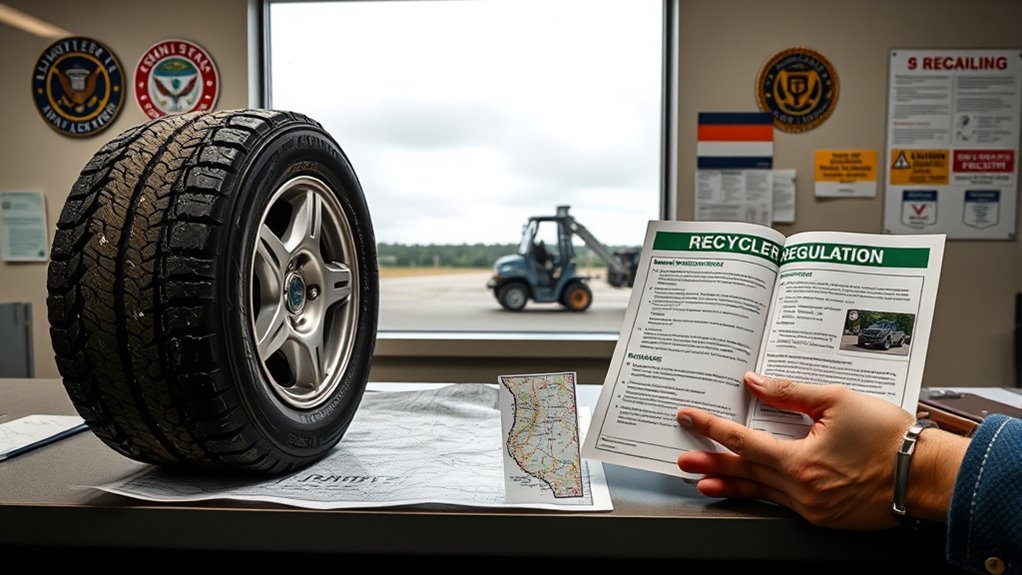
Tire-disposal rules differ by state, county, city, and facility. Some areas restrict whole tires from landfills, regulate larger loads, or require commercial haulers to register. Your household set of four tires may qualify for a simple drop-off, but you should still confirm the receiving facility’s rules.
The U.S. Environmental Protection Agency recommends checking tire retailers, local recycling facilities, and community collection events. The agency also warns against abandoning tires because piles can attract pests and catch fire.
State examples show why you should not assume one national rule:
- California: CalRecycle regulates waste-tire handling and provides an official tire-management and recycler search.
- Texas: The state advises residents to check local bulky-waste events or permitted facilities and to confirm whether a landfill accepts tires before arriving.
- Oregon: Whole tires are generally restricted from ordinary landfill disposal, while transfer stations and tire dealers may accept them through separate recycling arrangements.
[Products Worth Considering]

Upgrade your wheelbarrow, garden wagon, hand truck, or trolley with solid flat-free 13 inch replacement tires designed to avoid punctures and eliminate inflation time. Built with durable polyurethane and thickened steel for impact resistance and smooth rotation, the serrated tread improves traction on wet or slippery surfaces. Includes spacers and pins for easier installation and a universal 5/8 inch axle bore hole for a stable fit.
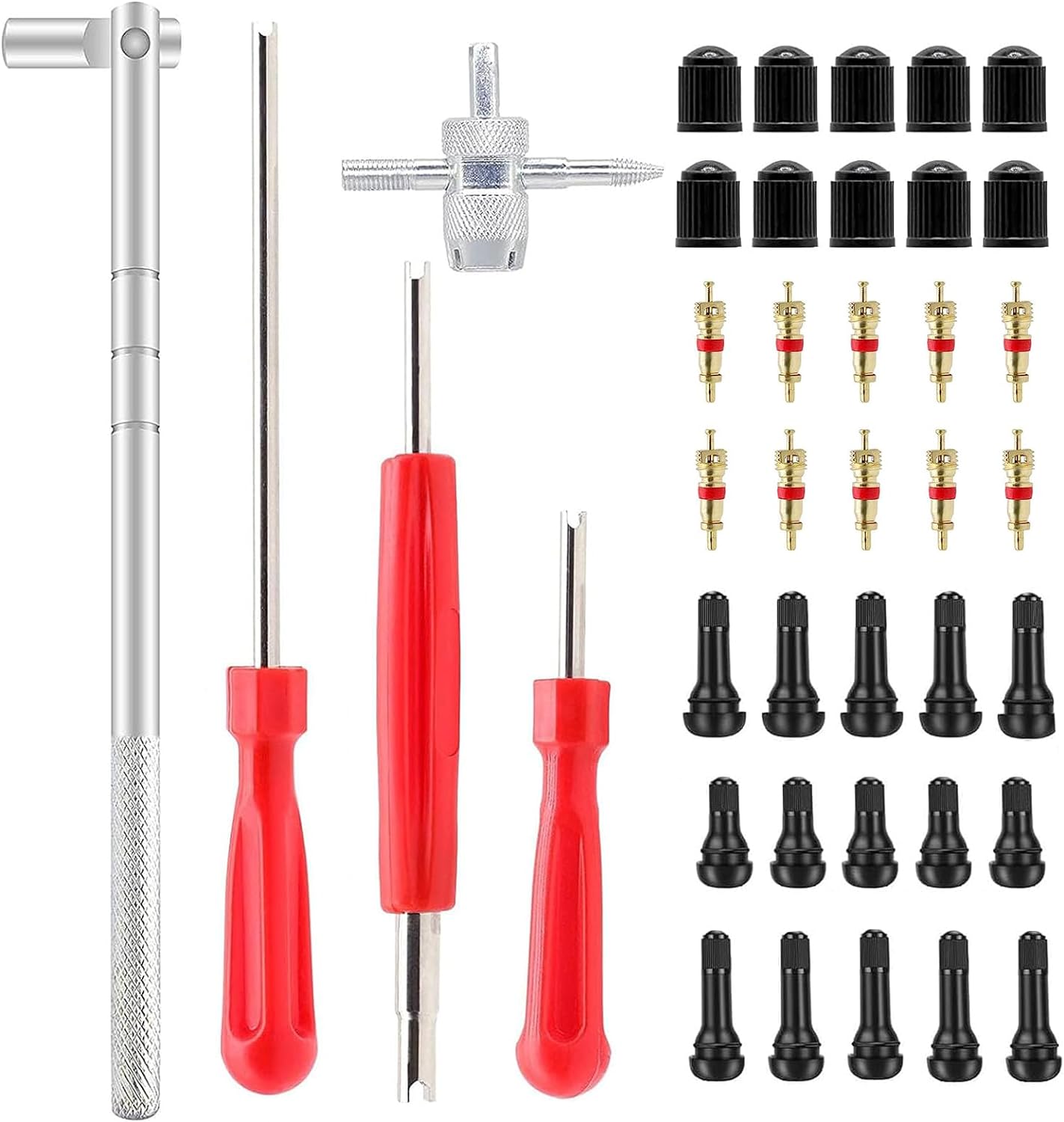
This ZHSMS valve stem puller and installer tool set makes it easy to remove and install tire valve stems without damaging wheels or valves. It uses a leverage design to save effort and includes valve stem tools plus removable valve core functionality for quick tire repairs. Compatible with tubeless tires for passenger cars, motorcycles, ATVs, off-road vehicles, and trucks.

Keep your tires performing with these valve core removal tools designed to quickly disassemble and reinstall standard valve cores. The compact, portable design makes it easy to carry for bicycle, motorcycle, car, or truck repairs. Durable stainless steel construction helps you handle routine tire maintenance with less hassle.
Questions to Ask Before You Drive
Call or check the official facility page and ask:
- Do you accept passenger or light-truck tires from a Toyota 4Runner?
- What is the household quantity limit?
- Do the tires need to be removed from their wheels or rims?
- Do you accept oversized, mud-terrain, or LT-rated tires?
- Is an appointment required?
- Do municipal events require proof of local residency?
- What is the current fee per tire?
- Which payment methods are accepted?
- Will I receive a disposal or recycling receipt?
Note: A tire can be considered waste even when it still looks usable. Do not sell or donate a tire with exposed cords, serious cracking, sidewall damage, internal damage, an unsafe repair, or insufficient tread.
Load and Transport the Tires Safely
Wear gloves and place a tarp or cargo liner beneath the tires. Keep loose dirt and standing water out of the vehicle. Secure the tires so they cannot roll, shift, block your view, strike a passenger, or fall from a truck bed or trailer.
Keep your load within the vehicle’s cargo and axle limits. A set mounted on wheels weighs considerably more than bare tires, so use safe lifting technique or ask for help.
Tire Shop Disposal: Ask Before Buying Replacement Tires
A tire retailer is often the easiest option when you are replacing all four tires. Many shops already work with registered haulers or recycling processors. However, the shop may charge a disposal fee, environmental fee, or recycling fee for each tire.
Ask whether the quoted installed price includes:
- Removal of the old tires
- Disposal or recycling
- New valve stems or TPMS service
- Mounting and balancing
- Any state-mandated tire fees
Comparing the complete installed price is more useful than focusing on whether one individual fee is described as free.
Timing Your Request
Ask about old-tire disposal before approving the installation. This gives the shop time to confirm whether it accepts your tire size and whether a fee applies.
If you bought the new tires online, contact the installer in advance. Some installers accept only tires removed during a paid installation, while others allow separate household drop-offs.
Asking About Four-Tire Pricing
A shop may price disposal per tire or include it in a four-tire installation package. You can politely ask whether all four old tires are included in the written total, but do not assume that bringing more tires creates automatic bargaining leverage.
Pro Tip: Ask for an out-the-door tire quote that separates installation, balancing, disposal, taxes, and mandatory state fees. This makes competing offers much easier to compare.
Building a Shop Relationship
A reliable local shop can help you manage future rotations, repairs, replacements, and disposal. Keep your invoice or recycling receipt, especially if your state requires proof that tires were handled through an approved route.
Policies can change, so confirm the current fee each time instead of relying on a previous visit or an old forum post.
Do 4Runner Tires Need a Specialized Recycler?
Most Toyota 4Runner tires do not need a facility dedicated to SUVs. Standard highway, all-terrain, mud-terrain, passenger, and light-truck tires are commonly handled through the same local tire-collection system.
The recycler is more likely to ask about the tire’s size and construction than the vehicle it came from. Unusual categories can include:
- Very large off-highway or earthmover tires
- Solid industrial tires
- Foam-filled tires
- Agricultural tires
- Tires still mounted on wheels
- Tires contaminated with oil, chemicals, concrete, or excessive debris
How Processors Handle SUV Tires
After collection, tires may be sorted for lawful reuse, retreading, material recovery, processing, or another approved end market. Depending on the processor and local market, end-of-life tires may become:
- Ground rubber for manufactured products or rubber-modified asphalt
- Tire-derived aggregate for approved civil-engineering uses
- Recovered steel from tire reinforcement
- Tire-derived fuel at authorized industrial facilities
- Feedstock for other permitted processing technologies
You normally cannot choose the exact final product made from your four tires. Your responsibility is to deliver them to a legitimate retailer, collection program, hauler, or receiving facility.
When a Special Facility May Be Needed
Call ahead if your 4Runner uses unusually large tires, beadlock-style wheels, internal balancing media, foam filling, or a size outside the facility’s listed passenger and light-truck range.
A municipal event designed for ordinary household tires may reject commercial quantities, tires on rims, or non-highway tires. The event flyer or official waste-department page should list these restrictions.
Off-Road and Mud-Terrain Tires
Aggressive tread and reinforced sidewalls do not automatically prevent recycling. Most legal highway mud-terrain and all-terrain tires can follow the same disposal route as other light-truck tires if the facility accepts their diameter and weight.
Retreading is not guaranteed. A retreader must inspect the casing, and many passenger or consumer SUV sizes have limited local retreading demand. Tires with serious sidewall damage, exposed reinforcement, failed repairs, or structural defects should go directly into an approved waste-tire stream.
Free City Programs: Finding Municipal Tire Collection
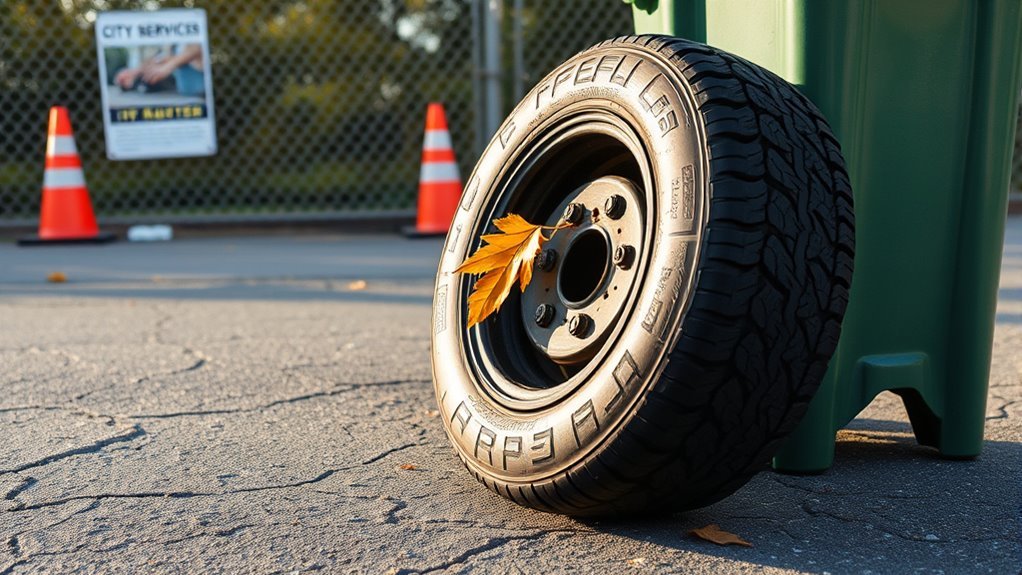
Many cities and counties hold tire-amnesty days, neighborhood cleanup events, or bulky-waste collection programs. These may offer the best chance of disposing of a household set without an additional charge.
Search your official city or county website for terms such as:
- Waste tire collection
- Tire amnesty event
- Household tire recycling
- Bulky-waste event
- Transfer station tire disposal
- Public works tire drop-off
Review the full event notice. Common conditions include:
- A limit on tires per household or vehicle
- Proof of residency
- No tires from businesses
- No rims or wheels
- No oversized or heavy-equipment tires
- Specific arrival times or appointments
- A requirement that tires be reasonably clean
California’s waste-tire grant programs help local governments conduct date-specific public collection events. Texas also directs residents to local bulky-waste events and permitted disposal facilities. Availability depends on the city, county, funding cycle, and event calendar.
If tires were dumped on your property by someone else, contact your city, county, code-enforcement office, or state environmental agency before moving a large quantity. Special reporting or cleanup assistance may be available.
DIY 4Runner Tire Projects: Planters, Furniture, and More
Reusing one or two tires can delay disposal, but a DIY project does not make damaged rubber safe for driving or remove your responsibility to prevent water, pests, sharp steel exposure, and structural failure.
[Products Worth Considering]

Upgrade your ride with a 2-pack set of 26x1.95 folding mountain bike tires built for dependable traction on mud, rocks, and trail surfaces. A reinforced puncture-resistant layer helps protect against sharp debris, while included butyl inner tubes provide strong sealing and shock absorption. Ready for fast swaps with included tire levers and universal sizing for most bikes.

The Trivd Frol 1/2" air impact wrench delivers high performance torque up to 1500 ft-lbs with a twin hammer impact mechanism for strong, balanced blows. It features an ergonomic grip, compact lightweight design, and quick-stop control with 3 forward speeds up to 8000 RPM plus a reverse speed. Built for demanding automotive repair and tire shop work, the rear exhaust helps keep debris away from the surface.

This manual duck head tire changer kit makes tire installation and removal simpler by letting you embed the duck head into the tire with applied pressure. The integrated design and durable steel construction help reduce friction and improve efficiency and safety during use. Suitable for 16–21 inch wheels, it’s convenient for cars, trucks, SUVs, and ATV tires, with 24-hour after-sales support.
Tire Planters
A tire can be used as a decorative planter if local rules allow it. Drill or design adequate drainage, place it where runoff will not create a nuisance, and check it after rain so water does not remain trapped.
Because tire materials and exposure conditions vary, use old tires for ornamental landscaping rather than edible crops unless reliable local environmental guidance supports that use.
Tire Swings
Use only a structurally sound tire without exposed steel, dangerous cracking, or contamination. Choose hardware, rope, attachment points, and tree limbs rated for the expected load.
Drill drainage holes at the lowest point and inspect the complete assembly regularly. Replace the tire or hardware if you find splitting, corrosion, sharp edges, or movement at the attachment point.
Outdoor Furniture
Clean tires can be incorporated into non-load-critical outdoor furniture or decorative pieces. Cover sharp cut edges and exposed steel. Wear eye protection, gloves, and appropriate respiratory protection when a project involves cutting or drilling.
Never burn a tire to soften it or remove material. Tire fires produce hazardous smoke and are difficult to control.
Retaining Walls and Structural Uses
Do not build a load-bearing retaining wall by casually stacking and filling tires. Retaining walls must manage soil pressure, drainage, erosion, surcharge loads, and long-term movement. Local permits or engineered plans may be required.
Use tires in structural earthwork only when the project has been approved and designed by qualified professionals under local building and environmental requirements.
4Runner Owner Forums: Useful Leads, Not Final Authority
4Runner forums and local social groups can help you identify nearby retailers, transfer stations, and collection events. Members may also report whether a facility accepted 33-inch, 35-inch, LT-rated, or rim-mounted tires.
Treat those posts as leads rather than verified current policy. Fees, operating hours, residency rules, and accepted sizes can change without notice.
Before following a recommendation, confirm:
- The facility’s official name and address
- That it is authorized to receive waste tires
- Current public operating hours
- Your tire size and quantity
- Whether wheels must be removed
- The current fee
- Whether an appointment or identification is required
A recent official facility page or direct phone confirmation is more reliable than a forum comment from several years ago.
Frequently Asked Questions
Can tires with sidewall cracks still be recycled?
Yes. A recycling or disposal facility can normally accept damaged tires if it accepts that tire category. Do not keep driving on a tire with deep cracking, exposed cords, bulges, cuts, air loss, or suspected structural damage. Have uncertain damage inspected by a qualified tire professional.
Do tax deductions apply to donated tires?
A qualifying donation of usable property to an eligible organization may be deductible under IRS rules, generally based on fair market value and proper documentation. Worn scrap tires often have little or no fair market value, and many charities will not accept them. Get a receipt and consult current IRS guidance or a tax professional before claiming a deduction.
How much does 4Runner tire disposal cost?
No single national price applies. A retailer may include disposal in an installation package, charge per tire, or list a separate environmental fee. Municipal events may be free for qualifying residents. Transfer stations, landfills, and recyclers set their own fees, so confirm the current total before visiting.
Are winter tires recycled differently from all-season tires?
Ordinary winter, all-season, all-terrain, and mud-terrain highway tires generally enter the same local collection system. The receiving facility may still apply limits based on tire diameter, weight, construction, contamination, or whether the tire remains mounted on a rim.
Can I transport tires across state lines for recycling?
Possibly, but do not assume every household or load is exempt from transport rules. Requirements can change with quantity, business activity, tire condition, and the states involved. Confirm the rules in both states and make sure the destination is authorized and willing to accept the tires.
Do I need to remove the wheels or rims first?
It depends on the facility. Some accept complete tire-and-wheel assemblies, while others accept bare tires only or charge an additional rim-removal fee. Ask before visiting. A metal recycler may accept separated steel or aluminum wheels, subject to its own rules.
Can old tires go in curbside trash or recycling?
Usually not. Whole tires are commonly excluded from normal household trash and curbside recycling. Use a tire retailer, approved drop-off facility, transfer station, bulky-waste program, or municipal tire event unless your local waste provider gives different written instructions.
Can I sell or donate partly worn 4Runner tires?
Only consider resale or donation when a qualified tire professional determines that the tires remain safe, legal, properly matched, free from disqualifying damage, and acceptable to the recipient. Tires with structural damage, unsafe repairs, exposed cords, severe weathering, or inadequate tread should be recycled instead.
Conclusion
Your old 4Runner tires do not normally require a special SUV recycler. Start with the retailer installing your replacements, then check your city, county, transfer station, or state-approved tire recycler. A short call can confirm the fee, quantity limit, rim policy, accepted tire size, and appointment requirements.
Use free municipal events when available, transport the tires securely, and keep a receipt when possible. If you reuse a tire at home, prevent standing water and avoid unapproved structural projects. Responsible handling keeps bulky rubber out of illegal dumps, reduces fire and pest risks, and sends recoverable material into a legitimate management system.
Sources
- U.S. Environmental Protection Agency: How Do I Recycle Common Recyclables? — retailer, recycling-facility, collection-event, pest, and fire guidance
- CalRecycle Tire Management — California tire regulation, facilities, haulers, and recycler search
- Texas Commission on Environmental Quality: Disposing of Tires — household events, landfill acceptance, fees, and abandoned-tire reporting
- Oregon Department of Environmental Quality: Waste Tire Management — landfill restrictions, transport rules, storage requirements, and household exemptions
- Internal Revenue Service: Charitable Contribution Deductions — qualified organizations, noncash property, and fair-market-value principles
- Centers for Disease Control and Prevention: Mosquito Control at Home — removing standing water from items such as tires
[Products Worth Considering]

Add style while helping protect your tire valve stems with handmade crystal rhinestone caps and a durable plastic insert. These caps resist corrosion and help keep out rain, snow, and muddy water, extending tire life. Textured non-slip design makes them easy to grip for quick install and removal when checking tire pressure.

These aluminum alloy tire valve stem caps with an O-ring seal help protect valve stems from corrosion while adding a clean, stylish look to your vehicle. The universal fit works across cars, trucks, motorcycles, bicycles, and more, making them an easy upgrade for everyday driving and off-road use. Installation is quick, and the included four-pack keeps all your tires dressed and protected.
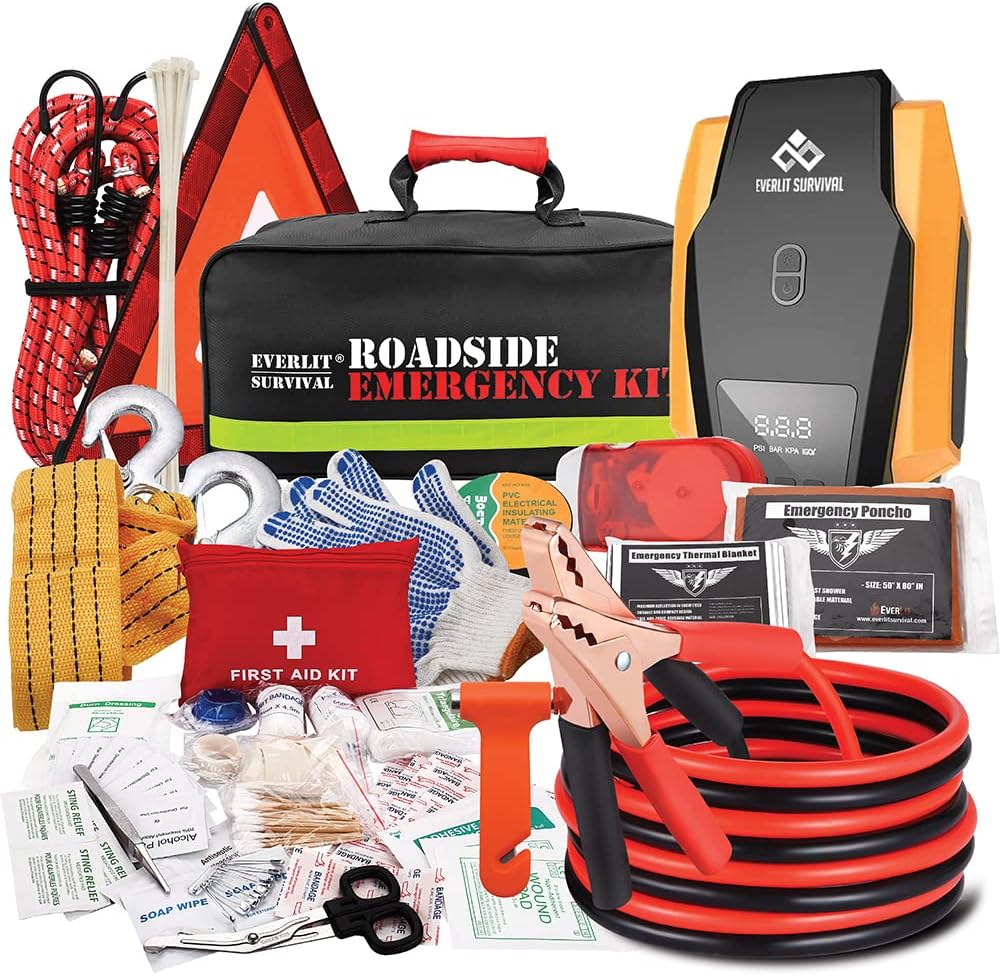
The Everlit Road Guardian emergency kit is designed for roadside breakdowns, combining essential safety gear and roadside tools in one compact bag. It includes a digital 12V auto tire inflator with preset and auto shutoff, plus 12-foot 8-gauge jumper cables to get you moving again. You also get a full 108-piece first aid kit, reflective warning tools, safety gloves, and emergency convenience items for safer travel.

Related Articles

When to Switch From All-Season to Winter Tires on a 4Runner
Ineffective all-season tires in cold weather can jeopardize your safety—discover when to make the crucial switch for better traction and handling.
Read More
4Runner Tire Mileage: How Many Miles Should They Last
Curious about how long your 4Runner tires should last? Discover essential tips and factors that influence tire longevity.
Read More
How Long Do Toyota 4Runner Tires Typically Last
How long do Toyota 4Runner tires typically last? Discover the factors that influence tire longevity and essential tips for maintenance.
Read More