
What Does a Tire Warranty Cover on a 4Runner

Your Toyota 4Runner’s factory warranty does not work like a tire road-hazard plan. The short version is simple: Toyota’s New Vehicle Limited Warranty covers Toyota-supplied vehicle parts for defects, but the original tires are warranted by the tire manufacturer, not Toyota. If you want help with punctures, potholes, glass, nails, or wheel damage, you usually need an optional protection plan or separate road-hazard coverage.
Quick Answer
A Toyota 4Runner’s factory warranty does not cover normal tire wear, punctures, or most road-hazard damage. Original-equipment tires are covered by the individual tire manufacturer’s warranty. Toyota Financial Services Tire & Wheel Protection, if purchased, can cover eligible road-hazard tire and wheel damage.
Key Takeaways
- Toyota’s factory warranty does not make Toyota responsible for the original 4Runner tires; those tires are warranted by their tire manufacturer.
- The basic Toyota warranty is separate from tire road-hazard coverage, which is why nails, potholes, glass, and normal tread wear usually fall outside factory warranty protection.
- Toyota Financial Services Tire & Wheel Protection can cover eligible tire and wheel damage if you bought the plan from a participating Toyota dealer.
- Repair-cost examples from Toyota are illustrative, not guaranteed 4Runner prices; actual tire and wheel costs depend on trim, tire size, tire brand, location, and labor rates.
- Always check your exact plan agreement, tire warranty booklet, and dealer paperwork because coverage can vary by state, plan version, tire brand, and purchase channel.
What Does Your 4Runner’s Factory Warranty Really Cover for Tires?

Your 4Runner has more than one possible tire-related coverage source, and mixing them up is where most confusion starts. Toyota’s 2026 4Runner Warranty & Maintenance Guide states that original-equipment tires on new Toyota vehicles are warranted by the individual tire manufacturer only, not Toyota.
That means the Toyota factory warranty is not the place to expect payment for a nail puncture, pothole impact, sidewall cut, or normal tread wear. Toyota’s New Vehicle Limited Warranty covers eligible Toyota-supplied parts and workmanship issues, subject to the warranty’s exclusions. Tires are handled separately through the tire maker’s warranty documents.
The factory warranty still matters for the rest of the vehicle. Toyota’s basic coverage is 36 months or 36,000 miles, and the powertrain warranty is 60 months or 60,000 miles, whichever comes first. But those coverage periods do not turn the factory warranty into a tire road-hazard plan.
Note: If your tire has a defect, check the tire brand on the sidewall and review that tire manufacturer’s warranty. If your tire was damaged by a road hazard, check whether you bought Toyota Financial Services Tire & Wheel Protection or dealer-installed tire road-hazard coverage.
[Products Worth Considering]

This tire repair kit provides fast emergency puncture repair without removing the tire from the rim, helping you get back on the road quickly. Its screw plug system is designed for punctures in both tread and sidewall and includes a complete patch plug tool set with essential accessories. A portable storage bag makes it easy to carry for cars, trucks, SUVs, motorcycles, and heavy-duty applications.

This tire repair patch tool kit helps you quickly seal small punctures using upgraded mushroom plugs and a built-in roller system that presses for even penetration. The tungsten buffing wheel and HSS twist drill bits prepare the damaged surface for stronger adhesion, while the crown-angle friendly plugs are designed to keep water and debris out. Ideal for puncture repairs on many vehicle types, from cars and trucks to bikes and scooters.

Wykodra tire plugs provide quick vulcanizing repairs for tubeless tires, helping you seal punctures and get back on the road. The industrial-strength rubber creates a long-lasting, leak-resistant bond and is designed for emergency fixes without removing the tire. Choose between two standard plug sizes with color-matched options for small to larger damage across many vehicles and off-road uses.
Factory Warranty vs. Tire Warranty vs. Protection Plan
Use this comparison to identify which coverage may apply before you pay out of pocket:
| Coverage Source | What It Usually Helps With | What It Usually Does Not Cover |
| Toyota factory warranty | Eligible defects in Toyota-supplied vehicle parts, subject to warranty terms. | Original-equipment tire warranty claims, normal tire wear, punctures, and most road-hazard damage. |
| Original tire manufacturer warranty | Defects in materials or workmanship, depending on the tire brand’s warranty terms. | Most punctures, impacts, sidewall cuts, poor maintenance, and normal wear unless the tire maker’s booklet says otherwise. |
| Toyota Financial Services Tire & Wheel Protection | Eligible road-hazard tire damage, qualifying wheel replacement, associated repair costs, and towing reimbursement under the plan. | Excluded events such as normal wear, vandalism, certain construction-zone conditions, low tread-depth situations, and unauthorized repairs. |
| Toyota dealer-installed eligible tire coverage | Eligible tires bought and installed at a Toyota dealership may include 24-month road-hazard replacement coverage. | Restrictions apply, and this is separate from the original new-vehicle tire warranty and TFS protection plan. |
How Long Does Toyota’s Tire Coverage Actually Last?
The answer depends on which coverage you mean. Your original 4Runner tires are covered by the tire manufacturer’s warranty, and the term varies by tire brand. Toyota Financial Services Tire & Wheel Protection is different: it is an optional product available through participating Toyota dealers and may be available for terms up to six years.
Coverage Duration Details
Toyota Financial Services Tire & Wheel Protection says Tire & Wheel Protection Gold is available for up to six years. Toyota’s Gold and Platinum brochures also describe general benefits such as no mileage limitation, no deductible, and one-time transfer to another owner in a private sale, subject to the agreement terms.
Do not assume every contract is identical. Coverage may vary by state, dealer participation, vehicle eligibility, and plan version. Before buying, ask the finance manager for the full agreement and read the exclusions before signing.
Plan Term Options
The article should not treat “six years” as one universal term for every buyer. A safer way to read Toyota’s wording is: coverage can be available for up to six years, but your exact term is the one printed on your agreement.
If you drive rough roads, construction routes, gravel, or off-road trails often, a longer term may be more valuable. If you drive low annual mileage on clean roads and keep an emergency fund for tires, the plan may be less compelling.
Mileage Limitations Explained
Toyota’s Tire & Wheel Protection brochures list no mileage limitation as a general benefit. That is helpful for 4Runner owners who drive long distances, but it does not remove all limits. The claim still has to qualify under the agreement, and the damaged tire or wheel must meet the plan’s requirements.
Replacement tires may continue to be covered during the agreement term if they meet the vehicle manufacturer’s size specifications. Keep invoices for replacement tires, wheel repairs, rotations, alignments, and any claim approvals.
What’s the Difference Between 4Runner Tire Warranty and Protection Plan?
A tire warranty and a protection plan solve different problems.
The original-equipment tire warranty comes from the tire manufacturer. It is generally meant for tire defects, such as problems in materials or workmanship, and the details depend on the tire brand. Toyota’s warranty guide points owners to the tire manufacturer’s warranty terms.
Toyota Financial Services Tire & Wheel Protection is optional coverage for eligible tire and wheel damage. TFS describes coverage for road hazards such as nails, broken glass, tree limbs, and potholes. It also lists wheel replacement if the wheel fails to hold a seal with a new tire, plus associated costs such as mounting, balancing, valve stems, disposal/environmental fees, and taxes.
Pro Tip: Ask for three documents before you decide: the 4Runner Warranty & Maintenance Guide, the tire manufacturer’s warranty booklet, and the full Tire & Wheel Protection agreement. The brochure is useful, but the agreement controls the claim.
What Do 4Runner Tire and Wheel Repairs Cost Out of Pocket?
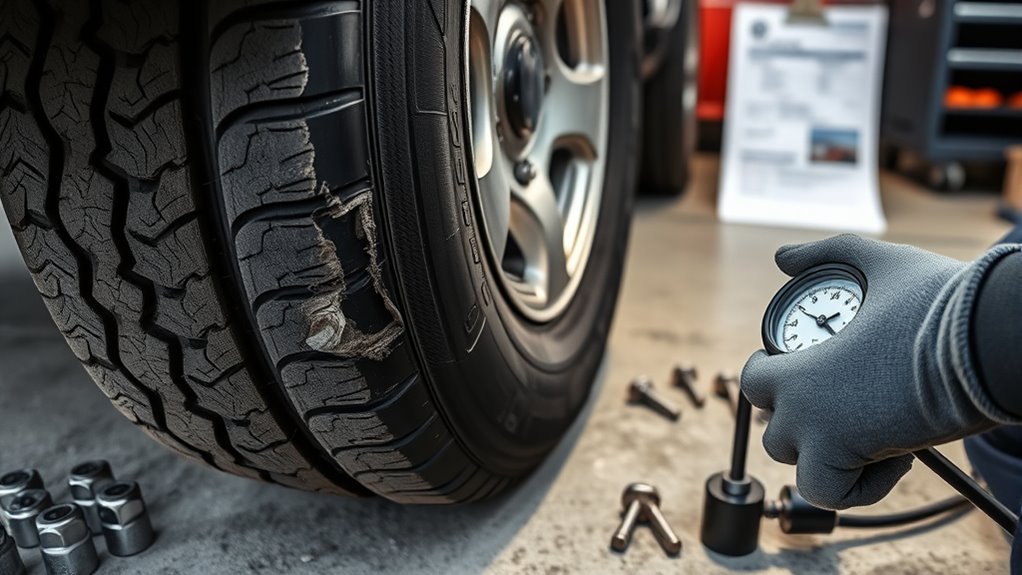
Actual 4Runner tire and wheel costs vary by tire size, trim, load rating, brand, location, labor rate, and whether the wheel can be repaired or must be replaced. A TRD Off-Road, Limited, Trailhunter, or TRD Pro may not use the same tire price as another trim.
Toyota Financial Services gives useful examples, but they are examples only. On its current Tire & Wheel Protection page, Toyota lists an illustrative out-of-pocket scenario that includes a $250 damaged tire replacement, $430 wheel replacement if the wheel will not hold a seal with the new tire, $60 towing to the nearest Toyota dealer, and $35 in associated costs, for a $775 total without protection. Toyota notes that the example is not the full agreement and that replacement costs are estimates.
Tire Replacement Expenses
If you do not have road-hazard coverage, you may pay for the tire, mounting, balancing, valve stem or TPMS-related service as needed, disposal fees, taxes, and possibly towing. If the tire can be safely repaired, the cost may be much lower than replacement. If the sidewall is damaged or the tire is unsafe to repair, replacement is usually the safer path.
Wheel Repair Costs
A pothole or hard impact can damage more than the tire. A wheel may bend, crack, or fail to seal properly with a new tire. If the wheel cannot hold air, Toyota Financial’s Tire & Wheel Protection materials describe wheel replacement as a covered benefit for qualifying claims.
Warning: Do not keep driving on a tire with a sidewall bulge, exposed cords, a visible split, rapid air loss, or a wheel that will not hold pressure. Stop safely and have the tire inspected before continuing.
Are Wheels and Rims Included in Tire Protection Plans?
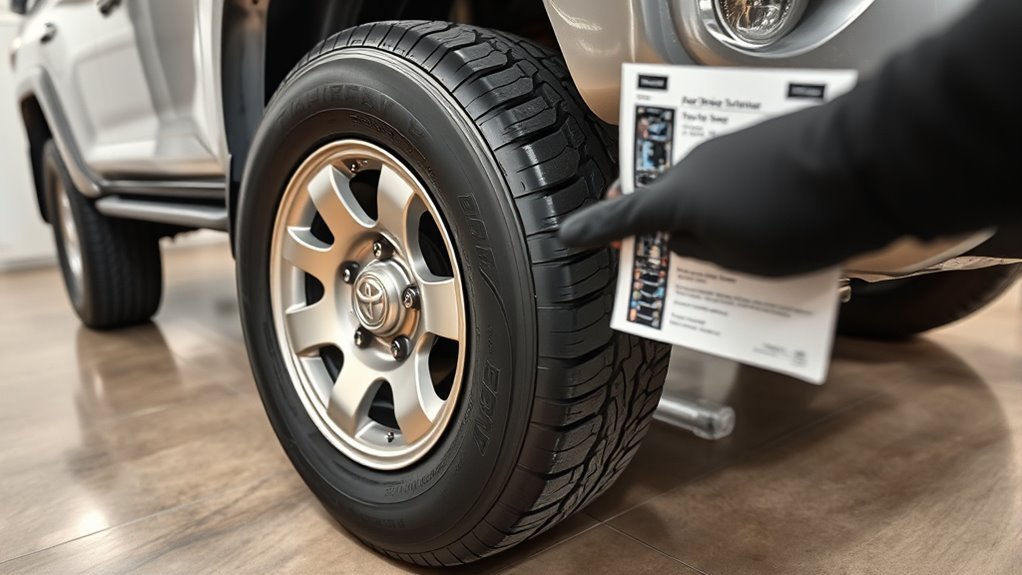
Yes, wheels can be included in Toyota Financial Services Tire & Wheel Protection when the claim qualifies. TFS says Tire & Wheel Protection Gold covers tire repair or replacement for eligible road-hazard damage and wheel replacement if the wheel fails to hold a seal with the new tire.
Platinum adds more appearance-related coverage. Toyota Financial describes Platinum as adding Paintless Dent Repair and Windshield Repair to the Tire & Wheel benefits. Depending on the agreement, cosmetic wheel repair may also be available, but cosmetic repair has its own limits and exclusions.
The key question is not “Are wheels ever covered?” It is “Did the wheel damage qualify under my exact agreement, and did I get authorization before repair?”
How Does Toyota’s Road Hazard Protection Work for 4Runners?
Toyota’s optional Tire & Wheel Protection is designed for eligible road hazards that affect tire or wheel performance. TFS examples include nails, glass, potholes, rocks, debris, tree limbs, and similar hazards on public roads.
When a claim qualifies, the plan may cover:
- Tire repair or replacement for eligible damage
- Wheel replacement if the wheel fails to hold a seal with the new tire
- Mounting, balancing, valve stems, disposal or environmental fees, and taxes
- Towing reimbursement up to the amount stated in the agreement
- Continued coverage for replacement tires that meet the manufacturer’s size specifications
Coverage is not unlimited in the everyday sense of “anything goes.” Toyota materials describe no limit on qualifying structural damage claims, but the plan still excludes certain situations. Common exclusions may include repairs made without prior authorization, normal wear and tear, vandalism, damage when the tire has less than 3/32-inch tread depth at the time of damage, and road conditions found in construction sites or zones.
How to File a Tire or Wheel Protection Claim
If your 4Runner has Tire & Wheel Protection and you hit a road hazard, follow these steps:
- Stop safely. Do not drive on a flat tire, severe vibration, exposed cords, or a damaged wheel.
- Document the damage. Take photos of the tire, wheel, tread depth area, hazard if visible, and dashboard warnings.
- Check your paperwork. Confirm whether you have Toyota Financial Services Tire & Wheel Protection, dealer-installed tire coverage, or only a tire manufacturer warranty.
- Contact the right party before authorizing repair. Toyota Financial says Tire & Wheel/Key Protection claims can be started by calling directly or by visiting the dealership so the dealer can contact TFS on your behalf.
- Keep receipts and invoices. Save towing receipts, repair orders, replacement tire invoices, and claim approvals.
- Ask whether the replacement tire remains covered. For TFS Tire & Wheel Protection, continued coverage generally depends on the replacement meeting the vehicle manufacturer’s size specifications.
If you bought eligible replacement tires at a Toyota dealership, also ask about Toyota Tire Center’s 24-month road-hazard replacement coverage. That coverage is separate from the new-vehicle factory warranty and has its own restrictions.
[Products Worth Considering]
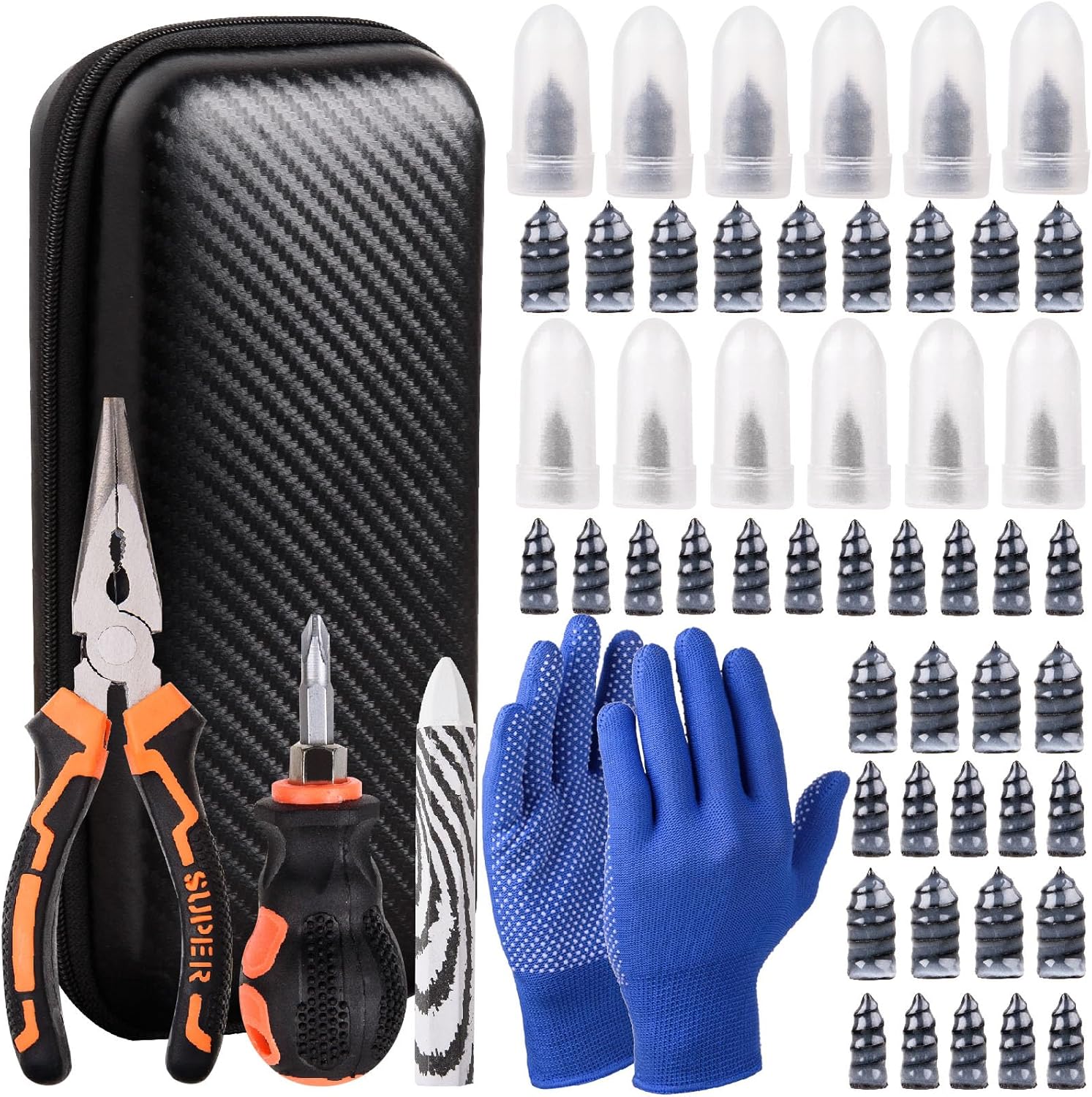
This tire sidewall puncture repair kit fixes flats fast without removing the tire, helping you get back on the road in minutes. It includes self-tapping repair nails, essential tools, gloves, and a portable storage bag for convenient roadside use. Designed for tubeless tires, it helps create a tight, leak-resistant seal for cars, motorcycles, trucks, SUVs, and ATVs.

This screw-in tire plug kit offers quick, DIY tire repairs for punctures from nails, screws, and sharp debris. Simply screw the vacuum tire mending nail into the puncture for a fast roadside fix, designed to create a strong, air-tight seal. It fits most tubeless tires for cars, trucks, motorcycles, and more, helping you avoid costly replacements until professional service is available.
Can You Transfer 4Runner Tire Coverage to a New Owner?
Toyota Financial’s Tire & Wheel Protection page says coverage can be transferred once, at no cost, from the original owner to a private-party buyer, excluding dealers. The brochure language also refers to one-time transfer in a private sale.
That does not mean you should wait until the day of sale to check the details. Before selling your 4Runner, contact the dealer or plan administrator and ask:
- Whether your exact agreement is transferable in your state
- Whether there is a deadline to submit transfer paperwork
- What documents the new owner needs
- Whether the transfer applies to all benefits or only certain benefits
Give the buyer copies of the protection agreement, claim history, replacement tire invoices, and maintenance records. Clean paperwork can make the coverage easier to use later.
What Voids Your 4Runner Tire Warranty or Protection?
“Void” is often used too loosely. A better way to think about it is this: a claim can be denied if the damage does not meet the warranty or protection-plan requirements.
For the original tire manufacturer’s warranty, problems often arise from:
- Normal tread wear
- Improper inflation
- Lack of rotation or uneven wear
- Misalignment-related wear
- Overloading
- Road-hazard damage that the tire maker does not cover
- Missing documentation required by the tire manufacturer
For Toyota Financial Services Tire & Wheel Protection, problems can arise from:
- Repairs or replacements made without prior authorization
- Damage excluded by the agreement
- Tires below the agreement’s tread-depth requirement when damage occurs
- Normal wear and tear
- Vandalism or abuse
- Certain construction-site or construction-zone road conditions
- Replacement tires or wheels that do not meet the vehicle manufacturer’s specifications
Installing a non-Toyota tire does not automatically “break” the entire factory warranty. Toyota’s warranty guide says warranty coverage is not dependent on the use of any particular replacement-parts brand. However, damage or failure caused by improper maintenance, improper repairs, misuse, or unsuitable parts may not be covered.
Tire Maintenance That Protects Your Coverage and Safety
Tire maintenance matters for safety, tire life, and warranty documentation. The U.S. Tire Manufacturers Association highlights pressure, tread, rotation, and alignment as the core tire-care essentials.
For a 4Runner owner, that means:
- Check tire pressure at least monthly with a gauge.
- Check pressure when tires are cold, before long trips, and before towing or carrying heavy loads.
- Inspect tread depth and look for uneven wear, cracks, bulges, punctures, and embedded objects.
- Rotate tires according to the maintenance schedule and tire manufacturer guidance.
- Check alignment after hard pothole strikes, off-road impacts, or uneven wear.
- Keep service records with date, mileage, and work performed.
Do not rely only on the tire pressure monitoring system. Federal TPMS rules state that TPMS is not a substitute for proper tire maintenance, and drivers remain responsible for maintaining correct tire pressure even before underinflation triggers a warning.
Should You Buy Extra Tire Protection for Your 4Runner?
Extra tire protection can make sense for some 4Runner owners, but it is not automatically the right purchase for everyone.
It may be worth considering if you:
- Drive in areas with potholes, construction debris, nails, rocks, or broken pavement
- Use more expensive all-terrain or specialty tires
- Travel far from home and want towing reimbursement built into the plan
- Prefer predictable coverage over surprise tire and wheel bills
- Plan to keep the 4Runner long enough to use a multi-year agreement
It may be less useful if you:
- Drive mostly on well-maintained roads
- Replace tires through a dealer program that already includes road-hazard coverage
- Have low annual mileage
- Can comfortably pay for a tire or wheel emergency out of pocket
- Do not like the plan’s exclusions, claim process, or price
Before buying, compare the plan price against the cost of one tire, one wheel, towing, and mounting/balancing in your area. Then read the exclusions. The best plan is the one that fits your roads, tire costs, and risk tolerance.
Frequently Asked Questions
What is covered under a Toyota 4Runner tire warranty?
The original tires on a new 4Runner are warranted by the individual tire manufacturer, not Toyota. That warranty usually focuses on tire defects in materials or workmanship. Road-hazard damage is usually handled only if you bought separate coverage, such as Toyota Financial Services Tire & Wheel Protection or eligible Toyota dealer-installed tire coverage.
What is not covered under a tire warranty?
Most tire warranties do not cover normal wear, punctures, road-hazard impacts, improper inflation, misalignment wear, overloading, abuse, or damage from poor maintenance. Exact exclusions depend on the tire manufacturer or protection-plan agreement.
Does Toyota’s basic warranty cover 4Runner tires?
No. Toyota’s 4Runner factory warranty does not make Toyota the warrantor for the original tires. Toyota’s warranty guide says original-equipment tires are warranted by the tire manufacturer only.
Does Toyota Tire & Wheel Protection cover pothole damage?
It can, if the pothole damage qualifies under your agreement. Toyota Financial Services lists potholes among examples of eligible road hazards, but exclusions and claim procedures still apply.
Are 4Runner wheels and rims covered?
They may be covered under Toyota Financial Services Tire & Wheel Protection if the wheel damage qualifies. TFS says wheel replacement can apply when the wheel fails to hold a seal with the new tire.
Can I buy Toyota Tire & Wheel Protection later?
Toyota Financial Services says Tire & Wheel Protection is available through participating Toyota dealers at the time of financing for purchase or lease. Ask your dealer what products are available for your vehicle before assuming you can add it later.
Do Toyota dealer replacement tires include road-hazard coverage?
Eligible tires purchased and installed at a Toyota dealership may include 100% road-hazard replacement coverage for 24 months, according to Toyota Tire Center. Restrictions apply, so confirm eligibility before purchase.
Will a non-Toyota tire void my 4Runner warranty?
Not automatically. Toyota’s warranty guide says warranty coverage is not dependent on using any particular replacement-parts brand. However, damage caused by improper maintenance, improper repairs, misuse, or unsuitable parts may not be covered.
Conclusion
A Toyota 4Runner tire warranty question has three separate answers. Toyota’s factory warranty covers eligible Toyota vehicle parts, not the original tires. The original tires are warranted by their tire manufacturer. Road-hazard protection for nails, glass, potholes, and wheel-seal failures usually comes from an optional plan, such as Toyota Financial Services Tire & Wheel Protection, or from separate coverage on eligible replacement tires purchased at a Toyota dealership.
Before paying for a tire or wheel repair, identify which coverage you have, get authorization when required, save all receipts, and read the exclusions. That one step can be the difference between a covered claim and an avoidable out-of-pocket bill.
Sources
- Toyota 2026 4Runner Warranty & Maintenance Guide — backs Toyota factory warranty periods, original-equipment tire warranty responsibility, maintenance records, and replacement-parts warranty language.
- Toyota Financial Services Tire & Wheel Protection — backs Gold/Platinum plan features, eligible road hazards, wheel replacement, transferability, and illustrative cost examples.
- Toyota Financial Services — How to File a Claim — backs the claim-filing path for Tire & Wheel/Key Protection.
- Toyota Tire Center — backs 24-month road-hazard replacement coverage for eligible dealer-installed tires.
- 49 CFR 571.138 — Tire Pressure Monitoring Systems — backs TPMS warning requirements and the statement that TPMS is not a substitute for proper tire maintenance.
- U.S. Tire Manufacturers Association Tire Care Essentials — backs tire pressure, tread, rotation, and alignment maintenance guidance.

Related Articles

When to Switch From All-Season to Winter Tires on a 4Runner
Ineffective all-season tires in cold weather can jeopardize your safety—discover when to make the crucial switch for better traction and handling.
Read More
4Runner Tire Mileage: How Many Miles Should They Last
Curious about how long your 4Runner tires should last? Discover essential tips and factors that influence tire longevity.
Read More
How Long Do Toyota 4Runner Tires Typically Last
How long do Toyota 4Runner tires typically last? Discover the factors that influence tire longevity and essential tips for maintenance.
Read More