
What Is Sidewall Deflection and How It Improves Traction
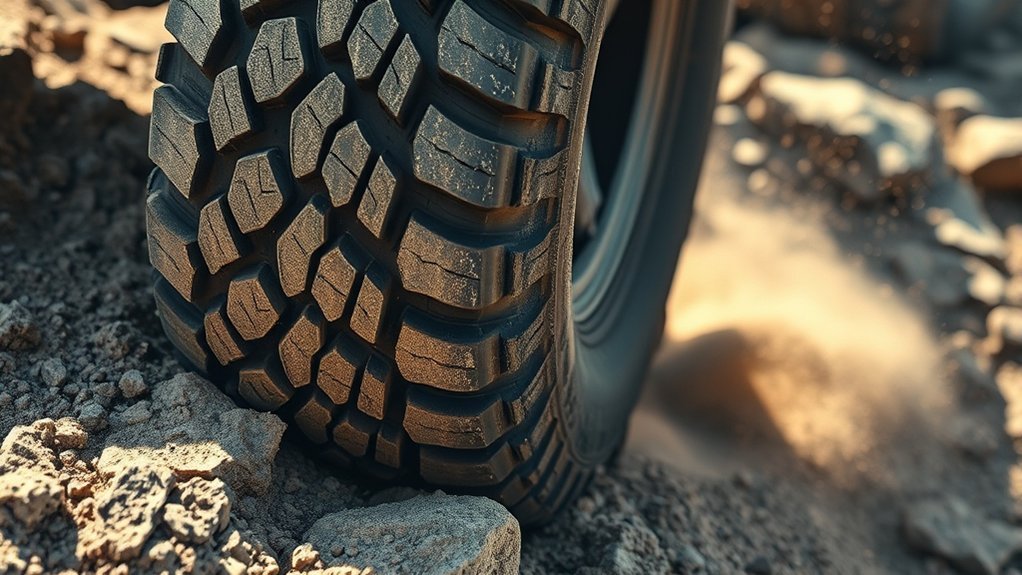
Quick Answer: Sidewall Deflection and Tire Traction
Last updated: July 7, 2026.
Sidewall deflection is the controlled bend or bulge you see in a tire’s sidewall when the tire carries weight. It can help traction when that flex creates a longer, more useful contact patch on soft or uneven ground. It can hurt traction and safety when pressure is too low for the load, speed, rim, or tire construction.
For everyday road driving, do not use underinflation as a grip shortcut. Start with the vehicle maker’s recommended cold tire pressure. For agricultural, off-road, and specialty tires, use the tire maker’s load and inflation table for the actual axle load, speed, and surface.
Quick Answer
Sidewall deflection can improve traction when it helps the tire maintain a larger, more useful contact patch. It is most helpful in fields, sand, mud, and uneven terrain. On paved roads, however, underinflation is not a traction trick; tires should be set to the vehicle maker’s recommended cold pressure.
Key Takeaways
- Sidewall deflection is normal, but it must match the tire’s load, speed, pressure, rim, and construction.
- Lower tire pressure increases flex, but on-road tires should follow the vehicle placard or owner’s manual, not guesswork.
- In agricultural use, IF and VF tires can create a larger footprint at lower pressure when used according to load and inflation tables.
- Too much deflection can cause heat buildup, shoulder wear, sluggish steering, sidewall damage, or bead/rim problems.
- The best tire is not simply the softest one; it is the tire whose sidewall, load rating, tread, rim fit, and pressure range fit the job.
[Products Worth Considering]
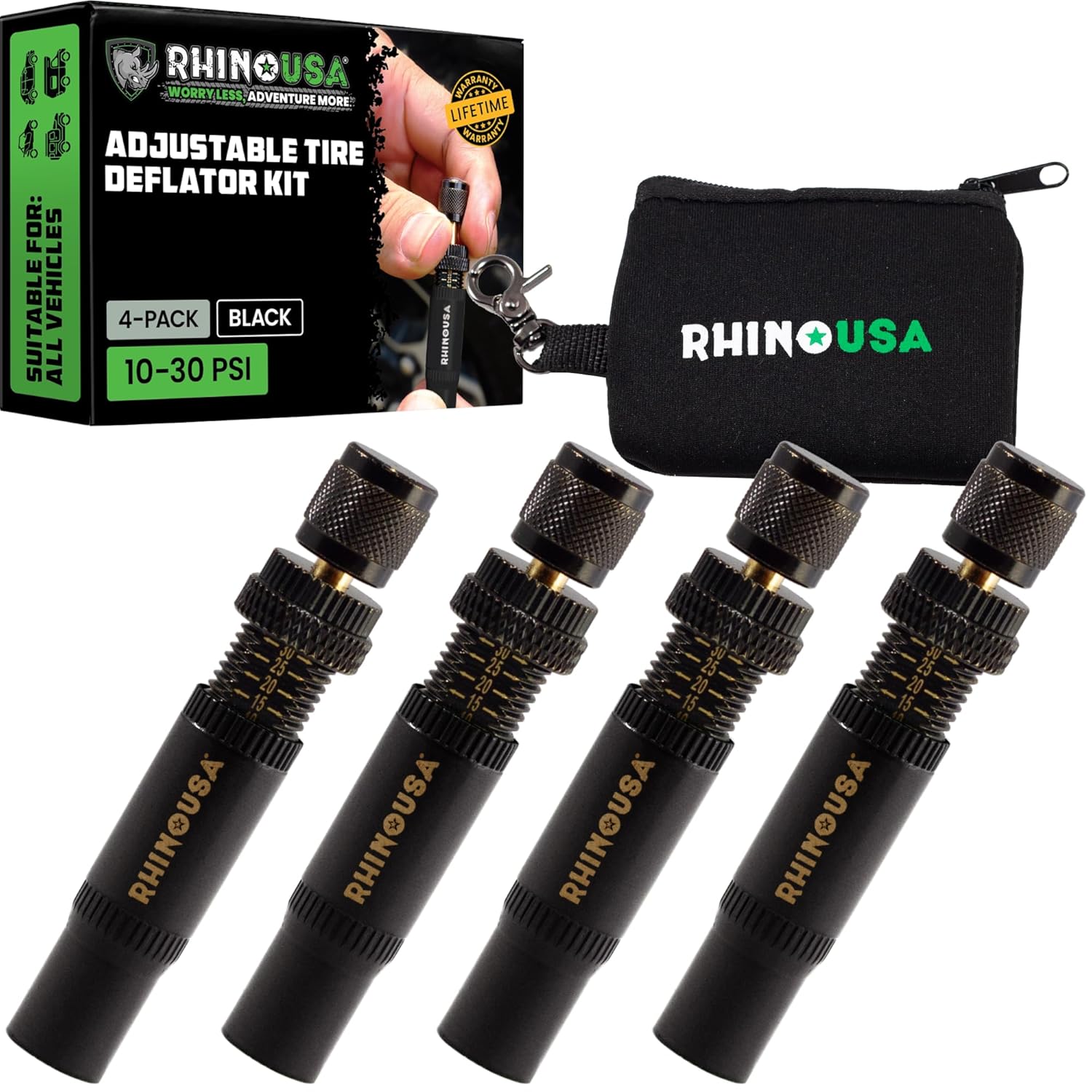
Use the Rhino USA adjustable tire deflators to air down all four tires at once by screwing one deflator onto each valve stem, letting you step away while the tires reach your preset pressure. Each deflator independently adjusts across a 10–30 PSI range with laser-etched indicators for quick setup and verification, making it ideal for beach, sand, and rocky off-road trails.
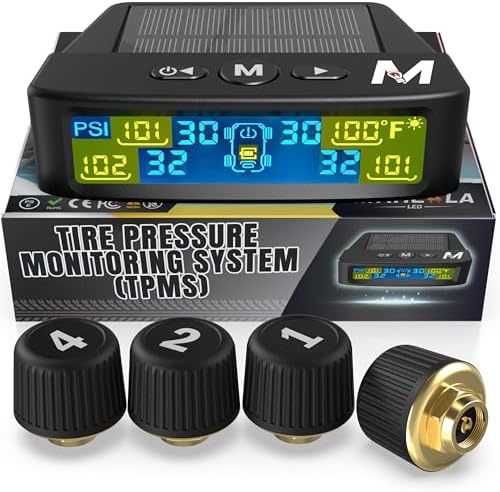
Marcala’s TPMS set of four sensors helps you monitor tire pressure and temperature in real time while driving, with updates every second. The bright color LCD uses auto-dimming for easy viewing, powered by dual solar and USB charging, and offers six alarm modes. Built for trailers, RVs, campers, trucks, and towing setups, the sensors support monitoring 1-4 wheels up to 98 PSI with IP67 waterproof protection.
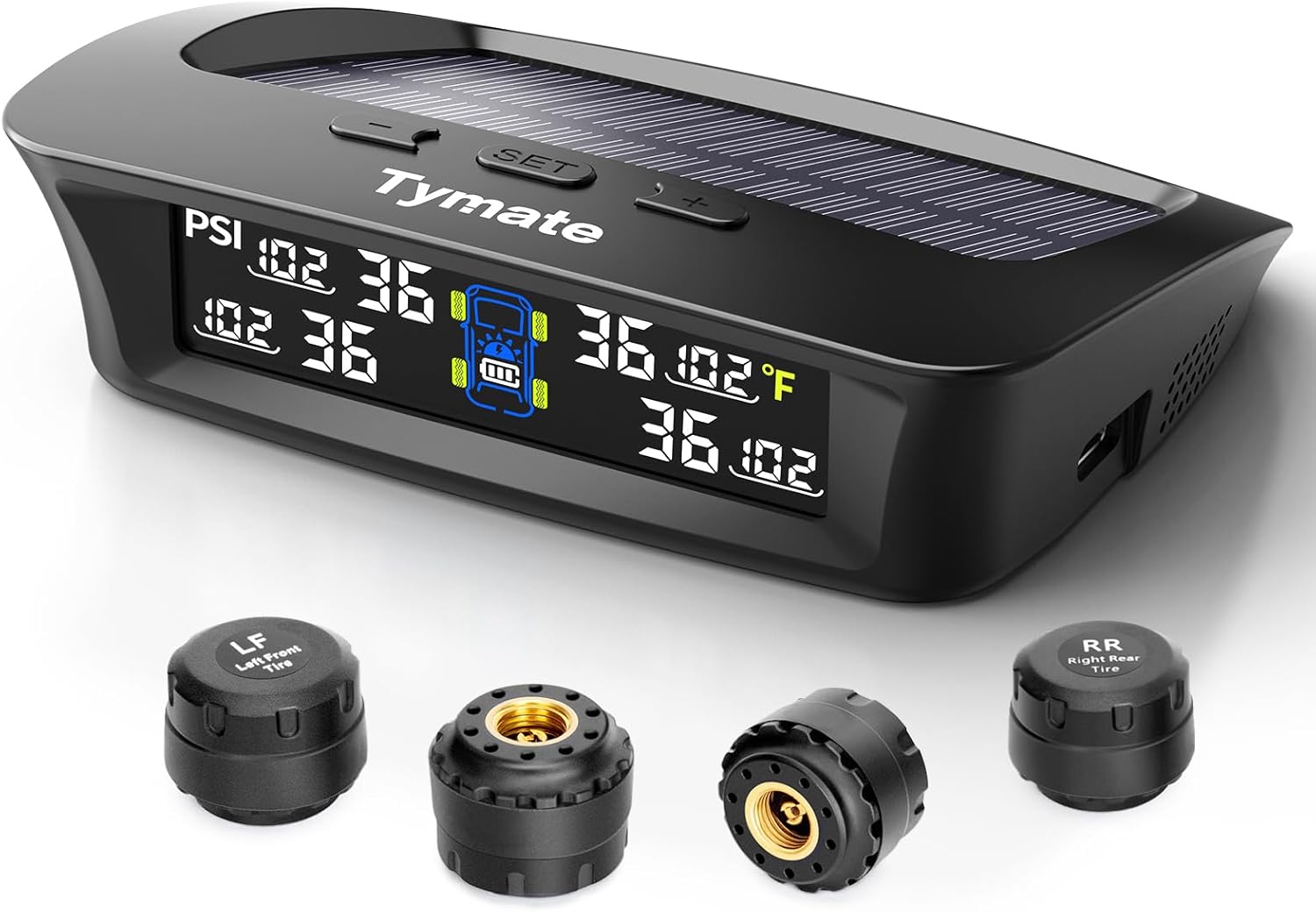
The Tymate TM3 RV TPMS delivers real-time tire pressure monitoring from 0 to 144 PSI with accurate readings and dependable wireless communication. It includes four external sensors with pre-pairing, six alarm modes for rapid leak, pressure extremes, temperature, and signal loss, plus an easy-reference setup for alert thresholds. Solar and USB-C charging help keep the display powered, while the color LCD and adaptive backlight improve visibility for safer driving and towing.
Sidewall Deflection Decision Guide
| Situation | What Deflection Should Do | Pressure Source to Use |
| Daily road driving | Stay controlled, predictable, and cool at speed | Vehicle placard or owner’s manual cold pressure |
| Towing or hauling | Support load without excessive shoulder flex or heat | Vehicle, tire, and load-rating guidance for the measured load |
| Sand, mud, or rocks | Conform to the surface at low speed without unseating the bead | Tire maker, off-road equipment, rim, and recovery guidance |
| Farm field work | Create a larger footprint for flotation, traction, and lower soil pressure | Agricultural tire load and inflation table for axle load and speed |
What Is Sidewall Deflection and How Does It Work?
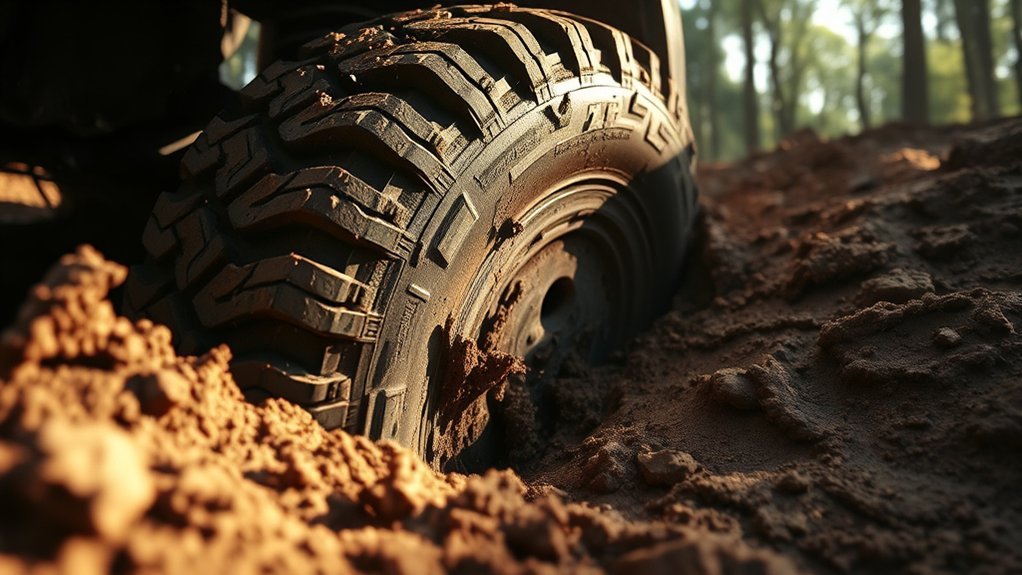
Sidewall deflection is the amount a tire’s sidewall bends as the tire supports a load. When weight presses down through the axle, the tire’s round shape flattens slightly at the bottom. That flattened area is the contact patch, which is the part of the tread touching the road, soil, or trail.
Several factors control how much a tire deflects:
- Inflation pressure: Lower pressure usually allows more sidewall flex and a larger footprint.
- Load: More weight increases deflection if pressure and tire construction stay the same.
- Tire construction: Radial, bias, reinforced, IF, VF, run-flat, and light-truck tires all flex differently.
- Speed: Higher speeds create more heat, so safe deflection limits become more important.
- Surface: Soil, sand, rocks, wet pavement, and dry pavement all respond differently to tire flex.
For normal road use, the safest starting point is the vehicle manufacturer’s recommended cold tire pressure. NHTSA’s tire-safety guidance says the correct pressure is on the vehicle’s Tire and Loading Information Label or in the owner’s manual, not the maximum PSI printed on the tire.
Warning: Do not lower tire pressure on paved roads just to “get more grip.” Severe underinflation can increase heat, damage the tire, reduce handling precision, increase stopping distance, and raise the risk of tire failure. Use the recommended cold pressure unless the tire maker, vehicle maker, or agricultural load table gives a different approved setting.
How Does Sidewall Flex Affect Traction and Stability?
Sidewall flex can improve traction when it helps the tread stay in better contact with the surface. On loose or uneven ground, a tire with controlled flex can spread the load over a longer footprint, put more tread blocks or lugs on the ground, and reduce the tendency to dig in.
This is why sidewall deflection matters in agricultural, off-road, and flotation applications. A larger footprint can help a tire ride over soft soil instead of cutting deeply into it. USDA Agricultural Research Service notes that traction and soil compaction from tires and tracks are strongly influenced by the size and shape of the tire or track footprint.
Controlled sidewall flex helps when it creates a useful footprint. Uncontrolled flex hurts when it turns into heat, squirm, uneven wear, or sidewall stress.
On pavement, the goal is different. A tire needs enough stiffness to respond quickly to steering, braking, and cornering. Too much sidewall movement can make a vehicle feel slow to respond, especially during lane changes, emergency braking, or towing. That is why performance tires often use shorter, stiffer sidewalls, while agricultural and flotation tires are built to flex more at lower speeds and lower ground pressure.
Where More Sidewall Flex Helps
- Farm fields: A wider footprint can reduce ground pressure and improve flotation.
- Sand and mud: Controlled airing down can help the tire float instead of digging, but only at suitable low speeds and within safe limits.
- Rocks and uneven trails: More flex can help the tread conform to obstacles and maintain contact.
- Rough surfaces: A taller or more flexible sidewall can absorb impact and improve ride comfort.
Where Too Much Flex Hurts
- Highway driving: Excessive flex creates heat and can damage the casing.
- Heavy loads: Underinflation under load can overstress the sidewall.
- Sharp steering inputs: A soft sidewall can delay response and feel unstable.
- Long trips: Heat buildup and uneven shoulder wear become more likely.
How Does Tire Pressure Affect Sidewall Flex?
Tire pressure directly affects sidewall flex, contact patch shape, heat, and tread wear. Lower pressure increases deflection. Higher pressure reduces deflection. Neither extreme is automatically better.
When a tire is underinflated, the sidewall bends more than intended. That can enlarge the footprint, but it can also make the tread contact unevenly, increase shoulder wear, raise rolling resistance, and generate heat. NHTSA warns that poor tire maintenance, including not having enough air in your tires, can lead to a flat tire, blowout, or tread separation. NHTSA also reported 511 traffic fatalities in tire-related crashes in 2024.
When a tire is overinflated, sidewall flex is restricted. The ride becomes harsher, the center of the tread may carry too much load, and the tire may not conform as well to uneven surfaces. The ideal pressure is not the maximum PSI printed on the sidewall. For road vehicles, it is the vehicle manufacturer’s recommended cold pressure. For agricultural and specialty tires, it is the pressure shown in the tire maker’s load and inflation table for the actual axle load, speed, and application.
Pro Tip: Check pressure before driving, when the tires are cold. For tractors and implements, weigh the axle or use reliable axle-load data before choosing field and road pressures from the tire maker’s chart.
Simple Pressure Checklist for Proper Deflection
- Identify the use: Road, towing, off-road, field work, loader work, sprayer use, or transport.
- Check the load: Include vehicle weight, cargo, ballast, implements, and tongue weight where relevant.
- Use the right source: Use the vehicle placard for road vehicles and the tire maker’s load table for agricultural or commercial tires.
- Inspect the sidewall: Look for cracks, cuts, bulges, exposed cords, or scuffing near the rim.
- Watch the wear pattern: Shoulder wear often points to underinflation or overload; center wear can point to overinflation.
- Reinflate after airing down: If you reduce pressure for off-road or field conditions, return to the approved road pressure before higher-speed travel.
How Do Materials and Tire Construction Change Sidewall Performance?
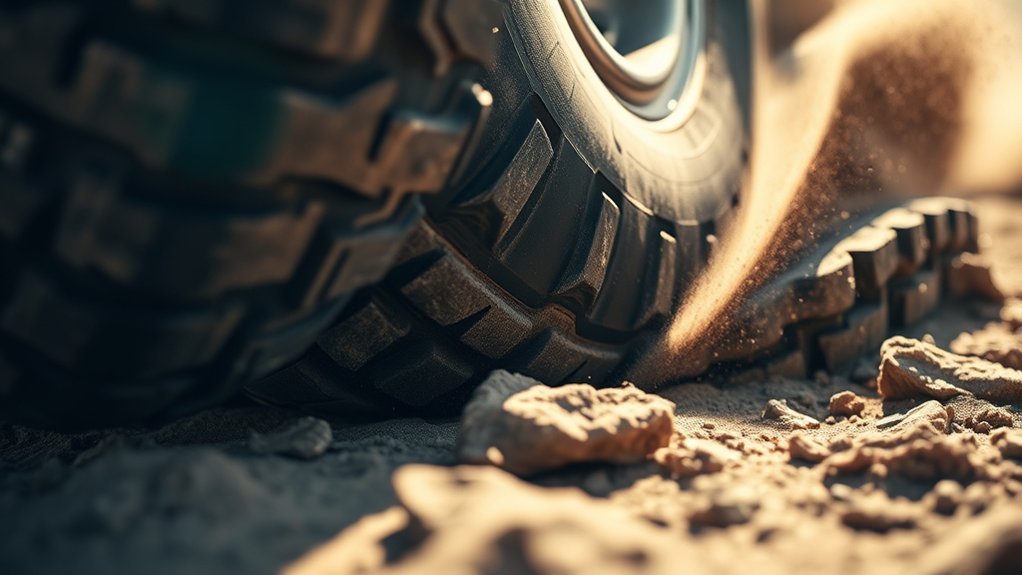
Material composition affects sidewall performance because the sidewall must flex, carry load, resist heat, protect the casing, and hold the bead securely on the rim. A tire that is too soft for the job may feel comfortable but unstable. A tire that is too stiff may respond quickly but struggle to conform to rough or loose surfaces.
Here are the main design factors that shape sidewall behavior:
- Carcass construction: Radial tires generally allow the sidewall and tread area to work differently than bias-ply tires. This affects ride quality, footprint shape, and field performance.
- Sidewall height: Taller sidewalls usually have more room to flex. Shorter sidewalls usually feel sharper and more responsive on pavement.
- Load range and ply rating: Heavier-duty tires use stronger casings to carry more load, but that can also change ride comfort and deflection.
- Rubber compound: Sidewall compounds must balance flexibility, weather resistance, cut resistance, and heat control.
- Bead and rim fit: The bead must stay seated under load, torque, and lateral force. This becomes especially important when using lower pressures off-road or in the field.
- IF and VF casing design: Increased Flexion and Very High Flexion tires are engineered to carry heavier loads or operate at lower pressures than standard radial tires when used correctly.
[Products Worth Considering]

Keep RV, trailer, or truck dual-axle tires protected with waterproof, UV-resistant covers that help guard against sunlight, snow, rust, and dirt. The dual tire covers are easy to install with a rope/bungee fastener for a stable fit that won’t easily slip. Designed for 27–30 inch diameter wheels, they help maintain tire condition through harsh weather.

RVMATE dual-axle RV tire covers help shield your tires from sunlight, snow, rust, and dirt to keep them in better condition in harsh weather. Made with heavy-duty waterproof, UV-resistant 420D Oxford fabric, they provide strong shading and help reduce wear. They install easily by placing the cover on the wheel and fastening the rope for a stable fit.
What Are IF and VF Tires, and Why Do They Matter for Deflection?
In agricultural tires, IF and VF technology is one of the clearest examples of sidewall deflection being designed into the tire. Michelin Ultraflex Technology describes IF as Improved Flexion and VF as Very High Flexion. Michelin says its low-pressure agricultural tires can reduce pressure by 20% to 40% versus standard tires while supporting the same loads, depending on the tire and setup.
The practical benefit is that a properly selected IF or VF tire can create a larger footprint without simply abusing a standard tire through unsafe underinflation. Michelin also states that flexible casing construction can create a larger footprint and improve traction in the field. That matters most when the tire, rim, load, speed, ballast, and soil conditions are all matched correctly.
Note: IF and VF markings do not mean you can choose any low pressure you want. Always match inflation pressure to axle load, speed, tire size, rim type, and the tire maker’s load table.
How to Select a Tire for the Right Sidewall Performance
When selecting the ideal tire for enhanced sidewall performance, focus on the job first. A tire for a compact car, a rock-crawling truck, a grain cart, and a high-speed sprayer should not flex the same way. The right tire balances sidewall flexibility, tread design, load capacity, pressure range, heat control, and durability.
| Use Case | Best Sidewall Goal | What to Prioritize |
| Daily road driving | Stable, predictable deflection | Correct placard pressure, even tread wear, wet braking, comfort |
| Performance driving | Less sidewall squirm | Stiffer sidewall, heat resistance, steering response, proper load rating |
| Off-road use | Controlled flex at low speed | Sidewall strength, bead retention, cut resistance, reinflation before road travel |
| Agricultural field work | Large footprint with safe casing flex | IF/VF options, load/inflation tables, soil protection, traction, flotation |
| Heavy towing or hauling | Load control with limited heat | Correct load range, cold pressure, axle weight, temperature checks |
For agricultural applications, lower field pressure is often useful because it increases the contact patch and helps flotation. That does not mean a standard tire should simply be run soft. The safest approach is to choose a tire designed for the load and then set pressure from the manufacturer’s chart. For mixed field and road work, central tire inflation systems can also help operators switch between field-friendly lower pressure and road-safe transport pressure.
What Are the Signs Your Sidewall Deflection Is Wrong?
Sidewall deflection is not something you judge by looks alone, but visible and driving clues can warn you that pressure, load, or tire choice may be wrong.
- Too much deflection: Squirmy steering, heavy shoulder wear, hot sidewalls, sidewall cracking, rim scuffing, bead movement, or a tire that looks overloaded.
- Too little deflection: Harsh ride, reduced flotation, center tread wear, poor grip on rough ground, or a tire that bounces instead of conforming.
- Possible damage: Bulges, exposed cords, cuts, sidewall bubbles, or repeated pressure loss mean the tire should be inspected before further use.
- Wrong tire for the job: If correct pressure still gives poor traction, harsh ride, or unstable handling, the tire construction or load rating may not match the application.
For field work, soil conditions matter too. Wet soil, heavy axle loads, repeated passes, and high contact pressure can all increase compaction risk. USDA Agricultural Research Service research explains that traction and soil compaction from vehicle tires and tracks are strongly influenced by tire and track footprint dimensions.
Frequently Asked Questions
Does more sidewall help traction?
More sidewall can help traction when it allows useful, controlled flex. This is common in fields, sand, mud, rocks, and other uneven terrain. On pavement, more sidewall flex is not always better because excessive flex can reduce steering response and generate heat.
Does lowering tire pressure always improve grip?
No. Lowering pressure can help in some low-speed off-road or agricultural situations, but it can be unsafe on paved roads. For cars and trucks on the road, use the vehicle maker’s recommended cold pressure. For farm tires, use the tire maker’s load and inflation table.
What causes sidewall deflection?
Sidewall deflection comes from load pressing through the tire while air pressure, casing stiffness, sidewall height, speed, and surface shape control how much the sidewall bends. More load and lower pressure usually increase deflection.
What happens if a tire has too much sidewall deflection?
Too much deflection can cause heat buildup, sidewall fatigue, irregular shoulder wear, poor steering response, bead or rim stress, and possible tire failure. It usually comes from underinflation, overloading, excessive speed for the pressure, or using the wrong tire type.
What is the difference between IF and VF tires?
IF means Improved Flexion, and VF means Very High Flexion. These agricultural tire designs are built to carry more load at a given pressure or operate at lower pressure for the same load, depending on the tire size and manufacturer’s table. VF tires generally allow more flexion capability than IF tires.
How do I know the right pressure for proper sidewall flex?
For road vehicles, check the placard inside the driver’s door area or the owner’s manual and measure pressure when the tires are cold. For agricultural, commercial, or specialty tires, use the tire manufacturer’s load and inflation chart for the actual axle load, speed, and application.
Conclusion
Sidewall deflection improves traction only when it is controlled and suited to the surface. In agricultural fields and low-speed off-road conditions, more flex can create a larger footprint, improve flotation, and reduce soil pressure. On paved roads, however, tire pressure should follow the vehicle manufacturer’s cold-pressure recommendation because underinflation can harm handling, increase heat, and shorten tire life.
The best approach is simple: choose a tire built for the job, match pressure to the load and speed, inspect wear patterns, and avoid treating low pressure as a universal grip solution. When sidewall stiffness, flexibility, construction, and pressure are balanced correctly, the tire can deliver better traction, safer handling, and longer service life.
Sources
- NHTSA TireWise Tire Safety: supports cold tire pressure guidance, tire placards, tire-safety cautions, tire-related crash data, and tread/traction guidance.
- Michelin Ultraflex Technology: supports IF/VF agricultural tire definitions, lower-pressure claims, larger-footprint claims, and field-traction discussion.
- USDA Agricultural Research Service: supports tire-soil footprint, traction, and soil-compaction discussion.

Related Articles
When to Switch From All-Season to Winter Tires on a 4Runner
Ineffective all-season tires in cold weather can jeopardize your safety—discover when to make the crucial switch for better traction and handling.
Read More
4Runner Tire Mileage: How Many Miles Should They Last
Curious about how long your 4Runner tires should last? Discover essential tips and factors that influence tire longevity.
Read More
How Long Do Toyota 4Runner Tires Typically Last
How long do Toyota 4Runner tires typically last? Discover the factors that influence tire longevity and essential tips for maintenance.
Read More