
LT Tire vs P Tire: Key Differences for 4Runner Drivers
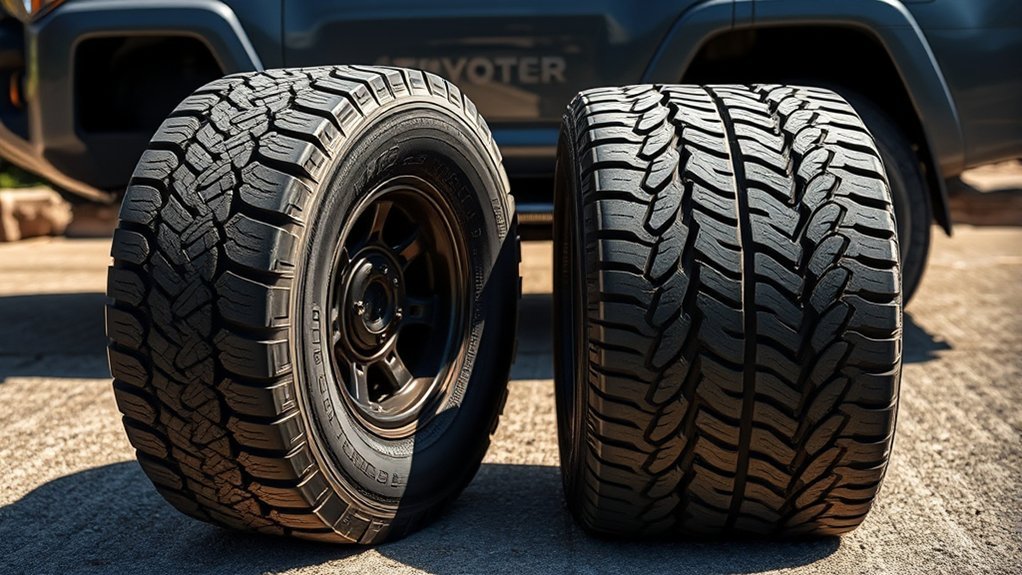
Choosing between LT and P tires for your 4Runner comes down to how you actually use the SUV. LT tires are usually the better fit for frequent towing, heavy cargo, sharp rocks, and rough trails. P-metric tires are usually better for commuting, highway driving, wet pavement, comfort, and fuel economy. The right choice is not the “toughest” tire by default—it is the tire that matches your load, terrain, driving speed, and Toyota’s tire placard.
Quick Answer
Choose LT tires for a 4Runner if you regularly tow, haul heavy gear, drive rocky trails, or need stronger sidewalls. Choose P-metric tires if your 4Runner is mostly a daily driver and you want a smoother, quieter ride with better fuel economy. Always confirm load capacity, tire pressure, and fitment against the door placard and owner’s manual.
Key Takeaways
- LT tires are built for heavier-duty use, but they often ride firmer and need higher pressure to carry the same load safely.
- P-metric tires are usually lighter, quieter, and more comfortable for pavement-heavy driving.
- A tire’s load index, load range, inflation pressure, and size matter more than the LT or P label alone.
- Never use sidewall maximum pressure as your everyday target unless a load-inflation table and vehicle requirements support it.
- Before switching tire types, check the 4Runner’s door placard, owner’s manual, wheel fitment, spare tire, TPMS, and actual cargo/towing weight.
LT vs. P Tires: Key Differences
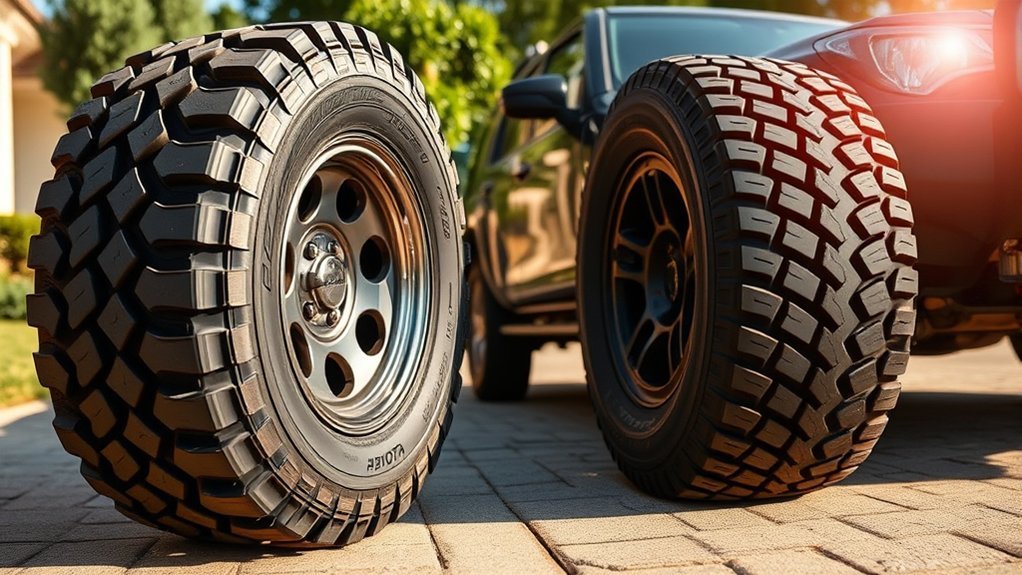
The letters on the sidewall tell you the tire category. According to the Tire Industry Association, P means passenger or P-metric, while LT means light truck. That label affects how the tire is designed, loaded, and inflated.
| Category | P-Metric Tires | LT Tires |
| Best use | Daily driving, commuting, highway trips, light cargo, wet pavement | Towing, heavy cargo, rough trails, sharp rocks, overlanding loads |
| Ride feel | Usually smoother and quieter | Usually firmer, especially at higher pressure |
| Load and pressure | Standard Load and Extra Load options; often lower pressure than LT in similar sizes | Marked by load range, such as C, D, or E; often needs higher pressure to carry equivalent loads |
| Fuel economy | Usually better because the tire is often lighter and less aggressive | Can reduce mpg and acceleration depending on size, tread, weight, and pressure |
For a 4Runner, that means the tire label should match the job. A pavement-focused 4Runner on factory-size all-season or mild all-terrain tires may be happier on P-metric tires. A loaded 4Runner with steel armor, a roof rack, recovery gear, a trailer, or frequent trail miles may benefit from LT construction.
Note: “10-ply rated” does not always mean the tire physically has ten plies. Modern tires use load ranges and ply ratings to describe strength and pressure capability. Check the tire’s actual load index, load range, and manufacturer load-inflation data.
[Products Worth Considering]

EVOULTES heavy duty tire inflator with an integrated gauge delivers accurate pressure readings from 10–120 PSI, helping you inflate, deflate, and check tires in one tool. The 16.5-inch extended dual-head air chuck with swivel base reaches hard-to-access dual wheel valves on trucks and RVs. A brass trigger core and side-mounted air release valve make operation smooth, with standard 1/4" NPT threading and quick-connect compatibility for easy setup.

This portable cordless tire inflator delivers up to 160 PSI with fast 17 L/min airflow to help you quickly top up tires and get back on the road. It features dual power mode, running on a 21V rechargeable battery or a 12V DC adapter for convenient roadside use. An automatic shut-off with digital pressure gauge helps prevent overinflation, and a built-in LED light improves visibility in low-light conditions.

The JACO FlowPro Tire Inflator measures, inflates, and airs down tires up to 100 PSI with battery-free operation and ±2% accuracy after calibration. It features a glowing pressure dial for night visibility, a heavy-duty steel build with a hybrid hose, and a precision push-to-inflate thumb trigger. The patented Lightning Air Chuck locks on for a secure seal, and the kit includes quick-connect hardware for easy inline use with your air compressor.
How Terrain Affects Tire Performance: LT vs. P
Terrain is one of the biggest reasons 4Runner owners move from P-metric to LT tires. Smooth pavement rewards a lighter tire with a flexible sidewall. Rocks, washboard roads, ruts, and trail debris reward stronger casing construction and better sidewall protection.
- Pavement and commuting: P-metric tires usually feel more comfortable, quieter, and more responsive on city streets and highways.
- Gravel and forest roads: Either type can work, but a quality all-terrain tread and proper pressure matter more than the letter alone.
- Rocky trails: LT tires usually provide better sidewall durability and puncture resistance.
- Mud, sand, and snow: Tread pattern, rubber compound, tire width, and aired-down pressure matter as much as LT vs. P.
If you only hit mild dirt roads a few times a year, a good P-metric all-terrain may be enough. If your 4Runner regularly sees sharp rocks, heavy washboard, remote trails, or loaded overlanding trips, LT tires become easier to justify.
Key Benefits of LT Tires for 4Runner Owners
LT tires are popular with 4Runner owners because they add a safety margin in the conditions where an SUV tire works hardest: load, heat, impact, and sidewall stress. They are not automatically better for every driver, but they can be the right tool for harder use.
Enhanced Load Capacity
LT tires are commonly sold in load ranges such as C, D, and E. Tire Rack’s load range guide shows that LT tires are marked with load range or ply-rating categories, such as Load Range E or 10-ply rated. For a 4Runner carrying camping gear, passengers, water, tools, armor, and a trailer tongue load, that extra capacity can matter.
Still, more load range is not always better. A Load Range E tire may ride harsher than a Load Range C tire on a mid-size SUV. Pick the lightest and most comfortable tire that still meets or exceeds your actual load requirement.
Superior Off-Road Durability
LT tires usually have stronger sidewalls and heavier casing construction than comparable P-metric tires. That helps when the sidewall rubs against rocks, roots, and ruts. It also helps when the vehicle is aired down for trail traction, as long as the tire stays within safe pressure and speed limits.
Pro Tip: If you want LT tires mainly for off-road durability, compare actual tire weights before buying. A heavy LT mud-terrain can change the way a 4Runner accelerates, brakes, steers, and rides more than a lighter LT all-terrain.
Better Control Under Load
When properly selected and inflated, LT tires can feel more stable with a loaded cargo area or trailer because the sidewalls flex less. That can reduce the vague, squirmy feeling some drivers notice when towing or carrying heavy gear. The benefit is most noticeable when the tire’s load rating, pressure, and size are matched correctly to the 4Runner’s axle loads.
Why P Tires Shine for Daily Driving
P-metric tires are not the “weak” choice. They are often the smarter choice for a 4Runner that spends most of its life on pavement. Their lighter construction can improve ride comfort, steering feel, braking response, and fuel economy compared with heavier LT tires in the same size and tread category.
P-rated tires are especially attractive if your 4Runner is used for:
- commuting and school runs,
- highway road trips,
- rainy pavement and mixed city driving,
- light weekend camping,
- occasional gravel roads, and
- minimal towing or payload.
For many owners, a high-quality P-metric or XL all-terrain tire provides enough traction and durability without the extra weight and firmness of an LT tire.
Towing With LT vs. P Tires: What You Need to Know
Towing is where tire choice gets serious. Toyota states that the 2026 4Runner offers a maximum towing capacity of 6,000 lbs when properly equipped, but tire choice does not raise your vehicle’s official tow rating. It only helps the tire support the load safely when the setup is within Toyota’s limits.
Load Capacity Differences
A tire’s load capacity depends on its size, construction, load index, load range, and inflation pressure. Tire Rack explains that maximum load is tied to the industry-assigned inflation pressure, and higher load ranges identify stronger internal construction that can hold more air pressure and carry more weight.
There is also an important SUV/light-truck rule: P-metric tires used on light trucks, pickups, vans, and SUVs are reduced to 91% of the sidewall-indicated load capacity. That does not make them unsafe, but it does mean you must compare the real application load rating, not just the biggest number molded on the sidewall.
Stability While Towing
LT tires can improve towing feel because they usually have firmer sidewalls. That can reduce tire squirm, especially with cargo in the rear and tongue weight on the hitch. However, tire stability cannot fix an overloaded trailer, poor weight distribution, worn suspension, incorrect hitch setup, or underinflation.
Safety Considerations When Towing
Before towing, check the tire and loading placard, owner’s manual, trailer weight, tongue weight, gross vehicle weight rating, gross axle weight ratings, and tire load capacity. The tire’s sidewall maximum pressure is not the same as the correct daily pressure. NHTSA says the correct pressure is the vehicle manufacturer’s recommended cold inflation pressure on the tire information placard or in the owner’s manual.
Warning: Do not install LT tires and keep them at the old P-metric pressure without checking load-inflation requirements. Toyo Tires warns that size-for-size LT-metric tires often need higher pressure to carry equivalent loads, and underinflation can lead to heat buildup and tire fatigue.
Impact of Tire Weight on Ride Quality and Fuel Efficiency
LT tires are often heavier than comparable P-metric tires. The exact difference depends on size, brand, tread depth, and load range. Extra tire weight can affect:
- Acceleration: heavier tires take more energy to spin.
- Braking: extra rotating weight can increase stopping effort.
- Fuel economy: aggressive tread and heavier construction can reduce mpg.
- Ride comfort: stiffer sidewalls can transmit more bumps into the cabin.
- Steering feel: heavy tires may feel slower to turn and less crisp on pavement.
This does not mean you should avoid LT tires. It means you should buy them for a reason. If you need sidewall strength and load support, the tradeoff can be worth it. If you mostly commute, the extra weight may only make the 4Runner less comfortable and less efficient.
[Products Worth Considering]
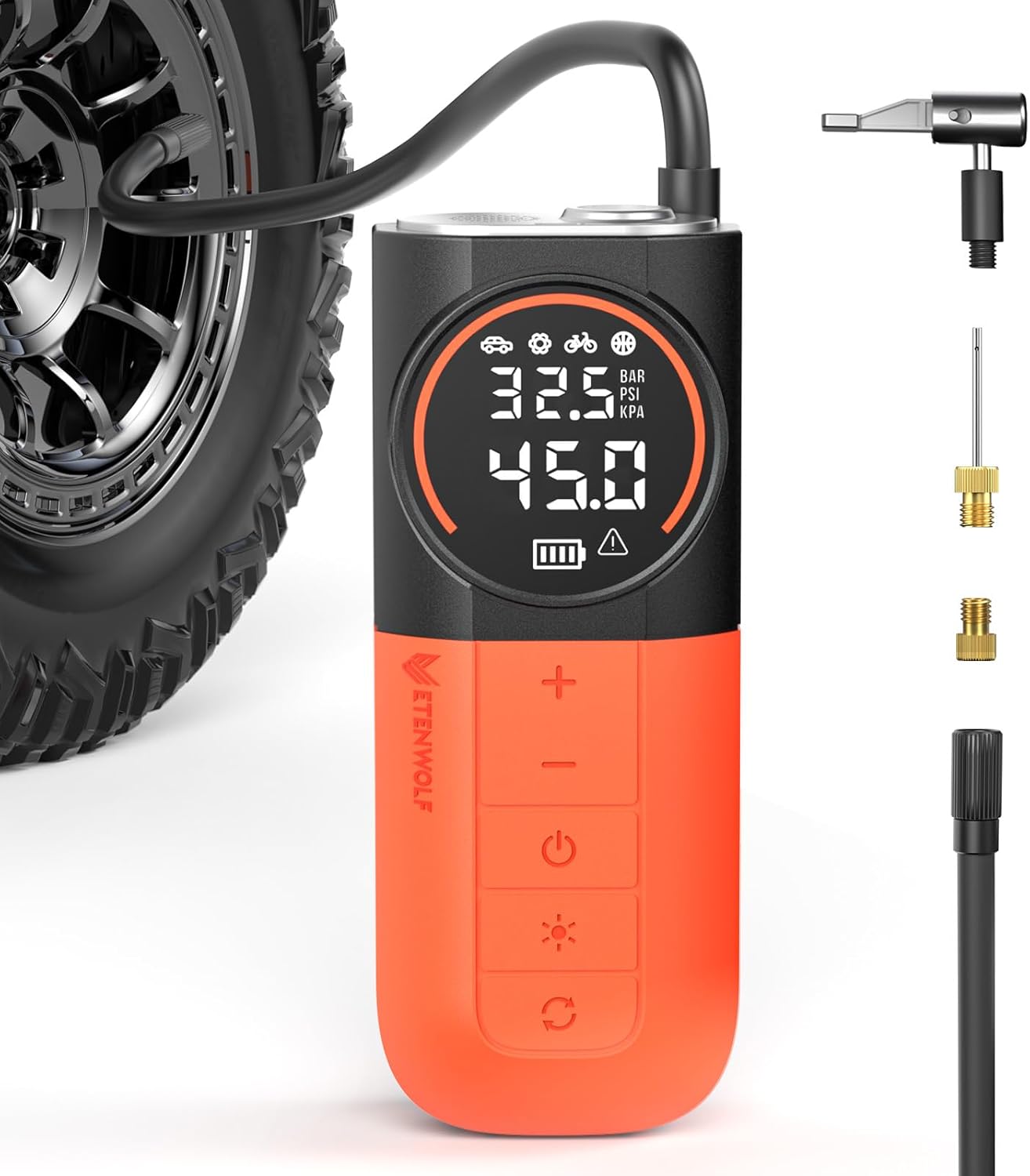
The ETENWOLF S1 cordless tire inflator delivers ultra-fast inflation with up to 160 PSI and a 20 L/min airflow for quicker tire top-offs. Its 5200mAh battery and cooling system support inflating many tires and sports balls on a single charge, while the digital pressure gauge and multi-unit display help you reach the right pressure accurately. With preset modes, pressure memory, an auto-stop feature, and an LED flashlight, it’s built for easy roadside and everyday use.

This portable cordless tire inflator delivers fast, efficient inflation for cars, motorcycles, bikes, and sports balls with a digital pressure gauge. Use the one-click PSI preset with auto shut-off for accurate, hands-free topping to your target pressure up to 150 PSI. It’s compact and rechargeable with a built-in emergency LED light plus valve adapters and accessories for quick, ready-to-go use.
Making the Right Tire Choice for Your 4Runner
Use your real driving pattern instead of copying someone else’s build. A 4Runner with a roof tent, sliders, skid plates, fridge, water, tools, passengers, and a trailer has different tire needs than a stock 4Runner on highway trips.
- Choose P-metric tires if you drive mostly on pavement, carry light cargo, tow rarely, and value quietness, comfort, and mpg.
- Choose XL P-metric tires if you want a little more load capacity than Standard Load without jumping to a much heavier LT tire.
- Choose LT Load Range C if available in your size and you want off-road durability without the stiffness of many E-rated tires.
- Choose LT Load Range E if you regularly carry heavy gear, tow, or drive sharp rocky trails and the tire’s weight/ride tradeoff makes sense.
The best 4Runner tire is not simply LT or P. It is the tire with the right size, load rating, pressure, tread pattern, and weight for how you actually drive.
What to Check Before Switching Tire Types
Before switching from P to LT tires—or from LT back to P—work through this checklist:
- Door placard: Confirm the factory tire size, cold pressure, and load information.
- Owner’s manual: Review Toyota’s load, towing, and tire replacement guidance.
- Load index: Make sure replacement tires meet or exceed the needed load capacity after any SUV/light-truck derating.
- Load range: Do not assume a higher load range is better if it makes the ride too harsh or requires pressure your use case does not need.
- Wheel fitment: Confirm rim width, diameter, offset, and brake clearance.
- Overall diameter: Larger tires can affect speedometer accuracy, gearing feel, clearance, and fuel economy.
- Spare tire: A mismatched spare can create problems, especially on 4WD systems.
- TPMS: Make sure the tire pressure monitoring system is compatible and reset or recalibrated if needed.
- Alignment and rubbing: Check for fender, mud flap, body mount, and suspension clearance.
- Pressure plan: Use tire manufacturer load-inflation tables when needed, not guesswork.
Frequently Asked Questions
Should I get LT tires for my 4Runner?
Get LT tires if your 4Runner regularly tows, carries heavy cargo, runs armor or overlanding gear, or drives rocky trails. Stay with P-metric tires if your driving is mostly pavement and you want better comfort, lower noise, and better fuel economy.
What are the disadvantages of LT tires?
LT tires can ride firmer, weigh more, cost more, reduce fuel economy, and make steering feel heavier. They may also need higher pressure to carry the correct load, which can make the 4Runner feel harsher on pavement.
Are LT tires safer for towing?
LT tires can be safer for towing when they are properly sized, properly inflated, and rated for the load. They do not increase the 4Runner’s official tow rating, and they cannot compensate for an overloaded trailer or poor weight distribution.
Can I put P-metric tires on a 4Runner?
Yes, if the tire size, load index, speed rating, and load capacity are appropriate for your specific 4Runner and use. Remember that P-metric tires used on SUVs/light trucks are treated as carrying less than the full sidewall load rating, so verify the numbers before buying.
What tire pressure should I run in LT tires on a 4Runner?
There is no single correct LT tire pressure for every 4Runner. Start with Toyota’s placard and manual, then use the tire manufacturer’s load-inflation table for your tire size, load range, and actual vehicle load. Do not use the sidewall maximum as your normal daily pressure unless the load calculation requires it.
Conclusion
For most daily-driven 4Runners, P-metric tires are the better match because they are usually lighter, quieter, smoother, and more efficient. For 4Runners that tow, haul heavy gear, or spend real time on rocky trails, LT tires can be worth the added weight and firmer ride. The safest choice is the one that matches your 4Runner’s placard, actual load, terrain, tire pressure needs, and driving habits—not the one with the toughest-sounding sidewall label.
Sources
- Tire Industry Association — Reading a Tire Sidewall — supports P-metric and LT sidewall designation explanations.
- NHTSA TireWise — supports cold inflation pressure, tire placard, and tire safety guidance.
- Tire Rack — Load Ranges / Ply Ratings — supports load range and ply-rating explanations.
- Tire Rack — Maximum Load for a Tire — supports load capacity, inflation pressure, and P-metric light-truck derating guidance.
- Toyo Tires Technical Bulletin TSD-12-011 — supports LT-metric replacement tire pressure and equivalent-load cautions.
- Toyota USA Newsroom — 2026 Toyota 4Runner — supports current 4Runner towing-capacity context.

Related Articles

When to Switch From All-Season to Winter Tires on a 4Runner
Ineffective all-season tires in cold weather can jeopardize your safety—discover when to make the crucial switch for better traction and handling.
Read More
4Runner Tire Mileage: How Many Miles Should They Last
Curious about how long your 4Runner tires should last? Discover essential tips and factors that influence tire longevity.
Read More
How Long Do Toyota 4Runner Tires Typically Last
How long do Toyota 4Runner tires typically last? Discover the factors that influence tire longevity and essential tips for maintenance.
Read More