
Toyota Camry Road Hazard Tire Warranty Explained: What’s Covered?

Toyota Camry road hazard tire warranty coverage usually refers to Toyota Financial Services Tire & Wheel Protection, an optional protection product sold through participating Toyota dealers. It can help pay for eligible tire and wheel damage caused by nails, glass, potholes, rocks, tree limbs, and similar debris on public roads. For many Camry owners, the real question is not only what the plan covers, but also when it applies, what it excludes, and whether Gold or Platinum coverage makes more sense.
Quick Answer
Toyota Camry Tire & Wheel Protection can cover eligible tire repair or replacement, wheel replacement, mounting, balancing, valve stems, disposal fees, taxes, and towing reimbursement up to $100 per claim. Gold covers tires and wheels. Platinum adds Paintless Dent Repair and Windshield Repair, subject to state availability and agreement terms.
Key Takeaways
- Gold is the focused tire and wheel plan for eligible road-hazard damage and certain tire or wheel failures.
- Platinum includes Gold benefits and adds minor dent repair and front windshield chip or crack repair where available.
- Toyota lists coverage for up to 6 years, but availability, exclusions, and exact terms can vary by agreement and state.
- You should confirm the plan, price, state availability, and claim rules at a participating Toyota dealer before you buy, lease, or finance your Camry.
What Is the Toyota Camry Road Hazard Tire Warranty?

The Toyota Camry road hazard tire warranty usually refers to Toyota Financial Services Tire & Wheel Protection. It is not a standard factory warranty that automatically comes with every Camry. It is an optional vehicle protection product sold through participating Toyota dealers.
The plan can help cover eligible tire and wheel repair or replacement after damage from covered road hazards. Toyota lists common examples such as nails, broken glass, potholes, rocks, tree limbs, and other objects or conditions not normally found in the roadway.
The plan can also help with related costs when they are tied to a covered claim. These may include mounting, balancing, wheel weights, valve stems, disposal or environmental fees, taxes, and eligible towing reimbursement.
Note: This is not the same as the original tire manufacturer’s warranty or Toyota’s basic vehicle warranty. Tire & Wheel Protection has its own agreement, limits, exclusions, claim rules, and state availability.
[Products Worth Considering]

This tire repair kit provides fast emergency puncture repair without removing the tire from the rim, helping you get back on the road quickly. Its screw plug system is designed for punctures in both tread and sidewall and includes a complete patch plug tool set with essential accessories. A portable storage bag makes it easy to carry for cars, trucks, SUVs, motorcycles, and heavy-duty applications.

This tire repair patch tool kit helps you quickly seal small punctures using upgraded mushroom plugs and a built-in roller system that presses for even penetration. The tungsten buffing wheel and HSS twist drill bits prepare the damaged surface for stronger adhesion, while the crown-angle friendly plugs are designed to keep water and debris out. Ideal for puncture repairs on many vehicle types, from cars and trucks to bikes and scooters.

This compact capsule-style tire repair kit helps you quickly fix punctures and plug flats with minimal effort. The rugged stainless steel shell protects the contents for reliable roadside use, while the simple plug assembly makes repairs fast and tool-free. Suitable for motorcycles, cars, ATVs, UTVs, and even mountain bikes.
Who Is Eligible for Toyota Tire & Wheel Protection?
Toyota says Tire & Wheel Protection is available for new, certified used, and used Toyota vehicles at the time of lease or purchase. It is sold through participating Toyota dealerships, so you should confirm availability before you finalize your paperwork.
The plan can be available for up to 6 years. It may also transfer once at no cost from the original owner to a private party, but it does not transfer to dealers. Your actual agreement controls the coverage term, transfer rules, cancellation rules, and claim requirements.
Warning: Do not assume every tire, wheel, dent, or glass issue qualifies. Ask the dealer for the full agreement and read the exclusions before you pay for the plan.
What Does Toyota Camry Tire & Wheel Protection Cover?
Toyota Camry Tire & Wheel Protection can cover eligible tire repair or replacement and wheel replacement after covered road-hazard damage. Toyota also lists coverage for certain operational or structural failures due to defects in material or workmanship.
If a covered tire is damaged, repair is usually attempted first when the agreement allows it. If the tire cannot be repaired, replacement may be covered as long as the replacement tire meets your vehicle manufacturer’s size specifications.
| Covered area | How it can help |
|---|---|
| Tire damage | Repair or replacement for eligible road-hazard damage, subject to the agreement. |
| Wheel damage | Wheel replacement if the wheel fails to hold a seal with the new tire. |
| Related costs | Mounting, balancing, wheel weights, valve stems, disposal fees, environmental fees, and taxes when tied to a covered repair. |
| Towing | Up to $100 per eligible claim for towing to the nearest authorized dealer or the cost to change the damaged tire with your spare. |
Tire and Wheel Coverage
If your Camry hits a covered road hazard, Tire & Wheel Protection can pay for eligible repair or replacement instead of leaving you with the full shop invoice. Toyota also says there is no limit to the number of covered claims during the term of the agreement.
That does not mean every flat tire automatically qualifies. The damage must meet the agreement’s definition of an eligible road hazard, and the repair or replacement must follow the claim process.
Road Hazard Repairs
Road-hazard repairs usually start with an inspection. A repairable puncture may be fixed, while a tire that cannot be safely repaired may need replacement. If the wheel fails to hold a seal with the new tire, wheel replacement may also qualify.
For safety, keep your Camry’s tires inflated to the pressure listed on the driver-side door placard or in the owner’s manual. The National Highway Traffic Safety Administration recommends checking tire pressure at least once a month when tires are cold.
Added Protection Options
Gold gives you focused tire and wheel coverage. Platinum adds two cosmetic or glass repair benefits: Paintless Dent Repair and Windshield Repair. Key Replacement Protection can be added to Gold or Platinum, and Toyota also lists it as available separately.
These added benefits may be useful if you want one plan to cover more small road-related problems. Still, the extra value depends on your driving conditions, local repair costs, plan price, and whether the benefits are available in your state.
What Tire, Wheel, and Towing Costs Are Covered?
Toyota’s example shows how the plan can reduce out-of-pocket costs after a covered tire and wheel incident. In that example, replacement of a road-hazard-damaged tire is listed at $250, wheel replacement is listed at $430, towing is listed at $60, and associated costs are listed at $35.
The example total is $775 without protection and $0 with Gold or Platinum protection. Treat that as Toyota’s example based on estimated replacement costs for a 2025 Toyota Camry, not a fixed quote for every Camry, tire size, dealer, or repair market.
The strongest value comes when the same covered incident involves more than one cost, such as a tire replacement, wheel replacement, towing, mounting, balancing, and taxes.
How Do Gold and Platinum Plans Compare?

Gold and Platinum share the same basic tire and wheel protection idea, but Platinum adds extra repair categories. If your main concern is pothole, nail, or wheel-seal damage, Gold may be enough. If you also want help with minor dents and front windshield chips, Platinum gives broader coverage where available.
| Plan | Main coverage | Best for |
|---|---|---|
| Gold | Tire and wheel repair or replacement for eligible claims. | Drivers who mainly want tire and wheel protection. |
| Platinum | Gold benefits plus Paintless Dent Repair and Windshield Repair. | Drivers who want broader small-damage protection. |
| Key Replacement Protection | Replacement key or key fob coverage up to the stated limit. | Drivers worried about lost, stolen, or damaged keys. |
What Do Paintless Dent and Windshield Repairs Include?
Paintless Dent Repair can cover minor dents and dings in accessible body-panel areas when the dent is no larger than 4 inches in diameter. The repair must be possible without damaging the manufacturer’s paint or finish.
Windshield Repair focuses on minor chips and cracks in the front windshield caused by propelled rocks or other road hazards. Toyota lists exclusions for stress cracks, cracks over 6 inches, inside windshield damage, hail, vandalism, neglect, and some state availability limits.
| Service | Coverage details |
|---|---|
| Paintless Dent Repair | Minor dents and dings up to 4 inches in accessible body-panel areas. |
| Hail under PDR | Covered up to the comprehensive deductible or $1,000, whichever is less, where available. |
| Windshield Repair | Minor front windshield chips and cracks caused by road hazards. |
| Key limitations | Stress cracks, cracks over 6 inches, inside windshield damage, hail, vandalism, neglect, and state-specific limits may apply. |
How Does Key Replacement Protection Work?
Key Replacement Protection helps when a covered vehicle key or key fob is lost, stolen, or damaged. Toyota lists replacement coverage up to $800 per occurrence for the covered vehicle’s key or key fob.
The plan can also include lock-out assistance, towing assistance up to $100 per occurrence, and transportation reimbursement up to $75 per occurrence for taxi, rental vehicle, or public transportation. It may also cover replacement of additional non-programmable keys up to $250 per lost key claim, with a limit of three occurrences.
Exclusions still apply. For example, Toyota lists exclusions for some keys covered by a manufacturer, repairer, or supplier warranty or recall, and for costs tied to a key becoming inoperable due to malfunction or main body ECU reprogramming.
[Products Worth Considering]
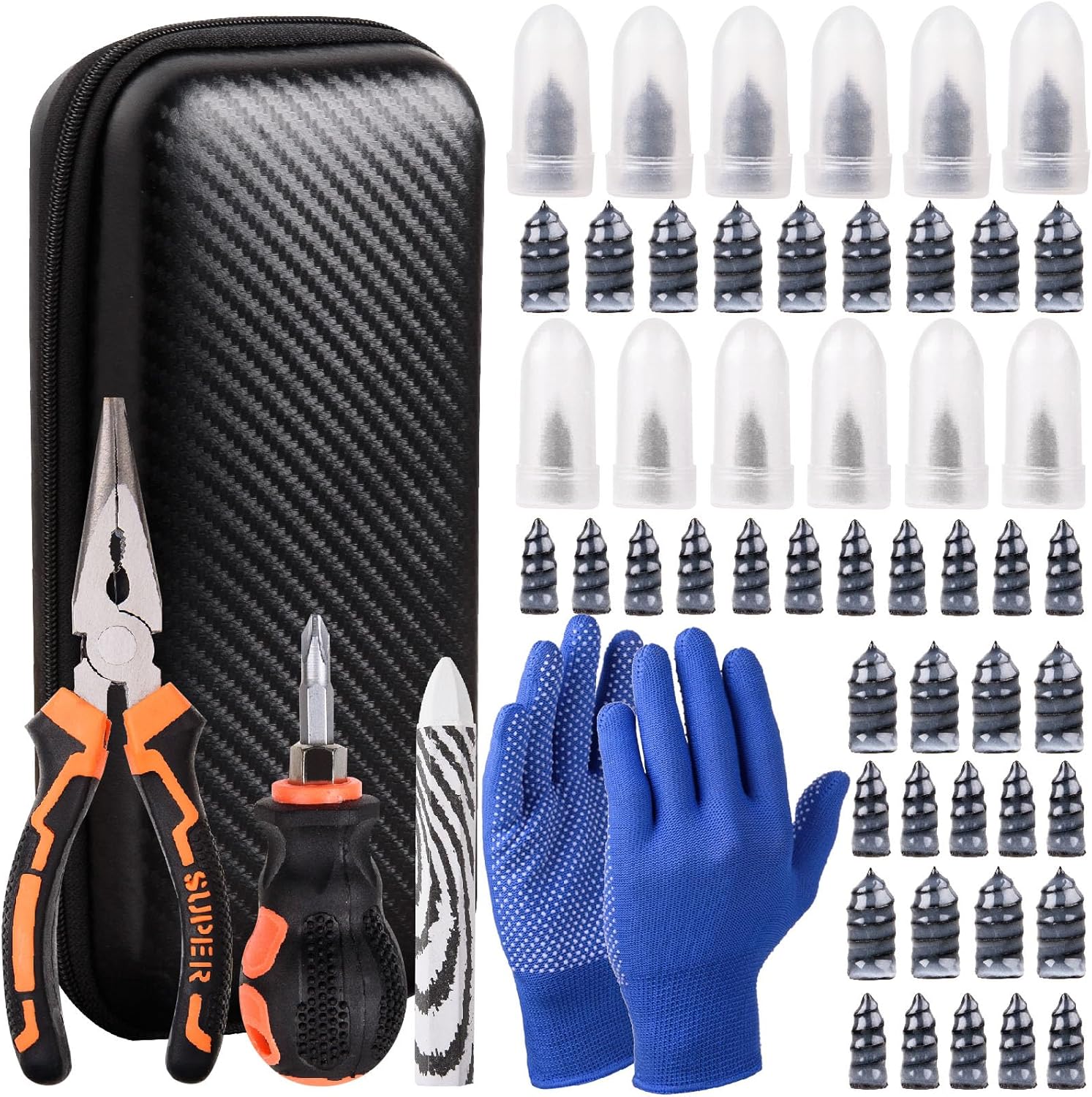
This tire sidewall puncture repair kit fixes flats fast without removing the tire, helping you get back on the road in minutes. It includes self-tapping repair nails, essential tools, gloves, and a portable storage bag for convenient roadside use. Designed for tubeless tires, it helps create a tight, leak-resistant seal for cars, motorcycles, trucks, SUVs, and ATVs.
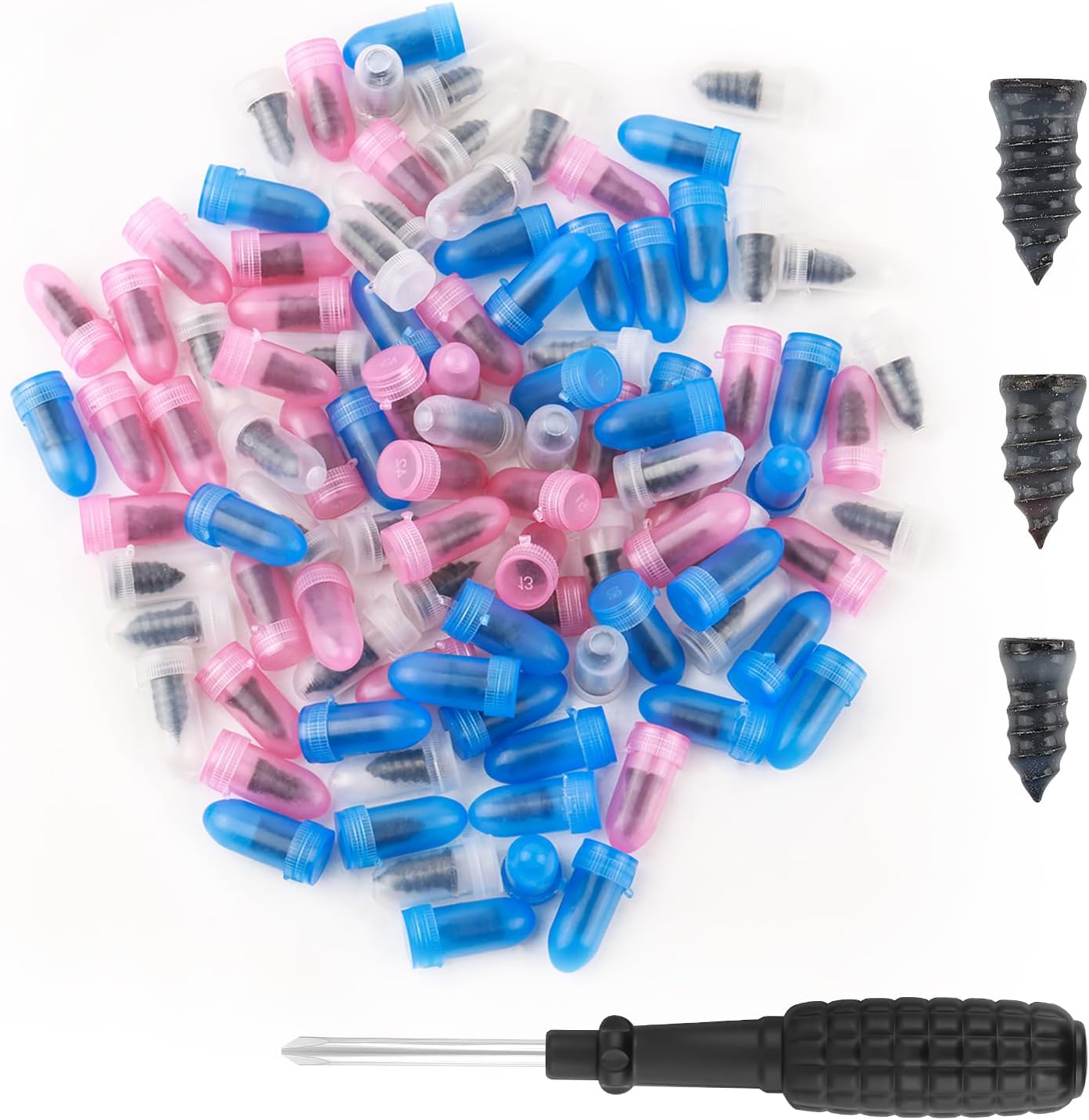
This 100-piece tire repair screw plug kit provides a fast, self-service solution for punctures on the road. Choose the correct plug size, insert it into the break, and screw it in to help seal the puncture and temporarily restore tire pressure. Thickened threads and rubber-wrapped plugs improve bite and sealing while remaining compact and easy to carry.
What Is Not Covered Under Toyota Tire & Wheel Protection?
The exact exclusions depend on your agreement, but several limits matter before you buy. The plan does not turn every worn tire, cosmetic wheel mark, or neglected maintenance issue into a covered repair.
- Normal tire wear is not the same as covered road-hazard damage.
- Cosmetic wheel damage may not qualify if the wheel still holds a seal.
- Repairs made without required authorization may be excluded.
- Platinum benefits may not be available in every state.
- Windshield replacement is different from windshield repair and may not be covered.
- Damage caused by neglect, vandalism, hail, or non-covered conditions can be excluded.
Good tire care still matters. NHTSA recommends monthly pressure checks, tread checks, and using the vehicle’s tire placard or owner’s manual for the correct tire size and pressure.
How Do You File a Toyota Tire & Wheel Claim?
If your Camry has tire or wheel damage, start by reviewing your agreement and contacting your Toyota dealer. Toyota Financial Services says you can visit your Toyota dealer for Tire & Wheel or Key Protection repairs, and the dealer can submit repair claims on your behalf.
- Move your Camry to a safe location and do not keep driving on a damaged tire.
- Check your Tire & Wheel Protection agreement for the plan, term, exclusions, and claim requirements.
- Contact your Toyota dealer or bring the vehicle in for inspection if it is safe to do so.
- Ask whether the repair needs authorization before work begins.
- Ask whether towing reimbursement applies before arranging a tow.
- Keep repair orders, receipts, photos, and any claim documents for your records.
Pro Tip: Save a copy of your Tire & Wheel Protection agreement in your glove box or phone. You will need the plan details when a tire problem happens away from home.
Questions to Ask Before Buying Toyota Tire & Wheel Protection
Before you add the plan to your Camry purchase or lease, ask the dealer direct questions. The right choice depends on your roads, tire size, plan cost, and how much risk you want to carry yourself.
| Question | Why it matters |
|---|---|
| What is the exact plan price? | You need the price before you can compare it with likely tire, wheel, and towing costs. |
| Is Platinum available in my state? | Paintless Dent Repair and Windshield Repair benefits can have state-specific limits. |
| When must I buy the plan? | Toyota lists Tire & Wheel Protection as available at the time of financing for purchase or lease. |
| What repair authorization is required? | Unauthorized repairs may be excluded, so you should know the claim process before a roadside problem happens. |
| Does my Camry have expensive tires or wheels? | Larger wheels and lower-profile tires can make one covered incident more expensive. |
Is Toyota Camry Tire & Wheel Protection Worth It?
It can be worth it if you drive on rough roads, deal with frequent construction debris, use low-profile tires, or want predictable repair costs during the coverage term. The plan becomes more attractive when one covered incident could involve a tire, wheel, towing, mounting, balancing, and taxes.
It may be less valuable if your roads are smooth, you rarely drive, your tire sizes are inexpensive, or you prefer paying for repairs as they happen. Before you buy, compare the plan price with the likely cost of one or two tire-and-wheel incidents in your area.
Gold usually makes the most sense when tire and wheel damage is your main concern. Platinum may make more sense if you also value minor dent repair and front windshield chip repair, and those benefits are available where you live.
Frequently Asked Questions
What does the Toyota tire and wheel warranty cover?
Toyota Tire & Wheel Protection can cover eligible tire repair or replacement, wheel replacement, mounting, balancing, valve stems, disposal or environmental fees, taxes, and towing reimbursement up to $100 per eligible claim. Gold covers tires and wheels, while Platinum adds Paintless Dent Repair and Windshield Repair where available.
What is not covered under a tire warranty?
Normal tire wear, neglected maintenance, unauthorized repairs, cosmetic wheel damage that does not affect the seal, and damage outside the agreement’s definition of an eligible road hazard may not be covered. Always check your actual agreement because exclusions can vary.
Does Toyota cover a nail in a tire?
Toyota may cover a nail in a tire if you purchased Tire & Wheel Protection and the damage meets the agreement’s eligibility rules. The plan may cover repair first, or replacement if the damaged tire cannot be repaired under the agreement.
Can Toyota roadside assistance fix a flat tire?
For Tire & Wheel Protection claims, Toyota lists towing reimbursement up to $100 per eligible claim for towing to the nearest authorized dealer or the cost to change the damaged tire with your spare. Separate Toyota roadside assistance benefits may depend on your vehicle, plan, and warranty status.
Can I buy Toyota Tire & Wheel Protection later?
Toyota says Tire & Wheel Protection is available through participating Toyota dealerships at the time of financing for purchase or lease. Ask your dealer before signing because availability and timing can affect whether you can add it.
Does Platinum cover windshield replacement?
Platinum lists Windshield Repair for eligible front windshield chips and cracks caused by road hazards. It does not automatically mean full windshield replacement is covered. Toyota lists exclusions, including stress cracks and cracks over 6 inches.
Does Toyota Tire & Wheel Protection cover cosmetic wheel damage?
Cosmetic wheel damage may not qualify if the wheel still holds a seal with the new tire. Toyota’s wheel replacement language focuses on a wheel that fails to hold a seal after a covered tire issue. Check your agreement for exact wheel-damage rules.
Can I use any repair shop for a Toyota Tire & Wheel claim?
Do not assume you can use any repair shop without approval. Toyota says you can visit your Toyota dealer for Tire & Wheel or Key Protection repairs, and the dealer can submit repair claims on your behalf. Your agreement controls the exact process.
Conclusion
Toyota Camry Tire & Wheel Protection can make sense if you want help with eligible road-hazard tire and wheel costs during the coverage term. Gold gives you focused tire and wheel coverage, while Platinum adds minor dent and windshield repair benefits where available.
The best choice depends on your driving roads, tire replacement costs, risk tolerance, state availability, and the price of the plan. Before you buy, ask your Toyota dealer for the full agreement, confirm exclusions, and compare the plan cost with the repair bills you are trying to avoid.
Sources
- Toyota Financial Services — Tire & Wheel Protection — Gold, Platinum, Key Replacement Protection, coverage limits, examples, availability notes, and exclusions.
- Toyota Financial Services — How to File a Claim — dealer claim submission process for Tire & Wheel/Key Protection repairs.
- NHTSA TireWise — tire pressure, tread, tire size, and tire maintenance safety guidance.

Related Articles

Toyota Camry All-Season Tires Explained: What They Can and Can’t Do
In exploring Toyota Camry all-season tires, discover their benefits and limitations—are they really the right choice for your driving needs?
Read More
Toyota Camry Tire Traction in Ice and Snow: A Practical Winter Driving Guide
Learn essential tips for maximizing tire traction on ice and snow in your Toyota Camry, ensuring your winter driving is safe and confident. Discover more now!
Read More
Do Toyota Camry Tires Need Snow Chains? When They Help and When They Don’t
How do snow chains enhance your Toyota Camry's winter driving safety, and when should you avoid using them? Discover the essential details inside!
Read More