
Toyota Camry TPMS Sensor Relearn Procedure: How and When to Reset It

A Toyota Camry TPMS reset is not one universal button trick. The right process depends on what changed: tire pressure, tire rotation, tire replacement, wheel set replacement, or a failed sensor. Start with correct cold tire pressure, then use the reset switch, the Multi-Information Display menu, or a TPMS scan tool based on your Camry’s system.
Quick Answer
To reset a Toyota Camry TPMS light, set all road tires to the cold pressure on the driver-door placard first. Then use the TPMS reset switch if your Camry has one, or use the TPWS setting menu on newer models. If sensors were replaced, register the sensor IDs before initialization.
Key Takeaways
- A Camry TPMS reset starts with correct cold tire pressure, not the reset button.
- Older Camry models may have a physical TPMS reset switch under the dash or near the glovebox.
- Newer Camry models may use the Multi-Information Display TPWS menu instead of a separate button.
- New tire pressure sensors, second wheel sets, or lost IDs usually need scan-tool registration before the light will clear.
- A flashing TPMS light that turns solid usually means a system malfunction, not simply low tire pressure.
At a Glance
| Time Required | 5 to 10 minutes for pressure setup; 20 to 30 minutes if a drive cycle is needed |
| Difficulty | Easy for pressure initialization; moderate if sensor IDs must be registered |
| Tools Needed | Accurate tire-pressure gauge, air compressor, owner’s manual, and TPMS scan tool only if sensors were replaced |
| Cost | Usually free for a simple reset; paid service if sensors, valve kits, mounting, or programming are needed |
Before You Reset, Check the Right Camry TPMS Method
Before you press any button, confirm what you are trying to fix. A pressure reset, also called initialization, teaches the system the correct inflation baseline. Sensor registration writes the tire pressure sensor IDs into the TPMS computer. These are related, but they are not the same job.
Use the tire pressure listed on the driver-side door placard, not the maximum pressure printed on the tire sidewall. Toyota’s current Camry quick reference material says the TPMS setting is available through the Multi-Information Display on newer models, while older Toyota procedures may use a separate reset switch.
| Situation | Best Next Step |
|---|---|
| You corrected low tire pressure | Set cold pressure, then initialize TPMS if the light does not turn off. |
| You rotated tires but kept the same sensors | Check pressure first. A full sensor ID registration is usually not needed unless your system cannot identify positions correctly. |
| You installed new TPMS sensors or another wheel set | Register the sensor IDs with a compatible TPMS scan tool or Toyota service tool, then initialize the system. |
| The light flashes for about a minute, then stays on | Treat it as a TPMS malfunction and scan the system before repeating resets. |
Note: Toyota uses the term TPWS, or Tire Pressure Warning System, in some manuals and menus. Drivers often call the same system TPMS.
Why Camry TPMS Relearn Matters
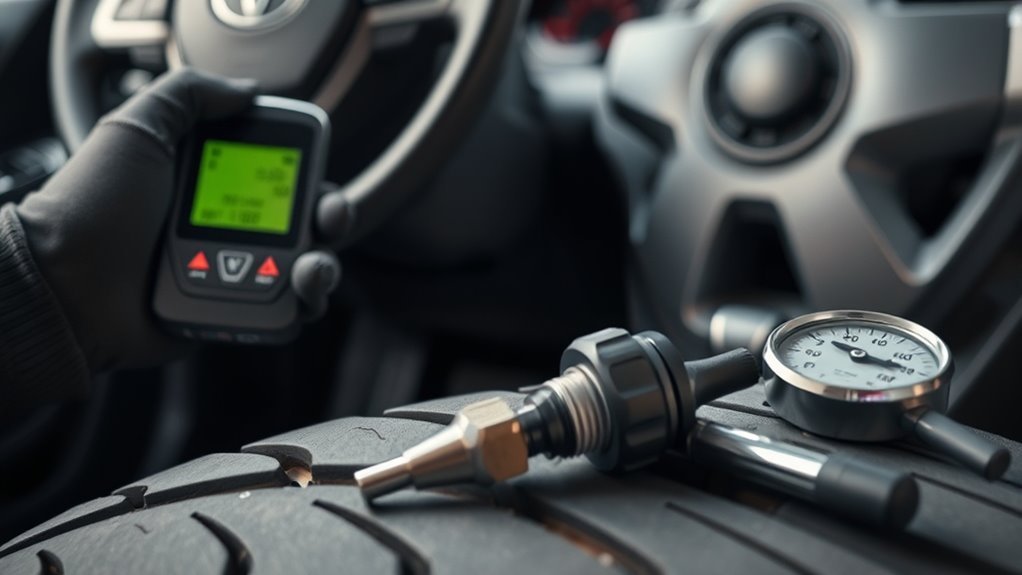
Camry TPMS relearn matters because the warning system must know which sensors belong to the vehicle and what pressure baseline counts as normal. After simple pressure service, initialization may be enough. After sensor replacement, the Camry must recognize the new sensor IDs before the warning light can clear.
A working TPMS helps you catch underinflation before the tire looks visibly low. NHTSA also reminds drivers that TPMS does not replace regular tire pressure checks, because tires can be underinflated before the warning threshold is reached.
Note: Most modern Camry TPMS setups use direct tire pressure sensors mounted at the wheels. Each sensor has an ID code. If a new sensor ID is not registered, the ECU may not accept the signal.
Where the Camry TPMS Reset Button Is
Some Toyota Camry models have a physical tire pressure reset switch under the steering wheel, low on the driver-side dash, or near the glovebox area. The exact location varies by model year and trim, so do not remove panels or force switches if you cannot find it.
Newer Camry models may not use a separate reset button for normal TPMS initialization. Instead, the tire pressure warning system can be selected through the Multi-Information Display. In the 2025 Toyota Camry Quick Reference Guide, the TPWS reset path appears under the vehicle settings menu.
Warning: Do not assume your Camry has a manual reset button. Repeating the wrong procedure can hide the real problem, especially when a sensor ID is missing or the TPMS light is flashing.
[Products Worth Considering]

EVOULTES heavy duty tire inflator with an integrated gauge delivers accurate pressure readings from 10–120 PSI, helping you inflate, deflate, and check tires in one tool. The 16.5-inch extended dual-head air chuck with swivel base reaches hard-to-access dual wheel valves on trucks and RVs. A brass trigger core and side-mounted air release valve make operation smooth, with standard 1/4" NPT threading and quick-connect compatibility for easy setup.
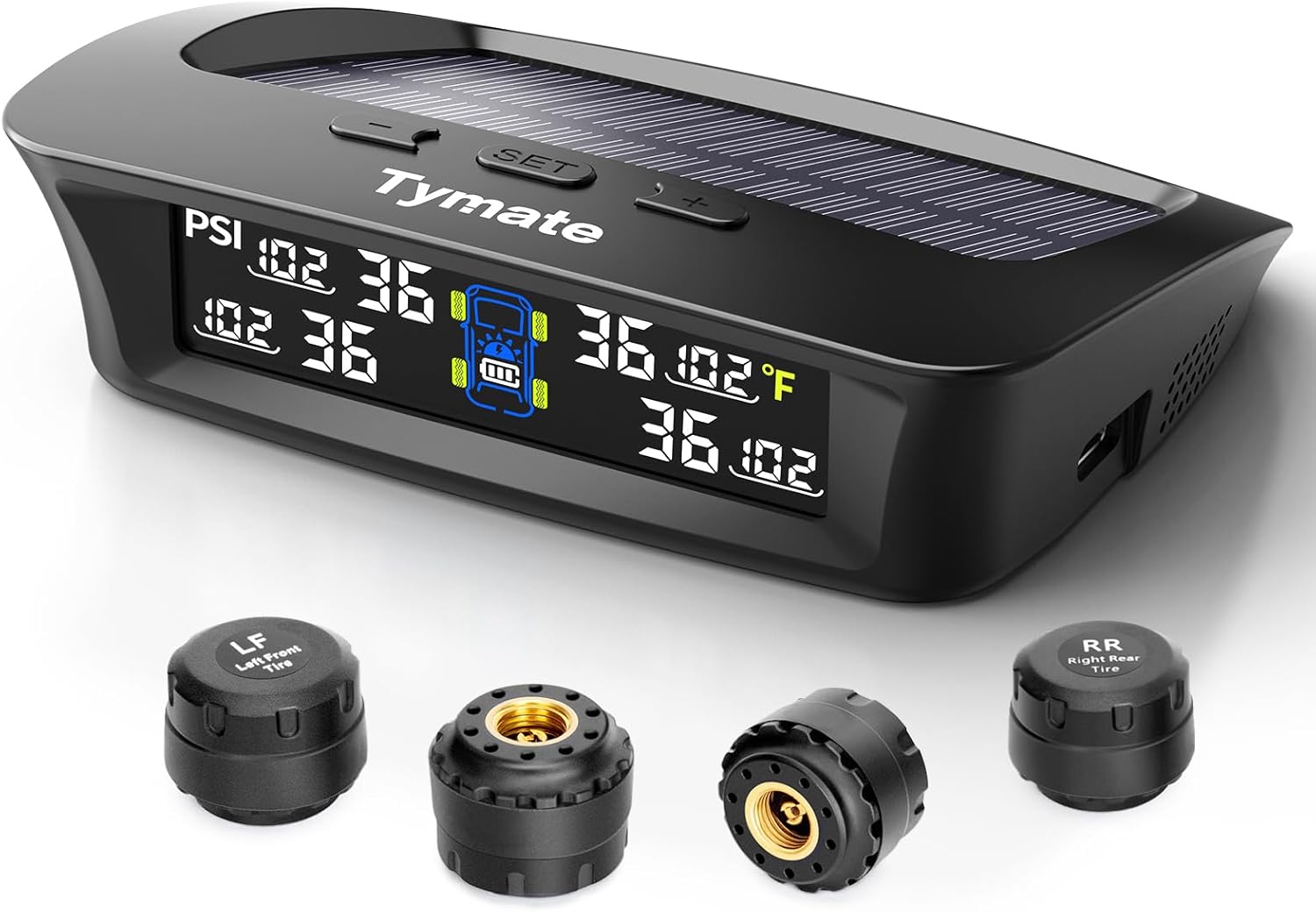
The Tymate TM3 RV TPMS delivers real-time tire pressure monitoring from 0 to 144 PSI with accurate readings and dependable wireless communication. It includes four external sensors with pre-pairing, six alarm modes for rapid leak, pressure extremes, temperature, and signal loss, plus an easy-reference setup for alert thresholds. Solar and USB-C charging help keep the display powered, while the color LCD and adaptive backlight improve visibility for safer driving and towing.

The Fanttik X10 Pro is a cordless portable tire inflator that reaches up to 150 PSI and can inflate an R15 tire in about 35 seconds for quick roadside or home top-ups. With AccuInFlate auto-stop and smart start/stop controls, it helps maintain accurate pressure and frees your hands once the target is reached. A high-visibility digital display and preset modes make it easy to set and monitor inflation for cars, motorcycles, bikes, and balls.
How to Reset the Camry TPMS Light
Park safely, let the tires cool, and check all four road tires with an accurate gauge. Inflate them to the cold pressure listed on the driver-door Tire and Loading Information label. Check the spare only if your owner’s manual or scan-tool data confirms that your Camry monitors a spare tire sensor.
[Products Worth Considering]

The AstroAI L7 Air Tire Inflator refills car tires quickly with up to 150PSI max pressure and a fast 1-minute inflation claim. It includes 5 preset modes for car, motorcycle, bicycle, balls, and manual use, along with an auto shutoff to help prevent overinflation. Designed for convenience, it features a digital gauge with unit switching, a top LED light with multiple modes, and USB-C/USB ports for backup power.

This portable cordless tire inflator delivers up to 160 PSI with fast 17 L/min airflow to help you quickly top up tires and get back on the road. It features dual power mode, running on a 21V rechargeable battery or a 12V DC adapter for convenient roadside use. An automatic shut-off with digital pressure gauge helps prevent overinflation, and a built-in LED light improves visibility in low-light conditions.
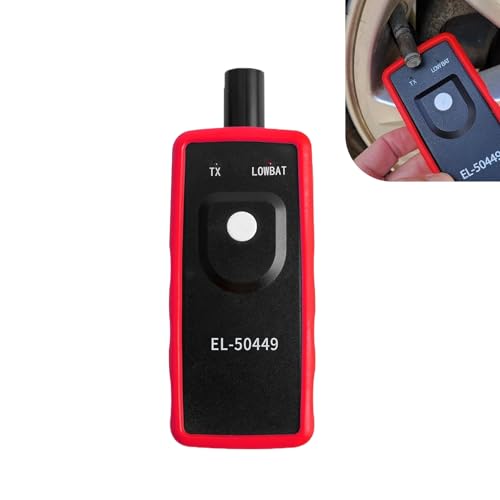
Key Functions: This tpms relearn tool is for vehicles with direct TPMS. It activates sensors, clears dashboard warning lights, and checks for bad or low-power sensors. It is compatible with many major vehicle brands.
Method 1: Use the Reset Switch if Equipped
- Turn the ignition to ON, or turn the vehicle to ON mode, without driving.
- Press and hold the tire pressure warning reset switch.
- Wait for the TPMS warning light to blink slowly three times.
- Release the switch and keep the vehicle in ON mode for a few minutes if your manual instructs you to do so.
- Start the vehicle and drive normally. Recheck pressure if the light returns.
Method 2: Use the Multi-Information Display Menu
On newer Camry models, use the steering-wheel controls and screen menu instead of looking for a separate button. The 2025 Camry quick reference process uses the Multi-Information Display path for TPWS settings.
- Select the settings menu on the Multi-Information Display.
- Open Vehicle Settings.
- Select TPWS setting.
- Select Tire Pressure Setting.
- Choose either the specified tire inflation pressure option or the current-pressure setting option shown on your screen.
- Confirm the setting and watch for the warning light to slowly blink three times.
Method 3: Register Sensor IDs After New Sensors or Wheels
If new tire pressure warning valves and transmitters were installed, the IDs must be registered before a reset can work. A tire shop, Toyota dealer, or technician with a compatible TPMS tool can read each sensor ID and write it into the vehicle through the diagnostic connection.
This step matters most after aftermarket sensors, winter wheel sets, used wheels, or a TPMS ECU replacement. Once the IDs are registered, initialize the tire pressure setting and complete any required drive cycle.
Pro Tip: If the reset started correctly but the light does not clear, drive at a steady speed above about 25 mph for 20 minutes when conditions are safe. If the light still flashes or returns, scan the TPMS system instead of repeating the reset.
What the Camry TPMS Light Pattern Means
The light pattern tells you whether you likely have low pressure, a reset issue, or a system malfunction. Read the pattern before replacing sensors.
| Light Pattern | Likely Meaning | What to Do |
|---|---|---|
| Solid light | One or more tires may be underinflated. | Check cold tire pressure with a gauge and inflate to the door placard. |
| Light comes on during cold mornings, then turns off | Pressure may be near the warning threshold and dropping with temperature. | Adjust cold pressure when the tires have not been driven recently. |
| Flashes for about 60 to 90 seconds, then stays on | TPMS malfunction, missing ID, sensor failure, receiver issue, or communication problem. | Scan TPMS codes and confirm all sensor IDs are registered. |
| Does not blink three times during reset | Initialization may not have started. | Recheck the method for your model year and confirm ignition mode. |
A flashing TPMS light followed by a steady light usually points to a system malfunction, not a simple low-pressure warning.
Why Camry TPMS Relearn Fails After Service
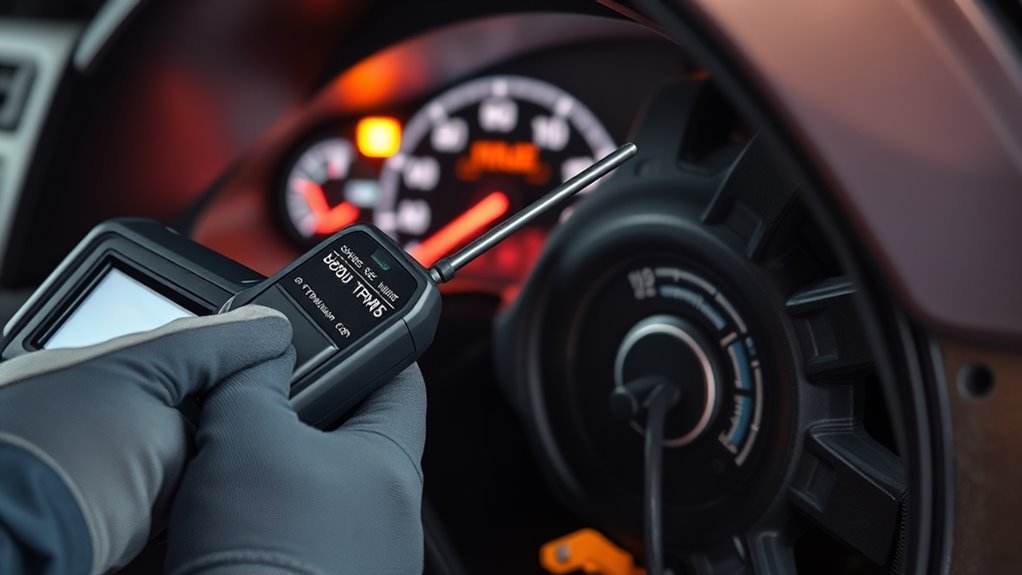
TPMS relearn failure usually happens when the ECU cannot detect the correct sensor signals or the pressure baseline was set incorrectly. This often appears after tire replacement, sensor replacement, wheel swaps, or using aftermarket sensors that were not programmed correctly.
| Cause | Result | Fix |
|---|---|---|
| Incorrect or missing sensor ID registration | ECU does not recognize one or more wheels. | Register IDs with a TPMS tool or Toyota service tool. |
| Wrong-frequency or incompatible aftermarket sensor | No usable signal reaches the TPMS receiver. | Install sensors matched to your Camry year and market. |
| Dead or weak sensor battery | Signal becomes intermittent or stops. | Replace the failed sensor, then register and initialize it. |
| Tires were set while hot | Pressure may drop below the learned baseline later. | Let tires cool, set cold pressure, and initialize again. |
| Incomplete initialization or drive cycle | System does not finish learning values. | Repeat the correct method, then drive steadily if required. |
| Monitored spare tire is low or inactive | Warning remains even when four road tires are correct. | Check your manual or scan-tool data to see whether your spare is monitored. |
To fix a failed relearn, verify cold tire pressure first, then confirm sensor compatibility and ID registration. If the TPMS light keeps flashing, stop repeating resets and read the TPMS diagnostic trouble codes.
Warning: Never ignore a flashing TPMS light. Until the malfunction is repaired, the system may not warn you correctly about a low tire.
Camry TPMS Sensors, Spare Tires, and Costs
TPMS sensors are battery-powered parts mounted inside the wheel at the valve stem. Many sensors last several years, often around 5 to 10 years, but battery life varies with sensor design, climate, mileage, and driving pattern. When a battery dies, the sensor usually must be replaced because the battery is sealed inside the sensor.
Some Toyota TPMS systems can store more than four transmitter IDs, but not every Camry monitors the spare tire. If the warning light remains after the four road tires are correct, check your owner’s manual, the tire placard notes, or scan-tool live data before assuming the spare is involved.
Replacement cost depends on whether you use an original-equipment sensor, a programmable aftermarket sensor, a new valve service kit, and paid programming. Schrader lists TPMS sensor replacement at about $50 to $100 each depending on vehicle type, before local labor differences. Ask the shop whether the quote includes sensor programming, tire dismounting, balancing, and a final TPMS verification.
[Products Worth Considering]

【Pre-programmed TPMS Sensor】The Tire Pressure Sensor is 100% new and come pre-programmed specifically for your make/model/year of vehicle,just activate them with TPMS scan tool.

【Compatible with】Tire pressure sensor replacement Compatible with Toyota 4Runner 2017►Toyota Camry 2012 2013 2014 2015 2016 2017►Toyota Corolla 2014 2015 2016 2017 2018 ►Toyota Prius 2016 2017 2018►Toyota Prius C 2013 2014 2015 2016 2017 2018►Toyota Prius Plug-In 2012 2013 2014 2015►Toyota Prius Prime 2017 2018►Toyota Prius V 2017► Toyota Highlander 2014 2015 2016 2017 2018►Toyota RAV4 2013 2014 2015 2016 2017 2018►Toyota Land Cruiser 2015 2016 2017 2018►Toyota Avalon 2013 2014 2015
Frequently Asked Questions
How long does Camry TPMS relearn take?
A simple pressure initialization may take only a few minutes after you set cold tire pressure and complete the reset steps. If the system needs driving time, plan for about 20 to 30 minutes of steady driving. If the light flashes or returns after that, scan the TPMS system.
Can I reset Camry TPMS without a scan tool?
Yes, you can usually reset or initialize the system without a scan tool when the original sensors are still installed and the issue is only low pressure. You usually need a scan tool when sensors were replaced, sensor IDs are missing, or the TPMS light indicates a malfunction.
Does disconnecting the battery reset TPMS?
No. Disconnecting the battery is not a proper TPMS reset. It will not register new sensor IDs, repair a dead sensor battery, or fix a wrong pressure baseline. Use the correct TPMS initialization method for your model year.
Can cold weather trigger Camry TPMS warnings?
Yes. Tire pressure drops as outside temperature falls, so a tire that was barely above the warning threshold may trigger the TPMS light on a cold morning. Check and set pressure when the tires are cold.
Do I need to reset TPMS after rotating Camry tires?
Not always. If the same sensors remain installed and all tire pressures match the placard, a rotation alone may not need ID registration. Reset or initialize the system if the warning light stays on, the pressure baseline changed, or your manual instructs you to do it after rotation.
Why is my Camry TPMS light flashing before it stays on?
A flashing TPMS light followed by a steady light usually means the system has a malfunction. Common causes include a dead sensor battery, unregistered sensor ID, wrong sensor type, receiver issue, or incomplete initialization.
Conclusion
Camry TPMS reset and relearn procedures work best when you start with the basics: cold tire pressure, the driver-door placard, and the correct method for your model year. Use the reset switch on older models that have one, use the TPWS menu on newer models, and register sensor IDs when sensors or wheel sets change. If the light flashes, treat it as a diagnostic problem rather than a simple reset issue.
Sources
- Toyota 2025 Camry Quick Reference Guide — TPWS menu location, tire pressure setting, and three-blink initialization behavior
- Toyota Owners Official Site — owner manual access and model-specific Toyota guidance
- NHTSA TireWise — TPMS warning light meaning, malfunction pattern, and tire pressure safety guidance
- NHTSA-hosted Toyota/Lexus TPWS Activation & Initialization Bulletin — cold tire pressure setup and initialization diagnostic details
- Tire Review Toyota TPMS Service Overview — Toyota reset switch guidance and sensor ID registration context
- Schrader TPMS Replacement Guide — TPMS sensor replacement, service kits, programming, and cost context

Related Articles

Toyota Camry All-Season Tires Explained: What They Can and Can’t Do
In exploring Toyota Camry all-season tires, discover their benefits and limitations—are they really the right choice for your driving needs?
Read More
Toyota Camry Tire Traction in Ice and Snow: A Practical Winter Driving Guide
Learn essential tips for maximizing tire traction on ice and snow in your Toyota Camry, ensuring your winter driving is safe and confident. Discover more now!
Read More
Do Toyota Camry Tires Need Snow Chains? When They Help and When They Don’t
How do snow chains enhance your Toyota Camry's winter driving safety, and when should you avoid using them? Discover the essential details inside!
Read More