
2024 Toyota Camry Tire Size: OEM Specs for LE, SE, XLE, XSE & TRD
For the 2024 Toyota Camry, the correct tire size depends on the trim, drivetrain, and whether you drive the gas or hybrid model. The gas LE uses 215/55R17, the gas SE and XLE use 235/45R18, and the XSE, TRD, and Nightshade trims use 235/40R19. Hybrid LE is different at 205/65R16, so always verify the sidewall and driver-door placard before you order tires.
Quick Answer
Most 2024 Toyota Camry gas trims use 215/55R17, 235/45R18, or 235/40R19 tires, depending on trim. Hybrid LE uses 205/65R16. For pressure, do not use 48–52 psi as a target. Check the Tire and Loading Information label on your driver-door jamb and inflate when the tires are cold.
Key Takeaways
- Gas LE trims commonly use 215/55R17 tires, while gas SE and XLE trims use 235/45R18.
- XSE, TRD, SE Nightshade, Hybrid XSE, and Hybrid SE Nightshade trims commonly use 235/40R19 tires.
- Hybrid LE is the main exception because it uses 205/65R16 tires.
- Always match tire size, load index, speed rating, and cold tire pressure to your door-jamb placard or owner information.
- Toyota says TPMS does not replace regular checks with a pressure gauge, so inspect your tires monthly.
Understanding the Importance of Correct Tire Sizing

Choosing the correct tire size for your 2024 Toyota Camry affects handling, ride comfort, braking feel, fuel economy, and tire wear. The tire size also helps your speedometer, stability control, anti-lock braking system, and tire pressure monitoring system work as designed.
A size such as 235/45R18 tells you the tire width, sidewall height ratio, construction type, and wheel diameter. The first number is width in millimeters. The second number is the sidewall aspect ratio. The “R” means radial construction, and the final number is the wheel diameter in inches.
For example, a 215/55R17 tire generally gives more sidewall cushion than a 235/40R19 tire. The 19-inch setup can feel sharper and sportier, but it may also ride firmer and cost more to replace. That is why the best tire is not just the largest tire. It is the tire that matches your Camry trim and your driving conditions.
Warning: Do not inflate your Camry tires to 48–52 psi unless your vehicle placard specifically says to do so. Some fitment charts show 48–52 mm as a wheel offset range, but that is not the same thing as tire pressure. Use the cold PSI listed on the driver-door Tire and Loading Information label.
[Products Worth Considering]

This portable cordless tire inflator delivers up to 160 PSI with fast 17 L/min airflow to help you quickly top up tires and get back on the road. It features dual power mode, running on a 21V rechargeable battery or a 12V DC adapter for convenient roadside use. An automatic shut-off with digital pressure gauge helps prevent overinflation, and a built-in LED light improves visibility in low-light conditions.

EVOULTES heavy duty tire inflator with an integrated gauge delivers accurate pressure readings from 10–120 PSI, helping you inflate, deflate, and check tires in one tool. The 16.5-inch extended dual-head air chuck with swivel base reaches hard-to-access dual wheel valves on trucks and RVs. A brass trigger core and side-mounted air release valve make operation smooth, with standard 1/4" NPT threading and quick-connect compatibility for easy setup.

The JACO FlowPro Tire Inflator measures, inflates, and airs down tires up to 100 PSI with battery-free operation and ±2% accuracy after calibration. It features a glowing pressure dial for night visibility, a heavy-duty steel build with a hybrid hose, and a precision push-to-inflate thumb trigger. The patented Lightning Air Chuck locks on for a secure seal, and the kit includes quick-connect hardware for easy inline use with your air compressor.
Tire Sizes and Specifications for Each Camry Trim Level
The table below covers the common 2024 Toyota Camry tire sizes by trim. Use it as a guide, then confirm your actual tire sidewall and driver-door placard before buying. Toyota’s 2024 Camry brochure also shows the matching wheel families for LE, SE, XLE, XSE, Nightshade, and TRD models, while tire fitment data from Goodyear lists the tire sizes by trim.
| 2024 Camry Trim | Common OEM Tire Size | Wheel Size | Notes |
|---|---|---|---|
| LE FWD / LE AWD | 215/55R17 | 17-inch | Comfort-focused gas trim size. |
| SE FWD / SE AWD | 235/45R18 | 18-inch | Sportier gas trim size. |
| SE Nightshade FWD / AWD | 235/40R19 | 19-inch | Special appearance package with 19-inch wheels. |
| XLE FWD / XLE AWD | 235/45R18 | 18-inch | Touring-focused trim with 18-inch wheels. |
| XSE FWD / XSE AWD | 235/40R19 | 19-inch | Sport-styled trim with lower-profile tires. |
| TRD | 235/40R19 | 19-inch | Performance-focused trim with TRD suspension tuning. |
| Hybrid LE | 205/65R16 | 16-inch | Efficiency-focused hybrid base trim. |
| Hybrid SE | 235/45R18 | 18-inch | Sport hybrid trim. |
| Hybrid SE Nightshade | 235/40R19 | 19-inch | Hybrid Nightshade appearance package. |
| Hybrid XLE | 235/45R18 | 18-inch | Comfort-focused hybrid upgrade trim. |
| Hybrid XSE | 235/40R19 | 19-inch | Sport-styled hybrid trim. |
Note: Tire retailer databases can list optional or alternate fitments. If your current tire sidewall, door placard, and retailer database do not match, ask a Toyota dealer or qualified tire shop to verify the correct fit before you buy.
Standard OEM Tire Options and Performance Insights
OEM tire sizing is not random. Toyota pairs each Camry trim with a wheel and tire package that fits the trim’s suspension tuning, ride goal, brake clearance, and fuel-economy target. A 17-inch LE setup favors comfort and sidewall cushion. An 18-inch SE or XLE setup adds a wider footprint. A 19-inch XSE, Nightshade, or TRD setup gives a sharper look and firmer steering feel.
When you replace tires, match more than the size. You should also match the load index and speed rating shown on your original tires or door placard. A tire marked 235/45R18 94V, for example, includes the size, load index, and speed rating. The load index tells you how much weight the tire can carry, while the speed rating reflects the tire’s tested speed capability.
For daily driving, a quality all-season tire is usually the simplest choice. Summer tires can improve warm-weather grip, but they are not meant for freezing temperatures. Winter tires can improve control in snow, slush, and icy cold weather, but they should be installed as a full set of four tires with matching sizing and ratings.
Understanding Performance Differences Among Tire Sizes

Each Camry tire size changes the way the car feels. Wider, lower-profile tires can give the car more direct steering and a sportier response. Taller-sidewall tires usually ride softer and may better absorb rough pavement. The right choice depends on your trim and the roads you drive every day.
Handling Characteristics
The 215/55R17 size gives the gas LE a balanced feel with more sidewall than the sportier trims. The 235/45R18 size on SE and XLE models adds width and a shorter sidewall, which can improve steering response without becoming as firm as a 19-inch package. The 235/40R19 size on XSE, TRD, and Nightshade trims uses a lower profile, which can feel sharper in corners but may feel firmer over potholes and broken pavement.
If you switch away from the factory size, you can change the outside diameter of the tire. That can affect speedometer accuracy, gear behavior, ride height, and clearance. On AWD models, keeping all four tires matched in size, wear, and construction is especially important.
Fuel Efficiency Impact
Tire size, tread design, weight, and inflation pressure can all affect fuel economy. Smaller or narrower tires often create less rolling resistance, while wider and heavier tires can need more energy to move. That does not mean a 19-inch Camry is a bad choice. It means you should choose tires that fit your trim and your priorities.
FuelEconomy.gov says proper tire inflation can improve gas mileage by 0.6% on average and up to 3% in some cases.
For the best balance, use the factory tire size unless you have a clear reason to change. Then choose a tire type that fits your climate, such as touring all-season, performance all-season, summer, or winter.
Recommended Tire Pressure for Performance
The safest tire pressure answer is the one printed on your 2024 Camry’s Tire and Loading Information label, usually located on the driver-side door jamb. Toyota also says you can find the correct tire pressure in the owner’s manual or online manual for your specific vehicle.
Many Camry fitments are commonly listed around 35 psi cold, but you should not rely on a generic number if your door placard says something different. Check pressure when the tires are cold, which means the car has been parked for at least three hours or has been driven only a short distance at low speed.
Do not use the maximum PSI printed on the tire sidewall as your normal inflation target. That sidewall number is a tire limit, not the vehicle manufacturer’s recommended pressure. Overinflation can reduce ride comfort and traction, while underinflation can increase heat, wear, fuel use, and stopping distance.
Pro Tip: Keep a digital pressure gauge in your glove box and check all four tires once a month. Toyota notes that TPMS is helpful, but it should not replace regular checks with a gauge.
Where to Find Your Camry Tire Size Before Ordering
Before buying replacement tires, check the size in three places:
- Current tire sidewall: Look for a code such as 235/45R18 or 235/40R19.
- Driver-door placard: This label lists the vehicle’s recommended tire size and cold pressure.
- Owner information or dealer fitment: Use Toyota owner information or a trusted tire shop database to confirm the trim and drivetrain.
This step matters because the 2024 Camry lineup includes gas, hybrid, AWD, FWD, Nightshade, and TRD versions. Two cars with the same model year can use different tire sizes.
[Products Worth Considering]
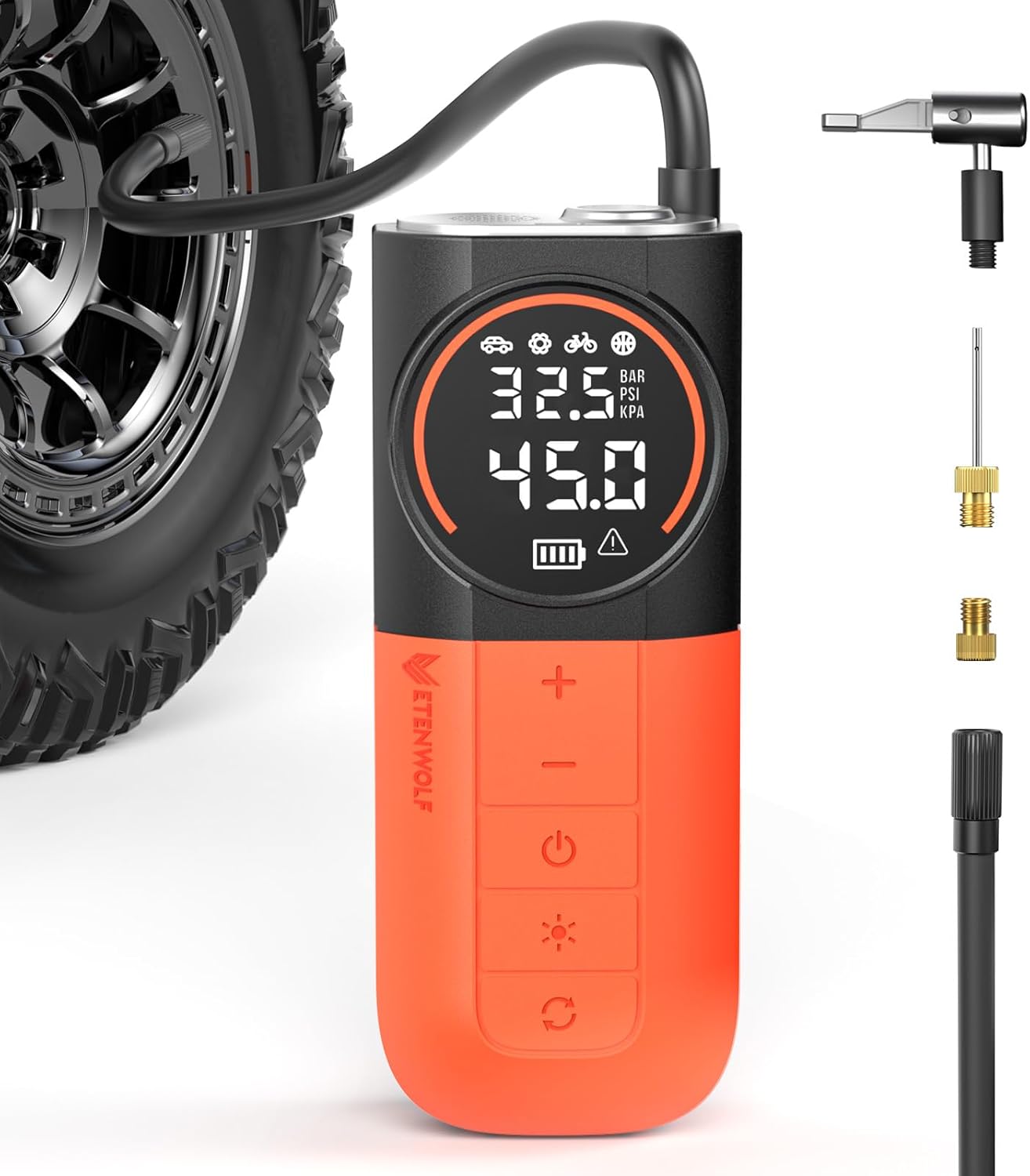
The ETENWOLF S1 cordless tire inflator delivers ultra-fast inflation with up to 160 PSI and a 20 L/min airflow for quicker tire top-offs. Its 5200mAh battery and cooling system support inflating many tires and sports balls on a single charge, while the digital pressure gauge and multi-unit display help you reach the right pressure accurately. With preset modes, pressure memory, an auto-stop feature, and an LED flashlight, it’s built for easy roadside and everyday use.

The Fanttik X10 Pro is a cordless portable tire inflator that reaches up to 150 PSI and can inflate an R15 tire in about 35 seconds for quick roadside or home top-ups. With AccuInFlate auto-stop and smart start/stop controls, it helps maintain accurate pressure and frees your hands once the target is reached. A high-visibility digital display and preset modes make it easy to set and monitor inflation for cars, motorcycles, bikes, and balls.
Choosing Aftermarket Tires to Upgrade Your Camry
Upgrading your 2024 Toyota Camry with aftermarket tires can improve ride comfort, wet grip, snow traction, tread life, or steering response. The key is to upgrade without creating fitment problems.
- Match the OEM size first: Start with the size on your door placard and current tire sidewall.
- Match load and speed ratings: Do not choose a lower load rating than the original tire.
- Choose the right category: Touring all-season tires favor comfort, performance all-season tires favor sharper response, summer tires favor warm-weather grip, and winter tires favor cold-weather control.
- Keep all four tires consistent: Use the same size, model, and similar tread depth on all four corners, especially on AWD Camry models.
- Confirm clearance: Larger wheels, wider tires, or aggressive offsets can rub suspension parts or fender liners.
If you want a plus-size setup, ask a qualified tire shop to confirm overall diameter, wheel width, offset, load rating, speed rating, and TPMS compatibility. A small change can work, but a poorly matched upgrade can hurt the ride, increase wear, or trigger warning lights.
Essential Tire Maintenance Tips for Longevity and Safety
Correct tire size is only the starting point. Your Camry also needs regular tire pressure checks, tread inspections, rotations, and alignment checks to keep the tires wearing evenly and safely.
Regular Tire Inspections
Inspect your tires at least once a month and before long road trips. Look for cuts, cracks, punctures, sidewall bubbles, exposed cords, and uneven tread wear. If you see a bulge or deep sidewall damage, do not ignore it. Have the tire inspected before driving at highway speed.
Check tread depth across the inner, center, and outer tread grooves. The legal minimum in many places is 2/32 inch, and NHTSA recommends replacing tires when the tread is worn to the wear indicators. In wet weather, replacing before the legal minimum can give you more stopping grip.
Proper Inflation Levels
Proper tire inflation helps your Camry handle predictably, stop properly, and use fuel efficiently. Check pressure when the tires are cold and set it to the PSI on your driver-door placard. If you check pressure after driving, the reading may be higher because heat raises tire pressure.
Temperature changes matter. Cold weather can lower tire pressure, while hot weather and highway driving can raise the reading. That is why monthly checks are more reliable than waiting for the TPMS warning light.
Timely Rotations and Alignments
Rotate your Camry tires on schedule to help even out wear. A common interval is every 5,000 to 7,500 miles, but your exact schedule can depend on your driving, tire type, and Toyota maintenance guidance. If you notice feathering, cupping, pulling, vibration, or one edge wearing faster than the other, schedule an alignment and suspension check.
For directional tires, the rotation pattern may differ because the tire must keep rolling in the correct direction. For staggered or non-standard setups, ask a tire professional before rotating.
Frequently Asked Questions
Can I use different tire sizes on my Camry?
You should use the tire size listed on your driver-door placard unless a qualified tire professional confirms an alternate size. Different sizing can affect handling, speedometer accuracy, tire clearance, braking, and AWD operation.
How do I know when to replace my tires?
Replace your tires when tread depth reaches 2/32 inch, when the wear bars are flush with the tread, or when you see unsafe damage such as sidewall bulges, exposed cords, deep cracks, or repeated air loss. In wet or winter driving, replacing earlier may improve safety.
What are the risks of incorrect tire sizing?
Incorrect tire sizing can reduce traction, create rubbing, change speedometer readings, increase uneven wear, affect stability control, and put extra stress on the drivetrain. It can also make the car ride worse or trigger TPMS issues.
Are all tires compatible with all Camry trims?
No. A 2024 Camry Hybrid LE, gas LE, SE, XLE, XSE, Nightshade, and TRD can use different tire and wheel packages. Always choose tires based on your trim, drivetrain, door placard, and current wheel size.
What PSI should 2024 Toyota Camry tires be?
Use the cold tire pressure printed on the driver-door Tire and Loading Information label. Many Camry fitments are commonly around 35 psi cold, but the placard on your specific car is the safest source.
Does the 2024 Camry Hybrid LE use the same tire size as the gas LE?
No. The gas LE commonly uses 215/55R17, while the Hybrid LE commonly uses 205/65R16. Check your actual sidewall and door placard before ordering because market and equipment differences can matter.
What is the warranty on OEM tires?
OEM tire coverage usually comes from the tire manufacturer’s limited warranty, not a separate Toyota bumper-to-bumper tire warranty. Check the tire warranty guide, tire brand, mileage terms, exclusions, and proof-of-maintenance requirements.
Conclusion
Choosing the right tire size for your 2024 Toyota Camry starts with your trim. Gas LE uses 215/55R17, SE and XLE use 235/45R18, and XSE, TRD, and Nightshade trims use 235/40R19. Hybrid LE is the important exception at 205/65R16. After you confirm the size, match the load rating, speed rating, and cold PSI on your door placard. That simple check helps protect ride quality, fuel economy, handling, and tire life.
Sources
- Toyota 2024 Camry eBrochure — backs up 2024 Camry wheel packages, trim equipment, and TPMS notes.
- Goodyear 2024 Toyota Camry tire fitment guide — backs up trim-by-trim tire size listings.
- Toyota: How To Check Tire Pressure — backs up door-jamb placard, owner’s manual, and proper pressure guidance.
- Toyota Support: Tire Pressure Monitoring System — backs up the need to check pressure with a gauge and not rely only on TPMS.
- NHTSA Tire Safety — backs up tread inspection, wear indicators, and replacement guidance.
- FuelEconomy.gov: Keeping Your Car in Shape — backs up the fuel-economy benefit of proper tire inflation.

Related Articles

Toyota Camry All-Season Tires Explained: What They Can and Can’t Do
In exploring Toyota Camry all-season tires, discover their benefits and limitations—are they really the right choice for your driving needs?
Read More
Toyota Camry Tire Traction in Ice and Snow: A Practical Winter Driving Guide
Learn essential tips for maximizing tire traction on ice and snow in your Toyota Camry, ensuring your winter driving is safe and confident. Discover more now!
Read More
Do Toyota Camry Tires Need Snow Chains? When They Help and When They Don’t
How do snow chains enhance your Toyota Camry's winter driving safety, and when should you avoid using them? Discover the essential details inside!
Read More