
Toyota Camry Tires Wearing on the Outside Edge: What’s Causing It?
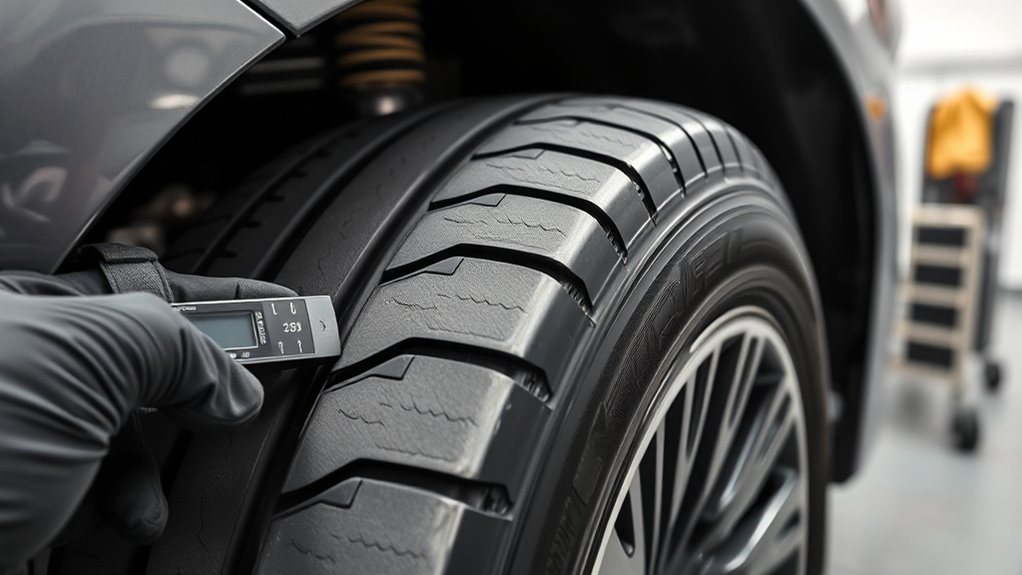
If your Toyota Camry’s tires are wearing on the outside edge, treat the pattern as a warning sign from the tire, alignment, and suspension system. The most common causes are an alignment angle out of spec, worn steering or suspension parts, low tire pressure, overloading, or hard cornering. Start with a safety check, then confirm the tread pattern before paying for new tires.
Quick Answer
A Toyota Camry tire wearing on the outside edge usually points to bad alignment, worn tie rods, ball joints, control arm bushings, struts, or driving and pressure issues. If both outer shoulders are worn, check tire pressure and load first. If only one outer shoulder is worn, get the suspension inspected and request an alignment printout.
Key Takeaways
- Outer-edge wear on one side of the tread often points to alignment or worn suspension parts, not just low tire pressure.
- Wear on both tire shoulders usually means the tire has been underinflated, overloaded, or driven hard through turns.
- Do not align the Camry until loose tie rods, ball joints, control arm bushings, struts, and wheel bearings are checked.
- Replace the tire if tread is at 2/32 inch, cords are visible, the sidewall is damaged, or the tire has bulges, cracks, or repeated pressure loss.
At a Glance
| Time Required | 10 minutes for a basic tire check; 30–60 minutes for a shop inspection and alignment check |
| Difficulty | Easy for pressure and tread checks; professional inspection recommended for suspension play and alignment |
| Tools Needed | Tire pressure gauge, tread depth gauge or penny, flashlight, jack stands for professional-style inspection, and alignment rack for final measurement |
| Cost | Free to check pressure and tread yourself; shop costs depend on alignment, parts, and tire replacement needs |
Warning: Do not keep driving on a tire with exposed cords, a bulge, a deep sidewall cut, cracking, tread separation, repeated air loss, or vibration that suddenly appears. Install the spare if it is safe and correctly inflated, or have the Camry towed to a tire shop.
Why Camry Tires Wear on the Outside
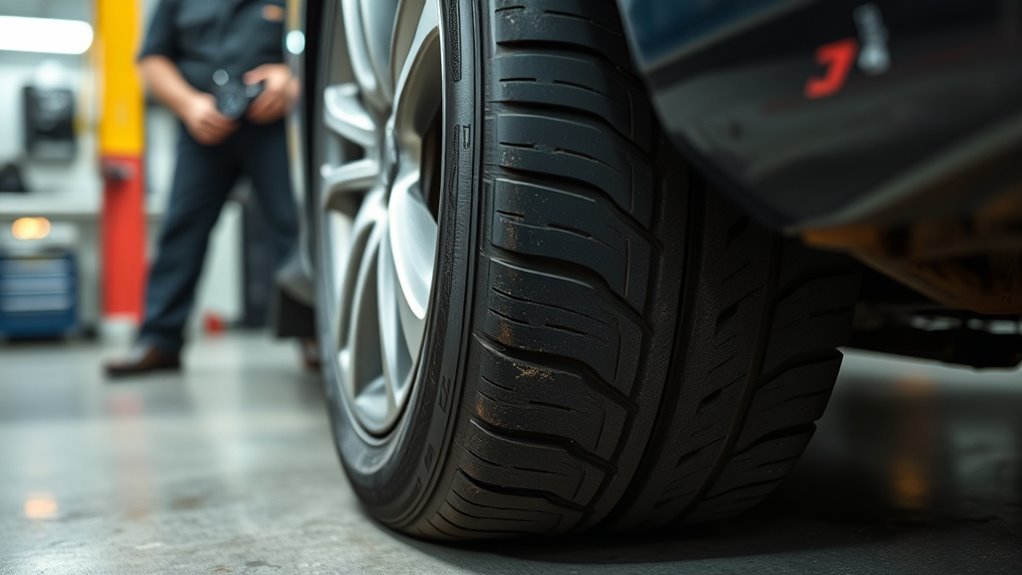
Outside tire wear on a Toyota Camry usually comes from one of five areas: alignment, steering parts, suspension parts, tire pressure, or driving load. The important detail is where the wear appears. A single worn outside shoulder points more strongly toward alignment geometry or loose suspension. Both shoulders wearing faster than the center usually points toward low pressure, heavy loading, or hard cornering.
Before you buy tires, look at all four tires in good light. Compare the inside shoulder, center tread, and outside shoulder. Then run your hand lightly across the tread blocks. If the blocks feel sharp in one direction and smooth in the other, that is often feathering from toe-related alignment wear. If the tire has scalloped dips, look harder at struts, shocks, balance, and loose parts.
Toyota tells Camry owners to check tires for uneven wear and treadwear indicators, and NHTSA recommends checking tread and pressure at least monthly. Use the pressure shown on the driver-side Tire and Loading Information label or in the owner’s manual, not the maximum pressure molded into the tire sidewall. Toyota owner tire guidance and NHTSA TireWise both support regular tire inspection.
[Products Worth Considering]

EVOULTES heavy duty tire inflator with an integrated gauge delivers accurate pressure readings from 10–120 PSI, helping you inflate, deflate, and check tires in one tool. The 16.5-inch extended dual-head air chuck with swivel base reaches hard-to-access dual wheel valves on trucks and RVs. A brass trigger core and side-mounted air release valve make operation smooth, with standard 1/4" NPT threading and quick-connect compatibility for easy setup.

The JACO FlowPro Tire Inflator measures, inflates, and airs down tires up to 100 PSI with battery-free operation and ±2% accuracy after calibration. It features a glowing pressure dial for night visibility, a heavy-duty steel build with a hybrid hose, and a precision push-to-inflate thumb trigger. The patented Lightning Air Chuck locks on for a secure seal, and the kit includes quick-connect hardware for easy inline use with your air compressor.

Upgrade your air tools with this 18-piece air compressor accessory kit featuring a 25ft recoil poly hose, 1/4" NPT quick connect fittings, and a 100 PSI tire inflator gauge. The set also includes a heavy-duty blow gun with safety and tapered nozzles, plus couplers, inflation needles, plugs, and other essentials for everyday mechanic and workshop tasks. Corrosion-resistant steel and brass components help keep connections reliable for inflating, blowing out, and general pneumatic use.
Read the Wear Pattern Before You Diagnose It
A tire wear pattern is not a perfect diagnosis by itself, but it gives you a smart starting point. Use this table before deciding whether the Camry needs air, alignment, suspension repair, or tire replacement.
| Wear Pattern | Most Likely Cause | First Check |
|---|---|---|
| Only the outside shoulder is worn | Camber/toe alignment issue, worn bushings, loose ball joint, bent part, or aggressive cornering | Suspension play and alignment printout |
| Both inner and outer shoulders are worn | Underinflation, overloading, or repeated hard cornering | Cold tire pressure and vehicle load |
| Tread feels saw-toothed or feathered | Toe out of spec, sometimes combined with caster or worn steering parts | Tie rods and toe readings |
| Scalloped dips or cupping | Weak struts, bad balance, worn suspension, or wheel bearing play | Struts, wheel balance, bearings, and loose joints |
| Outer edge is torn, cracked, or chunked | Impact damage, severe underinflation, road debris, tire aging, or sidewall/tread damage | Tire safety inspection before continued driving |
Wheel Alignment Issues Behind Outer Wear
Wheel alignment is one of the most common reasons a Camry wears the outside shoulder of a tire. The three angles that matter most are camber, toe, and caster. Camber describes how much the tire leans inward or outward. Toe describes whether the front of the tires point inward or outward. Caster affects steering return and stability.
Do not assume every outside-edge problem is “toe-in.” Excessive toe can create feathering or heel/toe wear, while one-sided shoulder wear is often tied to camber. A worn bushing or loose joint can also change these angles while the car is moving, even if the car looks normal while parked. Bridgestone explains that alignment settings affect camber, toe, and caster, and that improper alignment can cause premature, uneven tread wear. Bridgestone’s tire wear guide breaks down these patterns clearly.
Note: Ask the shop for the before-and-after alignment printout. If camber or caster is still out of range after adjustment, the Camry may have a bent part, worn bushing, sagging component, or subframe issue that alignment alone cannot fix.
Suspension Parts to Inspect First
Do the mechanical inspection before the alignment. Aligning a Camry with loose steering or suspension parts may produce nice numbers on the rack, but the tire can still scrub once the car is back on the road. Toyota’s 2025 Camry maintenance guide includes inspections for ball joints, dust covers, steering gear, and steering linkage at scheduled intervals, which supports checking these parts when uneven tire wear appears. Toyota 2025 Camry Warranty & Maintenance Guide
Check Tie Rod Ends
Tie rod ends connect the steering rack to the steering knuckle. If a tie rod is loose, the wheel can change toe as you drive. That can create feathering, wandering, a crooked steering wheel, or rapid shoulder wear.
A technician will usually raise the front end safely and check side-to-side wheel movement, joint play, torn boots, and clicking. If a tie rod end is worn, replace it first, then align the car. A fresh alignment on a loose tie rod will not hold.
Inspect Control Arm Bushings
Control arm bushings hold the suspension arm in position while still allowing controlled movement. When the rubber cracks, tears, separates, or softens, the wheel can shift under braking, cornering, and bumps. That movement can overload the outside shoulder of the tire.
Look for split rubber, shiny contact marks, leaking hydraulic bushings if equipped, or a control arm that moves too easily when loaded with a pry bar. Replace worn bushings or the control arm assembly before the alignment.
Examine Ball Joints
Ball joints connect the control arm and steering knuckle while allowing the suspension to move. A loose ball joint can change camber and toe under load. Signs include clunking, uneven tire wear, steering looseness, and a torn dust boot.
Ball joint checks should be done carefully with the correct lift points because suspension load affects the test. If the joint has play or the dust boot is damaged and contaminated, have it replaced and aligned afterward.
Do Not Overlook Struts, Strut Mounts, and Wheel Bearings
Weak struts and worn strut mounts can let the tire bounce instead of staying planted on the road. That often shows up as cupping or scalloping, but it can also speed shoulder wear. A worn wheel bearing can let the wheel tilt or wobble slightly, which can mimic alignment wear.
If the Camry has vibration, humming, cupped tread, or uneven wear that returns after alignment, ask the shop to check struts, mounts, wheel bearings, and wheel balance.
Check Tire Pressure and Driving Habits
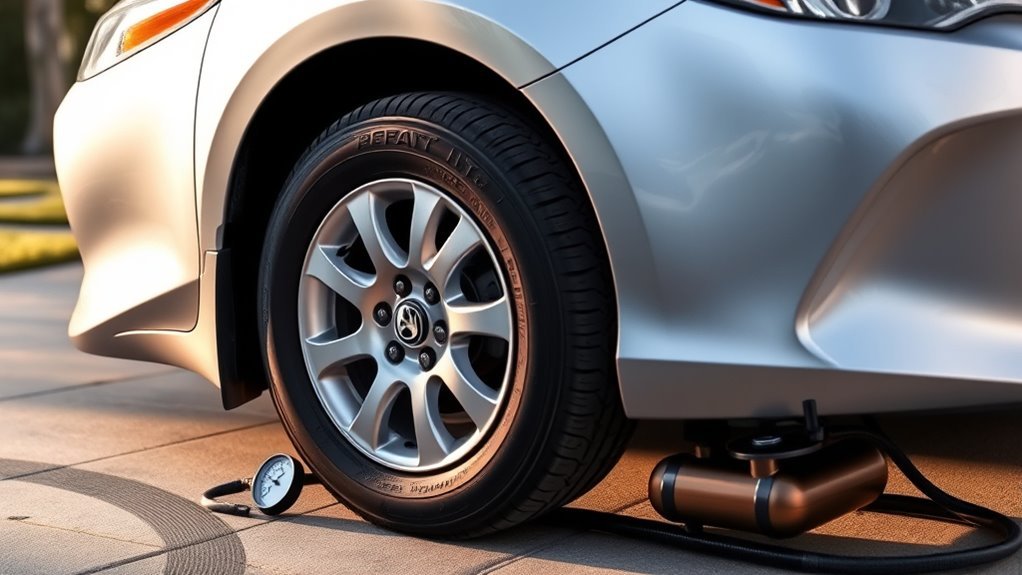
Low tire pressure can make the shoulders carry more load, especially during turns. That does not always mean low pressure is the only cause, but it is the easiest thing to check first. NHTSA recommends checking all tires at least once a month when they are cold, meaning the car has not been driven for at least three hours. The correct pressure is on the driver-side Tire and Loading Information label or in the owner’s manual.
- Park the Camry for at least three hours so the tires are cold.
- Find the recommended PSI on the driver-side door-jamb label.
- Check all four tires with a reliable pressure gauge.
- Inflate or deflate to the label pressure, not the sidewall maximum.
- Recheck after large temperature swings, long trips, or heavy loads.
Do not rely only on the TPMS light. The U.S. Tire Manufacturers Association notes that TPMS warnings may come after a tire is already significantly underinflated, so a monthly gauge check is still important. USTMA tire care guidance also recommends checking pressure before long trips or heavy loads.
Pro Tip: If the same tire keeps losing pressure, do not just keep adding air. Have the tire checked for a nail, bead leak, cracked valve stem, wheel damage, or a bad TPMS valve seal.
Driving style matters too. Fast corner entry, repeated hard turns, abrupt lane changes, and heavy cargo can load the outside shoulders. Smooth steering, proper pressure, balanced loading, and regular rotation help slow the wear, but they will not fix a bent part or bad alignment.
How Mechanics Diagnose Outer Tire Wear
A good diagnosis follows a sequence. The mechanic should not jump straight to an alignment without checking tire condition and suspension play first.
[Products Worth Considering]

Universal magnetic jack pad with aluminum grooved design to protect vehicle pinch welds during lifting. Durable nylon pad inserts are upgraded and secured with screws to resist damage and keep in place. Designed to fit most single vehicle pinpoint welds for safer, stable jacking when changing tires, repairs, or performing oil changes.

This roadside assistance kit helps drivers and passengers in urgent situations after an accident or breakdown, providing practical support while waiting for help. It includes a lightweight, compact tire inflator for fast inflation of standard vehicle tires, plus reinforced jumper cable protection for safer handling. Ideal for winter weather, road trips, camping, and travel, with everything stowed neatly in a trunk bag.
Step 1: Check Tread Depth, Damage, and Pressure
The first step is to measure tread depth across the inside, center, and outside of each tire. A tread depth gauge is best. A penny test can help identify very low tread, but a gauge gives better readings. The mechanic should also inspect for punctures, bubbles, cracks, exposed cords, separated tread, and uneven wear.
NHTSA says tires should be replaced when tread reaches 2/32 inch, and also recommends checking tread monthly when checking pressure. NHTSA TireWise also explains that balancing, alignment, and rotation help tire life and safety.
Step 2: Check Suspension Wear
Next, the mechanic checks tie rods, ball joints, control arm bushings, struts, strut mounts, steering linkage, wheel bearings, and wheel balance. Any looseness should be corrected before alignment. A worn part can let the tire move out of position while driving, which makes the alignment reading unreliable.
Step 3: Verify Alignment Settings
After the suspension is tight, the shop should measure camber, toe, and caster on an alignment rack. Ask for the printout. The “before” readings show what caused the wear; the “after” readings confirm whether the issue was corrected. If a value cannot be brought into range, the shop should explain why.
Step 4: Road-Test and Recheck
After repairs and alignment, the Camry should track straight, the steering wheel should sit centered, and there should be no pull, shimmy, or clunk. If the tire noise remains, the old wear pattern may already be built into the tire, even after the mechanical problem is fixed.
Fix Alignment After Suspension Repairs
Get a wheel alignment after replacing tie rods, control arms, ball joints, struts, or other steering and suspension parts. Also check alignment after a hard curb hit, pothole impact, collision repair, or new tire installation if the old tires show uneven wear.
- Inspect the tires for safety and measure tread depth.
- Repair loose or damaged suspension and steering parts.
- Set tire pressure to the door-jamb label.
- Perform the alignment and save the printout.
- Rotate or replace tires as needed, based on tread depth and wear severity.
- Road-test the Camry and confirm the steering wheel is straight.
If the outer edge is already bald, alignment will stop the cause, but it will not grow tread back. In that case, the tire may still need replacement even after the car is repaired.
When to Replace the Tire or Stop Driving
Outer-edge wear becomes a safety issue when the tire has too little tread or visible damage. Replace the tire or have it inspected immediately if you see any of the following:
- Outer shoulder tread at or below 2/32 inch.
- Steel cords, fabric, or belt material showing.
- Bulges, bubbles, or tread separation.
- Deep cuts, cracks, or sidewall damage.
- A tire that keeps losing pressure.
- New vibration, thumping, humming, or pulling.
- Uneven wear that reaches the treadwear bars.
NHTSA reports that poor tire maintenance, including low pressure and missed rotation, can lead to flats, blowouts, or tread separation. Tire care is not just about tire life; it is a safety check.
Prevent Camry Outer Edge Tire Wear
The best prevention plan is simple: correct pressure, scheduled rotation, regular tread checks, and fast repair when the Camry starts pulling, clunking, or wearing one shoulder. Follow your Camry maintenance guide for your model year and trim because tire size, drivetrain, and service schedule can vary.
| Check | Interval | Why It Matters |
|---|---|---|
| Tire pressure | Monthly, cold, and before long trips | Prevents shoulder overload and heat buildup |
| Tread depth and damage | Monthly | Catches unsafe wear before cords or tread bars appear |
| Tire rotation | Follow the Camry maintenance guide; general guidance is often 5,000–8,000 miles | Helps even out normal front/rear wear differences |
| Alignment | After impacts, suspension work, new uneven wear, or pulling | Corrects camber, toe, and caster problems before they ruin tires |
| Suspension and steering | At service visits or whenever wear appears | Finds loose joints, bushings, struts, and steering parts |
Good tire rotation can slow uneven wear, but it cannot fix a bad alignment or loose suspension part. If the same outside edge keeps wearing after rotation, the Camry needs measurement and repair, not just another tire swap.
Frequently Asked Questions
What most likely causes a tire to wear excessively on both outside edges?
Wear on both outside edges usually points to underinflation, overloading, or hard cornering. Check cold tire pressure first and compare it with the driver-side door-jamb label. If the pressure is correct and both shoulders still wear quickly, have the tire, alignment, and suspension inspected.
Why are my tyres balding on the outer edge?
Outer-edge balding usually means the tire is being scrubbed or overloaded on that shoulder. Common causes include camber or toe out of spec, worn control arm bushings, loose ball joints, worn tie rods, weak struts, low tire pressure, or repeated hard cornering.
What would cause tears in the outer edge of a car tire?
Tears or chunks on the outer edge can come from impact damage, road debris, severe underinflation, old rubber, sidewall cracking, or hard cornering on an already weakened tire. Do not treat tears like normal wear. Have the tire inspected before driving far.
Can tire rotation fix outside-edge wear?
Rotation can spread wear across different tire positions, but it cannot fix the cause. If alignment, pressure, or suspension play is causing the outside edge to scrub, the wear will continue until the root problem is repaired.
Should I replace the tires before or after alignment?
If the tire is unsafe, replace it immediately. If it is still safe but unevenly worn, inspect and repair the suspension first, align the Camry, then decide whether the tire can stay in service. New tires should not be installed on a car with unresolved alignment or suspension problems.
Conclusion
Outside-edge wear on a Toyota Camry is not something to ignore. It may be as simple as low pressure or hard cornering, but it can also point to alignment error, worn bushings, loose ball joints, tie rod play, weak struts, or wheel bearing movement. Check tread and pressure first, inspect the suspension before alignment, and replace any tire that is bald, damaged, cracked, bulging, or down to 2/32 inch. Once the root cause is fixed, regular pressure checks, rotation, and alignment checks will help the next set of tires wear evenly.
Sources
- Toyota Owners — 2025 Camry Hybrid Tires — supports checking tires for treadwear indicators and uneven wear.
- Toyota 2025 Camry Warranty & Maintenance Guide — supports scheduled tire rotation and inspections of ball joints, dust covers, steering gear, and steering linkage.
- NHTSA TireWise — supports monthly cold tire pressure checks, tread checks, 2/32-inch replacement guidance, alignment, rotation, and tire safety warnings.
- U.S. Tire Manufacturers Association — Tire Care Essentials — supports pressure, tread, rotation, alignment, TPMS, and monthly inspection guidance.
- Bridgestone — Tire Tread Wear Causes — supports the relationship between inflation, alignment, camber, toe, and irregular tread wear patterns.
- Tire Industry Association — Tire Inflation Pressure — supports monthly pressure checks, cold-tire checks, and using the vehicle placard/owner’s manual pressure.

Related Articles

Toyota Camry All-Season Tires Explained: What They Can and Can’t Do
In exploring Toyota Camry all-season tires, discover their benefits and limitations—are they really the right choice for your driving needs?
Read More
Toyota Camry Tire Traction in Ice and Snow: A Practical Winter Driving Guide
Learn essential tips for maximizing tire traction on ice and snow in your Toyota Camry, ensuring your winter driving is safe and confident. Discover more now!
Read More
Do Toyota Camry Tires Need Snow Chains? When They Help and When They Don’t
How do snow chains enhance your Toyota Camry's winter driving safety, and when should you avoid using them? Discover the essential details inside!
Read More