
Toyota Camry Tire Replacement Frequency Guide: How Often Should You Replace?
Last updated: July 8, 2026
You should replace your Toyota Camry tires when tread depth, age, damage, or driving feel shows they are no longer safe. Mileage helps you plan, but it is not the final rule. Replace a Camry tire immediately at 2/32 inch of tread, and start shopping around 4/32 inch if you often drive in rain. Also replace any tire with bulges, exposed cords, deep cracks, tread separation, or repeated air loss.
Quick Answer
Most Toyota Camry tires should be replaced when tread reaches 2/32 inch, when cracks, bulges, exposed cords, vibration, or repeated air loss appears, or when tire age becomes a concern. Many Camry tires last around 40,000 to 60,000 miles, but tread depth and tire condition matter more than mileage.
Key Takeaways
- Use mileage as a planning guide, not a promise. Tire type, alignment, road surface, climate, pressure, and driving style all affect tire life.
- Replace tires immediately at 2/32 inch of tread, and start shopping around 4/32 inch if you drive on wet roads.
- Check tire pressure monthly when tires are cold and use the pressure shown on your Camry’s driver-door placard or owner’s manual.
- Rotate tires on the schedule for your exact Camry model year. NHTSA says to follow the owner’s manual and, where recommended, rotate every 5,000 to 8,000 miles.
- Check tire age with the DOT date code, and have older tires inspected even if the tread still looks usable.
At a Glance
| Time Required | 5 to 10 minutes for a basic tire check |
| Difficulty | Easy; no mechanical work required |
| Tools Needed | Tread-depth gauge, tire-pressure gauge, flashlight, penny, and quarter |
| Cost | About $0 to $15 for checking tools; replacement tire cost varies by size, brand, and installation |
Quick Replacement Decision Guide
| What You Find | What to Do |
| Tread at 2/32 inch or wear bars flush with the tread | Replace now. Do not treat the tire as safe for normal driving. |
| Tread near 4/32 inch and frequent rain or highway driving | Start shopping and schedule replacement before wet-road grip drops further. |
| Bulge, exposed cord, deep crack, tread separation, or repeated air loss | Stop normal use and have the tire inspected or replaced before driving at speed. |
| Tire is six to ten years old, even with usable tread | Check the DOT date code and have a tire professional inspect it for age-related risk. |
How Often Should You Replace Camry Tires?
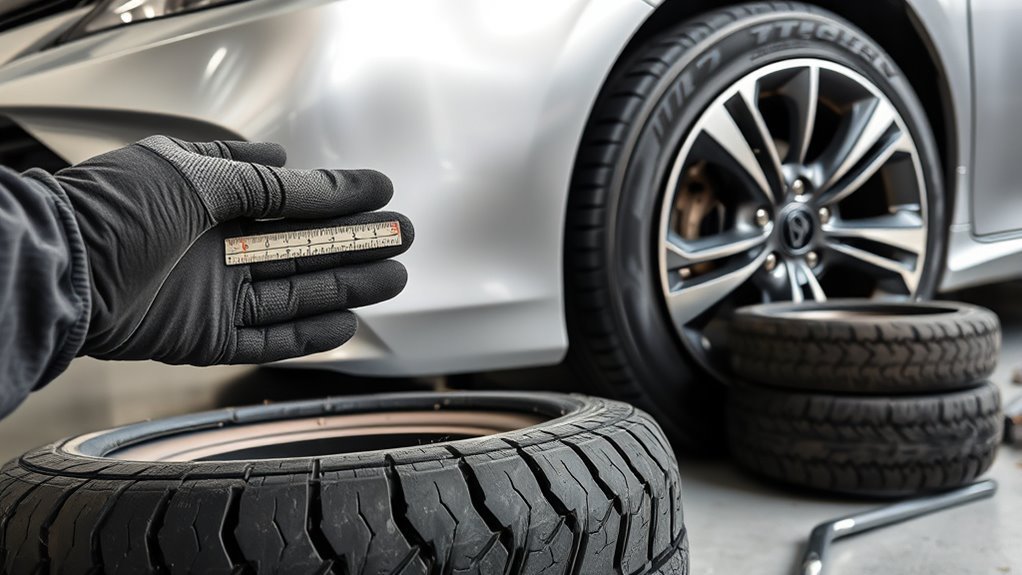
You should plan to replace Toyota Camry tires based on four checks: tread depth, tire age, visible damage, and wear pattern. For many drivers, replacement happens around 40,000 to 60,000 miles, with 50,000 miles being a useful planning point. That number can change quickly if you drive on rough roads, carry heavy loads, miss rotations, run low tire pressure, or use softer performance tires.
Toyota’s current Camry owner information says to inspect tires for treadwear indicators and uneven wear, and to replace or rotate tires according to treadwear and the maintenance schedule. For tire safety basics, NHTSA says to check pressure and tread monthly, use the pressure on the driver-door label or owner’s manual, and replace tires when tread reaches 2/32 inch. You can review the current Toyota Camry tire inspection guidance, the Toyota Camry Warranty & Maintenance Guide, and NHTSA TireWise guidance for the details that apply to your model year.
Warning: Do not keep driving on a tire with a bulge, exposed cords, deep sidewall cracking, tread separation, repeated air loss, or tread at 2/32 inch. Install the spare if safe to do so, slow down, and have the tire inspected or replaced before normal driving.
[Products Worth Considering]

EVOULTES heavy duty tire inflator with an integrated gauge delivers accurate pressure readings from 10–120 PSI, helping you inflate, deflate, and check tires in one tool. The 16.5-inch extended dual-head air chuck with swivel base reaches hard-to-access dual wheel valves on trucks and RVs. A brass trigger core and side-mounted air release valve make operation smooth, with standard 1/4" NPT threading and quick-connect compatibility for easy setup.

The JACO FlowPro Tire Inflator measures, inflates, and airs down tires up to 100 PSI with battery-free operation and ±2% accuracy after calibration. It features a glowing pressure dial for night visibility, a heavy-duty steel build with a hybrid hose, and a precision push-to-inflate thumb trigger. The patented Lightning Air Chuck locks on for a secure seal, and the kit includes quick-connect hardware for easy inline use with your air compressor.
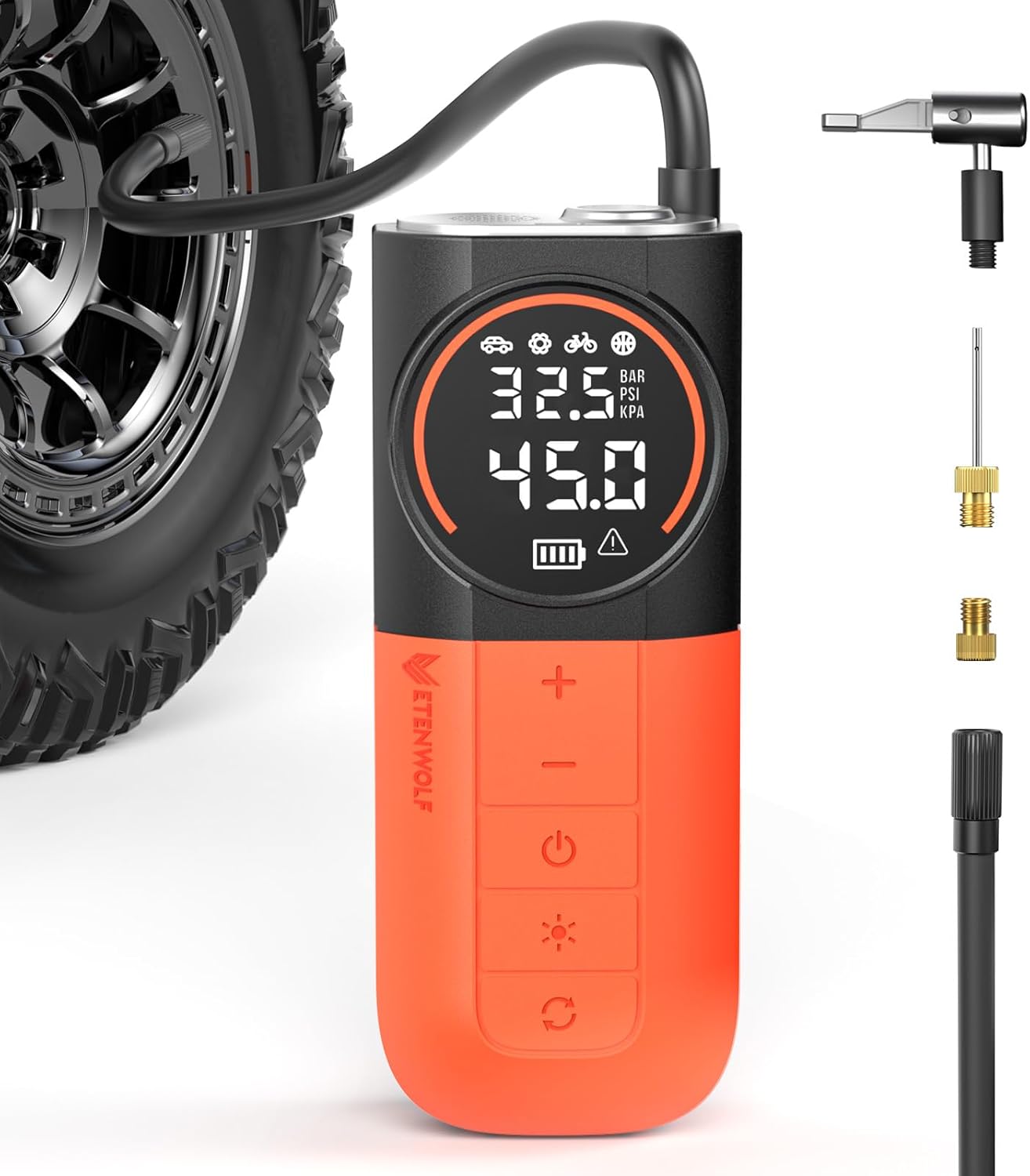
The ETENWOLF S1 cordless tire inflator delivers ultra-fast inflation with up to 160 PSI and a 20 L/min airflow for quicker tire top-offs. Its 5200mAh battery and cooling system support inflating many tires and sports balls on a single charge, while the digital pressure gauge and multi-unit display help you reach the right pressure accurately. With preset modes, pressure memory, an auto-stop feature, and an LED flashlight, it’s built for easy roadside and everyday use.
How Long Do Camry Tires Last?
Toyota Camry tires often last about 40,000 to 60,000 miles, but actual service life depends on the tire model, treadwear rating, road conditions, alignment, inflation, weather, and driving habits. A touring all-season tire may last longer than a sporty performance tire, while winter tires and summer tires can wear faster if used outside the conditions they were designed for.
Age also matters. NHTSA says some vehicle and tire manufacturers recommend replacing tires that are six to 10 years old, regardless of treadwear. Low-mileage Camry tires still need age checks because heat, sunlight, storage conditions, underinflation, and poor maintenance can increase age-related risk.
| Tread or Condition | What to Do |
| 6/32 inch or less | Start planning if you drive in snow or need strong winter traction. |
| 4/32 inch or less | Shop for replacement soon, especially if you drive in rain or at highway speeds. |
| 2/32 inch or less | Replace immediately. NHTSA says tires are not safe when tread is worn down to 2/32 inch. |
| Bulges, cracks, exposed cords, vibration, or repeated air loss | Stop treating the tire as normal. Have it inspected and replace it if damage is confirmed. |
| Six years in service | Inspect closely and consider replacement based on tire-maker guidance, climate, and condition. |
| Ten years from manufacture | Replace as a precaution, including spare tires, unless your tire or vehicle maker requires earlier replacement. |
Camry Tire Wear Signs to Watch For
A few clear warning signs can tell you when Camry tires need attention. Check tire tread depth with a gauge across the inner, center, and outer grooves of each tire. If the depth is near 4/32 inch, you are losing wet-road safety margin. If it reaches 2/32 inch, replace the tire immediately.
- Treadwear indicators are flush: These raised wear bars appear across the tread when the tire is worn out.
- One shoulder is wearing faster: This often points to alignment trouble, worn suspension parts, or hard cornering.
- Center tread is wearing faster: The tire may be overinflated, or the tire may not be wearing evenly for its load and use.
- Both edges are wearing faster: The tire may be underinflated or overloaded.
- Vibration or thumping appears: The tire may be out of balance, damaged internally, or wearing unevenly.
- Cracks, cuts, bubbles, or exposed cords appear: These are damage signs, not normal wear signs.
NHTSA reports 511 traffic fatalities in tire-related crashes in 2024. It also warns that poor tire maintenance, including underinflation and missed rotations, can lead to flat tires, blowouts, or tread separation.
How to Check Camry Tires at Home
You do not need a repair bay to catch most tire problems early. A monthly walkaround can help you spot low pressure, uneven wear, tread loss, and sidewall damage before they become roadside failures.
- Park on a level surface and let the tires cool. Toyota says cold tire pressure readings are most accurate after the vehicle has been parked for at least three hours or has not been driven more than about one mile.
- Check pressure with a gauge. Use the cold tire pressure on your Camry’s driver-door placard or owner’s manual, not the maximum pressure molded on the tire sidewall.
- Measure tread depth. Use a tread-depth gauge in several grooves and at several spots around each tire.
- Use coins only as a quick screen. A quarter can help you notice tread near 4/32 inch. A penny helps screen for the 2/32-inch replacement point. A gauge is better than either coin.
- Inspect the sidewalls and tread face. Look for cracks, cuts, nails, bubbles, missing chunks, exposed cords, or a tire that keeps losing air.
- Check tire age. Find the DOT code on the sidewall. The last four digits show the manufacture week and year. For example, 2519 means the tire was made in the 25th week of 2019.
- Do not forget the spare. If your Camry has a spare tire, check its pressure, age, and condition before a long trip.
Pro Tip: Check tire pressure in the morning before driving. Heat from driving can raise pressure readings and make an underinflated tire look closer to normal than it really is.
What Makes Camry Tires Wear Faster?
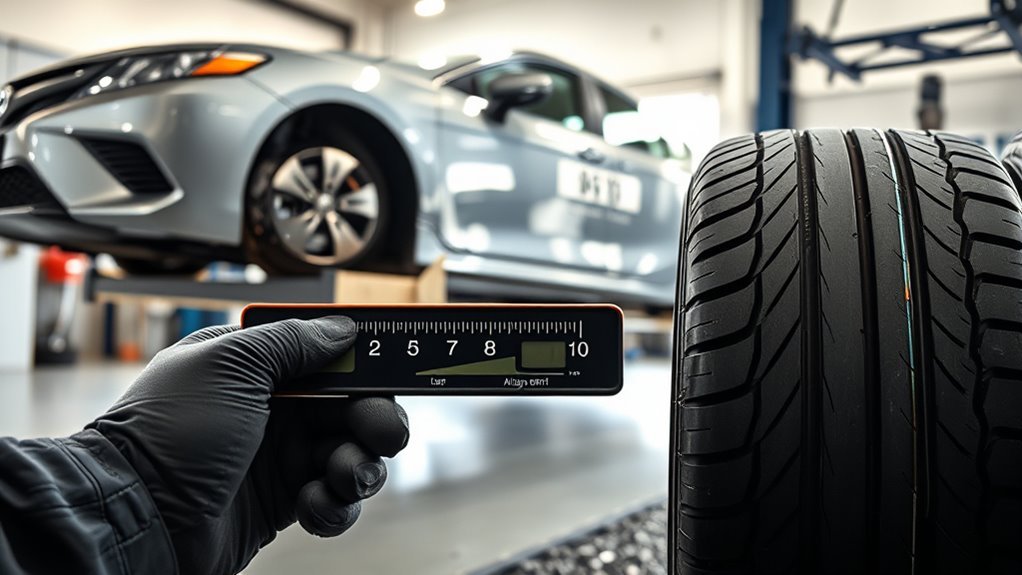
Several factors can make Camry tires wear out sooner than expected. Your tire type matters: a high-performance tire may grip harder but wear faster than a long-life touring tire. Your driving habits also matter. Hard acceleration, late braking, fast cornering, pothole impacts, and frequent highway heat all shorten tread life.
- Underinflation: Builds heat, wears the edges, hurts fuel economy, and can damage the tire.
- Overinflation: Can wear the center tread faster and reduce the tire’s contact patch.
- Misalignment: Scrubs one edge or creates feathered tread blocks.
- Missed rotations: Lets front tires wear faster, especially on front-wheel-drive Camrys.
- Worn suspension or imbalance: Can cause cupping, vibration, and patchy wear.
- Wrong seasonal use: Winter tires wear quickly in warm weather, while summer tires are not built for cold-weather traction.
- Road hazards: Potholes, curbs, sharp debris, gravel, and rough pavement can cause damage or uneven wear.
Rain does not mean your tires are wearing out by itself, but low tread in rain is a serious safety problem. As tread fades, the tire has less room to move water away from the contact patch, so braking performance and hydroplaning resistance get worse.
How to Extend Camry Tire Life
To extend your Camry tire life, keep inflation at the recommended pressure, rotate tires on schedule, and fix alignment problems before they ruin a good set of tires. A few habits make the biggest difference:
- Check tire pressure monthly and before road trips, using a cold reading.
- Rotate tires every 5,000 to 8,000 miles if your Camry maintenance schedule or tire maker calls for it, or sooner if uneven wear appears.
- Use the right tire size, load rating, and speed rating listed on the driver-door placard or owner’s manual.
- Get an alignment if the car pulls, the steering wheel is off-center, or one edge of a tire wears faster.
- Balance tires when you feel vibration after a rotation or tire installation.
- Drive smoothly by accelerating progressively, braking early, and cornering without forcing the tire to scrub.
- Avoid overloading the vehicle, and slow down for potholes, broken pavement, and gravel.
- Keep records of rotations, alignments, pressure checks, and tire purchases so you can track wear over time.
Note: A tire-pressure monitoring light is not a substitute for a monthly gauge check. NHTSA says TPMS is not intended to replace regular tire maintenance, and underinflated tires can be hard to spot by appearance alone.
[Products Worth Considering]

This portable cordless tire inflator delivers up to 160 PSI with fast 17 L/min airflow to help you quickly top up tires and get back on the road. It features dual power mode, running on a 21V rechargeable battery or a 12V DC adapter for convenient roadside use. An automatic shut-off with digital pressure gauge helps prevent overinflation, and a built-in LED light improves visibility in low-light conditions.

The Fanttik X10 Pro is a cordless portable tire inflator that reaches up to 150 PSI and can inflate an R15 tire in about 35 seconds for quick roadside or home top-ups. With AccuInFlate auto-stop and smart start/stop controls, it helps maintain accurate pressure and frees your hands once the target is reached. A high-visibility digital display and preset modes make it easy to set and monitor inflation for cars, motorcycles, bikes, and balls.
When to Replace One, Two, or All Four Camry Tires
You do not always need four new tires, but matching matters. If one tire is damaged and the other three are nearly new, a tire shop may be able to replace one tire with the same size, load rating, speed rating, and similar tread pattern. If two tires on the same axle are worn, replace them as a pair so the axle has balanced grip.
If all four tires are old, near 4/32 inch, unevenly worn, or mismatched, replacing the full set is usually the cleaner and safer choice. If your Camry is an AWD model, be more careful about tread-depth differences because mismatched rolling circumference can stress the drivetrain. When in doubt, ask the tire installer to check whether the remaining tread depth is close enough for one-tire or two-tire replacement.
Choosing Replacement Tires for a Camry
The safest replacement tire is not just “one that fits the wheel.” Match the tire size, load index, and speed rating shown on your Camry’s tire placard and owner’s manual. The sidewall also lists the tire size, such as a format like P215/55R17, but the vehicle placard is the best starting point because it matches the trim and original equipment setup.
For most Camry drivers, quality all-season touring tires are the simplest fit. Choose winter tires if you regularly drive in freezing temperatures, snow, or ice. Choose summer or performance tires only if you understand the faster-wear tradeoff and do not need cold-weather traction. Also compare treadwear warranty, wet traction ratings, road noise, ride comfort, and whether the tire is built for your climate.
Before a Road Trip or Rainy Season
Check your Camry tires before a long trip, before heavy rain season, and after any pothole hit or curb impact. Measure tread, inspect the sidewalls, set cold pressure, and confirm the spare or inflator kit is usable. If one tire keeps losing air or the car vibrates at highway speed, solve that problem before the trip instead of waiting for the next rotation.
Frequently Asked Questions
How often should I replace my Camry tires?
Replace your Camry tires when tread reaches 2/32 inch, when damage appears, or when age makes the tire questionable. Many Camry tires last around 40,000 to 60,000 miles, but tire type, pressure, alignment, climate, and driving style can move that number up or down.
Should I replace Camry tires at 4/32 inch or 2/32 inch?
Use 4/32 inch as a smart replacement-planning point, especially if you drive in rain. Use 2/32 inch as the immediate replacement point. At 2/32 inch, the tread is too low for safe normal driving.
Are six-year-old Camry tires unsafe?
Not always, but six-year-old tires deserve close inspection. NHTSA says some vehicle and tire manufacturers recommend replacement from six to 10 years old, regardless of treadwear. Check the DOT date code, tread depth, sidewalls, pressure behavior, and driving feel.
How often should Toyota Camry tires be rotated?
Follow the maintenance schedule for your exact model year and tire type. NHTSA says to check the owner’s manual for the right rotation interval and, if the vehicle maker recommends it, rotate every 5,000 to 8,000 miles or sooner if uneven wear appears.
Where do I find the correct Camry tire pressure?
Use the tire-pressure label on the driver-side door jamb or the owner’s manual for your exact Camry. Check pressure when the tires are cold, and do not use the maximum pressure number molded into the tire sidewall as your normal setting.
Can I replace only one Camry tire?
Sometimes. One-tire replacement may be acceptable if the other tires are almost new and the replacement closely matches size, rating, tread design, and tread depth. If the other tires are worn, replace two tires on the same axle or the full set.
Final Takeaway
Replace your Camry tires when the inspection says they are no longer safe, not just when they hit a mileage estimate. Measure tread, check cold pressure, inspect for damage, and read the DOT date code. If the tire is at 2/32 inch, visibly damaged, repeatedly losing air, or too old for confident use, replace it before normal driving.

Related Articles

Toyota Camry All-Season Tires Explained: What They Can and Can’t Do
In exploring Toyota Camry all-season tires, discover their benefits and limitations—are they really the right choice for your driving needs?
Read More
Toyota Camry Tire Traction in Ice and Snow: A Practical Winter Driving Guide
Learn essential tips for maximizing tire traction on ice and snow in your Toyota Camry, ensuring your winter driving is safe and confident. Discover more now!
Read More
Do Toyota Camry Tires Need Snow Chains? When They Help and When They Don’t
How do snow chains enhance your Toyota Camry's winter driving safety, and when should you avoid using them? Discover the essential details inside!
Read More