
How to Repair a Flat Tire on a Toyota Camry: Plug, Patch or Replace?
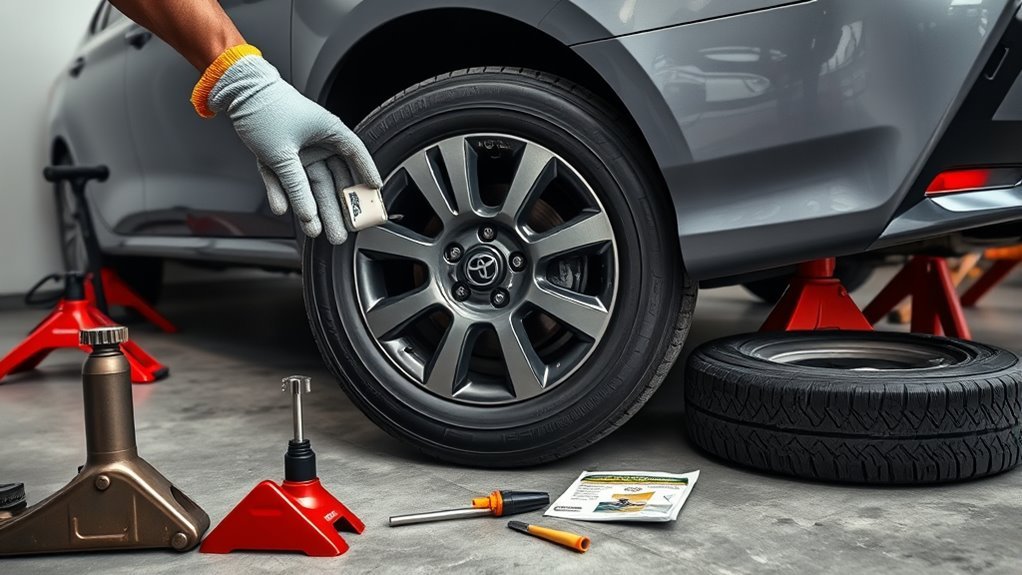
A Toyota Camry flat tire can often be repaired, but only when the damage meets strict tire-industry repair limits. The safest answer depends on where the puncture is, how large it is, whether the tire was driven while flat, and what a tire technician finds after removing the tire from the wheel.
Quick Answer
You can repair a Toyota Camry flat tire only if the puncture is in the repairable tread area, no larger than 1/4 inch or 6 mm, and the tire has no sidewall, shoulder, internal, bead, or severe wear damage. A proper permanent repair uses a plug-patch combination from inside the tire.
Key Takeaways
- A Camry tire is usually repairable only when the puncture is small, straight, and in the tread crown area.
- Sidewall and shoulder damage are not safe repair areas because those sections flex heavily and carry structural loads.
- A plug alone or patch alone is not considered a proper permanent repair; the best repair is a combination plug-patch installed from inside the tire.
- Replace the tire if it was driven flat, has a bulge, has exposed cords, has overlapping repairs, or is worn to 2/32 inch of tread depth.
At a Glance
| Time Required | Usually 30–60 minutes at a tire shop, depending on inspection and wait time. |
| Difficulty | Professional service recommended; the tire must be removed from the wheel for a proper inspection and repair. |
| Tools Needed | Tread-depth gauge, tire-pressure gauge, spare or inflator for emergency mobility, and professional tire-repair equipment at the shop. |
| Cost | Often $0–$50+ for a repair, depending on the shop, tire type, warranty, and whether replacement is needed. |
When a Camry Tire Can Be Repaired
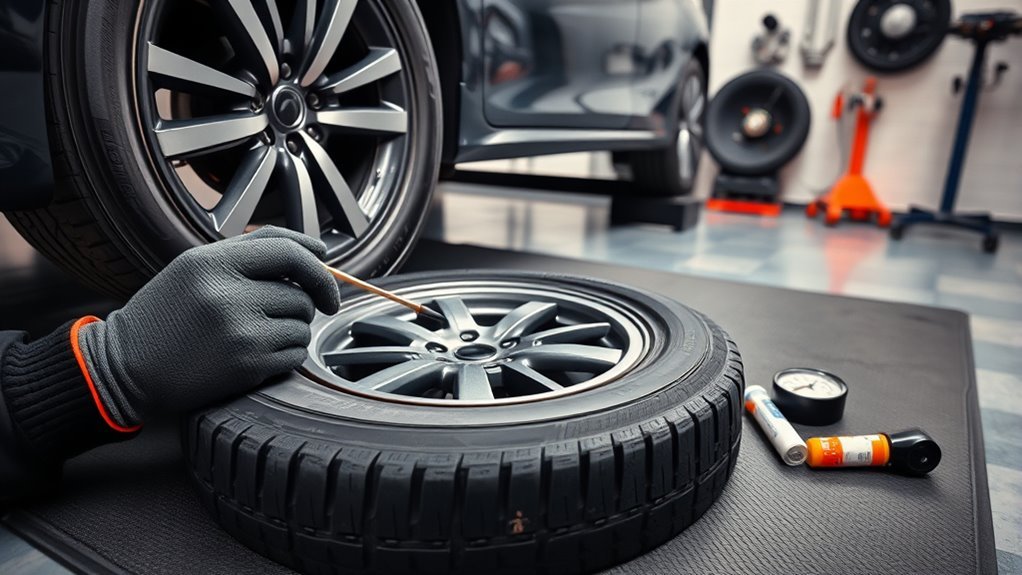
A Camry tire can usually be repaired when the puncture is in the repairable tread area, the hole is no larger than 1/4 inch or 6 mm, and the tire has no hidden structural damage. The U.S. Tire Manufacturers Association says proper puncture repairs are limited to the tread area, require the tire to be removed from the wheel, and use both a rubber stem and an inner-liner patch.
The key is not just whether the tire holds air. A tire can look fine from the outside and still have inner-liner damage, sidewall abrasion, or heat damage from being driven low on air. That is why a proper repair starts with a complete internal inspection.
Warning: Do not trust an outside-only string plug as a permanent repair. It may get the Camry off the road, but the tire still needs to be demounted and inspected from the inside.
[Products Worth Considering]

This tire repair patch tool kit helps you quickly seal small punctures using upgraded mushroom plugs and a built-in roller system that presses for even penetration. The tungsten buffing wheel and HSS twist drill bits prepare the damaged surface for stronger adhesion, while the crown-angle friendly plugs are designed to keep water and debris out. Ideal for puncture repairs on many vehicle types, from cars and trucks to bikes and scooters.

Wykodra tire plugs provide quick vulcanizing repairs for tubeless tires, helping you seal punctures and get back on the road. The industrial-strength rubber creates a long-lasting, leak-resistant bond and is designed for emergency fixes without removing the tire. Choose between two standard plug sizes with color-matched options for small to larger damage across many vehicles and off-road uses.
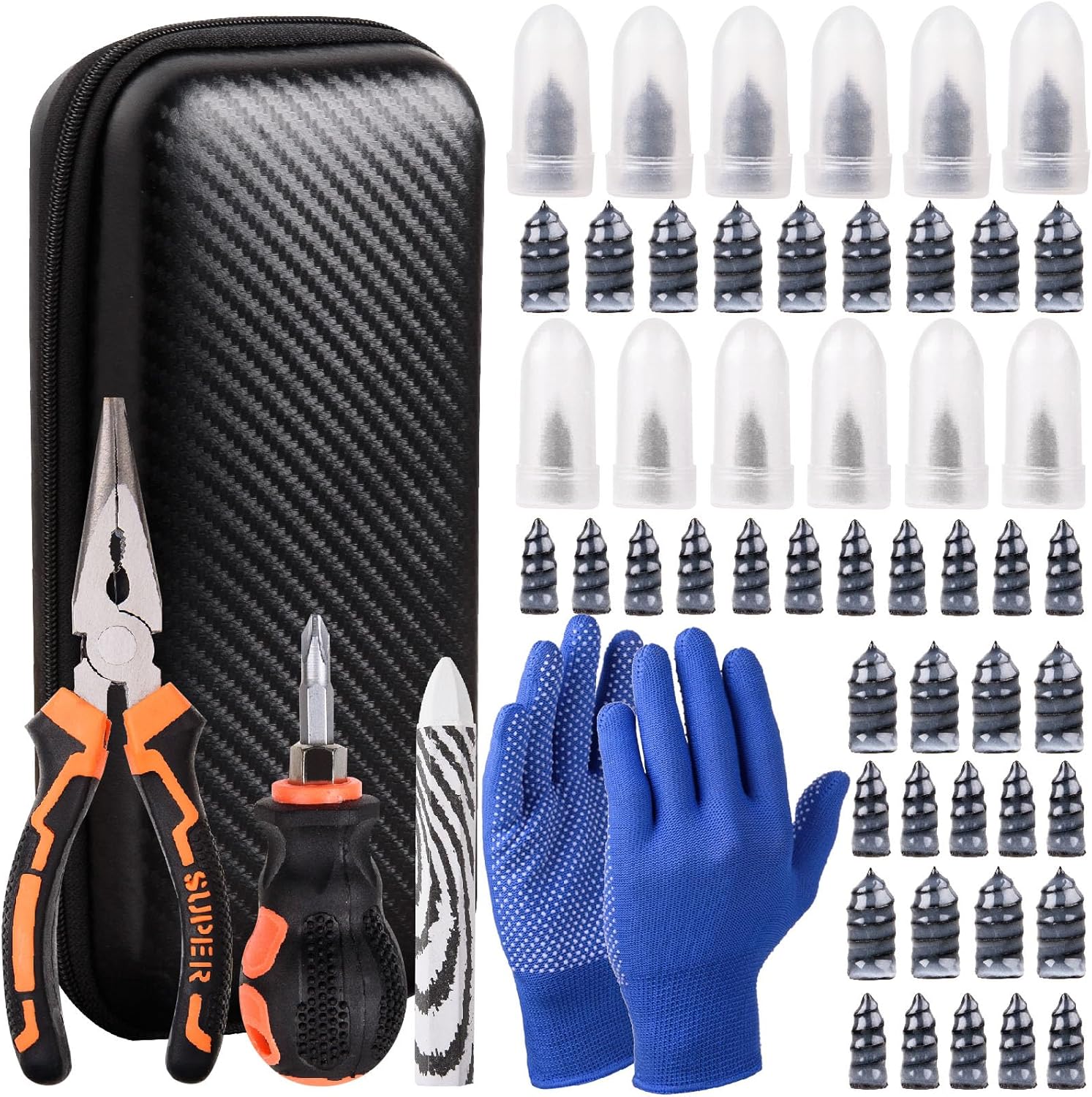
This tire sidewall puncture repair kit fixes flats fast without removing the tire, helping you get back on the road in minutes. It includes self-tapping repair nails, essential tools, gloves, and a portable storage bag for convenient roadside use. Designed for tubeless tires, it helps create a tight, leak-resistant seal for cars, motorcycles, trucks, SUVs, and ATVs.
Repair or Replace: Quick Decision Table
| Tire condition | Best choice | Why |
| Small nail or screw in the center tread | Usually repair | A professional plug-patch repair can seal the puncture channel and inner liner. |
| Puncture larger than 1/4 inch or 6 mm | Replace | The injury is beyond standard passenger-tire repair limits. |
| Shoulder or sidewall puncture | Replace | Those areas flex too much and are not considered safe repair zones. |
| Bulge, exposed cords, cracked rubber, bead damage, or inner-liner damage | Replace | These signs point to structural damage, not just an air leak. |
| Tread depth at or below 2/32 inch | Replace | The tire is already at the legal minimum and too worn to be a good repair candidate. |
Why Sidewall Damage Means Replacement
If your Camry’s sidewall is damaged, you should replace the tire instead of patching it. The sidewall is a flexible, load-bearing part of the tire, and a repair in that area cannot reliably restore the tire’s original strength. The same caution applies to shoulder damage, which sits near the edge of the tread where the tire transitions into the sidewall.
[Products Worth Considering]

This AUTOWN flat tire repair kit is designed for quick, reliable puncture repairs using a plug kit and spiral probe tool to simplify installation. Built for durability and safe handling, it offers strong adhesion and flexibility to help maintain tire air tightness. With a portable storage case and a multi-vehicle approach, it’s suitable for cars, motorcycles, ATVs, tractors, lawn mowers, RVs, jeeps, and trucks.

This portable cordless tire inflator delivers up to 160 PSI with fast 17 L/min airflow to help you quickly top up tires and get back on the road. It features dual power mode, running on a 21V rechargeable battery or a 12V DC adapter for convenient roadside use. An automatic shut-off with digital pressure gauge helps prevent overinflation, and a built-in LED light improves visibility in low-light conditions.
Sidewall Repair Safety
A small puncture or cut in the sidewall is still a serious problem. The sidewall bends with every rotation, every turn, and every braking event. That constant flexing can loosen or tear a repair, especially at highway speed. Most reputable tire shops will refuse sidewall repairs because the tire would remain structurally compromised.
Structural Weakness Risks
Sidewall and shoulder damage can weaken the tire casing, allow moisture into the tire body, or hide broken internal cords. A failed repair can cause rapid air loss, poor handling, or a blowout. Watch for these red flags:
- Bulges, bubbles, or waves in the sidewall.
- Cuts deep enough to show cords or fabric.
- A scuffed ring around the sidewall after driving on a flat tire.
- A puncture near the tread edge or shoulder area.
Replace, Don’t Patch
Replace a sidewall-damaged tire instead of trying to patch it. The normal tread-puncture repair limit does not make sidewall damage acceptable. If a shop says the puncture is too close to the shoulder or sidewall, that is not upselling by default; it is usually the correct safety call.
Plug vs. Patch: What’s Safe for a Camry Tire?
For a Toyota Camry tire, the safest long-term repair for a qualifying tread puncture is a combination plug-patch. A plug fills the puncture channel, and a patch seals the inner liner. The Tire Industry Association explains that a plug by itself or a patch by itself is not a complete proper repair.
- Plug only: Fast and useful as an emergency measure, but not a proper permanent repair.
- Patch only: Seals the inner liner, but does not fill the injury channel where water can enter and corrode steel belts.
- Plug-patch combination: Best for a repairable tread puncture because it fills the hole and seals the inside of the tire.
Pro Tip: Ask the shop whether the tire will be removed from the wheel and repaired from the inside with a combination repair unit. If the answer is no, treat it as temporary.
How a Tire Repair Is Done Right
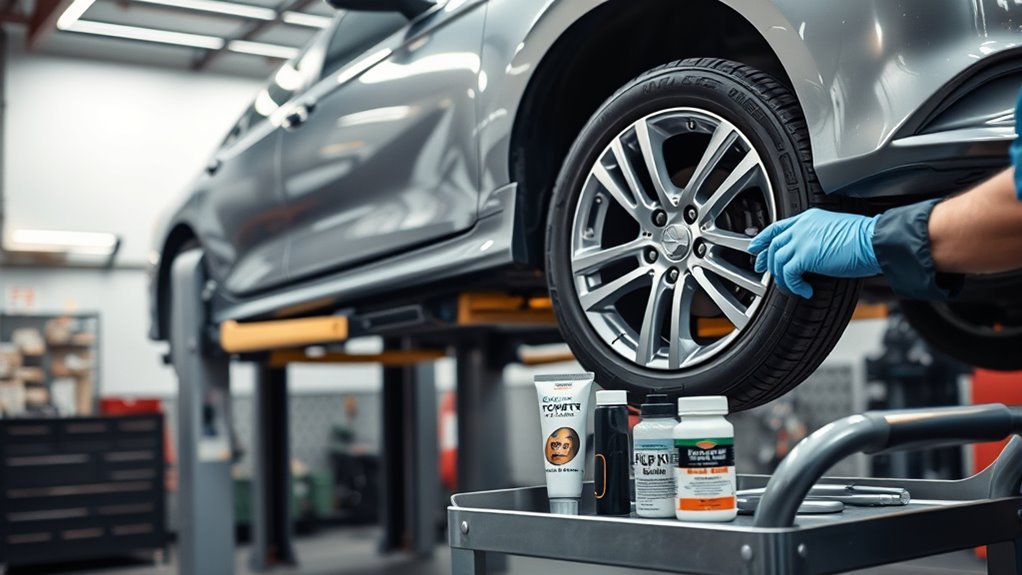
A proper tire repair starts by removing the tire from the wheel. The technician checks the puncture size, angle, and exact location, then inspects the inner liner for heat damage, shredded rubber, exposed cords, impact damage, and evidence that the tire was driven while flat.
If the injury qualifies, the damaged area is prepared from the inside, the puncture channel is filled with a rubber stem, and the inner liner is sealed with a patch. Many professional repairs use a one-piece combination unit. After the repair, the tire should be reinflated, checked for leaks, balanced if needed, and set to the Camry’s recommended cold tire pressure listed on the driver-door placard or in the Toyota owner’s manual.
Note: A tire that has been driven for even a short distance while severely underinflated may be unsafe to repair. Internal damage is not always visible until the tire is removed.
Can You Use a Repaired Tire as a Spare?
Yes, you can use a properly repaired tire as a spare if it meets the same safety standards as any other serviceable tire. That means the repair must be in the tread area, installed from inside the tire, and free of sidewall, shoulder, internal, bead, or severe tread-wear damage.
Do not use a tire with a sidewall repair, bulge, exposed cords, or a plug-only emergency repair as your long-term spare. If your Camry has a temporary compact spare, follow the speed and distance limits printed on the spare and listed in your owner’s manual. A temporary spare is meant to get you to a tire shop, not to replace a full-service tire.
When to Replace a Camry Tire
Replace a Camry tire when the damage falls outside safe repair limits or the tire is already too worn to be dependable. The Bridgestone tire repair guidance lists several no-repair conditions, including tread punctures larger than 1/4 inch, sidewall or shoulder damage, bead damage, rubber deterioration, and tires worn below 2/32 inch.
Replacement is also the safer choice if the tire has multiple nearby punctures, an existing improper repair, a puncture that overlaps an old repair, or damage directly across from another repair. When in doubt, ask the technician to show you the injury location and the inside of the tire before you approve a repair or replacement.
A tire repair is safe only when the tire is still structurally sound. Holding air is not the same thing as being roadworthy.
Tire Sealant, TPMS, and Your Camry
Tire sealant can help in an emergency, but it is not a permanent repair. It can also leave residue inside the tire and around the valve stem or tire-pressure monitoring hardware. Toyota explains that the tire pressure monitoring system alerts you when a tire is seriously low and should be checked, refilled, repaired, or replaced as needed.
If you use sealant, tell the tire shop before they demount the tire. The technician may need to clean the inside of the tire, inspect the TPMS sensor or valve, and confirm the tire is still repairable. Some sealants are labeled TPMS-safe, but that does not turn them into a long-term substitute for a proper internal plug-patch repair.
What to Ask the Tire Shop
Before approving the repair, ask a few direct questions:
- Is the puncture in the repairable tread area, away from the shoulder and sidewall?
- Is the injury 1/4 inch or 6 mm or smaller?
- Will you remove the tire from the wheel and inspect the inner liner?
- Will the repair use a plug-patch combination?
- Is there any evidence the tire was driven while flat or underinflated?
- Is the tread depth safely above 2/32 inch?
If the shop cannot answer those questions clearly, get a second opinion from a qualified tire service professional.
Frequently Asked Questions
How long can I drive on a spare tire?
Drive only as far as needed to reach a safe repair location. If your Camry has a temporary compact spare, follow the speed and distance limits printed on the spare and in the owner’s manual. Many compact spares are limited to low-speed, short-distance emergency use.
Does tire sealant damage a Camry tire pressure sensor?
Not always, but sealant can coat the inside of the tire, valve stem, or TPMS hardware. Some products are labeled sensor-safe, but sealant is still an emergency measure. Tell the shop you used it so they can clean and inspect the TPMS sensor during repair.
Can I repair a tire with multiple punctures?
Sometimes, but only after professional inspection. Repairs should not overlap, sit too close together, or be directly across from each other. If the tire has several injuries, shoulder damage, internal damage, or an old improper repair, replacement is usually safer.
Will a repaired tire affect my Camry’s fuel economy?
A proper repair should not noticeably hurt fuel economy. Tire pressure matters more. FuelEconomy.gov says underinflated tires can lower gas mileage by about 0.2% for every 1 psi drop in the average pressure of all tires, while proper inflation can improve mileage by up to about 3% in some cases.
How much does professional tire repair usually cost?
A repairable flat may cost nothing at some tire chains or roughly $20–$50+ at many shops, depending on location, tire type, warranty coverage, and shop policy. Replacement costs more, but it is the correct choice when the tire is not safely repairable.
Can I keep driving if the Camry tire still holds air after a nail puncture?
No, not for normal driving. A nail may slow the leak, but it can also enlarge the puncture or let moisture into the tire body. Drive gently only as needed to reach a safe tire service location.
Is a patched Camry tire as safe as a new tire?
A properly repaired tire can remain safe and serviceable when the puncture meets repair limits and the tire has no other damage. It is not the same as a new tire, though, so keep checking pressure, tread depth, and the repaired area during routine maintenance.
Conclusion
If your Camry’s tire gets punctured in the tread, it can often be repaired safely with a proper plug-patch repair. But sidewall damage, shoulder damage, large holes, bulges, exposed cords, severe wear, or internal damage mean replacement. The smartest move is simple: use the spare or emergency kit only to get off the road, then have the tire removed, inspected, and repaired or replaced by a qualified tire technician.
Sources
- U.S. Tire Manufacturers Association — Tire Repair Basics — repairable area, 1/4-inch puncture limit, demounting, and plug-patch repair method.
- Tire Industry Association — Tire Repair — professional inspection, center tread repair area, plug-only and patch-only limitations.
- Bridgestone Americas — Tire Repair — no-repair conditions including sidewall, shoulder, bead, deterioration, and tread-depth limits.
- Toyota Owners — Manuals and Warranties — model-specific owner’s manual reference for Camry tire pressure, spare tire, and emergency procedures.
- Toyota Support — Tire Pressure Monitoring System — TPMS warning behavior and repair/replace guidance.
- FuelEconomy.gov — Gas Mileage Tips — tire-pressure effect on fuel economy.

Related Articles

Toyota Camry All-Season Tires Explained: What They Can and Can’t Do
In exploring Toyota Camry all-season tires, discover their benefits and limitations—are they really the right choice for your driving needs?
Read More
Toyota Camry Tire Traction in Ice and Snow: A Practical Winter Driving Guide
Learn essential tips for maximizing tire traction on ice and snow in your Toyota Camry, ensuring your winter driving is safe and confident. Discover more now!
Read More
Do Toyota Camry Tires Need Snow Chains? When They Help and When They Don’t
How do snow chains enhance your Toyota Camry's winter driving safety, and when should you avoid using them? Discover the essential details inside!
Read More