
Hyundai Sonata Tire Wet Road Braking: What Affects Performance
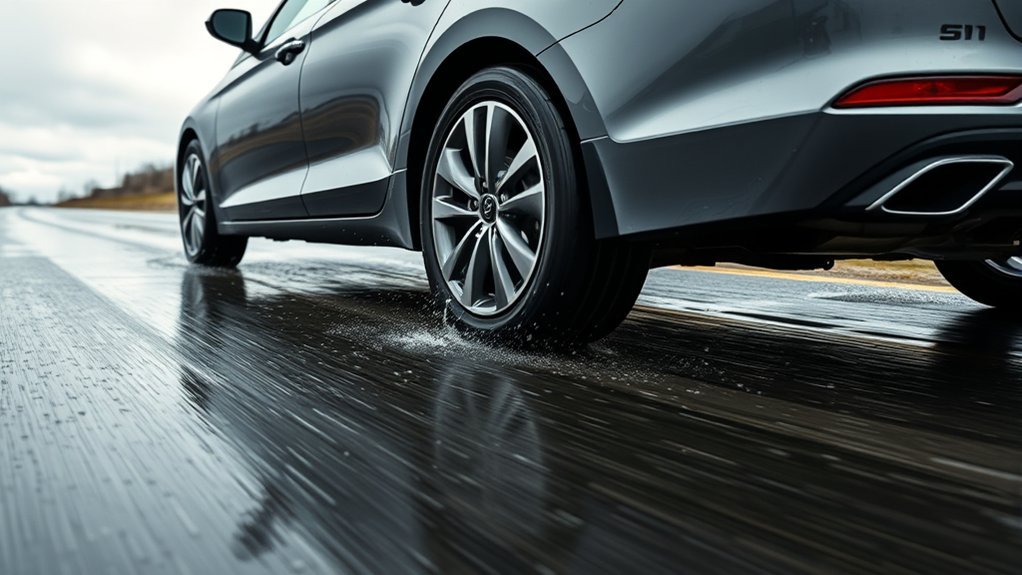
Your Hyundai Sonata can have strong brakes and still take much longer to stop in rain if the tires are worn. Tire tread depth affects how well the tire clears water from the contact patch, which directly affects wet-road braking, steering grip, and hydroplaning resistance. For frequent rain driving, treat about 4/32 inch of tread as a serious replacement-planning point, and replace tires no later than 2/32 inch or when the wear bars are flush.
Quick Answer
Tire tread depth matters because your Sonata’s tires need enough groove depth to push rainwater away. Around 4/32 inch, wet stopping distance is already noticeably worse than with newer tires. At 2/32 inch, tires may be legally worn out in many places and can be poor for emergency braking in rain.
Key Takeaways
- For wet-road safety, start planning tire replacement around 4/32 inch of tread, especially if you often drive in rain.
- Do not wait for poor weather performance to prove the tires are worn; emergency stopping distance can increase before the legal minimum is reached.
- Use the Sonata’s driver-door tire placard for cold PSI, not the maximum pressure printed on the tire sidewall.
- Rotate tires about every 7,500 miles or sooner if irregular wear appears, unless your exact model-year manual says otherwise.
- In rain, slow down, avoid cruise control, increase following distance, and avoid sudden braking or sharp steering.
At a Glance
| Time Required | 5–10 minutes for a basic tread and pressure check |
| Difficulty | Easy |
| Tools Needed | Tread-depth gauge, quarter, tire-pressure gauge, flashlight, and the Sonata tire placard or owner’s manual |
| Cost | Usually free; about $5–$20 if you buy a gauge |
Why Tire Tread Depth Matters for Wet Braking
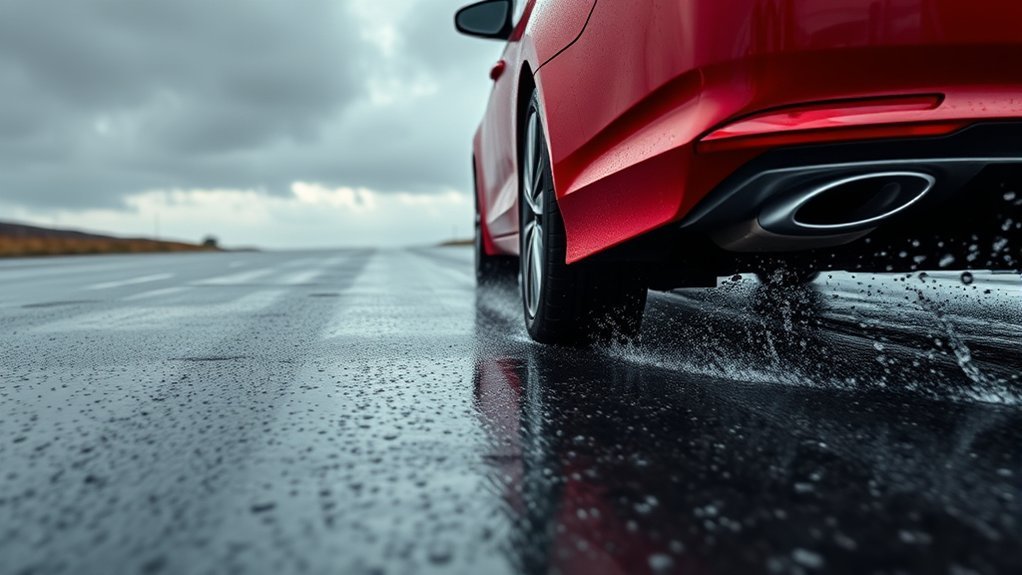
Tire tread is not just a wear indicator. It is part of the braking system because it helps the tire stay connected to the road when water is present. Deep grooves move water away from the contact patch. As the grooves get shallow, the tire has less room to evacuate water, so wet traction drops and stopping distance can grow.
That is why 4/32 inch matters. It is not a magic line where tires suddenly become unsafe, but it is a practical warning point for drivers who regularly see rain. AAA testing found that all-season tires worn to 4/32 inch had longer wet stopping distances than new tires, and AAA recommends using the quarter test as an early shopping signal rather than waiting for the penny-test minimum. AAA’s worn-tire research supports replacing tires before they reach the bare legal minimum.
Warning: A tire that is still legal may still be a poor choice for heavy rain. If your Sonata’s tires are near 4/32 inch and you drive in wet weather often, plan replacement before emergency braking performance becomes the problem.
[Products Worth Considering]

Black Magic Tire Wet delivers a deep wet-look shine that makes tires appear dark, rich, and freshly detailed. Its long-lasting formula helps resist rain, dust, and road grime for weeks of glossy protection, not days. Apply by spraying onto clean, dry tires—no buffing or wiping required—with a low-sling design to reduce splatter on paint and wheels.

Monitor tire tread wear with a smart, color-coded depth gauge that shows clear condition ranges at a glance. The bar is range marked for fast, easy readings, helping you maintain safer traction and performance. Each gauge is portable with a pocket clip, and the set includes 20 units for daily use and sharing.

Measure tire tread depth quickly and accurately with this LUMITECO dial gauge that reads in 1/32" increments up to 14/32". The color-coded green/yellow/red zones make it easy to judge tire wear and know when replacement is needed. A rugged, compact design with a protective pouch helps keep the gauge ready for use on cars, trucks, motorcycles, and more.
What Is Hydroplaning and Why Should You Care?
Hydroplaning happens when a wedge or film of water separates the tire from the pavement. When that happens, the tire cannot grip the road normally, so steering, braking, and acceleration can feel light or delayed. The risk rises with speed, standing water, worn tread, low tire pressure, smooth pavement, and sudden inputs.
Hydroplaning does not have one fixed speed. AAA notes that even new tires can lose some contact with the road at speeds as low as about 35 mph in wet conditions, and the Texas Department of Transportation explains that hydroplaning depends on water depth, road surface, vehicle speed, tread depth, tire inflation pressure, and other factors. In a Sonata, the safest response is to reduce speed before standing water, avoid cruise control in rain, and leave more room to stop.
Causes of Hydroplaning
The most common causes are too much water, too much speed, and too little tread. Worn tires cannot move water away fast enough, especially when water depth is greater than the remaining groove depth or when the road has puddling. Underinflation can make the situation worse because the tire may not hold its intended shape against the road.
- Standing water: Puddles, wheel ruts, and poorly drained lanes increase risk.
- Speed: The faster the tire rolls, the less time it has to clear water.
- Low tread depth: Shallow grooves reduce water evacuation.
- Incorrect pressure: Underinflation or overinflation can reduce stable contact with the road.
- Abrupt driving: Hard braking or sharp steering can break traction sooner.
Effects on Vehicle Control
When hydroplaning begins, the steering may feel loose, the engine may rev slightly as drive wheels lose resistance, or the car may drift. If this happens, do not slam the brakes. Ease off the accelerator, look where you want to go, hold the steering wheel steadily, and avoid sudden corrections until the tires regain contact.
Note: Antilock brakes, traction control, and stability control help in many slippery situations, but they cannot create grip if the tires are riding on water instead of pavement.
How Worn Tires Affect Stopping Distances
Worn tires can make a wet stop much longer because the tire has less grip while the brakes are trying to slow the car. Tire Rack compared wet braking from 60 mph at different tread depths. In its sedan test, new tires stopped in 205 feet, tires at 4/32 inch stopped in 270 feet, and tires at 2/32 inch stopped in 400 feet. Those numbers are test examples, not guaranteed Sonata distances, but the pattern is clear: lower tread depth can mean much longer wet stopping distance.
In Tire Rack’s 60-mph wet sedan test, tires at 2/32 inch needed 195 feet more to stop than new tires under the same test conditions.
Tread Depth Importance
Your Sonata’s brakes slow the wheels, but the tires create the friction that slows the vehicle. When tread is deep enough, the tire can cut through surface water and keep more rubber in contact with the pavement. When tread is shallow, the tire has less water-clearing capacity, so braking distances can rise quickly in rain.
Use this simple guide for wet-weather decision-making:
| Tread Depth | Wet-Road Meaning | Best Action |
|---|---|---|
| 6/32 inch or more | Generally stronger water evacuation, depending on tire model and condition | Monitor monthly |
| 5/32–4/32 inch | Wet braking performance is already reduced versus newer tires | Start shopping, especially for rainy driving |
| 3/32 inch | Very limited wet-weather safety margin | Replace soon and avoid heavy-rain driving when possible |
| 2/32 inch or wear bars flush | Common legal/wear-bar minimum; poor rain margin | Replace now |
Hydroplaning Risks
Hydroplaning risk rises as tread gets shallow because the tire has less room to move water. It also rises when tire pressure is wrong, because the tire may not maintain its intended shape and contact patch. That is why tire care is more than tread depth alone: pressure, rotation, alignment, and regular inspection all work together.
The U.S. Tire Manufacturers Association lists pressure, tread, rotation, and alignment as core tire-care essentials. It also recommends checking tire pressure at least monthly and when tires are cold. USTMA’s tire-care guidance is a useful baseline for Sonata owners.
Stopping Distance Variations
The table below shows Tire Rack’s 60-mph wet braking example. Use it as a warning about the trend, not as a prediction for every Hyundai Sonata. Your actual stopping distance depends on tire brand and model, tread design, tire age, road texture, water depth, speed, vehicle load, brake condition, ABS operation, and driver reaction time.
| Tread Depth | Sedan Wet Stop from 60 mph | Light Truck Wet Stop from 60 mph |
|---|---|---|
| New tire test depth | 205 feet | 216 feet |
| 4/32 inch | 270 feet | 261 feet |
| 2/32 inch | 400 feet | 287 feet |
Legal Tread Depth vs. Safety Recommendations
The common U.S. legal/wear-bar minimum is 2/32 inch, but legal does not always mean smart for wet weather. Wear bars are designed to show when the tire has reached the minimum replacement point. By then, wet braking and hydroplaning resistance may already be poor.
For a Hyundai Sonata that sees rain, 4/32 inch is a better planning threshold. This does not mean every tire must be replaced the moment it touches 4/32, but it does mean you should check weather, driving habits, tire age, and upcoming trips honestly. If you commute on highways, drive in storms, or carry passengers often, replacing at or near 4/32 can be the safer choice.
Pro Tip: Use the quarter test for a quick rain-safety check. Insert a quarter upside down into the main tread groove. If you can see the top of Washington’s head, the tire is around or below 4/32 inch and it is time to start shopping.
Essential Tips for Maintaining Tire Performance in Wet Conditions
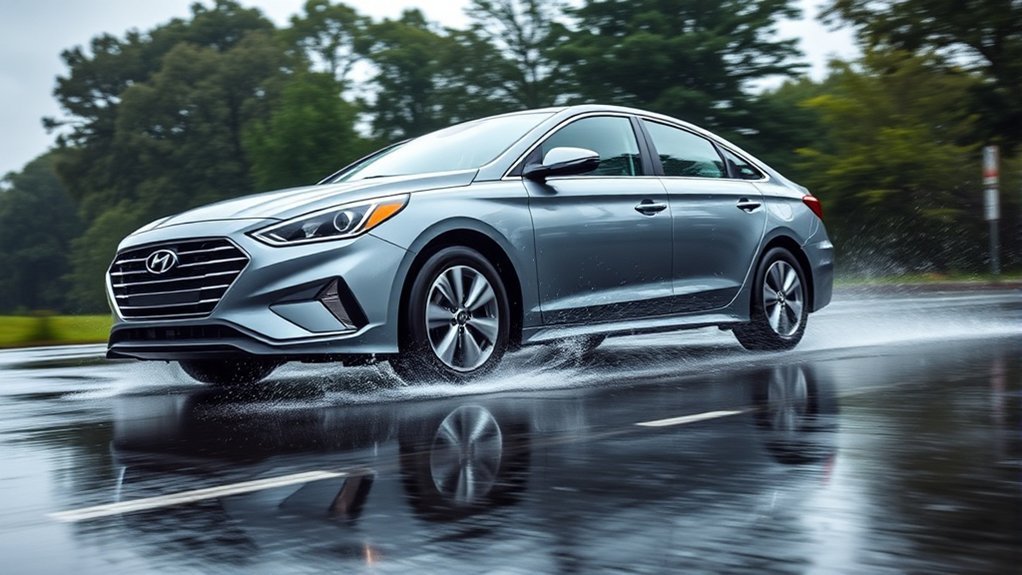
Good wet braking starts before the rain begins. Use this checklist to keep your Sonata’s tires ready for bad weather:
| Tip | Why It Matters | Action Required |
|---|---|---|
| Check tread depth | Confirms the tire still has enough groove depth to clear water | Use a tread-depth gauge monthly; start shopping around 4/32 inch for rain |
| Maintain cold tire pressure | Incorrect pressure can hurt handling, wear, and traction | Use the Sonata driver-door placard and check when tires are cold |
| Rotate tires | Helps even out tread wear across all four tires | Follow Hyundai guidance: about every 7,500 miles or sooner if irregular wear develops |
| Inspect for uneven wear | Uneven wear may point to alignment, pressure, balance, or suspension problems | Look across the inner edge, center, and outer edge of each tire |
| Inspect for damage | Bulges, cuts, exposed cord, or cracking can make a tire unsafe | Have damaged tires inspected by a tire professional immediately |
How to Check Your Sonata’s Tread Depth
A tread-depth gauge is the best tool because it gives an actual reading in 32nds of an inch. Check several spots on each tire, including the inner, center, and outer tread grooves. Do not rely on one groove or one tire, because front tires can wear faster on many Sonata models.
- Park safely on level ground. Turn the steering wheel slightly if you need better access to the front tire tread.
- Place the tread-depth gauge in a main groove. Avoid measuring on top of a wear bar.
- Measure inner, center, and outer grooves. Write down the lowest reading for each tire.
- Use the quarter test as a quick check. If the top of Washington’s head is visible, plan replacement for wet-weather driving.
- Use wear bars as the final warning. If the tread is flush with the built-in wear bars, replace the tire.
- Check pressure cold. Use the PSI listed on the Sonata’s driver-door tire placard or owner’s manual.
Do not use the maximum PSI printed on the tire sidewall as your normal inflation target. That number is the tire’s maximum rating, not the vehicle manufacturer’s recommended cold pressure for your Sonata.
[Products Worth Considering]

Accurately measure tire tread depth with a calibrated gauge marked from 0 to 1 inch in 1/32 inch increments. The color-coded bar helps you quickly identify tread condition ranges, supporting safe driving for trucks, motorcycles, automobiles, and passenger vehicles.

The SAFELIFE dial tire tread depth gauge measures tread depth in 1/32 inch increments with clear, easy-to-read 2-inch dial face. Color zones using a traffic light system help you quickly judge whether tread is low, marginal, or ample for safer driving. Built with a durable zinc cast body and a metal detect probe for precise, comfortable use across cars, motorcycles, trucks, and buses.

Black Magic Tire Wet delivers a wet, black, glossy finish with just one quick spray. Its weather and rinse-resistant formula helps maintain shine for weeks, not days, and dries quickly to reduce sling. A self-healing formula fills small scuffs to defend the look, leaving no white, powdery residue.
How to Address Tread Wear
Once you find low or uneven tread, the next step depends on the pattern. Some wear is normal, but uneven wear usually means something needs attention before a new set of tires wears out early.
| Wear Pattern | Possible Cause | What to Do |
|---|---|---|
| Both edges worn | Underinflation or heavy cornering | Set cold PSI to placard spec and inspect more often |
| Center worn | Overinflation or tire/load mismatch | Reset pressure cold and ask a tire shop to confirm fitment |
| One edge worn | Alignment issue or worn suspension part | Schedule alignment and suspension inspection |
| Cupping or scalloping | Balance, shocks/struts, or suspension issue | Have the wheel/tire assembly and suspension checked |
| Cracks, bulges, or exposed cord | Structural damage or aging | Do not ignore it; replace or professionally inspect immediately |
Hyundai owner guidance says to rotate tires every 12,000 km or 7,500 miles, or sooner if irregular wear develops. During rotation, Hyundai also recommends checking balance, uneven wear, damage, and tire pressure. Use your exact Sonata model-year owner’s manual as the final authority because tire sizes and service guidance can vary by year and trim.
Wet-Road Driving Tips for a Hyundai Sonata
Good tires help, but driving technique still matters. Wet roads reduce the margin for every driver, even with newer tires.
- Slow down before standing water. Speed is one of the biggest hydroplaning factors.
- Avoid cruise control in rain. You may need to ease off the accelerator quickly if traction drops.
- Increase following distance. Wet stops take longer, especially with worn tread.
- Avoid hard braking and sharp steering. Make smooth inputs so the tires keep as much grip as possible.
- Drive in the tracks of the vehicle ahead when safe. Those tracks may have less standing water.
- Replace streaking wipers and use headlights. Seeing early gives you more time to brake gently.
Frequently Asked Questions
Can wet roads affect braking distance?
Yes. Wet pavement lowers available traction, so your Sonata may need more distance to stop. Worn tires make the problem worse because shallow tread cannot clear water as effectively as deeper tread.
How do I get better traction on wet roads?
Keep tread depth healthy, set tire pressure to the Sonata door-placard PSI when tires are cold, rotate tires on schedule, and slow down in rain. Avoid cruise control, hard braking, and sharp turns on wet pavement.
Is 4/32 inch of tread still safe?
It may still be usable, but it is a warning point for rain. Wet braking is already reduced compared with newer tires, so begin shopping or replace soon if you drive in wet weather often.
Is 2/32 inch the legal tire limit?
In many U.S. states, 2/32 inch is the common legal minimum and the depth marked by built-in wear bars. Treat it as a final replacement point, not as a wet-weather safety target.
How often should I check my Sonata’s tires?
Check tire pressure and visually inspect tread at least once a month, before long trips, and before rainy seasons. Measure tread depth more often when the tires are near 5/32 inch or if you notice uneven wear.
Does TPMS mean my tire pressure is fine?
No. TPMS warns when pressure is significantly low, but it is not a replacement for monthly checks with a tire-pressure gauge. Always use the recommended cold PSI on the Sonata tire placard.
Conclusion
Tire tread depth has a major effect on your Hyundai Sonata’s wet-road braking. Around 4/32 inch, wet-weather performance is already reduced enough that rain-driving owners should start shopping or plan replacement. At 2/32 inch or when wear bars are flush, replace the tires immediately. Combine proper tread depth with correct cold PSI, regular rotation, alignment checks, and smoother rainy-day driving to give your Sonata the best chance to stop safely when the road is wet.
Sources
- NHTSA TireWise — tire safety, tire standards, and consumer tire-maintenance resources.
- U.S. Tire Manufacturers Association: Tire Care Essentials — pressure, tread, rotation, alignment, monthly checks, and tread-wear basics.
- AAA: Tread Lightly, Worn Tires Put Drivers at Risk — wet braking and handling performance loss at 4/32 inch.
- Tire Rack: How Much Does Tire Tread Depth Affect Wet Braking? — 60-mph wet braking examples at new, 4/32-inch, and 2/32-inch tread depths.
- Hyundai Owner Manual: Tire Rotation — rotation interval, uneven-wear inspection, damage checks, and pressure after rotation.
- AAA Exchange: Wet Weather Driving Tips — quarter test, cold pressure checks, avoiding cruise control, slowing down, and hydroplaning prevention.
[Products Worth Considering]

Measure tyre tread depth precisely with a digital gauge that reads in both MM and inches, helping you monitor safe driving conditions. The large LCD screen is easy to operate, and the compact tool fits for cars, trucks, and motorcycles. It provides high accuracy with a 0-25.4mm range and includes a 1-year warranty for added peace of mind.

ETENWOLF’s tire pressure gauge helps you quickly and accurately check tire PSI across cars, trucks, motorcycles, bikes, and more. It’s manually calibrated to ANSI B40.1 Grade A for reliable readings, includes a large glow dial for easy nighttime viewing, and features a 360-degree swivel chuck for use at any valve angle. The gauge also works consistently in extreme hot or cold weather.
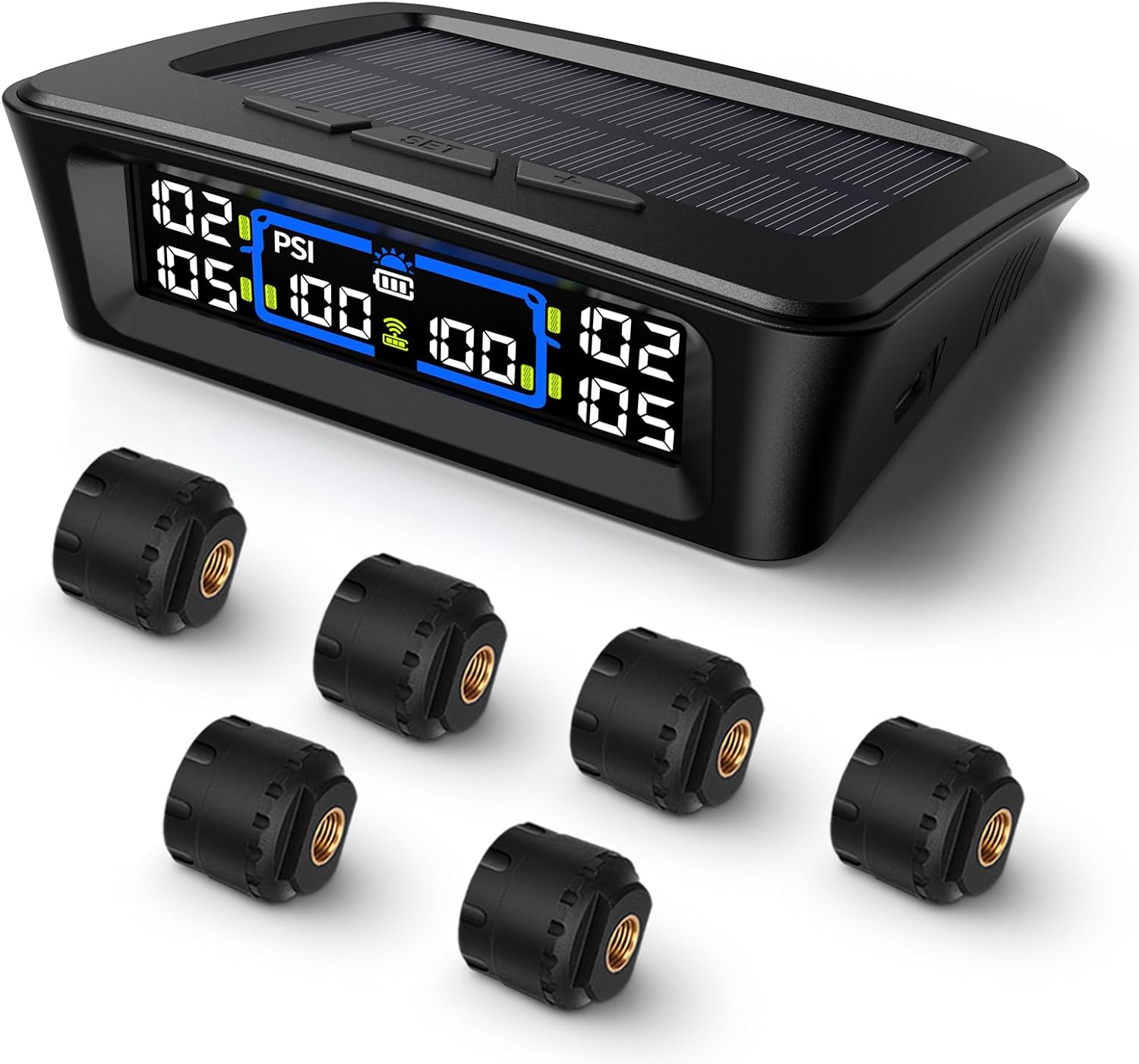
The Tymate TM12 RV TPMS delivers real-time tire pressure and temperature monitoring with a stable 433Hz display for safer long-distance driving. It supports simultaneous monitoring across vehicle and trailer zones, includes six alarm modes for pressure, temperature, leakage, battery, and signal loss, and features easy DIY installation with auto calibration. Power is supplied via USB-C charging or solar recharging, with a wide 0–144 PSI range and up to 50 ft signal coverage for RVs and towable trailers.

Related Articles

Danger of Using Summer Tires in Winter on a Hyundai Sonata
Potentially perilous, using summer tires in winter on your Hyundai Sonata can compromise safety—discover the hidden dangers that await you on icy roads.
Read More
Can You Mix Nitrogen and Air in Hyundai Sonata Tires? Answered
Discover the implications of mixing nitrogen and air in your Hyundai Sonata tires—are the benefits worth the risks? Explore the answer inside!
Read More
How to Tell If Hyundai Sonata Tires Are Too Old to Use Safely
Understand how to assess the age of your Hyundai Sonata tires and discover crucial signs of deterioration that could compromise your safety on the road.
Read More