
How to Use Costco Tire Inflation: Step-by-Step
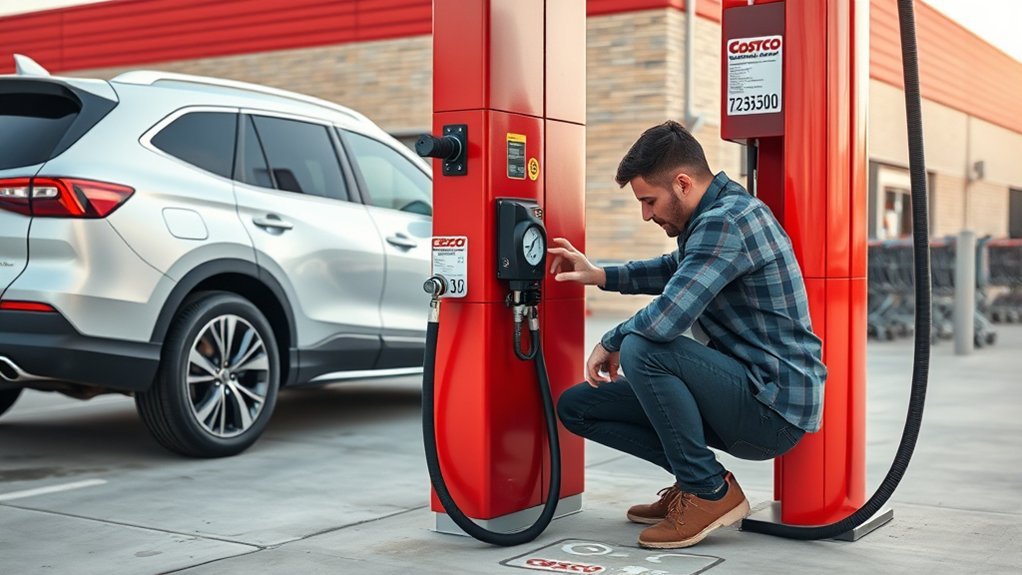
First, check your vehicle’s recommended PSI on the driver’s door placard or owner’s manual, and measure tires when cold. Then find the Costco tire inflation station near the tire center, confirm it’s working, and park close to the valves. Remove each cap, attach the hose, and add air in short bursts to the target PSI. Recheck with a reliable gauge, make small corrections, and watch for leaks or hose issues if pressure won’t hold.
Key Takeaways
- Check your vehicle’s recommended tire PSI on the door placard or owner’s manual before inflating.
- Find the Costco tire inflation station near the tire center and confirm it’s working and open.
- Remove the valve cap, attach the hose securely, and inflate each tire in short bursts.
- Recheck pressure with a reliable gauge after each adjustment until each tire reaches the target PSI.
- Troubleshoot leaks or equipment issues by checking the valve, hose connection, and compressor, or use another station.
[Products Worth Considering]

This tire inflator with pressure gauge delivers long-lasting performance with a durable rubber-protected gauge and sturdy build. The longer hose and 360 swivel air chuck help you seal the valve securely and keep your hands free while measuring, inflating, or deflating. It’s battery-free for reliable use and provides ±2 PSI accuracy in the mid-range for most typical tires, with universal compatibility for 1/4 NPT compressor outputs.

The Milton S-693 straight foot dual head air chuck is designed for accurate tire pressure checks and quick, secure valve-core engagement with lock-on threads on both ends. With a 1/4" FNPT connection and a maximum 150 PSI rating, it’s built for use on inner duals and common vehicle tires, including trucks and RVs.

This EVOULTES 2-way air chuck set includes a dual head closed flow air chuck and a ball head chuck for versatile tire inflation. It connects easily to air lines, inflator gauges, and compressors using 1/4" NPT threads and includes two 1/4" male quick plugs for fast coupling. Built with durable metal construction and sealed threads using Teflon tape to help prevent air leaks, it’s ideal for inflating Schrader valve tires across cars, bikes, and motorcycles.
Check Your Recommended Tire Pressure
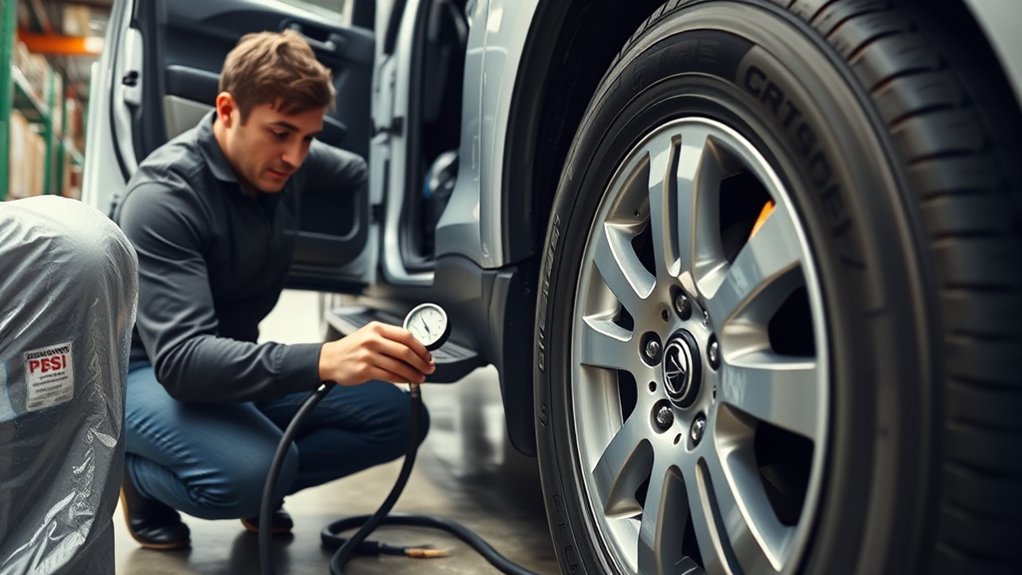
Before you inflate your tires at Costco, check the recommended pressure listed on the driver’s door placard, owner’s manual, or tire sidewall if it differs from the vehicle spec. You need the exact tire pressure to avoid underinflation, overinflation, uneven wear, and reduced handling.
Read the placard with the tires cold, since driving raises pressure and can skew your measurement. If your vehicle carries different front and rear values, note both numbers before you start.
Check tire placards when tires are cold, and note separate front and rear pressures before inflating.
Compare the recommendation to the current reading from a reliable gauge, and record the target in psi. Don’t guess or round aggressively; even a small difference matters.
These inflation tips help you set a safe baseline before you connect any air source. If you tow, haul, or run nonstandard tires, confirm whether the load requires a higher setting.
Keep the target pressure handy so you can check results quickly and make precise adjustments.
Find the Costco Tire Inflation Station
Once you know your target pressure, head to Costco’s tire inflation station, usually located near the tire center, auto service area, or a clearly marked air pump bay.
At most Costco location sites, you can spot it by following tire-service signs or asking an employee for the exact bay. Check the posted inflation hours before you drive over, because availability can vary by store and service schedule. If you arrive during peak traffic, expect a short wait near the station and keep your vehicle positioned safely.
- Look for a wall-mounted gauge and hose assembly.
- Confirm the air machine is operational.
- Park close enough to reach all valves.
- Keep your receipt or membership info handy if staff requests it.
Use the station only when the area is clear, and don’t block service lanes. A quick scan of the Costco location saves time and prevents unnecessary backtracking.
Inflate Each Tire to the Right PSI
Set the inflator to your vehicle’s recommended PSI and add air in short bursts, checking the pressure after each adjustment with a reliable gauge.
Use the Costco inflation tools to target each tire individually, since tire pressure can vary from wheel to wheel. Remove the valve cap, press the hose nozzle squarely onto the valve stem, and hold it steady to limit leakage.
Watch the gauge on the inflator, but rely on your own gauge if you need a tighter reading. If the reading is below spec, add a small burst; if it’s already near spec, stop and move to the next tire.
Keep the hose clear of the ground and avoid kinking it. Repeat the same process for all four tires, maintaining the same method so each tire reaches the correct PSI.
Consistent inflation helps your vehicle handle predictably and protects the tires from uneven wear and heat buildup during driving.
[Products Worth Considering]

This digital tire pressure gauge with built-in inflator helps you accurately check and adjust tire pressure for safer driving and better fuel efficiency. It supports multiple units (PSI, KPA, BAR, KG/CM²) and reads within 1% for reliable results. The 3-in-1 design inflates, deflates, and measures, with a quick-connect air chuck and compatible hose setup for cars, trucks, SUVs, RVs, and motorcycles.

This portable digital air compressor plugs into your car’s 12V outlet, lets you preset the target tire pressure, and automatically shuts off when it’s reached. It delivers up to 150 PSI with an accurate gauge, plus a bright LED light and digital display for easier night use. With multiple nozzle adaptors and a long power cord, it’s suitable for cars and many inflatables, excluding trucks and motor lorries.

This tire air chuck with clip adapter helps you connect a vehicle inflator nozzle securely for faster, easier tire inflation. The brass locking design aims to prevent leaks and keeps the connection stable while you fill tires. Ideal for use with compatible air compressors and pumps with an 8mm connection.
Verify PSI and Make Small Adjustments
Check the tire pressure with a reliable gauge after each burst, then compare it to the vehicle’s recommended PSI. If you’re within 1 to 2 PSI, stop and cap the valve. If you’re below target, add short bursts and recheck immediately. This method keeps your adjustment controlled and prevents overinflation.
Use tire maintenance tips that emphasize consistency: measure when tires are cold, note the reading, and repeat for all four tires. Keep a simple log of inflation frequency so you can spot slow loss over time.
- Read the gauge at eye level for accuracy.
- Pause between bursts to let pressure stabilize.
- Match each tire to the same target unless the placard says otherwise.
- Record the final PSI before leaving the pump.
Small, measured changes reduce wear and improve handling. When you verify PSI carefully, you’ll finish faster and maintain safer road performance.
Troubleshoot Common Inflation Problems
If the air hose won’t deliver pressure, verify the valve core is fully depressed and the chuck is seated straight on the stem. If air still doesn’t flow, check the compressor for power, hose kinks, or an empty tank.
Listen for leaks at the chuck, hose fittings, and valve stem; a hiss means you need to reseat the connection or replace a worn seal. If inflation stops early, confirm the outlet isn’t cycling off from heat or low supply, then retry after a short cooldown.
Compare the reading with a known tire gauge to confirm pressure gauge accuracy, since Costco unit displays can drift. If the tire inflates too slowly, remove any adapter and use direct contact.
When you suspect air compressor issues, move to another station or report the fault to staff. Stop immediately if the sidewall bulges, the bead shifts, or the tire won’t hold pressure, because the problem may be beyond simple adjustment.
Frequently Asked Questions
Do I Need a Costco Membership to Use the Tire Inflation Station?
Yes—you usually need a Costco membership to use the tire inflation station, since it’s tied to membership benefits. You can still handle basic tire maintenance elsewhere if you’re not a member.
Is the Costco Tire Inflation Station Free for All Customers?
No, you can’t assume it’s free for all customers; Costco typically offers tire inflation as a membership benefit. You should check local policy, follow tire maintenance tips, and confirm access before you inflate.
Can I Inflate a Spare Tire at Costco?
Yes, you can inflate a spare tire at Costco; about 80% of roadside tire failures involve underinflation. You’ll use the same air station, but check your spare’s pressure first and follow inflation tips carefully.
Are Costco Tire Inflation Stations Available 24/7?
No, Costco tire inflation stations usually aren’t available 24/7; you’ll need to check local Costco hours. For proper Tire maintenance, you should verify access before you go, since service depends on warehouse operating times.
Does Costco Offer Digital Tire Pressure Readings?
Yes, you can often read tire pressure on Costco’s digital display, like checking a smartwatch at a pit stop. You’ll get precise PSI feedback, so you can inflate accurately and avoid overfilling your tires.
Conclusion
Now you know how to use Costco tire inflation with confidence. Check your recommended PSI, find the station, inflate each tire, and verify the pressure before you leave. If a tire still reads low, make small adjustments until it’s right. A few careful minutes can keep your tires rolling like clockwork and help your vehicle handle better, last longer, and stay safer on the road. Proper pressure isn’t optional—it’s maintenance that pays off.
[Products Worth Considering]

The JACO FlowPro Tire Inflator measures, inflates, and airs down tires up to 100 PSI with battery-free operation and ±2% accuracy after calibration. It features a glowing pressure dial for night visibility, a heavy-duty steel build with a hybrid hose, and a precision push-to-inflate thumb trigger. The patented Lightning Air Chuck locks on for a secure seal, and the kit includes quick-connect hardware for easy inline use with your air compressor.

This brass tire air chuck with clip adapter locks securely to the valve stem for a tight seal with minimal leakage. Simply press the locking clip, push or twist the nozzle onto the tire valve, and release the clip to keep it in place during inflation. Designed for efficient, convenient connection between a vehicle inflator hose and common tire valves, with a compatible 8mm bore hose end.

Inflate Presta and Schrader bike and car tires with one compressor attachment, including tubeless setups. The digital gauge lets you monitor 2–200 PSI readings in 0.1 PSI increments with ±2 PSI accuracy, while the adjustable lever and built-in bleed button help you dial in precise pressure. Quick-connect coupler, hose, and a complete Presta service kit with spare cores and caps make it ready for fast maintenance.

Related Articles
How to Book a Costco Tire Center Appointment
Tired of guesswork? Learn how to book a Costco Tire Center appointment and avoid surprises before your next visit.
Read More
How to Book a Tire Appointment at Walmart
Mysterious steps make booking a Walmart tire appointment simpler than you think, but one crucial detail could save you time and money.
Read More
How to Book a Tire Appointment at Discount Tire
Online or by phone, booking a Discount Tire appointment is easy—just gather a few details first and discover the fastest way to get in.
Read More