
Where Are Continental Tires Made?
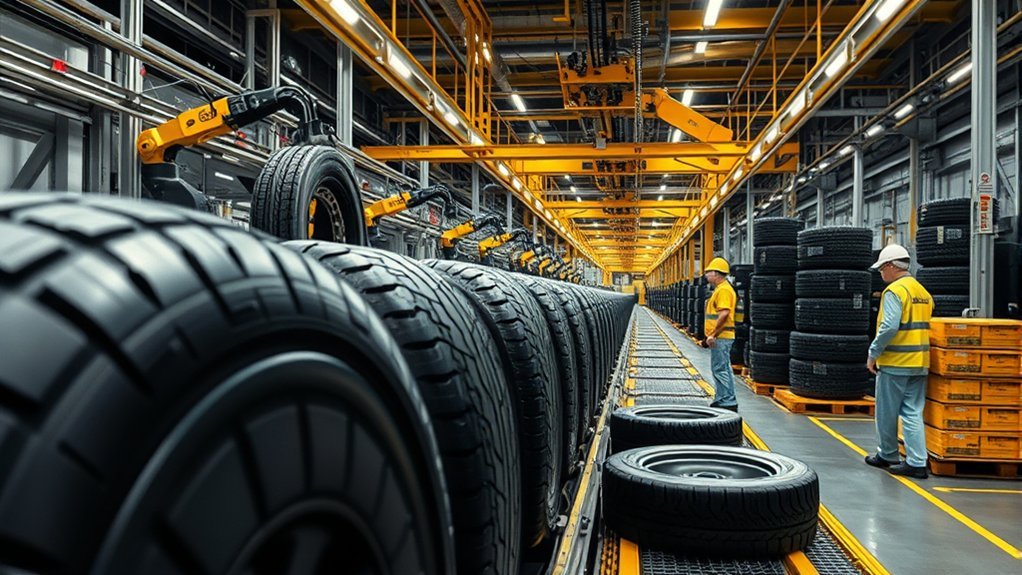
Continental tires are made across Europe, North America, South America, and Asia, not in one single country. You’ll find major plants in Germany, Slovakia, Portugal, Romania, Czechia, the U.S., Canada, Mexico, China, India, Thailand, and Malaysia. This distributed network helps Continental match local demand, shorten supply chains, and keep output consistent through standardized processes, automation, and strict quality controls. Your tire’s sidewall and DOT code can show its plant and production date, which helps explain more.
Key Takeaways
- Continental tires are manufactured globally across Europe, North America, South America, and Asia.
- Major European plants are in Germany, Slovakia, Portugal, Romania, and Czechia.
- North American production occurs in the U.S., Canada, and Mexico.
- Asian manufacturing sites are located in China, India, Thailand, and Malaysia.
- Tire sidewall and DOT codes identify the specific plant and production date.
[Products Worth Considering]

This Dr.Roc tire valve stem puller tools set helps install or remove snap-in tubeless valve stems safely and efficiently. It includes ozone-resistant EPDM snap-in valve stems, a valve stem installer, and a valve core remover for quick core removal or installation during tire service. Designed for reliable tubeless tire repair on motorcycles, ATVs, lawn equipment, cars, and trucks.

Upgrade your Toyota tire setup with these corrosion-resistant, leak-proof valve stem caps designed to help protect the valve core from water, snow, and road grime. The caps feature a snug rubber seal and durable copper alloy construction to resist rust and oxidation while maintaining stable tire pressure. Ideal for replacing worn original caps and keeping your wheels looking clean and stylish.

Mount your spare tire off the floor and onto your wall using an e-track spare tire carrier that helps you stay organized in trailers, garages, and warehouses. The upgraded double-fittings design improves stability versus single-fittings and supports greater load bearing. Install by snapping into e-track anchor points and securing the tire with a lug-nut style bolt setup for quick, secure storage.
Where Are Continental Tires Made?
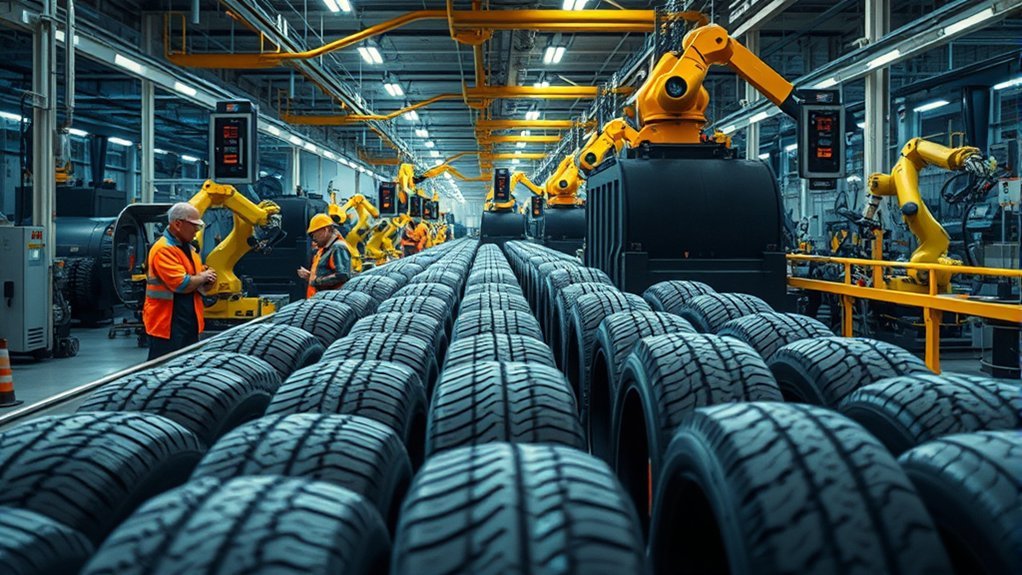
Continental tires are made in a global network of manufacturing plants, with major production facilities across Europe, North America, South America, and Asia. You can trace Continental’s tire manufacturing footprint across multiple countries, which helps balance capacity, labor, and logistics.
Continental tires are produced across a global network of plants spanning Europe, North America, South America, and Asia.
This distributed model supports global supply by reducing single-region dependence and improving delivery speed to OEMs and retailers. You’ll find production aligned with local demand, so the company can shorten shipping routes and manage inventory more efficiently.
Continental uses standardized processes, automation, and quality controls to keep output consistent across sites. Each plant follows strict testing for tread performance, durability, and safety compliance.
When you evaluate where a tire comes from, look at the sidewall code; it identifies the plant of origin. That code gives you a precise way to verify manufacturing location without relying on marketing claims.
Continental Tires Made in Europe
Across Europe, Continental operates several major tire plants, including facilities in Germany, Slovakia, Portugal, Romania, and Czechia, so a significant share of its passenger, SUV, and commercial tire output comes from the region.
You’ll find these sites support high-volume production with tight process control, automated inspection, and consistent compound mixing. Continental uses European craftsmanship to pair precise manufacturing tolerances with advanced tread design, helping each plant deliver stable quality metrics across summer, winter, and all-season lines.
The region also drives tire innovation through R&D-linked manufacturing, where engineers and production teams refine rolling resistance, wet grip, noise, and wear performance.
You can expect localization benefits too: shorter supply chains, region-specific sizing, and faster model changeovers.
In practice, European output gives you a technically mature portfolio built around efficiency, durability, and repeatable performance standards.
Continental Tires Made in North America
You’ll find Continental operates North American manufacturing sites in the U.S., Canada, and Mexico to support regional supply and logistics.
These plants produce selected tire models locally, including passenger, SUV, and commercial applications, depending on market demand and facility capability.
That regional footprint helps you trace where specific Continental tires come from and how production is distributed across the continent.
North American Manufacturing Sites
Continental operates several manufacturing sites in North America, with production concentrated in the United States and Mexico to support regional tire demand, shorten supply lines, and align output with local vehicle markets.
You’ll find these plants integrated into Continental’s global Tire production network, but they serve North America with localized capacity and logistics.
The company uses site-specific equipment, process controls, and quality checks to maintain consistent specifications across batches.
Because you’re looking at regional sourcing, these facilities matter for lead times, inventory planning, and distributor replenishment.
North America also gives Continental access to key automotive supply chains, rail, and cross-border freight routes.
That setup helps you compare sourcing patterns, manufacturing resilience, and delivery efficiency without relying on distant imports.
Tire Models Produced Locally
Among the Continental tires made in North America, production typically includes high-volume passenger, SUV, and light-truck lines assigned to regional plants based on size mix, compound requirements, and equipment capability.
You’ll usually see local production for tire models that need faster supply cycles and tighter OEM matching, especially all-season touring, crossover, and select performance applications.
Plants can adjust tread geometry, casing construction, and curing profiles to meet regional specs without long import delays. That lets you track fitment by plant rather than assume one global source.
For you, the practical takeaway is simple: the same tire model may come from different facilities, but Continental controls the process through standardized materials, quality checks, and build documentation across North American manufacturing.
Continental Tires Made in Asia
Continental runs several tire manufacturing sites in Asia to support regional supply, shorten logistics routes, and diversify production capacity. You’ll see Asian manufacturing focused on passenger, SUV, and commercial tire production with standardized process control. Plants typically use automated mixing, curing, and inspection lines to hold consistent tolerances.
| Country | Typical output | Notes |
|---|---|---|
| China | High | Broad product mix |
| India | Medium | Domestic and export supply |
| Thailand | Medium | Regional distribution |
| Malaysia | Selective | Specialty lines |
You can expect local sourcing for certain compounds, casings, and packaging to reduce lead times. Continental’s Asia footprint also helps you access tires tailored to climate, road, and vehicle demand patterns. If you compare labels, plant codes and DOT-style markings can reveal where a tire was made. For your sourcing analysis, Asian plants give you a practical view of Continental’s manufacturing scale and technical consistency across markets.
Why Continental Makes Tires in Multiple Countries
That broad Asian footprint points to a larger production strategy: Continental spreads tire manufacturing across multiple countries to balance cost, capacity, and market access.
You see a manufacturing strategy built around regional supply chain resilience, so output can shift when freight rates, tariffs, or demand patterns change. Producing near major vehicle markets improves cost efficiency and shortens lead times.
Regional supply chain resilience lets output shift with freight rates, tariffs, and demand, while shortening lead times.
It also lets Continental use local labor markets, align plants with specific regulatory or environmental impact targets, and reduce cross-border transport emissions. Different sites can specialize in product diversity, from passenger and SUV tires to commercial and winter lines, while supporting technological innovation through localized process investments.
This geographic spread helps Continental match market demand more precisely, avoid single-country bottlenecks, and keep capital deployment flexible. In practice, multiple countries give the company operational redundancy, better inventory positioning, and a stronger ability to serve you where demand is growing fastest.
[Products Worth Considering]

Protect your Tesla’s tire valves with these precision-fit aluminum stem caps made for Model 3, S, X, and Y. The rubber O-rings help form an airtight, leakproof seal to keep dust, debris, and moisture out while supporting proper tire pressure. Easy hand installation adds a clean finishing touch to your wheels.

This multi-function tire valve stem removal tool set makes it fast to remove, install, bleed, and clean valve cores for easier tire maintenance. It includes valve core removers, a 4-way spool tool, replacement valve caps, and spare cores to handle replacements and repairs with confidence. Universal compatibility suits cars, trucks, motorcycles, bicycles, and more for roadside convenience.

This ecocstm ratchet wrench is designed to make emergency and routine tire changes faster with a 360° rotating head and quick forward/reverse switching. The extended handle provides extra leverage to reduce effort and hand fatigue, while the adapter helps fit many scissor jacks on cars, SUVs, trucks, and vans. Built for reliable performance with durable construction, it’s a practical travel essential for on-the-road preparedness.
How Continental Keeps Quality Consistent
You can expect Continental to apply the same global quality standards across every plant, so each tire meets the same spec regardless of location.
The company uses factory testing controls to check tread accuracy, structural integrity, and performance targets during production.
It also keeps uniform production processes in place, which helps reduce variation and maintain consistent output worldwide.
Global Quality Standards
Across Continental’s global tire network, the same quality outcomes depend on standardized specifications, in-line process controls, and shared testing protocols across every plant.
You see global standards applied from compound mixing through curing, so each facility targets identical tolerances for dimensions, uniformity, and material performance.
Continental’s central engineering teams set production quality benchmarks, and local plants execute them with calibrated machinery and documented work instructions.
You benefit from this system because it reduces variation between regions and keeps tire behavior consistent across markets.
Digital traceability links batch data, equipment settings, and operator checks, allowing rapid comparison against specification limits.
That structure helps Continental maintain repeatable output whether a tire rolls off a European, North American, or Asian line.
Factory Testing Controls
Factory testing controls turn Continental’s production standards into measurable release criteria at each plant. You can expect each tire batch to pass structured factory testing before release, with inspections that verify dimensions, uniformity, balance, and structural integrity.
Quality assurance teams track results against tight tolerances, then flag any deviation for rework or rejection. You benefit from this data-driven process because it reduces variation and keeps performance within specification. Continental logs test outcomes, compares them against control limits, and audits equipment calibration to maintain repeatability.
When measurements drift, technicians correct the issue before product moves forward. This closed-loop system lets you see consistent quality at scale, while factory testing provides the evidence Continental needs to release tires with confidence.
Uniform Production Processes
Uniform production processes keep Continental’s output consistent by standardizing each step, from compound mixing and calendaring to curing, trimming, and final inspection. You get repeatable tolerances because each plant uses the same production technology, recipes, and machine settings. That control boosts manufacturing efficiency and reduces variance across batches.
| Step | Control Point | Effect |
|---|---|---|
| Mixing | Polymer ratio | Stable compound properties |
| Calendaring | Thickness check | Uniform belt and ply layers |
| Curing | Temperature and time | Predictable tread structure |
| Trimming | Dimensional limits | Accurate final geometry |
| Inspection | Vision and gauges | Fast defect rejection |
You’ll see the same process logic in each facility, so Continental can scale volume without sacrificing consistency.
How to Read Tire Sidewall Codes
When you read a tire sidewall, the code tells you the key specifications you need to match the tire to your vehicle and driving needs. You’ll see a format like P235/55R19 101V.
“P” indicates passenger use; “235” is section width in millimeters; “55” is aspect ratio; “R” means radial construction; “19” is rim diameter in inches. The load index “101” maps to a maximum load rating, and the speed symbol “V” shows the tested top speed.
Check the DOT code for the manufacturing week and year, then verify the TIN for traceability. You can also inspect sidewall markings for tire composition, ply rating, and UTQG grades, which quantify treadwear, traction, and temperature resistance.
Use these codes to confirm fitment, legal compliance, and service limits before you buy or install. If any value doesn’t match your vehicle placard, choose a different tire.
Does Factory Location Affect Performance?
Tire performance usually depends far more on the specific model, compound, and quality controls than on the country or plant where it’s built. You should expect Continental to use standardized specs across factories, so the measurable differences in grip, tread wear, rolling resistance, and noise usually stay within tight tolerances.
That means the manufacturing impact of location is typically indirect: it can matter if a plant runs different curing equipment, calibration, or inspection systems, but Continental’s global process controls are designed to minimize variation.
You’ll get the best read on performance metrics by comparing the exact tire line, load index, speed rating, and OE or replacement version, not just the factory code.
In practice, location is a minor variable; design and production standards drive results. If you want consistent handling and wear, focus on the tire’s engineering data, test results, and batch quality, because those tell you more than geography ever will.
Frequently Asked Questions
Are Continental Tires Made in the USA?
Yes, Continental tires are made in the USA at several production facilities. You’ll find manufacturing processes here and abroad, with U.S. plants supporting passenger, truck, and specialty tire output to meet regional demand.
Which Countries Manufacture Continental Tires?
Like a worldwide assembly line, you’ll find Continental tires made in Germany, the U.S., China, India, Brazil, Mexico, and Romania. Their Tire manufacturing processes run across Global production facilities, optimized for regional demand and logistics.
Do All Continental Tires Use the Same Materials?
No, you don’t get identical materials in all Continental tires; tire composition varies by model and performance target. Continental follows strict manufacturing standards, but compounds, belts, and tread designs change to meet specific load, grip, and durability requirements.
How Can I Tell My Tire’s Origin?
Check your tire’s sidewall for tire labeling: “Made in,” DOT code, plant code, and date. You can cross-reference these with manufacturer databases and manufacturing standards to verify origin, production site, and compliance.
Are Imported Continental Tires More Expensive?
Absolutely—yes, imported Continental tires can cost more. You’ll see higher prices from import cost factors like shipping, tariffs, and duties. Your price comparison should also account for dealer margin, currency swings, and local taxes.
Conclusion
So, where are Continental tires made? You’ll find them built in Europe, North America, and Asia, depending on the model and market demand. Continental uses global manufacturing to keep supply efficient, while tight quality controls help maintain consistent performance across plants. When you check the sidewall code, you can see the exact origin. In the end, factory location matters less than specs, testing, and fit. That’s the real backbone of tire performance.
[Products Worth Considering]

ETENWOLF’s calibrated digital tire pressure gauges deliver accurate readings across a wide pressure range, from below 12 PSI to above 140 PSI. The built-in thermal compensation helps maintain performance in extreme cold and hot conditions, while the LED light improves visibility for quick checks. Includes replaceable AAA batteries for long-lasting use and convenience for everyday tire monitoring.

This ETENWOLF tire plug repair kit helps you quickly fix punctures for reliable rides. It includes two plug sizes to match different damage widths, plus essential tools and lubricant for a smoother repair process. Designed for tubeless tires, it’s a convenient on-the-go solution for cars, motorcycles, ATVs, trucks, jeeps, and tractors.

This flat tire repair kit lets you handle punctures quickly with two plug sizes for different damage, helping restore drivability on the spot. It includes T-handle insertion and spiral probe tools plus lubricant and a utility knife, all packed in a compact bag for easy carry. Universal compatibility makes it suitable for tubeless tires across cars, motorcycles, ATVs, trucks, jeeps, and more.

Related Articles
Who Makes Kumho Tires? Brand and Factory Guide
From South Korea to global factories, find out who really makes Kumho tires—and why their production story may surprise you.
Read More
Are Michelin Tires Worth the Price?
Do Michelin tires justify their premium price, or are you paying for a badge; discover what really drives their value and decide for yourself.
Read More
Where Are Cooper Tires Made?
I’ll reveal where Cooper Tires are made, but the surprising answer depends on the model—keep reading to find your tire’s origin.
Read More