
How to Choose Tires for an Electric Vehicle (EV)
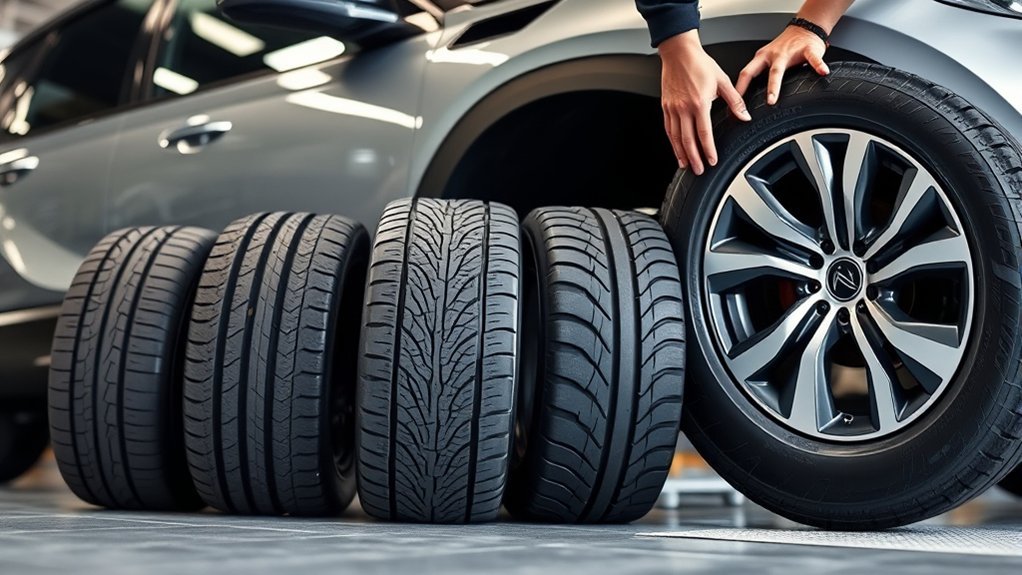
Choose EV tires by matching the size, load index, and speed rating on your door-jamb sticker, then verify the load index meets or exceeds your vehicle’s weight demands. Prioritize low rolling resistance for range, but balance it against grip, noise control, and seasonal traction. Check OE markings and inflation specs, and pick summer or winter compounds for your climate. Because EV torque and braking wear tires faster, the right setup matters, and the details get more useful from here.
Key Takeaways
- Check the door-jamb sticker for the correct tire size, load index, and speed rating for your EV.
- Choose tires with a high enough load index to support the battery weight and vehicle weight safely.
- Prioritize low rolling resistance tires to improve efficiency and extend driving range.
- Balance grip, noise, and season by selecting EV-specific summer, winter, or all-season tires as needed.
- Maintain proper inflation and rotate tires regularly to reduce uneven wear from instant torque and regenerative braking.
[Products Worth Considering]

Monitor tire tread wear with a smart, color-coded depth gauge that shows clear condition ranges at a glance. The bar is range marked for fast, easy readings, helping you maintain safer traction and performance. Each gauge is portable with a pocket clip, and the set includes 20 units for daily use and sharing.

Milton S-921 pencil tire pressure gauge helps you maintain optimal tire pressure for passenger cars with accurate readings in PSI and kPa. It features a built-in deflator valve for convenient pressure adjustments, plus a single chuck head and nylon indicator bar for easy use on the go. Built from durable plated brass and designed for reliable performance, it’s a practical road trip and cold-weather maintenance tool.

Measure tire tread depth quickly and accurately with this LUMITECO dial gauge that reads in 1/32" increments up to 14/32". The color-coded green/yellow/red zones make it easy to judge tire wear and know when replacement is needed. A rugged, compact design with a protective pouch helps keep the gauge ready for use on cars, trucks, motorcycles, and more.
What Makes EV Tires Different?
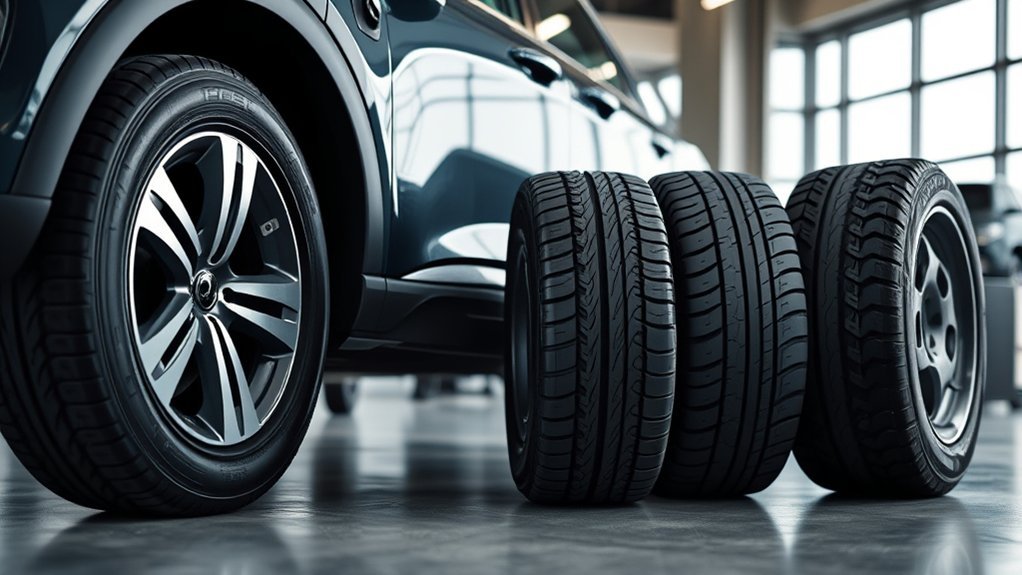
EV tires are engineered differently because an electric vehicle places unique demands on them. When you choose tires for electric vehicles, you need a higher load index to support battery weight and preserve structural integrity.
EV tires require a higher load index to support battery weight and maintain structural integrity.
You’ll also notice specialized tread and rubber compounds built for low rolling resistance, which reduces energy loss and supports range optimization. Because EV drivetrains deliver instant torque, the tire has to maintain optimized grip during hard launches, cornering, and braking.
Many models add noise reduction technologies, such as acoustic foam, to offset road noise and match the quiet cabin of an EV. Compared with conventional tires, EV versions often use a more aerodynamic profile, including narrower dimensions, to cut drag and improve efficiency.
In practice, these design changes work together: load support, efficiency, traction, and acoustic control all matter at once.
How to Check EV Tire Specs
To check EV tire specs, start with the door jamb sticker, since it lists the exact tire size, load index, and speed rating your vehicle requires.
Compare those specifications with any tire you’re considering for tires for electric cars. Match the tire size exactly to preserve compatibility, handling accuracy, and safety.
Then verify the load index; it must meet or exceed the capacity of a tire needed for your EV’s mass and battery load. Look for Original Equipment (OE) markings when possible, because OE tires are engineered for your model’s fit and performance targets.
Next, review rolling resistance data. A lower tire’s rolling resistance can improve efficiency and extend range, so this metric matters in EV selection.
Cross-check the manufacturer’s specifications before buying, and don’t assume a visually similar tire will work. Precise verification reduces wear, preserves vehicle dynamics, and helps you choose the right tire without guesswork.
How to Choose the Right EV Tire Load Index
Because electric vehicles carry heavy battery packs, you need a tire load index that can safely support the vehicle’s weight. The load index tells you each tire’s maximum safe carrying capacity; higher numbers mean more weight capacity.
For most electric vehicles, choose tires with a load index of 95 to 105, but always verify the exact rating on the door jamb sticker. That manufacturer spec should guide your selection, because it guarantees compatibility with the vehicle’s axle loads and safety standards.
If you select EV-specific tires above the required load index, you’ll gain a useful margin for passengers or cargo. Using the correct load index also reduces tire wear and lowers the risk of tire failure, which improves safety and performance.
When you compare tires, don’t treat load index as optional; it’s a core structural requirement that directly affects how well the tires support your EV on the road.
How to Balance EV Tire Range and Grip
Balancing range and grip means choosing a tire compound and tread design that reduce rolling resistance without sacrificing the traction you need for safe braking and cornering. For your EV, softer compounds usually improve grip, but they can cut range by raising rolling resistance. Harder compounds do the opposite, so you need a measured tradeoff. Narrower tire widths can also lower aerodynamic drag and extend range, yet they may reduce wet-condition grip.
| Choice | Effect on range | Effect on grip |
|---|---|---|
| Softer compounds | Lower | Higher |
| Harder compounds | Higher | Lower |
| EV-specific tire | Balanced | Balanced |
Assess your driving: if you accelerate hard or drive on wet roads, prioritize grip; if you commute steadily, prioritize range. EV-specific tire designs often deliver the best overall performance because they’re engineered for electric weight, torque, and efficiency demands.
How EV Tires Affect Braking
EV tires affect braking by managing the extra mass and torque that electric vehicles place on the contact patch, so you need a tire that can stop a heavier car without losing stability.
Because your EV carries a large battery pack, stopping distances can increase unless you choose tires designed for high load and stable grip.
EV ready tires use reinforced construction and optimized tread compounds to support braking performance under weight and torque loads.
If you pick a model with lower rolling resistance, check that it still preserves enough traction, since efficiency-focused designs can reduce grip at the limit.
Instant torque also accelerates wear and tear, so inspect tread depth and pressure regularly; uneven wear can degrade braking response quickly.
The best tires balance efficiency, durability, and contact control.
When you match the tire’s load index to your vehicle and prioritize EV-specific technologies, you improve safety and keep braking consistent in dry, wet, and emergency conditions.
How EV Tires Reduce Road Noise
Even though electric motors are naturally quiet, tire noise can still dominate the cabin, so EV tires are built to suppress vibration and tread-generated sound.
You’ll notice that EV tires use advanced technologies to target road noise at its source. Engineers tune tread patterns to break up harmonic frequencies, and they select softer rubber compounds that damp impact harshness before it enters the chassis.
Many designs also lower rolling resistance, which cuts energy loss and can reduce the noise transmitted to the cabin.
For stronger noise reduction, some models add a sound-absorbing layer, such as foam inserts or proprietary systems like ContiSilent, inside the tire cavity. This layer absorbs resonant air pulses and vibration, improving passenger comfort without changing steering feel.
When you compare EV tires, look for products that balance quiet operation, efficiency, and durability, because the best options control road noise while preserving the precise response you expect from an electric vehicle.
[Products Worth Considering]

Add style while helping protect your tire valve stems with handmade crystal rhinestone caps and a durable plastic insert. These caps resist corrosion and help keep out rain, snow, and muddy water, extending tire life. Textured non-slip design makes them easy to grip for quick install and removal when checking tire pressure.

The SAFELIFE dial tire tread depth gauge measures tread depth in 1/32 inch increments with clear, easy-to-read 2-inch dial face. Color zones using a traffic light system help you quickly judge whether tread is low, marginal, or ample for safer driving. Built with a durable zinc cast body and a metal detect probe for precise, comfortable use across cars, motorcycles, trucks, and buses.

Accurately measure tire tread depth with a calibrated gauge marked from 0 to 1 inch in 1/32 inch increments. The color-coded bar helps you quickly identify tread condition ranges, supporting safe driving for trucks, motorcycles, automobiles, and passenger vehicles.
How to Match EV Tires to the Season
You should match your EV tires to ambient temperature: summer tires deliver better dry and wet grip in warm conditions, while winter tires retain flexibility and traction when temperatures drop near 45°F.
You also need to track tread depth, since adequate depth improves braking and cornering performance in rain or snow where EVs can stop longer.
When you choose seasonal tires, prioritize low rolling resistance and rotate them regularly to preserve range, grip, and wear balance.
Summer vs. Winter Tires
Summer tires are the best choice for warm weather because their tread patterns maximize grip on dry and wet pavement while reducing rolling resistance, which helps preserve EV range and improves handling.
You should reserve winter tires for cold-weather use, especially below 45°F, when all-season tires start to lose grip. Their deeper tread depth and softer compounds improve traction on snow and ice, which matters because EV weight can extend braking distances.
- Choose summer tires for warm performance
- Choose winter tires for cold-weather traction
- Prefer EV-specific winter tires when possible
- Check tread depth regularly
- Match tire choice to seasonal conditions and safety needs
Temperature and Tread Grip
As temperatures drop to around 45°F, it’s advisable to switch an EV to winter tires because all-season compounds lose grip in colder conditions.
You’ll get better traction from EV-specific winter tires, whose tread patterns and cold-weather compounds maintain performance on snow and ice while keeping rolling resistance low.
In warm weather, summer tires can improve grip and handling because they’re tuned for higher temperatures.
Check tread depth regularly; for winter tires, keep at least 4/32″ so you preserve traction in snow and rain.
You should also monitor tire pressure, since temperature swings can change inflation quickly and reduce grip, efficiency, and overall performance.
Matching tire type to season helps you control wear, optimize energy use, and keep the EV stable.
Why EV Tires Wear Out Faster
EV tires often wear out faster because they’re subjected to greater loads and more aggressive forces than those on many ICE vehicles.
When you select tires for your EV, you need to account for added mass from battery packs, which raises the load index demand and increases rolling resistance.
Electric vehicles are becoming more capable, and that extra torque reaches the contact patch instantly, so the tread pattern can abrade more quickly during hard launches.
Instant EV torque reaches the contact patch fast, accelerating tread abrasion during hard launches.
Regenerative braking also changes load transfer, which can create irregular wear if you neglect maintenance and rotation.
EV-specific compounds help, but they still respond differently under high load and frequent stop-start use. They may also influence tire noise.
- Higher vehicle mass increases carcass stress.
- Instant torque accelerates surface abrasion.
- Regenerative braking can shift wear zones.
- Proper rotations help equalize tread wear.
- Regular inspections support longer service life.
How to Keep EV Tires Properly Inflated
Check your EV tire pressure every month to keep rolling resistance low and efficiency high.
Adjust inflation as temperatures change, since cold weather can reduce pressure and affect handling and braking.
Use the door jamb sticker for the manufacturer’s recommended PSI, and don’t assume the tires are correct by appearance alone.
Check Pressure Monthly
Monthly tire-pressure checks help you preserve EV range, handling, and tire life. You should check pressure monthly with a reliable gauge, because tire pressure monitoring systems may miss small losses. Use the door-jamb sticker to confirm the specified tire pressure for peak performance.
Under-inflation raises rolling resistance, cuts efficiency by up to 3%, and shortens tire lifespan. Consistent tire maintenance also supports safety and traction.
- Check pressure monthly
- Compare readings to the placard
- Inspect all four tires
- Recheck after long drives
- Record each measurement
Cold weather can lower pressure about 1 PSI per 10°F drop, so your readings can drift even when the tires look normal.
Accurate inflation keeps your EV predictable, efficient, and ready for daily driving.
Adjust For Weather Changes
When temperatures drop, tire pressure can fall by about 1 PSI for every 10°F decrease, so you need to verify inflation more often during seasonal swings.
Check your EV tires against the door-jamb sticker, since battery weight often requires higher air pressure than standard cars.
If air pressure is low, the tires become under-inflated, rolling resistance rises, and efficiency drops, which hurts optimizing range and performance.
Cold weather can also reduce battery capacity, so maintaining correct PSI matters even more in winter.
Recheck pressure before long trips and after sharp temperature shifts, then adjust promptly to prevent uneven wear.
Best EV Tires to Consider
If range, noise, and handling are your top priorities, you’ve got several strong EV tire options to compare. The best EV tires balance low rolling resistance, quiet tires, and stable tire performance, so you reduce energy loss without sacrificing control.
Michelin Primacy MXM4 remains a proven benchmark; its low drag helped it earn OEM use on the Tesla Model 3. Goodyear ElectricDrive adds acoustic foam and sustainable content, making it a technical fit if cabin refinement matters.
Bridgestone Turanza EV targets efficiency with quiet operation and superior rolling resistance, while Continental Conti EcoContact 6 delivers sharper traction and handling at a lower price.
Hankook ION EVO AS SUV also deserves attention for balanced noise suppression and cornering support.
- Prioritize range if you drive long distances.
- Check tread design for wet-road grip.
- Compare size-specific pricing before buying.
- Review tire manufacturers’ EV-specific tuning.
- Focus on choosing the right tires for your vehicle.
Frequently Asked Questions
Do EV Tires Work Well on All-Wheel-Drive Vehicles?
Yes, EV tires can work well on all-wheel-drive vehicles if you match tire compatibility, all wheel drive performance, tread design, traction requirements, weather conditions, energy efficiency, noise reduction, handling characteristics, and cost considerations carefully.
How Often Should EV Tires Be Rotated?
Rotate your EV tires every 5,000–7,500 miles; 80% of uneven wear comes from driving habits. You’ll extend tire lifespan, balance wear patterns, and preserve all season suitability, especially with performance tires, tire pressure, and seasonal changes.
Can I Use Regular Tires on My EV?
Yes, you can use regular tires if you verify tire compatibility, load capacity, performance ratings, and weather performance. Check tread design, energy efficiency, noise reduction, tire inflation, and cost considerations before you choose them.
Do EV Tires Affect Ride Comfort?
Yes—EV tires can reshape your ride comfort. You’ll feel the difference as tire construction, tread design, and weight distribution quietly alter noise reduction, road grip, performance handling, temperature sensitivity, energy efficiency, and driving experience.
Should I Buy Tires Based on My Typical Commute?
Yes—you should, because your commute drives tire longevity, energy efficiency, and noise levels. Match tread patterns to weather conditions, seasonal changes, and driving habits, then compare brands and cost considerations for the best fit.
Conclusion
Choosing EV tires is like fitting a carriage for a swift, heavy horse: the wrong shoes waste energy, slip on wet roads, and wear fast. When you check load index, tread, season rating, and inflation, you give your vehicle the support it needs. Pick a tire that balances range, grip, and braking, and you’ll protect efficiency and safety. If you match the tire to your driving conditions, your EV will travel farther, stop cleaner, and last longer.
[Products Worth Considering]

The ETENWOLF T600 digital tire pressure gauge delivers precise, manually calibrated readings to ANSI B40.7 Grade 2A standards with ±0.5% PSI accuracy. Its 360° rotating nozzle and display hold make it easy to check pressures from any angle, while a bleed button helps dial tires to the perfect level. With a 0–250 PSI range and support for PSI, BAR, and KPA, it’s a convenient tool for maintaining tire performance across many vehicles and seasons.

Measure tyre tread depth precisely with a digital gauge that reads in both MM and inches, helping you monitor safe driving conditions. The large LCD screen is easy to operate, and the compact tool fits for cars, trucks, and motorcycles. It provides high accuracy with a 0-25.4mm range and includes a 1-year warranty for added peace of mind.

This tire inflator with pressure gauge delivers long-lasting performance with a durable rubber-protected gauge and sturdy build. The longer hose and 360 swivel air chuck help you seal the valve securely and keep your hands free while measuring, inflating, or deflating. It’s battery-free for reliable use and provides ±2 PSI accuracy in the mid-range for most typical tires, with universal compatibility for 1/4 NPT compressor outputs.

Related Articles
Firestone Tire Installation Cost: Full Price Guide
Compare Firestone tire installation costs and discover what hidden fees could change your final bill.
Read More
Tire Rack vs Costco: Which Is Better for Tires?
Pick the better tire deal between Tire Rack and Costco before hidden differences change your choice.
Read More
How Much Does It Cost to Install Rims?
Need to know what installing rims really costs? Discover the hidden fees and price factors before you pay more than you should.
Read More