
Driving With Mismatched Tires: Is It Safe?

Driving with mismatched tires isn’t ideal, and it can reduce grip, upset handling, and add stress to your drivetrain. You should avoid mixing sizes, tread patterns, or tire types, especially on AWD and 4WD vehicles, where all four tires often need to match closely. If you must replace one tire, match size, load index, speed rating, and tread depth as closely as possible. Here’s what matters most when the tires don’t line up.
Key Takeaways
- Mismatched tires can reduce traction, handling, and braking, making driving less predictable and less safe.
- Tires should match in size, load index, and speed rating, especially on the same axle.
- AWD and 4WD vehicles usually require all four tires to match closely to avoid drivetrain damage.
- If one tire must be replaced, keep tread depth similar and place the newer tire on the rear axle.
- Uneven wear, vibrations, pulling, or longer stopping distances are signs the tire setup may be unsafe.
[Products Worth Considering]

These aluminum alloy tire valve caps help protect valve stems from road damage during everyday driving and long-term use. The hexagon, stylish design adds a clean look while fitting most cars, trucks, SUVs, motorcycles, and bicycles. Easy hand installation and periodic inspection help prevent slow air leaks and reduce risk of TPMS sensor wear.

These universal aluminum tire valve stem caps help protect valve cores from corrosion caused by dirt, water, and snow while helping prevent air leaks to maintain steady tire pressure. They’re easy to install with a simple screw-on fit and are suitable for cars, SUVs, trucks, bicycles, motorcycles, and other vehicles. The stylish black caps add a clean, standout look to your wheels while supporting reliable long-term performance.

These AQUAOK tire valve stem caps feature an anti-corrosion design with a metal body and plastic liner to help prevent sticking from corrosion and chemical damage. They offer universal fit for Schrader-style valve stems and are easy to hand tighten and remove. The anodized alloy caps include laser-etched logo styling for a clean, upgraded look on cars, SUVs, bikes, and more.
What Mismatched Tires Mean
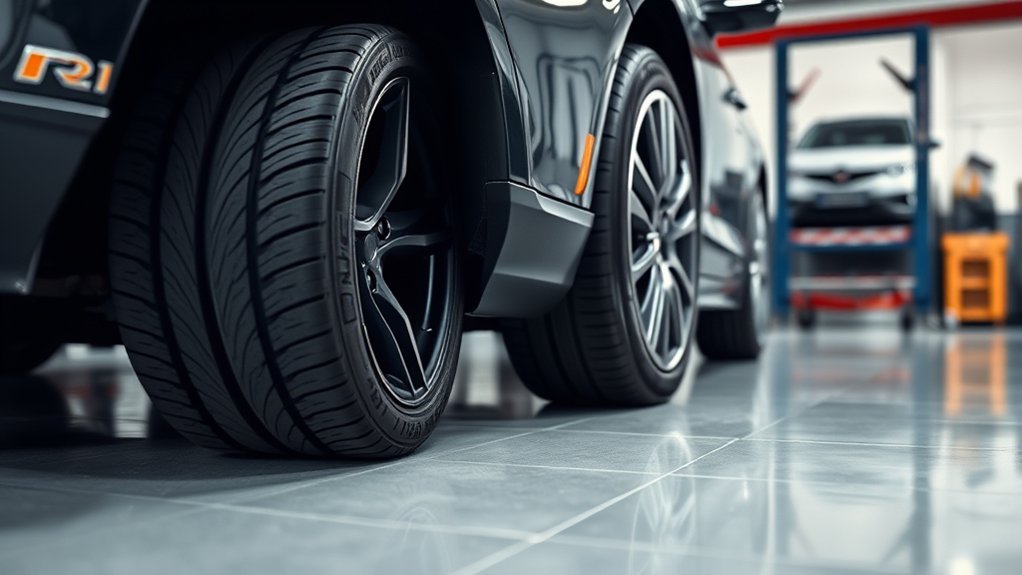
Mismatched tires mean you’re running different brands, tread patterns, sizes, or tire types on the same vehicle, which can alter handling and reduce safety.
In practice, mismatched tires can include pairing winter tires with all-season or all-terrain models, or combining tires with different tread depths, load indexes, or speed ratings.
You may notice uneven grip, altered response, or irregular tire wear as the set works less consistently.
Because each tire can behave differently under braking, cornering, and load, you should treat the setup as a technical compromise, not a standard configuration.
Some jurisdictions restrict this arrangement, especially on the same axle, while others permit it only when size and speed rating match.
To stay within manufacturer’s guidelines, you should inspect each tire regularly, compare specifications, and monitor tire wear closely.
That way, you can identify compatibility issues early and preserve safety.
Why Mismatched Tires Are Unsafe
When your tires don’t match, the vehicle may no longer respond in a predictable way. With mismatched tires, you can get uneven grip during cornering, and that can reduce your control right when you need it most.
Different tread patterns and sizes also alter contact patch behavior, so steering input and braking effectiveness don’t stay consistent. On wet or slippery roads, that inconsistency can undermine vehicle stability and increase stopping distance.
- Uneven grip can make one axle react sooner than the other.
- Different tread patterns can confuse traction control and ABS calibration.
- Varying load indexes or wear characteristics can raise blowout risk.
For safety, you should keep tires uniform on each axle. That helps the system predict traction, maintain balanced handling, and limit sudden changes in response.
When you mix tire types, you’re introducing variables the vehicle wasn’t tuned to manage, and that creates unnecessary hazard.
Are Mismatched Tires Ever Okay?
You can sometimes use mismatched tires if they keep the same size, load index, and speed rating, which helps limit safety risk.
For better handling, you should match tires on the same axle and keep the season type consistent when possible.
Even when rules allow some mismatch, you should follow your vehicle maker’s guidance, and you should avoid it entirely on AWD systems.
Same Axle Matching
Even if the tires are only slightly different, pairing them on the same axle can create uneven grip and unstable handling, especially in corners.
On the same axle, mismatched tires reduce uniformity and can undermine safety. You should match size, tread pattern, and load index to preserve handling and braking balance. Many jurisdictions treat this seriously; for example, some regulations prohibit mismatched tires on one axle.
- Match tire dimensions exactly.
- Keep tread and load index consistent.
- Follow manufacturer specifications.
If you can’t avoid a mismatch, use the same speed rating and the same season to limit risk, but don’t assume that makes the setup safe.
Technical guidance favors identical tires per axle because braking, steering response, and stability all depend on predictable contact behavior.
Limited Safe Exceptions
There are a few limited cases where mismatched tires can be acceptable, but only if the setup still meets strict compatibility rules. You can use tires with the same size, speed rating, and load index, even when you replace one or two units, but you shouldn’t ignore tread type or season.
Some regions permit different sizes only on separate axles when regulations allow it. If you drive an AWD system, replace all four tires together whenever possible; mixing tires can overload the drivetrain and cause damage.
If you must mix tires, place the better tires on the rear axle for stability and control. Even then, inspect wear closely and verify manufacturer guidance. Uniformity remains the safest choice.
Which Tires Must Match on AWD Cars?
On AWD cars, all four tires should ideally match in brand, type, size, and tread depth to keep wheel speeds synchronized and protect the drivetrain. You need identical tires whenever possible, because AWD vehicles react to small differences in rolling circumference. Mismatched tires can force unequal rotation speeds, raise stress in the system, and shorten component life.
For precise fitment, check:
- Brand and model consistency
- Size, load rating, and speed rating
- Tread depth and tread pattern
If you can’t get identical tires, choose replacements in the same performance category and verify equivalent ratings. Even then, tread depth must stay close across the axle and across the vehicle.
Consistent tread design helps traction control and stability, especially in changing road conditions. You should also follow the manufacturer’s specifications and inspect tire wear regularly. That’s the safest way to keep your tires match requirements intact and reduce the risk of damage from mismatched tires.
Can You Drive FWD or 4WD on Mismatched Tires?
If you drive a FWD vehicle on mismatched tires, you can upset traction control, braking performance, and overall handling. The front tires should match as closely as possible in size, tread depth, and design.
With FWD vehicles, mismatched tires can confuse the system and reduce vehicle stability, especially when you brake or accelerate hard. You should treat that as a safety concern, not a minor inconvenience.
For 4WD vehicles, mismatched tires are even more problematic. Unequal wheel rotation can force drivetrain components to work against each other, creating extra wear and possible mechanical damage. That’s why you shouldn’t mix tire sizes or tread patterns on 4WD vehicles unless a manufacturer specifically allows it.
In both drivetrains, uniform tire characteristics help maintain predictable grip and handling. If you need to replace one tire, you should check the remaining tires carefully and keep the set as consistent as possible.
[Products Worth Considering]

These oil-based permanent paint pens use quick-dry, waterproof ink for clean, lasting marks across many craft and DIY surfaces. The medium round nib delivers smooth, precise application for detailed writing, painting, and labeling. Each marker is individually packaged to help prevent leakage during shipping or storage.

The AstroAI L7 Mini tire inflator delivers fast, reliable inflation with a 5+4 smart inflation system, including preset modes for car, motorcycle, bicycle, ball, and custom pressure. A true gauge smart screen and advanced sensor provide accurate pressure readings to help prevent overinflation or low-pressure risk. Built-in 3-mode flashlight (flashlight, strobe, SOS) adds safety for roadside emergencies, while auto shut-off and long-lasting battery performance support repeated inflations.

The AstroAI 2 pack air chucks provide a heavy-duty, closed-flow locking design that helps keep air flowing during inflation while securely attaching to the valve stem. Built with 250 PSI rated brass components and compatible with Schrader valves, they feature 1/4" female NPT threads for a wide fit with common inflators. The straight tip and locking clip make filling tires and monitoring pressure more convenient.
How Tire Size and Tread Affect Handling
Tire size and tread pattern have a direct effect on how your vehicle steers, brakes, and stays stable on the road. When you run mismatched tires, you change tire size, aspect ratio, and width, which can shift the vehicle’s center of gravity and alter handling. That difference can feel small in normal driving, but it can become critical at speed or during cornering and braking.
- Larger or smaller tire size can reduce stability.
- Different tread patterns can create uneven grip and longer stopping distances.
- Inconsistent tire characteristics can confuse traction control systems.
You should expect less precise steering response when the tires don’t match. The vehicle may pull, hesitate, or react unpredictably as grip changes across the axle.
Because traction control systems depend on consistent tire behavior, mismatched tires can limit their effectiveness. For safe handling, keep tire size and tread patterns uniform across the vehicle.
How Wear and Rotation Affect Safety
When your tires have different tread depths, they won’t grip or stop with the same effectiveness, and that can affect steering and braking control.
You should follow the manufacturer’s rotation schedule to help keep wear even and preserve stability.
If wear becomes uneven, you’ll face longer stopping distances and a higher risk of handling problems.
Tread Depth Differences
Even a 1/16-inch tread-depth difference between mismatched tires can reduce grip, lengthen stopping distances, and make braking less predictable, especially on wet or slippery pavement.
You can’t ignore tread depth when uneven wear creates traction disparities across an axle. Deeper grooves evacuate water better, while worn tires lose bite and stability, so tire safety drops fast.
- Check tread depth at multiple points.
- Compare wear indicators with the adjacent tire.
- Replace tires before mismatch grows.
If one tire has considerably less tread, you may notice hydroplaning sooner and less precise steering.
That imbalance can also make braking feel inconsistent in emergency maneuvers. Monitoring tread depth helps you catch uneven wear early and keep mismatched tires from creating avoidable control problems.
Rotation Schedule Importance
A consistent rotation schedule helps keep tread wear even across all four tires, which preserves handling, braking performance, and overall safety. You should follow tire rotation intervals of 5,000-8,000 miles unless your manufacturer specifies otherwise. Regular tire rotation reduces uneven wear, supports traction, and helps maintain consistent performance.
| Checkpoint | Benefit |
|---|---|
| Rotation timing | Limits tread-depth spread |
| Even wear | Improves handling stability |
| Traction | Supports wet-road safety |
| Early inspection | Reveals misalignment or imbalance |
| Lower rolling resistance | Can improve fuel efficiency |
When you monitor tire condition and rotate on schedule, you reduce the chance that one tire carries more load than the others. That balance matters because mismatched wear can degrade safety and make your vehicle respond less predictably in demanding driving conditions.
Uneven Wear Risks
Uneven tire wear can quickly compromise traction, especially during braking and cornering, where reduced grip raises the risk of skidding or loss of control.
You should inspect tread depth regularly, because uneven tire wear can hide unsafe differences between tires. Mismatched tires may worsen this by altering balance, alignment, and wear patterns, creating safety hazards and forcing premature replacement.
Tire rotation helps distribute load more evenly and supports stable handling.
- Check wear indicators on each tire.
- Compare tread depth across all positions.
- Rotate tires on schedule to limit uneven tire wear.
If you ignore these checks, you can lose grip in wet or icy conditions and increase repair costs.
When You Can Replace Just One Tire
Replacing just one tire is usually acceptable when the other three have similar tread depth and wear, ideally within 2/32 of an inch of one another. In that case, you can replace one tire without creating a major mismatch, and the vehicle can remain safe to drive if you match the new tire’s size, load index, and speed rating.
Keep tread wear close across the axle pairs, because different tires with uneven characteristics can alter handling and braking balance. When you install the new tire, place it on the rear axle to improve stability and control, especially on wet or slippery roads.
If you drive an AWD or 4WD vehicle, you usually shouldn’t replace only one tire; you’ll often need all four to protect the drivetrain from inconsistent rolling characteristics. Always check your owner’s manual first, since manufacturers may specify tighter limits for tire replacement and rotation.
How To Spot Unsafe Tire Mismatch Signs
Even when a tire swap seems acceptable, you should keep checking for signs that the setup isn’t working safely. Inspect tire tread closely for uneven wear, because mismatched tires can change load transfer and reduce stability.
Drive a short test route and note any vibration, pulling, or increased road noise; these symptoms often mean the tires aren’t matching in size, construction, or grip.
Drive a short test route and watch for vibration, pulling, or extra noise—common signs the tires aren’t matching.
- Measure tire pressure on all four tires and compare values.
- Watch braking distances during normal stops; longer stops suggest uneven grip.
- Recheck tread patterns and wear rates after a few trips.
If one tire runs hotter, wears faster, or needs different tire pressure, treat that as a warning.
You should also pay attention to steering feel: a delayed response or constant correction can point to unsafe mismatch. When these signs appear, stop driving the vehicle hard and have the tires evaluated.
Frequently Asked Questions
Is It Okay to Run Mismatched Tires?
No, you shouldn’t run mismatched tires; you’ll compromise tire performance, tread patterns, and vehicle stability, creating handling issues and safety concerns. You should match sizes and specifications, especially on AWD vehicles, to avoid damage.
Is It Okay to Drive With Two Different Tires?
No, you shouldn’t drive with two different tires; tire performance can vary, causing handling issues, uneven tire wear, and safety concerns. Match size, tread patterns, and type to keep your vehicle stable and predictable.
Is It Illegal to Drive With Mismatched Tires?
Usually, you’re not automatically illegal, but local laws vary. You should check tire safety, performance impact, tread patterns, weather conditions, and legal implications, because mismatches can fail inspections, create liability, and void warranties.
Is It Okay to Drive With One Different Tire?
No, you shouldn’t. Even one different tire can create traction differences; a 2/32-inch tread depth gap may matter. You’ll notice handling issues, reduced vehicle stability, and poorer tire performance, especially in rain or hard braking.
Conclusion
In the end, you shouldn’t ignore mismatched tires. Even small differences in size, tread depth, or wear can upset handling, stress the drivetrain, and reduce traction when you need it most. If you drive an AWD vehicle, matching tires matters even more. When in doubt, check your owner’s manual and replace tires in matched sets when you can. Your safety depends on it, so don’t cut corners; a square peg won’t fit a round hole.
[Products Worth Considering]

AstroAI AIRUN H is a compact 12V tire inflator designed for fast, convenient inflation with an easy-to-read digital pressure gauge. Set your target pressure with programmable controls and let the auto shut-off turn off the pump when the preset is reached. It also includes a backlit screen and LED flashlight for nighttime use, with a ToughUltra durability design for longer service life.

Get quick, reliable tire readings with a backlit digital gauge that seals easily to valve stems for accurate 0.1 increments. Switch units on demand and check pressure on cars, trucks, motorcycles, and bicycles using the included Presta-to-Schrader adapter. The gauge powers with AAA batteries and automatically shuts off to help save battery life.

This calibrated digital tire pressure gauge delivers accurate readings within plus-minus 1 PSI for reliable tire maintenance. It features an illuminated nozzle and backlit LCD display to measure easily in dim areas, and offers four selectable units for versatile use. Automatic shutdown after 30 seconds helps conserve battery life for everyday convenience.

Related Articles

Tires With Exposed Cords: How Long Can You Drive?
Warning: tires with exposed cords can fail at any moment, and what you do next could save you from a dangerous blowout.
Read More
How Long Does a Tire Plug Take to Dry? Safe Wait Times
Longer than you think, a tire plug’s dry time can make or break your safety—discover the safest wait before driving.
Read More
How Tires Affect Road Noise (and How to Reduce It)
Icy tire tread patterns can turn every drive into a roar—discover what really causes road noise and how to quiet it down.
Read More