
4WD Tire Rotation Pattern: How and When to Rotate
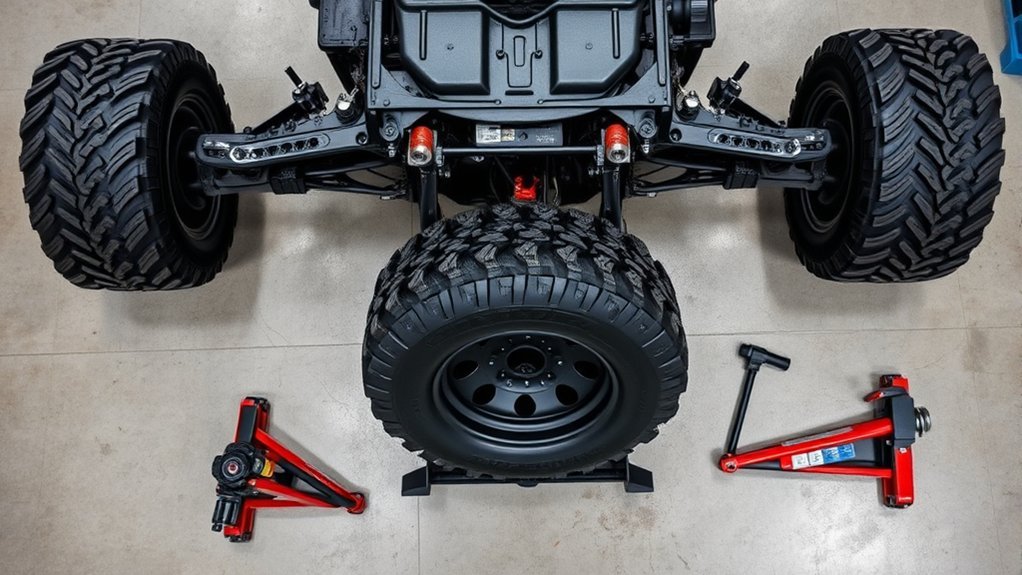
You should rotate your 4WD tires every 5,000 to 7,500 miles, or sooner if you notice uneven wear, vibration, or handling changes. Use the vehicle maker’s recommended pattern; for many 4WD and AWD setups, an X-pattern works best by moving front tires to opposite rear positions and rear tires to opposite front positions. Check tread depth, inflation, and alignment at the same time. Keep going, and you’ll see how to match the pattern to your tires.
Key Takeaways
- Use the X-pattern for 4WD tire rotation: front tires move to opposite rear positions, and rear tires move to opposite front positions.
- Rotate 4WD tires every 5,000 to 7,500 miles, or sooner if you notice uneven wear, vibration, or handling changes.
- Check tread depth and wear patterns during each rotation to catch misalignment or inflation problems early.
- Park on a flat surface, secure the vehicle, remove and swap all four tires, then torque lug nuts and check pressure.
- Follow the owner’s manual and inspect for cuts, bulges, or abnormal wear to avoid performance and warranty issues.
[Products Worth Considering]

Measure tire tread depth quickly and accurately with this LUMITECO dial gauge that reads in 1/32" increments up to 14/32". The color-coded green/yellow/red zones make it easy to judge tire wear and know when replacement is needed. A rugged, compact design with a protective pouch helps keep the gauge ready for use on cars, trucks, motorcycles, and more.

Monitor tire tread wear with a smart, color-coded depth gauge that shows clear condition ranges at a glance. The bar is range marked for fast, easy readings, helping you maintain safer traction and performance. Each gauge is portable with a pocket clip, and the set includes 20 units for daily use and sharing.

Measure tyre tread depth precisely with a digital gauge that reads in both MM and inches, helping you monitor safe driving conditions. The large LCD screen is easy to operate, and the compact tool fits for cars, trucks, and motorcycles. It provides high accuracy with a 0-25.4mm range and includes a 1-year warranty for added peace of mind.
What Is the Right 4WD and AWD Tire Rotation Pattern?
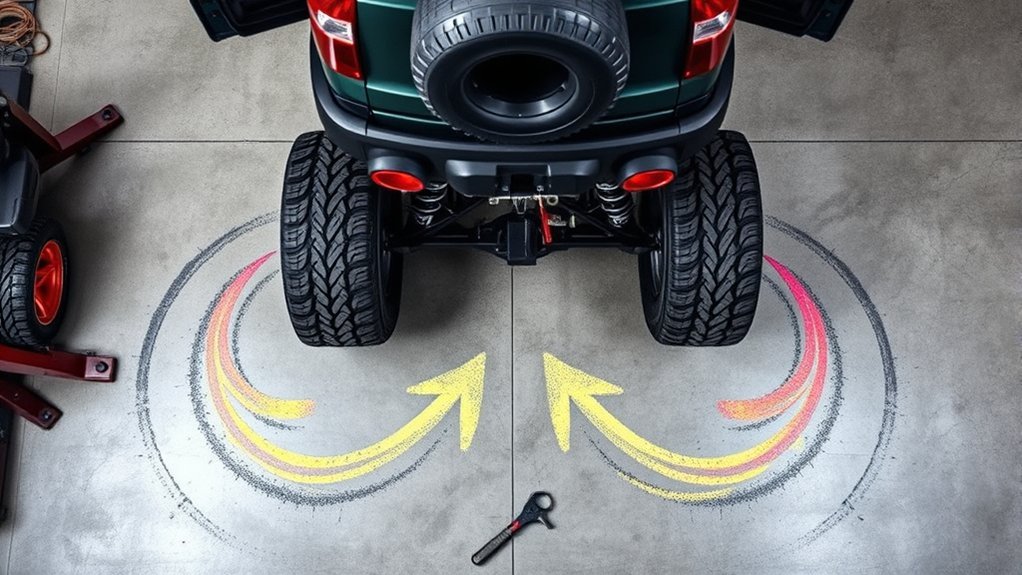
For 4WD and AWD vehicles, the X-pattern is usually the right tire rotation method: move the front tires to opposite rear positions, and the rear tires to opposite front positions.
This tire rotation pattern helps equalize wear across the front and rear, so you maintain more consistent tread depth on all four tires. You should use this approach on many all-wheel drive and 4WD setups because it matches the way these drivetrains load tires in service.
Still, check your vehicle owner’s manual before you rotate, since some tire rotation patterns differ by manufacturer or tire design.
If your vehicle carries a full-size spare, you can often include it to keep wear balanced and preserve overall performance.
The goal is simple: keep traction even, limit irregular wear, and support stable handling in varied conditions.
When Should You Rotate 4WD Tires?
You should rotate your 4WD tires every 5,000 to 7,500 miles, or follow your vehicle manufacturer’s schedule, to keep tread wear even and performance consistent. If you’re asking, when should you rotate 4wd tires?, use mileage and inspections together. During each tire rotation, check tread depth and look for uneven wear.
| Interval | Action | Result |
|---|---|---|
| 5,000 miles | Inspect and rotate | Stable tread depth |
| 7,500 miles | Rotate if due | Limits uneven wear |
| Every service | Use X-Pattern on 4WD vehicles | Balanced wear |
For most 4WD vehicles, the X-Pattern moves front tires to opposite rear positions and vice versa. That pattern helps keep wear levels matched across all four corners. Rotate sooner if you notice uneven wear, vibration, or a change in handling. Always inspect the tires closely while they’re off the vehicle; early detection can point to alignment or suspension problems. Regular tire rotation keeps your 4WD setup predictable and ready for mixed road conditions.
Why Tire Rotation Matters for 4WD Vehicles
Tire rotation matters on 4WD vehicles because all four tires share load and traction demands, so uneven tread wear can create handling imbalances and reduce grip.
When you keep tire rotation on schedule, you preserve consistent tread depth, which helps your 4WD vehicles track straight, brake predictably, and hold traction on pavement, mud, gravel, and snow.
Because the drivetrain sends power to every wheel, mismatched tires can increase drivetrain strain and force the system to work harder than necessary. That extra load can shorten component life and cut into peak performance.
Regular rotation also supports safety by reducing surprise understeer, vibration, and unstable cornering as tires age at different rates.
For most driving conditions, rotating every 5,000 to 7,500 miles or about every six months helps you manage wear before it affects control. A proper X-pattern can spread wear evenly and keep your vehicle balanced.
How to Rotate 4WD Tires Step by Step
To rotate your 4WD tires, use the X-pattern: move the front tires to the opposite rear positions and the rear tires to the opposite front positions.
Before you start, park on a flat surface, lift the vehicle securely, and check your owner’s manual for any system-specific requirements.
After the swap, inspect each tire for uneven wear or damage, and repeat the rotation every 5,000–7,500 miles or about every six months.
[Products Worth Considering]

The VEHLIVE SU-50448 II TPMS relearn tool provides a fast activation reset to restore accurate tire pressure monitoring after sensor replacement or tire rotation. It supports 315 MHz and 433 MHz GM series sensors and helps clear dashboard pressure warnings. With simple two-button operation and horn-confirmed relearning order, you can reprogram sensors conveniently at home.

The SAFELIFE dial tire tread depth gauge measures tread depth in 1/32 inch increments with clear, easy-to-read 2-inch dial face. Color zones using a traffic light system help you quickly judge whether tread is low, marginal, or ample for safer driving. Built with a durable zinc cast body and a metal detect probe for precise, comfortable use across cars, motorcycles, trucks, and buses.

Accurately measure tire tread depth with a calibrated gauge marked from 0 to 1 inch in 1/32 inch increments. The color-coded bar helps you quickly identify tread condition ranges, supporting safe driving for trucks, motorcycles, automobiles, and passenger vehicles.
4WD Rotation Pattern
For 4WD vehicles, the standard rotation method is the X-pattern: move the front tires to opposite rear positions and the rear tires to opposite front positions.
This 4WD tire rotation setup helps equalize tread life and reduces uneven wear on driven and non-driven corners. Perform the rotation every 5,000 to 7,500 miles, or about every 6 months, unless your vehicle owner’s manual specifies a different interval.
At each tire rotation, inspect all tires for cuts, bulges, abnormal wear, and damage that could affect traction and safety. If you run a full-size spare tire, include it in the X-Pattern so all five tires wear more evenly.
Always follow the vehicle owner’s manual for model-specific guidance and tire-type requirements.
Step-By-Step Rotation
Start by lifting your 4WD vehicle safely, then remove all four tires so you can rotate them in the X-pattern: move each front tire to the opposite rear position and each rear tire to the opposite front position. Use the right tools and safety gear. | Step | Action
| — | — |
|---|---|
| 1 | Lift vehicle and secure it |
| 2 | Remove all four tires |
| 3 | Swap front tires to opposite rear positions |
| 4 | Swap rear tires to opposite front positions |
| 5 | Reinstall, torque, and set pressure |
After tire rotation, check pressure to spec and tighten lug nuts evenly. Do a visual inspection for cuts, bulges, or uneven tread wear. Repeat this 4WD tire rotation every 5,000 to 7,500 miles, or follow your owner’s manual. This keeps handling balanced and helps your tires last longer.
Which Rotation Pattern Fits Your Tires?
Which rotation pattern fits your tires depends on whether they’re directional or non-directional. For 4WD vehicles, choose tire rotation based on tread design and wear.
Use the X-Pattern for non-directional tires: move front tires to opposite rear positions, and rear tires to opposite front positions. For directional tires, use Front-to-Rear, keeping each tire on the same side while moving it forward or back.
- Check sidewall arrows before you rotate.
- Match the rotation pattern to tire type.
- Rotate every 5,000 to 7,500 miles.
- Inspect wear and adjust timing if needed.
Following the right rotation patterns helps preserve tread life, balance traction, and maintain stability on mixed road surfaces.
The right rotation pattern preserves tread life, balances traction, and keeps stability steady on mixed road surfaces.
If your tires show uneven wear, don’t ignore it; recheck alignment, inflation, and your rotation schedule. Sticking to the manufacturer’s specification keeps your tire rotation effective and your 4WD ready for demanding conditions.
Common 4WD Tire Rotation Mistakes
You can’t ignore rotation direction or you’ll compromise tread performance and handling, especially on directional tires.
If you skip the manufacturer’s pattern, you may create uneven wear and reduce traction across all four corners.
Check for uneven wear before every rotation so you catch cupping, bald spots, and alignment issues early.
Ignoring Rotation Direction
Ignoring tire rotation direction can quickly create uneven wear patterns in a 4WD system, reducing traction and handling while adding stress to the drivetrain. You need to respect directionality when you perform rotation on 4WD tires; neglecting it hurts performance and accelerates wear.
Follow the correct pattern, such as an X-pattern when applicable, so each tire sees balanced service. Keep these points in mind:
- Match directional tires to their tread arrows.
- Rotate on schedule, usually every 5,000 to 7,500 miles.
- Include the spare if your setup allows it.
- Check tread alignment after each rotation.
If you swap tires incorrectly, you can create a rougher ride and uneven grip. Careful rotation protects drivetrain integrity, extends tire life, and keeps your 4WD handling consistent.
Skipping Manufacturer Patterns
Skipping the manufacturer-recommended rotation pattern can throw off wear balance in a 4WD system, reducing traction, ride quality, and overall performance.
You can’t assume a generic pattern works for all 4WD vehicles, because drivetrain dynamics differ and change how tires load over time.
Follow the manufacturer-recommended sequence for each tire rotation to limit uneven tire wear and keep handling predictable.
If you skip that guidance, you may also weaken proper maintenance compliance and risk losing warranty coverage.
In demanding use, such as towing or off-road driving, rotate more often to control degradation and reduce drivetrain strain.
Your best result comes from matching tire rotations to the vehicle’s exact service schedule, not from using a one-size-fits-all approach.
Uneven Wear Checks
During routine 4WD tire rotations, check for uneven wear at every corner, ideally every 5,000 to 7,500 miles, because tread depth differences can point to misalignment, improper inflation, or a missed rotation pattern.
Inspect your four-wheel drive tires for uneven tire wear before you swap them, and compare tire wear patterns side to side and front to rear. Use tire rotation patterns that match your drivetrain; wrong patterns can worsen cupping, bald spots, and handling issues.
Keep proper inflation equal across all tires, since pressure imbalance skews tread depth and masks problems.
- Measure tread depth at each shoulder and center
- Look for cupping, feathering, or bald spots
- Verify pressure before rotation
- Correct alignment issues before the next service
Frequently Asked Questions
What Is the Correct Pattern When Rotating Tires?
You should use the X-pattern: move front tires to opposite rear positions and rear tires to opposite front positions. It helps reduce tire wear, reveal alignment issues, balance tread depth, and accounts for seasonal changes and driving habits; use rotation tools.
How Do I Know When to Rotate My Tires?
You should rotate your tires every 5,000–7,500 miles, or sooner if you notice tire wear, alignment issues, seasonal changes, or aggressive driving habits; check your vehicle type and follow your maintenance schedule.
Should I Rotate My Tires 5000 Miles or 10000 Miles?
Rotate at 5,000 miles if you want tire lifespan to soar like a rocket; 10,000’s too long for many vehicles. Your driving habits, vehicle type, tread wear, alignment checks, and seasonal changes matter.
What Not to Do When Rotating Tires?
Don’t skip common mistakes: you shouldn’t rotate on unstable ground, mix tire types, ignore safety tips, omit alignment checks, use wrong rotation tools, or miss pressure checks; each causes uneven wear and handling problems.
Conclusion
In your 4WD, regular tire rotation keeps tread wear even, traction steady, and handling true. Rotate on schedule, follow the right pattern for your tires, and you’ll avoid uneven wear, noisy drivetrains, and early replacement costs. Check your owner’s manual, inspect tire depth, and don’t mix up directional or staggered setups. Stay consistent, stay careful, and your 4WD will deliver dependable drive, durable grip, and safer miles on and off road.
[Products Worth Considering]

Steelman white tire marking crayons provide high-contrast, semi-permanent marks for repairing and inspecting tires and equipment. They write on wet or dry, smooth or coarse surfaces including rubber, metal, glass, and wood, making them ideal for puncture location and damage outlining. The lead- and zinc-free crayons resist weather and fading yet wipe away when you no longer need the marks.

The Continental Grand Prix 5000 is an allround road bike tire engineered for faster rolling, improved ride comfort, and enhanced puncture protection. It features a Vectran Breaker cut-protection layer, Lazer Grip micro-profile tread for confident cornering control, and Active Comfort Technology to damp vibration for smoother rides. BlackChili compound optimizes grip and speed for everyday performance and long-lasting confidence.

Upgrade your wheels with MIKKUPPA closed-end lug nuts designed for reliable fit and corrosion resistance. The one-piece, cold-forged and heat-treated steel construction helps resist rust and stripping, while the integrated finish delivers a durable black appearance. Built to OEM standards with a conical 60-degree seat, these nuts provide a secure solution for compatible Ford, Honda, Jeep, and Chevrolet models.

Related Articles

Wheel Damage: Types, Repair Options, and Costs
Many wheel damages look minor, but some hide costly safety risks—learn which repairs are worth it and when replacement is smarter.
Read More
Tire Balancing Weights: Types, Cost, and Why You Need Them
Precisely chosen tire balancing weights reduce vibration and wear, but which type fits your wheels and what it really costs may surprise you.
Read More
Tire Repair Kits: What’s Inside and How to Use One
Get the essentials of tire repair kits, learn how each tool works, and discover the simple steps that can save your trip.
Read More