
How Tall Is a 225 75R15 Tire? Exact Height, Width & Dimensions
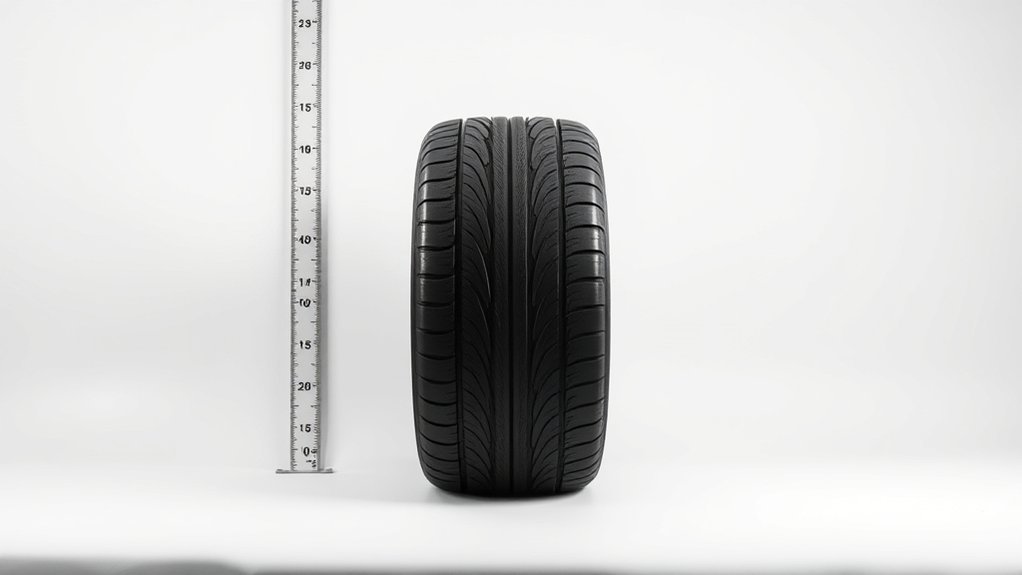
A 225/75R15 tire is about 28.3 inches tall, 8.9 inches wide, and made for a 15-inch wheel. Its sidewall is about 6.6 inches tall on each side, its circumference is about 88.8 to 88.9 inches, and its mathematical revolutions per mile are about 713. Use these numbers to compare clearance, gearing, speedometer change, and wheel fit before you buy.
Last updated: July 8, 2026
Quick Answer
A 225/75R15 tire measures about 28.3 inches in overall diameter, 8.9 inches in section width, and 6.6 inches in sidewall height. It fits a 15-inch wheel and is commonly approved for 6.0- to 7.5-inch passenger wheels, though LT versions may use a narrower range.
Key Takeaways
- A 225/75R15 tire is about 28.29 inches tall overall, usually rounded to 28.3 inches.
- Its section width is about 8.86 inches because 225 mm converts to 8.86 inches.
- Its sidewall height is about 6.64 inches because the 75 aspect ratio means the sidewall is 75% of the section width.
- Its circumference is about 88.87 inches, which equals about 713 mathematical revolutions per mile.
- Fitment depends on more than size. Check rim width, load index, speed rating, tire type, offset, and cold inflation pressure before installing it.
225/75R15 Tire Dimensions
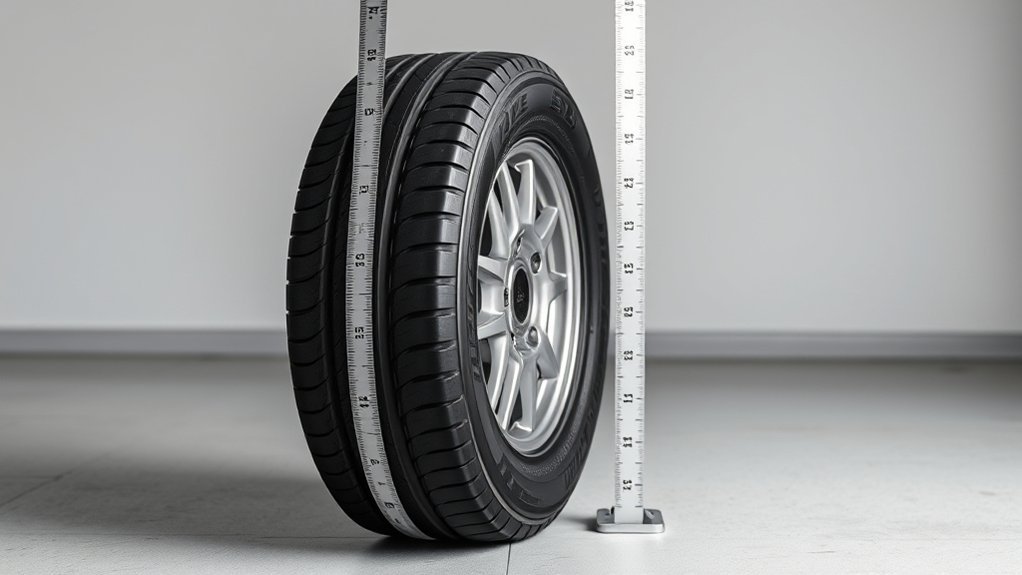
A 225/75R15 tire uses a 225 mm nominal section width, a 75% aspect ratio, radial construction, and a 15-inch rim diameter. Converted to inches, that gives you an overall diameter of about 28.29 inches, a section width of about 8.86 inches, and a sidewall height of about 6.64 inches.
| Measurement | 225/75R15 Value | Why It Matters |
|---|---|---|
| Overall diameter | 28.29 in | Affects clearance, gearing, and speedometer readings |
| Section width | 8.86 in | Affects fender, strut, frame, and trailer-fender clearance |
| Sidewall height | 6.64 in | Affects ride comfort, load support, and sidewall flex |
| Wheel diameter | 15 in | Must match a 15-inch rim |
| Circumference | 88.87 in | Used for speed and gearing comparisons |
| Revolutions per mile | About 713 | Helps estimate speedometer and odometer change |
Sizing note: Published tire-size references list 225/75R15 at about 28.3 inches tall, 8.9 inches wide, 88.8 inches around, and 713 revolutions per mile. Real-world dimensions can vary slightly by tire model, tread depth, load rating, rim width, inflation pressure, and measured loaded radius. See TireSize.com’s 225/75R15 reference for a second check.
[Products Worth Considering]

This portable cordless tire inflator delivers up to 160 PSI with fast 17 L/min airflow to help you quickly top up tires and get back on the road. It features dual power mode, running on a 21V rechargeable battery or a 12V DC adapter for convenient roadside use. An automatic shut-off with digital pressure gauge helps prevent overinflation, and a built-in LED light improves visibility in low-light conditions.

The JACO FlowPro Tire Inflator measures, inflates, and airs down tires up to 100 PSI with battery-free operation and ±2% accuracy after calibration. It features a glowing pressure dial for night visibility, a heavy-duty steel build with a hybrid hose, and a precision push-to-inflate thumb trigger. The patented Lightning Air Chuck locks on for a secure seal, and the kit includes quick-connect hardware for easy inline use with your air compressor.

This portable cordless tire inflator delivers fast, efficient inflation for cars, motorcycles, bikes, and sports balls with a digital pressure gauge. Use the one-click PSI preset with auto shut-off for accurate, hands-free topping to your target pressure up to 150 PSI. It’s compact and rechargeable with a built-in emergency LED light plus valve adapters and accessories for quick, ready-to-go use.
What 225/75R15 Means
The tire code tells you the basic dimensions before you ever measure the tire. In 225/75R15, each part has a specific meaning.
| Code Part | Meaning | What It Tells You |
|---|---|---|
| 225 | Nominal section width in millimeters | The tire is about 225 mm, or 8.86 inches, wide before model-specific variation |
| 75 | Aspect ratio | The sidewall height is 75% of the section width |
| R | Radial construction | The tire uses radial ply construction, which is standard on most modern road tires |
| 15 | Wheel diameter in inches | The tire must be mounted on a 15-inch wheel |
Note: A size such as P225/75R15, LT225/75R15, or ST225/75R15 may share the same basic dimensions, but the load capacity, pressure range, intended use, and approved rim range can be different.
How Tall Is a 225/75R15 Tire?
A 225/75R15 tire is about 28.3 inches tall from tread face to tread face when measured as nominal overall diameter. This figure comes from the tire code itself: 225 mm width × 75% aspect ratio creates a 168.75 mm sidewall, which equals about 6.64 inches. Add two sidewalls to the 15-inch rim, and the total diameter is about 28.29 inches.
Exact Tire Height
The exact nominal height is 28.29 inches. Most fitment calculators round that to 28.3 inches. Use the rounded number for quick comparisons, but use the exact value when you calculate diameter differences, speedometer error, or revolutions per mile.
Width And Sidewall
The section width is about 8.86 inches, and the sidewall height is about 6.64 inches. The width helps you check inner and outer clearance. The sidewall height tells you how much tire sits between the rim and the road, which affects ride comfort, steering response, and load support.
Fitment And Variance
Many passenger 225/75R15 tires are approved for 6.0- to 7.5-inch wheels, while some LT versions may list a 6.0- to 7.0-inch range. Do not assume every tire in this size has the same approved rim range. Check the manufacturer’s data sheet, then confirm fender, strut, brake, frame, mud flap, and suspension clearance at full steering lock and full compression.
Pro Tip: Compare the new tire against your current tire with both diameter and width. A taller tire can rub at the top of the wheel well, while a wider tire can rub the frame, control arm, strut, fender lip, or trailer fender.
225/75R15 Tire Size in Inches
In inches, a 225/75R15 tire is about 28.29 inches tall, 8.86 inches wide, and has a 6.64-inch sidewall. Its 88.87-inch circumference works out to roughly 713 mathematical revolutions per mile.
225/75R15 Dimensions
You can calculate the size with three steps:
- Width: 225 mm ÷ 25.4 = 8.86 inches.
- Sidewall: 225 mm × 0.75 ÷ 25.4 = 6.64 inches.
- Diameter: 15 inches + 6.64 inches + 6.64 inches = 28.29 inches.
| Measurement | Value |
|---|---|
| Diameter | 28.29 in |
| Width | 8.86 in |
| Sidewall | 6.64 in |
| Circumference | 88.87 in |
| Revolutions per mile | About 713 |
Fitment And Clearance
Fitment depends on more than tire height. Compare the 28.29-inch diameter and 8.86-inch width with your factory tire size, wheel offset, rim width, suspension travel, brake clearance, and intended load. A tire can clear while parked but rub during turns, bumps, towing, or full suspension compression, so check the tire at full lock on both sides.
Will a 225/75R15 Fit Your Vehicle?
A 225/75R15 will fit only if your vehicle accepts a 15-inch wheel and has enough room for a tire that is about 28.3 inches tall and 8.9 inches wide. Start with your owner’s manual or Tire and Loading Information Label, then compare the new size against the original tire’s diameter, width, load index, speed rating, and intended use. The NHTSA TireWise guide advises using the owner’s manual or tire label to confirm the correct tire size for your car or truck.
| Fitment Check | What To Confirm |
|---|---|
| Wheel diameter | The wheel must be 15 inches |
| Rim width | Check the specific tire’s approved rim-width range |
| Clearance | Check fender, strut, frame, brake, mud flap, and suspension clearance |
| Load index or load range | Must meet or exceed the vehicle, trailer, towing, or hauling requirement |
| Speed rating | Must match your vehicle use and legal requirements |
| Tire type | Confirm whether the tire is P-metric, XL, LT, or ST trailer-rated |
| Pressure | Use the vehicle placard or a qualified tire installer’s load-based guidance |
If you are replacing a much smaller tire, expect a taller ride height, slightly slower indicated speed, and possible rubbing. If you are replacing a similar 15-inch tire, the change may be small, but you should still verify clearance before driving.
225/75R15 Vs Similar Tire Sizes
When you compare 225/75R15 with nearby 15-inch sizes, focus on overall diameter first. Width matters for rubbing, but diameter has the biggest effect on ride height, gearing, and speedometer readings.
| Size | Diameter | Width | Difference vs 225/75R15 |
|---|---|---|---|
| 205/75R15 | 27.11 in | 8.07 in | 1.18 in shorter and 0.79 in narrower |
| 215/75R15 | 27.70 in | 8.46 in | 0.59 in shorter and 0.40 in narrower |
| 225/75R15 | 28.29 in | 8.86 in | Baseline |
| 235/70R15 | 27.95 in | 9.25 in | 0.34 in shorter and 0.39 in wider |
| 245/70R15 | 28.50 in | 9.65 in | 0.21 in taller and 0.79 in wider |
| 255/75R15 | 30.06 in | 10.04 in | 1.77 in taller and 1.18 in wider |
A 215/75R15 is noticeably shorter and narrower. A 235/70R15 is slightly shorter but wider. A 245/70R15 is very close in height but wider. A 255/75R15 is not a near-equivalent; it is about 30.1 inches tall and needs much more clearance.
How 225/75R15 Size Affects Performance
The 225/75R15 size can slightly raise ground clearance compared with shorter 15-inch tires. The taller diameter can also make the vehicle feel a little more relaxed at highway speeds because the tire travels farther with each rotation. The tradeoff is that acceleration may feel softer if your original tire was much smaller.
The 6.64-inch sidewall helps absorb bumps, which can improve comfort on rough pavement or gravel. That same sidewall can also add more flex than a lower-profile tire, so steering may feel less sharp. The 8.86-inch width gives a moderate contact patch without making the tire unusually wide for many older SUVs, trucks, vans, and trailers that use 15-inch wheels.
[Products Worth Considering]
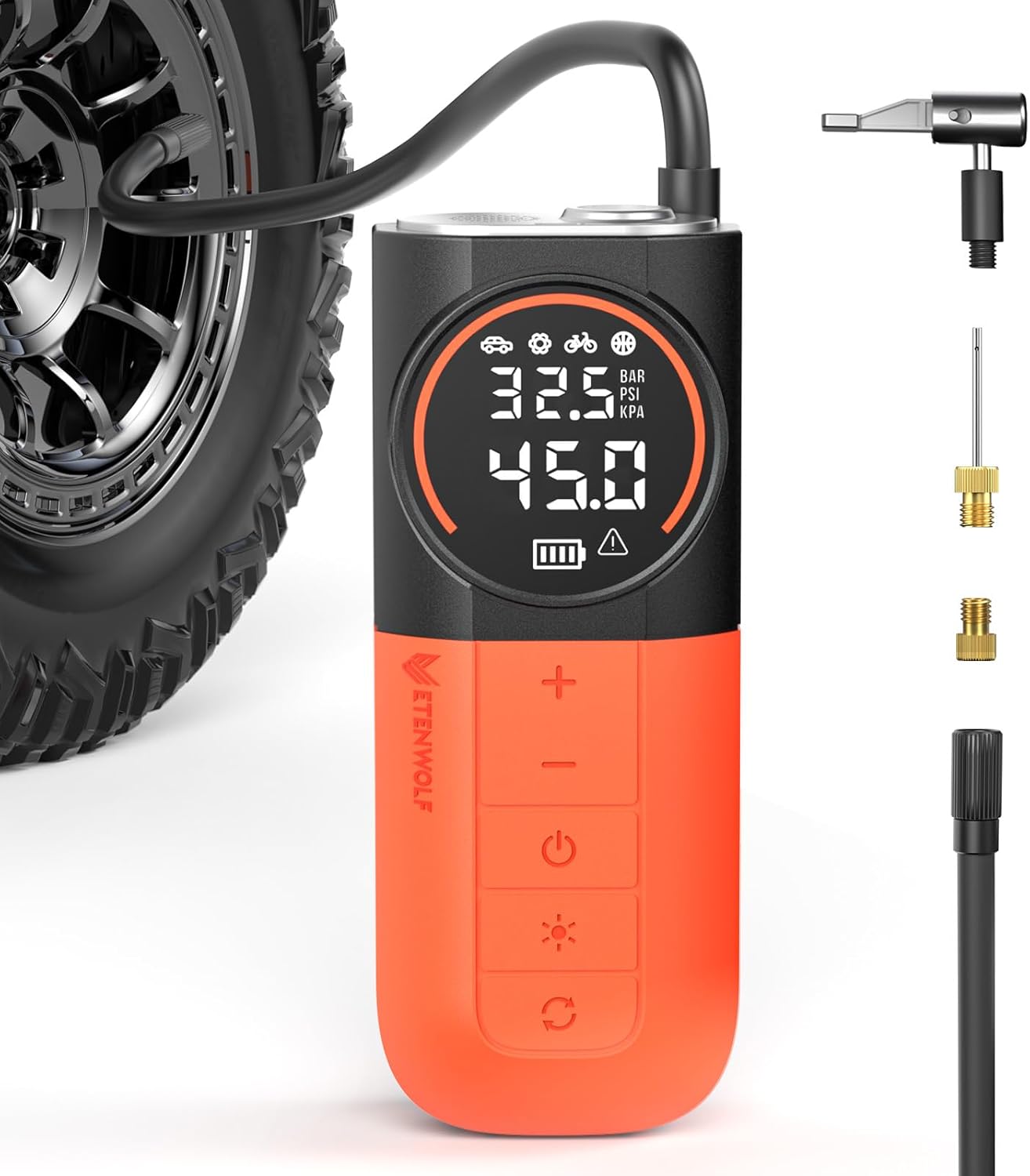
The ETENWOLF S1 cordless tire inflator delivers ultra-fast inflation with up to 160 PSI and a 20 L/min airflow for quicker tire top-offs. Its 5200mAh battery and cooling system support inflating many tires and sports balls on a single charge, while the digital pressure gauge and multi-unit display help you reach the right pressure accurately. With preset modes, pressure memory, an auto-stop feature, and an LED flashlight, it’s built for easy roadside and everyday use.

This cordless portable tire inflator delivers fast, safe inflation with an automatic shutoff when the target pressure is reached, helping prevent overinflation. The built-in LED lighting and real-time digital display make it easier to check pressure and handle roadside tire changes at night. It includes multiple nozzles for use on cars, motorcycles, bicycles, and inflatables like balls and swimming rings.
Speedometer And Gearing Change
A taller tire covers more distance per revolution, so your speedometer may read lower than your actual road speed if the new tire is taller than the original. The simplest way to estimate the change is to compare the new tire diameter with your current tire diameter.
For example, moving from a 215/75R15 tire at about 27.70 inches tall to a 225/75R15 tire at about 28.29 inches tall is about a 2.1% diameter increase. When the speedometer shows 60 mph, the vehicle may be traveling close to 61.3 mph, assuming no recalibration and similar loaded tire behavior.
Note: Mathematical revolutions per mile are based on unloaded circumference. Manufacturer-published loaded revolutions per mile can differ because the tire compresses under vehicle weight.
Check Tire Pressure and Load Ratings
Warning: Do not choose tire pressure, load capacity, or towing suitability from the size alone. A P225/75R15 passenger tire, LT225/75R15 light-truck tire, and ST225/75R15 trailer tire can have different load ratings, pressure requirements, and intended uses.
Do not choose pressure or load capacity from the size alone. A 225/75R15 may be sold as a passenger tire, XL tire, LT tire, or ST trailer tire, and each version can carry a different load at a different pressure. Check the sidewall load index or load range and the tire maker’s data sheet before towing, hauling, or replacing original equipment tires.
For passenger vehicles, start with the cold tire pressure on the vehicle placard or owner’s manual. The NHTSA tire safety guide says the proper tire pressure is listed on the Tire and Loading Information Label or in the owner’s manual, and that pressure should be checked when the tires are cold. If you move from a P-metric tire to an LT or trailer-rated tire, ask a qualified tire installer to confirm the correct pressure for your load and vehicle.
Compare 225/75R15 With Other Sizes
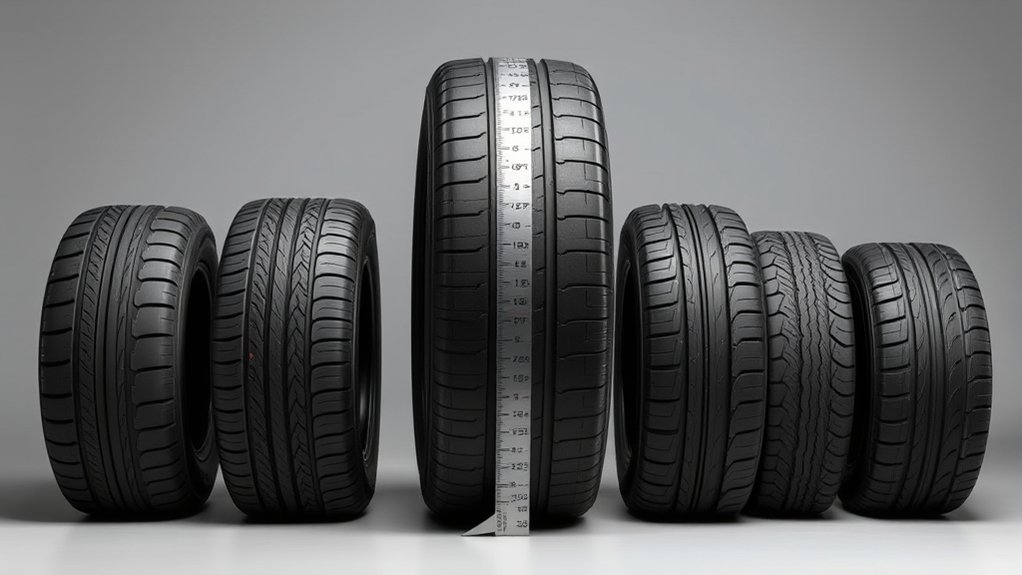
A 225/75R15 sits in a practical middle ground for many 15-inch applications. It is taller than 205/75R15 and 215/75R15, close to 235/70R15 and 245/70R15, and much shorter than 255/75R15.
| Size | Diameter | Best Use In A Comparison |
|---|---|---|
| 205/75R15 | 27.11 in | Shorter, narrower replacement where clearance is tight |
| 215/75R15 | 27.70 in | Slightly smaller size with less ride-height gain |
| 225/75R15 | 28.29 in | Balanced baseline for height and width |
| 235/70R15 | 27.95 in | Wider stance with a slightly shorter diameter |
| 245/70R15 | 28.50 in | Very close height, but wider body |
| 255/75R15 | 30.06 in | Large upsizing move that needs extra clearance |
If your goal is mild extra clearance without a major fitment change, 225/75R15 is often easier to package than wider or taller alternatives. If your goal is a wider footprint, compare section width and wheel offset carefully before choosing. If you are changing tire diameter, remember that overall tire diameter affects gearing, speedometer accuracy, and fender fit.
Frequently Asked Questions
How much taller is a 225/75R15 than a 205/75R15?
A 225/75R15 is about 1.18 inches taller than a 205/75R15. The 225/75R15 is about 28.29 inches tall, while the 205/75R15 is about 27.11 inches tall. It is also about 0.79 inches wider, so check both height and width before upgrading.
How tall is 225/75 R15?
A 225/75R15 tire is about 28.3 inches tall. Its nominal sidewall height is about 6.6 inches, and its section width is about 8.9 inches. The exact installed height can vary slightly by tire model, tread depth, rim width, load, and inflation pressure.
How much taller is a 75 tire than a 70?
Using the same 225 mm width and 15-inch rim, a 225/75R15 is about 0.89 inches taller than a 225/70R15. The 75-series sidewall is about 0.44 inches taller on each side, which creates the total diameter difference.
How tall is a 255/75R15 tire?
A 255/75R15 tire is about 30.1 inches tall, not 28.1 inches. It has a section width of about 10.0 inches and a sidewall height of about 7.5 inches. Compared with 225/75R15, it is about 1.77 inches taller and 1.18 inches wider, so it needs more clearance.
Will a 225/75R15 fit a 15×7 wheel?
Many 225/75R15 tires can fit a 15×7 wheel, but you still need to verify the specific tire’s approved rim-width range. Passenger versions often list 6.0 to 7.5 inches, while some LT versions may list a narrower range. The tire maker’s spec sheet is the final source.
How many revolutions per mile is a 225/75R15?
A 225/75R15 tire makes about 713 mathematical revolutions per mile. Some manufacturer data may list a slightly different loaded revolutions-per-mile number because a tire compresses under vehicle weight.
Is P225/75R15 the same as LT225/75R15?
No. The basic size is similar, but a P-metric tire and an LT tire can have different load ratings, pressure requirements, sidewall construction, and approved rim ranges. Use the tire type required by your vehicle, trailer, or load, not just the printed size.
Conclusion
A 225/75R15 tire is about 28.3 inches tall, 8.9 inches wide, and has a 6.6-inch sidewall. It gives you a taller profile than many 15-inch tire options, but it is not a universal fit. Before you buy, compare the size with your original tire, confirm the approved rim width, and verify the load index, speed rating, tire type, and cold inflation pressure for your vehicle.
Sources
- TireSize.com 225/75R15 tire-size reference — backs up nominal diameter, width, circumference, revs per mile, and general rim-width ranges.
- NHTSA TireWise tire safety guide — backs up tire-size selection, tire pressure, cold inflation, placard guidance, and tire maintenance safety.
- Car and Driver, Effects of Upsized Wheels and Tires Tested — backs up the effect of overall tire diameter on gearing, speedometer accuracy, fender fit, and performance tradeoffs.

Related Articles

How Much Do Used Tires Cost? Price Guide
A quick guide to used tire prices reveals what you’ll really pay, and the factors that could save you more than you expect.
Read More
Walmart Tire Return Policy: Rules and Time Limits
At Walmart, tire returns have strict rules and time limits, but one overlooked detail could determine whether your refund gets approved.
Read More
How Often Does Costco Have Tire Sales?
Just how often does Costco discount tires, and when are the biggest savings hidden?
Read More