
ARB ARB505 Deflator Kit Review: 10-60 PSI Rapid Tire Air Down Gauge for Off-Road Use

Disclosure: As an Amazon Associate, we earn from qualifying purchases. If you click a link on this page and make a purchase, we may receive a small commission at no extra cost to you.
Airing down can improve traction and ride comfort off pavement, but removing air slowly with a key or basic gauge wastes time and makes it harder to stop at a repeatable pressure. The ARB ARB505 E-Z Tire Deflator combines a valve-core removal tool, sliding air-release valve, braided hose, and 10-60 PSI analog gauge in one trail-ready kit. It is fast, simple, and built with metal components, but it works on one tire at a time and does not reinflate your tires. This review helps you decide whether that focused design is worth carrying in your recovery kit.
Quick Verdict
Rating: 8.7/10, recommended for regular off-road use
Best For: Drivers who want quick, controlled tire deflation with a large analog gauge
Bottom Line: The ARB505 removes the valve core inside the tool, so it releases air faster than pressing the valve pin by hand while still letting you check pressure. Its main tradeoffs are one-tire-at-a-time operation and a PSI-only analog display.
ARB ARB505 Deflator Kit

[Products Worth Considering]
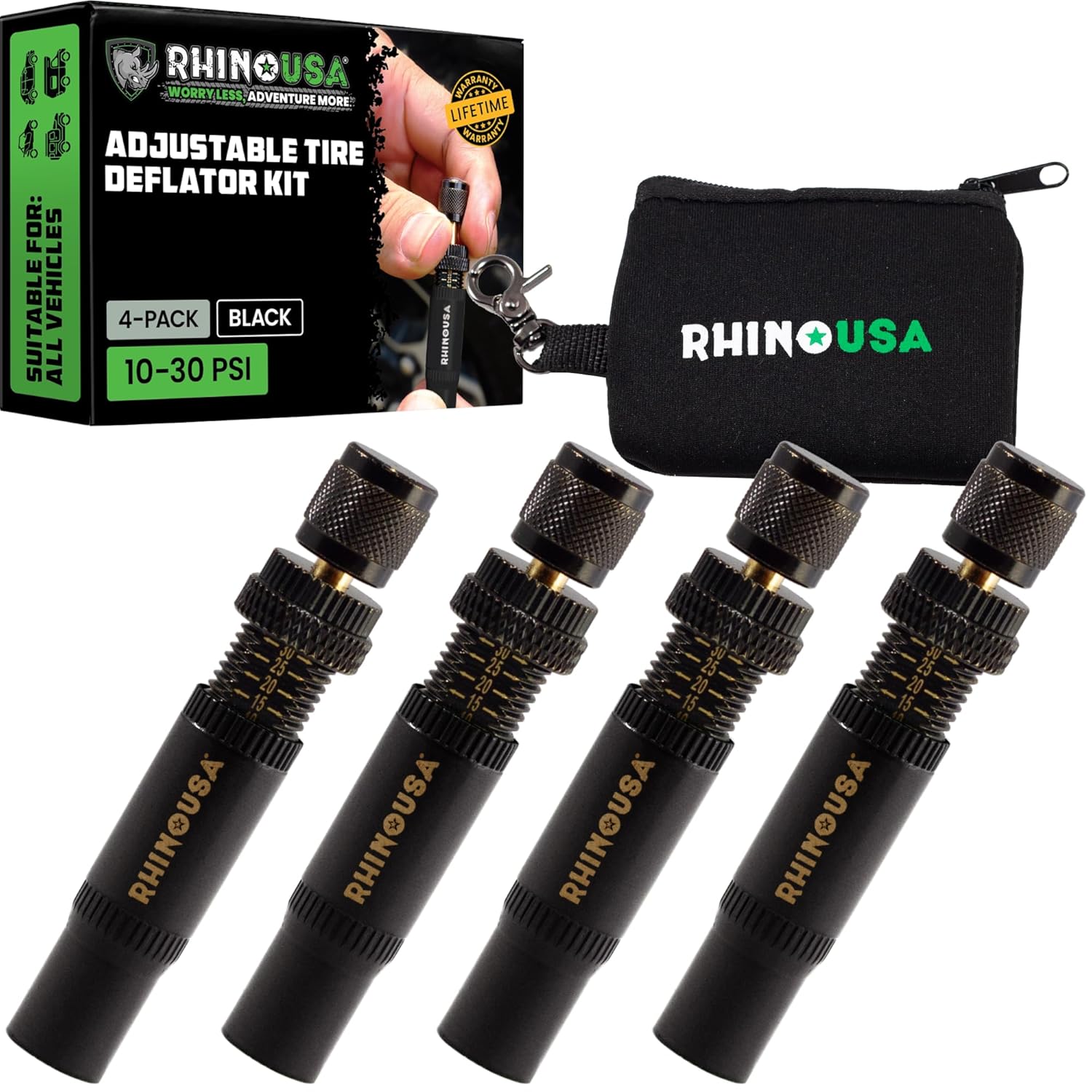
Use the Rhino USA adjustable tire deflators to air down all four tires at once by screwing one deflator onto each valve stem, letting you step away while the tires reach your preset pressure. Each deflator independently adjusts across a 10–30 PSI range with laser-etched indicators for quick setup and verification, making it ideal for beach, sand, and rocky off-road trails.

Camco Trailer Aid Plus tandem tire ramp lifts your trailer for quick, safe tire changes with ample clearance from its 5 1/2-inch lift. It helps you change a flat tire without unloading cargo, making roadside and routine maintenance more efficient. The heavy-duty, waterproof and rustproof polymer design supports up to 15,000 lb and is built for easy portability and storage.

This portable cordless tire inflator delivers fast, efficient inflation for cars, motorcycles, bikes, and sports balls with a digital pressure gauge. Use the one-click PSI preset with auto shut-off for accurate, hands-free topping to your target pressure up to 150 PSI. It’s compact and rechargeable with a built-in emergency LED light plus valve adapters and accessories for quick, ready-to-go use.
Key Specifications
| Specification | Detail |
|---|---|
| Brand | ARB |
| Model | ARB505 |
| Product type | Analog rapid tire deflator with pressure gauge |
| Gauge range | 10-60 PSI |
| Gauge scale | PSI with 1 PSI increments |
| Deflator materials | Corrosion-resistant brass and stainless steel |
| Gauge mechanism | Bronze Bourdon tube with fully geared solid-brass movement |
| Protection | Rubber gauge guard |
| Listed dimensions | 5 x 5 x 5 inches |
| Listed weight | 0.75 lb |
| Included items | Deflator and gauge assembly, protective canvas pouch, instruction sheet |
| Warranty | ARB currently lists 3 years; confirm seller terms before purchase |
| Best use | Controlled airing down for sand, mud, rocks, trails, and other off-pavement driving |
Key Takeaways
- The patented design captures the valve core inside the tool, which allows rapid airflow without losing the core.
- The sliding valve lets you alternate between releasing air and checking the current pressure.
- The analog dial uses 1 PSI increments and needs no battery.
- The kit is a deflator and gauge, not an inflator, so you still need a compressor before returning to normal road pressure.
What Is the ARB ARB505?
The ARB505 is a mechanical tire deflator made for drivers who adjust tire pressure for off-road conditions. Instead of holding down the small pin inside a valve stem, you thread the tool onto the stem, use its handle to unthread the valve core, and pull the sliding valve to release air quickly.
The gauge remains connected while the core is removed, so you can pause airflow and read pressure without taking the tool off. ARB uses a bronze Bourdon tube, solid-brass gauge movement, a brass and stainless-steel deflator body, and a rubber guard around the dial. The kit also includes a canvas pouch and instructions for storage in your vehicle.
Who Should Buy It?
Best For
- 4×4, truck, SUV, Jeep, and overland drivers who air down several times per year
- Drivers who prefer a battery-free analog gauge with a large dial
- Buyers who want one compact tool for valve-core removal, deflation, and pressure checks
Skip If
- You want four tires to deflate at the same time to preset pressures
- You need bar readings, a backlit display, or decimal-level digital resolution
- You need a tool that can reinflate tires without a separate compressor
Before You Buy: The ARB505 removes the valve core during use. Practice the full sequence at home, keep the tool square on the valve stem, and make sure the core is fully tightened before driving. Use a separate inflator to restore the pressure recommended for paved-road travel.
Feature-by-Feature Review
Rapid Valve-Core Deflation
The ARB505 releases air through the open valve stem after the core is backed out into the tool. This creates more airflow than pressing the valve pin with a basic gauge. The core stays captured by the remover, which lowers the risk of dropping a tiny part in dirt or sand.
This design is especially useful with larger off-road tires, where reducing several pounds of pressure through the valve pin can feel slow. The tradeoff is that the process takes a few deliberate steps, and incorrect engagement can cause slow airflow or make the core harder to reinstall.
Analog Gauge and Readability
The gauge covers 10-60 PSI and marks pressure in 1 PSI increments. That range fits typical off-road airing-down tasks and normal pressure checks for many passenger vehicles, trucks, and SUVs. The large dial is easier to glance at than a narrow pencil gauge, and there is no battery to replace.
The PSI-only face is less convenient if you normally use bar or kPa. An analog needle also does not provide decimal readings, so buyers who want a backlit screen or very fine resolution may prefer a digital model.
Materials and Build Quality
ARB lists a corrosion-resistant brass and stainless-steel deflator tool, a bronze Bourdon tube, and a fully geared solid-brass precision movement. Those details matter because the tool may be exposed to dust, moisture, temperature changes, and repeated threading onto metal valve stems.
A rubber guard surrounds the gauge to reduce damage from ordinary knocks. The braided hose and swivel-style connection also make it easier to position the dial where you can see it instead of twisting your wrist around the wheel.
Storage and Trail Readiness
The included canvas pouch keeps the gauge, hose, and valve-core handle together in a glove box, cargo drawer, or recovery bag. At a listed 0.75 lb, it is small enough to leave in the vehicle without taking up meaningful space.
The pouch protects against loose gear, but you should still store the tool dry and away from heavy objects that could crush the gauge. Wipe dust from the threaded adapter before packing it so debris does not reach the next valve stem.
What People Say
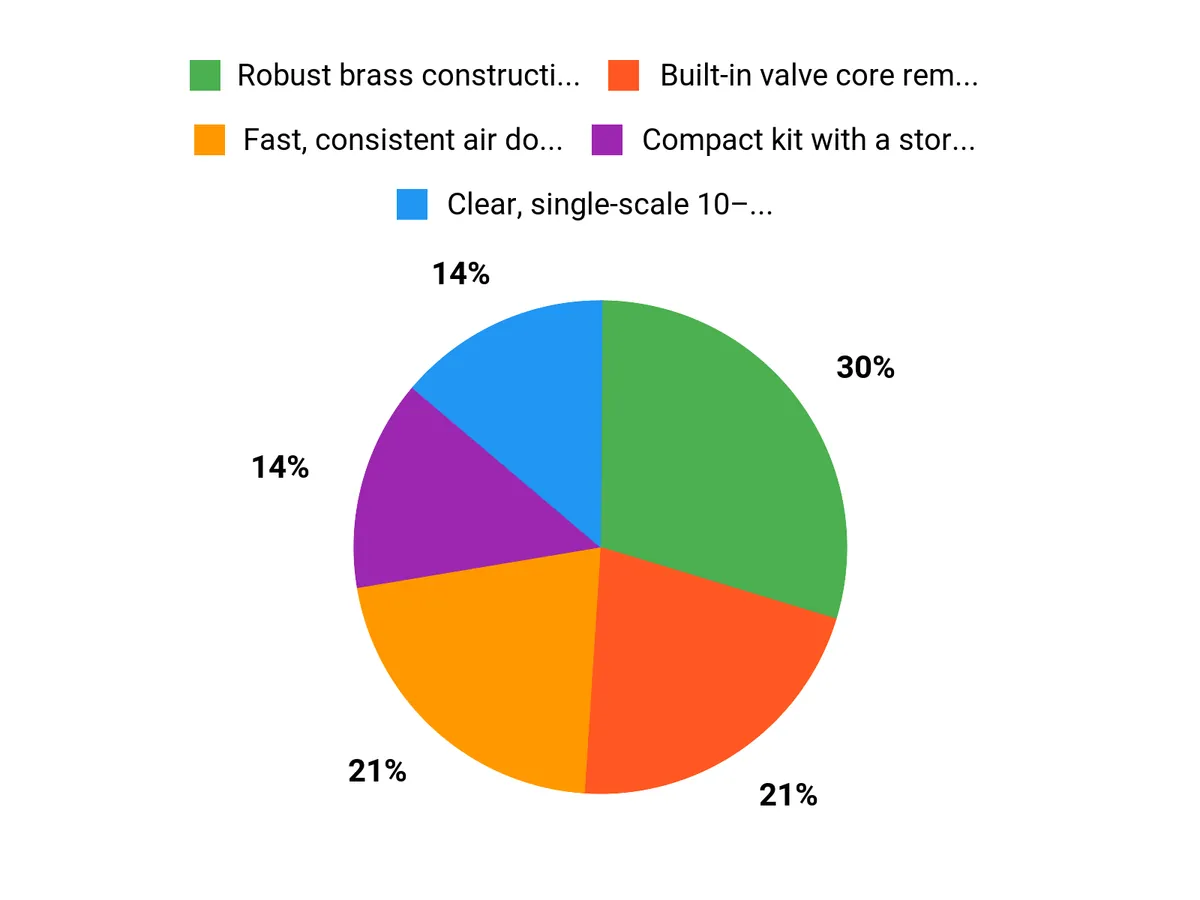
Buyer feedback commonly focuses on the fast air release, solid threaded connection, readable dial, and sturdier feel compared with low-cost copies. The recurring criticism is not poor core performance, but the learning curve: the valve core must be fully engaged and backed out far enough for strong airflow.
Overall Sentiment: Positive

How It Performs in Real Use
Sand and Dunes
On soft sand, the ARB505 lets you make controlled pressure changes before entering the terrain. You can stop the airflow, read the dial, and repeat until each tire reaches the target chosen for your vehicle, tire, load, and conditions. The tool does not decide that target for you, so use experienced guidance rather than copying another vehicle’s pressure.
Rocky Trails
For rocks and uneven trails, the main benefit is repeatability. You can work around the vehicle one tire at a time and use the same gauge for every wheel. The flexible hose helps keep the dial visible when the valve stem sits at an awkward angle.
Mud and Snow
The metal body and protected gauge suit messy outdoor use, but mud and grit should not be allowed into the valve adapter. Clean the connection before attaching it, and do not assume that lower pressure is always safer. Tire construction, load, speed, bead retention, and terrain all affect a suitable setting.
Road Trips and Overlanding
The ARB505 works well as part of a larger tire kit because it can also check pressure between trail sections. It is not a complete roadside solution by itself. Carry a suitable compressor, valve caps, and the repair equipment needed for your route.
How to Use It Correctly
- Park safely, secure the vehicle, and remove the valve cap.
- Push the sliding valve forward, then thread the valve-stem adapter onto the stem clockwise until it seals.
- Push the valve-core remover inward until it engages the core.
- Turn the remover counterclockwise to unthread the core. When released, the core remains captured inside the tool.
- Pull the sliding valve outward to release air. Push it inward to stop airflow and read the gauge.
- Repeat the release-and-check cycle until you reach your chosen pressure.
- Push the core remover inward and turn clockwise to reinstall the core securely.
- Unthread the adapter, check for leakage, and replace the valve cap.
Pro Tip: Before your first trail day, practice on a cool tire in a clean driveway. You will learn how the core remover feels when it engages, which makes the process faster and lowers the chance of cross-threading in dirt or poor light.
[Products Worth Considering]

This portable cordless tire inflator delivers up to 160 PSI with fast 17 L/min airflow to help you quickly top up tires and get back on the road. It features dual power mode,...
Common Mistakes to Avoid
- Do not force the adapter if it does not thread on smoothly.
- Do not pull the slider before the valve core is fully backed out, or airflow may be weak.
- Do not forget to reinstall and tighten the valve core before removing the tool.
- Do not drive on pavement at a trail pressure that is unsuitable for road speed and load.
- Do not treat the gauge as a substitute for your vehicle, tire, or wheel manufacturer’s pressure guidance.
Compatibility and Safety
The ARB505 is intended for common automotive tire valve stems. It generally works with wheels that use standard removable valve cores, including many TPMS-equipped assemblies, because the tool operates at the valve core rather than the sensor body. Aftermarket metal stems, unusual sensor hardware, or damaged threads may need extra care, so check the wheel or sensor maker’s instructions when compatibility is uncertain.
ARB USA also displays a California Proposition 65 warning for this product. Follow the product label and instructions, wash your hands after handling if directed, and keep the tool away from children. Tire-pressure changes affect handling, heat buildup, bead retention, load capacity, and tire wear, so reinflate to an appropriate road setting before higher-speed travel.
Pros and Cons
Pros
- Valve-core removal provides faster airflow than pressing the valve pin
- 10-60 PSI dial uses clear 1 PSI increments
- Brass, stainless-steel, and bronze gauge components support repeated trail use
- Rubber gauge guard, braided hose, and canvas pouch improve portability
- No battery, charging cable, or electronic setup required
Cons
- Deflates only one tire at a time and does not stop automatically at a preset pressure
- PSI-only analog display lacks bar readings, backlighting, and decimal resolution
- Requires correct valve-core engagement and a separate compressor for reinflation
Is It Worth the Price?
ARB USA listed the ARB505 at $54.95 when this review was checked, placing it above many generic gauge deflators but below some digital and multi-tire systems. The value comes from the metal construction, protected analog gauge, captured valve-core design, pouch, and current manufacturer-listed three-year warranty.
It makes the most sense if you air down often enough to value speed and repeatable readings. Occasional drivers who only make small adjustments may be satisfied with a basic gauge, while frequent overlanders may prefer a four-tire system that deflates several wheels at once.
How It Compares to Alternatives
The ARB600 is the closest in-brand alternative if you want both PSI and bar readings while keeping the same valve-core removal concept. The JACO RapidFlow is another 0-60 PSI gauge-based deflator worth comparing on price, hose design, and warranty.
Staun automatic deflators take a different approach: a set attaches to multiple tires and stops near a preset pressure. They are convenient when you use the same target often, but the ARB505 gives you a live gauge and lets you choose a different pressure for each situation without resetting four separate units.
Why Choose ARB505
You should choose the ARB505 when you want a dedicated, mechanical air-down tool with a readable gauge and durable metal working parts. It balances speed with direct control, and the captured-core design solves the main frustration of manually bleeding large tires.
You should choose another option when automatic multi-tire operation, digital precision, or bar readings matter more than the ARB505’s simple analog format.
Frequently Asked Questions
How does the ARB505 deflate a tire so quickly?
It unthreads the valve core while keeping the core captured inside the tool. Air then exits through the open stem, and the sliding valve lets you pause airflow to read the gauge.
Does the ARB505 inflate tires?
No. It deflates tires and measures pressure. You need a separate air compressor or inflator to restore road pressure after leaving the trail.
Will it work with TPMS-equipped wheels?
It generally works with standard removable valve cores used on many TPMS-equipped wheels. Use light hand pressure, avoid forcing aftermarket metal stems, and check the sensor or wheel maker’s instructions if the valve hardware is unusual.
What pressure should I air down to?
There is no universal target. Vehicle weight, tire construction, wheel design, load, speed, and terrain all matter, so use guidance that applies to your exact setup and reinflate before normal paved-road driving.
Why is air coming out slowly?
The valve-core remover may not be fully engaged, or the core may not be backed out far enough. Stop, push the remover into the core carefully, and continue turning counterclockwise without forcing the threads.
Is the gauge affected by weather or altitude?
ARB states that the bronze Bourdon tube gauge is designed so normal changes in temperature, humidity, and altitude do not affect its accuracy. Protect the gauge from hard impacts and compare it with a trusted reference gauge if readings seem unusual.
What warranty does the ARB505 include?
ARB’s current manufacturer pages list a three-year warranty for the ARB505. Seller listings or older paperwork may show different terms, so confirm the coverage that applies to your purchase and region.
Who should choose automatic deflators instead?
Choose preset automatic deflators when you want several tires working at once and usually use the same target pressure. Choose the ARB505 when you want a live gauge, manual control, and easy pressure changes from trip to trip.
The Bottom Line
The ARB ARB505 is a strong buy for off-road drivers who want faster air-down times, a clear 10-60 PSI gauge, and durable mechanical construction in one compact pouch. Skip it if you need automatic four-tire deflation, digital readings, or an all-in-one inflator. Its best feature is controlled valve-core removal, while its main limitation is that you must handle each tire separately and carry a compressor for the trip back to pavement.
Ready to Buy?
Check the latest price, warranty terms, and product details before you decide.

Related Articles

Best All-Terrain Tires for SUVs 2026: Rugged Tires for Trails and Daily Driving
You need tires that bridge the gap between weekend trails and weekday commutes, so choosing the right all-terrain set matters more than ever. The…
Read More
Best Westlake Tires 2026: Affordable Tires for Daily Driving and All-Season Use
You spend a lot of time on the road, and the tires you choose affect safety, comfort, fuel economy, and long-term costs. Westlake offers…
Read More
Best Sailun Tires 2026: Affordable Tire Picks for Everyday Driving
You rely on tires for safety, fuel economy and ride comfort, so choosing the right Sailun model matters more than just price. This guide…
Read More