
Tire Dressing Protectant Review: Superior Rubber Care
Disclosure: As an Amazon Associate, we earn from qualifying purchases. If you click a link on this page and make a purchase, we may receive a small commission at no extra cost to you.
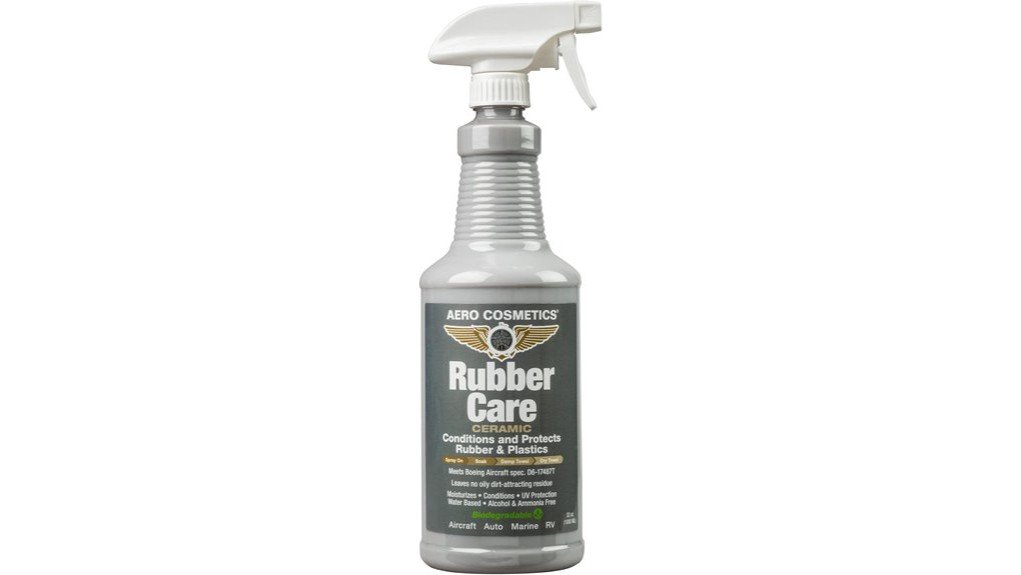
Greasy tire shine can make clean tires look overdone, collect dust, and sling residue onto nearby paint. Aero Cosmetics Rubber Care takes a different approach with a dry-to-the-touch satin finish for tires, weather stripping, and other rubber or plastic surfaces. This review explains what the 32-ounce, water-based formula does well, where its broad compatibility needs caution, and how to apply it without streaks or overspray. It is a strong match for drivers who prefer a dark, natural look, but buyers seeking a glossy wet finish should choose another dressing.
Quick Verdict
Rating: 8.3/10, Recommended with caveats
Best For: Drivers, RV owners, and detailers who want a natural satin finish rather than a glossy tire shine.
Bottom Line: Aero Cosmetics Rubber Care is a versatile, water-based conditioner that leaves treated rubber dark and dry instead of oily. Its main tradeoff is that the subtle finish may disappoint buyers who want a dramatic wet look, and careful application is needed around tread and wheel surfaces.
| Specification | Detail |
|---|---|
| Brand | Aero Cosmetics |
| Product | Rubber Care tire dressing, conditioner, and protectant |
| Manufacturer part number | 767Q |
| Container size | 32 ounces |
| Formula | Water-based triple nano ceramic polymer formula |
| Finish | Dark satin or matte, dry to the touch when used as directed |
| Application | Spray-on treatment, best spread with a foam or microfiber applicator |
| Supported surfaces | Tire sidewalls, weather stripping, rubber, and compatible plastic surfaces |
| Vehicle use | Cars, trucks, and RVs; the listing also describes aircraft use |
| Specification claim | Manufacturer listing states it meets Boeing Aircraft Specification D6-17487T |
| Warranty | 90-day manufacturer warranty listed by Amazon |
Key Takeaways
- Aero Cosmetics Rubber Care is a 32-ounce, water-based treatment for tire sidewalls, weather stripping, rubber, and compatible plastics.
- It is designed to leave a dark satin or matte finish that feels dry instead of oily when applied correctly.
- The formula uses a triple nano ceramic polymer blend and is marketed for UV protection and easier ongoing cleaning.
- The product makes more sense for a natural, factory-style appearance than for a high-gloss show-car look.
- Clean surfaces and thin, controlled coats matter because excess product can streak or reach areas where dressing should not be used.
[Products Worth Considering]

Adam’s Pro Tire Hex Grip applicators are molded foam sponges designed for precise, even tire dressing application. The ergonomic grip helps you spread product without overapplying, reducing sling that can splash onto paint and helping keep your hands clean during wheel and trim detailing. They’re durable, washable, and reusable for repeated detailing sessions.

Cristal Products Untouchable Tire Shine Spray delivers a deep, wet-look gloss that enhances your vehicle’s tires. It’s quick-drying and spreads smoothly for consistent, streak-free coverage, while forming a protective coating against UV rays, road grime, and weather. Suitable for all tire types, it helps restore dull, faded tires to a showroom-quality finish.

Blackline Blackout is a water-based trim and tire dressing that restores rubber, vinyl, and plastic with a rich satin, blackout look. Its no-sling formula dries quickly and helps prevent messy transfer onto paint. The coating repels water and offers UV protection to help prevent fading, cracking, and discoloration for a clean, long-lasting finish.
What Is Aero Cosmetics Rubber Care?
Aero Cosmetics Rubber Care is a ready-to-use rubber and plastic conditioner sold in a 32-ounce spray bottle. The verified Amazon listing identifies the brand as Aero Cosmetics, the manufacturer part number as 767Q, and the application type as spray-on. It is positioned as an aircraft-grade treatment that also works on cars, trucks, and RVs.
The main selling point is not maximum shine. The product is meant to restore a deeper black appearance while leaving a restrained satin or matte finish that dries without an oily feel. That makes it useful for drivers who dislike the glossy, freshly sprayed look of traditional tire shine.
The listing also states that the water-based ceramic polymer formula helps protect rubber and plastic from UV exposure. Treat this as a maintenance product, not a repair product. It can improve appearance and add a protective layer, but it cannot reverse cracking, dry rot, structural tire damage, or severely degraded trim.
Who Should Buy It?
Best For
- Drivers who prefer a dark, clean, low-gloss tire finish.
- Owners maintaining tires, exterior rubber seals, and compatible black plastic trim with one product.
- RV and truck owners who want a larger 32-ounce ready-to-use bottle for routine detailing.
Skip If
- You want a glossy wet-look finish or a dressing that can be layered for show-car shine.
- You need a cleaner for heavy browning, old dressing, grease, or embedded road grime.
- You want a concentrated product that can be diluted for different surfaces.
Before You Buy: This is a surface dressing and conditioner, not a tire repair or deep-cleaning chemical. Never apply it to tire tread, brake parts, pedals, steering controls, or any surface where added slickness could affect safety.
Satin Matte Finish and Dirt Resistance
Rubber Care is designed to darken the sidewall without producing a reflective wet shine. When the product is spread thinly and excess is removed, the finish should look closer to clean new rubber than to a heavily dressed show tire. The dry feel also reduces the greasy texture that can make dust and brake residue cling to the surface.
This finish is the product’s clearest advantage. It suits daily drivers, work trucks, and RVs where a clean appearance matters more than maximum gloss. The limitation is personal preference: a satin finish can look understated on dark wheels or highly polished vehicles, especially if you expect a dramatic before-and-after result.
Water-Based Formula and Protective Film
The product description identifies Rubber Care as water-based and describes a triple nano ceramic polymer formula. In practical terms, the liquid spreads over rubber or plastic and leaves a thin protective film after the carrier dries. The manufacturer markets that film for UV protection, a darker appearance, and easier cleaning.
A water-based formula is useful when you want controlled coverage and a less oily finish. It does not mean every surface will react the same way, however. Old porous trim may absorb more product than a smooth tire sidewall, and previously dressed rubber can produce uneven results until old residue is cleaned away.
The Boeing specification statement is a manufacturer claim tied to aircraft rubber-care use. It supports the product’s intended category, but it should not be read as approval for every aircraft component, vehicle surface, or safety-critical application. Follow the product label and any equipment-specific maintenance instructions.
Compatibility and Surface Safety
The verified listing names tires, weather stripping, rubber, plastic, cars, trucks, RVs, and aircraft surfaces. For automotive use, the safest targets are clean tire sidewalls, exterior rubber seals, black textured trim, and similar non-driving surfaces. Test an inconspicuous spot first when working on colored plastic, vinyl, restored trim, or an unknown coating.
Avoid spraying directly toward wheels, painted body panels, glass, brake rotors, and tread blocks. If overspray lands on another surface, remove it promptly according to that surface’s care instructions. Do not assume that “universal fit” means universal chemical compatibility with every finish.
The available listing confirms that the formula is water-based, but it does not provide enough detail to support broad claims such as solvent-free, silicone-free, food-safe, skin-safe, or harmless in every setting. Read the current label and safety data information before professional, aviation, indoor, or unusual use.
How to Apply It for Best Results
- Clean first. Remove road film, old dressing, and loose grime with a suitable tire or rubber cleaner. Rinse as directed and let the surface dry.
- Control the spray. Apply a small amount to a foam applicator or microfiber pad instead of spraying freely near wheels and paint.
- Spread a thin coat. Work around the tire sidewall or trim piece in overlapping passes. Keep product off tread and braking components.
- Level the finish. Use a clean microfiber towel to remove visible excess and even out dark or streaky spots.
- Inspect before driving. Confirm that the surface feels dry and that no product remains on the tread, wheel, floor, or controls.
Pro Tip: Use a dedicated curved tire applicator and start with less product than you think you need. A second light pass is easier to control than one heavy coat, and it reduces streaking and overspray.
[Products Worth Considering]

This wheel brush kit delivers pro-level cleaning at home, lifting dirt, grime, and brake dust to help restore wheel appearance. It includes multiple brush styles and applicator pads for tackling different wheel surfaces, with gentle, metal-free bristles designed to reduce scratching risk. The flat and double-ended brushes are built for comfort and reach, making wheel care easier for cars, trucks, and RVs.

This oesee 8-piece wheel care kit helps you clean, scrub, and dry wheels safely with purpose-built brushes and towels. The scratch-free microfiber wheel brush lifts brake dust and grime, while the stiff pro-grip tire brush removes tire browning and embedded dirt. A twist loop microfiber drying towel and an applicator help achieve a streak-free finish and cleaner, more even product application.
How It Performs in Real Use
For Daily Drivers
The low-gloss finish works well on vehicles that see regular commuting, rain, dust, and brake residue. Tires look darker and cared for without drawing attention to a shiny coating. Because the finish is meant to dry rather than stay oily, routine washing should also be less messy.
For Trucks and RVs
The 32-ounce bottle is more practical than a small sample size when you have large sidewalls, several vehicles, or exterior rubber seals to maintain. Work in sections so the product does not sit unevenly while you move around a large vehicle. Deeply weathered trim may require cleaning and repeated light applications rather than one heavy layer.
For Weather Stripping and Exterior Trim
Rubber seals and compatible black trim can benefit from the same restrained finish, especially when you want to avoid glossy patches. Apply with a pad for precision, keep the product away from glass and fabric, and test older or colored materials first. Do not use it as a substitute for replacing torn, hardened, or leaking seals.
For Show-Car Detailing
Rubber Care can create a tidy, factory-like appearance, but it is not the strongest option for buyers who want a mirror-like tire shine. Its value is consistency and subtlety. Detailers chasing a wet finish should compare a dedicated high-gloss dressing instead.
Maintenance and Common Mistakes
Reapply when the finish has visibly faded after washing or weather exposure rather than following an unsupported fixed schedule. Durability can vary with surface preparation, mileage, rainfall, detergent strength, parking conditions, and how much product was used. Keep the bottle closed and stored according to its label.
The most common mistakes are dressing a dirty sidewall, using too much product, spraying near brakes or paint, and expecting the coating to hide damaged rubber. A clean surface gives the protective film a more even base. Heavy application usually wastes product and increases the chance of streaks or sling.
Pros and Cons
Pros
- Leaves a dark satin or matte appearance instead of an oily wet shine.
- Water-based, spray-on formula is ready to use without mixing.
- Works across tire sidewalls, weather stripping, rubber, and compatible plastics.
- Large 32-ounce bottle suits multi-vehicle, truck, and RV maintenance.
- Manufacturer listing states compliance with Boeing Aircraft Specification D6-17487T.
Cons
- Subtle finish will not satisfy buyers seeking high gloss.
- It does not replace a dedicated cleaner for heavy grime or old dressing.
- Broad surface claims still require spot testing and careful overspray control.
Is It Worth the Price?
Aero Cosmetics Rubber Care fits the mid-range detailing category because it combines a 32-ounce ready-to-use bottle, multi-surface compatibility, and a specialized satin finish. It offers strong value for the price when you plan to treat several vehicles or use the same product on tires, exterior rubber seals, and compatible trim.
The value is weaker if you only dress one set of tires occasionally or prefer a concentrated formula that can be diluted. It is also not the best fit when high gloss is your top priority. Check the current listing details, seller, and package size before buying because retail offers can change.
How It Compares to Alternatives
Chemical Guys Natural Shine is worth comparing when you want another low-sheen, dry-to-the-touch dressing for plastic, rubber, and vinyl. Chemical Guys VRP produces a richer shine and offers applicator-controlled coverage, while CARPRO PERL is a concentrated water-based option that can be diluted for different surfaces.
Aero Cosmetics Rubber Care makes the most sense when you want a ready-to-use 32-ounce spray, a natural satin tire appearance, and a product positioned for both automotive and aircraft rubber care. Choose a dedicated gloss dressing instead when visual impact matters more than a restrained finish.
Frequently Asked Questions
Does Aero Cosmetics Rubber Care leave tires shiny?
It is designed for a dark satin or matte appearance, not a wet gloss. A thin, even coat should look closer to clean new rubber and feel dry when used as directed.
Can you use it on tire tread?
No. Apply tire dressing only to the sidewall and keep it off tread blocks, brake components, and driving controls. Remove accidental overspray before operating the vehicle.
Does it clean dirty or brown tires?
It can improve the finished appearance, but it is primarily a conditioner and protectant. Use a suitable tire cleaner first when sidewalls have heavy road film, browning, grease, or layers of old dressing.
Can it be used on plastic trim and weather stripping?
The listing supports use on rubber, plastics, and weather stripping. Test a hidden area first, especially on colored, coated, restored, or older materials, and wipe away overspray from nearby surfaces.
How long does the finish last?
The verified listing does not provide a fixed durability period. Longevity will vary with cleaning, rain, mileage, detergent strength, sun exposure, and surface preparation, so reapply when the appearance fades.
Is the product silicone-free or solvent-free?
The current product description confirms a water-based formula, but that alone does not prove every ingredient exclusion. Check the latest label and safety data sheet when silicone or solvent content matters for professional or specialized use.
Does it meet a Boeing aircraft specification?
The manufacturer listing states that Rubber Care meets Boeing Aircraft Specification D6-17487T. For aviation use, follow the aircraft maintenance documentation and confirm that the product is approved for the exact component and procedure.
Who should skip this tire dressing?
Skip it if you want a very glossy wet look, need a heavy-duty tire cleaner, or prefer a concentrate. It is also unnecessary when the rubber is damaged and needs inspection or replacement rather than cosmetic treatment.
The Bottom Line
Aero Cosmetics Rubber Care is a solid choice for drivers, truck owners, RV owners, and detailers who want dark, natural-looking rubber without a greasy shine. Its water-based 32-ounce formula, broad surface use, and satin finish are the main strengths, while limited gloss and the need for careful surface testing are the main tradeoffs. Skip it if you want a dramatic wet look or need a cleaner that removes heavy buildup.
Ready to Buy?
Check the latest price, seller, and product details before you decide.

Related Articles
Tire Screw Plug Repair Kit Review
Compact tire screw plug repair kit review reveals fast roadside fixes, but which punctures are truly safe enough to trust?
Read More
Wall Mount Spare Tire Carrier Mount Review
I review the wall mount spare tire carrier’s fit, strength, and stability—see what could make or break your trailer setup.
Read More
Socpuro Tire Repair Patch Tool Kit Review
Great for quick DIY puncture fixes, the Socpuro Tire Repair Patch Tool Kit has limits and surprises you’ll want to know before buying.
Read More