
Masoll TPMS Sensor Review: Reliable Tire Monitoring
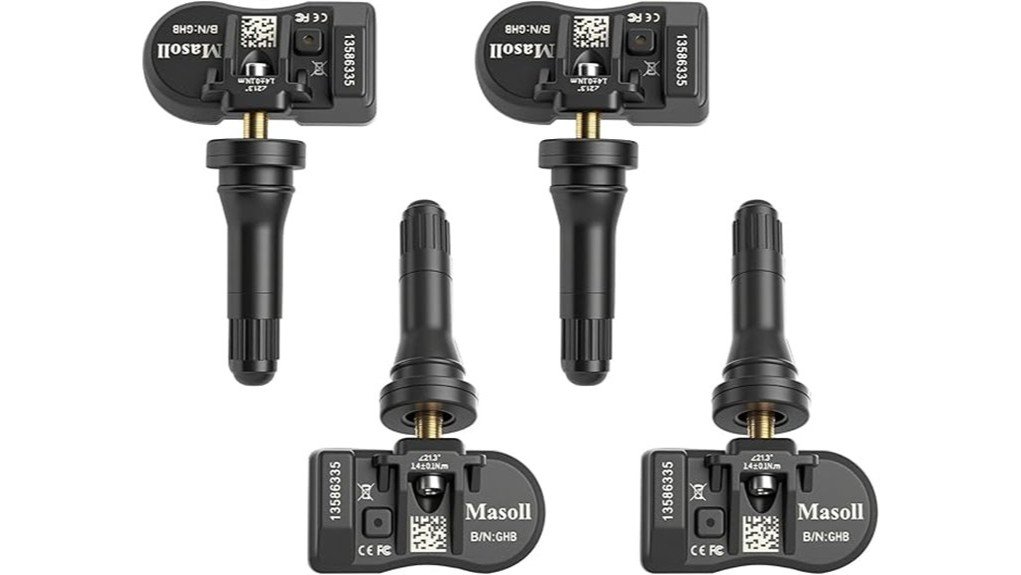
Masoll TPMS Sensor Review: GM E80 4-Pack
Replacing dead tire pressure sensors can get frustrating because TPMS fit depends on the vehicle year, OE number, sensor frequency, wheel setup, and relearn process. The Masoll TPMS Sensor E80 4-pack is a replacement sensor set for many GM vehicles after 2006, including select Chevrolet, GMC, Buick, and Cadillac models. It gives you four internal tire-mounted sensors in one box, with 315MHz and 433MHz support plus a dual-antenna design. This review helps you decide whether the Masoll E80 is a smart value buy for your vehicle or whether you should pay more for an OE-style replacement.
The main upside is simple: you can replace a full set of four direct TPMS sensors during tire service or a wheel swap. The main risk is fitment. Do not order this set until your OE part number, model year, sensor type, valve stem fit, and GM TPMS relearn method all match.
Quick Verdict
Rating: 8.4/10, Recommended with caveats
Best For: GM owners replacing all four internal TPMS sensors who can confirm fitment before mounting tires.
Bottom Line: The Masoll E80 offers strong value because it gives you four pre-programmed, dual-frequency sensors in one package. The tradeoff is compatibility, since TPMS sensors only work correctly when the OE number, vehicle application, wheel setup, and relearn tool line up.
Before You Buy: Confirm your exact vehicle year, OE part number, sensor frequency, valve stem fit, and TPMS relearn tool support. A broad GM fitment claim does not mean this sensor fits every GM vehicle.
[Products Worth Considering]
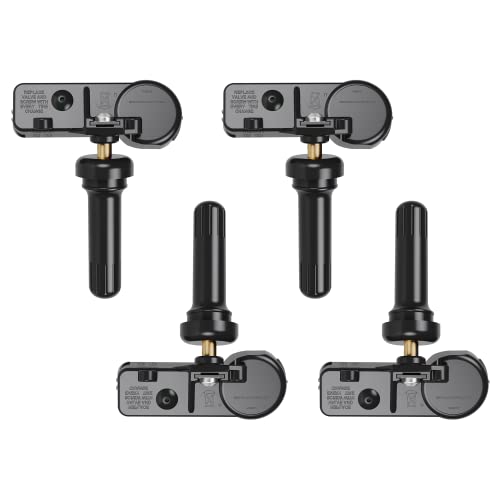
PREFECT REPLACEMENT:The tire pressure monitor system (TPMS) is 100% Brand new Compatible with most GM branded vehicles manufactured after 2006.including GMC Chevy Buick Cadillac

【Fits for GM】Masoll TPMS sensor compatible for most GM vehicles after 2006, including but not limited to Chevy Silverado Colorado Impala Tahoe, GMC Yukon Sierra Terrain, Buick Allure Enclave Encore Envision, Cadillac ATS CTS XTS etc. Please refer to the applicable model to check if the tire sensor fits for your vehicle model and year

【FITMENT】The CARORAV tire pressure sensor fit for most GM vehicles. For Buick Allure Enclave Encore Envision Lucerne Regal, Cadillac ATS CTS XTS, Chevy Colorado Silverado Impala Malibu, GMC Yukon Sierra ect. Please refer to Product Description for specific application of model and year
Key Specs
| Specification | Detail |
|---|---|
| Brand | Masoll |
| Model / Part Number | E80 |
| ASIN | B0FR9JCT5F |
| Manufacturer Listed | nLong, as shown in Amazon item details |
| Product Type | Replacement tire pressure monitoring sensor set |
| Sensor Design | Internal, tire-mounted TPMS sensor with rubber valve design |
| Pack Size | 4 TPMS replacement sensors |
| Included Components | 4 TPMS replacement sensors |
| Frequency | 315MHz and 433MHz, listed as dual-frequency support |
| Signal Design | Dual-antenna design, as stated by the listing |
| Measurement Accuracy | 1.5 psi, as stated by the listing |
| Mounting Type | Tire mount |
| Output Type | Digital |
| Battery | Built-in automotive-grade CR2050 battery |
| Battery Life | Rated by the listing for more than 5 years |
| Battery Replaceable | No, shown as not replaceable in the Amazon comparison details |
| Temperature Range | -40°F to 257°F, as stated by the listing |
| Material | Combination of silicon, metals, and polymers |
| Compatibility | Most GM vehicles after 2006, including select Chevrolet, GMC, Buick, and Cadillac models |
| Common OE Numbers Listed | 13598771, 13598772, 13586335, 13581558, 13589597, 15268606, 15825475, 13581559, 20923680, 20925924, 20964159, 22854866 |
| Relearn Needed | Yes. The sensors are pre-programmed, but GM TPMS relearn is still required after installation. |
| Warranty | 24 months stated on the Amazon listing |
| Best Use | Replacing worn, dead, or missing direct TPMS sensors during tire service, wheel replacement, or winter wheel setup |
What Is the Masoll E80 TPMS Sensor?
The Masoll E80 is a 4-pack of replacement tire pressure monitoring sensors for compatible GM vehicles. Each sensor mounts inside the wheel and sends pressure data to the vehicle’s factory dashboard system. It is not an external valve-cap kit, and it does not include a separate display screen.
This set is made for direct TPMS systems that use wheel-mounted pressure sensors. It makes the most sense when you want to replace all four sensors at the same time, especially while the tires are already off the wheels. The dual-frequency 315MHz and 433MHz support also helps reduce frequency confusion across supported GM applications.
The E80 is still not a universal GM sensor. Vehicle year, OE part number, sensor frequency, wheel design, valve stem fit, and relearn support can all affect whether it works correctly.
Who Should Buy It?
Best For
- GM owners with a matching Chevrolet, GMC, Buick, or Cadillac application after 2006
- Drivers replacing all four internal TPMS sensors during tire installation or wheel service
- Winter wheel setups where the vehicle, wheel, valve stem, OE number, and relearn tool are confirmed compatible
Skip If
- Your vehicle uses an indirect TPMS system that does not have wheel-mounted pressure sensors
- You cannot confirm the OE number, frequency, model-year fitment, valve stem fit, or relearn process
- You want a guaranteed OE replacement from a dealer catalog or a recognized OE supplier path
[Products Worth Considering]

【OE PART NUMBER】: 13598773, 13512347, 13540606, 13522629, 13544442, 13594222, 13545366, 13589601
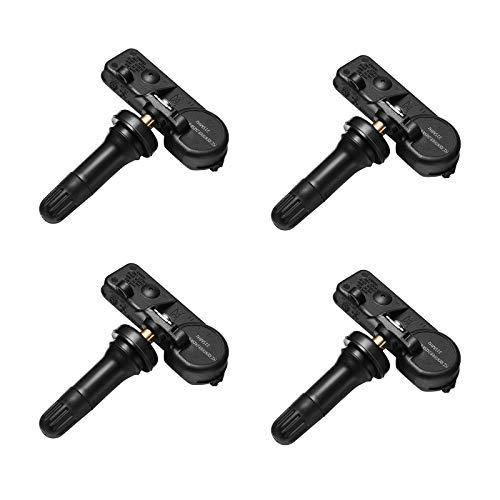
【FITMENT】- The tire pressure monitor system (TPMS) Compatible with Chevy Silverado 2007-2013;Compatible with Buick 2007-2015; Compatible with Cadillac CTS/DTS; Compatible with GMC Sierra 2007-2013; Compatible with Pontiac G3/G5/G6/G8. Please scroll down to product description for complete list of model and year

[VEHICLE FITMENT-1]: Compatible with Chevrolet Blazer, Bolt EV, Camaro, Caprice, Captiva Sport, Cheyenne, Cobalt, Colorado Suburban, For Corvette Grand Sport, Cruze, Cruze Limited, Equinox, HHR, Impala, Malibu, Malibu Limited, Orlando, Silverado 1500 2500 3500, Silverado 1500 LD, Silverado 2500 HD, Silverado 3500 HD, Sonic, Spark, Spark EV, SS, Suburban, Tahoe, Traverse, Trax, Volt
Fit and Compatibility
Fitment is the most important part of this review. The listing says the Masoll E80 fits most GM vehicles after 2006, including select Chevrolet Silverado, Colorado, Impala, Tahoe, GMC Yukon, Sierra, Terrain, Buick Allure, Enclave, Encore, Envision, Cadillac ATS, CTS, and XTS applications. That still does not mean every trim, wheel setup, or model year will match.
Start by checking your old sensor number, owner’s manual, parts catalog, or tire shop database. The listed OE numbers include 13598771, 13598772, 13586335, 13581558, 13589597, 15268606, 15825475, 13581559, 20923680, 20925924, 20964159, and 22854866. If your current sensor number is different, do not assume this set will work just because your vehicle is a GM model.
Also check whether your vehicle needs 315MHz, 433MHz, or a specific sensor generation. The E80’s dual-frequency support is helpful, but it does not remove the need to confirm fitment before tire mounting.
Materials and Build
The listing describes the sensor material as a combination of silicon, metals, and polymers. It also notes a rubber valve design with corrosion protection. Those details matter because TPMS sensors live inside the wheel, where they face vibration, heat, cold, moisture, and road salt exposure.
The built-in CR2050 battery is rated by the listing for more than five years. Like most internal TPMS sensors, the battery is not treated as a normal user-serviceable part. When the battery dies, the usual fix is replacing the sensor rather than opening it.
The listing also says the sensors use a dual-antenna design. That is most relevant for larger GM SUVs and pickup trucks where signal strength can matter more than it does on a smaller car. Still, proper relearn and vehicle compatibility matter more than antenna design alone.
Installation and Relearn
The Masoll E80 sensors are listed as pre-programmed, but they still require a GM TPMS relearn after installation. This is a common point of confusion. Pre-programmed means the sensor is prepared to communicate, not that your vehicle will automatically know which new sensor belongs to each wheel position.
After the sensors are mounted, the vehicle must be placed in TPMS relearn mode. Then each sensor needs to be activated with a GM-compatible TPMS scan tool or relearn tool in the correct sequence for your vehicle. Some owners can handle this at home with the right tool, while others may need a tire shop or scan tool support.
Because these are internal tire-mounted sensors, installation usually requires breaking the tire bead or removing the tire from the wheel. That is why this 4-pack is most convenient when you are already paying for tire mounting, tire replacement, or a seasonal wheel setup.
Pro Tip: Before mounting the tires, ask your tire shop to confirm that each sensor wakes up on the scan tool. It is easier to catch a mismatch before the wheels are back on the vehicle.
Accuracy and Monitoring
The listing states 1.5 psi pressure accuracy. That is useful for dashboard monitoring and warning-light control, especially when one tire loses pressure faster than the others. It can also help you spot a slow leak before the tire looks visibly low.
You should still use a quality manual tire gauge when adjusting tire pressure. TPMS sensors are a safety and monitoring aid, not a full replacement for regular pressure checks. This matters most before towing, long highway drives, cold-weather trips, or heavy-load driving.
If the dashboard warning remains on after installation, check the relearn process before blaming the sensor. A wrong activation sequence, unsupported scan tool, wrong frequency, or mismatched OE number can all cause the vehicle to reject a new sensor.
How It Performs in Real Use
For Daily Driving
For normal commuting and errands, the main benefit is getting your factory TPMS system working again without buying four separate OE sensors. Once relearned, the sensors should send pressure data through the vehicle’s existing dashboard system. That makes the E80 useful when dead sensors are causing a constant TPMS warning light.
For New Tire Installation
This 4-pack is most practical when you are already paying for tire mounting or wheel service. Since the tire has to come off the wheel to install an internal sensor, replacing all four at once can save labor compared with replacing one failed sensor now and another later.
For Winter Wheels
The Masoll E80 can work well for a winter tire and wheel package if the wheels and vehicle match the sensor fitment. You should still plan on a TPMS relearn after the swap. Also confirm valve stem clearance with the wheel supplier before mounting aftermarket winter wheels.
For Troubleshooting a TPMS Light
If your TPMS light stays on after installation, do not assume the sensor is defective right away. Check the relearn order, tool compatibility, tire pressure, vehicle fitment, and whether the vehicle uses direct TPMS sensors. A tire shop can usually scan each sensor to confirm whether it is transmitting.
Setup Tips Before You Buy
- Match the OE number first: Use your existing sensor, parts catalog, or shop database to compare OE numbers before relying on broad fitment language.
- Confirm direct TPMS: This set is for direct TPMS systems with wheel-mounted sensors, not indirect systems that estimate pressure from wheel-speed data.
- Check your relearn tool: Make sure your TPMS tool can activate GM sensors on your specific model year.
- Ask about valve stem fit: Aftermarket wheels may have different valve hole shapes, angles, or clearance limits.
- Install during tire service: Internal sensors are easier and cheaper to install when tires are already being mounted or replaced.
Compatibility and Safety Notes
TPMS sensors affect tire pressure warnings, so compatibility matters for safety as well as convenience. If the vehicle cannot read the sensor, your dashboard may keep showing a TPMS warning or fail to report pressure correctly. That can hide a real low-pressure issue later.
Have the sensors mounted by someone who can install and torque valve hardware correctly. Incorrect installation can cause leaks, broken stems, or sensor damage. After installation, verify pressure with a tire gauge and confirm that the vehicle reads each wheel position after relearn.
Do not use these sensors to ignore normal tire maintenance. You still need to check tire pressure, inspect valve stems, and watch for slow leaks. TPMS helps alert you to pressure changes, but it does not fix tire damage, wheel corrosion, or valve sealing problems.
What Buyers Are Saying
Buyer feedback on TPMS sensors often depends on fitment, installation, and the relearn tool used. For this set, the main themes are value, setup, and compatibility.
- Praise: Buyers with matching GM applications often like that the package includes four sensors for a full replacement job.
- Praise: The pre-programmed design can reduce setup work when paired with the correct GM relearn process.
- Praise: The dual-frequency design helps shoppers who are trying to avoid a 315MHz versus 433MHz mismatch.
- Watch-out: Compatibility can still be mixed if the OE number, model year, wheel setup, or scan tool does not match.
Pros and Cons
Pros
- 4-pack lets you replace a full set of internal TPMS sensors at once
- Dual-frequency 315MHz and 433MHz support helps reduce frequency guesswork on compatible GM vehicles
- Pre-programmed design can simplify setup when paired with the right GM relearn tool
- Listing states 1.5 psi pressure accuracy and a CR2050 battery rated for more than five years
- Rubber valve design and corrosion protection are useful for wet, snowy, or salted-road conditions
Cons
- Compatibility must be checked by vehicle, year, OE number, wheel design, and relearn tool
- GM TPMS relearn is required after installation, so you may need a tool or tire shop support
- The internal battery is not a normal user-replaceable service item
- Aftermarket wheel fit is not guaranteed by the listing
Is It Worth the Price?
The Masoll E80 is a strong value for the price if your vehicle matches the fitment and you want a full set of four sensors. The value is best when you are already paying for tire mounting or wheel service because the sensors can be installed while the tires are off.
It is not the best fit if you want a no-risk OE replacement or if you cannot confirm your current sensor number. TPMS sensors are not a good place to guess. A lower-cost 4-pack can become expensive if you have to remount tires, buy another set, or pay a shop to troubleshoot a mismatch.
For the right buyer, the best value comes from replacing all four aging sensors at the same time. For the wrong application, the savings disappear quickly because installation labor usually costs more than the sensor itself.
How It Compares to Alternatives
If you want an OE-style option, compare it with an ACDelco GM Original Equipment 13598771 sensor or a Schrader OE replacement that matches your vehicle’s exact frequency and part number. Those choices may cost more, especially if bought individually, but they can be a better route for buyers who want a more traditional OE supplier path.
If you want another aftermarket 4-pack, compare the Masoll E80 with SHOCKENT GM 315MHz sensors or similar GM-focused sets. The Masoll E80 makes the most sense if your application benefits from dual-frequency 315MHz and 433MHz support and you want all four sensors in one box.
[Products Worth Considering]

【PREFECT REPLACEMENT】The tire pressure monitor system (TPMS) is Compatible with Ford、Lincoln、Mercury(see picture for specific model)。Please double check the compatibilty before purchase to avoid unnecessary installation fees.
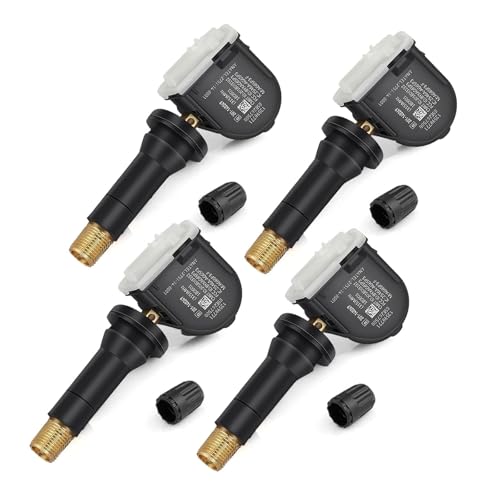
VEHICLE FITMENT - These TPMS sensors are compatible with a variety of GM vehicles, including Chevrolet Silverado, Tahoe, Suburban, Traverse, Equinox, Malibu, Avalanche, Express; GMC Sierra, Yukon, Acadia, Savana; Cadillac CTS, Escalade, SRX; Buick Enclave, LaCrosse, Lucerne; Hummer H2 and more. Please verify your vehicle or OE number before purchase.

【Pre-programmed TPMS Sensor】The Tire Pressure Sensor is 100% new and come pre-programmed specifically for your make/model/year of vehicle,just activate them with TPMS scan tool. The specific operation is as follows Step 1: Select “Check Sensor” in TPMS scan tool. Step 2-4: Select vehicle brand,model and year. Step 5: Select tire location then push button to trigger . Step 6: Wake up sensor successfully and display sensor information on screen.
Frequently Asked Questions
Will the Masoll E80 fit every GM vehicle after 2006?
No. The listing says it fits most GM vehicles after 2006, not every GM vehicle. Check your exact year, model, OE number, frequency, and tire shop fitment data before ordering.
Are these sensors pre-programmed?
Yes. The listing says the sensors are pre-programmed. You still need to perform the GM TPMS relearn process after installation so the vehicle can identify each sensor position.
Do I need a TPMS relearn tool?
In most cases, yes. The sensors need to be relearned to the vehicle ECU with a GM-compatible TPMS scan tool or relearn tool. A tire shop can usually help if you do not own the tool.
Do these work with direct and indirect TPMS?
They are for direct TPMS systems that use wheel-mounted pressure sensors. They are not for indirect TPMS systems that estimate pressure through wheel-speed data and do not use internal tire pressure sensors.
Can I use them with aftermarket wheels?
Possibly, but the listing does not guarantee universal aftermarket wheel fit. Confirm the valve stem hole, wheel clearance, and sensor position with your wheel supplier or tire shop before mounting.
Can the battery be replaced?
No. The sensor uses a built-in CR2050 battery, and the product comparison details show the sensor battery as not replaceable. When the battery dies, the usual repair is replacing the sensor.
Are they good for winter tire swaps?
They can be a practical choice for winter wheels if your vehicle and wheels match the sensor fitment. Expect to complete TPMS relearn after the sensors are installed or after the wheel set is changed.
What is the most common buying mistake with these sensors?
The most common mistake is buying only because the vehicle brand is GM. Match the OE number, frequency, model year, valve stem fit, and relearn tool support before you mount the sensors.
The Bottom Line
The Masoll E80 TPMS Sensor 4-pack is a sensible aftermarket option for GM owners who want four internal replacement sensors and can verify fitment before installation. Its main strengths are the full 4-sensor package, dual-frequency 315MHz and 433MHz support, stated 1.5 psi accuracy, dual-antenna design, and a CR2050 battery rated for more than five years.
Skip it if your vehicle uses indirect TPMS, if your OE number does not match, if your wheels cannot accept the valve stem design, or if you cannot complete the relearn process. For the right GM application, it earns a recommended-with-caveats verdict because the value is strong but compatibility is the deciding factor.
Ready to Buy?
Check the latest product details and confirm fitment before you decide.

Related Articles
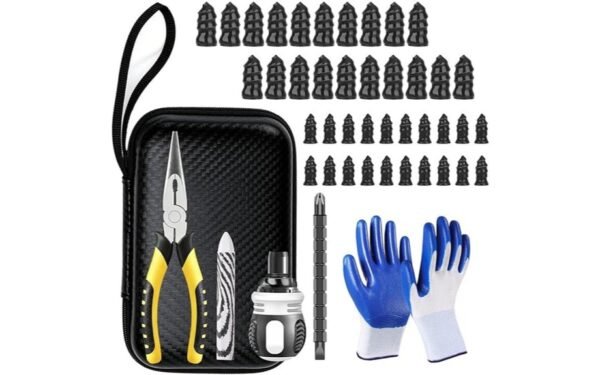
Tire Screw Plug Repair Kit Review
Compact tire screw plug repair kit review reveals fast roadside fixes, but which punctures are truly safe enough to trust?
Read More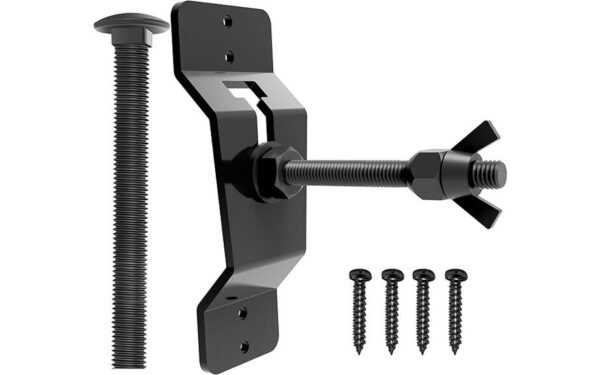
Wall Mount Spare Tire Carrier Mount Review
I review the wall mount spare tire carrier’s fit, strength, and stability—see what could make or break your trailer setup.
Read More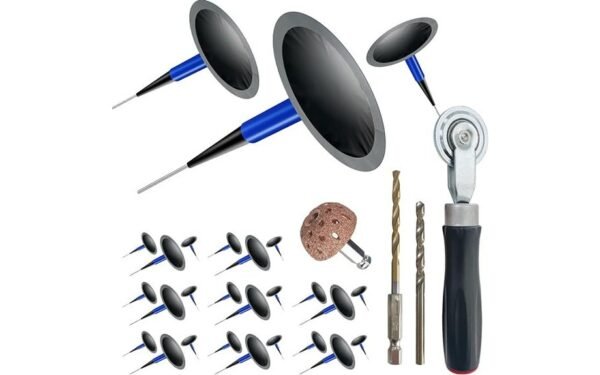
Socpuro Tire Repair Patch Tool Kit Review
Great for quick DIY puncture fixes, the Socpuro Tire Repair Patch Tool Kit has limits and surprises you’ll want to know before buying.
Read More