
Choosing the Right Tire for Daily Honda Accord Driving
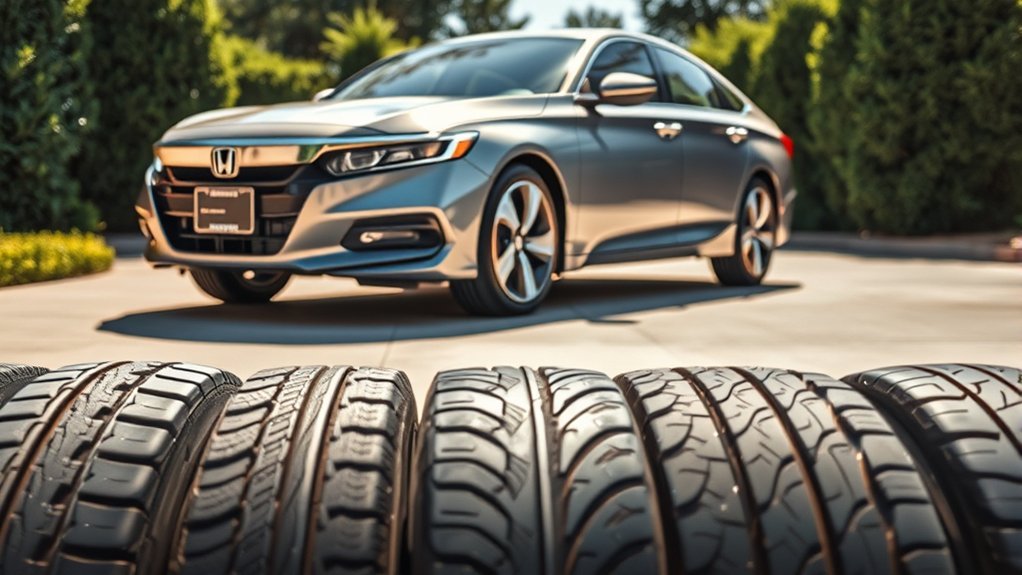
Choosing the best tires for a Honda Accord starts with three checks: your exact tire size, your local weather, and the kind of ride you want. A daily commuter in a warm city may be happiest with a long-lasting all-season tire, while a driver who sees regular snow should look at all-weather or dedicated winter tires.
Quick Answer
For most Honda Accord drivers, a quality touring all-season tire is the easiest year-round choice. Choose an all-weather tire with the Three Peak Mountain Snowflake symbol if you get moderate snow, and choose dedicated winter tires if your roads are often icy or snow-packed.
Key Takeaways
- Always match the tire size, load index, and speed rating shown on your Accord’s door-jamb Tire and Loading Information label.
- All-season tires fit mild climates and daily commuting; all-weather tires add certified snow traction; winter tires are best for harsh cold-weather driving.
- For 2026 U.S. Accord models, Honda lists 225/50R17 and 235/40R19 all-season tires depending on trim, but older model years can differ.
- Check cold tire pressure monthly, rotate tires on schedule, and replace tires when tread, age, damage, or uneven wear makes them unsafe.
At a Glance
| Time Required | 10–20 minutes to confirm size, compare tire type, and check warranty details |
| Difficulty | Easy for research; professional installation is recommended |
| Tools Needed | Door-jamb tire label, owner’s manual, tire pressure gauge, tread depth gauge or penny |
| Cost | Varies by size, brand, speed rating, installer, alignment needs, and road-hazard coverage |
Why the Right Tires Matter for a Honda Accord

Your tires affect how your Accord brakes, corners, rides, handles rain, and manages fuel use. The best choice is not always the tire with the longest warranty or the sportiest tread pattern. It is the tire that matches your trim, climate, mileage, and driving style.
For most drivers, a touring all-season tire is a strong default because it balances comfort, tread life, wet traction, and noise control. If you drive in regular snow, an all-weather tire with the Three Peak Mountain Snowflake symbol is worth considering. If winter roads are icy, steep, or snow-packed for months, a dedicated winter tire is the safer seasonal choice.
Warning: Do not choose tires by size alone. Match the size, load index, speed rating, and inflation pressure listed on your Accord’s Tire and Loading Information label. When in doubt, use the official Honda owner’s manual lookup or ask a qualified tire professional.
[Products Worth Considering]

The JACO FlowPro Tire Inflator measures, inflates, and airs down tires up to 100 PSI with battery-free operation and ±2% accuracy after calibration. It features a glowing pressure dial for night visibility, a heavy-duty steel build with a hybrid hose, and a precision push-to-inflate thumb trigger. The patented Lightning Air Chuck locks on for a secure seal, and the kit includes quick-connect hardware for easy inline use with your air compressor.
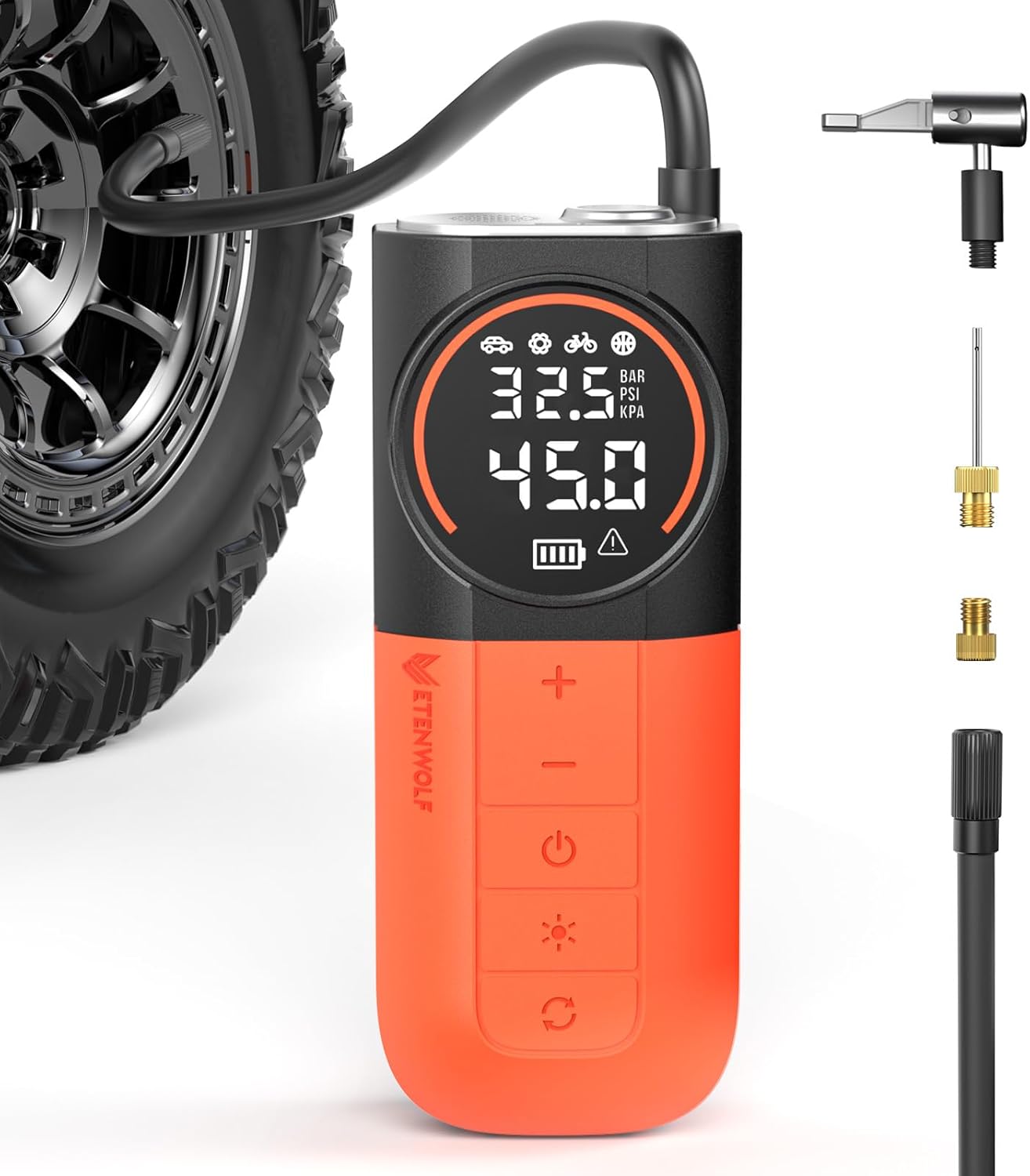
The ETENWOLF S1 cordless tire inflator delivers ultra-fast inflation with up to 160 PSI and a 20 L/min airflow for quicker tire top-offs. Its 5200mAh battery and cooling system support inflating many tires and sports balls on a single charge, while the digital pressure gauge and multi-unit display help you reach the right pressure accurately. With preset modes, pressure memory, an auto-stop feature, and an LED flashlight, it’s built for easy roadside and everyday use.

EVOULTES heavy duty tire inflator with an integrated gauge delivers accurate pressure readings from 10–120 PSI, helping you inflate, deflate, and check tires in one tool. The 16.5-inch extended dual-head air chuck with swivel base reaches hard-to-access dual wheel valves on trucks and RVs. A brass trigger core and side-mounted air release valve make operation smooth, with standard 1/4" NPT threading and quick-connect compatibility for easy setup.
Confirm Your Honda Accord Tire Size First
The fastest way to confirm your tire size is to open the driver’s door and read the Tire and Loading Information label on the door jamb. That label gives the original tire size and recommended cold tire pressure for your specific vehicle. The owner’s manual is your next best source.
For reference, Honda lists the following all-season tire sizes for the 2026 U.S. Accord lineup in its official specifications and feature guide:
| 2026 Accord trim example | Original tire size | What it means |
| LX and EX-L Hybrid | 225/50R17 94V | 17-inch wheel, comfort-focused ride, lower replacement cost in many cases |
| SE, Sport Hybrid, Sport-L Hybrid, and Touring Hybrid | 235/40R19 96V | 19-inch wheel, sportier response, shorter sidewall, often higher tire cost |
The numbers matter. In 225/50R17, “225” is the tire width in millimeters, “50” is the sidewall height as a percentage of width, “R” means radial construction, and “17” is the wheel diameter in inches. The “94V” or “96V” part is just as important: it identifies load capacity and speed rating. Your replacement tire should meet or exceed the original requirements unless Honda or a qualified tire specialist gives a safe alternative.
Choose the Right Tire Type for Your Climate
The best Honda Accord tire depends heavily on weather. A tire that feels smooth and quiet in a warm city may not be the right tire for mountain snow or icy rural roads.
| Tire type | Best for | Trade-off |
| All-season touring | Daily commuting, rain, dry roads, mild winters | Not ideal for frequent ice or deep snow |
| All-weather | Drivers who want one set of tires with certified snow traction | Can be noisier or firmer than comfort-focused all-season tires |
| Winter | Cold regions, packed snow, ice, steep winter roads | Seasonal changeover required; not meant for warm-weather use |
| Performance all-season | Sharper steering and a sportier feel | May sacrifice ride comfort, tread life, or winter grip |
A good example of a long-warranty touring all-season tire is the Hankook Kinergy PT H737, which Hankook lists with a 90,000-mile warranty for H- and T-rated fitments and a 75,000-mile warranty for V-rated fitments. For one-set winter versatility, the Pirelli Cinturato WeatherActive is an all-weather tire with the Three Peak Mountain Snowflake symbol and a 60,000-mile treadwear warranty. For severe winter use, the Continental WinterContact TS 850 P is a dedicated winter tire designed for passenger cars, crossovers, and SUVs.
Note: The Three Peak Mountain Snowflake symbol means the tire meets a snow-traction performance requirement. It does not make the tire equal to a dedicated winter tire on ice, and it does not replace safe winter driving habits.
Essential Tire Features for Optimal Honda Accord Performance
Once you know the correct size and tire type, compare the details that affect daily driving. The most useful features are not always the flashiest ones.
- Load index and speed rating: Match or exceed the original rating on the door-jamb label. For many current Accord trims, Honda lists V-rated all-season tires.
- Tread pattern: Touring patterns usually focus on comfort and even wear. Directional and all-weather patterns often focus more on water evacuation and snow traction.
- Wet braking and hydroplaning resistance: These matter more than dry grip for many commuters because rain is a common real-world hazard.
- Ride comfort and road noise: A quiet touring tire often suits the Accord’s smooth personality better than a very aggressive performance tire.
- Treadwear warranty: Useful for value comparison, but read the terms. Warranty mileage can vary by tire size, speed rating, rotation records, and alignment condition.
- Rolling resistance: Low rolling resistance can help fuel economy, especially when paired with correct inflation and alignment.
A tire’s design affects durability, wet and dry traction, handling, ride comfort, and rolling resistance, so choose based on your real driving conditions rather than brand name alone.
How to Compare Top Tire Options for a Honda Accord
Instead of asking for one universal “best” tire, match the tire to the job. Use this table as a practical starting point before checking current availability in your exact size.
| Driver priority | Look for | Good fit for |
| Long tread life | Touring all-season tire, strong treadwear warranty, even-wear design | High-mileage commuting and highway driving |
| One tire for rain and moderate snow | All-weather tire with 3PMSF marking | Drivers who do not want seasonal tire swaps |
| Harsh winter control | Dedicated winter tire mounted in a complete set of four | Snow belts, mountain roads, icy commutes |
| Sportier steering | Performance all-season with the correct speed rating | Sport and Touring drivers who value handling feel |
Understanding UTQG, Treadwear, and Warranty Claims
The Uniform Tire Quality Grading system helps shoppers compare passenger tires for treadwear, traction, and temperature resistance. It is useful, but it is not a perfect prediction of real-world tire life. Driving style, alignment, rotation, pressure, climate, and road surfaces can all change how long a tire actually lasts.
Use UTQG and warranty mileage as comparison tools, not as guarantees. A tire with a long warranty may be a great value for commuting, but a shorter-warranty tire may still be the better choice if it gives you better snow traction, wet braking, or steering response.
Pro Tip: If two tires both fit your Accord, compare customer reviews only after checking objective details: size, load index, speed rating, tire category, warranty terms, UTQG, and whether the tire carries the 3PMSF mark.
Maintaining Your Honda Accord Tires for Longevity
Good tires wear out quickly when pressure, alignment, or rotation is ignored. A simple maintenance routine helps protect your investment and keeps the Accord driving the way it should.
- Check cold tire pressure monthly: Use a tire pressure gauge before driving far. Do not rely only on TPMS because the warning usually appears after pressure is already significantly low.
- Rotate on schedule: Follow the maintenance minder or owner’s manual interval. Many drivers rotate around oil-change time, but the correct interval depends on your vehicle and tire wear.
- Inspect tread depth: Use a tread depth gauge for the most accurate reading. A penny can quickly show when tread is near the 2/32-inch replacement point.
- Watch for uneven wear: Feathering, cupping, inside-edge wear, or one tire wearing faster than the others can point to alignment, suspension, or inflation problems.
- Balance and align when needed: Vibration, pulling, or rapid uneven wear should be checked before new tires are ruined.
[Products Worth Considering]

This portable cordless tire inflator delivers up to 160 PSI with fast 17 L/min airflow to help you quickly top up tires and get back on the road. It features dual power mode, running on a 21V rechargeable battery or a 12V DC adapter for convenient roadside use. An automatic shut-off with digital pressure gauge helps prevent overinflation, and a built-in LED light improves visibility in low-light conditions.

The AstroAI L7 Air Tire Inflator refills car tires quickly with up to 150PSI max pressure and a fast 1-minute inflation claim. It includes 5 preset modes for car, motorcycle, bicycle, balls, and manual use, along with an auto shutoff to help prevent overinflation. Designed for convenience, it features a digital gauge with unit switching, a top LED light with multiple modes, and USB-C/USB ports for backup power.
When to Replace Your Tires

Replace your Accord tires when tread depth reaches 2/32 inch, when tread wear indicators are flush with the tread, or sooner if wet traction has become poor. For frequent rain or snow, plan earlier instead of waiting until the legal minimum.
Also replace a tire immediately if you see sidewall bulges, exposed cords, deep cuts, cracking, tread separation, repeated pressure loss, or damage that a tire professional says cannot be safely repaired. Tire age matters too. NHTSA notes that some vehicle and tire manufacturers recommend replacing tires after six to 10 years regardless of treadwear, so check the DOT Tire Identification Number on the sidewall to find the manufacture week and year.
Warning: If one tire is damaged, do not automatically replace only that tire without checking tread depth and tire type on the other three. Mismatched tires can affect braking, handling, and stability.
Should You Choose All-Weather or Winter Tires?
Choose all-weather tires if you want one set of tires for the full year and your winters are moderate. A 3PMSF all-weather tire is usually a better snow choice than a standard all-season tire, while still being practical for spring, summer, and fall.
Choose winter tires if your Accord regularly faces ice, packed snow, mountain passes, steep driveways, or long stretches below freezing. Winter tires use cold-weather rubber compounds and tread designs made for winter traction. They should be installed as a set of four and changed back when temperatures warm up.
Where to Buy Quality Tires for Your Honda Accord
You can buy Accord tires through a Honda dealer, a national tire chain, a local tire shop, warehouse clubs, or reputable online tire retailers that ship to an installer. The best place is the one that confirms fitment, explains warranty terms, installs correctly, and can help with rotations, balancing, TPMS service, and alignment.
Before paying, check these details:
- Exact size and rating: Confirm size, load index, and speed rating before checkout.
- Manufacture date: Ask about the DOT date code, especially if the tire is discounted.
- Installation cost: Compare mounting, balancing, valve stems, TPMS service, disposal fees, and taxes.
- Warranty terms: Read treadwear, road-hazard, trial-period, and rotation-record requirements.
- Alignment needs: If the old tires wore unevenly, schedule an alignment with the new set.
- Return policy: Make sure you know the policy before the tires are mounted.
Frequently Asked Questions
What size tires does a Honda Accord use?
It depends on the model year and trim. For 2026 U.S. Accord models, Honda lists 225/50R17 for LX and EX-L Hybrid examples and 235/40R19 for SE, Sport Hybrid, Sport-L Hybrid, and Touring Hybrid examples. Always confirm your exact size on the driver’s door-jamb label.
Are all-season tires good for a Honda Accord?
Yes, all-season touring tires are a good choice for many Accord drivers in mild climates. They usually offer a comfortable ride, good tread life, and dependable wet and dry performance. They are not the best choice for frequent ice or heavy snow.
Are all-weather tires better than all-season tires?
All-weather tires are better if you want one tire set that can handle moderate winter conditions and carries the Three Peak Mountain Snowflake symbol. Standard all-season tires may be quieter, smoother, or longer-lasting in mild climates, but they usually do not match all-weather tires in snow traction.
Do I need winter tires for my Honda Accord?
You should strongly consider winter tires if you regularly drive in freezing temperatures, packed snow, ice, or mountainous winter conditions. Install winter tires as a set of four so the Accord has balanced grip at every corner.
When should I replace Honda Accord tires?
Replace them at 2/32 inch of tread depth, when tread wear indicators show, or sooner if traction is poor in rain or snow. Also replace tires with bulges, cracks, exposed cords, repeated air loss, tread separation, or unsafe age.
Should I replace all four tires at once?
Replacing all four is best when the tires are worn evenly or when switching tire type. If only one tire is damaged, ask a tire professional to compare tread depth, tire model, size, and wear pattern before replacing just one or two.
Conclusion
The best tires for your Honda Accord are the ones that match your exact trim, climate, and driving style. Start with the door-jamb tire label, choose the right tire category, compare warranty and performance details, and keep up with pressure checks, rotations, and tread inspections. Do that, and your Accord will feel safer, smoother, and more confident every day.
Sources
- Honda Newsroom — 2026 Honda Accord Specifications & Features — official 2026 Accord wheel, tire, TPMS, and tire-pressure guidance
- Honda Owner’s Manual Search — official manual lookup by year, model, trim, or VIN
- NHTSA TireWise — tire safety, pressure checks, tread checks, recalls, aging, and fuel-efficiency guidance
- 49 CFR 575.104 — Uniform Tire Quality Grading Standards — official UTQG framework for treadwear, traction, and temperature resistance
- Hankook Kinergy PT H737 — manufacturer category and treadwear warranty details
- Pirelli Cinturato WeatherActive — manufacturer all-weather, 3PMSF, and treadwear warranty details

Related Articles
How Tall Is a 305 70 R17 Tire? Exact Height, Width & Dimensions
Curious how tall a 305 70 R17 tire really is—and whether it fits your truck?
Read More
Can-Am Defender Tire Size Guide: Stock Specs & Upgrade Options
Just how big can you go on a Can-Am Defender before mods become necessary?
Read More
How Tall Is a 275 65 20 Tire? Exact Height, Width & Dimensions
Check the exact height, width, and hidden fitment effects of a 275/65R20 tire before you buy or upgrade.
Read More