
What Tires Interchange With the Hyundai Sonata? Fitment Guide
If you’re looking for tires that interchange with your Hyundai Sonata, the essential sizes vary by model year. For the latest models (2019-2025), you’ll typically need 215/60R16, 235/45R18, or up to 245/40ZR19. Earlier models might require sizes like 205/65R16 or 225/45R18. Always check the 5×114.3 bolt pattern for compatibility. Understanding the specific fitment for your trim guarantees peak performance and safety. You’ll discover more details about maintenance and upgrade options next.
Essential Tire Sizes for Hyundai Sonata Trims
When selecting tires for your Hyundai Sonata, it’s crucial to know the specific sizes that match your vehicle’s trim. The 2025 model typically uses tire sizes like 215/55R17, 235/45ZR18, and 245/40ZR19, reflecting its performance-oriented design. If you own an earlier model, such as the 2009-2014 Sonata, you might need sizes like 205/65R16 or 225/45R18, which cater to different driving needs and preferences.
For the 2014-2019 Sonata, expect sizes like 205/65R16 and 235/40ZR19, showcasing a trend towards larger options. Understanding trim compatibility is key; different trims require specific tire sizes for peak performance and safety. As you consider tire purchases, remember that newer models may offer options up to 20 inches, a significant upgrade from older variants. Choose wisely to guarantee your ride’s stability and efficiency on the road.
Tire Specifications: A Breakdown by Sonata Generation
When selecting tires for your Hyundai Sonata, understanding the specifications by generation is essential. Each model year features distinct tire sizes that cater to varying performance needs, from standard comfort to sporty handling. You’ll also want to take into account aftermarket compatibility options to enhance your driving experience.
Tire Sizes by Generation
The Hyundai Sonata has evolved through several generations, each with distinct tire specifications essential for peak performance. From 2004 to 2010, you’ll find tire size variations like 205/70R15, 215/60R16, and 235/45R18. The 2009-2014 models introduced sizes such as 205/65R16, 225/45R18, and even 255/35R19 in later trims. Shifting to the 2014-2019 Sonata, tire options expanded to include 205/65R16, 215/55R17, and 235/40ZR19. For the latest 2019-2025 generation, common sizes are 215/60R16, 235/45R18, and 245/40R19, with 20-inch options available. Understanding these tire specifications guarantees better generation compatibility, maximizing your Sonata’s performance on the road. Always consult manufacturer guidelines for accurate fitment.
Performance Considerations
Understanding tire specifications not only helps with compatibility but also impacts performance across different Sonata generations. Each model offers varying tire sizes that affect handling characteristics and overall tire performance. For instance, the 2004-2010 Sonata ranges from 205/70R15 to 235/40R18, accommodating diverse driving styles. The 2009-2014 model introduces larger sizes like 255/35R19, enhancing cornering abilities. The 2014-2019 Sonata emphasizes performance with options like 235/40ZR19, improving grip and responsiveness. The latest 2019-2025 Sonata expands this further with sizes up to 245/35ZR20, reflecting a shift toward more performance-oriented designs. Consistent specifications like the 5×114.3 bolt pattern guarantee fitment across trims, allowing you to optimize handling without compromising compatibility.
Aftermarket Compatibility Options
While exploring aftermarket tire options for the Hyundai Sonata, it’s essential to evaluate the specific tire specifications for each generation. The 2004-2010 models can use sizes like 205/70R15, 215/60R16, and 235/45R18, catering to diverse driving needs. For the 2009-2014 Sonata, compatible sizes include 205/65R16, 215/55R17, and 255/35R19, enhancing performance and comfort. The 2014-2019 generation supports 205/65R16 and 235/40ZR19, accommodating various styles. The latest 2019-2025 model features sizes like 215/60R16 and 245/35ZR20, showcasing performance advancements. When choosing aftermarket brands, always verify load and speed ratings and check for available tire warranties to guarantee compatibility and peace of mind across all generations.
Tire Replacement Timing for Optimal Performance
To maintain ideal performance for your Hyundai Sonata, it’s essential to evaluate tire age, mileage, and usage factors. Even if tread wear looks acceptable, tires should be replaced every five years due to material degradation. Regular visual inspections for cracks, bulges, or significant wear will help you determine the right time for replacement.
Tire Age Considerations
Tires age over time, even if they show minimal tread wear, making it essential to replace them after five years for peak performance and safety. Here are some tire longevity factors to take into account:
- Visual Inspections: Regularly check for tread wear and damage; degradation can occur even without visible signs.
- Manufacturer Recommendations: Always adhere to the specific tire replacement intervals recommended by your manufacturer.
- Tread Depth Monitoring: Tires with less than 2/32 inches of tread are unsafe and should be replaced immediately.
Mileage and Usage Factors
Understanding how your driving habits affect tire longevity is vital for maintaining peak performance. The mileage impact of your typical driving—averaging between 12,000 to 15,000 miles annually—plays an important role in how quickly your tires wear out. Keep an eye on your usage patterns; varied driving conditions can accelerate deterioration. Tire replacement is generally recommended every five years due to material degradation, regardless of tread wear. To enhance lifespan, rotate your tires every 5,000 to 7,000 miles for even tread wear. Regular visual inspections help you assess tire health and determine when replacements are necessary. By monitoring both mileage and usage, you can make sure your tires perform at their best for your Hyundai Sonata.
Visual Inspection Importance
Regularly inspecting your tires is essential for ensuring safety and ideal performance. Visual checks help you spot critical indicators for tire replacement. Here are key elements to monitor:
- Tread Wear: Use a gauge; replace tires with less than 2/32 inches of tread to maintain traction and handling.
- Visual Cues: Look for cracks, bulges, or foreign objects lodged in the tire, which can lead to punctures.
- Safety Checks: Follow the manufacturer’s guidelines for inspection frequency and tire replacement, ideally every five years, regardless of tread depth.
Tire Pressure & Maintenance Tips
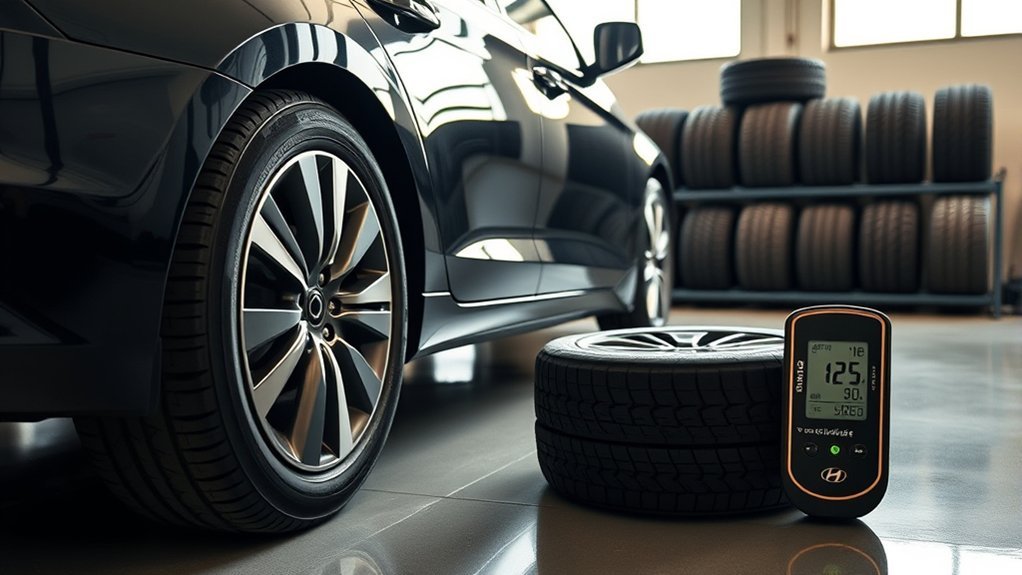
Maintaining the correct tire pressure is essential for your Hyundai Sonata’s performance and safety. Always check the driver’s side door label for the recommended pressure, usually around 35 psi. Regularly monitoring your tire pressure can prevent fuel inefficiency, reduce tire wear, and avoid blowouts. Seasonal changes can alter tire pressure, so make it a habit to check monthly or before long trips.
Using a quality tire pressure gauge is key. Here’s a quick reference table to guide you:
| Condition | Recommended Pressure (psi) | Action Needed |
|---|---|---|
| Cold Weather | 35 | Inflate if below 32 psi |
| Warm Weather | 35 | Check regularly |
| Uneven Wear | 35 | Rotate tires |
| Long Trip | 35 | Check before departure |
| Low Pressure Alert | < 30 | Inflate immediately |
Following a consistent maintenance schedule will enhance your Sonata’s drive and prolong tire life.
Your Top Questions on Sonata Tire Compatibility Answered?
Wondering what tire options are best for your Hyundai Sonata? Here are some key points to take into account for ideal tire compatibility:
- Common Sizes: Look for tires like 215/55R17, 235/45ZR18, or 245/40ZR19. These sizes work across various Sonata trims, especially 2019-2025 models.
- Bolt Pattern: The Sonata uses a 5×114.3 bolt pattern, allowing compatibility with many aftermarket wheels.
- Load and Speed Ratings: Always verify replacements match or exceed the original specifications for safe performance.
When choosing new tires, keep an eye on tread wear and tire noise. A professional consultation is advisable to confirm compatibility and performance implications. This guarantees you maintain the Sonata’s handling characteristics while enjoying a quiet, smooth ride.
Identifying Signs Your Tires Need Replacement
Tires are a critical component of your Hyundai Sonata’s safety and performance. Regularly inspect your tire tread for replacement indicators; if the tread depth is less than 2/32 of an inch, it’s time to replace them. Conduct a sidewall inspection for cracks, bulges, or blisters, as these signs of structural damage require immediate attention. If your tires are older than five years, have them evaluated for potential degradation, regardless of tread depth. Monitor for vibration symptoms or handling issues; if you experience vibrations or your vehicle pulls to one side, this could indicate tire wear or imbalance needing replacement. Additionally, perform regular pressure checks; under-inflated tires can lead to uneven wear and may necessitate earlier replacement. Staying alert to these signs guarantees your Sonata remains safe and performs at its best on the road.
Benefits of Upgrading Your Sonata Tire Package
Upgrading your Hyundai Sonata’s tire package can dramatically improve your driving experience, especially if you’re looking for better grip and handling. Here are some key benefits:
- Enhanced Tire Performance: Larger sizes like 235/45R18 or 245/40R19 boost grip and cornering ability, particularly in performance-oriented trims like the N Line.
- Improved Stability: Higher speed and load ratings provide greater safety at high speeds, making your drives smoother and more secure.
- Aesthetic Upgrades: Switching to 19-inch wheels not only elevates your Sonata’s look but also reduces unsprung weight, enhancing ride quality.
With enhanced tire packages maintaining OEM compatibility through a 5×114.3 bolt pattern, you can achieve a seamless fit without modifications. This upgrade isn’t just about looks; it’s a pathway to a more liberated driving experience that combines style with performance.
Frequently Asked Questions
What Tires Fit a Hyundai Sonata?
You’ll find tire sizes like 215/55R17, 235/45ZR18, and 245/40ZR19 fit your Hyundai Sonata. Verify the tread patterns align with your driving needs for peak performance and safety on the road.
Can a 17X7 5 Rim Fit on a 2008 Hyundai Sonata?
Sure, a 17×7 rim fits your 2008 Hyundai Sonata, but who wouldn’t want to complicate things? Just verify it meets the tire specifications and rim compatibility—offset between +48 to +50 mm for smooth sailing!
Conclusion
Just as a well-tuned engine propels your Hyundai Sonata down the road, the right tires guarantee a smooth and safe journey. By understanding tire compatibility and maintenance, you’re not just swapping rubber; you’re choosing the right partners for your vehicle’s dance with the asphalt. Keep an eye on wear and guarantee proper pressure, and your Sonata will glide through life’s twists and turns effortlessly. Invest in quality tires, and you’ll enjoy the ride for miles to come.

Related Articles

Is It Safe to Drive With a Nail in a Hyundai Sonata Tire?
Safety concerns arise when driving with a nail in your Hyundai Sonata tire; discover what steps you should take to ensure your well-being on the road.
Read More
Can Aftermarket TPMS Sensors Work on a Hyundai Sonata?
I explain how aftermarket TPMS sensors can fit and be programmed to a Hyundai Sonata—learn the key checks and pitfalls before you buy.
Read More
Hyundai Sonata Tire Plug vs Patch: Which Repair Is Safer?
The choice between a tire plug and patch for your Hyundai Sonata can impact safety and performance—discover which option truly protects your vehicle.
Read More