What Is Tire Aspect Ratio? How to Read & Understand It
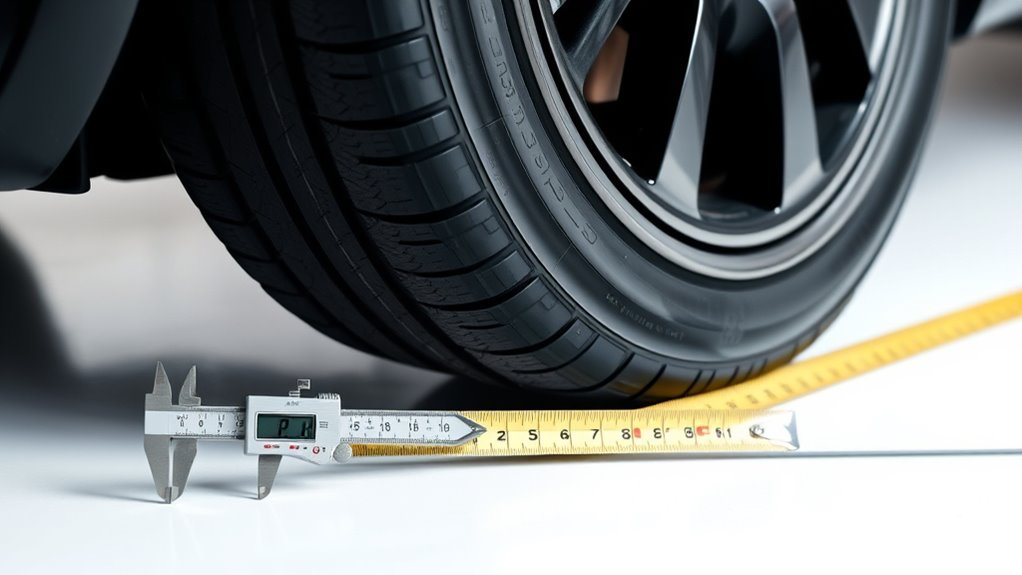
Tire aspect ratio tells you the sidewall height as a percentage of the tire’s width—so in 265/70R17 the sidewall is 70% of 265 mm. You’ll use the ratio to calculate sidewall height (width × ratio) and overall diameter ((2 × sidewall) + rim), which affects handling, comfort, speedometer accuracy, ABS, and clearance. Lower ratios sharpen steering; higher ratios cushion the ride. Keep sizes within about ±3% of stock and you’ll avoid most fitment issues, with more details ahead.
What Tire Aspect Ratio Means and How to Read It
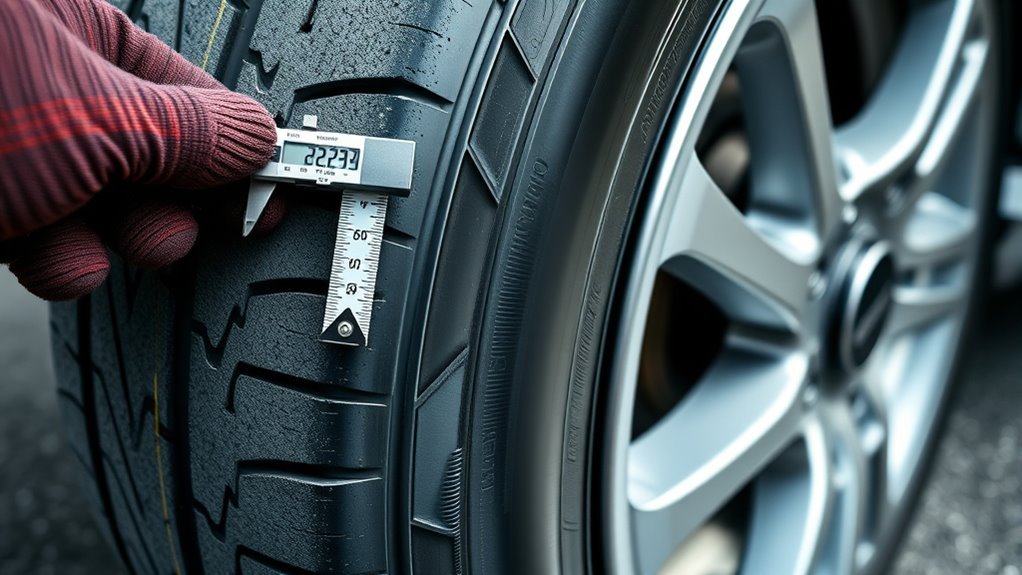
Think of the aspect ratio as the tire’s sidewall height expressed as a percentage of its width—so in a 265/70R17 tire the sidewall is 70% of 265 mm. You read the middle number to gauge cushioning versus responsiveness: lower ratios (like 50) give a shorter sidewall for sharper handling and better performance metrics; higher ratios (like 75) offer taller sidewalls for comfort and stability. Use aspect ratio alongside tire classifications to match tires to driving needs—sport, touring, or off-road—without assuming rim compatibility. Remember that changing ratio can alter overall diameter, affecting speedometer accuracy and clearance. Focus on the ratio as a clear spec that balances traction, ride quality, and handling within your chosen performance goals.
Calculating Sidewall Height and Total Tire Diameter
Now you’ll use the aspect ratio to calculate sidewall height: multiply the tire width in millimeters by the aspect ratio as a decimal (for example, 235 × 0.80 = 188 mm). Convert that sidewall height to inches by dividing by 25.4, then add twice the sidewall height to the rim diameter in inches to get total tire diameter (7.4 in × 2 + 16 in ≈ 30.8 in). These measurements help confirm fitment and performance, but check manufacturer specs for exact dimensions.
Calculate Sidewall Height
When you’re checking tire sizes, calculate the sidewall height by multiplying the tire width in millimeters by the aspect ratio (as a decimal), then convert to inches if needed; for example, a 265/70R17 has a sidewall of 265 × 0.70 = 185.5 mm, about 7.3 inches. Use the tire width and aspect ratio printed on the sidewall: width is the first number, aspect ratio is the second. Multiply width × (aspect ratio/100) to get millimeters, then divide by 25.4 to convert to inches. Do this for both front and rear if sizes differ. Note manufacturers may vary slightly, so verify specific tire specs before finalizing fitment or assuming exact measurements.
Total Tire Diameter
To get a tire’s total diameter, start with the sidewall height you calculated and add twice that height to the rim diameter (in inches): Total Diameter = (2 × Sidewall Height) + Rim Diameter. Use the sidewall you found (width in mm × aspect ratio as a decimal), convert millimeters to inches (divide by 25.4), then apply the formula. For example, a 235/80R16 gives a sidewall of 188 mm (235 × 0.80) ≈ 7.4 in; Total Diameter ≈ (2 × 7.4) + 16 = 30.8 in. That figure helps confirm wheel-well clearance and speedometer accuracy. Remember tire measurements are nominal; diameter variations occur between manufacturers, so verify with actual specs before changing sizes.
Vehicle Systems & Clearance: Speedometer, ABS, and Rubbing Risk
Because changing a tire’s aspect ratio alters overall diameter and circumference, you’ll affect systems like the speedometer and ABS and risk rubbing if clearance isn’t checked; larger-diameter tires make the speedometer under-report speed, mismatched circumferences can confuse wheel-speed sensors, and taller sidewalls increase the chance of contact during full lock or suspension travel. Check speedometer calibration after any size change—GPS or shop verification confirms true speed. Maintain uniform circumference across axles to preserve ABS functionality; avoid mixing aspect ratios or uneven wear. Inspect inner fenders and steering clearances at full lock and with suspension compressed. If you’re unsure, consult a qualified mechanic or tire professional to verify clearance, sensor compatibility, and safe fitment before you drive.
How Aspect Ratio Changes Ride Comfort, Handling, and Fuel Use
Although a tire’s aspect ratio might seem like a small spec, it has a direct, measurable effect on ride comfort, handling, and fuel use—higher ratios (taller sidewalls) absorb bumps and make rides softer, while lower ratios (shorter sidewalls) firm up the contact patch for quicker steering and better cornering. You’ll notice taller sidewalls smooth rough roads and can improve fuel efficiency by reducing rolling resistance; shorter sidewalls sharpen steering feel and cornering stability. Keep tire pressure correct and choose compatible tread patterns to preserve those traits. Changing aspect ratio alters overall diameter, which affects speedometer readings and vehicle dynamics, so match replacements carefully.
| Aspect Ratio | Effect |
|---|---|
| High | More cushioning |
| Low | Sharper handling |
| Change | Speedometer impact |
High- vs Low-Profile Tires : Aspect Ratio Pros and Cons
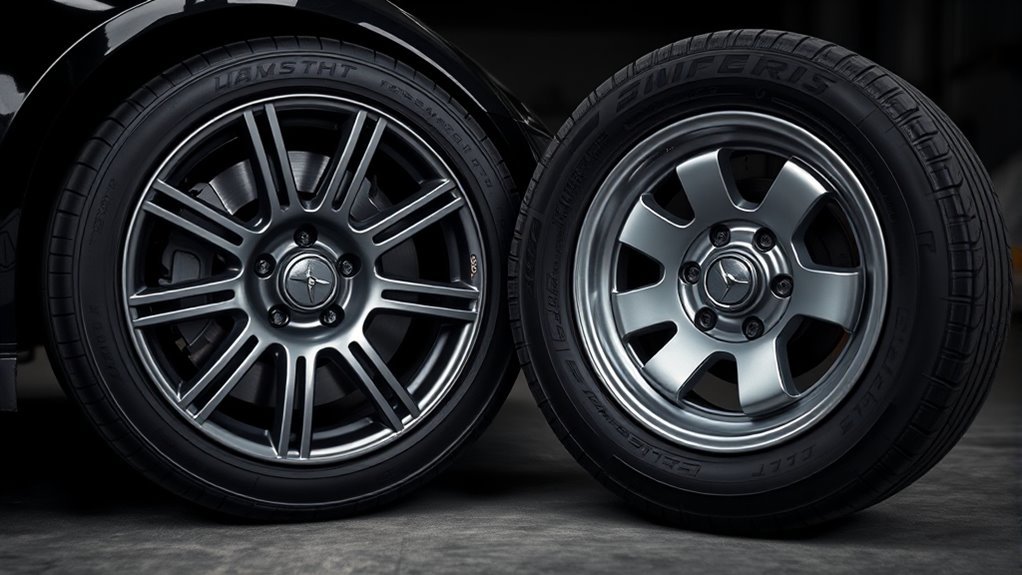
When choosing between high- and low-profile tires, think about how the taller sidewalls of high-profile tires soak up bumps for a smoother ride while shorter sidewalls on low-profile tires sharpen handling and cornering. You’ll also weigh stability and durability: low-profile tires improve lateral grip but can transmit more road shock and are more prone to sidewall damage, whereas high-profiles trade some responsiveness for longer wear and better impact tolerance. Match your choice to driving habits and road conditions to balance comfort, handling, and tire longevity.
Ride Comfort Differences
If you want a smoother, more comfortable ride on everyday roads, choose higher-aspect-ratio tires with taller sidewalls—they flex more to absorb bumps and uneven surfaces. You’ll notice increased tire softness and a calmer driving experience: the taller sidewall cushions impacts, improves comfort on rough patches, and can aid fuel efficiency.
High vs low profile trade-offs:
- High-profile: better cushioning, less road harshness.
- Low-profile: firmer feel, reduced sidewall flex.
- High-profile: gentler on uneven surfaces, often longer-lasting comfort.
- Low-profile: sportier feel but harsher ride and potentially faster wear.
Pick high-aspect ratios if comfort matters most; choose lower ratios only if you prioritize sporty feedback over everyday ride comfort.
Handling And Stability
Because aspect ratio changes how much a tire’s sidewall flexes, choosing lower-profile tires (35–55% aspect ratios) will give you sharper handling and more precise cornering at the cost of a firmer ride and greater vulnerability to road damage. You’ll notice improved tire performance and better stability during aggressive driving or high-speed maneuvers. Higher-profile tires (65%+) cushion impacts and suit daily commuting, trading some cornering precision for comfort and fuel efficiency.
| Situation | Recommendation |
|---|---|
| Performance cornering | Low-profile |
| Everyday comfort | High-profile |
| Rough roads | High-profile |
| High-speed stability | Low-profile |
| Fuel-conscious driving | High-profile |
Weigh these stability trade offs to match driving style and road conditions.
Durability And Wear
Although low-profile tires give you sharper handling, they put more stress on tread and sidewalls, so you should expect faster wear and greater risk from potholes and debris. You’ll trade some tire longevity for responsiveness: lower aspect ratios have stiffer sidewalls that improve load handling but accelerate tread wear and increase damage risk. High-profile tires cushion impacts, reducing abnormal wear and preserving tire longevity for everyday or rough-road use. To manage durability, follow these guidelines:
- Monitor tread wear monthly and rotate tires per manufacturer intervals.
- Maintain correct inflation to prevent uneven wear and sidewall strain.
- Avoid potholes and rough roads when possible; low profiles are vulnerable.
- Inspect sidewalls after impacts and replace tires showing cuts or bulges.
Choose aspect ratio based on how you prioritize longevity versus handling.
Picking Aspect Ratio by Use Case: Daily Driving, Towing, Off‑Road
When you pick an aspect ratio, match it to how you use the vehicle: higher ratios (about 65–75) give daily drivers more cushioning and comfort, lower ratios (around 60–65) suit towing by offering stiffer sidewalls and better control, and very high ratios (70+) help off‑road rigs flex and maintain traction on uneven terrain. Choose by use: daily driving favors comfort and predictable tire performance; towing needs towing stability and load control; off road traction requires taller sidewalls for flex.
| Use Case | Typical Ratio | Benefit |
|---|---|---|
| Daily driving | 65–75 | Cushioning, smoother ride |
| Towing | 60–65 | Stiffer sidewalls, stability |
| Off‑road | 70+ | Flex, improved traction |
Check vehicle specs to verify aspect ratio benefits align with safety and performance.
Changing Aspect Ratio Safely: Fitment Rules and Common Mistakes
If you change a tire’s aspect ratio, keep the overall diameter within about 3% of the stock size so you don’t introduce clearance problems, speedometer errors, or altered handling. You’ll avoid common fitment errors and debunk aspect ratio myths by following simple rules. Always verify tire compatibility with rim size, load index, and manufacturer specs; consult a pro if unsure. Never mix different aspect ratios on the same axle—uneven grip and handling follow. Use fitment charts or calculators to confirm diameter and load capacity.
- Check overall diameter vs. stock (±3%).
- Match rim width and load index.
- Don’t mix aspect ratios on an axle.
- Consult a professional for final approval.
Quick Reference: Common Sizes, Aspect Ratios, and Dimensions
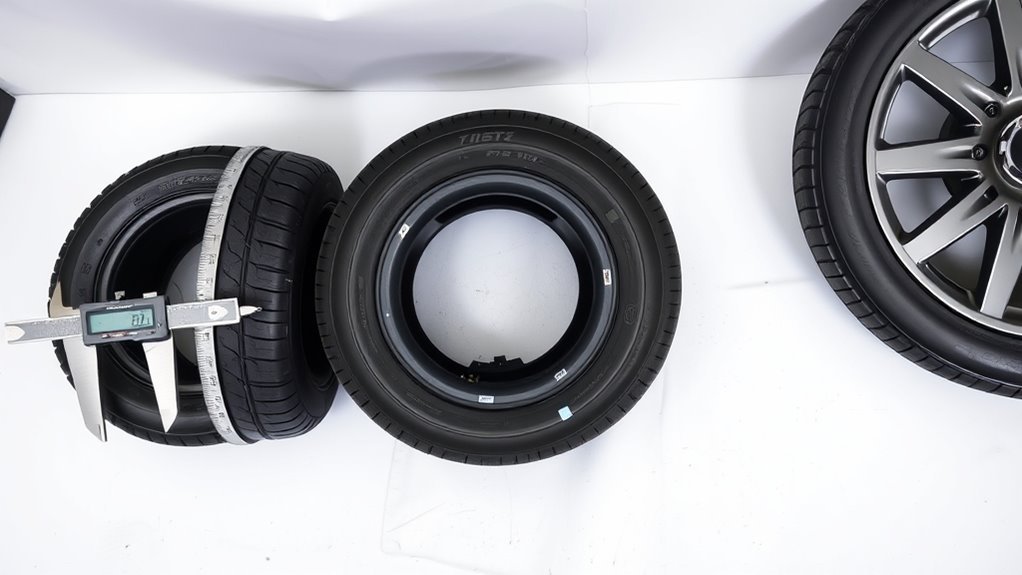
Now that you know the fitment rules and common mistakes, let’s look at common sizes so you can quickly read aspect ratios and calculate dimensions. You’ll see how width × aspect ratio × rim size yields sidewall height and approximate overall diameter, which helps with fitment, tire maintenance, and seasonal changes planning. Use this quick table for reference:
| Tire Size | Aspect Ratio (%) | Approx. Sidewall (mm) |
|---|---|---|
| 265/70R17 | 70 | 185.5 |
| 225/65R17 | 65 | 146.25 |
| 275/55R20 | 55 | 151.25 |
| 235/45R18 | 45 | 105.75 |
Remember: higher ratios give comfort and load support; lower ratios improve handling and stability.
Frequently Asked Questions
Can You Change Tire Aspect Ratio 60 to 65?
Yes — you can change from 60 to 65, but you’ll alter tire performance and handling characteristics; check clearance, speedometer accuracy, and suspension fit, and expect a taller sidewall that improves comfort but slightly reduces responsiveness.
What Tire Aspect Ratio Is Best?
For most drivers, a 65–75 aspect ratio’s best: it balances tire performance and driving comfort, but you’ll choose lower (≤60) for sportier handling or higher (≥75) for off-road load cushioning—match to vehicle and use.
Conclusion
So you’ll read the numbers, do the math, and still expect the same ride—funny, right? Aspect ratio’s the quiet tire rule that controls sidewall height, speedo accuracy, and whether your car hugs corners or soaks bumps. Change it for looks or load, but don’t invent fitment rules mid-garage. Follow clearance, diameter, and ABS limits, and you’ll get the handling, comfort, and economy you intended—no automotive witchcraft required.
Related Articles
How to Read Motorcycle Tire Size: Complete Breakdown
Often misunderstood, this guide decodes motorcycle tire sizes like 180/55ZR17—learn what each number and letter means to ensure safe, perfect fitment.
Read More
How to Read Bicycle Tire Size: Inches, Metric & ISO
Get the essential trick to decoding ETRTO/ISO codes so you’ll always pick rim-compatible tyres—discover what to check next.
Read More
How to Read Tire Size Numbers: Decode the Sidewall
Step-by-step guide to decode tire sidewalls—sizes, load, speed, DOT and winter symbols—so you’ll know what fits and when to replace.
Read More