What Is the Tire Sidewall? Anatomy & Markings Decoded
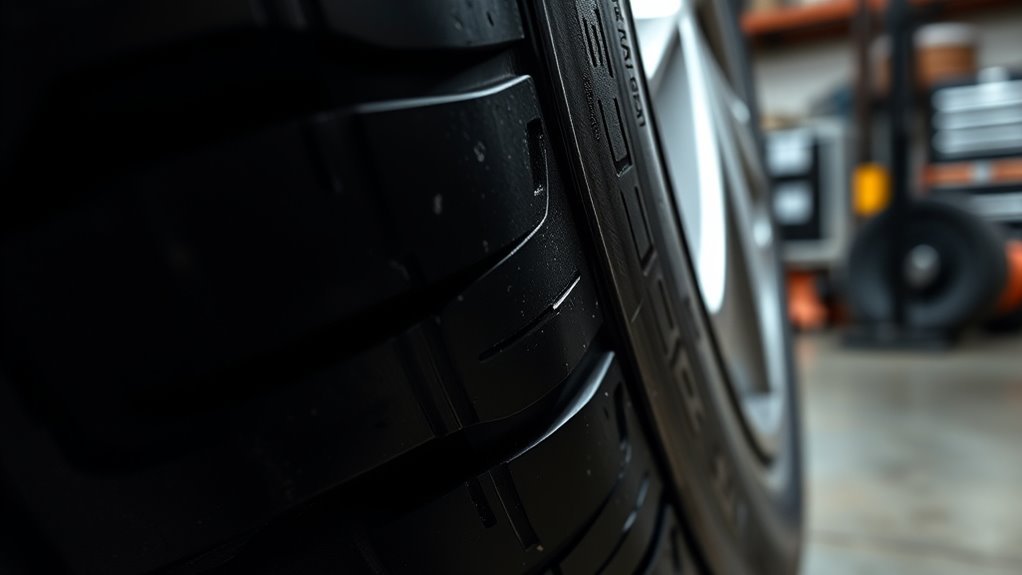
Your tire sidewall is a compact data plate that tells you fitment and safety specs at a glance. You’ll find the size code (e.g., P205/55R17), load index and speed rating, maximum inflation pressure, and the DOT plant code with the week/year production date. It also shows UTQG ratings for treadwear, traction and temperature, treadwear indicators, and seasonal marks like 3PMSF or M+S. Keep checking these markings and you’ll learn how each detail affects performance.
Quick: Read Your Tire Size and Date
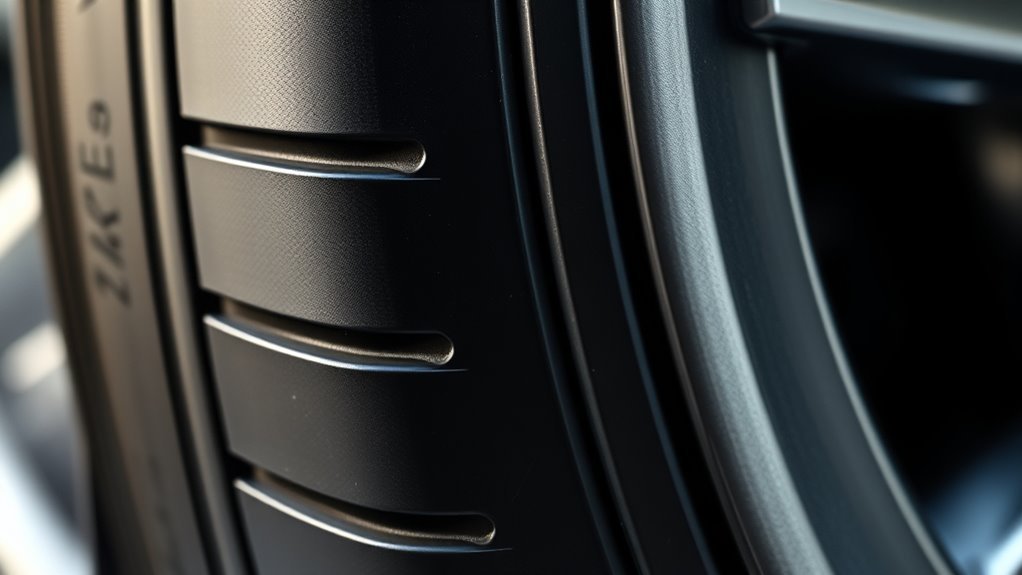
When you inspect a tire’s sidewall, read the size code—such as P205/55R17—to confirm fit: “P” denotes a passenger tire, 205 is the tread width in millimeters, 55 is the aspect ratio (sidewall height as a percentage of width), “R” means radial construction, and 17 is the rim diameter in inches. You’ll also find a DOT code; the last four digits state manufacture week and year (e.g., 1501 = 15th week of 2001). Interpreting these markings lets you verify compatibility, safety, and regulatory compliance. Pay attention to tire markings significance when selecting replacements. Note aspect ratio impact: lower percentages reduce sidewall height, tightening handling but lowering ride comfort; higher percentages increase cushion but can soften response. Use codes to match vehicle specs precisely.
How to Read Tire Size on Sidewall
Tire size markings like P205/55R17 give you precise fitment information at a glance: the prefix (P) identifies a passenger tire, the first numeric group (205) is tire width in millimeters, the slash separates width from aspect ratio (55) which is sidewall height as a percentage of width, the construction code (R) denotes radial, and the final number (17) is rim diameter in inches. When you read tire dimensions explained, note the aspect ratio’s impact on handling and ride comfort: lower ratios improve cornering but can increase harshness. These sidewall markings significance guarantee proper fitment and vehicle compatibility—critical for safety and performance. Read each element exactly as shown to match manufacturer requirements.
Load Index, Speed Rating, Max Pressure
On the sidewall you’ll find the load index, a numerical code that tells you the maximum weight each tire can carry when properly inflated. You’ll also see the speed rating, a letter indicating the maximum sustained speed the tire can handle safely under ideal conditions. Finally, check the maximum inflation pressure (shown in kPa and PSI) to guarantee you don’t exceed the tire’s safe air-pressure limit.
Load Index Explained
Think of the load index as a compact numerical shorthand that tells you the maximum weight a properly inflated tire can support; paired with the speed rating (a letter) and the tire’s maximum pressure (PSI/kPa), these markings define the tire’s safe operating limits. The load index maps to a specific tire weight capacity—e.g., 91 equals 1,356 lbs—so you can verify each tire meets your vehicle’s required capacity. You must match the tire’s load index to manufacturer specifications to preserve load safety and handling. Max pressure markings give the highest allowable inflation; follow vehicle door-sticker or manual recommendations for operating pressure. Never exceed the load index or maximum pressure, and replace tires that show signs of overload or structural damage to avoid failure.
Speed Rating Meaning
Having confirmed the load index and maximum pressure, you should also check the speed rating—the single-letter code (like H, V or Z) that tells how fast a tire can safely sustain continuous operation under specified test conditions. The speed rating defines the upper speed limits for continuous operation; higher letters indicate greater tire performance at speed. You’ll find this code on the sidewall alongside the load index, and you must match it to the vehicle manufacturer’s specification. Using a lower-rated tire than specified reduces handling margins, heat tolerance and braking performance; using a higher-rated tire is acceptable if load index is maintained. Refer to manufacturer and test charts for exact mph/km·h equivalencies (for example, H = 130 mph / 210 km/h).
Maximum Inflation Pressure
Because proper inflation directly affects load capacity and speed capability, you should always check the tire’s maximum inflation pressure stamped on the sidewall (usually shown in PSI and kPa). That marking denotes the highest safe pressure the tire can contain; tire pressure above or below this alters inflation effects on traction, wear, and structural integrity. The sidewall also lists the load index and speed rating, so you can verify the tire supports the vehicle’s weight and intended speeds.
- Load index: numeric code tied to maximum supported weight (e.g., 91 = 1,356 lbs).
- Speed rating: letter code for maximum safe speed under load (e.g., H = 130 mph, V = 149 mph).
- Never exceed the marked maximum inflation pressure.
- Incorrect pressure increases uneven wear and risk of failure.
Find the DOT Code and Date
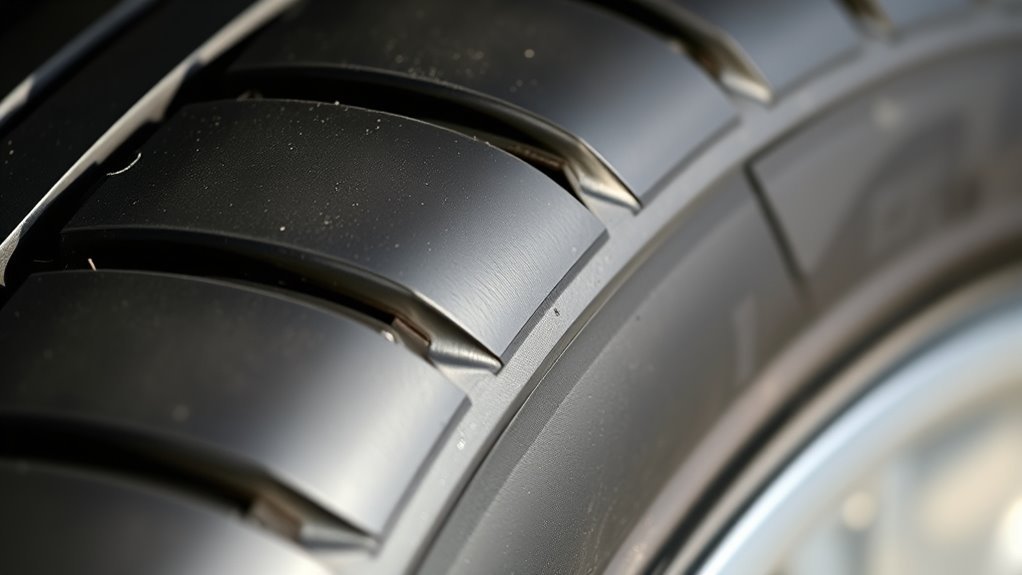
To find a tire’s DOT code and manufacture date, inspect the sidewall near the bead for a string beginning with “DOT” followed by a plant/manufacturer identifier and a group of digits; the essential date is the last four digits, which show the week and year of production (for example, “1501” = 15th week of 2001). You’ll read the DOT Code to verify compliance with Safety Standards and to identify the production plant. The final four digits provide the Manufacturing Date: first two digits = week, last two = year. Check this to determine Tire Age; tires generally have a service life of about six to ten years irrespective of tread. Record DOT details when inspecting used tires or planning replacement to maintain vehicle safety.
UTQG, Treadwear, Traction & Temperature
On the sidewall you’ll find the UTQG code, which breaks into three measurable metrics: treadwear, traction, and temperature. You’ll read treadwear as a relative number (100 baseline) that predicts longevity, traction as AA–C for wet grip, and temperature as A–C for heat resistance. Use these ratings to compare durability, wet performance, and heat-handling so you can select tires that meet your safety and usage needs.
UTQG Explained Simply
Curious how the string of letters and numbers on your tire’s sidewall translates to real-world performance? You’ll use the UTQG benefits to compare tires via a standardized grading system that quantifies treadwear, traction, and temperature performance. The code simplifies selection and enforces regulatory transparency.
- Treadwear: numerical index (100 baseline); 200 implies roughly twice the life under comparable conditions.
- Traction: grades AA, A, B, C; AA gives superior wet stopping ability.
- Temperature: A, B, C; A indicates best heat dissipation and resistance to failure.
- Comparison utility: UTQG lets you objectively prioritize longevity, wet grip, or heat tolerance based on intended use.
Rely on UTQG as a technical, consumer-facing performance shorthand.
Treadwear, Traction, Temperature
Although it looks like a jumble of letters and numbers, the UTQG trio—treadwear, traction, and temperature—gives you concise, standardized measures of how a tire will wear, grip, and handle heat. You use treadwear longevity numbers (baseline 100) to estimate service life: higher values mean slower wear. Traction performance is graded AA, A, B, C; AA offers the best wet/dry grip. Temperature safety uses A, B, C to show heat dissipation capability; anything below C is unacceptable. These grades provide clear guidance for matching tires to driving conditions and maintenance plans, underscoring grading importance in procurement and safety decisions.
| Component | Scale | Practical use |
|---|---|---|
| Treadwear | 100+ | Predict longevity |
| Traction | AA–C | Assess grip |
Seasonal Symbols, OE, and EV Marks
Because tire sidewall markings convey critical information about seasonal performance and vehicle-specific design, you should learn to read symbols like 3PMSF and M+S, recognize OE codes, and spot EV-specific marks that indicate low rolling resistance and other electric-vehicle optimizations. You’ll use these to assess seasonal safety and tire compatibility quickly. 3PMSF certifies winter traction under standardized tests; M+S is manufacturer-declared for mud and snow. OE stamps confirm design integration with suspension, ABS, and steering characteristics. EV marks signal compounds and constructions tuned for reduced rolling resistance, noise, and load from battery weight.
Read tire sidewalls: 3PMSF, M+S, OE, and EV marks reveal seasonal performance, vehicle fitment, and efficiency.
- 3PMSF: certified severe-snow performance
- M+S: manufacturer-declared mud/snow suitability
- OE: vehicle-specific optimization and fitment
- EV: low rolling resistance, efficiency-focused design
Practical Checks Before Buying or Replacing Tires
Now that you can read seasonal symbols, OE and EV marks, let’s move to the practical checks you’ll perform before buying or replacing tires. First, confirm the tire size stamped on the sidewall; mismatched dimensions alter handling and stability. Next, verify the load index and speed rating meet or exceed the vehicle manufacturer’s specs to guarantee safe performance. Inspect treadwear indicators in the grooves; replace tires once they reach 2/32 inch (1.6 mm). Read the DOT code to confirm compliance and note the manufacture week/year for recall tracking. For climate-specific selection, check for 3PMSF or other seasonal markings to match tires to seasonal changes. These steps integrate tire maintenance into procurement and replacement decisions.
Frequently Asked Questions
How to Read Tire Sidewall Information?
You read the tire sidewall by decoding size (e.g., P205/55R17), load and speed ratings, DOT date, and treadwear markers; you’ll use this info for tire maintenance and evaluating sidewall durability to guarantee safe, compliant operation.
What’s Written on the Sidewall of a Tire?
Like a roadmap, the sidewall lists size, load index, speed rating, DOT code, and treadwear indicators; you’ll also see tire pressure recommendations, construction symbols, and warnings about sidewall damage, helping you maintain safe, compliant tires.
What Are Different Types of Sidewalls?
You encounter standard, low-profile and reinforced sidewalls; they vary by sidewall materials and sidewall designs to balance comfort, handling, load capacity and durability. You’ll select types based on vehicle use, weight and performance needs.
Conclusion
You’ve learned to read the sidewall like a blueprint, so don’t let numbers blur into noise. Treat the size, load, speed, DOT, UTQG and seasonal marks as precise instruments guiding safe choices. Before you buy or replace tires, inspect those codes and symbols—think of them as a safety checklist etched in rubber. Follow them closely, and you’ll keep traction, load capacity, and legality aligned like gears in a well-tuned machine.
Related Articles
How to Read Motorcycle Tire Size: Complete Breakdown
Often misunderstood, this guide decodes motorcycle tire sizes like 180/55ZR17—learn what each number and letter means to ensure safe, perfect fitment.
Read More
How to Read Bicycle Tire Size: Inches, Metric & ISO
Get the essential trick to decoding ETRTO/ISO codes so you’ll always pick rim-compatible tyres—discover what to check next.
Read More
How to Read Tire Size Numbers: Decode the Sidewall
Step-by-step guide to decode tire sidewalls—sizes, load, speed, DOT and winter symbols—so you’ll know what fits and when to replace.
Read More