What Is a Radial Tire? Construction & Benefits Explained
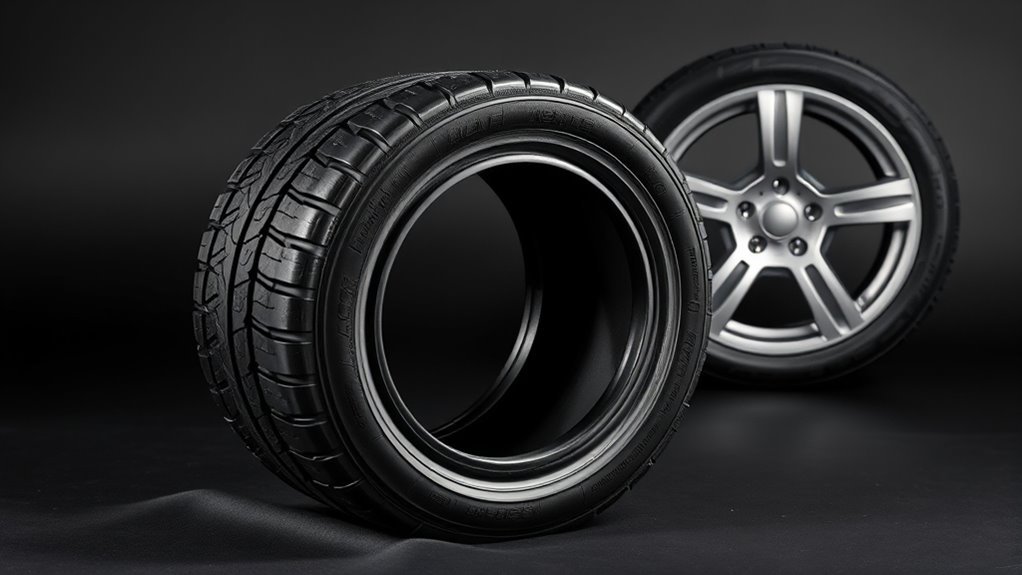
A radial tire has cord plies that run radially from bead to bead, with steel belts under the tread and flexible sidewalls that let the tread and carcass move independently. That construction lowers rolling resistance, improves heat dissipation, stabilizes the contact patch, and extends tread life while enhancing cornering grip and high‑speed stability. You’ll get better fuel economy, steadier handling, and more predictable wear; keep going to uncover construction details, performance tradeoffs, and maintenance tips.
What Is a Radial Tire?
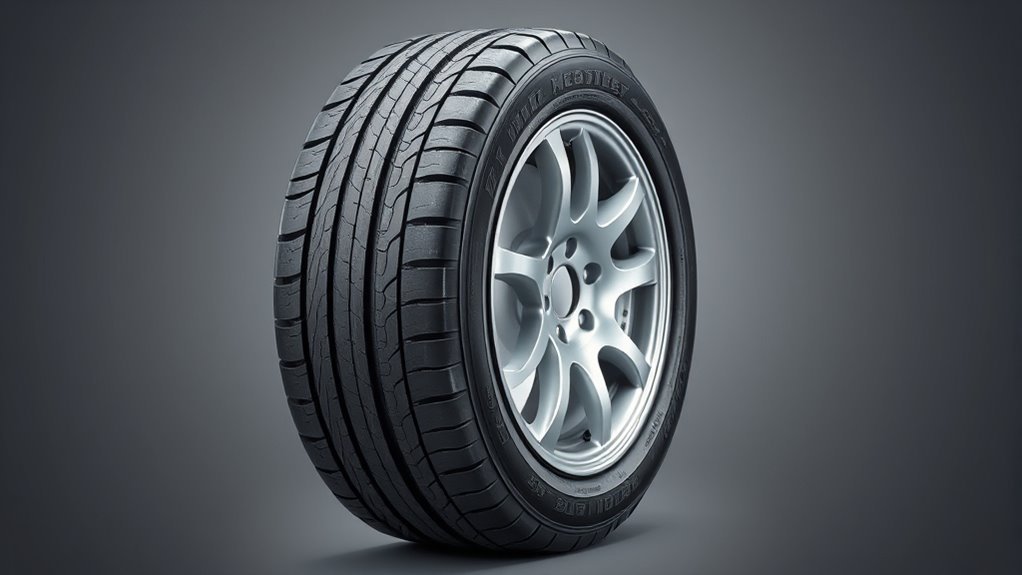
Think of a radial tire as a layered engineering solution: its plies run radially, perpendicular to the direction of travel, giving the carcass lateral flexibility while steel belts under the tread maintain structural integrity. You’ll recognize this design from tire history: radials supplanted bias-ply constructions by offering lower rolling resistance and improved tread life, becoming standard on passenger cars by the late 1970s. In practical terms, the flexible sidewalls act as vertical springs, smoothing ride quality, while steel belts preserve road contact and high-speed stability. From a manufacturing process viewpoint, plies and belts are assembled to precise tensions and cured to bond components, yielding predictable deformation characteristics. You’ll consequently expect better fuel efficiency, handling, and longevity from radials.
Radial Tire Anatomy and Materials
You’ll first examine the steel belt package, which under the tread provides tensile strength and resists deformation during cornering and braking. Then you’ll analyze flexible sidewall materials—their polymer composition and ply arrangement—that act as vertical springs to absorb road irregularities. Together these components define ride stability, wear characteristics, and overall handling performance.
Steel Belt Package
At the core of a radial tire’s strength is the steel belt package, a set of circumferential steel cord layers placed beneath the tread that resists deformation during cornering and high-speed runs. You rely on this steel reinforcement to stabilize the tread footprint, which preserves contact patch geometry and improves traction and high-speed stability. The belts also act as thermal conductors, dispersing heat generated by flexing and friction, so your tire runs cooler and achieves greater tire longevity. When manufacturers combine steel belts with advanced plies like polyester or Kevlar, you get enhanced puncture resistance and controlled stiffness without excessive mass. In sum, the steel belt package balances rigidity and flexibility, optimizing handling, fuel efficiency, and tread life in radial designs.
Flexible Sidewall Materials
While the steel belt package keeps the tread stable and heat-managed, the sidewalls provide the vertical compliance that defines ride quality and road contact. You rely on sidewall flexibility engineered from polyester or textile cords to act as vertical springs, delivering controlled tire cushioning and isolating chassis from road inputs. Their independent movement relative to the tread improves handling and high-speed stability while maintaining traction across surfaces. Flexible sidewalls also aid heat dissipation, extending tread life and improving fuel economy. Design balances cord angle, ply count, and compound to preserve shape under load alongside steel belts, optimizing contact patch geometry.
- Materials: polyester/textile cords for elasticity and strength
- Function: vertical spring, damping, and cushioning
- Thermal: improved heat dissipation vs bias-ply
- Performance: enhanced grip and stability
Radial vs Bias‑Ply: Key Construction and Performance Differences
Because their internal plies run perpendicular to travel, radial tires flex the tread and sidewall independently, producing lower rolling resistance and improved heat dissipation than bias‑ply tires whose diagonal plies form a stiffer carcass. In a performance comparison you’ll note radials’ perpendicular cord orientation reduces carcass stiffness, improving high‑speed stability and thermal management; bias‑ply’s crossed plies increase robustness against puncture and heavy‑load deformation. For tire maintenance you’ll treat radials and bias‑ply differently: radials need attention to inflation and alignment to preserve flexible carcass behavior, while bias‑ply units tolerate heavier compression but can overheat under sustained speed. Never mix types on a single axle — mismatched dynamic responses can induce uneven wear, structural stress, and compromised vehicle control.
How Radial Tires Affect Handling, Fuel Economy, and Tread Life
You’ll notice radial construction translates to improved cornering grip because the flexible sidewalls and consistent road contact keep more tread in contact during lateral loads. That same design lowers rolling resistance by reducing hysteresis losses in the tread and carcass, which improves fuel economy. Because heat is dissipated more effectively and contact is more uniform, you’ll get more even tread wear and longer service life.
Improved Cornering Grip
When you push into a corner, a radial tire’s flexible sidewalls and independently functioning tread let the contact patch conform to the road, improving lateral grip and vehicle stability. You’ll notice improved cornering dynamics and measurable gains in tire performance because the tread and sidewall act independently, optimizing contact geometry under lateral load. Heat dissipation and uniform wear sustain grip over the tire’s life, so handling remains predictable.
- Flexible sidewalls increase contact adaptability during turn-in.
- Independent tread movement maintains even pressure distribution.
- Enhanced heat management preserves compound properties under stress.
- Uniform tread wear maintains consistent lateral response over time.
These technical traits reduce unpredictable slip onset and improve steering precision at speed.
Lower Rolling Resistance
Although the perpendicular ply layout and flexible sidewalls are subtle, they cut rolling resistance considerably, so you’ll notice measurable gains in fuel economy, handling consistency, and tread life. Radial construction reduces hysteresis losses in the carcass, lowering energy dissipation as the tire deforms; in controlled tests this yields up to a 10% fuel-economy improvement versus bias-ply designs. Because sidewalls absorb and return energy more efficiently, you get steadier road contact and improved high-speed stability without added drag. Reduced rolling resistance also generates less heat, which limits rubber degradation and extends tread life while preserving traction characteristics. When you evaluate tire technology, include rolling-resistance coefficients and other performance metrics to quantify trade-offs between efficiency, grip, and longevity.
Even Tread Wear
Radial tires deliver more even tread wear by maintaining uniform road contact through their perpendicular cord layout and flexible sidewalls, so you’ll see steadier footprint distribution across load cycles. That structural uniformity reduces localized stress, producing predictable wear patterns and improved tread longevity versus bias-ply designs. You benefit via better handling, lower vibration, and reduced heat buildup that slows degradation.
- Consistent contact patch minimizes asymmetric wear and irregular wear patterns.
- Flexible sidewalls act as vertical springs, stabilizing load transfer during maneuvers.
- Improved heat dissipation lowers thermal fatigue, extending tread longevity.
- Lower rolling resistance enhances fuel economy while limiting additional wear.
Measure tread depth periodically to verify even wear and maintain alignment and inflation for best results.
When to Choose Radial Tires: Vehicle Types and Use Cases
Which vehicle types and driving scenarios call for radial tires? You’ll choose radials for passenger cars, light trucks, and SUVs when you want improved handling, fuel efficiency, and stability at speed; include “tire selection tips” by prioritizing radial constructions for everyday driving and long-distance travel due to flexible sidewalls that smooth ride and maintain grip. For performance vehicles, opt for radials engineered for responsiveness and wet traction—this yields measurable performance enhancement in steering and braking. Off-road use requires specialty radials built for rugged terrain and higher load capacity versus standard radials. For trailers, select all-season radial tires that resist heat and offer enhanced load durability for varied hauling. Match tire design to vehicle duty cycle, loading, and expected road surfaces for best results.
Radial Tire Markings: How to Read the Sidewall
Reading your tire’s sidewall gives you a compact set of technical data that tells you size, construction, load capacity, speed rating, manufacture date, and special designations—so you can verify fitment, safety, and service life at a glance. You’ll interpret markings methodically to support tire maintenance and monitor tread depth.
- Size example: 265/65R18 = width(mm)/aspect ratio + R (radial) + wheel diameter(in).
- Load index: numeric code → maximum load capacity; higher = stronger.
- Speed rating: letter code (H, V, etc.) → maximum safe speed.
- DOT code and date: last four digits = week/year of manufacture.
Also note treadwear indicators and M+S symbols for application. Use these data points to plan replacements and confirm compatibility.
Frequently Asked Questions
What Does Radial Tire Construction Mean?
Radial tire construction means you have perpendicular tire layers with steel belts under the tread patterns, giving flexible sidewalls that absorb shocks, maintain structural integrity, dissipate heat, extend tread life, and improve handling and fuel economy.
What Is the 3% Rule for Tires?
Think: keep it within 3%—you must match diameters. You’ll use ((New − Original)/Original)×100; tire maintenance needs this to prevent uneven tread wear, ABS/traction issues, fuel loss, speedometer errors, and drivetrain damage.
What Are the Cons of Radial Tires?
You’ll face drawbacks: higher upfront cost, more frequent pressure checks to preserve tire performance, reduced off-road puncture resistance, vulnerable sidewalls in rough terrain, and sometimes lower load capacity affecting handling characteristics under heavy-duty conditions.
What Are the Three Types of Tire Construction?
You’ll encounter three tire constructions: radial, bias ply, and cross ply. Each affects tire longevity, tread patterns, flexibility, and strength; radials optimize fuel efficiency and handling, while bias and cross ply prioritize durability and load resistance.
Conclusion
You’ve seen how radial tires lay steel-belted cords like ripples under the tread, pushing contact patch precision into every turn. Picture those layers as a tuned suspension element: they steady your ride, cut rolling drag, and chew less rubber. When you pick radials for highway commuting, light trucks, or performance driving, you’re choosing construction that improves handling, fuel economy, and tread life—measurable benefits that translate into predictable, technical advantages on the road.
Related Articles
How to Read Motorcycle Tire Size: Complete Breakdown
Often misunderstood, this guide decodes motorcycle tire sizes like 180/55ZR17—learn what each number and letter means to ensure safe, perfect fitment.
Read More
How to Read Bicycle Tire Size: Inches, Metric & ISO
Get the essential trick to decoding ETRTO/ISO codes so you’ll always pick rim-compatible tyres—discover what to check next.
Read More
How to Read Tire Size Numbers: Decode the Sidewall
Step-by-step guide to decode tire sidewalls—sizes, load, speed, DOT and winter symbols—so you’ll know what fits and when to replace.
Read More