
What Does 235/45R18 Mean on Hyundai Sonata Tires? Decoded

If your Sonata’s tires read 235/45R18, that means the tread is 235 mm wide, the sidewall height is 45% of that width, it’s a radial construction, and it fits an 18‑inch rim—giving a lower, stiffer profile for sharper handling and quicker steering. A load index 94 supports about 1,477 lb per tire and a V speed rating allows higher speeds. It suits many Sonata trims but affects ride comfort; keep going to see fitment, swaps, and maintenance tips.
Quick Answer: Is 235/45R18 Right for Your Sonata?

Wondering if 235/45R18 is right for your Sonata? Yes — it’s a strong fit for drivers who want liberated control. That 235mm tread width gives you solid tire performance and confident grip in cornering, while the 45% aspect ratio lowers sidewall flex for sportier feedback and quicker steering response. The radial construction boosts durability and fuel efficiency, so you won’t trade longevity for agility. An 18-inch diameter matches Sonata rims commonly specified, keeping fitment safe and straightforward. With a load index of 94, each tire supports about 1,477 pounds, covering passenger and cargo needs without compromise. In short, this size sharpens handling characteristics and preserves everyday usability: more direct steering, firmer ride, and dependable load capacity. If you’re aiming to feel free on the road while maintaining reliability, 235/45R18 delivers a balanced, performance-oriented upgrade that aligns with the Sonata’s design and your desire for responsive driving.
Reading 235/45R18: Width, Aspect, Construction, Rim
When you read 235/45R18, the first number (235) tells you the tire width in millimeters, which directly affects grip and handling. The 45 is the aspect ratio, so the sidewall height is 45% of that width and influences ride comfort and steering response. The R denotes radial construction and 18 is the rim diameter in inches—both are essential for durability and proper fit on your Sonata.
Tire Width Explained
Because tire markings pack several measurements into a short code, reading 235/45R18 tells you exactly how the tire will fit and perform: the first number, 235, is the tire width in millimeters. You’ll find wider tires like this increase contact patch area, directly influencing tire performance and grip factors—better cornering and stability at the cost of slightly higher rolling resistance. That width works with the 45 aspect ratio (sidewall height as a percent of width), radial construction (R) for flexibility and efficiency, and an 18-inch rim diameter to guarantee proper fit. When choosing tires, match width to your Sonata’s wheel well and driving goals so you’re free to prioritize handling, safety, or fuel economy without compromise.
Aspect Ratio Meaning
If you look at 235/45R18, the “45” is the aspect ratio—meaning the sidewall height equals 45% of the 235 mm tread width—so a lower percentage gives a shorter, stiffer sidewall that sharpens steering and reduces flex. You’ll notice aspect ratio benefits in quicker turn-in, improved cornering precision, and more direct feedback from the road, which suits drivers who want control and autonomy. The trade-off is a firmer ride and greater sensitivity to road imperfections, so you’ll weigh comfort versus responsiveness. Aspect ratio impact also affects tire profile aesthetics and handling balance; changing it alters speedometer calibration and ride dynamics. Choose a ratio that preserves safety, fits the Sonata’s specs, and supports your driving freedom.
Radial Construction & Rim
You’ve just seen how aspect ratio shapes ride feel and handling; now look at the “R” and the rim size in 235/45R18. The “R” means radial construction — layers running radially from bead to bead — which boosts flexibility, durability, and tire longevity. The 18-inch rim diameter tells you the wheel the tire fits; correct match maintains safety and the performance benefits you want.
- Radial design: common, resilient, improves contact patch.
- Flexibility: absorbs road irregularities, enhances comfort.
- Durability: resists heat, extends tire longevity.
- Rim size: 18″ guarantees proper seating and clearances.
- Performance benefits: sharper steering, stable high-speed handling.
Choose tires that honor those specs so your Sonata stays safe, responsive, and liberating to drive.
What Load Index 94 and Speed Rating V Mean for Performance
A load index of 94 and a speed rating of V tell you two critical limits: each tire can carry about 1,477 pounds when properly inflated, and it’s engineered for sustained speeds up to 149 mph (240 km/h). You get clear metrics—load capacity and speed performance—that let you match tires to how you drive and what you carry. With a 94 load index, each tire supports mid-sized vehicles like the Sonata without sacrificing ride quality; that balance frees you from overbuilt, heavy tires that hurt efficiency. The V rating guarantees the tire’s compound, tread, and construction handle high-speed heat and stress, so you can push performance without risking failure. Together, these ratings guide safe choices: don’t under-spec and overload, and don’t overrate if you won’t use it. Read them as operational boundaries that protect your mobility and autonomy while keeping ride dynamics tuned to spirited, responsible driving.
Which Sonata Models Use 235/45R18 OEM and Why
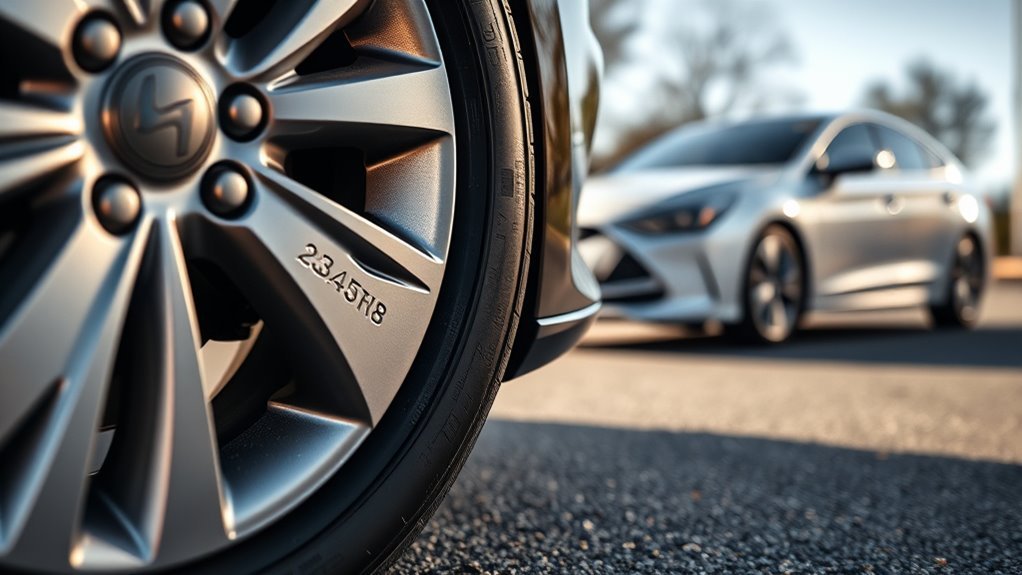
You’ll find the 235/45R18 size as OEM on trims like the 2021 Sonata and the Sonata N Line because their 18-inch wheels and suspension tunes are matched to that tire’s width and sidewall. This fitment balances grip, steering response, fuel economy, and ride comfort across those trims. The load index 94 and V speed rating also align with Hyundai’s safety and performance targets for these models.
Sonata Trim Compatibility
Most Sonata trims that lean toward sportier handling—like the Sonata Limited and Sport—come from the factory with 235/45R18 tires because that size balances grip, steering response, and ride comfort for the midsize sedan. You’ll find this spec on models aiming for Sonata performance without sacrificing daily comfort. Sticking with OEM 235/45R18 preserves calibrated handling and helps maximize tire longevity when you drive proactively.
- Sonata Limited: performance-focused touring with balanced ride
- Sonata Sport: sharper steering and responsive feel
- Higher-option packages: often include 18″ wheel upgrades
- Owners seeking comfort: benefit from tuned ride dynamics
- Replacement guidance: OEM size supports safety and design intent
You’re empowered to choose confidently—this size matches the car’s intent and your need for liberated driving.
OEM Fitment Reasons
Because Hyundai tunes several Sonata variants for a mix of sport and comfort, models like the Sonata 9, Limited, and Sport come from the factory with 235/45R18 tires to balance grip, ride quality, and fuel economy. You get OEM advantages: a wider contact patch for better handling, 18-inch rims that preserve style and stability, and a load index (94) supporting appropriate vehicle weight. Sticking to 235/45R18 helps maintain safety specs and tire longevity when you drive confidently and free.
| Model | OEM Size | Benefit |
|---|---|---|
| Sonata 9 | 235/45R18 | Sporty grip |
| Limited | 235/45R18 | Comfort balance |
| Sport | 235/45R18 | Handling focus |
| All | Load 94 | Stability & safety |
How 235/45R18 Affects Handling, Ride, and Fuel Economy

When you fit 235/45R18 tires on a Hyundai Sonata, the wider 235mm tread increases the contact patch for better cornering grip and stability, while the 45% aspect ratio yields a stiffer sidewall that sharpens steering response at the cost of a firmer ride; the 18‑inch diameter matches the Sonata’s wheels for proper fit and safety, and the tire’s 94 load index (about 1,477 lb per tire) gives adequate capacity for the vehicle. You’ll notice clear tire performance considerations: better lateral grip, crisper steering, and predictable load handling. Fuel effects vary—reduced rolling resistance can help economy in mixed driving, though higher-speed drag may offset gains. Your driving comfort evaluation should weigh sharper response against a firmer cabin feel. For liberated drivers who value control, these tires reward engagement.
- Increased contact patch improves cornering confidence.
- Stiffer sidewalls tighten steering feel.
- 18‑inch match preserves safety and handling balance.
- Potential fuel gains in lower-speed conditions.
- Firmer ride may reduce daily comfort.
235/45R18 Fitment Rules: Diameter, Rim Width, and Clearances
Start by checking the overall diameter: a 235/45R18’s sidewall height is 45% of 235mm, and that plus the 18‑inch rim diameter determines the tire’s rolling circumference, so you must keep the total diameter within the Sonata’s tolerance to preserve speedometer accuracy and prevent rubbing. You’ll also verify rim compatibility: recommended rim width is 7–8.5 inches for this tire, which preserves contact patch and handling. Check clearances at fenders and suspension to avoid rub during turns or on bumps. Monitor tire pressure to maintain ride comfort, tire life, and consistent handling.
| Item | Spec | Why it matters |
|---|---|---|
| Sidewall height | 105.75 mm | Affects comfort, ABS/calibration |
| Rim width | 7–8.5 in | Guarantees proper bead seating and handling |
| Clearance | Adequate gap | Prevents rubbing during articulation |
You’ll act decisively: measure, confirm rim compatibility, set correct tire pressure, and guarantee freedom to drive without compromise.
Replacement & Upgrade Options for 235/45R18 (Equivalents & Swaps)
If you’re swapping from 235/45R18, pick equivalents that keep overall diameter, load capacity, and speed rating within the Sonata’s specs—common swaps are 225/45R18 (slightly narrower) or 245/45R18 (wider), but you must confirm the new tire’s load index is 94 or higher and the speed rating is at least V to preserve safety and performance. Choose tire alternatives that match your driving goals—comfort, economy, or sport—and consult the owner manual before changing sizes.
- 225/45R18: narrower, may improve rolling resistance; check load index.
- 245/45R18: wider footprint, potentially better dry grip in a performance comparison.
- All-season option: balanced grip, year-round freedom.
- Performance tire: sharper response, sacrifice some comfort.
- Verify speed rating V and load index ≥94 for each candidate.
You’re reclaiming control over ride feel and capability; make swaps deliberately, not impulsively, to keep handling predictable and safe.
Maintenance and Safety for 235/45R18: Pressure, Wear, DOT Age
Because proper maintenance directly affects safety and performance, you should keep your 235/45R18 tires at the recommended 32–35 PSI, watch tread depth with the penny test, inspect for cuts or irregular wear, and check the DOT code for age—replacing any tire older than six years even if tread remains. You’ll rotate and align every 5,000–7,500 miles, reducing uneven wear and preserving handling. Practice routine tire maintenance and safety checks to stay independent and in control on the road.
| Task | Frequency | Why it matters |
|---|---|---|
| Pressure check | Weekly | Optimizes grip, fuel use |
| Penny tread test | Monthly | Prevents hydroplaning |
| DOT/visual inspect | At least annually | Avoids age-related failures |
If you spot bulges, cuts, or asymmetric wear, act immediately. Replace aged or damaged tires—liberation on the road starts with reliable rubber and diligent safety checks.
Frequently Asked Questions
What Does 235 45R18 Mean on a Tire?
You’re looking at tire specifications: 235 is tread width in millimeters, 45 is the aspect ratio (sidewall height 45% of width), R means radial construction, and 18 is the rim diameter in inches.
What Does 255 45 R18 Mean?
Think of it as a sporting upgrade: you’re choosing tire specifications giving 255 mm tread width, 45% aspect ratio, radial construction for 18-inch rims—boosting performance characteristics like grip, handling precision, and load capacity for liberating driving.
Conclusion
In short, 235/45R18 gives your Sonata a balanced mix of grip, comfort, and style—it’s the stock-ish choice that won’t surprise you. You’ll see the 235 for tire width, 45 for sidewall height as a percent of that width, R for radial, and 18 for rim diameter; paired with a 94V rating it handles briskly. Stick to recommended diameters and pressures, check age and tread, and you’ll avoid problems—this setup is basically tire perfection (almost).

Related Articles
Hyundai Sonata Overall Tire Diameter by Size: Full Chart
Hyundai Sonata overall tire diameter by size: discover exact measurements, common OEM examples, and fitment tips to ensure speedometer accuracy and proper clearance.
Read More
Hyundai Sonata Tire Aspect Ratio Explained: What the Number Means
Good to know: discover how the Sonata’s tire aspect ratio affects ride, handling, and speedometer accuracy — and why that number really matters.
Read More
Hyundai Sonata Compatible Tire Sizes: Full Fitment Guide
I need to show which Hyundai Sonata generations accept which tire sizes and why fitment, offset, and diameter matter—read on to get exact matches.
Read More