Treadwear Rating Meaning: What the Numbers Tell You
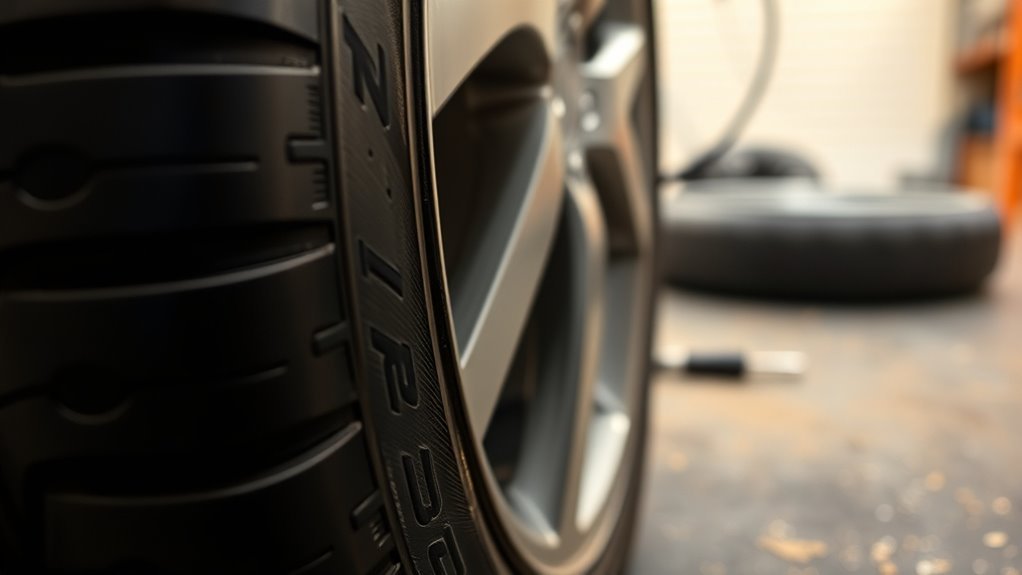
Treadwear ratings are a comparative index showing how long a tire’s tread should last versus a control rated 100; a higher UTQG number means slower wear under standardized NHTSA test conditions. Ratings aren’t mileage guarantees but help estimate life—e.g., a 400 rating often corresponds to roughly 40,000–60,000 miles depending on load, roads, inflation, driving style and rotations. Use them to match tires to commuting, performance or heavy-duty needs, and keep going to learn practical selection and maintenance tips.
What UTQG Treadwear Ratings Mean for You
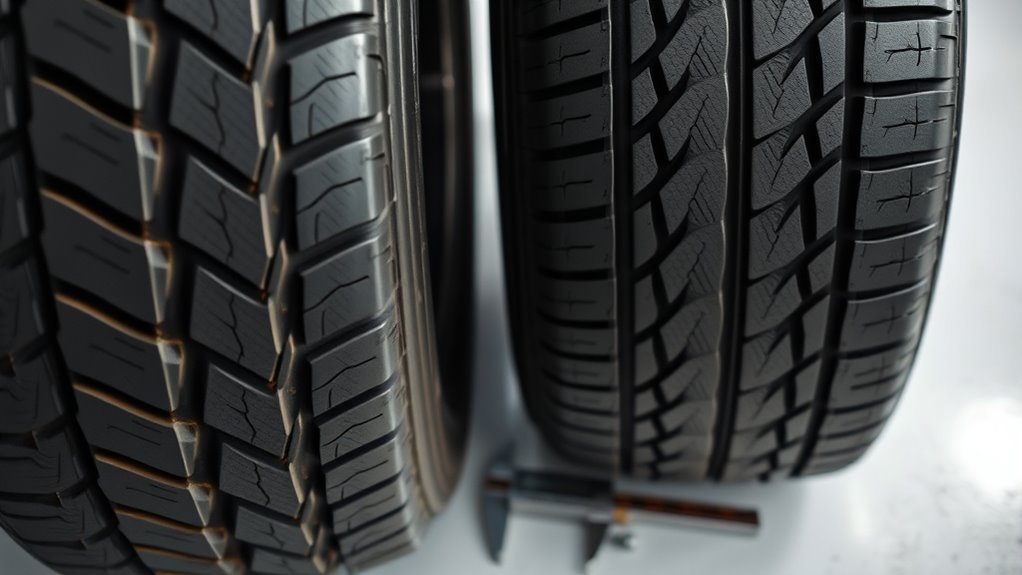
Although the UTQG treadwear number is a comparative index rather than an absolute promise, it gives you a concise way to estimate relative tire longevity: a rating of 100 is the baseline control, so a tire rated 300 should, under the same test conditions, wear roughly three times slower than that control. You’ll use ratings to compare expected service life: numbers span roughly 100–800+, with higher values generally indicating longer tread life. Treat ratings as indicative; real-world mileage depends on design, driver habits, road surfaces, and maintenance. For example, a 400-rated tire often yields about 40,000–60,000 miles under normal conditions, but that’s not guaranteed. Address treadwear myths and rating misconceptions by combining rating data with vehicle use and inspection practices.
How Treadwear Ratings Are Tested by the NHTSA
When the NHTSA monitors treadwear testing, manufacturers run a controlled 6,400‑mile road test that compares a candidate tire’s wear to a standardized control tire rated at 100; the candidate’s rating is calculated from the ratio of tread loss over that fixed distance. You’ll see tests done on varied public surfaces to reflect real-world degradation. The NHTSA audits protocols, data collection, and sample selection to enforce rating consistency across labs and manufacturers. You can expect technical procedures: predefined loads, speeds, and measurement intervals, with repeatability checks.
NHTSA‑monitored 6,400‑mile road tests compare candidate tires to a control (100) using standardized procedures.
- Sample selection and conditioning protocols
- Controlled run parameters: load, speed, route profile
- Periodic tread-depth measurements and data logging
- Statistical analysis to validate rating consistency
UTQG Numbers → Realistic Mileage Ranges and Warranties
Because UTQG treadwear numbers are relative benchmarks rather than guarantees, you should treat a rating of 100 as the baseline from which expected mileage scales: for example, a 400-rated tire typically delivers roughly 40,000–60,000 miles and a 600-rated tire can often exceed 70,000 miles under ideal conditions. You’ll use these figures to set realistic mileage expectations and estimate tire longevity for selection and budgeting. Manufacturers commonly match treadwear ratings to prorated warranty terms—many fall between 50,000 and 90,000 miles—so the UTQG number often correlates with warranty length. Remember these values are comparative; a lower-than-200 rating usually implies insufficient longevity for daily commuting. Treat UTQG as a planning tool, not an absolute predictor.
How Driving, Maintenance, and Vehicle Factors Change Wear
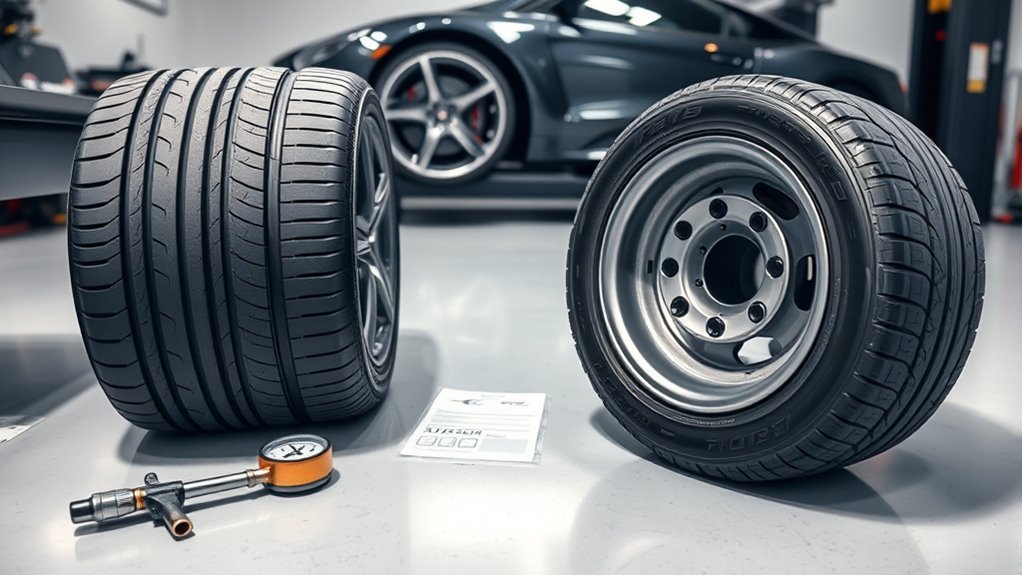
UTQG numbers give you a baseline, but real-world tread life depends heavily on how you drive, maintain, and load your vehicle. You’ll see deviations from rated mileage when driving techniques, maintenance practices, road conditions, and vehicle setup interact. Aggressive acceleration and hard braking concentrate stress and accelerate edge and center wear. Improper inflation and skipped rotations create uneven patterns; regular rotations and correct pressure restore uniform contact patch and add miles. Rough roads and heavy loads increase abrasion and fatigue; suspension wear amplifies localized overloads. Use predictive inspection intervals and load-management control to quantify wear rates and adjust replacement timing.
- Driving techniques: avoid hard launches/braking to reduce shear and thermal buildup.
- Maintenance practices: rotate, balance, and monitor pressure routinely.
- Road condition monitoring: log rough-route mileage.
- Vehicle setup: manage payload and suspension health.
Choosing Tires by Treadwear: Recommendations by Use Case
If you drive primarily for daily commuting, choose tires with a treadwear rating of 500 or higher to maximize service life—expect roughly 40,000–70,000 miles under proper inflation, regular rotations, and normal road conditions. For performance driving, select tires rated 200–300 to prioritize grip and handling; you’ll accept faster wear for improved cornering and braking response. For all-terrain or off-road use, evaluate tread pattern and rubber compound over numerical treadwear ratings—aggressive blocks and reinforced sidewalls matter more than the number. For heavy-duty or towing, pick tires with higher load indices and moderate treadwear ratings to balance durability and strength. Always factor driving habits, climate, and road conditions when applying tire selection tips and dispelling common treadwear myths.
Frequently Asked Questions
What Does Treadwear 440 Mean?
Treadwear 440 means your tire’s treadwear durability is about 4.4 times the 100 reference, implying roughly 50,000–70,000 miles under ideal conditions; use treadwear comparison to choose tires matching your driving patterns.
Is 600 Treadwear Better Than 500?
Yes—you’ll usually get better treadwear comparison results with 600 over 500; coincidentally, two identical commutes reveal noticeable tire longevity gains. You’ll still consider driving habits, road conditions, and other performance ratings.
Is a 420 Treadwear Rating Good?
Yes, a 420 treadwear rating is good: you’ll expect a treadwear lifespan around 40,000–60,000 miles. You’ll get balanced durability and grip; performance comparison shows mid-range longevity versus higher-rated touring or lower-rated performance tires.
Conclusion
You now know UTQG treadwear numbers give a comparative baseline, not a guaranteed lifespan. Think of the rating like a map: it shows relative wear tendencies, not exact distances. Use ratings alongside driving habits, inflation, alignment, load, and your vehicle’s torque to predict real-world mileage and choose warranties. For daily driving, favor higher ratings; for performance needs, weigh grip vs. longevity. Regular maintenance will preserve whatever treadwear you pick.
Related Articles

How to Read Motorcycle Tire Size: Complete Breakdown
Often misunderstood, this guide decodes motorcycle tire sizes like 180/55ZR17—learn what each number and letter means to ensure safe, perfect fitment.
Read More
How to Read Bicycle Tire Size: Inches, Metric & ISO
Get the essential trick to decoding ETRTO/ISO codes so you’ll always pick rim-compatible tyres—discover what to check next.
Read More
How to Read Tire Size Numbers: Decode the Sidewall
Step-by-step guide to decode tire sidewalls—sizes, load, speed, DOT and winter symbols—so you’ll know what fits and when to replace.
Read More