Tire Pressure for EVs: Why Electric Cars Need Higher PSI
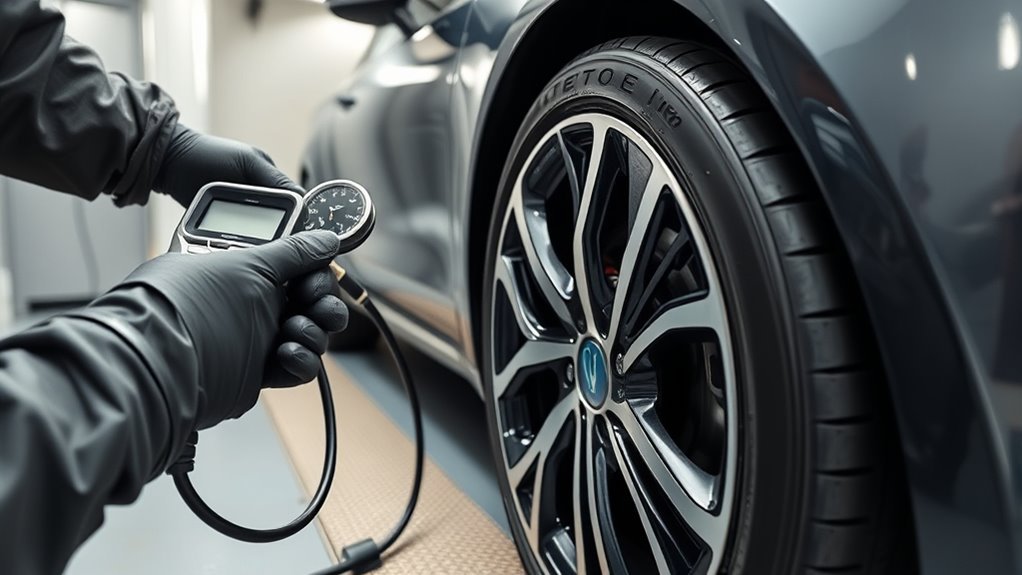
You should run EV tires higher—typically around 40–50 PSI (about 45 PSI cold)—to offset 20–30% added battery mass, instant torque and regenerative braking that increase tire flex and rolling resistance. Higher cold pressure limits deformation, reduces uneven wear and preserves low‑rolling‑resistance performance, so current draw and range loss drop measurably versus underinflation. Check cold PSI monthly, adjust for load and temperature, and follow manufacturer baselines; keep going to learn practical tuning and maintenance steps.
Quick Answer: Recommended EV PSI Ranges and Tradeoffs
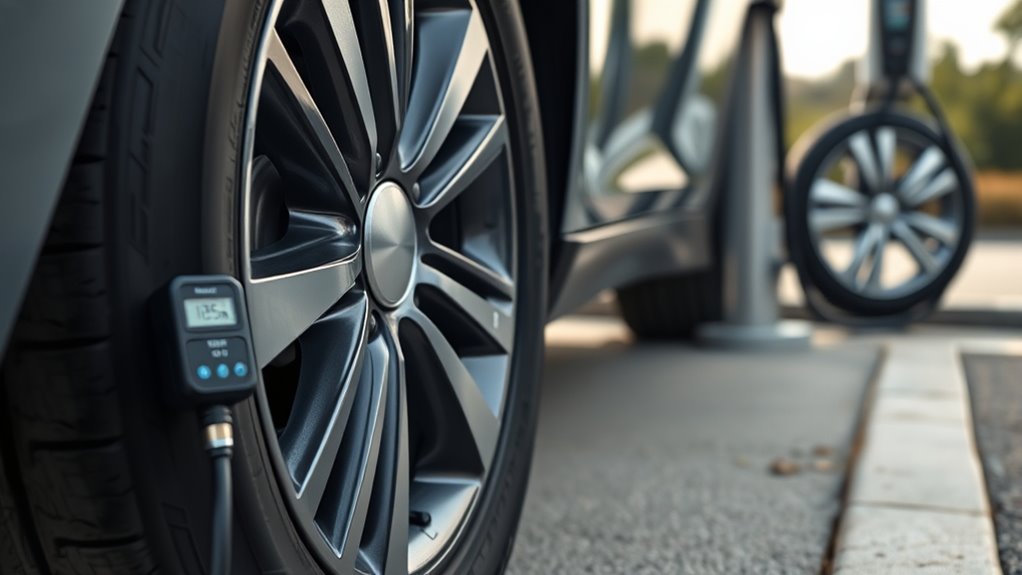
Although EVs vary by model, you should generally target higher pressures—commonly around 45 PSI—because the extra battery weight and efficiency goals make higher inflation ideal; a few PSI difference meaningfully alters rolling resistance, wear patterns, heat generation, and consequently range and safety. You’ll typically see recommended ranges from about 40–50 PSI depending on load and tire spec. Aim near the manufacturer’s higher-stated value when carrying battery weight or planning long trips, but monitor for overinflation effects on contact patch and ride comfort. Track tire pressure monthly—tires lose ~1 PSI per month—and before temperature extremes. Underinflation raises rolling resistance, increases heat, accelerates uneven tire wear, and reduces range; overinflation can worsen stability and localized wear. Balance these efficiency trade offs by measuring cold PSI, adjusting incrementally, and recording results for range and handling. That disciplined approach frees you from guesswork and preserves safety, range, and long-term tire performance.
Why EVs Usually Need Higher PSI (Weight, Torque, Regenerative Braking)
Because EVs carry 20–30% more mass from their battery packs and deliver near-instant torque, you should run higher cold PSI than in comparable ICE cars to control tire deflection, heat buildup, and wear. You’ll notice heavier weight distribution increases contact patch stress; higher pressure reduces excessive flex and uneven tire wear while supporting structural loads.
- Reduced deflection — higher PSI limits sidewall flex from added mass, cutting heat generation and prolonging tire life (tire wear).
- Torque impact — instant torque spikes accelerate slip and abrasion; firmer tires stabilize launch dynamics and mitigate rapid wear.
- Regenerative braking — repeated deceleration pulses shift load and induce scrub; raised PSI preserves tread integrity and supports traction control interventions.
- Comfort vs. durability — aim for manufacturer guidance (often ~45 PSI for EVs) to balance ride quality, thermal management, and predictable handling under heavy loads.
You’ll act deliberately: monitor pressure cold, adjust for payload, and prioritize safety and liberation through controlled, data-driven tire maintenance.
How Tire Pressure Affects EV Range and Efficiency
Higher recommended PSI for EVs doesn’t just protect tires — it directly affects range and energy use. You’ll lose roughly 1 PSI monthly, so active monitoring preserves energy efficiency and minimizes unexpected losses. Underinflation raises rolling resistance, forcing the motor to draw extra current; that can shave several miles off a single charge. Proper inflation, often near 45 PSI for many EVs, distributes load evenly across the tread, optimizing low-rolling-resistance tire design and reducing uneven tire wear that shortens service life.
Small PSI deviations produce measurable changes in consumption and handling, so you should treat pressure as a primary efficiency parameter, not a secondary convenience. Underinflated tires also generate excess heat, accelerating material degradation and compounding range loss. By maintaining target pressures you harness the vehicle’s designed efficiency, extend tire life, and defend your autonomy—both in range and in the freedom to travel farther between charges.
Find the Right PSI for Your EV: Manufacturer Guidance vs. Real-World Tweaks
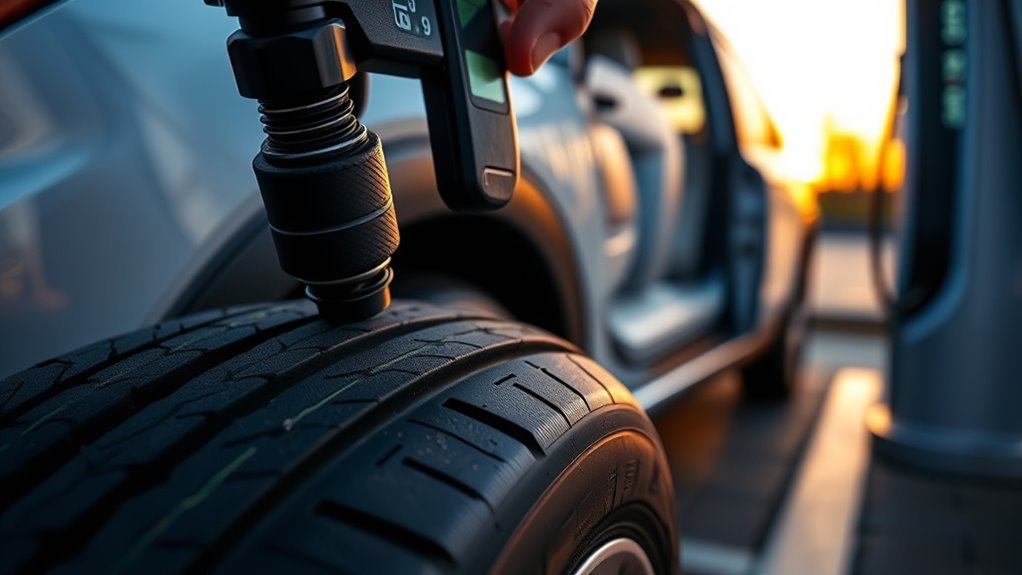
When you set tire pressure for an EV, start with the manufacturer’s PSI as your controlled baseline—typically around 45 PSI for many models—but expect to adjust for real-world variables like ambient temperature, cargo weight, and driving style. Use that baseline as an experiment control: it’s engineered for battery weight and efficiency, but it isn’t immutable.
Start with the manufacturer’s PSI—often ~45 PSI—as your baseline, then adjust for temperature, load, and driving style.
- Log baseline PSI and note manufacturer adjustments for load and speed.
- Monitor ambient temperature shifts; expect ≈1 PSI change per 10°F and compensate proactively.
- Adjust for cargo and passenger load: add small increments to maintain designed contact patch and minimize rolling resistance.
- Correlate PSI tweaks with your driving habits; aggressive acceleration/regen cycles demand slightly higher pressures to preserve handling and range.
You’ll rely on TPMS for alerts, but perform manual calibrations to liberate real-world performance. Make incremental changes, record effects on range and comfort, and iterate until pressure matches your use case.
Check and Maintain EV Tire Pressure: Tools, Timing, and Step‑by‑Step Checks
Start by checking your EV’s tire pressure at least once a month and before long trips, since tires typically lose about 1 PSI per month and underinflation reduces range and safety. Use the vehicle’s tire pressure monitoring data as a baseline, then verify with a calibrated digital gauge. For EVs often specified near 45 PSI, target the precise value shown on the door placard or your real‑world adjusted setpoint.
Step‑by‑step: cold‑check pressures after three hours parked; record each corner; compare to target; if low, use an air compressor. Use a digital air machine to add air in 1–2 PSI increments, retesting after each fill for precise calibration. Inspect tread depth with the penny test; visible Lincoln indicates replacement. Log readings and dates for trend analysis; address persistent loss as a leak or valve issue. Routine, data‑driven checks preserve range, safety, and control—practical actions toward autonomy and mobility freedom.
Tire Choices and Rotation Strategies That Protect Range and Tire Life
Because EVs carry more weight and demand efficiency, your tire choices and rotation schedule directly affect range and tread life, so prioritize OE or EV‑rated, low‑rolling‑resistance tires and rotate every 5,000–7,500 miles. You’ll maximize range and durability by using tires engineered for EV torque, higher loads, and lower rolling resistance; tire selection matters more than style. Maintain ~45 PSI and check monthly to prevent underinflation that raises rolling resistance and drains range.
- Choose OE or EV‑rated, low-rolling-resistance tires to reduce energy loss and slow tread wear.
- Set rotation frequency at 5,000–7,500 miles; front/rear and cross rotations equalize wear from weight and torque.
- Monitor pressures monthly and after temperature shifts; adjust to manufacturer specs to protect efficiency.
- Inspect tread depth and irregular wear; replace before efficiency and safety degrade.
Act deliberately: select proper tires, enforce rotation frequency, and monitor pressures to liberate range and extend tire life.
Frequently Asked Questions
Why Do Electric Cars Have Higher Tire Pressure?
Because EVs carry heavier batteries, you need higher PSI to improve tire efficiency and preserve weight distribution, reducing rolling resistance and uneven wear, so you’ll maximize range, safety, and component longevity with data-driven maintenance.
Conclusion
Think of your EV as a precision instrument: correct PSI is its tuning fork. Higher pressure compensates for extra weight, instant torque, and regenerative braking, cutting rolling resistance and extending range. Use manufacturer specs as your baseline, then tweak within safe limits, monitor tread wear, and rotate regularly. Check pressures cold with a calibrated gauge. Small PSI gains translate to measurable efficiency improvements—treat pressure as a simple, data-driven lever for performance and longevity.
Related Articles
Motorcycle Tire Pressure Chart: Recommended PSI by Type
Discover ideal PSI ranges for road, track, and wet motorcycle tires — practical tips and adjustments await to optimize grip and safety.
Read More
Bicycle Tire Pressure Chart by Rider Weight: PSI Guide
Want optimal ride feel and fewer flats? Discover PSI baselines by weight, tire type, and wheel size to fine-tune grip and comfort.
Read More
How Altitude Affects Tire Pressure: High Elevation Guide
Note how tire PSI drops with elevation—learn the simple adjustments to maintain safety, efficiency, and tire life as you climb.
Read More