
Tire Maintenance Checklist for Toyota RAV4: Printable Guide

For an essential tire maintenance checklist for your Toyota RAV4, start by checking tire pressure monthly when the tires are cold. Inspect tread depth using the penny test, and watch for signs of uneven wear. Rotate your tires every 5,000 to 7,500 miles and check alignment every 5,000 to 6,000 miles. Additionally, keep an eye on common tire pressure issues. Want to guarantee your RAV4 is always road-ready? There’s much more to explore!
Importance of Tire Maintenance for Your RAV4
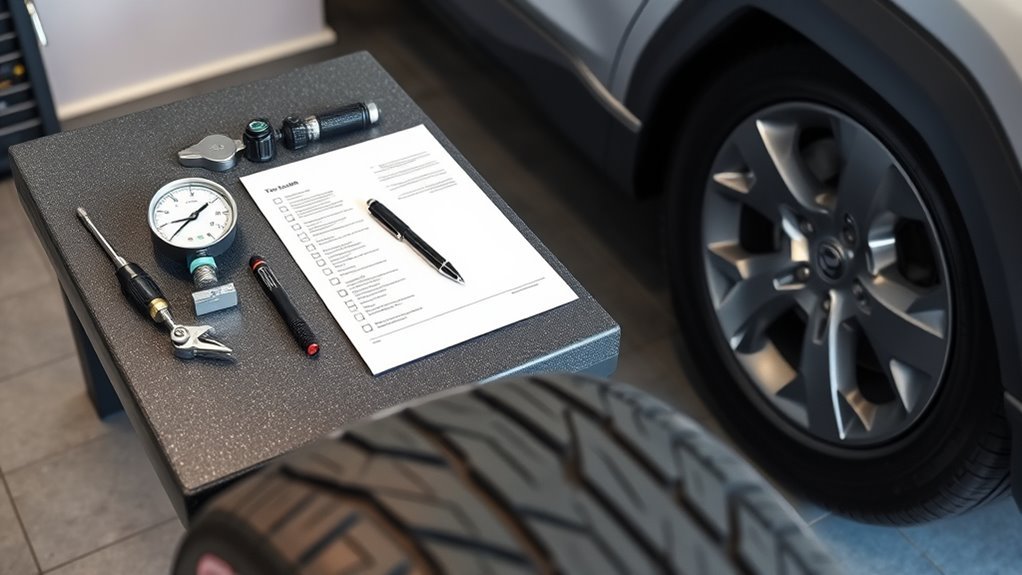
Maintaining your RAV4’s tires isn’t just a good idea; it’s vital for your safety and efficiency on the road. Regular tire maintenance, including pressure checks and rotations, directly impacts your driving safety and the overall performance of your vehicle. Keeping your tires properly inflated can improve fuel economy by up to 3%, helping you save money at the pump while ensuring a smooth ride.
Rotating your tires every 5,000 to 7,500 miles promotes even wear, extending tire lifespan and enhancing handling. Uneven tire wear can lead to decreased traction and a higher risk of blowouts, so routine inspections are important. Proper alignment and balancing not only prevent premature tire wear but also contribute to a more comfortable driving experience. By prioritizing tire maintenance, you’re not just protecting your investment; you’re liberating yourself to drive with confidence and peace of mind.
How to Check Tire Pressure Correctly
To keep your RAV4 performing at its best, knowing how to check tire pressure correctly is key. Follow these steps for effective pressure monitoring:
- Choose the Right Time: Check tire pressure when tires are cold—ideally in the morning or after at least three hours of parking. This gives the most accurate reading.
- Select a Reliable Tire Gauge: Use a trusted tire gauge type, as inaccuracies can lead to under- or over-inflation, affecting both fuel efficiency and tire wear.
- Refer to Recommended Settings: Always check your owner’s manual or the tire information placard on the driver’s door jamb for the ideal PSI range, typically between 30-35 PSI for most vehicles.
Regularly check your tire pressure at least once a month and before long trips. Keeping your tires properly inflated maximizes handling, traction, and overall driving experience.
How to Inspect Tread Depth Effectively
While driving your RAV4, you might not realize how essential tread depth is for your safety and performance. To keep your tires in check, use the penny test: insert a penny into the tread with Lincoln’s head facing down. If you can see all of Lincoln’s head, it’s time for new tires.
Regularly inspecting tread depth can help prevent hydroplaning and guarantee peak traction. Aim to check every month or before long trips.
| Tread Depth (inches) | Action Needed |
|---|---|
| 4/32 or more | Good condition |
| 3/32 | Monitor closely |
| 2/32 | Replace tires soon |
| Tread wear indicators | Replace immediately |
Signs of Uneven Tire Wear and Their Causes
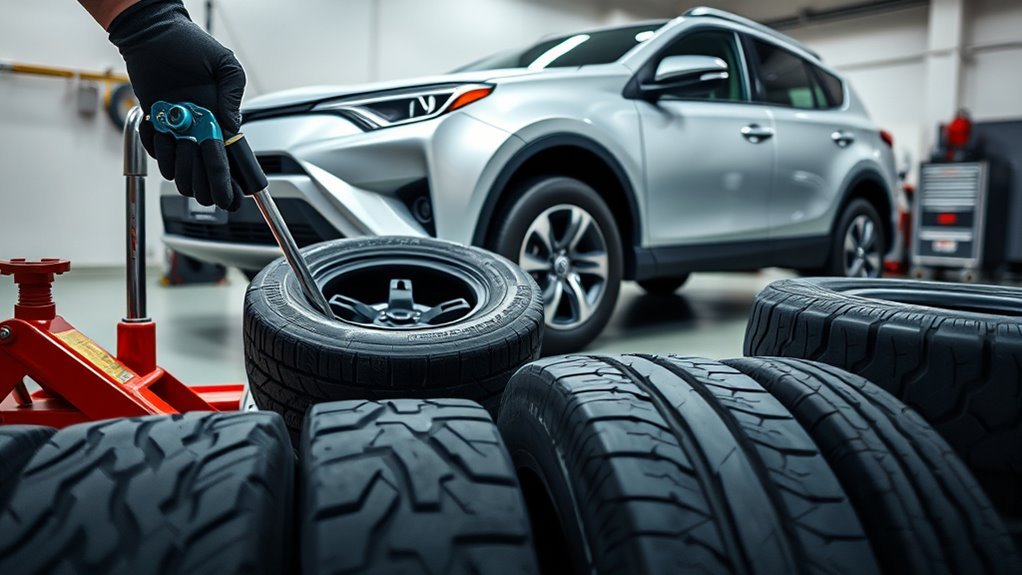
When you notice uneven tire wear on your Toyota RAV4, it’s essential to address the issue promptly. Ignoring it can lead to unsafe driving conditions and costly repairs. Here are key signs and their causes:
- Bald Spots: These indicate possible misalignment or suspension problems, requiring immediate inspection.
- Cupping: This often results from worn suspension components that fail to keep the tire in proper contact with the road.
- Excessive Wear on One Side: Usually linked to improper tire inflation, which can cause uneven tire wear patterns.
To maintain your tires, regularly check your tire pressure and perform a suspension inspection. Additionally, rotating your tires every 5,000 to 7,500 miles helps promote even wear and prolongs tire life. By staying vigilant, you guarantee a smoother ride and enhance your RAV4’s performance.
When and How to Rotate Your RAV4 Tires
Regularly rotating your RAV4’s tires is crucial for maximizing their lifespan and guaranteeing your vehicle handles well on the road. Aim to rotate your tires every 5,000 to 7,500 miles, using the appropriate tire rotation techniques: front to back and side to side, especially if you have directional tires.
Before you rotate, check your tire pressure monthly and adjust as needed for peak performance. During rotation, inspect the tread depth; if it’s below 2/32 of an inch, consider replacing your tires for better traction.
Don’t forget about seasonal tire considerations! If you switch between summer and winter tires, make sure to rotate them accordingly to promote even wear. Finally, use a torque wrench to verify lug nut torque meets the manufacturer’s specifications—typically around 76 lb-ft for your RAV4. Keeping up with these practices will enhance your driving experience.
Tire Alignment and Balancing Basics
Tire alignment and balancing are crucial for keeping your Toyota RAV4 running smoothly and safely. When your tires are properly aligned, you’ll notice better handling and reduced wear, while balancing prevents vibrations and guarantees a comfortable ride. Keep an eye out for signs of misalignment to avoid costly tire replacements and maintain peak performance.
Importance of Tire Alignment
Maintaining proper tire alignment is essential for ensuring your Toyota RAV4 performs at its best. The benefits of tire alignment are significant, including improved handling and extended tire life. To keep your ride smooth and efficient, consider these points:
- Tire Longevity: Proper alignment prevents uneven wear, potentially extending tire life by up to 25%.
- Fuel Efficiency: A well-aligned vehicle can enhance fuel efficiency, saving you up to 10% on mileage.
- Regular Checks: Aim for alignment adjustments every 5,000 to 6,000 miles or during routine maintenance for peak performance.
Signs of Misalignment
After ensuring your Toyota RAV4 has proper alignment, it’s important to recognize the signs that indicate misalignment might be occurring. Look out for misalignment symptoms like uneven tire wear, where the outer or inner edges wear faster than the center. If your vehicle pulls to one side on a flat road, this too suggests alignment issues that can compromise your safety. A steering wheel that’s off-center while driving straight is another clear sign of misalignment, impacting your comfort and control. Regularly checking tire tread depth can help you spot these problems early. Experts recommend checking alignment every 6,000 miles or whenever you replace tires to maintain peak performance and extend tire lifespan.
Balancing Benefits Explained
Ensuring your Toyota RAV4 has proper balance and alignment is essential for a smooth driving experience. Regular tire balancing and alignment checks can greatly enhance your ride. Here are three key benefits:
- Improved Comfort: Proper balancing techniques prevent vibrations, ensuring a more enjoyable drive.
- Extended Tire Life: Correct alignment reduces uneven wear, potentially prolonging tire lifespan by up to 25%.
- Enhanced Safety: Ideal balance and alignment maintain traction and stability, especially in adverse weather conditions.
For best results, aim for balancing frequency every 5,000 to 7,500 miles or when you install new tires. This commitment keeps your RAV4 performing at its best, giving you the freedom to drive with confidence.
Tire Maintenance: Choosing the Right Tires for Your RAV4
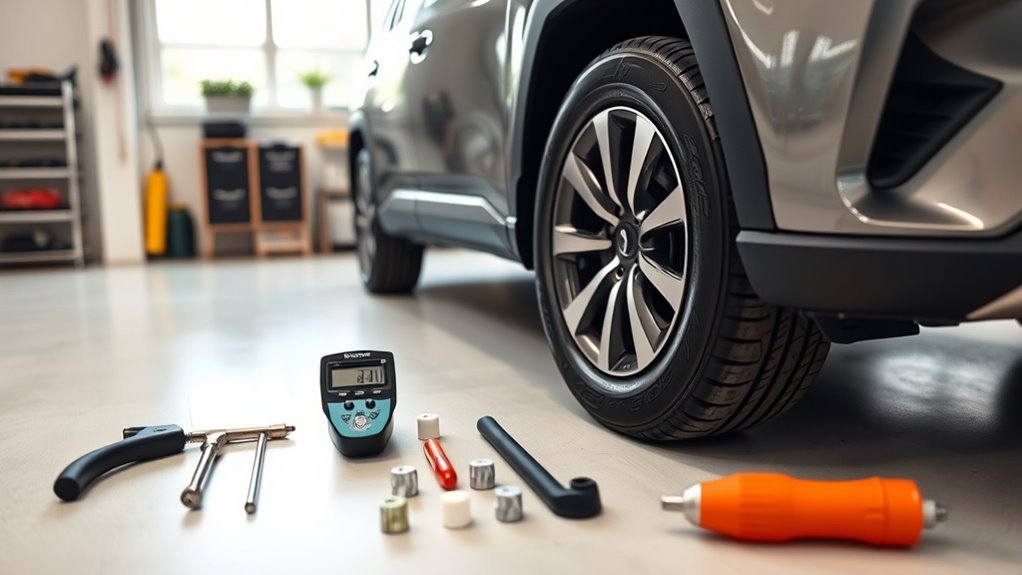
When you choose tires for your Toyota RAV4, it’s important to take into account the manufacturer’s recommendations for tire size and specifications found in your owner’s manual. This guarantees peak performance and safety. Popular tire types for the RAV4 include all-season tires, which offer a solid balance of traction, handling, and comfort across various weather conditions. If you often drive in winter weather, consider investing in winter tires designed for superior grip and handling on snow and ice.
Don’t forget to check tire pressure regularly, maintaining it at the manufacturer’s recommended PSI to boost fuel efficiency and extend tire lifespan. Additionally, rotating your tires every 5,000 to 7,500 miles helps promote even wear, enhancing safety and performance. By understanding tire performance ratings, you can make informed choices, ultimately leading to a smoother, more liberated driving experience.
Common Tire Pressure Issues and Solutions
Keeping an eye on your tire pressure is essential for safety and efficiency. Low tire pressure can sneak up on you, often due to temperature changes, leading to decreased fuel economy and a rough ride. On the flip side, overinflated tires can wear unevenly and increase the risk of blowouts, especially in hot conditions.
Low Tire Pressure Causes
Low tire pressure can sneak up on you, often caused by temperature fluctuations that drop pressure by about 1 PSI for every 10°F decrease. Understanding these causes helps you maintain safety and performance in your Toyota RAV4. Here are three common reasons for low tire pressure:
- Temperature Changes: A drop in temperature directly affects tire pressure.
- Under-Inflation: Tires lose air over time, leading to increased rolling resistance and reduced fuel efficiency.
- Leaks or Damage: Punctures or valve issues can cause slow air loss.
Regularly checking your tire pressure, ideally once a month, is vital. The recommended PSI for your RAV4 is typically around 32-35 PSI. Stay vigilant to avoid safety concerns on the road!
Overinflated Tire Risks
While maintaining proper tire pressure is essential for safety, overinflated tires can pose significant risks. They reduce contact with the road, leading to poor traction and handling, especially in wet conditions. Additionally, excessive tire pressure can cause uneven tire wear, shortening lifespan and increasing replacement costs. Overinflation also makes your tires more vulnerable to damage from potholes and debris, raising the risk of blowouts. To keep your Toyota RAV4 running smoothly, check your tire pressure regularly.
| Overinflated Risks | Solutions |
|---|---|
| Reduced traction | Check pressure monthly |
| Uneven tire wear | Follow owner’s manual specs |
| Increased blowout potential | Inspect for damage regularly |
| Poor fuel efficiency | Adjust pressure as needed |
| Shorter tire lifespan | Rotate tires frequently |
Frequently Asked Questions
What Is the Maintenance Schedule for a Toyota RAV4?
For your Toyota RAV4, follow the maintenance schedule by rotating tires every 5,000 to 7,500 miles. Don’t forget to check engine care and fluid levels regularly to keep your ride safe and smooth.
How Often Should I Change the Tires on My Toyota RAV4?
Think of your tires as the foundation of your journey. Change them every six years or sooner if tire tread shows wear. Seasonal changes might require different types for best grip and safety. Stay proactive!
What Is the 90000 Mile Service on a Toyota RAV4?
At 90,000 miles, you’ll check fluids, replace filters, and inspect spark plugs to boost engine performance. It’s vital to guarantee everything’s in top shape for reliability and safety on the road. Don’t skip it!
Conclusion
By following this tire maintenance checklist, you’ll keep your Toyota RAV4 rolling smoothly and safely. Think of your tires as the shoes of your vehicle; just as you wouldn’t run a marathon in worn-out sneakers, don’t hit the road with neglected tires. Regular checks and maintenance not only enhance performance but also extend the life of your tires. So, take a few minutes today to guarantee your RAV4 stays road-ready for all your adventures.

Related Articles

Upsizing Wheels on a Toyota RAV4: Pros, Cons, and Considerations
Boost your Toyota RAV4's performance with larger wheels, but discover the hidden trade-offs that could impact your ride before you decide.
Read More
Can I Change Tire Size on My Toyota RAV4? Rules and Recommendations
Are you considering changing the tire size on your Toyota RAV4? Discover the essential rules and recommendations before making a decision.
Read More
What to Do If the TPMS Light Comes On in Your RAV4
Understand the steps to take when the TPMS light illuminates in your RAV4, as overlooking it could lead to serious tire problems.
Read More