Tire Construction Types: Radial, Bias & Belted Guide
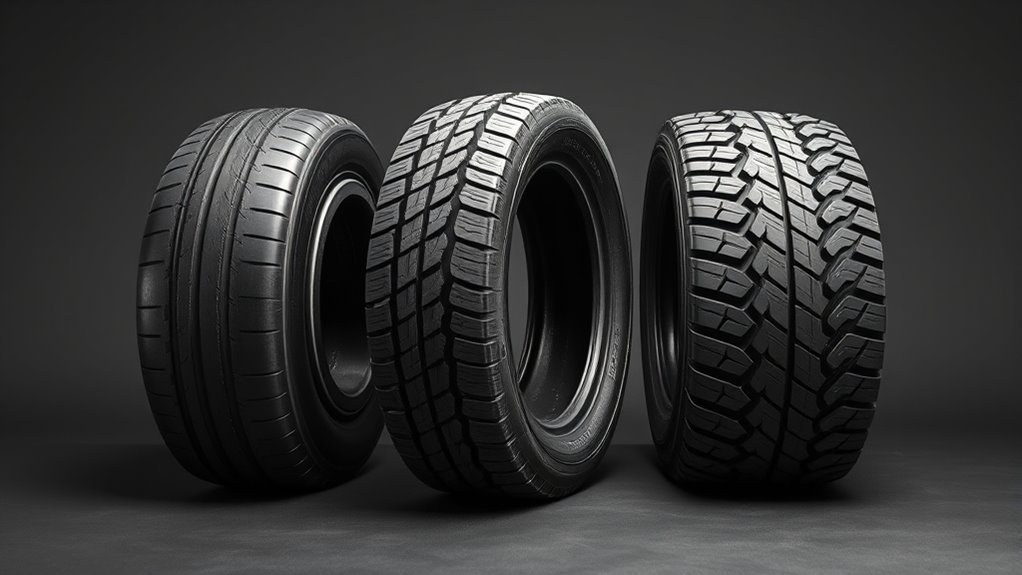
You should pick radial, bias‑ply, or steel‑belted tires based on vehicle use, load, and terrain: radials give cooler operation, better fuel economy, longer tread life, and superior on‑road handling; bias‑ply suits rugged off‑road duty with flexible sidewalls but runs hotter and wears faster on pavement; steel‑belted bias offers added puncture resistance and stability at the expense of some comfort. Check sidewall codes, load ratings, and inflation for safety — continue for construction details and application guidance.
Quick Decision Guide: Which Tyres to Choose (Radial vs Bias vs Belted)?
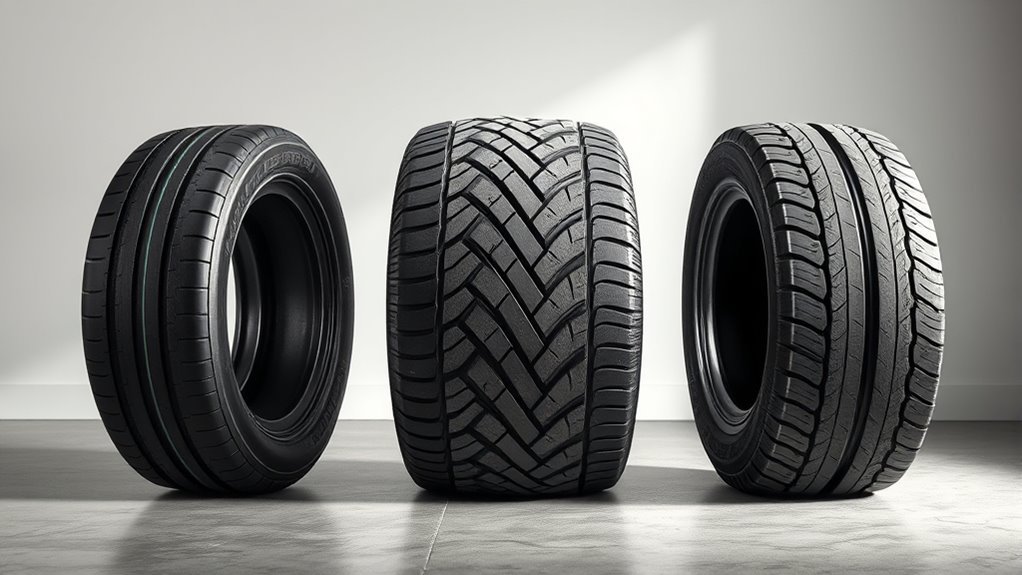
Which tire matches your driving needs? You’ll evaluate radial, bias-ply, and steel-belted bias options by matching vehicle use to performance metrics and tire longevity comparison. Choose radial for modern vehicles, high-speed driving, and long-distance towing: its steel-belted 90-degree construction gives superior traction, fuel efficiency, and longest tread life. Pick bias-ply for off-road, rugged use, or short-haul, cost-sensitive applications: its flexible sidewalls improve grip on uneven terrain but accelerate wear at highway speeds. Select steel-belted bias when you need mixed-terrain capability with enhanced puncture resistance—balancing flexibility and strength. Don’t mix radial and bias types on the same vehicle; mismatched constructions degrade handling and compromise safety. Make selections based on quantified metrics, load, and operating speed.
Tyre Construction Explained: Radial, Bias-Ply, and Belted (Visual Guide)
A clear visual breakdown helps you see how radial, bias-ply, and belted tire constructions differ: Radial tires show steel cord plies at 90 degrees to the tread centerline, letting sidewall and tread move independently. Bias-ply diagrams display multiple diagonal fabric plies crossing the carcass, illustrating flexibility and uniform load distribution. Belted designs overlay steel belts beneath the tread atop a bias or radial carcass, indicating added puncture resistance.
You’ll compare construction materials comparison side-by-side: steel cords, fabric plies, and belt layers. Note tire longevity factors: radials dissipate heat better at highway speeds, extending tread life, while bias-ply generates more heat but offers off-road robustness. Use these visuals to match construction to vehicle use and operating conditions.
How Construction Changes Ride, Heat, Wear, and Handling
When you compare constructions, you’ll see radial, bias-ply, and steel-belted designs produce distinct ride comfort profiles: radials let the sidewall and tread move independently for a smoother ride, while bias plies run stiffer for better traction on rough terrain. Those structural differences also control heat generation and dissipation—radials run cooler at speed, extending tread life and improving fuel efficiency, whereas bias ply and some belted designs build more heat and wear faster on highways. Finally, handling varies predictably with construction: radials deliver superior high-speed stability and traction, bias plies offer rugged off-road grip, and steel-belted hybrids trade some efficiency for added puncture resistance and stability.
Ride Comfort Differences
Because tire construction dictates how the sidewall and tread interact, you’ll feel clear differences in ride comfort, heat generation, wear patterns, and handling between radial and bias designs. When evaluating ride quality, remember comfort factors like sidewall compliance and tread independence: radials isolate road inputs, so you get lower vibration and better high-speed stability; bias ply tires transmit more shock and noise due to their stiff diagonal plies, reducing comfort. Steel-belted bias ply variants bridge performance—improving stability and puncture resistance while retaining some flexibility for mixed terrain.
- Choose radials for smoother, quieter highway comfort and predictable handling.
- Expect bias ply to be firmer with faster wear and more noise.
- Use belted bias for compromised comfort but enhanced durability.
Heat Generation Effects
Although tire construction may seem subtle, it directly controls heat generation and consequently affects ride, wear, and handling; radials separate sidewall and tread loads so they run cooler at highway speeds, extending tread life and improving fuel efficiency, while bias-ply casings couple those elements and produce more internal friction and heat under sustained speed, accelerating wear and degrading high-speed stability.
| Construction | Heat behavior |
|---|---|
| Radial | Low heat generation, efficient heat dissipation |
| Bias-ply | Higher internal friction, more heat |
| Steel-belted bias | Intermediate; improved resistance but warmer than radial |
You’ll notice heat dissipation governs ride stability and tread longevity. In a direct performance comparison, radials deliver better thermal management and fuel economy; bias types remain useful off-road but trade thermal efficiency for flexibility.
Wear And Handling
Tire construction directly dictates how your vehicle rides, heats up, wears, and responds to steering inputs. You’ll notice radial tires give smoother ride quality, better heat dissipation, and superior handling dynamics, which improves tire longevity through reduced tread wear. Bias ply tires’ stiffer tread-block coupling and flexible sidewalls boost grip on uneven terrain but raise rolling friction and heat at speed, shortening life on pavement. Steel-belted bias designs trade some flexibility for added stability and puncture resistance, offering balanced wear rates for mixed use.
- Choose radials for high-speed stability and longer tread life.
- Use bias ply where sidewall flex aids off-road traction.
- Consider steel-belted bias for mixed-terrain durability and handling.
Best Tyres by Vehicle and Driving Conditions (Cars, Trailers, Off-Road, Motorcycles)
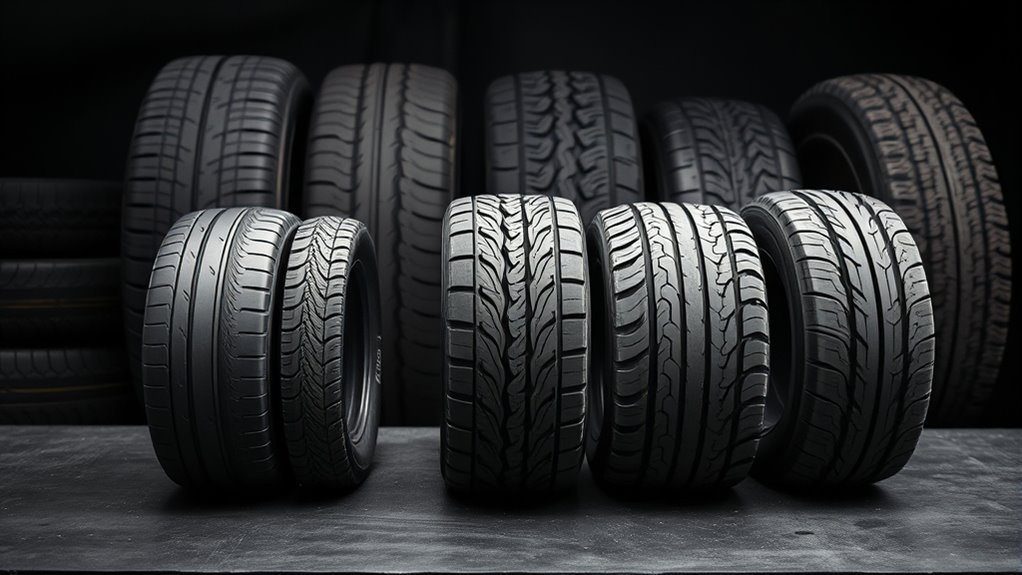
When choosing tyres for a specific vehicle and driving condition, match construction and design to expected loads, speeds, and surfaces. For cars and SUVs you’ll typically select radial tyres for fuel efficiency, smoother ride, and high-speed handling; prioritize tire maintenance and account for seasonal changes when switching compounds. For trailers use purpose-built ST tyres with stiffer sidewalls to control loads and improve stability during towing. For off-road work choose bias ply constructions; their flexible sidewalls and load tolerance give better grip and damage resistance on uneven terrain. For motorcycles fit radials on high-performance bikes for superior stability at speed, while bias-belted tyres remain appropriate for older designs not engineered for radials. Match tyre choice to duty cycle, vehicle dynamics, and surface.
Trailer & Specialty Tyres: ST vs LT, Diagonal, and Steel-Belted Options
When selecting trailer or specialty tyres, you’ll compare ST versus LT to match sidewall stiffness and load-control needs for towing. Consider diagonal constructions for low-speed, rugged or vintage motorcycle applications, while steel-belted and radial options give you improved puncture resistance, heat dissipation, and highway stability for sustained loads. Focus on matching tyre construction to load ratings, speed use, and terrain to optimize safety and longevity.
ST Versus LT
Think of ST (Special Trailer) and LT (Light Truck) as purpose-built tools: you select based on tire pressure, load capacity, and handling needs. ST tires have stiffer sidewalls, tolerate higher inflation, and carry vertical loads with minimal sway; use them for long-distance towing or heavy cargo. LT tires prioritize flexibility for steering and braking on powered axles and aren’t optimized for trailer dynamics. Don’t fit LT or passenger tires on trailers if you need stability and longevity.
- Choose ST for vertical load support and high tire pressure operation.
- Use LT for vehicle-driven axles requiring steering, braking, and ride compliance.
- Consider steel-belted bias if you need a compromise between flexibility and stability.
Diagonal Tire Uses
Anyone choosing tires for trailers or specialty applications should match construction to load, speed, and terrain: you’ll find diagonal tire applications are limited but purposeful. Diagonal tires use crossed textile cord layers, giving robust carcass strength and predictable deformation on low-speed, low-distance runs. For small motorcycles, scooters, and some utility trailer roles where speeds stay low and rugged surfaces dominate, diagonal tire advantages include simplicity, resistance to sidewall damage, and easier repairability. You shouldn’t use them where sustained highway speeds or heavy vertical loads occur; they run hotter and wear faster than radials and can reduce towing stability compared with ST-rated designs. Select diagonal constructions only when their mechanical simplicity and off-highway robustness match the axle load and service profile.
Steel-Belted Benefits
Some drivers and fleet operators prefer steel-belted constructions for trailers and specialty applications because they blend the puncture resistance and tread stability of steel with a bias or bias-belted carcass that keeps sidewalls predictable under load. You’ll get steel belted durability that resists punctures on mixed terrain and improved heat dissipation for sustained highway towing. Compared with LT options, ST-style steel-belted tires carry higher vertical loads at higher pressures with less sway. For motorcycles and specialty units, bias belted variants add strength where radials aren’t suitable. Overall, steel belted performance delivers consistent tread footprint, controlled carcass deflection, and longevity under heavy, sustained loads.
- Higher puncture resistance and heat management
- Predictable sidewall behavior under load
- Improved load capacity and stability
How to Identify Radial, Bias, and Belted Tyres on the Sidewall
Reading a tire’s sidewall gives you clear clues about its construction: look for the letter codes in the size (an “R” denotes radial construction, a “B” indicates bias ply and sometimes belted designs), check for explicit belt or steel markings that confirm belted tires, and compare tread complexity and load ratings—radials usually show more intricate tread patterns and higher load ratings while bias plies tend toward simpler treads and lower load capacities. When you inspect sidewall markings and tire specifications, first read the size code (e.g., 205/55R16 or 130/90B15) to identify ply orientation. Then scan for additional indicators such as “steel belted,” fiber belt symbols, or specific load index values. Use tread pattern observation as a secondary confirmation.
Buying Checklist: Load Rating, Inflation, Retreadability, and Maintenance
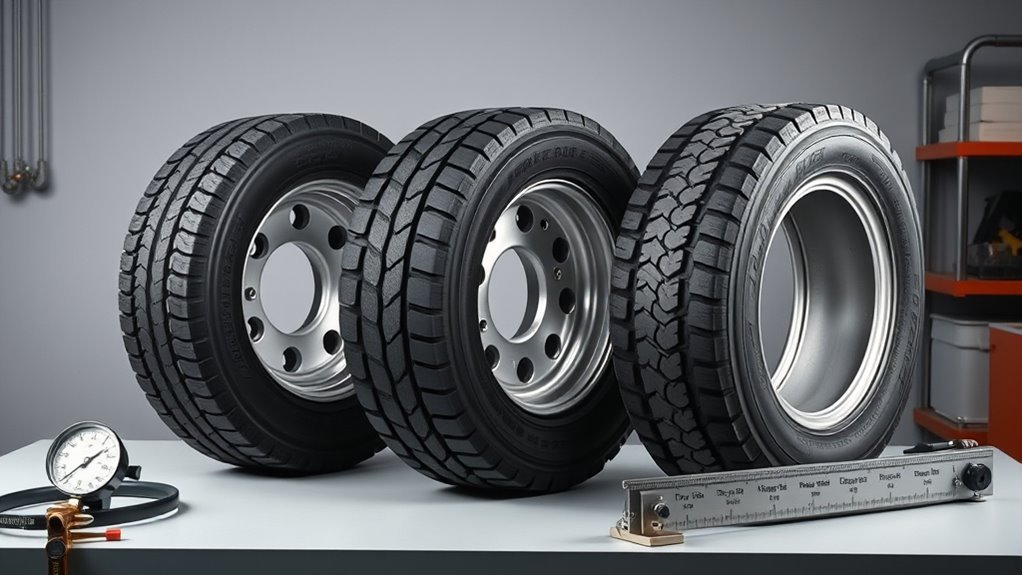
When you shop for tires, verify the load rating on the sidewall meets or exceeds your vehicle’s requirements, maintain the correct inflation pressure, and consider retreadability and serviceability to optimize lifecycle cost and safety. Check the stamped load capacity and UTQG grades against manufacturer specs. Keep tire pressure at the recommended value; underinflation reduces fuel efficiency and accelerates wear. Choose casings rated for retread benefits if you need lower replacement costs and proven casing integrity. Implement regular inspection and rotation as core maintenance tips to detect uneven wear, sidewall damage, and tread depth loss.
- Confirm load capacity and UTQG before purchase.
- Verify tire pressure weekly or before long trips.
- Select retreadable casings when lifecycle cost matters.
Frequently Asked Questions
Can Tire Construction Affect Fuel Efficiency Over Time?
Yes, you’ll see fuel efficiency change: uneven tread wear and higher rolling resistance increase consumption over time, so you should monitor tread condition and choose tires with low rolling resistance to maintain ideal fuel economy.
Are There Environmental Impacts From Different Tire Constructions?
Funny how your tires “breathe” pollution: yes, different constructions change environmental impacts — manufacturing processes alter emissions and resource use, and recycling practices vary in feasibility; you’ll need targeted disposal and production choices to minimize harm.
Do Different Constructions Influence Tire Noise Inside the Cabin?
Yes — different constructions change tire noise and cabin comfort; you’ll notice variations in vibration, tread pattern harmonics, and airborne noise transmission, so choose construction and damping strategies to minimize interior noise and optimize ride quality.
How Does Construction Affect Compatibility With TPMS Sensors?
Like a tuned orchestra, construction affects TPMS compatibility: you’ll need TPMS calibration for different construction materials to prevent sensor interference, ensuring pressure stability; mount procedures and balancing minimize stray signals and maintain reliable sensor readings.
Can Construction Type Impact Resale Value of Used Tires?
Yes — you’ll see resale differences: construction influences tire longevity and performance differences, so buyers prefer tires with proven life and consistent handling. Market value reflects expected remaining life, wear patterns, and documented performance history.
Conclusion
You’ve seen how radial, bias and belted constructions change ride, robustness, heat handling and handling. Choose construction by use—cars, trailers, off‑road or bikes—matching load rating, inflation and belt design to your conditions. Regular inspection, correct pressure and timely rotation reduce wear and risk. Prioritise proven patterns and proper retreadability for heavy or commercial work. Smart selection saves service time, sustains safety and secures steady, superior steering and stability on every surface.
Related Articles
How to Read Motorcycle Tire Size: Complete Breakdown
Often misunderstood, this guide decodes motorcycle tire sizes like 180/55ZR17—learn what each number and letter means to ensure safe, perfect fitment.
Read More
How to Read Bicycle Tire Size: Inches, Metric & ISO
Get the essential trick to decoding ETRTO/ISO codes so you’ll always pick rim-compatible tyres—discover what to check next.
Read More
How to Read Tire Size Numbers: Decode the Sidewall
Step-by-step guide to decode tire sidewalls—sizes, load, speed, DOT and winter symbols—so you’ll know what fits and when to replace.
Read More