Motorcycle Tire Pressure Chart: Recommended PSI by Type
You should set road tires about 28–40 PSI per your manual, track tires cold around 26–36 PSI (target hot ~33–36 PSI front, 23–26 PSI rear), and lower pressures for wet/rain tires. Always measure cold after the bike sits three hours, adjust for ambient temperature, rider weight, and track surface, and use tire warmers (70–90°C for slicks) with slight overinflation then bleed down. Continue for specifics on brands, sizes and adjustment tips.
Quick Answer: Best PSI Ranges for Road, Track, Rain
A few clear PSI ranges cover most situations: for everyday road use follow your owner’s manual but expect about 28–40 PSI, track tires generally start cold around 26–36 PSI with adjustments made for hot pressures after laps, and rain-specific or wet-condition cold pressures sit roughly 30.5–33 PSI (with warmers set to 30–50°C if you use them).
You’ll set road pressures to balance longevity, comfort, and steady grip; sticking near the manual’s midpoint frees you from overthinking. On track, start in the 26–36 PSI cold window, then dial pressures based on hot readings and handling—aim for the tire’s ideal contact patch to maximize cornering and braking. For wet conditions, the slightly higher cold figures help maintain predictable tread contact and reduce aquaplaning risk. Understand that tire pressure directly affects the performance impact: it changes contact patch, heat build-up, and carcass behavior. Use measured adjustments, not guesswork, to liberate your bike’s potential.
Understand Cold vs Hot Pressure : When and How to Check
When you check tire pressure, do it cold—before you ride—to get a true baseline for adjustments, since heat from riding raises pressure and masks underinflation. You’ll measure cold tire pressure with a reliable gauge, ideally after the bike has sat for at least three hours or overnight. Record ambient temperature and adjust target cold values downward in colder conditions to compensate for pressure loss.
After a session, measure hot pressure to confirm operating ranges; typical hot targets are about 33–36 PSI front and 23–26 PSI rear. Use consistent measurement techniques: same gauge, same valve sequence, quick but accurate readings to avoid heat loss. Compare cold-to-hot differentials to understand how your bike’s load and riding style affect pressures.
Regular monitoring prevents uneven wear, sharpens handling, and frees you to ride confidently. Calibrate your procedure, keep good tools, and make small, deliberate adjustments based on measured data rather than guesswork.
Using Tire Warmers: PSI Settings, Timing, and Best Practices
Because tire warmers speed the tire’s rise to ideal temperature, you should set them to the correct target and time them deliberately: for MICHELIN Power Slick Evo, Cup Evo, and RS use 70–90°C, for Power Rain use 30–50°C, and run them for at least one hour to guarantee uniform heating. Use consistent tire warmer settings and monitor thermometers; best heating avoids hot spots and unequal pressures. For track-focused tires, you’ll overinflate slightly before heating, then bleed to recommended cold pressures once the rubber is uniformly warm and has stabilized. Check pressures again after the first run because ambient conditions shift targets. Maintain your warmers and pressure gauges; calibration keeps measurements honest and frees you from guesswork. Treat tire warming as part of a liberation routine: precise inputs yield predictable grip and confidence. Keep records of settings, durations, and resulting hot pressures so you can reproduce successful setups and adapt quickly to changing track or weather conditions.
PSI Examples by Brand and Tire Size (Michelin, Pirelli, Dunlop, Bridgestone)
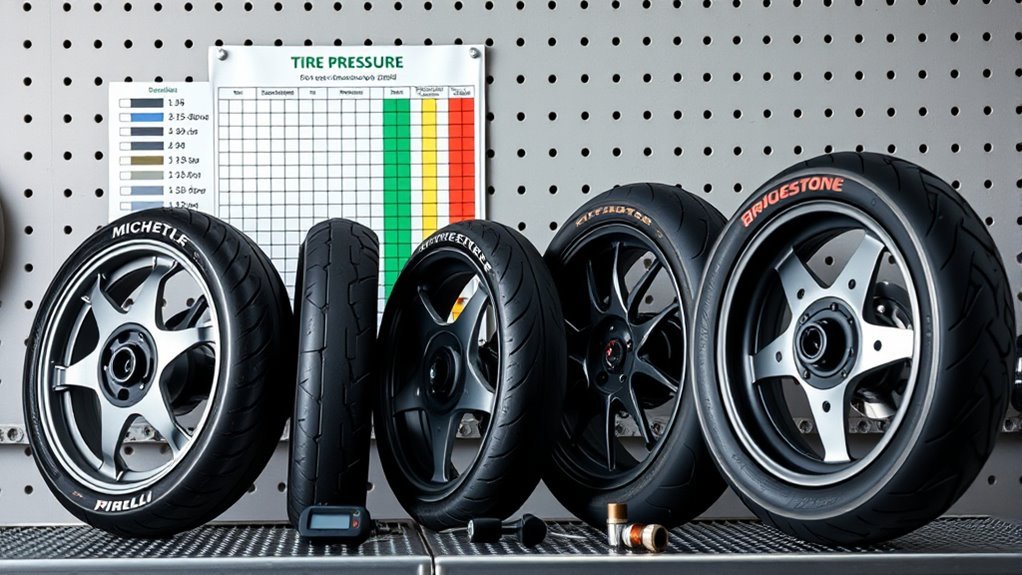
Now we’ll compare real-world PSI examples from leading race and sport tire lines so you can set baselines by brand and size. You’ll see Michelin, Pirelli, Dunlop, and Bridgestone recommendations for cold and target hot pressures under typical track warm-up protocols. Use these figures as starting points, then fine-tune for bike, load, and track conditions.
Michelin Pressure Examples
Start with the cold pressures Michelin lists and use them as your baseline: for Power Performance Cup and Power Slick Evo tires the recommended cold front pressure is 30.5 PSI (rear 18.9 PSI for the Power Performance Cup, and around 18.9 PSI implied for similar slicks). You’ll use Michelin tire specifications to set cold pressures, then apply Michelin pressure adjustments to reach hot targets: Power Performance Cup hot fronts 33–36 PSI and rears 23–26 PSI; Slick Evo hot around 24.7 PSI after warmup. Tune to track feedback: lap times, feel, and wear patterns. Use this quick reference table and adjust incrementally to free yourself from conservative defaults.
| Tire Model | Cold / Hot (PSI) |
|---|---|
| Power Performance Cup | 30.5 / 33–36 (F) 18.9 / 23–26 (R) |
| Power Slick Evo | 30.5 / ~24.7 |
| Notes | Adjust by temp and track |
Pirelli, Dunlop, Bridgestone
For Pirelli, Dunlop, and Bridgestone slicks you should set cold pressures from the manufacturer’s specs and aim for their published hot ranges after proper warm-up: you’ll follow measured targets to free your riding precision. Use Pirelli performance and Pirelli technology notes for aggressive grip, Dunlop construction cues for heat management, and Bridgestone durability for consistency.
- Pirelli Diablo Superbike: cold 30.5 PSI; hot target 32–36 PSI after proper track sessions.
- Dunlop KR106/KR108: cold 30.5 PSI; heat to 80°C for 60 minutes, hot target 33–38 PSI.
- Bridgestone V03 (120/70-17 front): cold 33 PSI; heat to 80°C for 45 minutes to reach hot spec.
- Adjust pressures progressively; log changes and prioritize grip, stability, liberation.
Adjust PSI for Ambient Temp, Track Surface, and Rider Weight
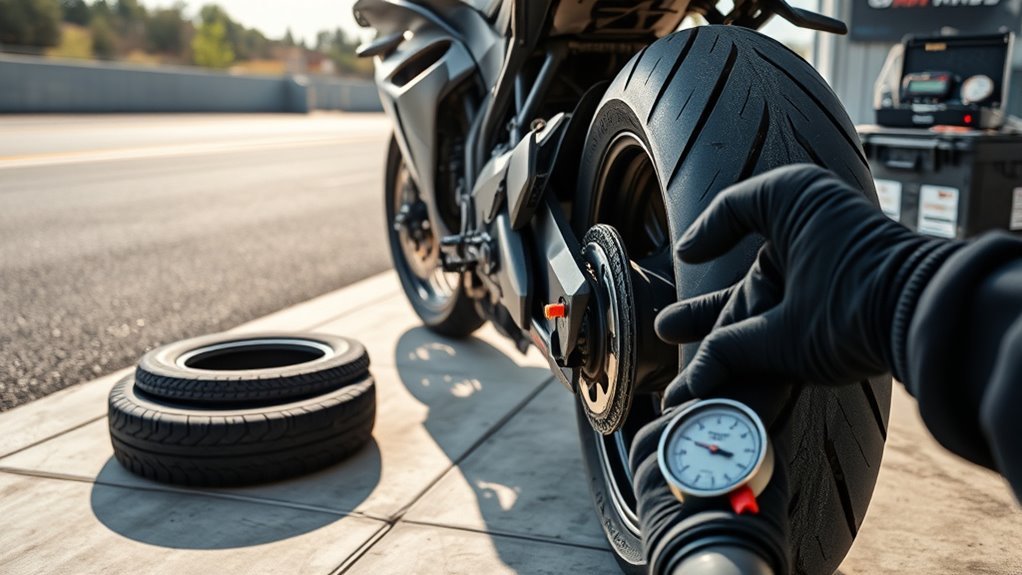
Because ambient and track temperatures and your weight change how a tire heats and deforms, you should adjust cold PSI to target the tire’s ideal hot pressure after a few laps. Use ambient adjustments to raise cold PSI in cold air and lower it in heat; track surface temperature and abrasiveness demand small PSI changes to preserve contact patch and stability. Account for rider weight and cargo considerations by increasing cold PSI for heavier loads to limit excessive flex and heat build-up. Match cold-to-hot pressure targets specific to your tire and riding style; consult the manufacturer for model-specific offsets.
| Condition | Adjustment |
|---|---|
| Cold ambient | +1–3 psi cold |
| Hot track | −1–2 psi cold |
Start conservative: change one psi per tire and test. Record hot pressures after a few laps, then iterate. This lets you free yourself from guesswork and tune pressure for traction, feedback, and predictable handling.
Monthly Checks, Wear Signs, and When to Replace Tires
When you perform monthly checks (and before any long ride), inspect pressure, tread depth, and the sidewalls so you catch wear or damage early; maintain manufacturer PSI and note any persistent drops that could mean a slow leak. You’ll keep control and freedom by treating tire maintenance as nonnegotiable. Measure pressure cold, compare to the chart, and scan tread for uneven wear or bald spots. Check sidewalls for cracks, bulges, or cuts—any bulge means immediate replacement.
- Replace when tread depth ≤ 1.6 mm; use a gauge or the wear bars to verify legal and safe limits.
- Address persistent pressure loss: find leaks, failing valves, or rim damage; don’t ignore slow leaks.
- If you see uneven wear, inspect alignment, suspension, and loading; uneven wear shortens tire life and reduces grip.
- Remove tires with sidewall damage or visible cords; bulges and deep cuts risk blowouts despite adequate PSI.
Follow these safety tips to preserve traction, control, and your riding autonomy.
Frequently Asked Questions
Is 90 Psi Too High for Bike Tires?
Yes — 90 PSI is far too high; you’ll create serious safety concerns, hurt performance impact, and accelerate uneven tire wear. Check and set tire pressure to manufacturer specs, measure cold, and adjust for safe riding.
Conclusion
Keep tire pressure consistent: check cold before rides, adjust for hot conditions, rider weight, and surface—track, road, or wet. I once missed a 2-psi drop before a club track day and felt the bike turn like a shopping cart with a flat front: unstable and slow. Manufacturers often recommend ~28–36 psi front, 32–40 psi rear cold, but use your tire’s spec and adjust with data from warm readings. Inspect monthly and replace when wear or damage shows.
Related Articles
Bicycle Tire Pressure Chart by Rider Weight: PSI Guide
Want optimal ride feel and fewer flats? Discover PSI baselines by weight, tire type, and wheel size to fine-tune grip and comfort.
Read More
How Altitude Affects Tire Pressure: High Elevation Guide
Note how tire PSI drops with elevation—learn the simple adjustments to maintain safety, efficiency, and tire life as you climb.
Read More
Tire Pressure for EVs: Why Electric Cars Need Higher PSI
A concise guide explains why EVs benefit from higher PSI for range, wear, and safety—discover the simple adjustments that can boost efficiency.
Read More