
How to Use the Hyundai Sonata Tire Mobility Kit: Full Instructions
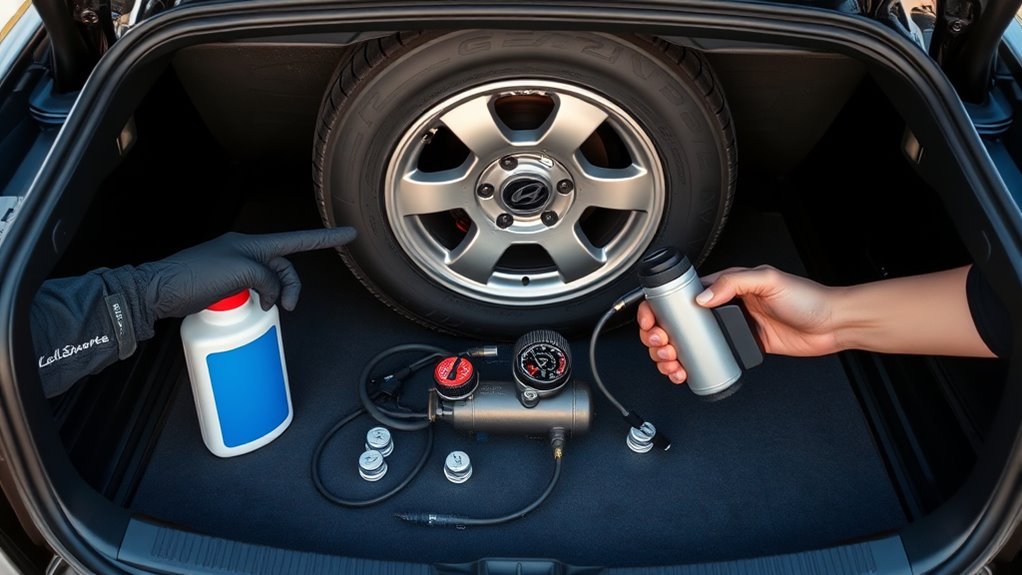
You’ll use the Hyundai Tire Mobility Kit for small punctures (≤4 mm) by parking on level ground, checking the tire for sidewall or severe damage, setting the parking brake, and keeping the engine running. Shake and attach the sealant bottle to the compressor, connect to the valve, then run the compressor 5–7 minutes until you reach at least 29 PSI. Drive 7–10 km at 20–80 km/h to distribute sealant, recheck pressure, and see a dealer for permanent repair if needed to learn more.
What’s in the Hyundai Tire Mobility Kit (And When to Use It)
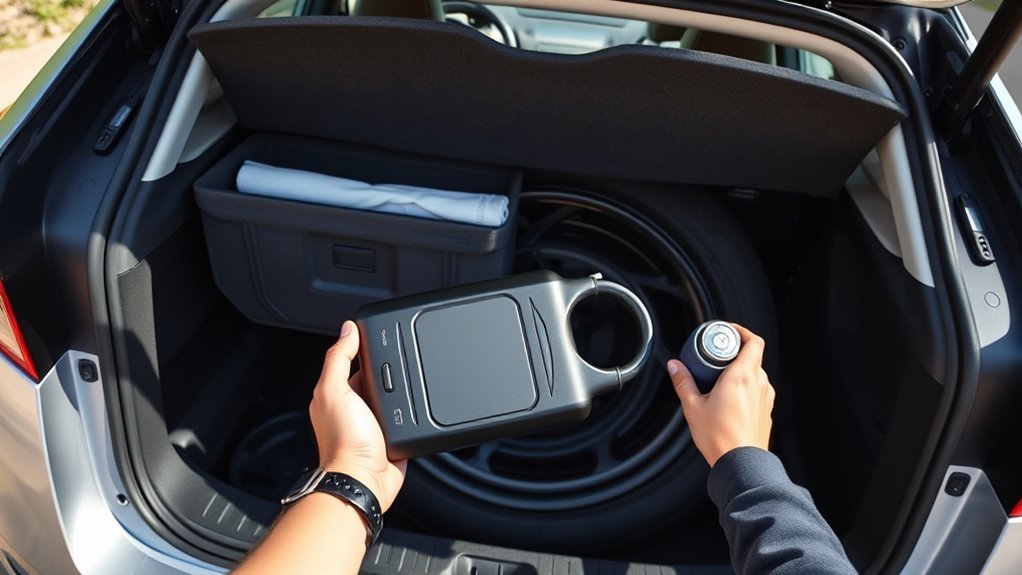
The Hyundai Tire Mobility Kit includes a sealant bottle, filling hose, compressor with a pressure gauge, and the connectors you’ll need to temporarily fix small punctures. You’ll find the kit intended for brief, controlled use when a Tire puncture under 0.16 inches (4 mm) leaves you stranded. Check the sealant effectiveness before relying on it: confirm the bottle isn’t expired and remove the speed restriction label that limits you to 80 km/h (50 mph) after repair. Don’t use the kit for sidewall damage or severe tire failure; those need professional repair or replacement. You’ll attach the hose, inject sealant, and inflate to the correct pressure using the compressor and gauge, then drive directly to a service center. Keep the kit accessible, inspect the sealant date periodically, and treat it as a temporary liberation tool—enough to regain mobility and choose your next safe destination, not a permanent fix.
Pre‑Repair Safety Checks: Location, Tire Condition, and Engine
Before you start the repair, stop somewhere safe: pull well off the road onto level ground, set the parking brake, and turn on your hazard lights so other drivers can see you. You’ll want safe parking and a clear head before touching the kit. Do a quick tire assessment and engine check to confirm you can proceed.
- Inspect location: choose a flat, well-lit spot away from traffic; avoid hills or soft shoulders.
- Tire assessment: check for sidewall cuts, bulges, or damage—the kit only fixes small punctures (≤6mm); if you see severe damage, don’t use the kit.
- Visibility and control: set the parking brake, chock wheels if available, and keep hazard lights on.
- Engine readiness: leave the engine running when you use the compressor so it gets power; confirm fuel and battery conditions.
These steps free you to act confidently and safely; if anything looks unsafe, step back and seek professional help.
Attach the Sealant Bottle and Compressor
Shake the sealant bottle well, then screw the connection hose tightly onto its connector to prevent leaks. Attach the filling hose to the tire valve and lock the compressor valve before inserting the bottle into the compressor. Keep the compressor off while you plug it into the vehicle’s power outlet, then you’re ready to operate.
Secure Sealant Bottle Connector
Screw the connection hose firmly onto the sealant bottle’s connector, making sure the screw cap is closed and the bottle and hose caps are removed so nothing leaks when you attach the bottle to the compressor. You want a tight, confident fit: this prevents mess, preserves sealant compatibility, and keeps your kit ready to free you from roadside dependency.
- Verify caps are off and screw cap is closed before mating hose and bottle.
- Tighten the connection hose hand‑firm; avoid cross‑threading for reliable hose maintenance.
- Insert bottle into compressor housing until it seats securely; check alignment.
- Lock the compressor valve on the filling hose to prevent backflow and secure the system.
Work steadily—secure connections give you control and swift liberation from a flat.
Connect Compressor And Power
Start by seating the sealant bottle in its holder and removing the caps from both the bottle and valve, then firmly attach the filling hose to the tire valve to prevent any backflow. Make sure the compressor is off before this step for compressor safety. Screw the sealant bottle onto its holder, confirm the hose is tight, and tuck any loose lines away so nothing snags. Start the vehicle to provide power activation to the compressor circuit, then switch the compressor on. Watch the pressure gauge closely and aim for at least 29 PSI. If you don’t reach that within seven minutes, stop and reassess—don’t keep forcing sealant or air. This preserves your freedom to move and avoids further damage.
Inflate the Tire Safely (How Long, Target PSI, When to Stop)
Before you switch on the compressor, connect the kit, then run it for 5–7 minutes while watching the pressure gauge; stop once the tire reaches at least 29 PSI (200 kPa) or after 7 minutes to avoid overheating. You’ll use tire inflation to restore mobility and freedom—stay focused on pressure monitoring so you don’t overrun the unit. Run the compressor steadily, watch the gauge, and be prepared to stop at the target. If the gauge hasn’t hit 29 PSI after seven minutes, shut the compressor off to prevent damage.
- Start compressor and note gauge, aiming for a minimum of 29 PSI (200 kPa).
- Maintain steady operation for 5–7 minutes to distribute sealant and build pressure.
- If pressure reaches 29 PSI before 7 minutes, stop immediately and secure the valve.
- If after 7 minutes you’re below 29 PSI, stop to avoid overheating and seek professional help.
Act decisively; this keeps you safe and in control.
Drive Immediately After Repair: Speed, Distance, and Warnings

Once you’ve inflated the tire, drive immediately for about 4–6 miles (7–10 km) so the sealant can spread evenly and seat the puncture. Use a deliberate drive strategy: keep speed between 12 mph (20 km/h) and 50 mph (80 km/h) and obey the kit’s speed restriction label (max 80 km/h / 50 mph). Maintain steady, moderate pace—no hard accelerations or sharp turns—so the sealant distributes and bonds.
Watch for changes in handling. If you feel unusual vibration or hear odd noises, slow down and pull over safely; vibration safety matters because excessive vibration can worsen damage or indicate failed sealing. After stopping, inspect visually and address issues before resuming. Don’t push past obvious problems; your freedom on the road depends on prudent choices now. Follow these limits and warnings to finish the temporary repair confidently and preserve your ability to reach a service center.
Recheck Tire Pressure, Sealant Limits, and When to See a Dealer
Right after you use the kit, check the tire pressure and confirm it’s at least 29 PSI before driving. Remember the sealant only repairs punctures up to 0.16 inches (4 mm); larger damage or a tire that won’t hold pressure means you need professional help. If the tire remains unserviceable or you plan to replace it, contact an authorized HYUNDAI dealer promptly and clean sealant from sensors and the wheel.
Check Pressure Immediately
After you use the Tire Mobility Kit, check the tire pressure with the included gauge and confirm it reads at least 29 PSI (200 kPa) before you drive; if it’s below 29 PSI, don’t drive and call for roadside assistance. You’re practicing pressure monitoring and proactive tire maintenance — recheck after about 10 minutes of driving so sealant can distribute and inflation stabilizes. If pressure stays under 29 PSI, you won’t proceed; get help. Remember sealant only covers small punctures. If problems persist, contact an authorized HYUNDAI dealer for evaluation.
- Verify gauge reads ≥29 PSI before moving.
- Drive ~10 minutes, then recheck pressure.
- If still low, stop and call roadside assistance.
- If tire unserviceable or damaged, see a HYUNDAI dealer.
Know Sealant Limits
While the sealant can fix only small punctures, you should recheck the tire pressure immediately and again after about 10 minutes of driving to make sure it’s at least 29 PSI (200 kPa); if it’s below that or the tire stays unserviceable, don’t drive and contact an authorized HYUNDAI dealer.
| Item | Limit | Action |
|---|---|---|
| Max puncture size | 0.16 in (4 mm) | Use sealant only |
| Embedded object | Don’t remove | Leave object in place |
| Pressure threshold | 29 PSI (200 kPa) | Recheck immediately |
| Sealant shelf life | Check expiry | Replace if expired |
| Post-check | Unserviceable tire | Contact dealer |
You’ll preserve freedom by knowing sealant effectiveness and puncture size limits. Follow checks, respect limits, and seek dealer help when needed.
Visit Dealer Promptly
Since the Tire Mobility Kit is a temporary fix, recheck your tire pressure immediately and again after about 10 minutes of driving to confirm it’s at least 29 PSI (200 kPa); if the puncture is larger than 0.16 in (4 mm), the tire stays unserviceable, the sealant is expired, or you can’t safely maintain speed below 50 mph (80 km/h), contact an authorized HYUNDAI dealer promptly for professional inspection and repair. You want freedom on the road; don’t gamble. If pressure holds and sealant is within date, drive cautiously to the dealer for a dealer evaluation and to learn permanent repair options. If anything feels off, stop driving and call for assistance.
- Verify pressure immediately and after 10 minutes.
- Inspect sealant expiration date.
- Note puncture size; >0.16 in needs pros.
- Seek dealer evaluation for repair options.
Frequently Asked Questions
Is a Tire Mobility Kit a Permanent Fix?
No, a tire mobility kit isn’t a permanent fix; you’ll use it as a temporary solution to reach help, but you’ll face safety concerns if you rely on it long-term, so get professional repair or replacement.
Conclusion
You’ve now got what you need to use the Hyundai Sonata tire mobility kit safely and effectively. Remember: about 90% of punctures smaller than 1/4 inch can be temporarily repaired with sealant and inflation, but it’s a temporary fix—not a permanent tire replacement. After you drive the recommended distance and speed, recheck pressure and get the tire inspected or replaced by a dealer. Stay safe, follow the kit steps, and don’t delay professional repair.

Related Articles

Hyundai Sonata Overall Tire Diameter by Size: Full Chart
Hyundai Sonata overall tire diameter by size: discover exact measurements, common OEM examples, and fitment tips to ensure speedometer accuracy and proper clearance.
Read More
Hyundai Sonata Tire Aspect Ratio Explained: What the Number Means
Good to know: discover how the Sonata’s tire aspect ratio affects ride, handling, and speedometer accuracy — and why that number really matters.
Read More
Hyundai Sonata Compatible Tire Sizes: Full Fitment Guide
I need to show which Hyundai Sonata generations accept which tire sizes and why fitment, offset, and diameter matter—read on to get exact matches.
Read More