
How to Rotate Tires on a Hyundai Sonata: DIY Guide & Patterns
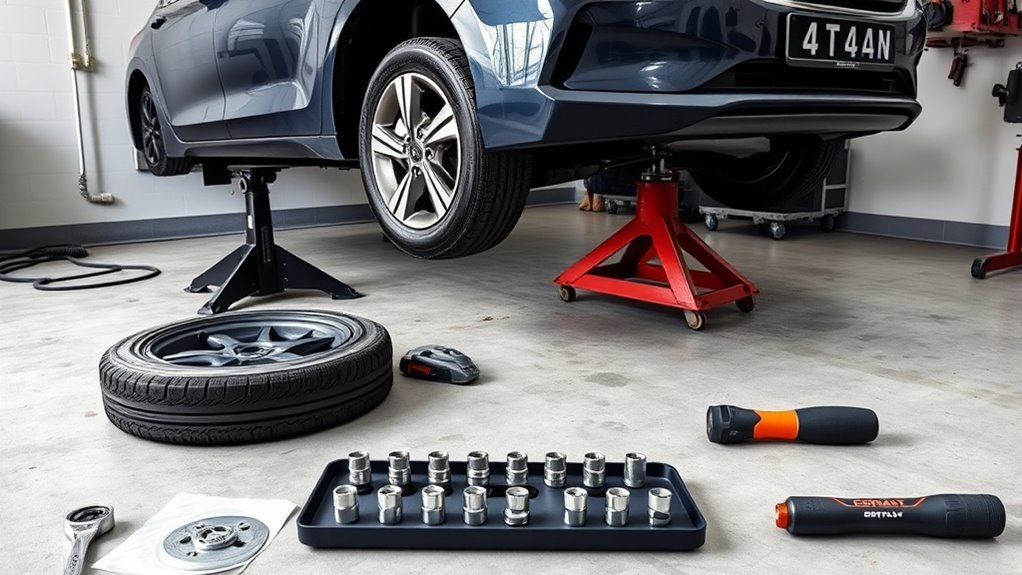
You’ll safely rotate your Hyundai Sonata by parking on level ground, chocking wheels, lifting with a jack and stands, and removing wheels after loosening lug nuts. For FWD models move front tires straight back and cross the rear tires to the front; follow manufacturer guidance for AWD or directional tires. Inspect tread, sidewalls, and suspension, then reinstall and torque lug nuts to spec and reset pressures. Continue below to get step‑by‑step patterns, torque values, and inspection tips.
How to Rotate Tires on a Hyundai Sonata (Quick Steps)
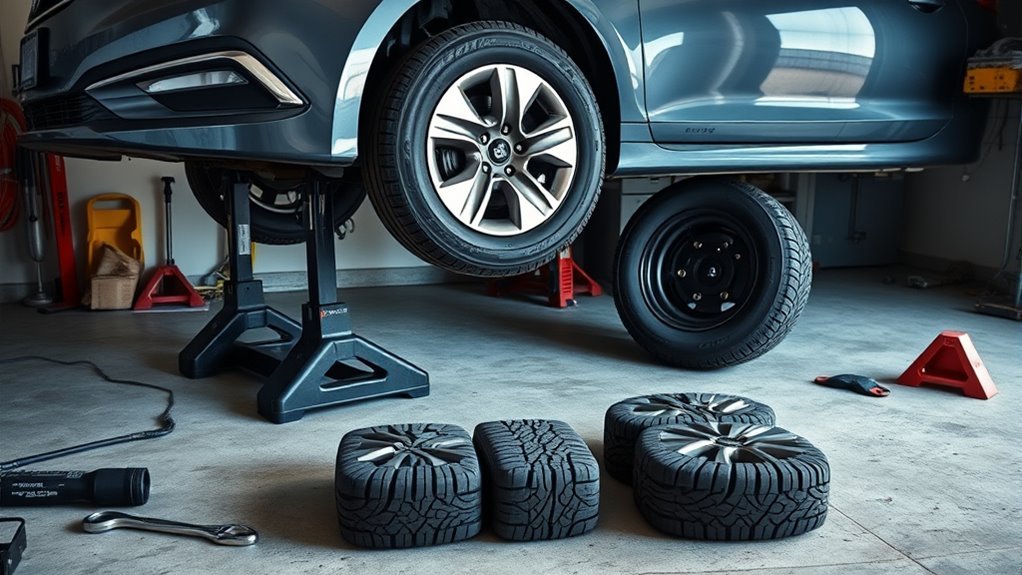
Start by parking your Sonata on level ground, engaging the parking brake, and placing wheel chocks behind the rear wheels to secure the vehicle; you’ll need a jack, jack stands, a lug wrench, and a torque wrench. Lift one corner, support it on a stand, and loosen lug nuts before fully raising the car. Remove wheels and follow the rotation pattern: front tires move straight to the rear; rear tires cross to the front. If tires are directional, keep each tire on the same side and swap front-to-rear only. Non-directional tires can use the criss-cross pattern for even wear. Inspect each tire for cuts, bulges, and remaining tread depth; replace if signs of unsafe wear appear. Reinstall wheels, tighten lug nuts by hand, lower the car, and torque nuts to spec. Finish by checking and adjusting tire pressures per manufacturer specs. Incorporate periodic rotations every 6,000–8,000 miles to align tire maintenance with mindful driving habits and preserve freedom on the road.
Which Sonata Models & Drive Types Are Covered (FWD, AWD, Year Notes)
Check your Sonata’s model year and drive type before you start: most years are FWD and use a rear-to-front crossed rotation, while AWD variants follow manufacturer-specific patterns. You’ll want to confirm the exact pattern and interval for your year—recommendations can change between model generations. Always follow the owner’s manual for the correct rotation method and the 6,000–8,000 mile service window.
Model Years Covered
Which Sonata models does this guide cover, and what drive types matter for rotation? You’ll find this guide applies mainly to 2011 through current-year Hyundai Sonata models, which are primarily front-wheel drive; check your owner’s manual for exact model-year notes, tire pressure specs, and the recommended maintenance schedule. For FWD Sonatas, use the standard rotation: front tires move straight back, rear tires cross to the front. Select AWD variants exist; they require the manufacturer’s AWD rotation procedure—consult factory guidance. Rotate tires every 6,000–8,000 miles to equalize wear and preserve handling freedom. You’re responsible for confirming any exceptions tied to trim, staggered wheel setups, or specific year revisions before proceeding. Follow documented specs, then act decisively.
Drive Type Variations
Although the Sonata has traditionally been front-wheel drive, Hyundai introduced AWD options on select recent model years, so you’ll need to confirm your car’s drive type before rotating tires. Check your owner’s manual or VIN details to identify FWD versus AWD. For FWD Sonatas, move the front tires to the rear and cross the rear tires to the front; this evens wear and sustains handling. For AWD, follow the specific rotation pattern in the manual—some years require a directional or same-side swap to protect the drivetrain. Rotate every 6,000–8,000 miles as a core maintenance tip. Before and after rotation, verify tire pressure and inspect tread depth. These precise steps free you from avoidable wear and preserve control.
Essential Tools and Safety Gear (Jack, Stands, Torque Wrench)
1. You’ll gather specific gear for tire maintenance and follow strict safety precautions. Use the jack at the manufacturer’s lift points to avoid body damage; don’t improvise. After lifting, place jack stands under solid frame points and lower the car onto them for stable support. Wear gloves and goggles to protect hands and eyes. Carry a tire pressure gauge to reset pressures after rotation. Use a calibrated torque wrench to tighten lug nuts to Hyundai’s specs—this prevents both loose and over-torqued wheels.
| Tool | Purpose | Liberation value |
|---|---|---|
| Jack | Lift vehicle at specified points | Enables self-reliance |
| Jack stands | Support vehicle while you work | Guarantees safe independence |
| Torque wrench | Accurate lug nut torque | Controls outcome, prevents failure |
| Gloves & goggles | Personal protection | Keeps you unhindered by injury |
| Tire pressure gauge | Verify/adjust PSI | Restores performance, freedom |
Follow the manual, work methodically, and never skip supports. These tools free you to maintain your Sonata safely and confidently.
How to Check If Your Tires Are Directional or Non‑Directional
Before rotating, you’ll confirm whether each tire is directional or non‑directional by inspecting specific markings and tread shape. Check the sidewall for arrows or rotation indicators and visually compare the tread: directional patterns are V‑shaped or unidirectional, while non‑directional treads are more symmetrical. If the owner’s manual lists tire designations, use that to verify your findings and determine allowable rotation patterns.
Look For Directional Arrows
When checking whether your Sonata’s tires are directional, inspect each sidewall for an arrow or “rotation” marking that shows the intended rolling direction; these arrows tell you which way the tread was engineered to channel water and maintain traction. Walk around the car and note every wheel’s marking, photographing sidewalls if needed for reference. If you find arrows, treat those tires as directional: they must stay on the same side during rotation to protect handling and tread longevity. No arrows usually means non‑directional tires, which give you flexible rotation patterns for efficient tire maintenance. Verify ambiguous cases against your owner’s manual or the tire maker’s spec sheet. Acting deliberately preserves performance and frees you from unexpected wear.
Inspect Tread Pattern
If you’re unsure whether your Sonata’s tires are directional, inspect the tread and sidewall markings: directional tires usually have a pronounced V-shaped or arrow‑point pattern and a rotation arrow stamped on the sidewall, while non‑directional tires show a more uniform, symmetrical tread and lack directional arrows. Examine each tire visually for V-shaped channels or asymmetry; if present, treat the tire as directional and plan rotations without swapping sides. For non‑directional tires, confirm symmetry and note that criss-cross or front-to-back patterns are acceptable. Measure tread depth across the shoulder and center to detect uneven tire wear that signals alignment or rotation issues. Cross‑reference observations with your owner’s manual, then choose the rotation method that preserves tread depth and extends tire life.
Check Sidewall Markings
Start at the sidewall and scan for stamped arrows, rotation indicators, or model markings that identify directional tires; an arrow or the word “Rotation” means the tire must roll that way. You’ll also inspect tread geometry—V-shaped or strongly asymmetrical patterns often signal one-directional design. If markings are absent, the tire is likely non-directional and can be crossed during rotation. Check manufacturer specs or your owner’s manual to confirm ambiguous cases. When you identify directional tires, plan rotations as front-to-back swaps to maintain intended roll direction; for non-directional tires, use cross-pattern rotations to equalize wear. Integrate this check into routine tire maintenance tips and pair it with tire pressure checks to preserve performance, safety, and your freedom to drive confidently.
Sonata FWD Rotation Pattern: Forward‑Cross Explained (And Directional Exceptions)

Because the Sonata is front‑wheel drive, you’ll use the forward‑cross rotation: move the front tires straight back and cross the rear tires to the front to balance wear between axles. You’ll reduce uneven tire wear and extend service life by redistributing the heavier load from the front axle. Maintain a rotation frequency of every 6,000–8,000 miles; that cadence prevents localized degradation and keeps tread depth even.
Procedure: lift and secure the vehicle, remove wheels, mark positions, install rear right to front left and rear left to front right, and reinstall original front tires to the rear on the same side. Torque lug nuts to spec and check pressures. Directional tires are an exception: they must stay on the same side and rotate only front‑to‑rear to preserve rotational direction; do not cross them. Always confirm steps with your owner’s manual. By following this methodical routine you reclaim control over maintenance, maximize tire life, and keep handling predictable.
Including a Full‑Size Spare or Different‑Sized Tires in Rotation
Include your full‑size spare in the rotation schedule so all five tires wear evenly and you don’t end up with a mismatched set. If your Sonata has different‑sized tires, check the owner’s manual and only mix sizes when the manufacturer permits, since incompatible sizes can alter handling and drivetrain loads. Follow the drivetrain‑specific rotation pattern while confirming the spare matches tire specs and maintaining correct pressure on all five tires.
Including Full‑Size Spare
If you keep a full-size spare on your Hyundai Sonata, treat it as a fifth tire and rotate all five every 6,000–8,000 miles using the vehicle’s recommended pattern so wear stays uniform. You’ll gain rotation benefits: balanced wear, longer tread life, and predictable handling. Verify the spare tire matches size and tread depth; if it doesn’t, consult the owner’s manual before including it. Follow the Sonata pattern: move fronts to rear, rear tires cross to front, and cycle the spare into the sequence. Document each rotation—mileage, position, and condition—to monitor wear and liberate yourself from unexpected failures.
| Item | Action | Record |
|---|---|---|
| Spare check | Inspect tread/pressure | Date/miles |
| Rotate interval | 6,000–8,000 mi | New positions |
| Pattern | Follow manual | Notes on wear |
Mixing Different Tire Sizes
When you mix different tire sizes on a Hyundai Sonata—including a full-size spare that doesn’t match—the vehicle’s handling and drivetrain can suffer, so you should avoid it unless the owner’s manual explicitly permits otherwise. You must keep all four tires the same size and type to preserve tire safety and avoid uneven wear. A mismatched full-size spare or varied sizes increases rolling circumference differences, stresses the drivetrain (critical in AWD variants), and degrades steering precision. Consult the owner’s manual for allowances; if it permits a temporary use, limit speed and distance and monitor tread depth and pressure immediately. For liberation from concern, standardize replacements: buy matching tires, maintain equal pressures, and inspect regularly to protect performance impact and long-term drivetrain health.
Rotation Patterns And Considerations
Although you can follow several rotation schemes, Hyundai recommends a front-to-rear and rear-to-front crossing pattern for non-directional tires to equalize wear; include a full-size spare in the cycle so all five tires share mileage and tread life. You’ll apply consistent rotation techniques every 6,000–8,000 miles, inspecting for tread depth, cuts, and irregular wear that signal alignment or inflation problems. Confirm front and rear tires match in size and offset before rotating; mismatched sizes alter handling and void benefits.
- Swap front-to-rear and rear-to-front with cross when tire positions are non-directional; rotate the spare into service on a timed schedule.
- Exclude directional or staggered-size setups; follow manufacturer or professional guidance.
- Document rotations for disciplined tire maintenance and liberated control over vehicle safety.
Jack, Support, and Remove Wheels : Step‑by‑Step
Prepare by parking on level ground, setting the parking brake, and slightly loosening the wheel lug nuts before lifting. For tire maintenance and safety precautions, verify the jack points in your Hyundai Sonata manual. Position the jack under the designated lift pad, then raise the vehicle until the tire clears the ground by a few inches.
Place jack stands under recommended support locations and lower the car gently onto them; don’t rely on the jack alone. Check stability by shaking the vehicle lightly at the bumper; it should not shift. Fully remove the loosened lug nuts in a star pattern to prevent binding and confirm even removal.
Grasp the wheel firmly and pull it straight off the hub, keeping brake components clear. Set wheels aside on a clean surface to avoid contamination. Repeat the process for each wheel you’re rotating. Keep tools organized and maintain a deliberate pace—freedom on the road starts with disciplined, safe work at the curb.
Inspect Tires and Suspension While Rotating: What to Look For
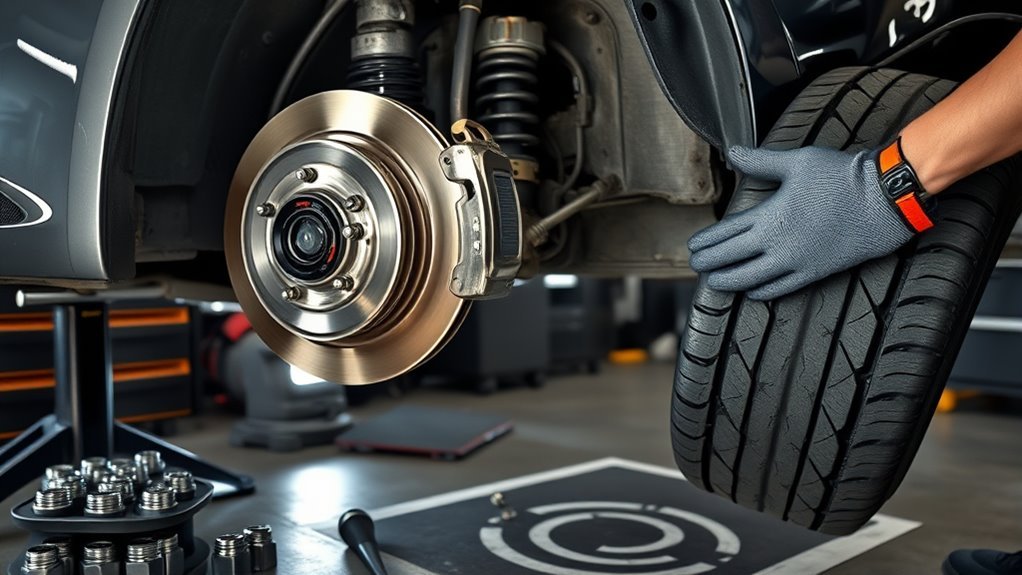
Before you remount wheels, perform a focused inspection of tires and suspension to catch issues that rotation won’t fix. You want freedom from roadside failure, so be methodical: scan for bulges, cuts, exposed cords, and measure tread depth—replace if at or below 2/32″. Check for uneven patterns (inner, outer, feathering) that point to alignment problems or improper inflation.
- Inspect visible tire damage and tread depth with a gauge or built-in indicators; note asymmetrical wear and shoulder scalloping that signals under-inflation and compromised life.
- Verify tire pressure per placard specifications; correct pressure restores contact patch balance and prevents accelerated wear caused by over- or under-inflation.
- Examine suspension components—bushings, ball joints, shocks/struts—for looseness, leaks, or suspension wear that produces irregular tire wear and degrades handling.
Document findings, address critical faults before driving, and schedule repairs that preserve mobility and safety.
Refit Wheels, Torque Bolts, and Final Post‑Rotation Checks
Seat each wheel carefully, aligning the tire valve with the rim cutout, then hand-start the wheel bolts and snug them in a star pattern so the hub and rotor seat evenly. Use a torque wrench to tighten bolts to the Hyundai-specified torque—consult the handbook for your Sonata’s model year and engine. Follow the star sequence in final tightening to avoid rotor warp and maintain uniform clamping force.
After bolting, lower the car and perform a final torque check with the wrench. Verify tire pressures against manufacturer recommendations; front and rear pressures may differ. Inspect each tire for visible cuts, bulges, or uneven wear before driving. Record the torque value and pressure readings for future tire maintenance.
Safety tips: wear gloves and eye protection, and confirm the vehicle rests securely on jack stands while working. These methodical steps free you from guesswork, preserve braking integrity, and keep you moving with confidence and control.
When to Rotate, Recordkeeping, and Troubleshooting Uneven Wear
Rotate your Sonata’s tires every 6,000–8,000 miles and log each service entry (date, odometer, pattern used) so you can spot wear trends and schedule the next rotation accurately. Keep entries concise: mileage, date, rotation pattern (front-to-rear or criss-cross), and any notes on pressure or road conditions. Good records extend tire lifespan and empower you to act before failures.
Rotate your Sonata’s tires every 6,000–8,000 miles and log date, odometer, pattern, and notes for trend spotting.
- Inspect: check tread depth and look for uneven wear across shoulders and centers; record findings and tire positions.
- Diagnose: asymmetrical or cupped wear suggests alignment, suspension, or inflation faults; remedy those before the next rotation to protect tire lifespan.
- Act: if unusual wear persists after corrections, consult a professional for wheel alignment and suspension inspection; update your log with their recommendations.
You’ll liberate yourself from surprise failures by rotating on schedule, keeping precise records, and addressing uneven wear promptly and methodically.
Frequently Asked Questions
How to Rotate Tires on Hyundai Sonata?
You rotate your Hyundai Sonata tires every 5,000–7,000 miles, using front-to-back and criss-cross patterns for non-directional tires; inspect for tire wear, adjust pressures, and consult the manual to maintain rotation frequency and alignment.
How to Do Tire Rotation DIY?
You’ll jack the car, remove wheels, swap them per pattern, inspect tread and damage, then torque bolts in a star pattern. Follow tire maintenance tips, use essential tools like jack, torque wrench, lug wrench, and pressure gauge.
What Not to Do When Rotating Tires?
Don’t ignore visible tire wear or skip safety precautions; don’t swap directional tires side-to-side, use improper lifting tools, neglect Hyundai manual rotation pattern, or skip pressure checks — you’ll compromise handling, shorten tire life, and risk injury.
Conclusion
Rotate your Sonata’s tires like a mechanic following a recipe—methodical, consistent, and precise. Rotate every 6,000–8,000 miles, noting tread depth and suspension play as if you’re reading a highway map to longevity. Use the forward‑cross pattern for FWD unless tires are directional, jack and support securely, torque to factory specs, and log the date and mileage. Regular checks prevent surprises and keep handling true, much as steady maintenance keeps an engine breathing easy.

Related Articles

Hyundai Sonata Overall Tire Diameter by Size: Full Chart
Hyundai Sonata overall tire diameter by size: discover exact measurements, common OEM examples, and fitment tips to ensure speedometer accuracy and proper clearance.
Read More
Hyundai Sonata Tire Aspect Ratio Explained: What the Number Means
Good to know: discover how the Sonata’s tire aspect ratio affects ride, handling, and speedometer accuracy — and why that number really matters.
Read More
Hyundai Sonata Compatible Tire Sizes: Full Fitment Guide
I need to show which Hyundai Sonata generations accept which tire sizes and why fitment, offset, and diameter matter—read on to get exact matches.
Read More