
How to Check Tire Pressure on a Hyundai Sonata: Easy Guide
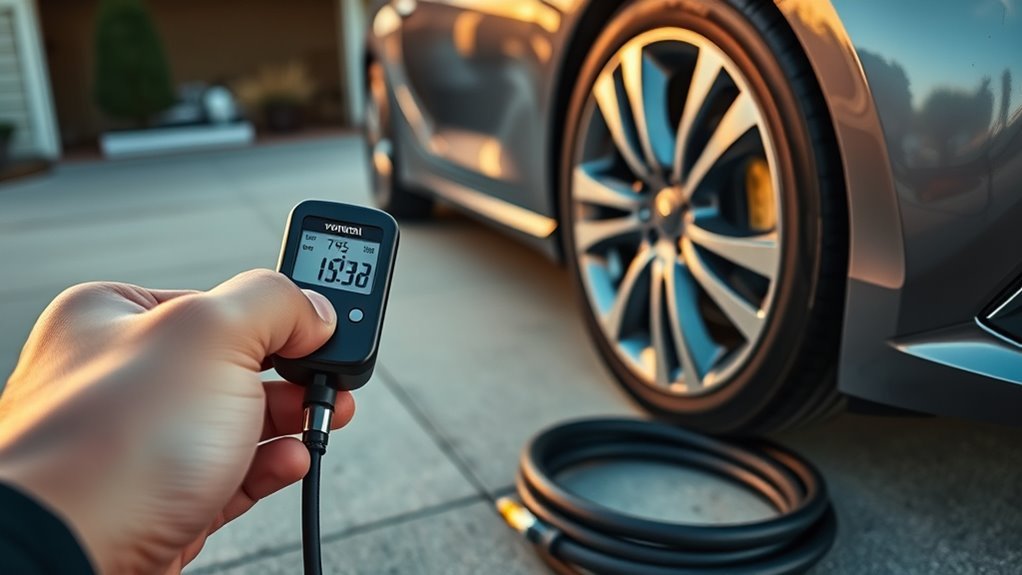
Find the recommended PSI on the driver’s door-jamb and note front/rear values for your model and tire size. Park the Sonata for 2–3 hours so tires are cold, then use a calibrated gauge aligned squarely with each valve stem to get readings. Record all four pressures, then use a compressor to add air in short bursts or gently depress the valve core to release air until each tire matches the placard. Continue below for step-by-step tips and troubleshooting.
Find the Recommended PSI on Your Hyundai Sonata
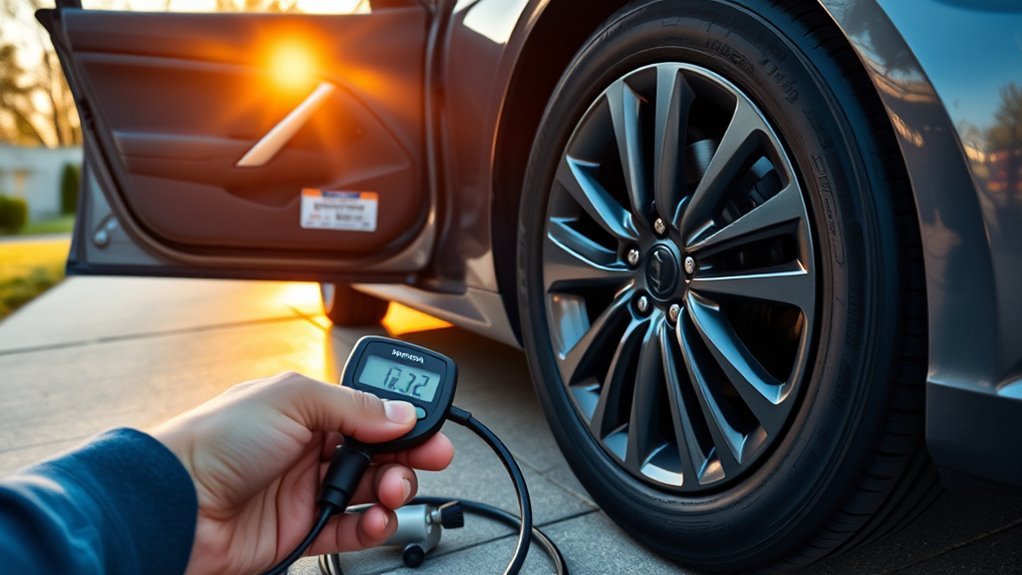
Where do you find the recommended PSI for your Hyundai Sonata? Look at the tire pressure label on the driver’s side door jamb; that’s the authoritative source for front and rear tire pressure values. You’ll see PSI listed for the stock tire sizes—most Sonata models call for roughly 30–35 PSI, but confirm the exact number for your model year and tire size. If your Sonata has mixed tire sizes, read the label carefully and apply the specified PSI for each wheel. Always measure when tires are cold—after the car’s been parked 2–3 hours—to get an accurate baseline. Maintaining the labeled tire pressure improves fuel economy and strengthens vehicle safety by ensuring proper handling and wear patterns. Make checking this label part of your routine freedom practice: it’s a simple, direct step that preserves mobility and reduces dependency on roadside help. Follow the label’s specs; don’t guess.
Tools You Need : Gauges, Compressors, and Night-Check Tips
Now that you know where to find the correct PSI, gather the right tools so you can measure and adjust pressure accurately: a reliable tire pressure gauge (digital gauges with LED lights are best for night checks), a portable air compressor for on-the-go inflation, and a flashlight or headlamp for visibility. Use digital gauges for fast, clear readings; their LED displays reduce error in low light and speed decisions. Carry a compact portable compressor that can run from your vehicle battery or a 12V outlet so you can restore pressure immediately when needed. When measuring, align the gauge straight and parallel to the valve stem, press firmly to eliminate hiss and get a stable read. If you work at night, position your headlamp to avoid casting shadows on the valve and use the gauge’s lighted display. Check tools regularly: calibrate or replace faulty gauges and inspect compressor hoses and fittings. Consistent checks free you from unexpected roadside delays and protect your autonomy.
Check Hyundai Sonata Tire Pressure (Cold) : Step-by-Step
Start by parking the Sonata and letting it sit for 2–3 hours so the tires reach cold temperature; this gives you an accurate baseline for pressure. Locate the tire pressure label on the driver’s door and note the recommended PSI for your tire size. Move to each wheel and remove the valve stem cover, placing it somewhere secure.
- Feel empowered: align the pressure gauge straight with the valve stem and press firmly for a clear reading.
- Stay in control: compare the gauge result to the door’s PSI and record each tire’s value.
- Be free: repeat for all four tires, ensuring consistency across corners.
If a tire reads off-spec, don’t panic — you’ll adjust in the next step. After finishing measurements, replace each valve stem cover to prevent slow leaks. Verify all tires show uniform readings, then reclaim the road with confident, liberated control.
Inflate or Release Air Safely to Reach the Correct PSI
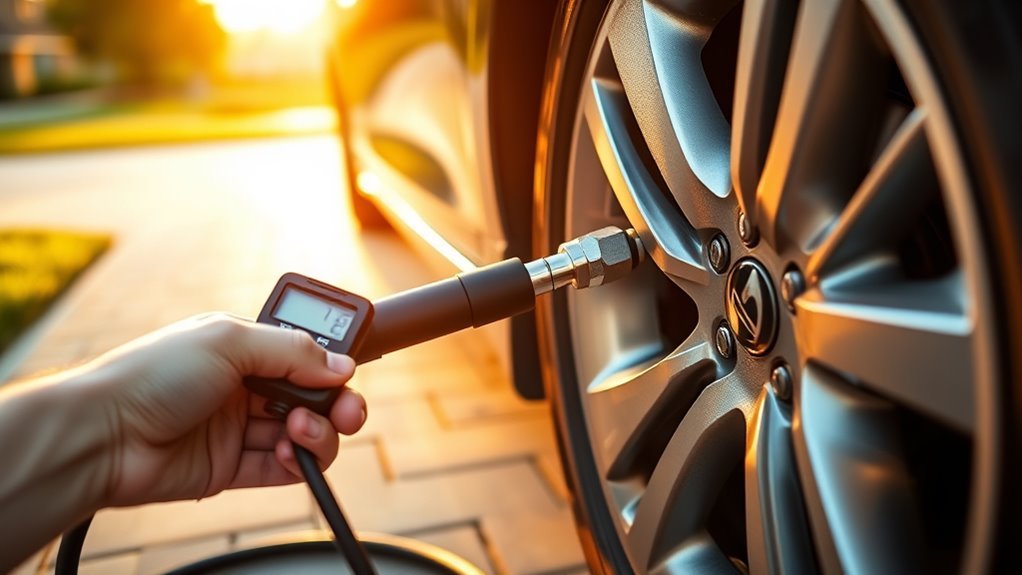
With your cold-pressure readings recorded, prepare to add or release air to match the PSI on the driver’s door label. Position the car safely, engage the parking brake, and approach each tire with a calibrated gauge and a portable air compressor or station pump. Follow air compressor safety: secure the hose, set the regulator to the target PSI, and keep fingers clear of moving parts. Attach the compressor nozzle firmly to the valve stem; inflate in short bursts, pause, and recheck with your gauge until the exact pressure is reached.
If pressure is over the spec, depress the valve core gently with the gauge tip at an angle to bleed air slowly; re-measure after each small release. Maintain consistent technique across all tires. After adjustments, replace the valve stem cap to prevent leaks and support tire valve maintenance. Record final readings and free yourself from doubt—you’re operating with precision and safety.
Troubleshooting and How Often to Check Tire Pressure
Although it’s easy to forget, you should check your Hyundai Sonata’s tire pressure at least once a month and any time before a long trip, measuring after the car’s been parked for 2–3 hours to get an accurate cold reading. Use the driver’s-side door placard to set the target PSI, then perform regular pressure monitoring as part of your tire maintenance routine. If pressure drops more than 1–2 PSI, inspect the tire for nails, cuts, or valve-stem leaks; repair or replace immediately. Consistent checks extend tire life and can improve fuel efficiency.
Check tire pressure monthly and before trips—use the door placard, measure cold, inspect leaks, and repair promptly.
- Feel the control: catch small leaks early to avoid being stranded.
- Claim freedom: timely repairs keep you moving and reduce waste.
- Own your safety: accurate PSI preserves handling and braking.
Follow a step-by-step check: read the placard, use a calibrated gauge, correct to recommended PSI, and document readings. Stay proactive; liberation comes from predictable, reliable vehicle care.
Frequently Asked Questions
Can Tire Pressure Affect My Sonata’s Fuel Economy Noticeably?
Yes — underinflated tires reduce fuel efficiency, so you should monitor pressure regularly. Maintain recommended PSI, inspect for leaks, rotate tires, and perform tire maintenance to regain ideal rolling resistance and free your Sonata’s performance and economy.
Do Tire Pressure Sensors Need Battery Replacement?
Yes — some tire pressure sensors have replaceable batteries and need periodic replacement. You’ll perform sensor maintenance: diagnose battery lifespan, sync replacements, and follow procedural steps so you’re free to manage safety and autonomy without dealership dependence.
Will Aftermarket Wheels Change the Recommended PSI?
Yes — but don’t panic: if your aftermarket wheel compatibility alters tire diameter or load, you’ll need tire pressure adjustments. You’ll check specs, adjust psi per load/size, and retest to verify safe, liberated driving.
Can I Use Nitrogen Instead of Air in My Tires?
Yes — you can use nitrogen; it offers steadier pressure, reduced moisture, and corrosion resistance. Inflate to recommended psi, monitor periodically, and expect modest tire longevity improvements while you maintain control and reduce pressure-related failures.
Does Tire Pressure Impact My Sonata’s Warranty?
Yes — you’re responsible: incorrect tire pressure can void a tire warranty if you ignore pressure guidelines and cause damage. Follow specified pressure guidelines, document maintenance, and report defects promptly to preserve your tire warranty rights.
Conclusion
You’ve now got a quick, repeatable process for checking and adjusting your Hyundai Sonata’s tire pressure: find the recommended PSI, use a reliable gauge when tires are cold, and inflate or release air to match specs. Do this monthly—underinflation by 10% can increase fuel consumption by about 1–2%—and after temperature swings or long trips. Regular checks keep handling safe, tires wearing evenly, and fuel economy optimized.

Related Articles

Hyundai Sonata Overall Tire Diameter by Size: Full Chart
Hyundai Sonata overall tire diameter by size: discover exact measurements, common OEM examples, and fitment tips to ensure speedometer accuracy and proper clearance.
Read More
Hyundai Sonata Tire Aspect Ratio Explained: What the Number Means
Good to know: discover how the Sonata’s tire aspect ratio affects ride, handling, and speedometer accuracy — and why that number really matters.
Read More
Hyundai Sonata Compatible Tire Sizes: Full Fitment Guide
I need to show which Hyundai Sonata generations accept which tire sizes and why fitment, offset, and diameter matter—read on to get exact matches.
Read More