Difference Between P-Metric and Euro-Metric Tires for RAV4
When choosing tires for your RAV4, understanding the difference between P-metric and Euro-metric tires is essential. P-metric tires have a “P” prefix and are designed for lighter, everyday loads, supporting up to 1,477 lbs. Euro-metric tires, without the prefix, offer a higher load capacity of 1,521 lbs. This makes them better suited for European vehicles. Selecting the right type guarantees peak performance and safety. Discover more about tire specifics and maintenance options that can enhance your driving experience.
Understanding P-Metric Tires: Key Features
Understanding P-metric tires is essential for anyone looking to optimize their vehicle’s performance, especially if you drive a passenger vehicle like the RAV4. These tires, marked with a “P” prefix, are specifically designed for lighter loads and everyday driving. For instance, a P215/60R16 tire supports up to 1,477 lbs, which is slightly less than its metric counterparts. This lower load capacity can influence your vehicle’s handling, especially under heavier loads.
When selecting P-metric tires, pay attention to tread patterns, as they directly impact traction and stability. Additionally, maintaining the correct tire pressure is vital for maximizing performance and safety. Always replace tires with the same size designation and load index as your original equipment. By understanding these key features, you can enhance your RAV4’s performance, ensuring a safer and more enjoyable driving experience.
What Are Euro-Metric Tires?
While P-metric tires are tailored for lighter vehicles, Euro-metric tires offer a distinct design for many European makes and models. These tires, also known as Metric tires, lack the “P” prefix and are measured in millimeters for width and aspect ratio, ensuring a precise fit for your vehicle’s specifications.
P-metric tires suit lighter vehicles, while Euro-metric tires, measured in millimeters, ensure a precise fit for European models.
Here are some Euro-metric advantages:
- Higher load capacity reserve, ideal for heavier loads
- Different load index that supports more weight at the same size
- Designed specifically for foreign vehicles, enhancing performance
When you’re considering tire replacements, it’s essential to consult your vehicle’s placard for the correct specifications. Using Euro-metric tires can greatly improve your driving experience, especially if you’re driving a European model. Remember, substituting P-metric for Euro-metric or vice versa can impact both performance and safety, so make informed choices for your RAV4.
P-Metric vs. Euro-Metric Tires: How Do They Differ?
When comparing P-metric and Euro-metric tires, you’ll notice key differences that can greatly affect your vehicle’s performance. P-metric tires, marked with a “P,” are designed for domestic vehicles like the RAV4, while Euro-metric tires lack this prefix and are typically found on foreign vehicles. Both types may share similar dimensions, such as P215/60R16 and 215/60R16, but they differ in load capacity. For instance, a P-metric tire supports up to 1,477 lbs, while its Euro-metric counterpart can handle 1,521 lbs.
Switching from P-metric to Euro-metric tires is acceptable if the size and load index match, but mixing them can lead to performance issues and safety implications. It’s essential to consult a tire fitment guide to guarantee you’re making the right choice. Prioritizing the right tire type enhances your driving experience and keeps you safe on the road.
Load Capacity: A Comparative Overview
Load capacity plays a crucial role in tire performance, directly impacting your vehicle’s safety and handling. When you consider P-metric and Euro-metric tires for your RAV4, understanding their load index is essential.
- P-metric tires, like P215/60R16, typically support a maximum load of 1,477 lbs with a load index of 94.
- Euro-metric tires, such as 215/60R16, often feature a higher load index of 95, allowing for a maximum load of 1,521 lbs.
- The greater load capacity reserve in Euro-metric tires makes them more suitable for heavier loads, enhancing overall vehicle performance.
Choosing the right tire type guarantees peak handling and safety. Mixing P-metric and Euro-metric tires can lead to uneven load distribution, compromising performance. Always adhere to the manufacturer’s recommendations regarding load index to maintain your RAV4’s effectiveness on the road.
How to Replace Tires on Your RAV4
Replacing tires on your RAV4 is a straightforward process that can greatly enhance your vehicle’s performance and safety. Start by checking the sidewall for the size designation—opt for the same P-metric or Euro-metric tires that match your original equipment. This guarantees ideal handling and load capacity. Use the tire fitment guide and the placard on your door jamb for specific size and load index recommendations.
When it comes to tire installation tips, always replace tires in sets to maintain balanced handling. Avoid mixing P-metric and Euro-metric tires, as this can lead to uneven wear and compromised safety. Seasonal tire considerations are essential; switch to winter tires if you live in snowy climates, and confirm they meet or exceed the load index of your originals. Following these guidelines will keep your RAV4 running smoothly and safely on any terrain.
Interchangeability of P-Metric and Euro-Metric Tires
While you may find P-Metric and Euro-Metric tires visually similar, their interchangeability hinges on understanding key differences in load capacity and sizing standards. P-Metric tires, marked with a “P,” are common in domestic vehicles, while Euro-Metric tires lack this prefix and may offer higher load capacities.
To guarantee tire compatibility and optimize performance, consider the following:
- Load Index: P-Metric tires like P215/60R16 have a load index of 94, supporting 1,477 lbs, whereas Euro-Metric tires in the same size might support more.
- Size Matching: Always check that the dimensions match your vehicle’s specifications.
- Mixing Risks: Using both types on the same vehicle can compromise performance, so consulting a tire fitment guide is essential.
Understanding these factors helps maintain safety and performance, allowing you to make informed decisions about your RAV4’s tires.
Essential Maintenance Tips for P-Metric and Euro-Metric Tires
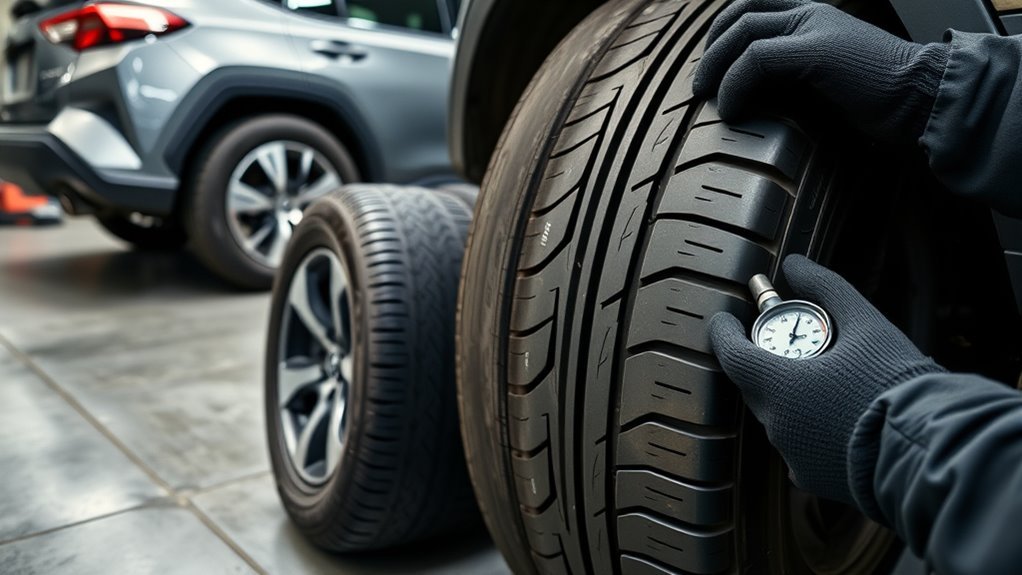
Maintaining your P-Metric and Euro-Metric tires is essential for guaranteeing safety and performance on the road. Start by regularly checking your tire pressure; proper inflation is critical for maximizing load capacity and enhancing vehicle handling. Always consult your vehicle’s placard for the recommended pressures.
Next, don’t overlook the importance of tire rotation. Following the manufacturer’s recommended intervals helps secure even wear, prolonging tire life and maintaining peak performance.
Equally important is inspecting tread depth. Regularly check your tires, and replace them when the tread falls below 2/32 of an inch. Adequate tread depth is key for traction and safety, especially in adverse conditions.
Common Misconceptions About P-Metric and Euro-Metric Tires
Many drivers mistakenly believe that P-metric and Euro-metric tires are interchangeable without any consequences. This tire myth can lead to performance differences that affect both safety and handling. Understanding the distinctions is essential for making informed choices.
- Load Capacity: P-metric tires typically support lower loads compared to Euro-metric tires.
- Pressure Requirements: Each type has specific pressure needs; mixing them can alter performance.
- Handling Characteristics: Euro-metric tires are engineered for different driving dynamics, impacting your vehicle’s response.
Switching from P-metric to Euro-metric isn’t always straightforward. You must consult your vehicle’s placard and fitment guide to guarantee compatibility. Ignoring these details can lead to issues that compromise your driving experience. So, don’t fall for the misconception—know the differences and choose wisely for peak performance.
Choosing the Right Tire for Your Vehicle
When choosing the right tire for your vehicle, understanding tire size and load capacity is essential. A proper fit guarantees ideal handling and safety, while the correct load capacity prevents potential issues on the road. Always refer to your vehicle’s placard to make informed decisions that enhance performance.
Tire Size Importance
Choosing the right tire size is essential for your vehicle’s performance and safety. The tire size designations, like P-metric and Euro-metric, directly impact how your RAV4 handles and responds on the road. Here’s why you should pay attention:
- Performance: Each tire type offers unique characteristics that affect handling and traction.
- Safety: Incorrect sizes can compromise your vehicle’s stability, especially in adverse conditions.
- Load Capacity: Matching the load index guarantees your tires can support your vehicle’s weight effectively.
Always consult your vehicle’s placard for specific tire size and load recommendations. Selecting the appropriate tires not only optimizes tire performance but also enhances your overall driving experience, keeping you safe on the road.
Load Capacity Considerations
Understanding load capacity is essential for ensuring your vehicle performs at its best under various conditions. The load index indicates how much weight each tire can safely support, impacting weight distribution and overall handling. P-metric tires typically have a lower load capacity than Euro-metric tires, which can affect performance, especially under heavy loads. For instance, a P215/60R16 tire supports 1,477 lbs, while a Euro-metric 215/60R16 can handle 1,521 lbs. Substituting tires without adhering to load index specifications can compromise safety. Always consult your RAV4’s tire fitment guide and the placard on the door jamb to choose the right tires based on load capacity.
| Tire Type | Load Capacity |
|---|---|
| P-Metric | 1,477 lbs |
| Euro-Metric | 1,521 lbs |
Resources for Further Tire Research and Support
Many drivers seek reliable resources to navigate the complexities of tire selection and maintenance. Understanding the differences in P-metric and Euro-metric tires is essential for effective tire buying. Here are some valuable resources to assist you:
Many drivers benefit from understanding P-metric and Euro-metric tires to make informed tire buying decisions.
- Consumer Reports: Check tire ratings and comparisons for insights on performance factors and reliability.
- Fitment Guides: Use detailed online guides to find the right tire size and designation for your RAV4 based on manufacturer specifications.
- Manufacturer Websites: Explore tire manufacturers’ sites for product descriptions, specs, and support tools to aid in brand comparisons and informed decisions.
Don’t forget to check the placard on your door jamb for recommended tire sizes and load ratings. Educating yourself with these maintenance resources guarantees you’re well-equipped to make the best choices for your vehicle.
Frequently Asked Questions
What Is the Difference Between P-Metric and Euro-Metric Tires?
P-metric tires are designed mainly for domestic vehicles, while Euro-metric tires offer higher load capacity and performance. Choosing the right type guarantees peak tire performance and safety, reflecting your vehicle’s needs and capabilities.
Can a P-Metric Sized Tire and a Euro-Metric Sized Tire May Have the Same Dimensions but Different?
Yes, a P-metric tire and a Euro-metric tire can have the same dimensions but differ markedly in tire compatibility and performance differences. Euro-metric typically supports higher load capacities, enhancing your vehicle’s overall handling.
Conclusion
In conclusion, understanding the difference between P-metric and Euro-metric tires is essential for your RAV4’s performance and safety. Did you know that choosing the right tire can improve fuel efficiency by up to 10%? Whether you opt for P-metric or Euro-metric, consider your driving style and conditions. Proper maintenance and timely replacements will guarantee you get the most out of your tires. Make an informed choice to enhance your driving experience!

Related Articles
Upsizing Wheels on a Toyota RAV4: Pros, Cons, and Considerations
Boost your Toyota RAV4's performance with larger wheels, but discover the hidden trade-offs that could impact your ride before you decide.
Read More
Can I Change Tire Size on My Toyota RAV4? Rules and Recommendations
Are you considering changing the tire size on your Toyota RAV4? Discover the essential rules and recommendations before making a decision.
Read More
What to Do If the TPMS Light Comes On in Your RAV4
Understand the steps to take when the TPMS light illuminates in your RAV4, as overlooking it could lead to serious tire problems.
Read More