
Do You Need New Wheels for Bigger Tires on a Toyota Tacoma
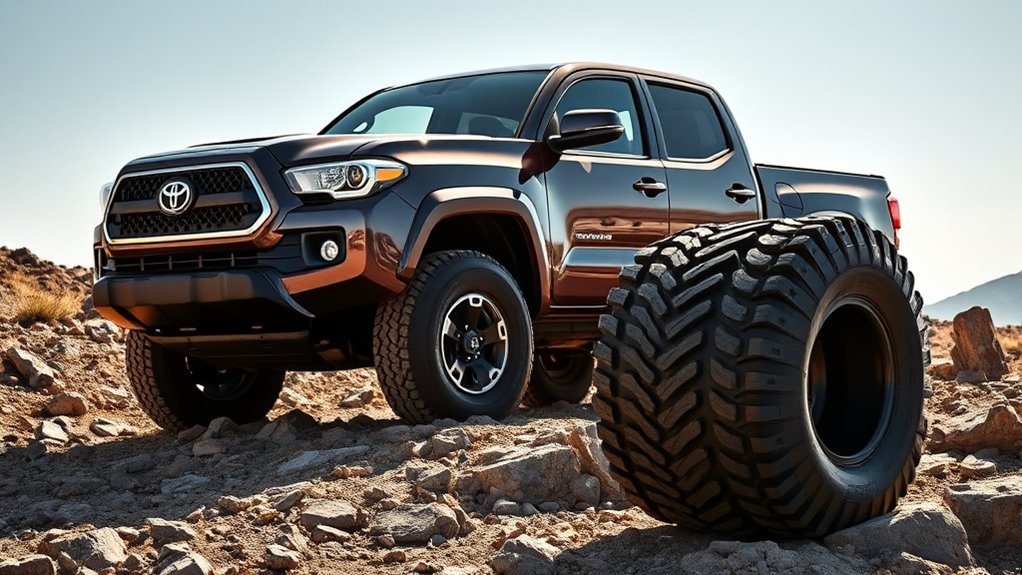
Fitting larger tires on a Toyota Tacoma does not automatically mean you need new wheels. The correct setup depends on your Tacoma’s year, trim, suspension, factory wheel size, the new tire’s width and approved rim-width range, and the wheel’s offset and backspacing. Start with the tire placard and owner’s manual, then confirm clearance through the full steering and suspension range before driving.
Quick Answer
You can often keep your Tacoma’s stock wheels when the larger tire is approved for the factory rim width and clears the suspension, body, brakes, and steering components. New wheels become necessary when the tire is too wide for the stock rim, the offset causes rubbing, or your build needs different brake or suspension clearance.
Key Takeaways
- Tire diameter alone does not determine whether you need new wheels. Tire width, approved rim width, offset, backspacing, and vehicle clearance matter just as much.
- A “33-inch” tire is not a guaranteed bolt-on fit for every Tacoma. Fitment changes by generation, trim, suspension, wheel specification, and actual tire dimensions.
- A lift can create body clearance, but it does not automatically correct wheel offset, upper-control-arm contact, body-mount interference, or full-compression rubbing.
- After changing tire size, check alignment, wheel-nut torque, tire pressure, TPMS operation, spare-tire fit, and speedometer accuracy.
Last updated: July 17, 2026 · Reviewed for fitment accuracy and safety.
What Are the Benefits of Upgrading to Larger Tires?
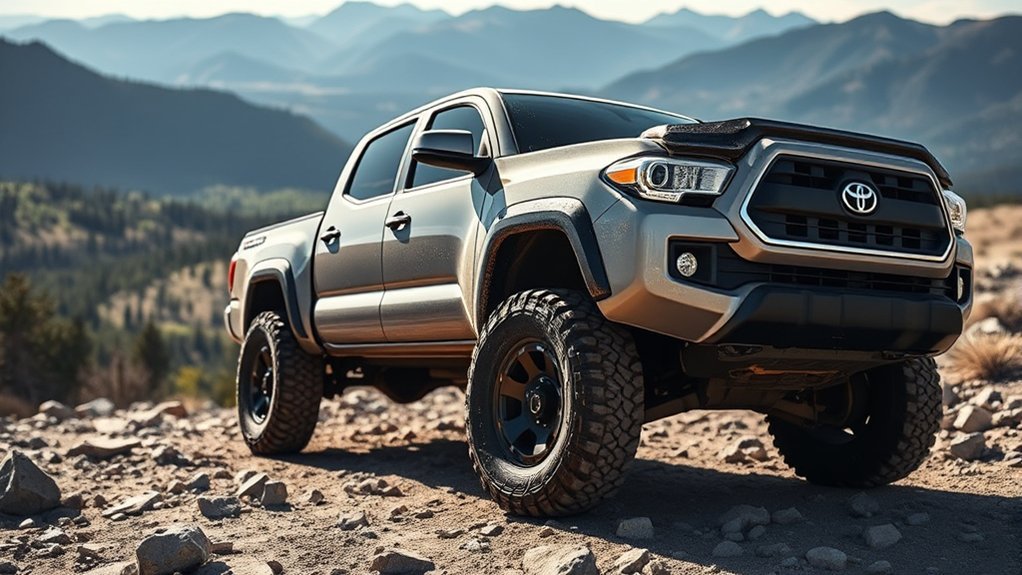
Larger all-terrain or mud-terrain tires can improve traction on loose surfaces and increase clearance under the axles. They can also give your Tacoma a wider, more aggressive stance. The size increase should match how you use the truck, because a tire that helps on rocks or mud may add noise, weight, steering effort, and rolling resistance during daily driving.
Remember that tire diameter only raises axle and differential clearance by about half the diameter increase. For example, moving from a 31.6-inch tire to a 33-inch tire adds roughly 0.7 inch of theoretical differential clearance, not two inches. Actual gains can be slightly smaller after accounting for load, pressure, and measured tire dimensions.
[Products Worth Considering]

Universal magnetic jack pad with aluminum grooved design to protect vehicle pinch welds during lifting. Durable nylon pad inserts are upgraded and secured with screws to resist damage and keep in place. Designed to fit most single vehicle pinpoint welds for safer, stable jacking when changing tires, repairs, or performing oil changes.

This VEVOR tire bead breaker uses a slide-hammer impact and wedge tip to separate tire beads from rims quickly and efficiently without damaging hub surfaces. The long handle and sturdy steel construction help reduce user strain while providing reliable, portable tire changing for cars, trucks, and more. Ideal for home mechanics and repair shops handling multiple vehicle tire sizes.

This 100-piece tire repair screw plug kit provides a fast, self-service solution for punctures on the road. Choose the correct plug size, insert it into the break, and screw it in to help seal the puncture and temporarily restore tire pressure. Thickened threads and rubber-wrapped plugs improve bite and sealing while remaining compact and easy to carry.
Do Stock Rims Fit Larger Tires?
Stock Tacoma wheels can fit some larger tires, but you must verify the exact tire rather than relying on the advertised diameter. Every tire model has an approved rim-width range published by its manufacturer. The factory wheel must fall within that range, and the mounted tire must clear the upper control arm, frame, body mount, fender liner, mud flaps, bumper, and brake components.
The 2024 Tacoma owner’s manual lists several factory combinations, including 17-inch wheels in 7-inch and 7.5-inch widths and 18-inch wheels in 7.5-inch and 8-inch widths, depending on the configuration. That variation shows why a single Tacoma fitment rule cannot cover every year and trim.
Toyota also equips the fourth-generation TRD Pro with factory 33-inch tires, dedicated wheels, a wider track, and model-specific suspension. That factory package does not prove the same tire will clear a standard SR, SR5, or earlier-generation Tacoma without changes.
Note: Two tires sold under the same nominal size can have different measured diameters, section widths, tread widths, and shoulder shapes. Always check the manufacturer’s specification sheet for the exact tire model.
Check Your Tacoma Generation and Factory Setup First
Tacoma fitment advice must identify the generation and configuration. A setup that clears a 2016–2023 truck may rub on a 2024-and-newer truck, and the reverse can also be true. Suspension height, brake size, body shape, steering geometry, and factory wheel specifications can change between generations and trims.
| Tacoma group | What to verify before choosing tires or wheels |
|---|---|
| 2005–2015 | Current suspension condition, wheel width and offset, body-mount clearance, bumper and liner clearance, and any previous lift or leveling work. |
| 2016–2023 | Trim-specific suspension, upper-control-arm clearance, alignment range, body mount, front liner and mud-flap clearance, and Toyota Safety Sense compatibility after lifting. |
| 2024 and newer | Exact factory wheel width, larger brake-package clearance, coil- or leaf-spring configuration, trim-specific track width, driver-assistance sensors, and TPMS initialization requirements. |
Essential Factors for Choosing Tacoma Wheels
Choose wheels as part of a complete tire-and-vehicle package. A wheel can share the correct bolt pattern yet still be unsafe or unusable because of the wrong center bore, offset, load rating, brake clearance, or lug-seat design.
| Factor | What to confirm |
|---|---|
| Bolt pattern and center bore | Match the exact model year and hub. Do not assume every Tacoma wheel is interchangeable. |
| Wheel diameter | Clear the brake caliper and provide a tire sidewall height suitable for your driving. |
| Rim width | Stay within the tire manufacturer’s approved range for the exact size and model. |
| Offset and backspacing | Balance inner suspension clearance against outer fender and body clearance. More negative offset is not automatically better. |
| Load rating | Use wheels and tires rated for the truck’s axle loads, payload, towing use, and intended terrain. |
| TPMS and valve hardware | Confirm sensor compatibility, installation method, ID registration, and system initialization. |
| Lug nuts and seat type | Use the lug hardware required by the wheel manufacturer and torque it to the correct specification. |
Pro Tip: Ask the wheel seller to confirm fitment in writing for your exact year, trim, drivetrain, brake package, tire size, and suspension setup. “Fits Tacoma” is not detailed enough.
Why Lift Kits Matter for Bigger Tire Fitment
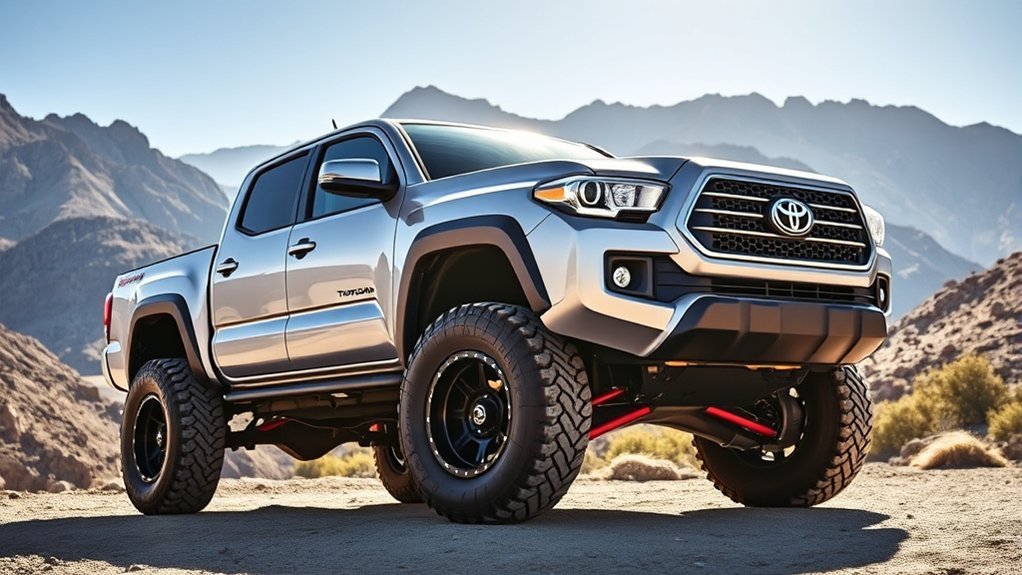
A lift or leveling kit can create more space between the body and the tire, but it is only one part of the fitment equation. It may not solve contact at the upper control arm, frame, body mount, bumper, or rear of the wheel opening. Lift height also does not guarantee clearance when the suspension compresses or the steering reaches full lock.
Improved Ground Clearance
A suspension lift raises parts of the chassis and body, which can improve approach, breakover, and departure angles. Larger tires increase clearance under the axles and differentials. These two changes work differently, so do not treat lift height and tire-radius gain as the same measurement.
Enhanced Off-Road Capability
A properly engineered lift can improve suspension travel and obstacle clearance while preserving predictable handling. Toyota’s TRD lift kit for eligible 2020-and-newer V6 4×4 Tacomas, for example, provides a two-inch front lift and one-inch rear lift and was validated for Toyota Safety Sense on the covered models. That does not make the same lift height a universal prescription for every Tacoma or tire size.
Better Aesthetic Appeal
A lift and larger tires can create a more aggressive stance, but appearance should follow correct geometry and safe clearance. Excessive wheel poke or offset can increase rubbing, spray debris outside the body, alter steering feel, and place additional leverage on wheel bearings and suspension parts.
Warning: Do not approve a setup based only on parked clearance. The tire must clear at full left and right steering lock and throughout suspension compression, including when the truck is loaded or articulated off-road.
How Tire Size Affects Tacoma Performance
Larger tires change more than ride height. Their diameter, width, construction, tread, and weight can affect acceleration, braking, steering, ride quality, fuel use, transmission behavior, and component wear.
Handling and Stability Changes
- Steering response: Wider or heavier tires can feel slower to turn and may follow road grooves more strongly.
- Cornering: Taller sidewalls may flex more, while aggressive tread blocks can feel less precise on pavement.
- Braking: Additional rotating mass can require more braking effort and may increase stopping distance.
- Suspension load: More wheel offset and tire weight can increase stress on bearings, ball joints, tie rods, and bushings.
- Alignment: Lifts and larger tires can reduce the available alignment range, making caster and toe settings especially important.
Fuel Efficiency and Effective Gearing
At the same road speed, a larger-diameter tire rotates fewer times per mile. This makes the effective gearing taller. The engine may run at lower RPM in the same transmission gear, but the truck may downshift more often or work harder during acceleration, towing, and hill climbing. Added tire weight, aggressive tread, increased rolling resistance, and lift-related aerodynamic drag can also reduce fuel economy.
Fuel additives do not correct the mechanical effects of a larger tire. Choose the lightest suitable tire, maintain the correct cold pressure for the load and tire setup, and consider drivetrain gearing only when the tire increase and driving demands justify it.
Speedometer, Odometer, and Driver-Assistance Effects
A larger rolling circumference can make the truck travel faster and farther than the speedometer and odometer indicate if the system is not recalibrated. Tire-size and suspension changes can also affect camera or radar aim on equipped trucks. After a significant change, ask a qualified Toyota or alignment specialist whether calibration is required for your model.
Do You Really Need Wheel Spacers?
Wheel spacers are not automatically required for larger tires, and they should not be the first response to every rubbing problem. A spacer moves the wheel outward. That may improve inner clearance at the upper control arm, but it can create new contact at the fender, liner, bumper, or body mount. It also changes scrub radius and increases leverage on the hub and suspension.
If a spacer is part of a verified fitment, use a vehicle-appropriate, hub-centric design from a reputable manufacturer. Follow the spacer maker’s installation, torque, inspection, and re-torque instructions. In many builds, a correctly specified wheel with the required offset and load rating is a cleaner long-term solution.
[Products Worth Considering]

EVOULTES heavy duty tire inflator with an integrated gauge delivers accurate pressure readings from 10–120 PSI, helping you inflate, deflate, and check tires in one tool. The 16.5-inch extended dual-head air chuck with swivel base reaches hard-to-access dual wheel valves on trucks and RVs. A brass trigger core and side-mounted air release valve make operation smooth, with standard 1/4" NPT threading and quick-connect compatibility for easy setup.
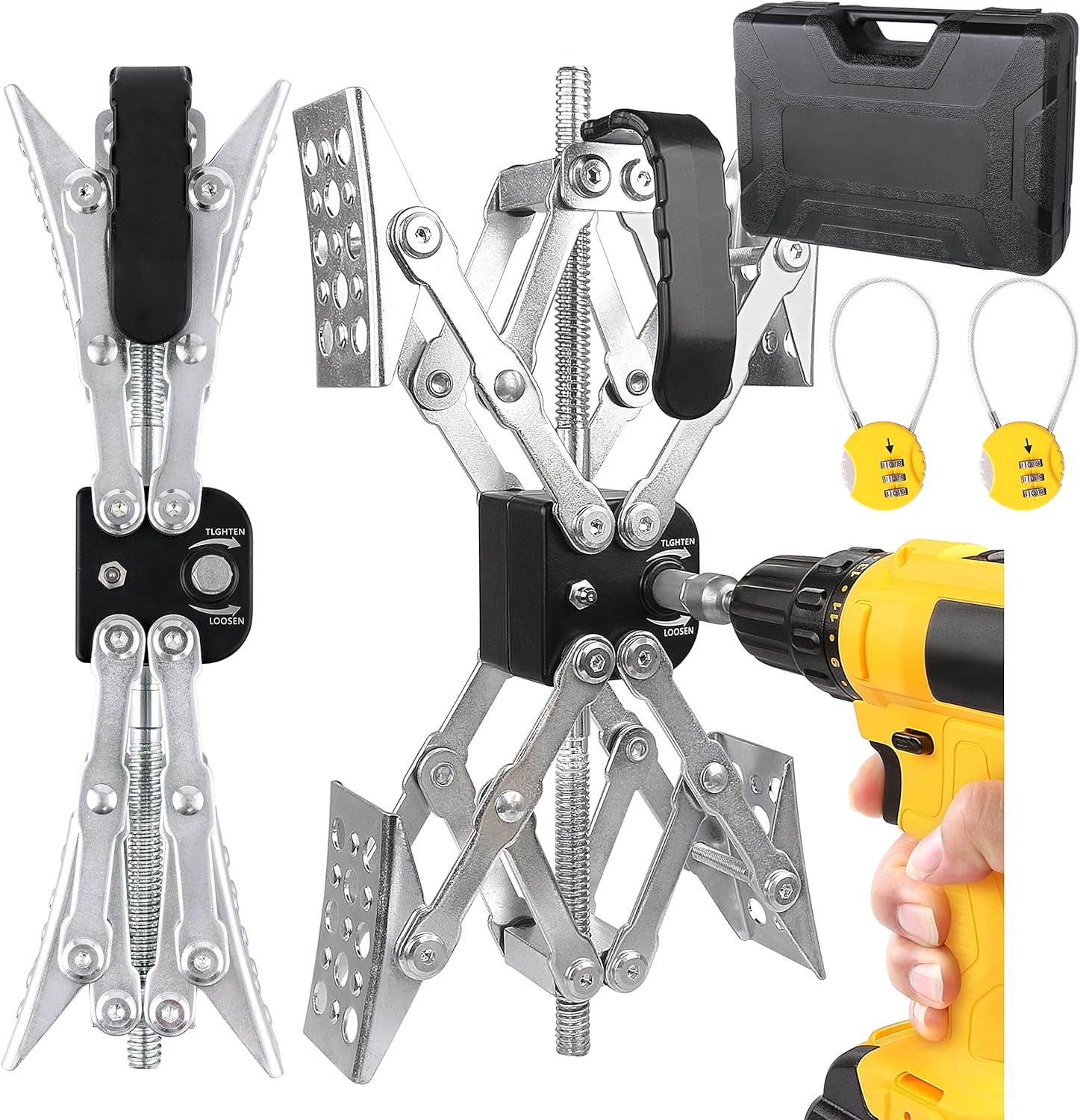
Lock the Maxchock X-style wheel stabilizers between tandem tires to reduce sway and keep your RV travel trailer secure while camping. The adjustable design fits a wide range of wheel gaps, and included hardware lets you install quickly with a power drill. Built from heavy-gauge steel with zinc plating, the chocks include locks and an organizer case for safer, more convenient use.
Possible Modifications for Fitting Larger Tires
The work needed depends on the actual tire dimensions and how you use the truck. A mild increase may fit with no changes, while a wide 33-inch or 35-inch tire can require several coordinated modifications.
- Alignment adjustment: Additional positive caster may move the tire forward for clearance, but settings must remain within a safe, drivable range.
- Fender-liner or mud-flap adjustment: Minor plastic interference may be corrected without cutting structural metal.
- Body-mount or bumper clearance work: Some aggressive setups need professional trimming or fabrication. Protect corrosion-prone cut surfaces.
- Lift or leveling components: Use parts designed for the exact Tacoma generation, trim, drivetrain, and driver-assistance equipment.
- Aftermarket upper control arms: These may restore alignment range or inner clearance on some lifted setups, but they are not mandatory for every lift.
- Drivetrain gearing: Very large or heavy tires may justify re-gearing when acceleration, towing response, or transmission behavior becomes unacceptable.
- TPMS service: The 2024 Tacoma manual states that the tire-pressure warning system must be initialized when tire size or inflation pressure changes and after transmitter ID registration.
- Spare-tire planning: Confirm that a matching spare fits its storage location and that the jack can safely lift the modified truck.
Tacoma Larger-Tire Fitment Checklist
- Record the exact truck configuration. Note the model year, trim, cab and bed, drivetrain, factory wheel and tire size, brake package, suspension, and existing modifications.
- Read the door placard and owner’s manual. Confirm the original tire size, load information, cold inflation pressure, and wheel-nut torque.
- Choose the exact tire model. Compare its measured diameter, section width, tread width, weight, load index, speed rating, and approved rim-width range.
- Verify the wheel. Confirm diameter, width, bolt pattern, center bore, offset, backspacing, load rating, brake clearance, lug seat, and TPMS compatibility.
- Compare inner and outer clearance. Check the upper control arm, tie rod, frame, sway bar, body mount, bumper, liner, fender, and mud flaps.
- Perform a controlled test fit. Turn from lock to lock and check clearance as the suspension compresses. Repeat with realistic payload where appropriate.
- Finish the installation correctly. Balance the tires, set alignment, initialize TPMS, verify pressure, torque the wheel nuts correctly, and recheck for contact after a short drive.
The best fitment is not the largest tire that can be forced onto the truck. It is the largest setup that clears safely, carries the required load, aligns correctly, and still works for your daily driving and off-road use.
Cost Considerations for Upgrades
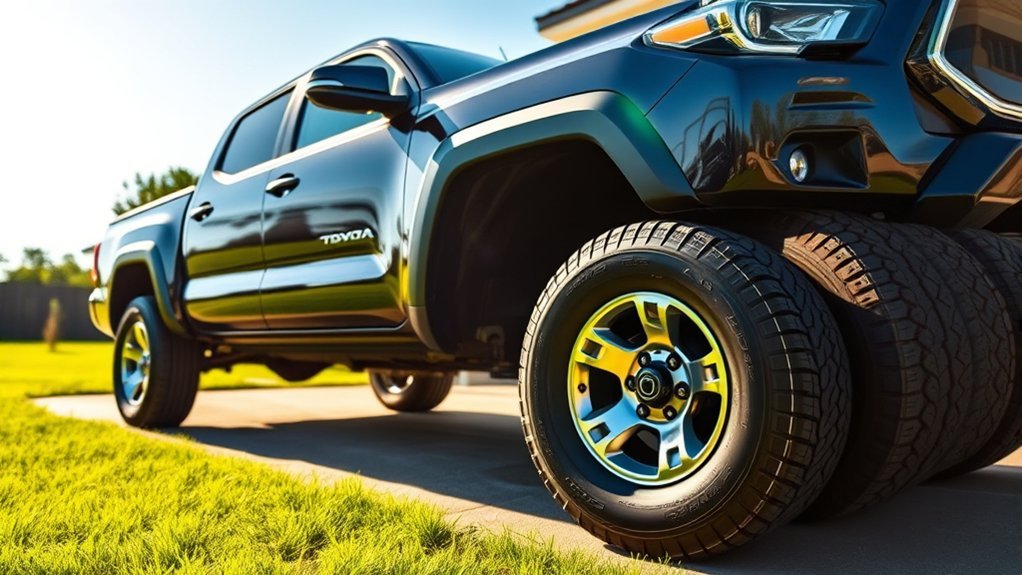
Do not budget only for four tires. Prices vary widely by size, construction, brand, location, and the amount of fabrication required, so fixed per-tire estimates become outdated quickly. Build your quote around the complete installation.
- Tires: Include a matching spare when possible.
- Wheels: Add compatible lug nuts, center rings if approved, valve hardware, and TPMS sensors.
- Installation: Budget for mounting, balancing, disposal fees, alignment, and a post-installation inspection.
- Clearance work: Include liners, mud flaps, bumper work, body-mount work, or professional fabrication when required.
- Suspension: A lift may also require control arms, differential-drop components, longer brake-line brackets, or sensor-related work, depending on the kit and model.
- Drivetrain and calibration: Significant changes may add speedometer correction, driver-assistance calibration, or re-gearing costs.
- Ongoing ownership: Heavier tires can increase fuel use and wear on brakes, steering, bearings, and suspension parts.
Final Thoughts: Stock Wheels or New Wheels?
Keep the stock wheels when the tire manufacturer approves their width, the tire clears every component through steering and suspension travel, the wheel has adequate load capacity, and the resulting stance meets your needs.
Buy new wheels when the chosen tire is outside the stock rim-width range, a different offset is needed for balanced inner and outer clearance, the factory wheel will not clear the brakes or suspension, you need a higher load rating, or you want a dedicated trail setup.
Do not select wheels by diameter and bolt pattern alone. A complete fitment check is more important than a generic claim that a certain tire size “fits a Tacoma.”
Frequently Asked Questions
What is the biggest tire you can put on a Toyota Tacoma?
There is no universal maximum for every Tacoma. The limit depends on the year, trim, wheel width and offset, suspension, alignment, tire model, and how much trimming or fabrication you accept. Some fourth-generation off-road trims come with factory 33-inch tires, but that does not make 33 inches a guaranteed no-modification fit on other trims or generations.
Can you put 285/70R17 tires on stock Tacoma wheels?
Possibly, but you must check the exact tire’s approved rim-width range and your factory wheel width. You must also verify inner control-arm clearance, body and liner clearance, alignment, load rating, and full-lock rubbing for your specific year and trim.
Do 35-inch Tacoma tires require new wheels?
They often require wider wheels or a different offset, but the tire manufacturer’s approved rim range decides whether the stock wheel is technically suitable. A 35-inch setup commonly needs extensive clearance, suspension, alignment, and possibly drivetrain work even when the tire can mount on the wheel.
Will a lift kit stop larger tires from rubbing?
Not always. A lift can improve body clearance, but rubbing may remain at the upper control arm, frame, body mount, bumper, fender liner, or during full suspension compression. Wheel offset, tire width, caster, and actual tire shape still matter.
Are wheel spacers a safe way to clear larger tires?
A properly designed and correctly installed spacer can create inner clearance, but it can also cause outer rubbing and change steering geometry and hub loading. Use spacers only as part of a verified setup, follow the manufacturer’s torque and inspection instructions, and consider a wheel with the correct offset instead.
Do new Tacoma wheels need new TPMS sensors?
You can sometimes transfer compatible sensors, but dedicated wheels usually need compatible sensors and transmitter ID registration. Tire-size or pressure changes may also require TPMS initialization. Follow the owner’s manual for your model year.
Conclusion
You do not automatically need new wheels when you install larger tires on a Toyota Tacoma. Keep the stock wheels when their width, load rating, offset, brake clearance, and TPMS hardware work with the exact tire and the truck clears safely. Choose new wheels when they solve a verified compatibility problem, not simply because the tire is labeled 33 or 35 inches. A professional test fit, alignment, and post-installation inspection will protect your truck and give you a more predictable result on the road and trail.
Sources
- Toyota 2024 Tacoma Owner’s Manual: Tires and Wheels — factory tire sizes, wheel widths, pressures, and wheel-nut torque.
- Toyota USA Newsroom: 2024 Tacoma — fourth-generation chassis, trim differences, TRD Pro ride height, track width, and factory 33-inch tires.
- Toyota USA Newsroom: Tacoma TRD Lift Kit — lift dimensions, eligible models, Toyota Safety Sense validation, and installation details.
- Toyota 2024 Tacoma Owner’s Manual: Items to Initialize — TPMS initialization after tire-size or pressure changes and transmitter registration.
- NHTSA TireWise — replacement-tire sizing, placard guidance, inflation, load, balance, alignment, and tire safety.
- Toyota 2024 Tacoma Owner’s Manual: Maintenance Requirements — maintenance responsibility and warranty-coverage guidance for non-Toyota parts or repairs.

Related Articles
How Tire Weight Affects Toyota Tacoma Performance
How does tire weight influence your Toyota Tacoma's performance and efficiency? Discover the surprising effects that could change your driving experience.
Read More
Tire Noise Levels by Tire Type on a Toyota Tacoma
A comprehensive look at how tire types affect noise levels in your Toyota Tacoma reveals surprising insights that could enhance your driving experience.
Read More
How To Choose Tires for a Dual Use Toyota Tacoma
Unlock the secrets to selecting the perfect tires for your dual-use Toyota Tacoma, ensuring optimal performance and comfort on every adventure. Discover more inside!
Read More