
Hybrid Terrain vs All Terrain Tires for a Toyota Tacoma
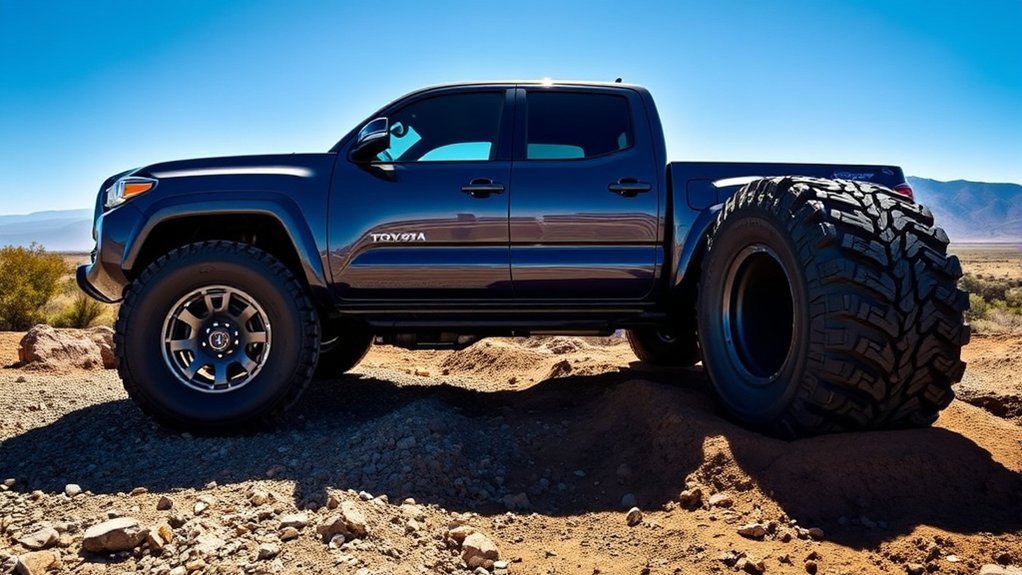
Choosing between hybrid-terrain and all-terrain tires for your Toyota Tacoma comes down to your real driving mix. Think about how often you commute, tow, haul, drive gravel roads, hit muddy trails, or deal with snow. Both tire styles can work well on a Tacoma, but they are not built for the same driver.
All-terrain tires usually make the most sense for daily driving with weekend dirt, gravel, camping roads, and light trails. Hybrid-terrain tires usually make more sense when you want stronger trail bite and a tougher off-road look without jumping all the way to a full mud-terrain tire.
Quick Answer
Choose all-terrain tires if your Tacoma spends most of its time on pavement with weekend gravel, dirt, snow, or light trail use. Choose hybrid-terrain tires if you need more bite for rocks, ruts, muddy roads, and rougher trails but still want better road manners than a true mud-terrain tire.
Key Takeaways
- All-terrain tires are the more practical default for most daily-driven Tacomas because they balance comfort, road noise, wet traction, and light off-road grip.
- Hybrid-terrain tires usually sit between all-terrain and mud-terrain tires, with a bolder tread, larger shoulder blocks, and more aggressive trail manners.
- Do not choose by tread style alone. Check your Tacoma’s tire size, load index, speed rating, rim width, and Tire and Loading Information Label first.
- For winter driving, look for the three-peak mountain snowflake symbol, but use dedicated winter tires if you regularly face ice, deep snow, mountain passes, or long freezing seasons.
- Fuel economy and noise depend on the exact tire model, size, weight, inflation pressure, tread design, and wear pattern, not only the tire category name.
Hybrid-Terrain vs All-Terrain Tires: Quick Comparison
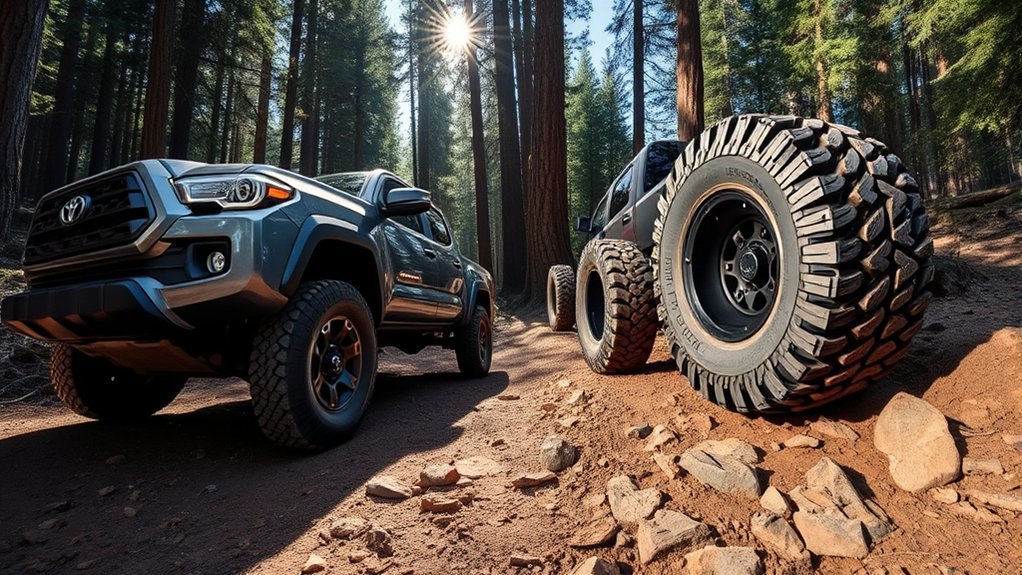
The best tire for your Toyota Tacoma depends on your normal week, not your most extreme trail day. A tire that feels great on a rocky forest road may feel loud and heavy during a long highway commute. A tire that feels smooth on pavement may not have enough shoulder bite for mud, ruts, and loose rock.
NHTSA describes all-terrain tires as a compromise between on-road driving and off-road capability. That is why many Tacoma owners start there. A good all-terrain tire can handle pavement, gravel, packed dirt, mild snow, and light trails without feeling too harsh for daily use.
Hybrid-terrain tires are less standardized as a category. Some brands use the term for tires that blend mud-terrain and all-terrain traits. For example, Nitto describes the Ridge Grappler as a hybrid terrain tire that takes features from its mud-terrain and all-terrain tire lines. That type of tire often gives you a tougher look and stronger off-road bite, but it can add weight, cost, and road noise compared with a milder all-terrain tire.
| Factor | All-Terrain Tires | Hybrid-Terrain Tires |
| Best for | Daily driving, gravel roads, packed dirt, light trails, rain, and mixed weather | More aggressive trail use, rocky roads, muddy access roads, ruts, and a tougher off-road look |
| Road comfort | Usually better with mild and touring-style all-terrain models | Can still ride well, but tread aggressiveness, tire weight, and load range matter |
| Noise | Often quieter than aggressive hybrid or mud-terrain-style tires | Varies by model; some use pitch tuning to reduce highway hum |
| Winter use | Good only when the exact tire has the right snow rating and cold-weather performance for your climate | Check carefully; aggressive tread does not automatically mean better ice traction |
| Main trade-off | Less aggressive in mud, ruts, and loose rock than tougher hybrid or mud-terrain designs | May add noise, weight, price, ride firmness, and fuel-use penalties |
[Products Worth Considering]

Keep RV, trailer, or truck dual-axle tires protected with waterproof, UV-resistant covers that help guard against sunlight, snow, rust, and dirt. The dual tire covers are easy to install with a rope/bungee fastener for a stable fit that won’t easily slip. Designed for 27–30 inch diameter wheels, they help maintain tire condition through harsh weather.
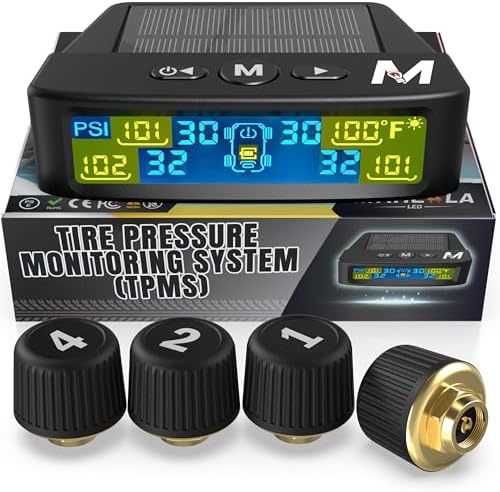
Marcala’s TPMS set of four sensors helps you monitor tire pressure and temperature in real time while driving, with updates every second. The bright color LCD uses auto-dimming for easy viewing, powered by dual solar and USB charging, and offers six alarm modes. Built for trailers, RVs, campers, trucks, and towing setups, the sensors support monitoring 1-4 wheels up to 98 PSI with IP67 waterproof protection.
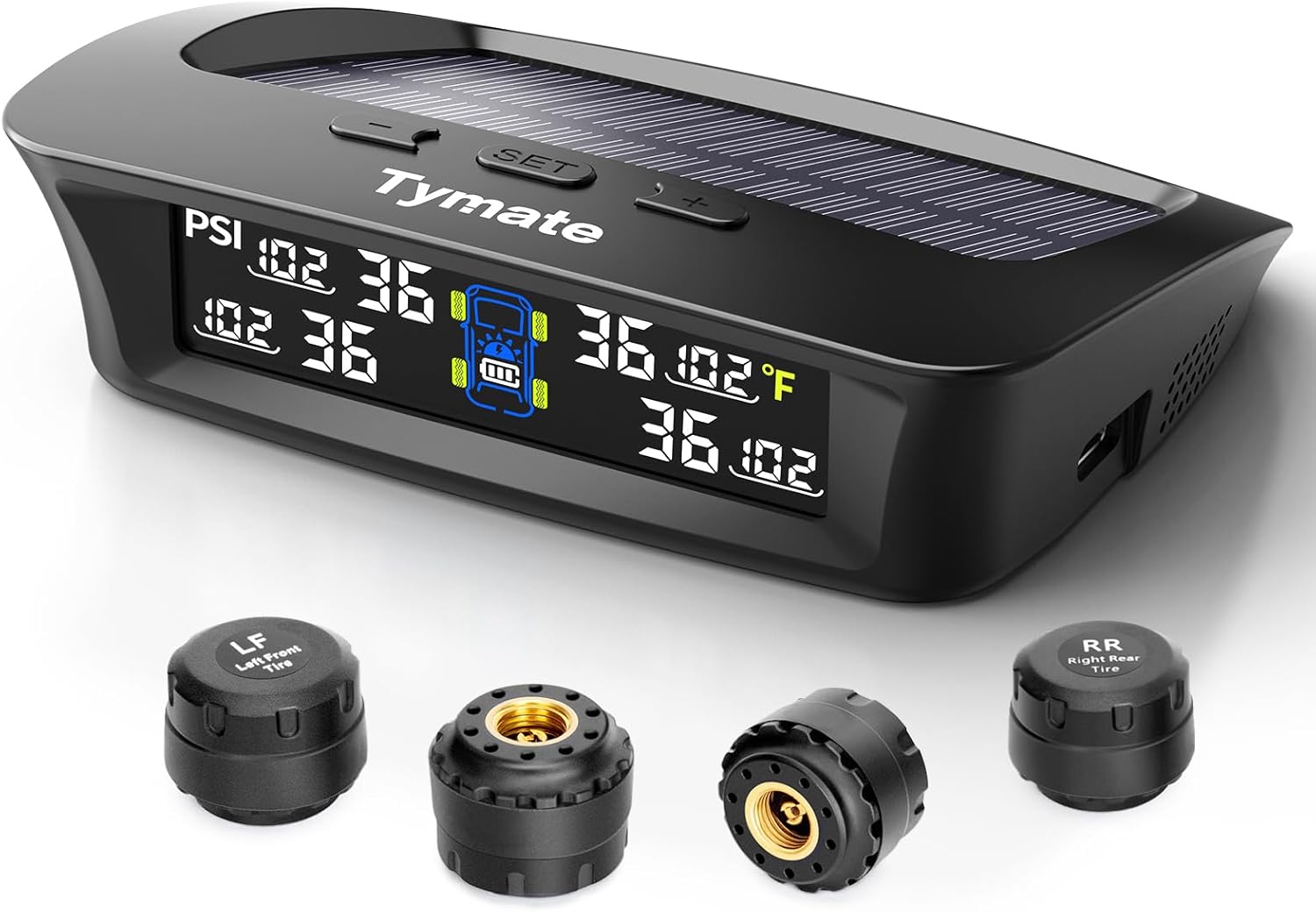
The Tymate TM3 RV TPMS delivers real-time tire pressure monitoring from 0 to 144 PSI with accurate readings and dependable wireless communication. It includes four external sensors with pre-pairing, six alarm modes for rapid leak, pressure extremes, temperature, and signal loss, plus an easy-reference setup for alert thresholds. Solar and USB-C charging help keep the display powered, while the color LCD and adaptive backlight improve visibility for safer driving and towing.
Best Choice by Tacoma Driving Style
Use your actual driving habits to narrow the choice before comparing brands. This is the fastest way to avoid buying more tire than you need.
| Your Tacoma Use | Better Starting Point | Why |
| Mostly highway and city driving | Highway-terrain or mild all-terrain | You get better comfort, lower noise, and less rolling weight than a more aggressive tire. |
| Daily driving plus camping roads | Balanced all-terrain | This gives you useful gravel and dirt traction without making the truck hard to live with. |
| Frequent rocky roads and trailheads | Aggressive all-terrain or hybrid-terrain | You may benefit from stronger shoulders, tougher construction, and better loose-surface bite. |
| Mud, ruts, ranch roads, and job sites | Hybrid-terrain | The extra voids and shoulder bite can help when a mild all-terrain starts to pack up or spin. |
| Deep mud or repeated technical off-roading | Mud-terrain or specialty off-road tire | A hybrid tire may not clear mud or handle repeated technical use as well as a tire built for that job. |
| Regular ice, deep snow, or mountain winter driving | Dedicated winter tires | A 3PMSF-rated all-terrain or hybrid tire helps in snow, but it is not a full replacement for winter tires in severe conditions. |
What You Need to Know About All-Terrain Tires
All-terrain tires are built for drivers who split time between pavement and unpaved surfaces. On a Tacoma, they make sense if you drive to work during the week, take forest roads on the weekend, and want one tire that can handle several surfaces without feeling extreme.
A typical all-terrain tire uses open tread blocks, shoulder features, and deeper grooves than a highway tire. That helps with gravel, dirt, wet grass, and light mud. Many all-terrain tires also come in light-truck sizes and load ranges that suit Tacoma owners who tow, haul, or add accessories.
The downside is that all-terrain tires are not all the same. A mild all-terrain tire may feel quiet and efficient but struggle in sticky mud. A more aggressive all-terrain tire may dig better off-road but hum more on the highway. Before you buy, compare the exact tire’s tread depth, weight, load rating, warranty, snow rating, and owner feedback for road noise.
Exploring Hybrid-Terrain Tires: Features and Benefits
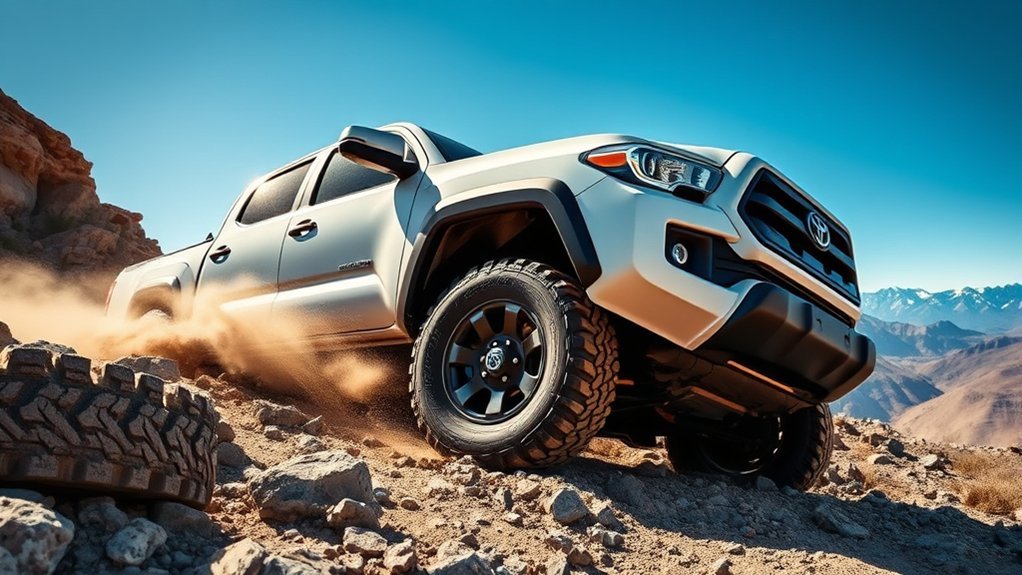
Hybrid-terrain tires try to give you some of the trail bite of a mud-terrain tire without going fully into mud-terrain road manners. They often use larger shoulder lugs, wider grooves, stone ejectors, and a tougher sidewall look. Some models also use tread-pitch design to control highway noise.
This style works well if your Tacoma sees rougher dirt roads, rocky trailheads, hunting roads, desert tracks, ranch roads, or muddy job sites. It can also make sense if you like a more aggressive stance but still drive on pavement often.
The trade-off is simple: more tire usually means more compromise. Larger tread blocks, heavier construction, and deeper voids can affect steering feel, braking distance, fuel use, and cabin noise. That does not make hybrid-terrain tires a bad choice. It means you should choose them because your driving needs justify the extra aggression.
Design and Performance Benefits
Hybrid-terrain tires can help when a standard all-terrain tire feels too mild but a full mud-terrain tire feels like too much. Look for these features when comparing models:
- Shoulder lugs: Larger shoulder blocks can help the tire bite in ruts, loose dirt, and light mud.
- Stone ejectors: Raised features inside the grooves can help reduce stone drilling on gravel and rocky roads.
- Reinforced tread blocks: Stiffer blocks can improve tread stability under load and on uneven surfaces.
- Pitch variation: Some tires use varied tread-block spacing to reduce repetitive road hum.
- Sidewall protection: Stronger sidewall features can help on rocks and rough job-site surfaces, but they do not make the tire immune to damage.
Versatility Across Terrains
A good hybrid-terrain tire can feel confident on pavement, gravel, hard-packed dirt, and moderate trails. It is often a smart middle ground for Tacoma owners who want more bite than a mild all-terrain tire but do not want the noise and wet-road compromises that can come with a full mud-terrain tire.
Still, “hybrid terrain” is a marketing category, not a single official performance standard. One hybrid tire may be quiet and road-friendly, while another may feel closer to a mud-terrain tire. Compare the actual model instead of assuming all hybrid-terrain tires behave the same way.
Key Differences Between Hybrid and All-Terrain Tires
The easiest way to compare these tires is to think about balance. All-terrain tires usually lean toward everyday versatility. Hybrid-terrain tires usually lean toward extra trail bite and a more aggressive look.
- Tread design: All-terrain tires usually use a balanced tread for pavement, gravel, dirt, and light off-road use. Hybrid-terrain tires often use larger shoulder lugs and more aggressive voids.
- Road manners: Mild all-terrain tires often feel quieter and smoother. Hybrid-terrain tires can still ride well, but the exact tread design matters more.
- Fuel economy: Tire weight, rolling resistance, tread depth, tire pressure, and size affect fuel use. Do not expect a guaranteed fuel-economy gain from switching categories.
- Off-road traction: Hybrid-terrain tires often offer more bite in loose dirt, rock, and mud than mild all-terrain tires, but they still may not match a dedicated mud-terrain tire in deep mud.
- Winter grip: Do not judge winter performance by tread aggression alone. Check for the three-peak mountain snowflake symbol and the tire maker’s winter guidance.
- Cost and wear: More aggressive tires often cost more and may wear differently if you mostly drive on pavement.
Performance: Hybrid vs All-Terrain Tires
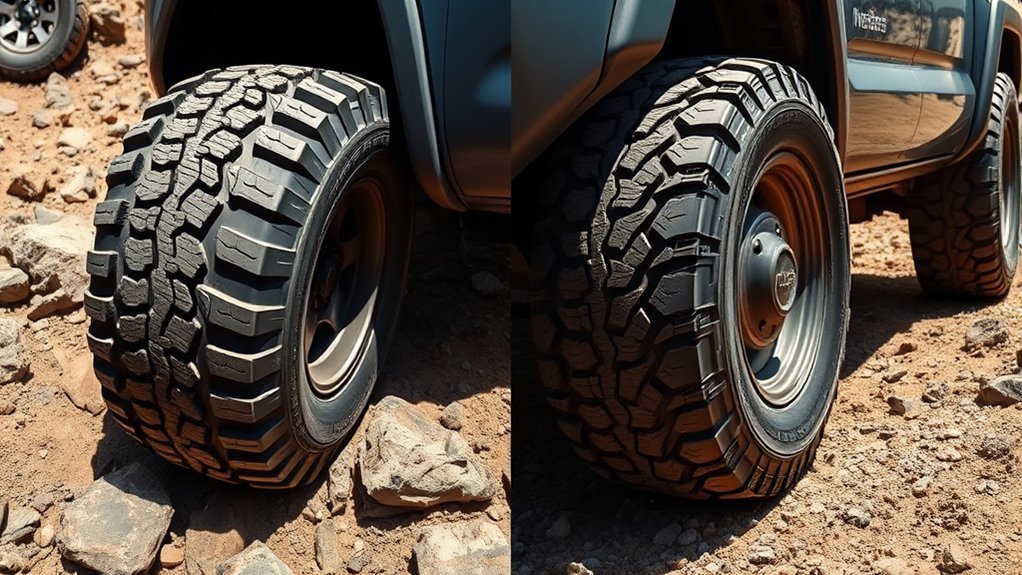
Performance depends on the exact tire, but the general pattern is clear. All-terrain tires often give Tacoma owners the best day-to-day balance. Hybrid-terrain tires make more sense when you want extra traction and toughness for rougher surfaces.
Performance Comparison Metrics
Use these real-world metrics before you choose:
- Dry and wet braking: Aggressive tread can help off-road, but it does not automatically improve wet-road stopping.
- Noise: Read owner feedback for your exact size. Larger LT sizes may sound different from P-metric sizes in the same tire line.
- Weight: Heavier tires can affect acceleration, braking feel, steering response, and fuel use.
- Tread depth: Deeper tread can help off-road, but it may squirm more on pavement when new.
- Load rating: Your tire must meet or exceed the load requirements for your Tacoma, especially if you tow, haul, or run a camper shell.
- Snow rating: If winter matters, look for the 3PMSF symbol instead of relying only on “M+S” markings.
Off-Road Capability Analysis
For gravel roads, mild trails, and dry dirt, a quality all-terrain tire usually gives you enough capability. It will also keep the truck easier to live with during the workweek.
For ruts, sharp rock, loose climbs, and muddy access roads, a hybrid-terrain tire can be the better match. The stronger shoulder design and more aggressive tread can help the tire grab when a milder all-terrain tire starts to spin.
If you spend a lot of time in deep mud, neither choice may be ideal. A mud-terrain tire may clear mud better, but it usually brings more noise, weight, and wet-road compromise. For many Tacoma owners, hybrid-terrain tires are the practical upper limit before a tire becomes too aggressive for daily use.
On-Road Handling Differences
On pavement, all-terrain tires usually feel more predictable if you choose a mild or touring-style model. They tend to suit commuting, highway trips, family use, and mixed weather.
Hybrid-terrain tires can still drive well, especially premium models with tuned tread patterns. However, they may feel heavier, louder, or less crisp during quick steering inputs. You may notice this more if you move from the factory tire size to a larger LT tire.
Note: A larger tire can change more than ground clearance. It can affect speedometer accuracy, braking feel, fuel economy, wheel-well clearance, spare-tire fit, and the way the truck shifts. Check fitment before you size up.
P-Metric vs LT Tires: What Tacoma Owners Should Know
Many Tacoma tire searches include both P-metric and LT tire options. P-metric tires are common on daily-driven trucks because they often ride smoother and weigh less. LT tires are built for light-truck use and may offer stronger construction, higher load capacity in some sizes, and tougher sidewalls.
That does not mean every Tacoma needs LT tires. An LT tire can ride firmer, weigh more, cost more, and require different inflation decisions. If you tow, haul tools, carry a camper shell, run a bed rack, or drive rough roads often, an LT tire may make sense. If your Tacoma is mostly a commuter, a properly rated P-metric or standard-load all-terrain tire may be the better daily choice.
Warning: Never assume a tougher-looking tire has the right load capacity. Match the tire size, load index, load range, and cold inflation guidance to your Tacoma’s Tire and Loading Information Label, owner’s manual, and real payload or towing setup.
Noise Levels: Comparing Hybrid and All-Terrain Tire Noise
Tire noise comes from tread block shape, void spacing, rubber compound, tire size, vehicle sound insulation, pavement texture, and wear pattern. That is why two tires in the same category can sound very different on the same Tacoma.
As a general rule, less aggressive all-terrain tires tend to stay quieter on long highway drives. Hybrid-terrain tires may hum more as they wear, especially if the tread blocks are large and the voids are wide. Some hybrid models use tread-pitch technology to reduce repetitive noise, but you should still compare reviews in your exact size.
| Noise Factor | What to Check |
| Tread pattern | Large, widely spaced blocks usually create more hum than tighter, staggered tread blocks. |
| Tire size | A larger or heavier LT tire may sound and feel different from the same model in a smaller P-metric size. |
| Wear pattern | Uneven wear from poor rotation, balance, or alignment can make any tire louder. |
| Road surface | Coarse pavement can make even a quiet tire sound rough inside the cabin. |
[Products Worth Considering]
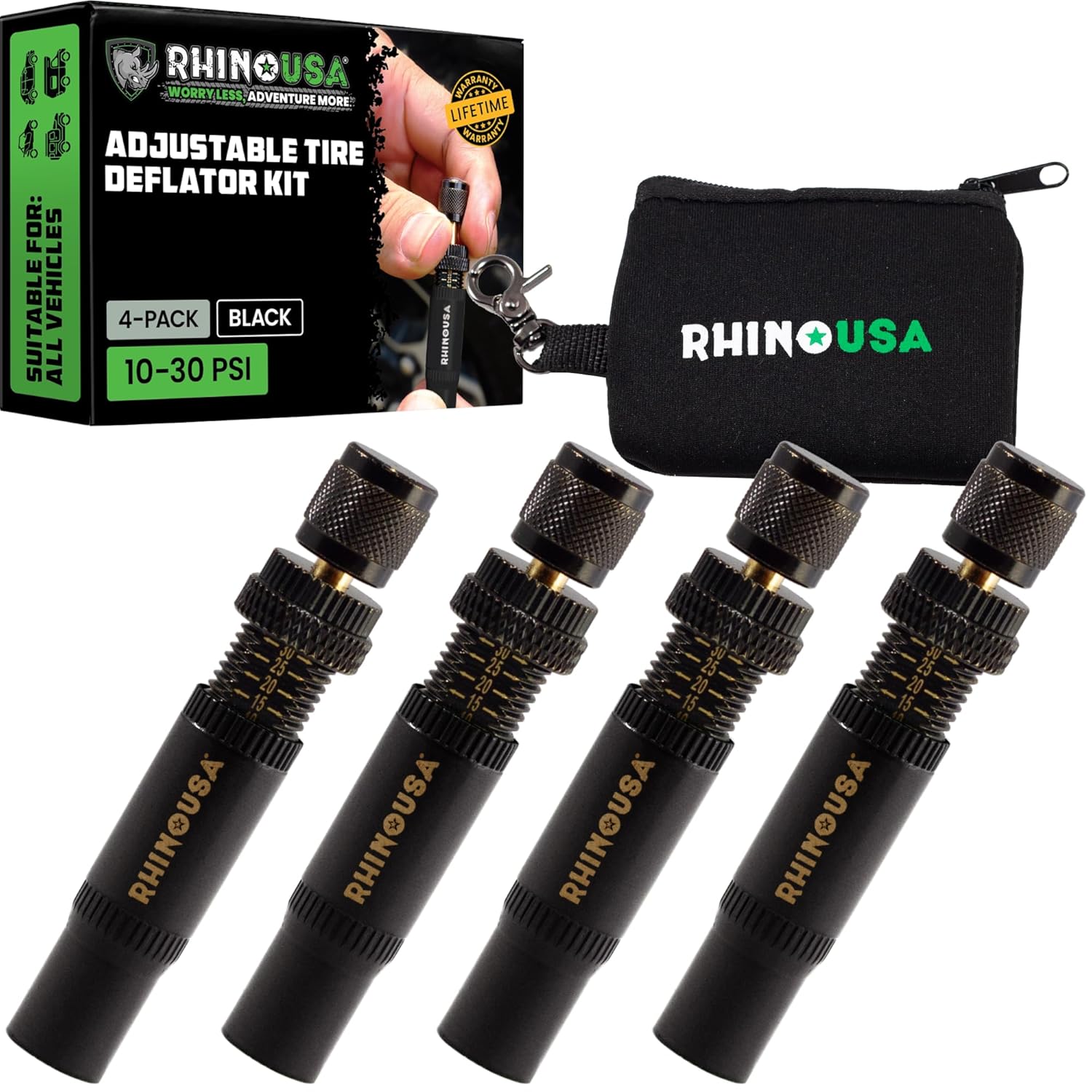
Use the Rhino USA adjustable tire deflators to air down all four tires at once by screwing one deflator onto each valve stem, letting you step away while the tires reach your preset pressure. Each deflator independently adjusts across a 10–30 PSI range with laser-etched indicators for quick setup and verification, making it ideal for beach, sand, and rocky off-road trails.

Camco Trailer Aid Plus tandem tire ramp lifts your trailer for quick, safe tire changes with ample clearance from its 5 1/2-inch lift. It helps you change a flat tire without unloading cargo, making roadside and routine maintenance more efficient. The heavy-duty, waterproof and rustproof polymer design supports up to 15,000 lb and is built for easy portability and storage.
Fuel Efficiency: Hybrid Terrain vs All-Terrain Tires
Fuel economy is one of the easiest areas to overstate. A tire’s rolling resistance matters, but so do tire pressure, size, weight, tread depth, driving speed, alignment, and how much cargo you carry.
FuelEconomy.gov says properly inflated tires can improve gas mileage by 0.6% on average and up to 3% in some cases. It also warns that underinflated tires can lower gas mileage by about 0.2% for every 1 psi drop in the average pressure of all tires. That is why pressure maintenance matters more than chasing a broad tire-category claim.
In general, a lighter and less aggressive all-terrain tire may use less fuel than a heavy hybrid-terrain tire. But the exact model matters. Some all-terrain tires are heavy, and some hybrid-terrain tires are designed with better road manners. Compare the tire’s weight, load range, and rolling-resistance reputation before you buy.
Rolling Resistance Comparison
Rolling resistance is the energy your Tacoma uses to keep the tire moving. More aggressive tread, extra weight, and low inflation pressure can increase that energy demand. A highway-focused tire often has an advantage here, while aggressive all-terrain and hybrid-terrain tires may trade some efficiency for traction and durability.
For a Tacoma that spends most of its time on pavement, avoid buying more tire than you need. A mild all-terrain tire may deliver the best mix of comfort, capability, and fuel use. If you need stronger off-road traction, accept that a hybrid-terrain tire may cost more to run.
How to Protect Fuel Economy
You can protect fuel economy by keeping the tire close to the factory size, choosing a reasonable load range, maintaining cold tire pressure, rotating on schedule, and fixing alignment problems quickly. These steps help no matter which tread category you choose.
Pro Tip: Check your Tacoma’s tire pressure when the tires are cold. Use the pressure on the driver-side Tire and Loading Information Label or owner’s manual, not the maximum pressure printed on the tire sidewall.
Driving Conditions Impact
Your driving mix should guide the final choice:
- Mostly pavement: Choose a mild all-terrain tire or even a highway-terrain tire if you rarely leave paved roads.
- Pavement plus gravel roads: Choose a balanced all-terrain tire with good wet-road reviews.
- Frequent trails and rocky roads: Choose a tougher all-terrain or hybrid-terrain tire with stronger sidewall protection.
- Mud and ruts: Consider hybrid-terrain tires, but understand their limits before moving to mud-terrain tires.
- Snow and ice: Prioritize winter rating and compound, not just an aggressive tread pattern.
Winter Performance: How Do Hybrid-Terrain Tires Compare?
Winter performance depends on more than tread depth. Rubber compound, siping, temperature behavior, and snow testing matter. A tire that looks aggressive may still slide on ice if the compound is not designed for cold weather.
The three-peak mountain snowflake symbol, often shortened to 3PMSF, shows that a tire has met a minimum light-snow acceleration-traction threshold. It is more meaningful than M+S alone. However, 3PMSF testing does not measure every winter condition. It does not test ice traction, snow braking, or snow cornering, and it does not make an all-terrain or hybrid-terrain tire equal to a dedicated winter tire.
Warning: If you regularly drive on ice, deep snow, mountain passes, or long freezing-season roads, use dedicated winter tires when your climate and local rules call for them. A 3PMSF-rated all-terrain tire can help in snow, but it is not a full replacement for a true winter tire in severe conditions.
| Winter Feature | What It Means |
| M+S | A mud-and-snow marking based mainly on tread geometry; it does not guarantee tested severe-snow performance. |
| 3PMSF | A performance-based severe-snow symbol tied to light-snow acceleration traction, but not a full test of ice, braking, or cornering. |
| Dedicated winter tire | Best choice for regular ice, deep snow, and long cold-weather seasons. |
How to Choose the Right Tire for Your Driving Style
Start with your Tacoma’s fitment requirements, then match the tread to your driving style. Before buying, check the owner’s manual or the driver-side Tire and Loading Information Label. Toyota’s owner resources can help you find manuals and warranty information for your model year.
- Confirm the correct size: Match the approved tire size or confirm that your alternate size fits safely.
- Check load index and load range: This matters if you tow, haul, use a bed rack, run a camper shell, or carry tools.
- Check speed rating: Do not downgrade below what your vehicle and driving conditions require.
- Check wheel width: The tire must be approved for your rim width.
- Check clearance: Larger tires may rub the fender liner, mud flaps, cab mount, or upper control arm.
- Check spare fit: A larger tire may not fit in the factory spare location.
- Check tire weight: Extra rotating weight can change acceleration, braking feel, and fuel economy.
- Check local winter rules: Some areas require winter tires, chains, or traction devices during certain conditions.
Choose All-Terrain Tires If
- You drive mostly on pavement but want confidence on gravel, dirt, rain, and light snow.
- You care about highway comfort and lower cabin noise.
- You take weekend trails but do not need a mud-focused tire.
- You want a wide range of choices, from mild touring-style all-terrain tires to aggressive all-terrain tires.
- You tow or haul and need a practical tire that still behaves well on the road.
Choose Hybrid-Terrain Tires If
- You want more shoulder bite and a tougher look than a mild all-terrain tire provides.
- You drive rough access roads, rocky trails, job sites, ranch roads, or muddy trailheads often.
- You are willing to accept possible extra noise, weight, and fuel use for stronger off-road traction.
- You do not want to jump all the way to a full mud-terrain tire.
Think Twice If You Mostly Drive Highways
If your Tacoma rarely leaves paved roads, a hybrid-terrain tire may be more aggressive than you need. A highway-terrain tire or mild all-terrain tire may give you better comfort, lower noise, and easier long-distance driving.
Maintenance Tips for Prolonging Tire Life and Performance
Good tire maintenance matters as much as the category you choose. Poor pressure, missed rotations, imbalance, or bad alignment can make an expensive tire wear quickly and perform poorly.
NHTSA recommends checking tire pressure at least once a month when tires are cold. It also says tires should be replaced when treadwear indicators show the tread is worn out, and the penny test can help you spot tread that has reached replacement depth.
- Check cold tire pressure monthly: Include the spare if your Tacoma has a full-size spare.
- Inspect tread depth: Replace tires when tread is worn to the legal minimum, or sooner if performance, cracking, damage, or local winter rules require it.
- Rotate on schedule: Check your owner’s manual. If the vehicle maker recommends it, NHTSA notes that many tires are rotated every 5,000 to 8,000 miles or sooner if uneven wear appears.
- Balance new tires: Balancing helps prevent vibration and uneven wear.
- Check alignment: If the truck pulls, the steering wheel sits off-center, or the tread wears unevenly, get the alignment checked.
- Inspect after trail use: Look for cuts, sidewall bulges, embedded stones, missing chunks, and bead damage.
Frequently Asked Questions
How do tire warranties differ between hybrid and all-terrain options?
Warranty coverage depends on the exact tire model, size, and load type. Some all-terrain tires include a mileage warranty, while more aggressive hybrid-terrain or LT versions may have shorter coverage or different limits. Read the manufacturer warranty for your exact size before you buy.
Can I use hybrid-terrain tires in extreme off-road conditions?
You can use hybrid-terrain tires off-road, and many work well on rocks, gravel, ruts, and moderate mud. For deep mud, repeated rock crawling, or aired-down technical trails, a dedicated mud-terrain or specialty off-road tire may work better. Match the tire to the hardest terrain you drive often, not once a year.
What are the best brands for hybrid and all-terrain tires?
Many Tacoma owners compare models from BFGoodrich, Falken, Toyo, Nitto, Goodyear, Michelin, Yokohama, Cooper, and General. Still, the best choice depends on your size, budget, snow needs, noise tolerance, load rating, and trail use. Compare specific tire models instead of buying by brand name alone.
How long do hybrid and all-terrain tires typically last?
Many all-terrain and hybrid-terrain tires can last tens of thousands of miles, but there is no single number that fits every model. Tire life depends on compound, load range, rotation habits, alignment, air pressure, driving style, road surface, towing, and trail damage. Use the tire maker’s warranty and real owner reports as a guide.
Are hybrid-terrain tires suitable for towing heavy loads?
They can be, but only if the tire’s size, load index, load range, and pressure requirements match your Tacoma and towing setup. Do not assume a tougher tread means enough load capacity. Check the door placard, owner’s manual, trailer weight, payload, and tire sidewall ratings before towing.
Are all-terrain tires better than hybrid-terrain tires in snow?
Not automatically. A 3PMSF-rated all-terrain tire may perform better in snow than a hybrid-terrain tire without that rating, but the reverse can also be true depending on the model. For regular ice and severe winter driving, dedicated winter tires are still the better tool.
Will hybrid-terrain tires hurt my Tacoma’s fuel economy?
They might if they are heavier, larger, or more aggressive than your current tires. Fuel economy depends on tire weight, rolling resistance, inflation pressure, tread pattern, and driving habits. Keeping tires properly inflated and aligned helps protect mileage with either tire type.
Should I choose P-metric or LT tires for my Tacoma?
Choose based on load needs and driving conditions. P-metric tires often ride smoother and weigh less, which helps daily comfort. LT tires may make sense for towing, hauling, sharp gravel, rocky roads, and heavier builds, but they can ride firmer and weigh more. Always match the tire to your Tacoma’s load requirements.
Do hybrid-terrain tires rub on a stock Tacoma?
The tread category alone does not determine rubbing. Rubbing depends on tire size, wheel offset, rim width, suspension setup, mud flaps, fender liner clearance, and how the tire measures in real life. Before upsizing, confirm fitment with a tire professional or Tacoma-specific fitment data for your exact generation and trim.
Conclusion
For most Toyota Tacoma owners, all-terrain tires are the best starting point because they balance road comfort, off-road traction, wet-road manners, and daily usability. They fit the way many Tacomas are actually used: commuting during the week, then handling gravel roads, campsites, trailheads, and light snow on weekends.
Choose hybrid-terrain tires when you want more trail bite, a stronger off-road look, and better rough-road confidence than a mild all-terrain tire offers. Just make sure the added aggression matches your real driving needs. The right tire is not the boldest one on the shelf. It is the one that fits your Tacoma, your load, your climate, and the roads you drive most.
Sources
- NHTSA TireWise — tire types, tire sizing, inflation pressure, tread depth, rotation, alignment, and safety guidance.
- FuelEconomy.gov: Keeping Your Vehicle in Shape — tire pressure and fuel-economy impact.
- Toyota Owners Manuals and Warranties — owner manual lookup and Toyota maintenance resources.
- Nitto Ridge Grappler — example of a manufacturer-labeled hybrid-terrain tire and its feature claims.
- Tire Rack: Three-Peak Mountain Snowflake Symbol — 3PMSF meaning and winter-performance limitations.

Related Articles
How Tire Weight Affects Toyota Tacoma Performance
How does tire weight influence your Toyota Tacoma's performance and efficiency? Discover the surprising effects that could change your driving experience.
Read More
Tire Noise Levels by Tire Type on a Toyota Tacoma
A comprehensive look at how tire types affect noise levels in your Toyota Tacoma reveals surprising insights that could enhance your driving experience.
Read More
How To Choose Tires for a Dual Use Toyota Tacoma
Unlock the secrets to selecting the perfect tires for your dual-use Toyota Tacoma, ensuring optimal performance and comfort on every adventure. Discover more inside!
Read More