
How Tire Tread Pattern Affects Toyota Tacoma Performance
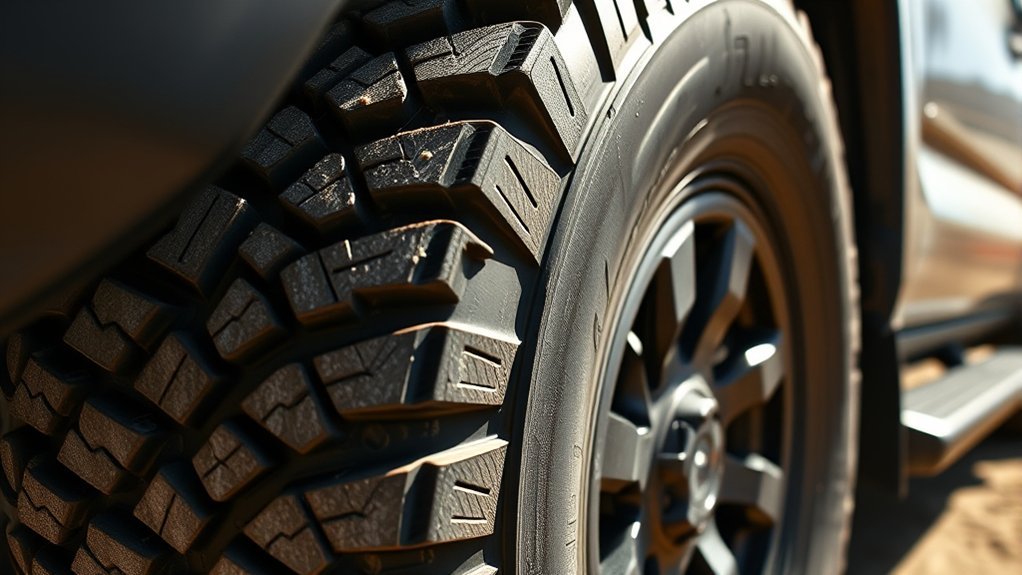
Tire tread patterns affect how your Toyota Tacoma grips, brakes, steers, rides, and wears its tires. The best tread is not always the most aggressive one. A daily-driven Tacoma, a towing Tacoma, and a trail-focused Tacoma need different tread designs, load ratings, and maintenance habits.
Quick Answer
Tire tread patterns affect your Tacoma’s traction, braking, handling, fuel economy, road noise, and treadwear. Highway-style treads are usually quieter and more efficient, all-terrain treads balance pavement and trail use, mud-terrain treads dig better off-road, and winter-rated tires improve cold-weather grip.
Key Takeaways
- Choose tread by how you actually drive: pavement, rain, towing, gravel, mud, rocks, snow, or a mix.
- Before buying tires, verify your Tacoma’s tire size, load rating, and cold tire pressure on the driver-side Tire and Loading Information Label or in the owner’s manual.
- Replace tires when tread reaches 2/32 inch, and consider replacing earlier if you often drive in heavy rain, snow, or off-road conditions.
- Aggressive tread can improve loose-terrain bite, but it often adds road noise, weight, rolling resistance, and faster pavement wear.
At a Glance
| Time Required | 10–20 minutes to inspect your current tires and choose the right tread category |
| Difficulty | Easy for planning; professional installation recommended |
| Tools Needed | Tread-depth gauge, tire-pressure gauge, Tacoma owner’s manual, and driver-side doorjamb tire label |
| Cost | About $5–$25 for basic gauges; tire cost varies by size, load rating, brand, and tread type |
The Role of Tire Tread Patterns in Tacoma Performance
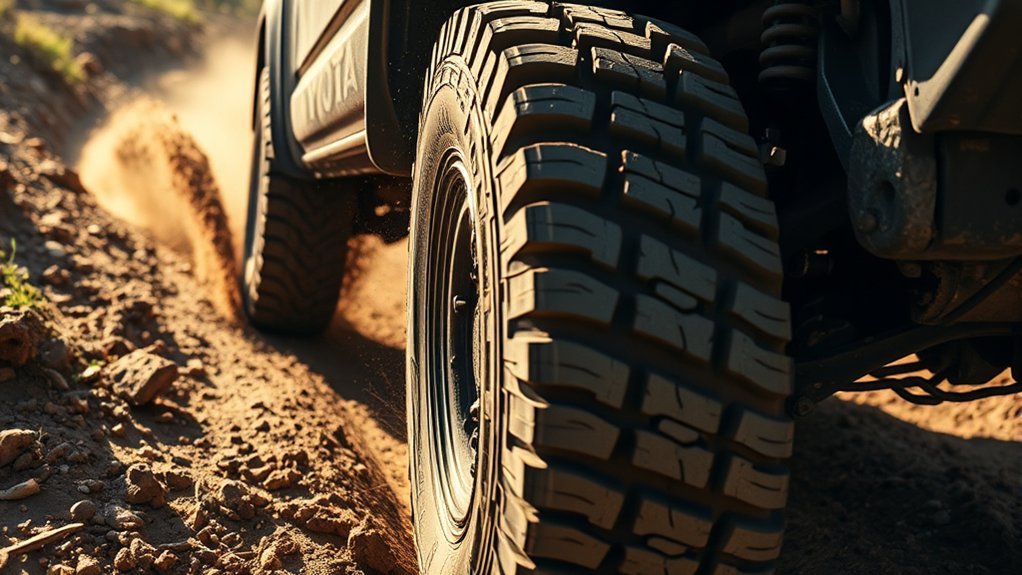
A tire’s tread pattern is the part of the tire that manages contact with the road or trail. The shape and spacing of the tread blocks, ribs, grooves, sipes, shoulders, and voids influence how the tire clears water, bites into loose ground, resists squirm, and transmits steering input.
For a Toyota Tacoma, tread choice matters because the truck may be used for very different jobs: daily commuting, highway trips, towing, job-site driving, gravel roads, beach access, snow, mud, or rock trails. A tread that feels perfect on a trail can be loud and heavy on the highway. A quiet highway-terrain tire can feel short on bite in mud or rutted dirt.
The National Highway Traffic Safety Administration notes that tire design affects durability, wet and dry traction, handling, ride comfort, rolling resistance, and fuel efficiency. That is why tread pattern should be chosen alongside tire size, load rating, pressure, and driving conditions.
[Products Worth Considering]

EVOULTES heavy duty tire inflator with an integrated gauge delivers accurate pressure readings from 10–120 PSI, helping you inflate, deflate, and check tires in one tool. The 16.5-inch extended dual-head air chuck with swivel base reaches hard-to-access dual wheel valves on trucks and RVs. A brass trigger core and side-mounted air release valve make operation smooth, with standard 1/4" NPT threading and quick-connect compatibility for easy setup.

The JACO FlowPro Tire Inflator measures, inflates, and airs down tires up to 100 PSI with battery-free operation and ±2% accuracy after calibration. It features a glowing pressure dial for night visibility, a heavy-duty steel build with a hybrid hose, and a precision push-to-inflate thumb trigger. The patented Lightning Air Chuck locks on for a secure seal, and the kit includes quick-connect hardware for easy inline use with your air compressor.

The Fanttik X10 Pro is a cordless portable tire inflator that reaches up to 150 PSI and can inflate an R15 tire in about 35 seconds for quick roadside or home top-ups. With AccuInFlate auto-stop and smart start/stop controls, it helps maintain accurate pressure and frees your hands once the target is reached. A high-visibility digital display and preset modes make it easy to set and monitor inflation for cars, motorcycles, bikes, and balls.
How Tread Pattern Parts Affect Grip, Noise, and Wear
Understanding a few tread terms makes tire shopping easier:
- Ribs: Continuous raised bands that help stability, steering feel, and even wear on pavement.
- Blocks or lugs: Individual tread sections that create biting edges for dirt, gravel, snow, and mud.
- Grooves: Channels that move water away from the contact patch to help wet-road traction.
- Sipes: Small slits in the tread blocks that add biting edges, especially useful in wet and winter conditions.
- Voids: Open spaces between tread blocks. Larger voids help clear mud and loose material but often increase noise and reduce smoothness.
- Shoulders: Outer tread edges that affect cornering, off-road side bite, and how the tire handles ruts.
Bridgestone’s tire tread pattern guide explains that different tread layouts are built for different driving conditions. On a Tacoma, that means you should choose the pattern that matches your main use, not just the most aggressive-looking tire.
The right tread pattern is a trade-off. More off-road bite usually means more road noise, more rolling resistance, and more pavement wear.
Choosing the Right Tread Design for Your Tacoma
Start with your real driving mix. A Tacoma that spends 90% of its life on pavement does not need the same tread as a Tacoma that spends weekends on mud, rocks, and forest roads.
| Tread Type | Best For | Main Trade-Off |
| Highway-terrain / touring truck tread | Commuting, highway trips, light towing, wet pavement | Less grip in mud, ruts, and loose off-road terrain |
| On-road all-terrain | Daily driving with gravel, dirt roads, camping, and occasional trail use | Moderate off-road ability, but not as aggressive as mud-terrain tires |
| Off-road or rugged all-terrain | Mixed pavement and trail use, rocky roads, tougher gravel, light mud | More noise, weight, and possible fuel-economy loss than highway tread |
| Mud-terrain / maximum-traction tread | Deep mud, loose dirt, ruts, and more serious off-road driving | Usually louder, rougher, heavier, and faster-wearing on pavement |
| Winter / severe-snow-rated tire | Snow, ice, freezing temperatures, mountain passes | Not ideal for year-round hot-weather use |
Recent Tire Rack all-terrain testing used a Toyota Tacoma in size 265/70R17 and showed why category matters. All-terrain tires are not all the same: some are built mainly for road comfort, while others lean harder toward trail traction.
Pro Tip: If your Tacoma is a daily driver that only sees occasional dirt roads, start with an on-road all-terrain tire before jumping to a mud-terrain tread. You will usually get better comfort, lower noise, and longer pavement life.
Check Tacoma Fitment Before You Buy
Tread pattern is only one part of the decision. A good Tacoma tire also has to fit the truck correctly and carry the load safely.
- Check the factory tire size: Use the driver-side Tire and Loading Information Label or the Toyota Tacoma owner’s manual resources.
- Match the load rating: This matters if you tow, haul tools, carry camping gear, or run a heavier overland setup.
- Use the correct cold tire pressure: The correct pressure is the vehicle manufacturer’s number on the label or in the manual, not the maximum pressure molded on the tire sidewall.
- Consider wheel and spare fitment: Oversized tires may rub, change speedometer readings, affect braking feel, or leave you with a mismatched spare.
- Stay consistent on each axle: Tires on the same axle should match in size, construction, and profile.
Warning: Do not choose a tire only by appearance. The wrong size, load rating, or pressure can reduce handling, increase wear, and create safety problems, especially when towing or carrying a heavy load.
Evaluating Terrain Effects on Tread Selection
Terrain plays a major role in tire tread selection for your Toyota Tacoma. The more specific you are about your driving conditions, the better your tire choice will be.
Mostly Pavement and Highway Driving
If your Tacoma spends most of its time on paved roads, a highway-terrain or on-road all-terrain pattern is usually the best fit. These tires tend to have tighter tread blocks, continuous ribs, and lower void area, which can improve steering response, ride smoothness, and noise control.
Rain and Wet Roads
Look for strong circumferential grooves, lateral channels, and enough tread depth to move water away from the contact patch. Worn tread reduces a tire’s ability to evacuate water, which can increase stopping distance and hydroplaning risk.
Gravel, Dirt Roads, and Job Sites
An all-terrain tread is often the sweet spot. It adds stronger shoulders and more biting edges than a highway tread without becoming as loud or rough as a mud-terrain tire.
Mud, Ruts, and Loose Soil
Choose a more open tread with larger voids and stronger lugs. These patterns help the tire dig and self-clean. The trade-off is more road noise and often quicker wear if most miles are on pavement.
Rocks and Trail Use
Look for strong sidewalls, reinforced shoulders, and tread blocks that can grip uneven surfaces. If you air down off-road, follow safe pressure practices and air back up before returning to highway speeds.
Snow and Ice
Deep grooves alone do not make a tire a winter tire. For regular snow and ice, look for tires designed for severe snow service and consider dedicated winter tires if your Tacoma sees frequent freezing conditions.
Note: Four-wheel drive helps a Tacoma move, but it does not shorten stopping distance on worn or poorly matched tires. Braking and steering still depend heavily on tread condition and tire grip.
Tread Depth: Safety and Maintenance Tips
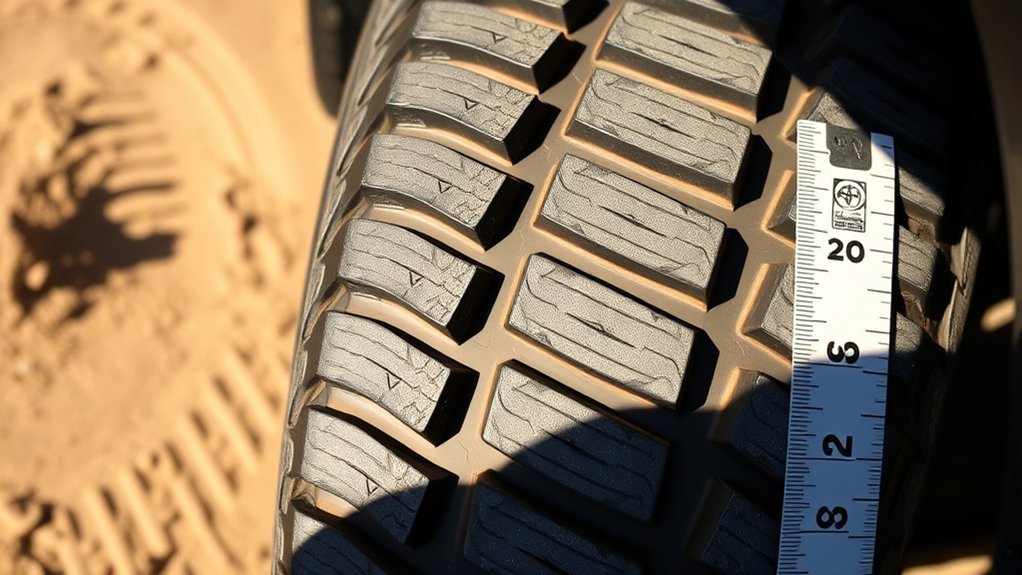
Maintaining adequate tread depth is essential for safety and performance. Under 49 CFR § 570.9, tread should not be less than 2/32 inch. NHTSA also says tires are not safe and should be replaced when tread is worn down to 2/32 inch.
For a Tacoma that regularly sees rain, snow, gravel, or towing, it is smart to start planning replacement before the tires reach the legal minimum. More tread depth gives the tire more room to evacuate water and bite into loose surfaces.
[Products Worth Considering]
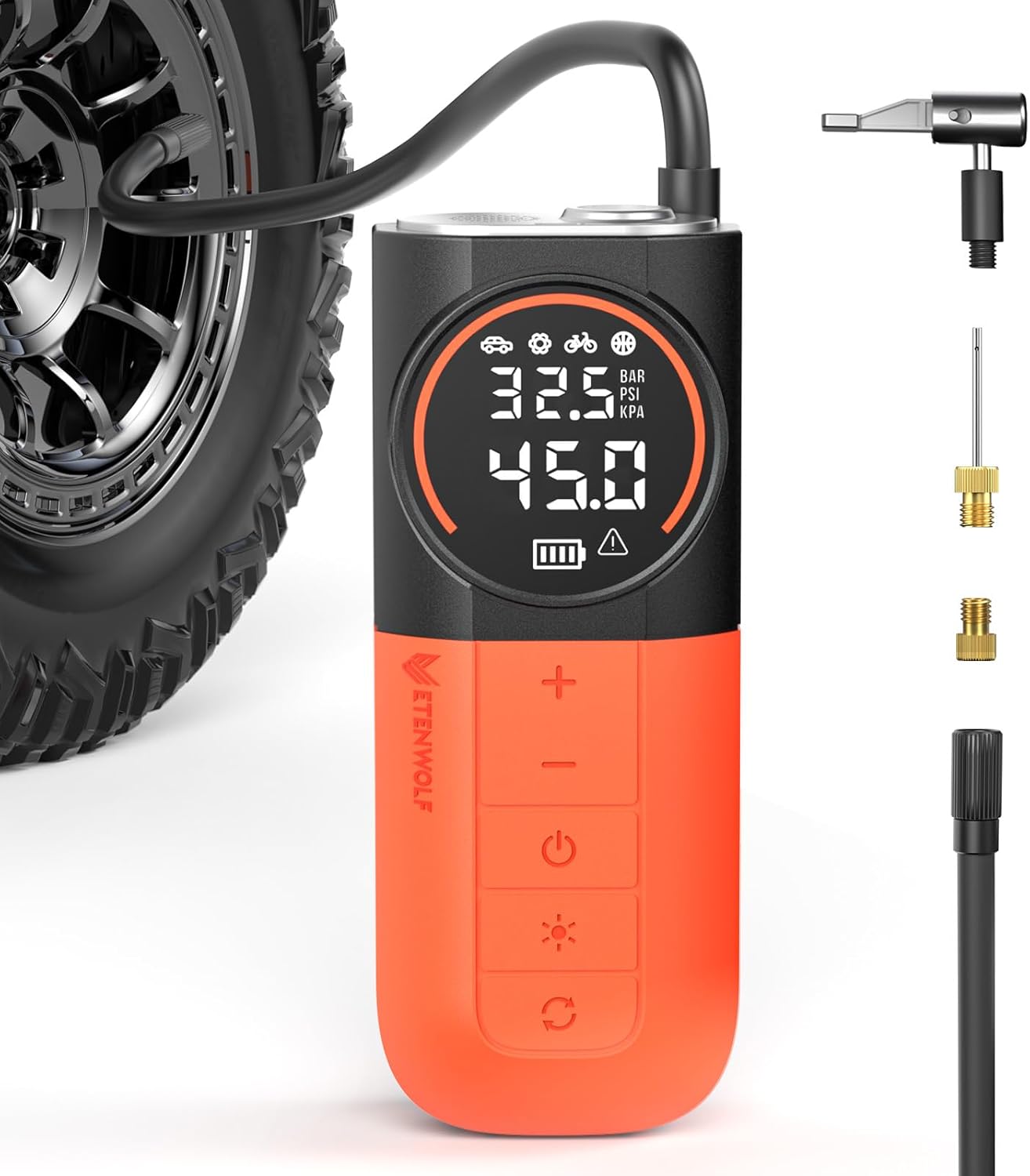
The ETENWOLF S1 cordless tire inflator delivers ultra-fast inflation with up to 160 PSI and a 20 L/min airflow for quicker tire top-offs. Its 5200mAh battery and cooling system support inflating many tires and sports balls on a single charge, while the digital pressure gauge and multi-unit display help you reach the right pressure accurately. With preset modes, pressure memory, an auto-stop feature, and an LED flashlight, it’s built for easy roadside and everyday use.

This portable cordless tire inflator delivers fast, efficient inflation for cars, motorcycles, bikes, and sports balls with a digital pressure gauge. Use the one-click PSI preset with auto shut-off for accurate, hands-free topping to your target pressure up to 150 PSI. It’s compact and rechargeable with a built-in emergency LED light plus valve adapters and accessories for quick, ready-to-go use.
How to Check Tacoma Tire Tread
- Use a tread-depth gauge: Measure several grooves across each tire, not just one spot.
- Check the wear bars: Built-in treadwear indicators become level with the tread when the tire is worn out.
- Use the penny test as a quick check: If you can see the top of Lincoln’s head with the penny inserted upside down, the tire is at or near replacement depth.
- Look for uneven wear: Feathering, cupping, one-edge wear, or center wear can point to pressure, alignment, balance, or suspension issues.
- Inspect for damage: Replace or professionally inspect tires with cracks, bulges, exposed cords, punctures, or sidewall damage.
Pressure, Rotation, and Alignment
Check tire pressure at least once a month when the tires are cold. NHTSA recommends using the pressure listed on the Tire and Loading Information Label or in the owner’s manual, and also recommends checking tread when checking pressure.
Rotating tires helps reduce irregular wear and can help maintain fuel efficiency. NHTSA advises checking the owner’s manual for the correct rotation interval and pattern. If uneven wear appears, have alignment, balance, and suspension components inspected.
Warning: Do not rely only on the tire pressure monitoring system. TPMS warns when pressure is significantly low, but it is not a substitute for monthly pressure, tread, and damage checks.
How Tread Patterns Impact Ride Comfort and Noise Levels
Tread patterns play a major role in your Toyota Tacoma’s ride comfort and cabin noise. Large, open voids help off-road traction by clearing mud and loose material, but those same voids can create more vibration and hum on pavement.
Tread Design Influence
For the quietest ride, look for a highway-terrain or on-road all-terrain tire with stable center ribs, smaller block spacing, and noise-optimized tread sequencing. For more trail traction, expect larger shoulder blocks, deeper grooves, and more open voids.
- Larger voids: Better mud and loose-terrain clearing, usually more highway noise.
- Stiffer center ribs: Better pavement stability and steering feel.
- More siping: More biting edges for wet or light-snow traction, depending on compound and tire design.
- Heavier construction: Better toughness for some off-road use, but often more rotating weight.
Noise Reduction Techniques
Some tires use variable pitch sequencing, optimized block placement, and computer-modeled tread layouts to reduce repetitive road noise. Softer compounds and more compliant construction can also help ride comfort, though they may affect tread life or handling response.
Proper tire pressure matters here too. Underinflated tires can run hotter, wear unevenly, feel sluggish, and create extra rolling resistance. Overinflated tires can ride harshly and wear the center of the tread faster.
What’s Next in Tire Tread Patterns for Your Tacoma?
The most useful changes for Tacoma owners are not futuristic concepts; they are better-balanced real-world tires. Modern all-terrain tires are becoming more specialized, with some focused on quiet daily driving and others built for stronger off-road bite.
When shopping, watch for these practical improvements:
- More refined all-terrain categories: On-road all-terrain, off-road all-terrain, rugged-terrain, and mud-terrain tires now serve different Tacoma use cases.
- Better winter-capable all-terrain options: Some all-terrain tires carry severe-snow ratings, which can help drivers who want one tire for mixed conditions.
- Noise-optimized tread blocks: Many newer truck tires use tread sequencing to reduce highway hum.
- Stronger casing options: Helpful for towing, hauling, and off-road use when paired with the correct size and load rating.
The best next tire for your Tacoma is the one that matches your driving mix, not the one with the most aggressive sidewall design.
Frequently Asked Questions
Which tires wear faster on a Toyota Tacoma?
Mud-terrain and very aggressive off-road tires often wear faster on pavement than highway-terrain or mild all-terrain tires. Extra weight, softer compounds, open tread blocks, poor alignment, low pressure, heavy loads, and skipped rotations can also speed up wear.
Does tire tread affect acceleration?
Yes. Tread affects how well the tire grips the surface when torque reaches the ground. On pavement, a stable tread and good compound help clean acceleration. In mud, gravel, or snow, deeper blocks, sipes, and open voids can help the tire bite instead of spin.
Are all-terrain tires good for a daily-driven Tacoma?
Yes, an on-road all-terrain tire can be a strong choice for a daily-driven Tacoma that also sees gravel roads, camping trips, or light trails. For mostly highway driving, choose a quieter all-terrain pattern rather than a rugged or mud-terrain design.
Do aggressive tread patterns hurt fuel economy?
They can. Aggressive tires often have more rolling resistance, more weight, and larger tread voids. Those factors can reduce fuel economy compared with lighter, smoother highway-terrain tires, especially if the new tires are larger than stock.
When should Tacoma tires be replaced?
Replace tires when tread reaches 2/32 inch, when wear bars are flush with the tread, or when you see damage such as cracks, bulges, exposed cords, or severe uneven wear. Also check the DOT date code because some vehicle and tire manufacturers recommend replacement after six to 10 years regardless of tread depth.
Conclusion
Your Tacoma’s tire tread pattern directly affects traction, braking, steering feel, ride comfort, noise, fuel economy, and tread life. Highway treads are best for quiet pavement miles, all-terrain treads suit mixed use, mud-terrain treads help in loose off-road conditions, and winter-rated tires are the safer choice for regular snow and ice.
Before buying, check your Tacoma’s tire label and owner’s manual, match the correct size and load rating, and be honest about where the truck actually spends its miles. The right tread pattern will make your Tacoma feel more controlled, capable, and predictable in the conditions you drive most.
Sources
- NHTSA TireWise — tire safety, tread depth, pressure, rotation, aging, fuel efficiency, and maintenance guidance
- 49 CFR § 570.9 Tires — federal tread-depth and tire-condition inspection standard
- Toyota Tacoma Manuals and Warranties — owner’s manual and vehicle-specific tire information resources
- Tire Rack On-Road All-Terrain Tire Test — Tacoma-based all-terrain tire category testing
- Bridgestone Tire Tread Patterns — tread pattern types and how tread design affects driving conditions

Related Articles
How Tire Weight Affects Toyota Tacoma Performance
How does tire weight influence your Toyota Tacoma's performance and efficiency? Discover the surprising effects that could change your driving experience.
Read More
Tire Noise Levels by Tire Type on a Toyota Tacoma
A comprehensive look at how tire types affect noise levels in your Toyota Tacoma reveals surprising insights that could enhance your driving experience.
Read More
How To Choose Tires for a Dual Use Toyota Tacoma
Unlock the secrets to selecting the perfect tires for your dual-use Toyota Tacoma, ensuring optimal performance and comfort on every adventure. Discover more inside!
Read More