
Toyota Tundra TPMS Light Stays On After Reset: Causes and Fixes
A Toyota Tundra TPMS light that stays on after a reset usually means the truck still sees low tire pressure, the system was initialized with the wrong cold pressure, or one or more tire pressure sensors are not reporting correctly. Before you reset it again, check every tire with a gauge and note whether the light is solid, blinking, or blinking first and then staying on.
Last updated: July 6, 2026
Quick Answer
If your Toyota Tundra TPMS light stays on after reset, set every tire to the cold PSI on the driver-side door label, check the spare if equipped, then initialize the system using your model-year procedure. A light that flashes for about a minute and then stays on usually points to a TPMS malfunction, not simple low pressure.
Key Takeaways
- Use the cold tire pressure shown on your Tundra’s driver-side Tire and Loading Information Label, not the maximum PSI printed on the tire sidewall.
- A solid TPMS light usually points to low pressure, while a light that flashes for about 60 to 90 seconds and then stays on usually points to a system fault.
- A TPMS reset is not the same as sensor registration. New sensors or wheel swaps may require a relearn or ID registration procedure.
- Do not keep resetting the TPMS to hide a warning light. Find the low tire, leak, dead sensor, spare-tire issue, or registration problem first.
At a Glance
| Time Required | 10 to 30 minutes for a pressure check and reset; longer if a scan tool diagnosis, sensor relearn, or leak repair is needed |
| Difficulty | Easy for pressure checks; moderate for sensor testing, relearn, or ID registration |
| Tools Needed | Accurate tire pressure gauge, air compressor, owner’s manual, soapy water for leak checks, and TPMS scan tool if the light will not clear |
| Cost | Usually free to low-cost for pressure correction; shop diagnosis, leak repair, sensor replacement, or registration costs vary |
What the TPMS Light Means on a Toyota Tundra
Your Tundra’s tire pressure monitoring system watches for tire pressure that drops below the warning threshold and turns on the TPMS symbol when it detects a problem. You should still check pressure manually because NHTSA says TPMS is not a replacement for regular tire maintenance.
The light behavior tells you where to start:
| Light behavior | What it usually means | What to do first |
| Solid TPMS light | One or more tires may be significantly underinflated. | Check all tires cold and inflate to the door-label PSI. |
| Flashes for about 60 to 90 seconds, then stays on | The TPMS may have a malfunction, such as a dead sensor, unregistered sensor, incompatible sensor, or receiver issue. | Check pressure first, then have the TPMS scanned if the warning repeats. |
| Comes on in the morning, then turns off later | Cold weather may drop a marginal tire below the warning threshold. | Set cold pressure before driving, not after the tires warm up. |
| Stays on after new wheels or tires | The truck may not recognize the sensors, or the sensors may be missing, damaged, or incompatible. | Ask for sensor ID registration or TPMS relearn, not just a pressure reset. |
Identifying Common Causes of TPMS Light Activation
When the TPMS light activates on your Toyota Tundra, start with the simplest cause: low pressure. Use an accurate tire gauge and check the tires when they are cold. NHTSA defines cold tire pressure as pressure measured when the tire has not been driven on for at least three hours.
The most common causes include:
- Cold tire pressure below the placard value: Temperature drops, slow leaks, and recent tire service can leave one tire low enough to trigger the warning.
- A puncture or valve-stem leak: A nail, bead leak, damaged valve stem, or loose valve core can make the light return after you inflate the tire.
- A spare tire issue: Check the spare for safety. If your Tundra’s model year and setup monitor the spare, low spare pressure or an unregistered spare sensor may also matter.
- A temporary spare after a flat: If you replaced a flat tire with a temporary spare, the light may not clear until the repaired wheel and its working sensor are back on the truck.
- A weak or failed TPMS sensor: Direct TPMS sensors use internal batteries. When a battery fails, the sensor usually needs replacement.
- Unregistered replacement sensors: If new sensors were installed but their ID codes were not registered to the truck, the warning light may stay on or flash.
- Wrong or incompatible sensors: Aftermarket wheels or sensors must match the truck’s TPMS system and model-year requirements.
- Receiver, antenna, or wiring problems: These are less common than pressure or sensor problems, but a scan tool can help identify them.
Warning: Do not lower tire pressure or reset the system around an incorrect PSI just to turn the light off. Set the tires to the cold pressure on the driver-side label first, then reset or initialize the system. Pull over safely if the truck pulls, vibrates, handles poorly, or a tire looks damaged.
Before You Reset the TPMS Light
A reset only works when the truck has the right starting pressure. If you initialize the system while a tire is low, the Tundra may learn the wrong baseline and the light can come back.
- Find the correct PSI: Use the Tire and Loading Information Label on the driver-side door jamb or your Toyota owner’s manual. Do not use the maximum PSI printed on the tire sidewall.
- Check pressure cold: For the best reading, check pressure before driving or after the truck has been parked for at least three hours.
- Check all four road tires: Make sure each tire matches the placard pressure for its axle and load setup.
- Check the spare: Even if the spare is not part of the TPMS warning on your model year, it still needs the correct pressure for emergencies.
- Inspect for leaks or damage: Look for nails, cracked valve stems, sidewall damage, bent wheels, or a tire that loses pressure again within a day or two.
- Confirm what changed recently: New tires, rotated tires, aftermarket wheels, seasonal wheel swaps, or replacement sensors can point to a sensor registration issue.
Note: Toyota reset steps vary by model year. Some Tundras use a physical tire pressure warning reset switch, while newer models may use settings in the multi-information display. Confirm the exact procedure in your Toyota owner’s manual.
Reset vs Relearn vs Sensor Registration
Many TPMS problems continue because the wrong procedure gets used. A TPMS reset or pressure initialization tells the truck what tire pressure to treat as the baseline. It does not always teach the truck new sensor IDs.
A TPMS relearn or sensor registration connects the sensor IDs in the wheels to the truck’s tire pressure warning computer. This matters after new sensors, some wheel swaps, or a set of aftermarket wheels. If the truck does not recognize a sensor, the light may flash first and then stay on even when all tires have the correct pressure.
| Procedure | What it does | When you need it |
| Pressure reset or initialization | Sets or confirms the tire pressure baseline. | After correcting pressure, changing tire size, or following the model-year reset procedure. |
| Sensor relearn or ID registration | Registers the TPMS sensor IDs with the truck. | After new sensors, different wheels, or a TPMS scan showing missing sensor IDs. |
| Leak repair | Fixes the real pressure loss. | When the same tire keeps dropping below the placard PSI. |
[Products Worth Considering]

The Milton 555e digital tire inflator delivers fast, accurate pressure readings with a backlit display and multiple unit options, making tire inflation quick and easy. Its durable 20" EPDM rubber hose and grip‑head chuck provide reliable connection, while the ±1 PSI accuracy ensures precise inflation for cars, bikes, and trucks.

This digital tire pressure gauge combines a sturdy pistol grip inflator with a backlit 0.1 PSI display for quick, accurate readings in any lighting condition. Its 360° swivel gauge and 20" rubber hose make it easy to use and store, while the integrated inflate/deflate trigger and ¼" NPT air inlet provide fast, reliable tire maintenance.

The Milton 507KIT delivers fast, accurate tire inflation, deflation and pressure measurement with a backlit LCD gauge and 14" rubber hose. Its 3‑in‑1 design meets ANSI/ASME standards and provides readings from 0‑250 PSI with 0.1 PSI resolution. The ergonomic pistol‑grip body and brass lock‑on chuck make one‑handed operation effortless, while the auto‑off feature conserves battery life.
How to Reset Your TPMS Light Properly
After you set the correct cold pressure, use the reset or initialization process that matches your Tundra. Newer Tundras may use a multi-information display menu. Toyota’s 2024 Tundra Quick Reference Guide lists a TPWS path through the vehicle settings menu and says the warning light blinks three times during system reset initialization.
- Park safely and turn the truck on: Set the parking brake and switch the ignition or power mode to the position required by your model year.
- Confirm cold tire pressure: Recheck each tire with a gauge and adjust to the driver-side label value.
- Open the TPMS reset or tire pressure settings: Use the physical reset switch if your Tundra has one, or use the multi-information display tire pressure settings if your model uses a menu.
- Select the pressure initialization option: On newer Tundras, this may appear as Vehicle Settings, TPWS, and Set Pressure. The exact icons and wording can vary.
- Start initialization: Hold the reset switch or select the setting until the indicator or display confirms the process has started.
- Wait or drive if required: Some systems need time or normal driving before the sensor readings update. Follow your owner’s manual for your exact model year.
- Recheck the light: If the light returns, flashes, or stays on after correct pressure and initialization, move to diagnosis instead of repeating the reset.
Pro Tip: Write down the cold PSI reading for each tire before adding air. If one tire is repeatedly lower than the others, you likely have a slow leak rather than a reset problem.
If the Light Stays On After Reset
If the Toyota Tundra TPMS light stays on after reset, use the symptom to narrow the problem. This helps you avoid replacing sensors when the real issue is a slow leak, warm-pressure mistake, temporary spare, or wrong reset procedure.
| Symptom | Likely cause | Best next step |
| Light stays solid after pressure correction | One tire may still be low, warm pressure may be misleading, or the system was not initialized correctly. | Recheck cold pressure and repeat the correct model-year initialization process once. |
| Light flashes first, then stays on | TPMS malfunction, failed sensor, unregistered sensor, incompatible sensor, or receiver issue. | Have a tire shop or Toyota dealer scan the TPMS and read the fault codes. |
| Light appeared after new tires or wheels | Sensor damage, missing sensors, incompatible sensors, or sensor IDs not registered. | Ask the installer to confirm sensor compatibility and register all sensor IDs. |
| Light stays on after using the spare | The spare may be low, may not have a compatible sensor, or the original flat tire sensor may be missing from the truck. | Check spare pressure and repair or reinstall the original wheel as soon as practical. |
| Same tire keeps losing pressure | Slow puncture, bead leak, cracked valve stem, damaged wheel, or loose valve core. | Repair the leak before resetting the system again. |
[Products Worth Considering]

The AZUNO Digital Tire Inflator provides fast, accurate inflation with a 200 PSI capacity and a digital gauge that reads within 1% of true pressure. Its stainless‑steel...
Warm vs Cold Tire Pressure Mistakes
Warm tire pressure can fool you. Tires heat up as you drive, and the pressure reading rises. If you check pressure after driving and bleed the tire down to the cold placard PSI, the tire may become underinflated after it cools.
For the cleanest reset, park the truck for at least three hours, check the pressure cold, and adjust to the driver-side Tire and Loading Information Label. If you must add air while the tires are warm, recheck and fine-tune the pressure when the tires cool down.
How Long Do TPMS Sensors Last and What Affects Performance?
TPMS sensors are sealed electronic parts mounted inside the wheel. Many original sensors last for years, but their internal batteries do not last forever. As your Tundra gets older, a weak sensor battery becomes a more likely reason for a flashing TPMS light.
Sensor Lifespan Factors
Sensor life depends on age, mileage, temperature exposure, wheel service, and sensor quality. Damage can also happen during tire mounting if the sensor or valve stem gets hit by the tire machine.
- Age: Older sensors are more likely to have weak batteries.
- Heat and cold: Harsh temperatures can affect tire pressure and electronic performance.
- Tire service: Tire changes, valve-stem service, and wheel swaps can damage sensors if handled carelessly.
- Compatibility: Replacement sensors must match the truck’s system and be registered correctly.
Performance Impact Elements
TPMS performance also depends on correct tire pressure, working transmitters, and clean communication with the truck’s receiver. If one sensor stops reporting, the system may store a fault and keep the warning light on until the problem is fixed.
Essential Tools and Techniques for Diagnosing TPMS Issues
You can handle the first checks at home, but sensor faults often need a TPMS scan tool. A scan can show which sensor is reporting, which one is missing, and whether the truck has stored a TPMS fault code.
[Products Worth Considering]
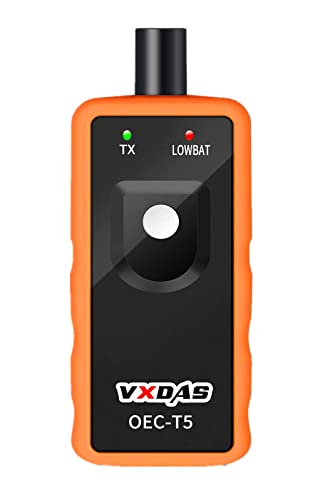
🚗2023 UPDATED FOR WIDER COMPATIBILITY: Specifically designed to work with most GM vehicles 2006-2023 (Chevy / Buick / GMC / Opel /Cadillac and more) equipped with 315/433 MHz. Your vehicle deserves the best tire pressure sensor reset tool.(It is not suitable for heavy trucks with more than 4 tires or vehicles with an external TPMS system.)Tip:Based on factory and customer-tested models shown in A+, please refer to the car model list to confirm compatibility with the VXDAS TPMS tool.

📢【Need Support? Co.ntact Us Directly】If you have any questions or need further help during use: Received a registered device/ Startup, Registration or Update issues, or Charging/ Authorized Language/ Function Performance/ Need additional accessories, etc., pls conta.ct us directly via 📩Autelonline @ outlook. com📩, we will provide you a prompt and perfect solution. 📣If you are unsure whether the product is suitable for your vehicle, please send your car VIN# via 📩Autelonline @ outlook. com💌 for tech support. 🎉🎉Kindly note: Our TS508WF comes with a Rugged Blow-Molded Carrying Case to protect and store your device. Unlike other sell.ers, only with a thin cloth bag.
Common Diagnostic Tools
- Tire pressure gauge: Use this before every reset. A dashboard warning cannot replace an accurate gauge reading.
- Air compressor: Add air only to the cold placard pressure shown for your truck.
- TPMS scan tool: A shop can use this to read sensor IDs, pressure data, temperature data, and battery status when supported.
- Soapy water: Use it around the valve stem, tread puncture, and bead area to look for slow leaks.
- Owner’s manual: Use the manual for your exact year, trim, wheel package, and display setup.
Sensor Testing Techniques
Start with a visual inspection. Look for cracked valve stems, missing caps, corrosion, bent stems, or wheel damage. Then confirm the cold pressure on every tire. If the warning light still flashes or returns, a TPMS scan tool can identify a failed or missing sensor more reliably than guessing.
Manual Reset Procedures
Manual reset procedures depend on the model year. If your Tundra has a tire pressure warning reset switch, follow the owner’s manual steps for that switch. If your Tundra uses a display menu, use the tire pressure warning system settings instead. In both cases, reset only after all tires match the correct cold pressure.
Importance of Checking All Tires, Including the Spare
Do not stop after checking the four road tires. The spare tire still matters, especially on a truck used for towing, hauling, road trips, or remote driving. A properly inflated spare can save you from being stranded when a road tire fails.
Some Tundra setups may include a sensor in the spare, while others may not monitor it the same way as the road tires. Either way, include the spare in your routine pressure checks. NHTSA recommends checking all tires, including spare tires, when you check tire pressure.
When Should You Call a Professional for TPMS Issues?
Call a tire shop or Toyota dealer if the TPMS light stays on after you have corrected cold pressure and followed the proper initialization steps. You should also get help if the warning light flashes for about a minute and then stays on. Toyota’s 2024 Tundra Quick Reference Guide says to take the vehicle to a Toyota dealer if the tire pressure indicator flashes for approximately one minute and then remains on.
Professional diagnosis is especially useful when:
- A sensor was recently replaced but the light did not clear.
- New wheels or aftermarket sensors were installed.
- One tire pressure reading is missing from the display.
- The same tire keeps losing pressure after inflation.
- The light flashes at every startup.
- You used a spare tire and the warning will not clear after the repaired wheel is back on the truck.
- You suspect receiver, antenna, or wiring problems.
A shop can scan the TPMS, confirm sensor IDs, test each sensor, repair leaks, and register replacement sensors when needed.
Real-World Troubleshooting Tips That Actually Help
Use this order before replacing parts:
- Set cold pressure first: Match the driver-side label, not the tire sidewall.
- Check for repeat pressure loss: If one tire drops again, fix the leak before resetting.
- Run the correct reset once: Use your model-year switch or display-menu procedure.
- Look at recent service: New wheels, new tires, rotations, or replacement sensors can point to sensor registration.
- Scan if the light flashes: A flashing light followed by a steady light is a malfunction clue, not a pressure-only warning.
This order matters because it separates simple pressure problems from sensor and registration problems. Replacing sensors before checking for a slow leak can waste money and leave the original problem untouched.
A TPMS reset should confirm correct tire pressure, not cover up a warning. If the light returns, treat it as a diagnostic clue.
Frequently Asked Questions
How do you turn off the TPMS light on a Toyota Tundra?
Set all tires to the cold pressure on the driver-side label, check the spare if applicable, and initialize the TPMS using the reset switch or vehicle settings menu for your model year. If the light comes back, diagnose the pressure, leak, sensor, spare-tire, or registration issue instead of repeating the reset.
Why is my Toyota tire pressure light blinking when the tires look fine?
A blinking TPMS light that turns solid usually points to a system malfunction. The tires can look normal and still be low, so check pressure with a gauge first. If pressure is correct, have the TPMS scanned for a failed sensor, unregistered sensor, incompatible sensor, or receiver fault.
What PSI should I use before resetting the Tundra TPMS?
Use the cold tire pressure printed on your Tundra’s Tire and Loading Information Label, usually on the driver-side door jamb. Do not use a generic PSI range and do not use the maximum pressure printed on the tire sidewall.
Can the spare tire make the TPMS light stay on?
It depends on the model year and whether your spare has a registered TPMS sensor. You should still check the spare because an underinflated spare can fail when you need it. If your system monitors the spare, low spare pressure or an unregistered spare sensor may keep the warning active.
Why did the TPMS light stay on after I installed the temporary spare?
The truck may not receive the expected signal while the original wheel and sensor are off the vehicle, or the spare may not match the monitored setup. Check the spare pressure, drive carefully, and repair or reinstall the original wheel as soon as possible.
Do new TPMS sensors need programming on a Toyota Tundra?
Often, yes. Replacement sensors need to be compatible with the truck, and their ID codes may need to be registered with the TPMS system. If new sensors were installed and the light still flashes or stays on, ask the installer to confirm sensor registration or relearn.
Is it safe to drive with the TPMS light on?
Stop and check tire pressure as soon as it is safe. A solid TPMS light may mean one tire is significantly underinflated, which can affect handling, tire wear, and heat buildup. If the light flashes and then stays on, the system may not be able to warn you correctly until it is repaired.
Conclusion
A Toyota Tundra TPMS light that stays on after reset is not something to ignore. Start with cold tire pressure, use the PSI on the driver-side label, check the spare, and follow the reset procedure for your model year. If the light flashes, returns, or stays on after the correct pressure and initialization, have the TPMS scanned for sensor, registration, or receiver faults. Fixing the cause keeps the warning system useful and helps protect your tires on the road.
Sources
- NHTSA TireWise Tire Safety — backs cold tire pressure checks, spare tire checks, TPMS light meaning, monthly maintenance, and TPMS malfunction behavior.
- Toyota 2024 Tundra Quick Reference Guide — backs newer Tundra TPWS menu reset initialization, the warning light blinking three times during initialization, and dealer inspection advice for a flashing indicator.
- Toyota Manuals and Warranties — supports checking the exact owner’s manual for model-year-specific TPMS procedures.
- Toyota Warning Lights — supports using the owner’s manual or Toyota dealer for warning-light details.
- Federal Motor Vehicle Safety Standards: TPMS Final Rule — backs the 60-to-90-second TPMS malfunction telltale behavior.

Related Articles
Toyota Tundra Tire and Wheel Package: What to Consider Before Buying
Unlock the secrets to choosing the perfect tire and wheel package for your Toyota Tundra—essential tips await to enhance your ride.
Read More
Do Bigger Tires Void a Toyota Tundra Warranty? Magnuson-Moss Act Explained
Bigger tires might not void your Toyota Tundra warranty, but understanding the Magnuson-Moss Act is crucial—discover how to protect your investment effectively.
Read More
Toyota Tundra Tire Rack Setup: Garage Storage Ideas for Seasonal Sets
Better tire storage for your Toyota Tundra awaits—discover essential tips to maximize space and protect your seasonal sets in the garage!
Read More