
What Is a Directional Tire Tread Pattern? Pros, Cons, and Rotation Rules
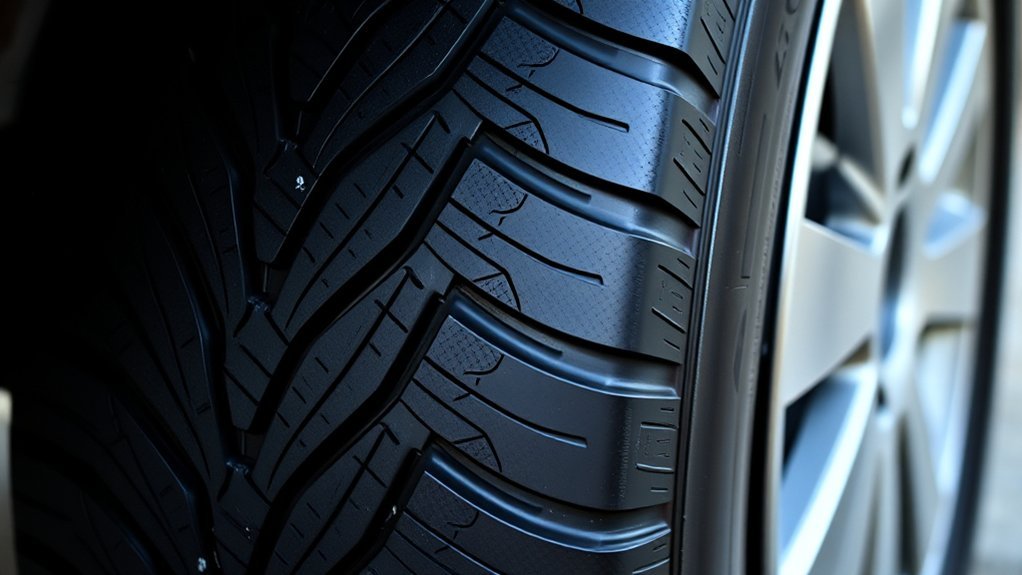
A directional tire tread pattern is a one-way tread design built to roll in the direction shown by the arrow on the tire sidewall. Many directional tires use a V-shaped or arrow-like groove layout to help move water away from the contact patch, which can improve wet-road grip when the tire is mounted correctly and has enough tread depth.
Quick Answer
A directional tire tread pattern is designed to rotate in one direction only. Its angled grooves, often shaped like a V, help channel water away from the tire. The tradeoff is that directional tires must be mounted in the correct direction and usually rotated front-to-rear on the same side.
Key Takeaways
- Directional tires roll one way only, so the sidewall arrow must point in the tire’s forward rolling direction.
- The V-shaped channels can help resist hydroplaning, but tread depth, tire pressure, speed, and standing water still matter.
- Most same-size directional tires are rotated front-to-rear on the same side, not in a cross pattern.
- If a directional tire is mounted backward, have a tire shop demount and remount it correctly as soon as practical.
At a Glance
| Time Required | 5 minutes to identify; 30–60 minutes for professional rotation |
| Difficulty | Easy to identify; moderate if rotating at home with safe lifting equipment |
| Tools Needed | Flashlight, tread depth gauge or penny, tire pressure gauge, and a qualified tire shop for remounting or balancing |
| Cost | Usually free to low-cost if included with tire service; extra cost may apply for dismounting, remounting, and balancing |
What Are Directional Tires and How Do They Work?
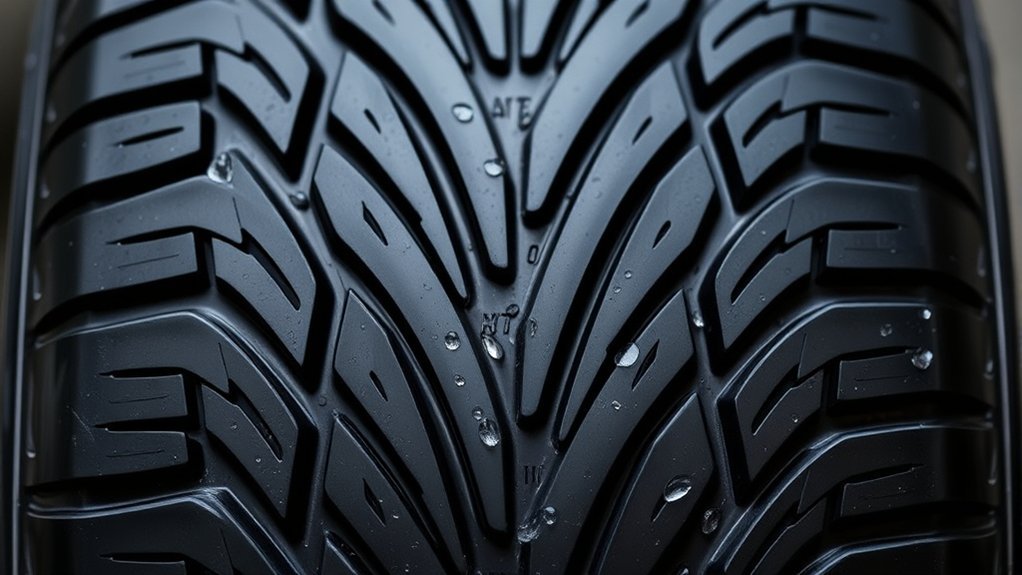
Directional tires, also called unidirectional tires, are made to roll in one direction. Instead of using a tread pattern that works the same from either direction, a directional tire uses angled grooves that point toward the intended rolling direction.
According to Bridgestone’s tread pattern guide, directional tread patterns are often found on high-performance tires and winter tires because the V-shaped channels can move water from under the contact patch and help improve hydroplaning resistance at higher speeds.
The key detail is installation. A directional tire only works as intended when the sidewall arrow points in the proper rolling direction. If it is installed backward, the tread channels face the wrong way and wet-weather performance can suffer.
Warning: Do not ignore a backward-mounted directional tire. Continental advises that directional tires should be returned to an authorized dealer to be demounted and remounted correctly when incorrect mounting is noticed.
[Products Worth Considering]

EVOULTES heavy duty tire inflator with an integrated gauge delivers accurate pressure readings from 10–120 PSI, helping you inflate, deflate, and check tires in one tool. The 16.5-inch extended dual-head air chuck with swivel base reaches hard-to-access dual wheel valves on trucks and RVs. A brass trigger core and side-mounted air release valve make operation smooth, with standard 1/4" NPT threading and quick-connect compatibility for easy setup.

The AstroAI 2 pack air chucks provide a heavy-duty, closed-flow locking design that helps keep air flowing during inflation while securely attaching to the valve stem. Built with 250 PSI rated brass components and compatible with Schrader valves, they feature 1/4" female NPT threads for a wide fit with common inflators. The straight tip and locking clip make filling tires and monitoring pressure more convenient.

The JACO FlowPro Tire Inflator measures, inflates, and airs down tires up to 100 PSI with battery-free operation and ±2% accuracy after calibration. It features a glowing pressure dial for night visibility, a heavy-duty steel build with a hybrid hose, and a precision push-to-inflate thumb trigger. The patented Lightning Air Chuck locks on for a secure seal, and the kit includes quick-connect hardware for easy inline use with your air compressor.
How to Identify a Directional Tire Tread Pattern
The fastest way to identify a directional tire is to look at the sidewall, not just the tread. A directional tire usually has a molded arrow, plus wording such as Rotation, Direction, or a similar marking. The arrow should point toward the front of the vehicle when viewed at the top half of the tire.
You can also look at the tread face. Many directional tires have a V-shaped, chevron, or arrow-like pattern that appears to point forward. However, tread shape alone is not enough. Some tires look directional but are actually asymmetric, so always confirm by reading the sidewall markings.
Note: Directional and asymmetric are not the same thing. An asymmetric tire has an “inside” and “outside” sidewall; a directional tire has a required rolling direction. Some tire designs can be both, so follow every sidewall marking.
Top Benefits of Directional Tires for Wet Conditions
Directional tires are popular because their groove layout is built to move water away from the tire as it rolls. That can help the tire keep more contact with the road in rain, especially when the tread is still deep and the tires are properly inflated.
Wet-weather grip is not only about tread shape. AAA notes that lower tread depth increases the chance of hydroplaning, so even a good directional tire loses wet-road advantage as it wears.
- Better water evacuation: The angled tread channels help push water away from the contact patch.
- Improved hydroplaning resistance: A correctly mounted directional tread can help reduce, not eliminate, the risk of hydroplaning.
- Stable high-speed handling: Many directional tires are designed for performance vehicles, where straight-line stability and steering response matter.
- Useful winter-tire layout: Directional patterns are common on winter tires, but snow and ice performance still depend on the tire’s compound, siping, and winter rating.
What to Watch Out for With Directional Tires?
Directional tires have real advantages, but they are less flexible than symmetric non-directional tires. The biggest issue is mounting direction. If the tread faces the wrong way, the tire may still roll, but it will not clear water the way the manufacturer intended.
Rotation is also more limited. A standard same-size directional tire setup is usually rotated front-to-rear on the same side. You should not cross the tires left-to-right unless the tires are removed from the wheels, remounted in the correct rolling direction, and rebalanced by a qualified shop.
Cost can vary. Some directional tires are performance or winter models, which may cost more than basic touring tires, but price depends on size, brand, speed rating, load rating, tread life warranty, and tire category. Do not assume directionality alone makes a tire better or more expensive.
Proper Tire Rotation Rules for Directional Tires

Proper tire rotation helps reduce irregular wear and keeps handling more consistent. NHTSA recommends checking the owner’s manual for the correct rotation pattern and rotating tires every 5,000 to 8,000 miles if recommended by the manufacturer, or sooner if uneven wear appears.
For most vehicles with four same-size directional tires, use this pattern:
- Front-left tire moves to rear-left.
- Rear-left tire moves to front-left.
- Front-right tire moves to rear-right.
- Rear-right tire moves to front-right.
This keeps every tire rolling in the same direction. Tire Rack also notes that vehicles with directional tires, staggered sizes, or different wheel offsets may require dismounting, mounting, and rebalancing if the usual rotation pattern does not even out wear.
Pro Tip: After rotating directional tires, recheck the sidewall arrows on all four tires before driving away. On the top half of each tire, the arrow should point toward the front of the vehicle.
Directional vs. Symmetric vs. Asymmetric Tires
Understanding the main tread types makes tire shopping easier:
- Directional tires: Built to roll one way. They often have V-shaped grooves and must follow the sidewall rotation arrow.
- Symmetric tires: Use the same tread pattern across the tire face. They are usually the most flexible for rotation because they can be moved to more positions.
- Asymmetric tires: Use different inner and outer tread zones. They must be mounted with the correct side facing outward, but they are not automatically directional.
Continental’s mounting guidance explains that asymmetric tires have an “inside” and “outside,” while directional tires have a rotation arrow. If your tire has both types of markings, follow both.
[Products Worth Considering]

This AUTOWN flat tire repair kit is designed for quick, reliable puncture repairs using a plug kit and spiral probe tool to simplify installation. Built for durability and safe handling, it offers strong adhesion and flexibility to help maintain tire air tightness. With a portable storage case and a multi-vehicle approach, it’s suitable for cars, motorcycles, ATVs, tractors, lawn mowers, RVs, jeeps, and trucks.

This portable cordless tire inflator delivers up to 160 PSI with fast 17 L/min airflow to help you quickly top up tires and get back on the road. It features dual power mode, running on a 21V rechargeable battery or a 12V DC adapter for convenient roadside use. An automatic shut-off with digital pressure gauge helps prevent overinflation, and a built-in LED light improves visibility in low-light conditions.
Choosing Between Directional and Non-Directional Tires
Choose directional tires when wet traction, sporty handling, or winter-tire performance is a high priority and you are comfortable with stricter mounting and rotation rules. They can be a smart fit for performance cars, rainy climates, and vehicles that use winter tires seasonally.
Choose non-directional tires if you want simpler rotation options, easier maintenance, or a practical daily-driving tire for mild conditions. A high-quality symmetric or asymmetric tire may be the better choice if it matches your vehicle, climate, load rating, speed rating, and treadwear needs.
The best tire is not determined by tread direction alone. Compare the tire’s category, wet braking ratings, winter rating if needed, warranty, noise comfort, rolling resistance, and manufacturer fitment recommendations.
Directional Tires in Rain, Snow, and Daily Driving
In rain, directional tires can be very effective because their grooves are designed to clear water in one direction. Still, no tire prevents hydroplaning completely. Slow down in standing water, avoid sharp inputs, keep tires inflated to the vehicle’s recommended pressure, and replace tires before tread becomes unsafe.
In snow, directionality can help a winter tire move slush and snow, but it does not replace true winter construction. For regular snow and ice, choose a tire specifically made for winter driving and check for the proper winter rating.
For daily driving, directional tires are easy to live with as long as they are installed correctly and rotated on schedule. The main tradeoff is that you have fewer rotation patterns available, so uneven wear may need professional correction.
Directional Tire Maintenance Checklist
- Check the rotation arrows: Confirm every tire points in the correct rolling direction after installation or rotation.
- Inspect tread monthly: The U.S. Tire Manufacturers Association recommends checking tread and replacing tires when tread reaches 2/32 inch.
- Watch wet-weather performance: If the car feels loose in rain, inspect tread depth, pressure, alignment, and tire age.
- Rotate on schedule: Follow your owner’s manual. If no interval is listed, 5,000 to 8,000 miles is a common tire-industry recommendation.
- Use correct pressure: Set pressure to the vehicle manufacturer’s tire placard, not the maximum pressure printed on the tire sidewall.
- Visit a tire shop for remounting: Side-to-side moves usually require demounting, remounting, and balancing to keep the rotation arrow correct.
Frequently Asked Questions
What are the pros and cons of directional tires?
The main pros are strong water evacuation, good wet-road stability, and a tread layout often used on performance and winter tires. The main cons are stricter mounting rules, limited rotation patterns, and possible extra labor if the tires need to be dismounted and remounted to correct uneven wear.
Are directional tires good in the rain?
Yes, directional tires can be very good in rain when they are correctly mounted and have enough tread depth. Their angled grooves help move water away from the contact patch. However, worn tread, underinflation, high speed, and deep standing water can still cause hydroplaning.
Can directional tires be rotated side to side?
Not in a normal mounted rotation. Most directional tires should be moved front-to-rear on the same side of the vehicle. A side-to-side move usually requires a tire shop to demount the tire, remount it in the correct rolling direction, and rebalance it.
What happens if a directional tire is mounted backward?
A backward-mounted directional tire will not channel water as designed, so wet traction and hydroplaning resistance may be reduced. The tire should be taken to a qualified tire shop and remounted so the sidewall arrow points in the proper rolling direction.
How do I know if my tires are directional?
Look for an arrow or the words “Rotation” or “Direction” on the sidewall. A V-shaped tread can be a clue, but the sidewall marking is the most reliable way to confirm that the tire is directional.
Are directional tires better than non-directional tires?
They can be better for certain uses, especially wet-weather evacuation, sporty handling, or winter-tire designs. They are not automatically better for every driver. A premium non-directional tire may be quieter, longer-lasting, easier to rotate, or better suited to your vehicle and climate.
Conclusion
A directional tire tread pattern is best understood as a one-way design with a clear purpose: move water, slush, or snow in the direction the tire was engineered to roll. That can improve wet-road confidence and handling, but only when the tire is installed correctly, rotated properly, kept at the right pressure, and replaced before tread depth becomes unsafe.
If you want maximum rotation flexibility and simple maintenance, a non-directional tire may be easier to live with. If you drive in heavy rain, use winter tires, or want sharper performance, directional tires can be a strong choice as long as you follow the arrow on the sidewall and use the correct front-to-rear rotation pattern.
Sources
- Bridgestone Tire Tread Patterns — supports directional tread design, V-shaped water evacuation, sidewall arrows, and front-to-back rotation guidance.
- Continental Tire: Mounting Directional and Asymmetrical Tread Patterns — supports sidewall arrow identification and remounting guidance for incorrectly mounted directional tires.
- Tire Rack Tire Rotation Instructions — supports front-to-rear directional tire rotation and dismount/remount exceptions.
- NHTSA Tire Safety Month Guidance — supports owner’s-manual rotation guidance and 5,000 to 8,000 mile rotation interval when recommended.
- U.S. Tire Manufacturers Association Tire Care Essentials — supports tread-depth inspection, 2/32 inch replacement guidance, and tire rotation interval guidance.
- AAA: Worn Tires Put Drivers at Risk — supports the relationship between lower tread depth and increased hydroplaning risk in wet conditions.

Related Articles
Toyota Tundra Tire and Wheel Package: What to Consider Before Buying
Unlock the secrets to choosing the perfect tire and wheel package for your Toyota Tundra—essential tips await to enhance your ride.
Read More
Do Bigger Tires Void a Toyota Tundra Warranty? Magnuson-Moss Act Explained
Bigger tires might not void your Toyota Tundra warranty, but understanding the Magnuson-Moss Act is crucial—discover how to protect your investment effectively.
Read More
Toyota Tundra Tire Rack Setup: Garage Storage Ideas for Seasonal Sets
Better tire storage for your Toyota Tundra awaits—discover essential tips to maximize space and protect your seasonal sets in the garage!
Read More