
P-Metric vs LT Tire Explained: Which Type Is Right for Your Tundra?
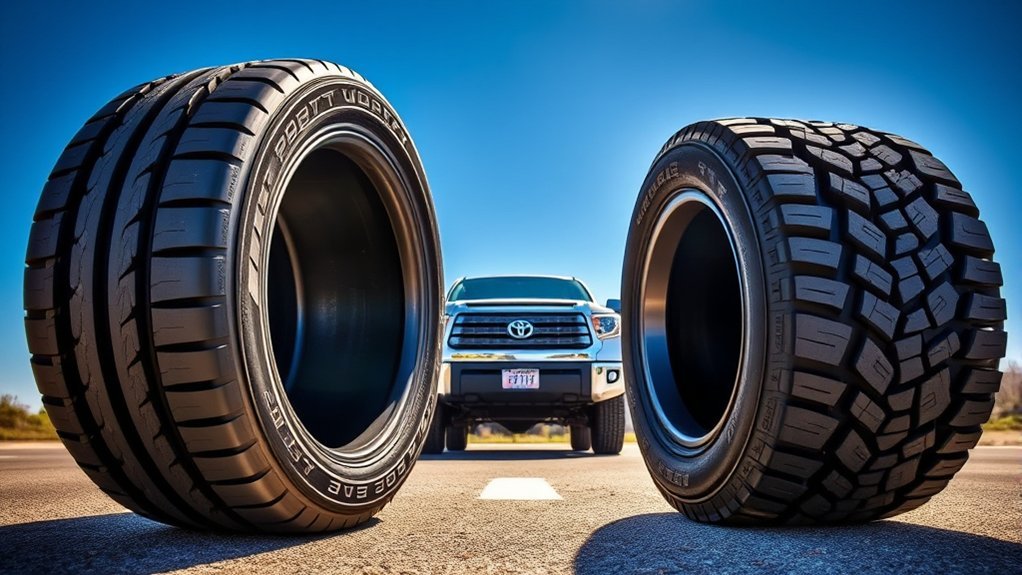
Choosing between P-metric and LT tires for your Toyota Tundra is not just about “comfort versus toughness.” The right choice depends on how you use the truck, how much weight you carry, how often you tow, and what the tire placard on your driver-side door jamb requires. P-metric or Euro-metric tires usually make the most sense for daily driving, while LT tires are worth considering when your Tundra regularly carries heavy payloads, tows near its limits, or spends time on rough jobsite or off-road terrain.
Quick Answer
For most daily-driven Tundras, P-metric or Euro-metric tires give the best ride comfort, lower weight, and better fuel economy. Choose LT tires if you regularly tow, haul heavy payloads, drive rough terrain, or need stronger sidewalls—only after matching the tire size, load index, load range, and pressure to your Tundra’s placard and real loaded weight.
Key Takeaways
- P-metric tires are usually better for everyday Tundra driving because they are lighter, smoother, and often quieter.
- LT tires are built for heavier loads, higher working pressures, tougher sidewalls, and more demanding towing or hauling.
- A P-metric tire used on a pickup is commonly credited at about 91% of its sidewall load rating, so load capacity must be checked carefully.
- Do not choose tires by “ply” alone. Match the load index, load range, tire size, speed rating, wheel rating, and cold inflation pressure to your truck and use case.
- If you are changing from the original tire type or size, confirm the setup with a qualified tire professional before towing or hauling.
Choosing Between P-Metric and LT Tires: Key Differences
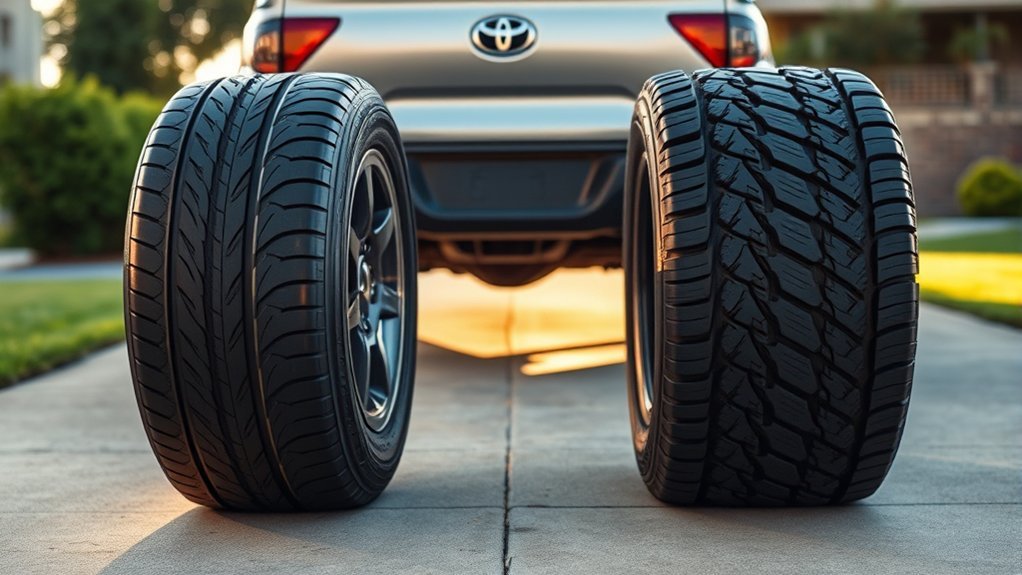
P-metric tires have sizes that start with “P,” such as P265/70R18. They were designed around passenger-vehicle use, but many half-ton pickups and SUVs use P-metric or Euro-metric tires from the factory because they ride well, weigh less, and often have lower rolling resistance. That is why they are a strong fit for commuting, highway driving, errands, and occasional light hauling.
LT tires have sizes that start with “LT,” such as LT275/65R18. LT stands for light truck. These tires are built for heavier-duty use, usually with stronger construction, higher load range options, and higher inflation pressures than passenger-style tires. They can feel firmer, but they are better suited for repeated towing, payload, gravel roads, sharp rocks, construction sites, and other demanding use.
A P-metric tire used on a pickup, van, crossover, or SUV is commonly credited at about 91% of the load capacity shown on the sidewall. In practice, that means you divide the sidewall load rating by 1.10 before comparing it with your truck’s needs.
For a Tundra, the most important question is not “Which tire is stronger?” It is “Which tire meets or exceeds the load rating Toyota specified for this truck, while still matching how I drive?” Start with the tire and loading information label on the driver-side door jamb and the owner’s manual. The NHTSA tire safety guide explains that the correct tire size and recommended cold inflation pressure come from the vehicle manufacturer’s label or manual, not from guessing or using the maximum pressure printed on the tire sidewall.
[Products Worth Considering]

Universal magnetic jack pad with aluminum grooved design to protect vehicle pinch welds during lifting. Durable nylon pad inserts are upgraded and secured with screws to resist damage and keep in place. Designed to fit most single vehicle pinpoint welds for safer, stable jacking when changing tires, repairs, or performing oil changes.

Secure your trailer or RV tires with a scissor-style wheel chock stabilizer that applies opposing force to help prevent wheel shift. It fits tight wheel gaps from 3.5 inches up to 12 inches and works for travel trailers, campers, fifth wheels, toy haulers, and heavy-duty trucks. The surface uses new electrophoretic technology to help prevent rust for reliable travel use.

Camco Trailer Aid Plus tandem tire ramp lifts your trailer for quick, safe tire changes with ample clearance from its 5 1/2-inch lift. It helps you change a flat tire without unloading cargo, making roadside and routine maintenance more efficient. The heavy-duty, waterproof and rustproof polymer design supports up to 15,000 lb and is built for easy portability and storage.
P-Metric vs LT Tires at a Glance
| Category | P-Metric / Euro-Metric Tires | LT Tires |
| Best For | Daily driving, highway use, light cargo, family use, and occasional towing within limits | Frequent towing, heavy payload, work use, rough roads, and tougher off-road driving |
| Ride Comfort | Usually smoother and quieter | Usually firmer, especially at higher pressures |
| Load Capacity | Must be derated when used on trucks; compare the adjusted rating with your placard and axle needs | Carries its LT-rated load when inflated correctly for the load |
| Inflation Pressure | Often lower, depending on Standard Load or Extra Load construction | Often higher; Load Range E tires are commonly rated up to 80 psi, while Load Range F can be higher |
| Fuel Economy | Usually better because the tire is often lighter and less aggressive | May drop slightly because of added tire weight and more aggressive tread designs |
| Cost | Usually less expensive in the same size and category | Usually more expensive, especially in premium all-terrain or higher load range options |
How P-Metric and LT Tires Affect Ride Quality
Ride quality is where most Tundra owners notice the difference first. P-metric and Euro-metric tires usually have more compliant sidewalls, lower working pressures, and less weight. That can make the truck feel smoother over broken pavement, expansion joints, and daily city driving.
LT tires can improve loaded stability, especially when the truck has cargo in the bed or tongue weight on the hitch. The tradeoff is that the stronger casing and higher load range can make the truck feel firmer when empty. If you drive your Tundra unloaded most of the week, a heavy LT all-terrain may feel like too much tire.
Note: LT tires do not need to be inflated to their sidewall maximum for every trip. The right cold pressure depends on the tire, wheel, axle load, and vehicle guidance. Running too little pressure can overheat the tire; running too much for the actual load can reduce ride comfort and traction.
Assessing Towing and Load Needs
Before buying tires for towing, look beyond the trailer’s advertised weight. Toyota currently lists the 2026 Tundra with a maximum towing capacity of up to 12,000 pounds and maximum payload of 1,850 pounds on its official Tundra page, but those are maximum figures and vary by cab, bed, trim, drivetrain, engine, options, and equipment. Your specific truck’s placard and manual matter more than a general number.
Use this simple process before choosing P-metric or LT tires:
- Read the driver-side door placard. Note the original tire size, cold pressure, payload limit, and load rating requirements.
- Check the tire load index. A replacement tire should meet or exceed the original load index listed for your truck. The Tire Industry Association warns against installing a tire with a lower load index than the original equipment tire listed on the placard or in the owner’s manual.
- Account for the P-metric truck adjustment. If you use P-metric tires on a pickup, divide the sidewall load capacity by 1.10 before comparing capacity.
- Estimate real payload. Add passengers, tools, cargo, bed gear, topper weight, hitch hardware, and trailer tongue weight.
- Compare axle load to tire capacity. Heavy tongue weight usually lands on the rear axle, so the rear tires matter most when towing.
- Confirm inflation guidance. Use the placard, tire manufacturer data, and load/inflation tables when changing tire type or load range.
A 7,000-pound trailer is a good example. The trailer itself does not sit entirely on the truck, but conventional bumper-pull trailers often place about 10% to 15% of loaded trailer weight on the hitch. That means a 7,000-pound trailer can add roughly 700 to 1,050 pounds of tongue weight before you count passengers and cargo. That payload can push some Tundra setups close to their rear axle, tire, or payload limit even when the trailer is below the headline tow rating. U-Haul’s towing guidance also notes that too much tongue weight can make the tow vehicle sag, while too little tongue weight can increase instability and trailer sway.
Warning: Never install tires with a lower load index than Toyota specified for your Tundra. Do not mix P-metric and LT tires, different load ranges, or different tire sizes on the same axle. If you are changing tire type, size, wheel, or load range, have a qualified tire professional verify the setup before towing.
Load Range, Ply Rating, and Tire Pressure Explained
Many truck owners still say “10-ply” or “12-ply,” but modern tires usually do not contain that many physical plies. Today, ply rating is a strength-equivalent term tied to load range. Tire Rack’s load range guide explains that the ply rating no longer indicates the actual number of casing plies in the tire.
- Load Range C is commonly called 6-ply rated and is often rated at a lower maximum pressure than E or F.
- Load Range D is commonly called 8-ply rated.
- Load Range E is commonly called 10-ply rated and is a common heavy-duty LT choice for pickups.
- Load Range F is commonly called 12-ply rated and is used for heavier applications, but it is not automatically the best choice for every Tundra.
For most Tundra owners who need LT tires, Load Range E is often the practical upper range because it adds strength without going as far into heavy commercial-style stiffness. Load Range F can make sense only if the exact tire size, wheel pressure rating, axle load, and use case justify it. If your truck is unloaded most of the time, going too heavy can make the ride harsher without giving you a real-world benefit.
Pro Tip: When comparing two tires, do not stop at the words “P,” “LT,” “10-ply,” or “12-ply.” Compare the exact tire size, load index, load range, maximum load, speed rating, tire weight, tread pattern, and warranty.
Are LT Tires Worth It? Let’s Talk Costs
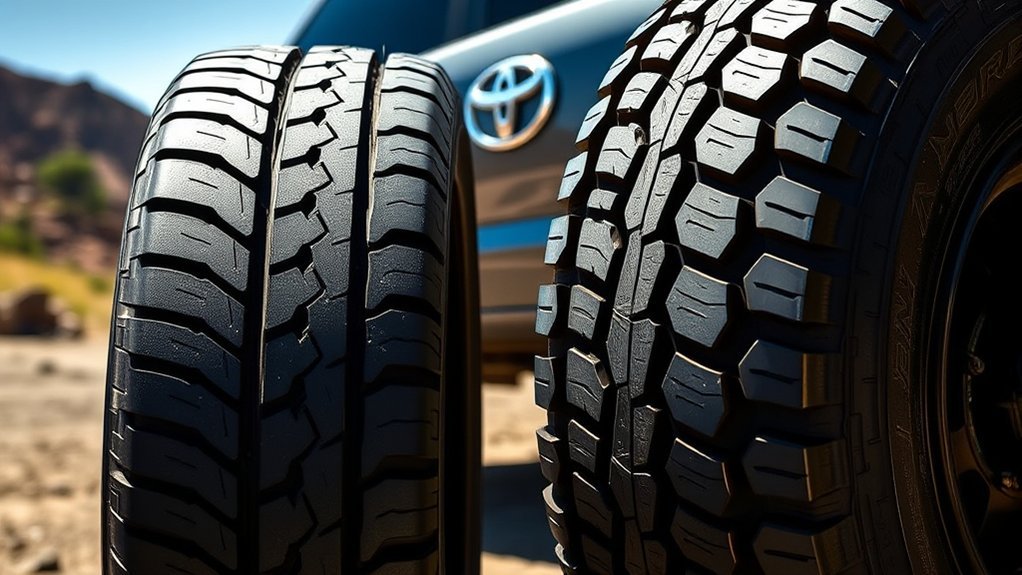
LT tires usually cost more than comparable P-metric or Euro-metric tires because they use heavier construction and are built for more demanding service. They can also add unsprung weight, which may affect steering feel, braking feel, and fuel economy. The exact difference depends on the tire model, size, tread pattern, and load range.
That extra cost can be worth it if your Tundra regularly works hard. Choose LT tires when you frequently tow a travel trailer, haul heavy tools or materials, drive rocky trails, use the truck for jobsite work, or often run near the truck’s payload limit. In those cases, the stronger casing and higher load capability can be more valuable than the smoother ride of a passenger-style tire.
For mostly unloaded daily driving, P-metric or Euro-metric tires are usually the smarter buy. They ride better, often cost less, and are easier to live with on long commutes. A good highway-terrain or mild all-terrain tire that matches the original load index may be safer and more comfortable than an oversized LT tire chosen only because it looks tougher.
[Products Worth Considering]

This spare tire tool kit is designed for the 2004 to 2018 Ford F-150 to help you loosen and tighten wheel lug nuts and manage the spare tire and provided jack functions from underneath the vehicle. It includes the lug nut wrench and extension pieces plus a convenient storage carrying case for organized transport. The jack itself is not included.

Make hard-to-reach areas easier to access with the MAXXHAUL truck tire service step featuring an adjustable width and height. The foldable design stores compactly, while the serrated non-slip platform provides secure footing for tire-related maintenance. It fits most stock tire sizes up to 31-inch diameter with a 300-lb capacity.
Best Tire Choice by Tundra Driving Style
- Daily commuting and family use: Stay with the original tire type or a high-quality P-metric/Euro-metric replacement that meets or exceeds the factory load index.
- Occasional towing: P-metric or Euro-metric tires may still be fine if the adjusted load rating, payload, rear axle load, and pressure all stay within limits.
- Frequent trailer towing: Consider LT tires, especially if tongue weight and cargo regularly load the rear axle heavily.
- Construction, farm, or jobsite use: LT tires are often worth it for stronger sidewalls and better resistance to damage.
- Rocky trails or rough forest roads: LT all-terrain tires can add protection, but expect more road noise and a firmer ride.
- Mud-focused off-road use: Mud-terrain LT tires can improve grip in deep mud, but they are usually louder, heavier, and less efficient on pavement.
User Experiences With Tire Choices
Tundra owners often split into two groups. Drivers who use the truck mostly as a daily vehicle usually prefer the smoother feel of P-metric or Euro-metric tires. Drivers who tow often, carry tools, or spend time on rough roads often prefer LT tires because the truck feels more planted under load.
- Common P-metric advantage: smoother ride, less weight, less road noise, and often better fuel economy.
- Common P-metric drawback: less sidewall toughness and lower adjusted load capacity when used on a pickup.
- Common LT advantage: stronger casing, better loaded stability, and more confidence on rough surfaces.
- Common LT drawback: firmer empty ride, more tire weight, possible fuel economy loss, and higher purchase cost.
The best choice is the one that matches your real use. If your Tundra only tows a few weekends per year and stays well within its payload and tire ratings, a properly rated P-metric tire can be the better everyday tire. If towing or hauling is part of the truck’s normal job, LT tires are usually the safer long-term direction.
Frequently Asked Questions
Are P-metric tires better than LT tires for a Toyota Tundra?
P-metric tires are better for many daily-driven Tundras because they usually ride smoother, weigh less, and cost less. LT tires are better when the truck regularly tows, hauls heavy payloads, drives rough terrain, or needs stronger sidewalls. The right answer depends on your placard, load index, payload, and use case.
What are the best tires to put on a Toyota Tundra?
The best tires are the ones that match your Tundra’s factory size or approved alternate size, meet or exceed the original load index, and fit your driving style. Choose highway-terrain tires for comfort and mileage, all-terrain tires for mixed pavement and dirt, LT all-terrain tires for frequent towing or rough use, and mud-terrain tires only if off-road traction matters more than noise and ride comfort.
Is 10-ply or 12-ply better for towing?
Neither is automatically better. “10-ply” usually refers to Load Range E, while “12-ply” usually refers to Load Range F. Load Range F can carry more in some sizes, but it may ride harsher and may require wheel and pressure ratings your setup does not need. For a Tundra, choose by load index, load range, wheel rating, and actual axle load rather than ply rating alone.
Can I replace P-metric tires with LT tires on my Tundra?
Yes, but only if the LT tire has the correct size, load rating, speed rating, wheel compatibility, and inflation guidance for your truck. LT tires often need different pressures than P-metric tires, so do not simply install them and use the old pressure without checking manufacturer guidance.
Do LT tires make a Tundra ride rougher?
They can. LT tires usually have stronger sidewalls and heavier construction, so an empty Tundra may feel firmer over bumps. The difference depends on the tire model, load range, tread pattern, pressure, and wheel size.
Do I need LT tires to tow a 7,000-pound trailer?
Not always. A 7,000-pound trailer can add significant tongue weight to the truck, but the tire decision depends on your Tundra’s payload, rear axle load, tire load rating, and inflation requirements. If your loaded setup is close to the truck’s payload or rear tire capacity, LT tires may be the better choice.
Conclusion
P-metric and LT tires can both work on a Toyota Tundra, but they serve different drivers. If your truck is mostly a comfortable daily driver with light cargo and occasional towing, a properly rated P-metric or Euro-metric tire is usually the best fit. If your Tundra regularly tows, hauls, works, or runs rough terrain, LT tires are often worth the added cost and firmer ride.
The safest choice is the one that matches your actual load. Check the door placard, confirm the load index, account for cargo and tongue weight, and use the correct cold inflation pressure. When in doubt, have a tire professional verify the setup before towing heavy.
Sources
- NHTSA Tire Safety Ratings and Awareness — tire size, placard, cold inflation pressure, and tire safety guidance.
- Tire Industry Association: Tire Replacement — replacement tire load index and professional guidance for custom tire/wheel changes.
- Tire Rack: Do Euro- and P-Metric Tires Carry Less Load When Installed on a Truck? — P-metric load adjustment and LT tire construction differences.
- Tire Rack: What Are Load Ranges / Ply Ratings? — load range, ply-rating equivalents, and maximum load pressure examples.
- Toyota Tundra Official Specs — current Tundra towing and payload context.
- U-Haul: What Does GVWR Mean? — tongue weight basics and 10% to 15% general trailer guidance.

Related Articles
Toyota Tundra Tire and Wheel Package: What to Consider Before Buying
Unlock the secrets to choosing the perfect tire and wheel package for your Toyota Tundra—essential tips await to enhance your ride.
Read More
Do Bigger Tires Void a Toyota Tundra Warranty? Magnuson-Moss Act Explained
Bigger tires might not void your Toyota Tundra warranty, but understanding the Magnuson-Moss Act is crucial—discover how to protect your investment effectively.
Read More
Toyota Tundra Tire Rack Setup: Garage Storage Ideas for Seasonal Sets
Better tire storage for your Toyota Tundra awaits—discover essential tips to maximize space and protect your seasonal sets in the garage!
Read More