
What Is a Hybrid-Terrain Tire and Who Should Use One
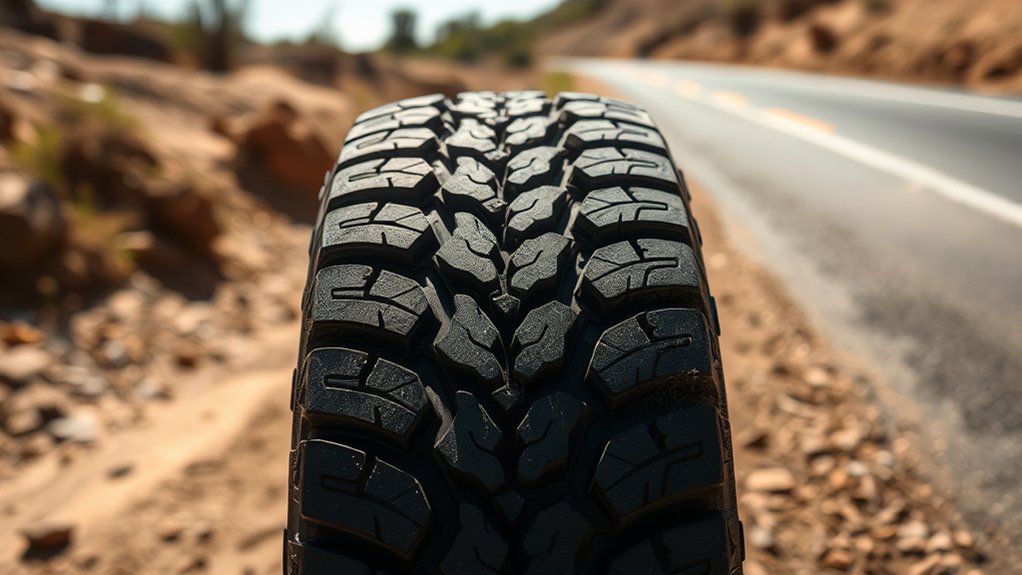
A hybrid-terrain tire is designed for drivers who split their time between pavement and demanding surfaces such as gravel, dirt, rocks, sand, or shallow mud. It generally sits between an all-terrain and a mud-terrain tire: more aggressive than most all-terrain designs, but usually quieter and easier to live with than a dedicated mud tire. The right choice depends on your vehicle, terrain, weather, load requirements, and tolerance for road noise and reduced efficiency.
Quick Answer
A hybrid-terrain tire combines an aggressive off-road tread with features intended to improve highway stability, comfort, and noise. It suits trucks and SUVs that regularly travel on pavement but need more loose-terrain traction than a typical all-terrain tire. The category is not standardized, so compare each model and size carefully.
Key Takeaways
- Hybrid-terrain, rugged-terrain, rough-terrain, and R/T labels can describe similar products, but they do not guarantee one universal level of performance.
- These tires usually provide more open tread voids and stronger shoulder traction than a conventional all-terrain tire, with less noise and harshness than many mud-terrain tires.
- Expect possible trade-offs in road noise, ride firmness, wet braking, steering feel, weight, and fuel economy.
- Always verify the exact size, load index, speed rating, rim-width range, clearance, warranty, winter marking, and recall status.
- Choose by your actual terrain and vehicle needs—not by appearance or an arbitrary percentage of off-road driving.
What Is a Hybrid-Terrain Tire and How Does It Work?
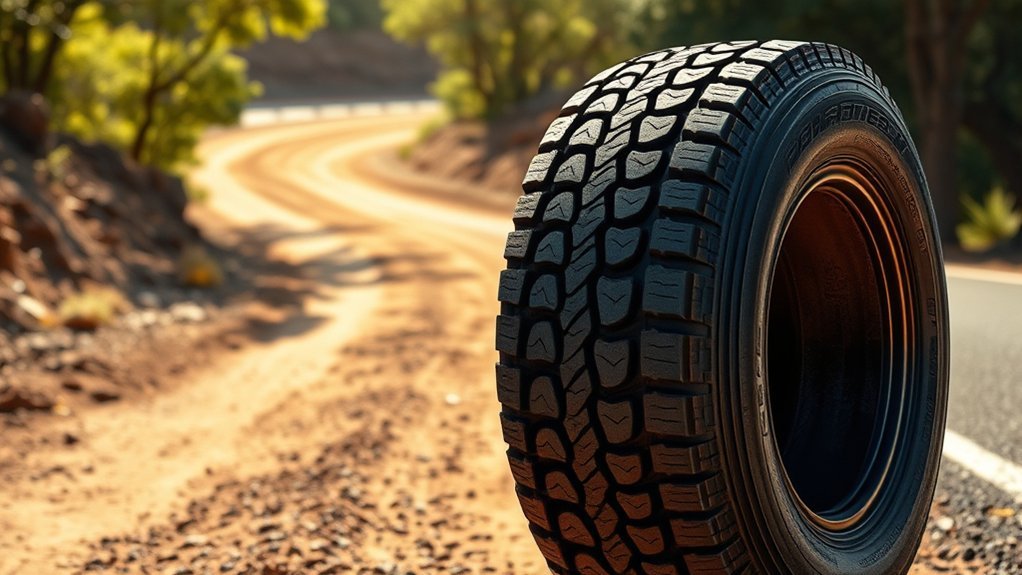
A hybrid-terrain tire uses tread and casing features intended to balance on-road use with stronger off-road capability. Common design elements include larger tread blocks, wider voids, reinforced shoulders, stone ejectors, sidewall lugs, variable-pitch tread patterns, and internal construction suited to trucks or SUVs.
The center portion of the tread is often arranged to maintain road contact and limit pattern noise. The shoulders may be more open and aggressive so they can bite into dirt, gravel, sand, mud, or uneven ground. Actual construction varies by model, size, and load range, so two tires carrying similar R/T labels may perform very differently.
Note: Hybrid terrain is a market description rather than one universal government-defined tire class. Nitto uses “hybrid terrain,” Falken and Toyo use “rugged terrain,” Cooper uses “rough terrain,” and other brands use “hybrid all-terrain.” Compare published specifications instead of relying on the category name alone.
[Products Worth Considering]

These pre-assembled 15x6.00-6 front tire and wheel assemblies are designed for quick replacement on riding lawn mowers and lawn tractors. Built with natural rubber pneumatic...
Top Advantages of Hybrid-Terrain Tires
The main advantage is added flexibility for a vehicle that must handle both routine road driving and more difficult off-road surfaces. Depending on the model, you may gain:
- More loose-surface traction: Wider voids and aggressive shoulders can improve grip in dirt, gravel, sand, shallow mud, and on rocky trails.
- Better road manners than many mud tires: Tighter center blocks and variable-pitch patterns can reduce noise and vibration.
- Stronger shoulder protection: Some designs use thicker rubber, reinforced construction, or sidewall lugs to resist trail impacts and cuts.
- Useful towing and work capability: Properly selected LT and higher-load versions can serve trucks that tow, haul, or travel on job-site roads.
- One-tire convenience: A suitable model may remove the need to switch between a mild road tire and a more aggressive recreational tire.
These are design goals rather than guaranteed results. Wet braking, noise, comfort, tread life, snow traction, and off-road performance still depend on the exact tire and size.
Performance Characteristics: On-Road vs. Off-Road
| Performance Area | Typical Hybrid-Terrain Character | What to Verify |
|---|---|---|
| Highway noise | Usually quieter than an aggressive mud-terrain tire, but often louder than a highway or mild all-terrain tire. | Tread pitch, block spacing, owner feedback, and whether noise increases with wear. |
| Ride and steering | Can feel firmer or heavier, especially in LT, high-load, or oversized fitments. | Tire weight, load range, sidewall construction, inflation requirements, and vehicle suspension. |
| Wet roads | Wide grooves may help move water, but large tread blocks and compounds can produce different braking results. | Circumferential grooves, siping, compound, published wet-performance information, and independent tests where available. |
| Dirt and gravel | Commonly a strong use case because open shoulders and biting edges can improve traction and self-cleaning. | Stone ejectors, tread depth, shoulder design, cut-and-chip resistance, and road-noise tolerance. |
| Mud and sand | Usually more capable than a closed-pattern all-terrain tire, but less self-cleaning than a dedicated mud tire in deep mud. | Void ratio, shoulder openings, vehicle weight, terrain depth, and whether recovery equipment is needed. |
| Fuel economy | May decline if the new tire is heavier, more aggressive, wider, taller, or operated at the wrong pressure. | Published tire weight, overall diameter, rolling-resistance information, pressure, alignment, and driving conditions. |
A hybrid-terrain tire is a compromise by design: it gives up some road refinement to gain off-road ability, while retaining more everyday usability than many dedicated mud tires.
Ideal Driving Conditions for Hybrid-Terrain Tires
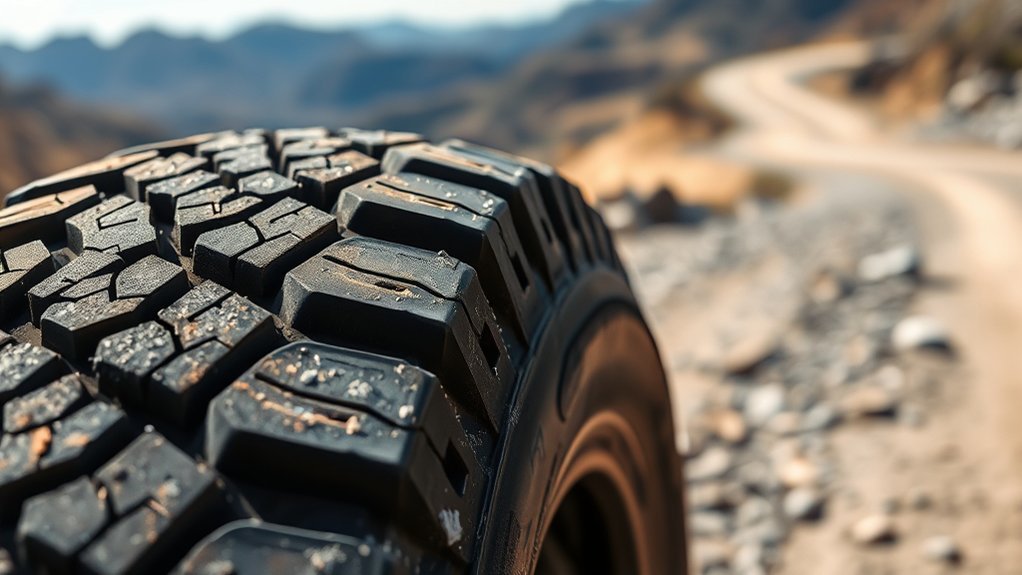
Hybrid-terrain tires make the most sense when your driving regularly combines pavement with surfaces that challenge a mild all-terrain tire. They are commonly considered for pickups, body-on-frame SUVs, Jeeps, overland vehicles, work trucks, and other vehicles with suitable clearance and load capacity.
Versatile Terrain Adaptability
A suitable hybrid-terrain model can provide useful traction across:
- Gravel and unpaved roads
- Forest roads and maintained trails
- Rocky or rutted access routes
- Sand and loose dirt
- Shallow or occasional mud
- Construction sites, farms, ranches, and remote work areas
Deep mud, severe rock crawling, prolonged competition use, and extreme winter conditions may still call for a more specialized tire.
Daily Commute Performance
A hybrid-terrain tire can work for a daily-driven truck or SUV when the driver accepts more tread noise and possibly firmer handling than a highway-oriented tire. Models with tightly arranged center blocks and variable-pitch patterns are designed to make paved-road travel more manageable.
| Driving Condition | Potential Benefit | Main Limitation |
|---|---|---|
| Paved commuting | More manageable noise and stability than many mud tires | Usually less refined than a highway tire |
| Gravel and uneven roads | Open shoulders and stronger biting edges | Possible stone retention, vibration, or tread chipping |
| Seasonal weather | Some models or sizes carry enhanced snow markings | Not every hybrid-terrain tire is 3PMSF-rated or suitable for severe ice |
| Towing and hauling | LT and higher-load versions may support demanding use | Incorrect load range or pressure can harm ride, handling, and safety |
When Another Tire Is Better
- Mostly highway driving: A highway-terrain tire will generally offer lower noise, a softer ride, and better efficiency.
- Light trails and frequent snow: A 3PMSF-rated all-terrain tire may provide a better road-focused balance.
- Deep mud or extreme trails: A mud-terrain tire may clear debris and find traction more effectively.
- Persistent ice and severe cold: A dedicated winter tire may be the safer seasonal choice.
- Passenger cars and road-focused crossovers: Many hybrid-terrain sizes and constructions are inappropriate or unnecessary.
Real-World Use Cases for Hybrid-Terrain Tires
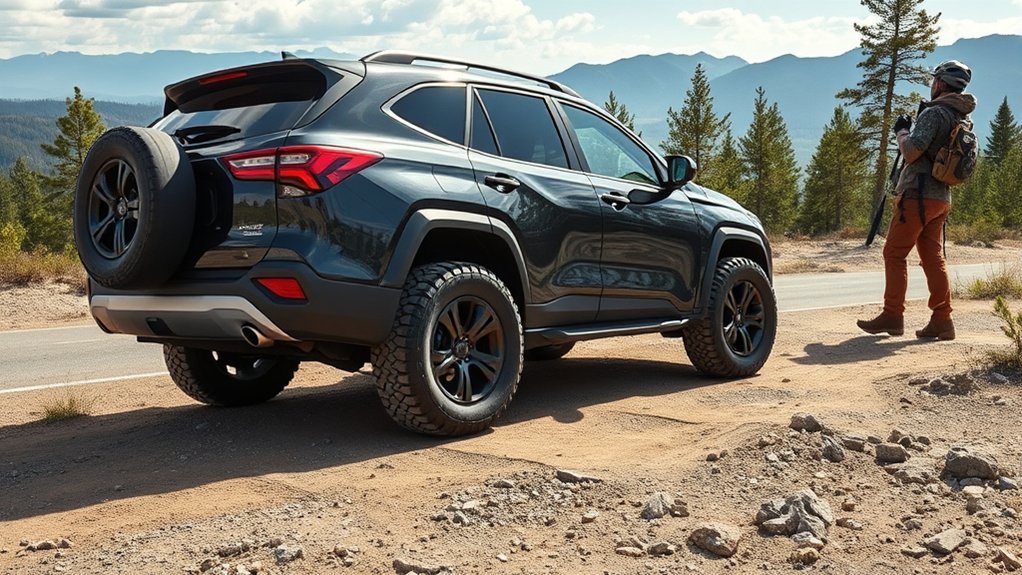
Drivers commonly consider hybrid-terrain tires for situations such as:
- Daily commuting with weekend trails: Regular highway travel combined with camping, hunting, fishing, or off-road recreation.
- Overlanding: Long paved approaches followed by gravel, washboard roads, rocks, sand, or remote access routes.
- Work-related driving: Construction sites, utility roads, farms, ranches, forestry access, and other changing surfaces.
- Towing to recreation areas: Pulling a trailer on pavement before entering loose or uneven terrain.
- Rural living: Regular use on unpaved roads where a highway tire lacks protection or traction.
- Drivers who dislike mud-tire noise: A rugged option for those who need extra trail ability but do not want a full M/T tread.
Who Benefits the Most From Hybrid-Terrain Tires?
Daily Commuters
A commuter may benefit when the vehicle also encounters unpaved roads, rough job sites, rural routes, or weekend trails. The tire should still be chosen for wet-road behavior, noise, treadwear, and cold-weather needs—not only for aggressive appearance.
Off-Road Enthusiasts
Drivers who regularly use dirt, rocks, sand, and moderate mud may gain more shoulder grip and tread void than a mild all-terrain tire provides. A hybrid design is less suitable when the terrain consistently demands the maximum self-cleaning and sidewall protection of a dedicated mud or extreme-terrain tire.
Towing, Hauling, and Work Trucks
Hybrid-terrain tires are available in a range of metric, flotation, and LT sizes. However, an LT designation or high load range does not automatically make a tire correct for your truck. Verify the vehicle’s required load index, wheel capacity, approved rim width, inflation requirements, trailer tongue weight, payload, and axle ratings.
What to Check Before Buying Hybrid-Terrain Tires
Size, Load Index, and Speed Rating
Start with the Tire and Loading Information label on the driver-side door area and the vehicle owner’s manual. The replacement tire should meet the vehicle manufacturer’s size and service requirements unless a qualified professional has confirmed a safe alternative fitment.
- Match or properly account for the original tire size.
- Do not select a lower load index than the vehicle requires.
- Check the speed rating and intended service.
- Verify that the wheel falls within the tire’s approved rim-width range.
- Confirm suspension, fender, brake, and steering clearance through the full range of motion.
- Check the overall diameter of the spare if the vehicle uses a full-size spare.
- Ask how a size change may affect the speedometer, gearing, electronic driver aids, and tire-pressure monitoring system.
Warning: Never choose a tire solely because it fits the wheel or looks aggressive. An incorrect load index, speed rating, rim width, inflation pressure, or overall diameter can affect braking, steering, tire durability, and vehicle control. Have non-original fitments reviewed by a qualified tire professional.
Winter and Wet-Weather Needs
Do not assume that “all-season,” “R/T,” or an aggressive tread automatically provides strong severe-snow performance. Check whether the exact tire size carries the Three-Peak Mountain Snowflake marking when qualifying snow traction matters. The marking addresses a snow-traction test; it is not a blanket promise of equal performance on ice, slush, wet pavement, and every cold-weather surface. The U.S. Tire Manufacturers Association’s snow-tire guidance explains the applicable markings.
For rainy climates, examine groove design, siping, wet-performance information, and credible comparative testing. A large void ratio can help move water, but tread compound, block stiffness, wear, pressure, and vehicle behavior also affect wet braking and hydroplaning resistance.
Noise, Weight, and Efficiency
Compare the published weight of each candidate in your required size. A heavier or larger tire adds rotating and unsprung mass, while aggressive tread can increase rolling losses and air noise. Tire pressure, alignment, driving speed, roof accessories, wheel choice, and vehicle modifications can also change fuel economy, so do not rely on a universal mileage estimate.
Pro Tip: Compare tires in the exact size and load range you plan to buy. Weight, tread depth, speed rating, approved rim width, warranty, and winter marking can differ within the same product line.
How to Maintain Hybrid-Terrain Tires for Longer Life
Hybrid-terrain tires need the same basic safety care as other road tires, with extra attention after rough-road or trail use.
- Check pressure monthly when the tires are cold. Use the pressure on the vehicle placard or in the owner’s manual for normal operation—not the maximum pressure molded onto the tire sidewall.
- Inspect the tread and sidewalls. Look for cuts, punctures, exposed cords, bulges, cracking, lodged stones, abnormal wear, or impact damage.
- Rotate on the correct schedule. Follow the vehicle manual and tire warranty. Some warranties require documented rotations at stated mileage intervals.
- Watch for uneven wear. Feathering, one-sided wear, cupping, vibration, or pulling can indicate alignment, balance, suspension, pressure, or load problems.
- Clean out packed debris. Remove mud and stones after off-road use without cutting or damaging the tread.
- Check tread depth in several locations. The U.S. minimum replacement threshold is 2/32 inch, but a tire can lose useful wet or snow performance before reaching that point.
- Inspect the spare. Check its pressure, condition, age, size, and recall status.
- Read the DOT Tire Identification Number. The final four digits show the week and year of manufacture. Age, heat, storage, and damage matter even when tread remains.
NHTSA TireWise recommends monthly pressure and tread checks and states that tires should be replaced when worn to 2/32 inch. It also advises drivers to consult a tire professional when they notice damage, pressure loss, noise, vibration, or performance changes.
Cost Comparison: Hybrid-Terrain Tires vs. Other Options
A reliable price comparison must use the exact tire size and total installed cost. An advertised per-tire price may exclude shipping, sales tax, mounting, balancing, valve stems, tire-pressure sensors, alignment, road-hazard coverage, and disposal fees.
| Tire Type | Typical Cost Pattern | Potential Long-Term Expense |
|---|---|---|
| Highway terrain | Often the least aggressive construction for road-focused use | May offer lower noise, better efficiency, and longer tread warranties |
| All terrain | Broad range from value to premium | Often a strong balance for drivers who only need light or moderate trails |
| Hybrid/rugged terrain | Commonly priced above mild all-terrain options in the same size | Possible added fuel, rotation, alignment, or replacement expense if oversized or used hard |
| Mud terrain | Often premium-priced due to specialized construction | Greater noise and potentially faster or less even road wear |
Also compare the mileage warranty, trial period, road-hazard terms, rotation requirements, excluded sizes, prorated adjustment rules, and whether mounting or balancing is covered. A longer advertised warranty does not guarantee that every driver will receive that mileage.
Current Hybrid-Terrain Brands and Models to Consider
The following examples were current on official U.S. manufacturer websites in July 2026. Specifications and coverage can change, so verify the exact size before purchasing.
| Model | Manufacturer Description | Advertised Treadwear Coverage | Notable Point |
|---|---|---|---|
| Falken Wildpeak R/T | Rugged terrain with a hybrid tread pattern | 50,000-mile limited tread-life warranty | Built for lifted trucks, SUVs, diesel pickups, towing, hauling, and rocky terrain |
| Nitto Ridge Grappler | Hybrid terrain | No mileage figure advertised on the product page; check the current warranty | Variable-pitch tread, reinforced blocks, stone ejectors, and dual sidewalls |
| Toyo Open Country R/T Trail | On/off-road rugged terrain | 45,000-mile treadwear warranty | Designed to add off-road grip without the full noise and harshness of a dedicated mud tire |
| Mickey Thompson Baja Legend EXP | Hybrid all-terrain | 50,000-mile treadwear warranty | Silica-reinforced compound, wide voids, sidewall traction features, and lightweight construction |
| Cooper Discoverer Rugged Trek | Rough terrain | Up to 60,000 miles for listed metric versions; Rugged Trek LT pages show 55,000 miles | Some metric versions display 3PMSF; verify the marking and coverage for the exact size |
Recall Check: Toyo lists an October 2025 safety recall affecting certain Open Country R/T Trail tires, along with several other Open Country models. The recall does not cover every R/T Trail tire. Check the model, size, plant code, and complete Tire Identification Number on Toyo’s official recall page, and inspect the spare tire as well.
Are Hybrid-Terrain Tires Right for You?
A hybrid-terrain tire may be a good fit when most of the following statements are true:
- You drive a compatible truck or SUV.
- You regularly encounter gravel, dirt, rocks, sand, rough access roads, or moderate mud.
- A conventional all-terrain tire does not provide enough off-road ability.
- You still spend enough time on pavement to care about noise, stability, and ride quality.
- You accept a possible fuel-economy and comfort penalty.
- You can obtain the correct size, load capacity, speed rating, and winter performance for your vehicle.
- You are willing to rotate, inspect, and maintain the tires on schedule.
Choose another category when most driving is on pavement, when deep mud is the main challenge, or when severe winter grip is the highest priority. The best tire is the least aggressive model that safely covers your real driving conditions.
Frequently Asked Questions
Are hybrid-terrain tires more expensive than regular tires?
They often cost more than a highway tire or mild all-terrain tire in the same size because of their specialized tread and construction. The exact difference depends on size, load range, brand, retailer, and installation charges. Compare total installed cost rather than an advertised per-tire price.
How long do hybrid-terrain tires last?
There is no universal lifespan. Current mileage warranties on selected models range from about 45,000 to 60,000 miles, but actual tread life depends on pressure, alignment, rotation, load, vehicle weight, terrain, speed, compound, size, and driving style. A mileage warranty is conditional coverage, not a promise that every set will reach that distance.
Are hybrid-terrain tires good in snow?
Some perform well in loose or packed snow, but performance varies by model and size. Check whether the exact tire carries the Three-Peak Mountain Snowflake marking. Do not assume an aggressive tread is equivalent to a dedicated winter tire on ice or in severe cold.
Are hybrid-terrain tires noisy on the highway?
They are commonly louder than highway tires and mild all-terrain tires, but quieter than many dedicated mud tires. Noise varies with tread design, vehicle insulation, pavement, pressure, alignment, rotation, and tread wear.
Do hybrid-terrain tires reduce fuel economy?
They can, especially when the replacement is heavier, wider, taller, more aggressive, or underinflated. The change may be small or noticeable depending on the vehicle and fitment. Compare exact tire weights and diameters and keep the tires at the vehicle manufacturer’s recommended cold pressure.
Can I use hybrid-terrain tires for towing or hauling?
Yes, when the exact tire and wheel meet the vehicle’s load, pressure, speed, and fitment requirements. Do not assume that every LT or high-load tire is suitable. Confirm payload, axle ratings, trailer tongue weight, wheel capacity, approved rim width, and the manufacturer’s load-and-inflation guidance.
Conclusion
Hybrid-terrain tires can provide a practical middle ground for trucks and SUVs that need meaningful off-road traction without accepting every compromise of a dedicated mud tire. Their suitability depends on the exact model and size, not the label alone. Compare road noise, wet and winter performance, weight, warranty, load capacity, fitment, and recall status before buying. For a vehicle that regularly moves between pavement and difficult access roads or trails, the right hybrid-terrain tire can deliver a useful balance of capability and everyday control.
Sources
- NHTSA TireWise — tire sizing, cold inflation pressure, tread depth, aging, inspection, and maintenance guidance.
- Falken Wildpeak R/T — current rugged-terrain positioning, intended uses, and limited tread-life warranty.
- Nitto Ridge Grappler — hybrid-terrain terminology, tread features, sizes, and specifications.
- Toyo Open Country R/T Trail — rugged-terrain design, performance features, sizes, and warranty.
- Toyo Tires Safety Recall Campaign — current recall notices and Tire Identification Number guidance.
- Cooper Discoverer Rugged Trek — rough-terrain features, size-dependent snow marking, specifications, and warranty information.

Related Articles
When to Switch From All-Season to Winter Tires on a 4Runner
Ineffective all-season tires in cold weather can jeopardize your safety—discover when to make the crucial switch for better traction and handling.
Read More
4Runner Tire Mileage: How Many Miles Should They Last
Curious about how long your 4Runner tires should last? Discover essential tips and factors that influence tire longevity.
Read More
How Long Do Toyota 4Runner Tires Typically Last
How long do Toyota 4Runner tires typically last? Discover the factors that influence tire longevity and essential tips for maintenance.
Read More