
Does Towing a Trailer Wear Out 4Runner Tires Faster
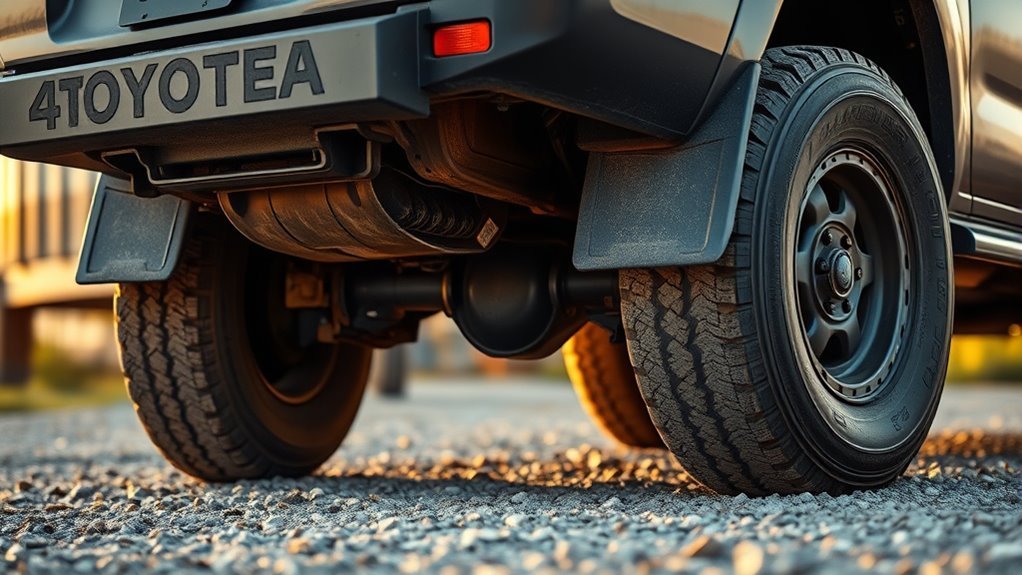
Yes, towing can wear out your Toyota 4Runner’s tires faster, especially the rear tires, because trailer tongue weight adds load to the rear axle and makes the tires work harder. The exact wear rate depends on trailer weight, tongue weight, tire pressure, tire type, alignment, road temperature, speed, and how often you rotate and inspect the tires.
Quick Answer
Towing usually wears 4Runner tires faster because extra load creates more heat, sidewall flex, and rear-tire stress. Do not use a universal towing PSI. Set tire pressure cold according to the driver-door placard, your owner’s manual, and the tire maker’s load chart if you changed tire size or load range.
Key Takeaways
- Towing adds tongue weight to the 4Runner’s rear axle, so rear tires often wear faster than front tires.
- Use the Toyota tire placard and owner’s manual for cold tire pressure; do not copy random 45, 50, or 70 psi advice online.
- Check 4Runner tires and trailer tires separately because they have different load and pressure requirements.
- Rotate tires at the schedule for your model year, and inspect more often when towing, hauling, or driving in heat.
- Replace tires early if you see bulges, cracks, exposed cords, severe uneven wear, or tread worn to the wear bars.
At a Glance
| Time Required | 5–10 minutes before each tow trip, plus a deeper inspection at each rotation |
| Difficulty | Easy for pressure and tread checks; professional help recommended for alignment, balancing, or tire load changes |
| Tools Needed | Accurate tire pressure gauge, tread-depth gauge, flashlight, torque wrench if checking lug nuts, and your owner’s manual |
| Cost | Usually $10–$25 for a good gauge; more for alignment, balancing, or tire replacement |
Why Towing Wears 4Runner Tires Faster
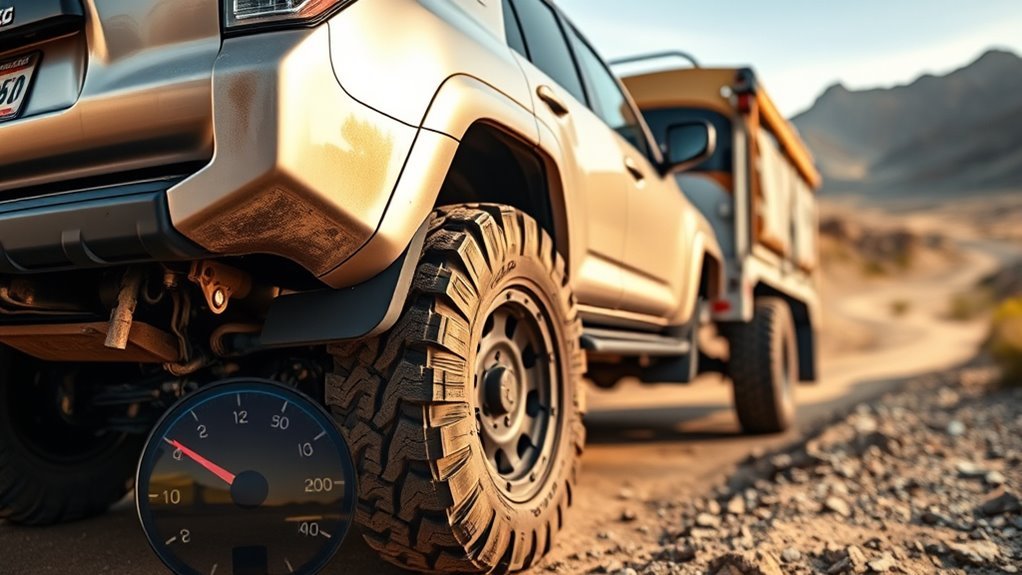
Towing does not instantly ruin tires, but it does increase the work they do. A trailer places tongue weight on the hitch, and that weight is carried mostly by the rear suspension and rear tires. More load means more heat, more sidewall flex, and a larger demand on the tire’s load-carrying capacity.
That is why a 4Runner that tows often may show faster rear tire wear, shoulder wear, cupping, or uneven tread depth between axles. The effect is worse if the tires are underinflated, overloaded, out of alignment, unbalanced, old, or already worn.
Your exact 4Runner matters, too. Older and newer model years do not all share the same towing limits. For example, Toyota listed the 2024 4Runner at a 5,000-lb maximum towing capacity, while Toyota’s 2026 4Runner announcement lists a maximum towing capacity of 6,000 lb. Always use the towing, payload, GAWR, GVWR, and GCWR ratings for your exact model year, trim, and equipment.
Warning: Do not set your 4Runner tires to 70 psi just because you saw that number online. The correct cold pressure comes from the tire placard, the owner’s manual, and the tire manufacturer’s load guidance when tire size or load range has changed. Overinflation can reduce traction and change handling.
[Products Worth Considering]

This portable cordless tire inflator delivers fast, efficient inflation for cars, motorcycles, bikes, and sports balls with a digital pressure gauge. Use the one-click PSI preset with auto shut-off for accurate, hands-free topping to your target pressure up to 150 PSI. It’s compact and rechargeable with a built-in emergency LED light plus valve adapters and accessories for quick, ready-to-go use.

The JACO FlowPro Tire Inflator measures, inflates, and airs down tires up to 100 PSI with battery-free operation and ±2% accuracy after calibration. It features a glowing pressure dial for night visibility, a heavy-duty steel build with a hybrid hose, and a precision push-to-inflate thumb trigger. The patented Lightning Air Chuck locks on for a secure seal, and the kit includes quick-connect hardware for easy inline use with your air compressor.

EVOULTES heavy duty tire inflator with an integrated gauge delivers accurate pressure readings from 10–120 PSI, helping you inflate, deflate, and check tires in one tool. The 16.5-inch extended dual-head air chuck with swivel base reaches hard-to-access dual wheel valves on trucks and RVs. A brass trigger core and side-mounted air release valve make operation smooth, with standard 1/4" NPT threading and quick-connect compatibility for easy setup.
The Right Tire Pressure for Towing Is Not One Universal PSI
The most dangerous mistake in towing tire care is treating one PSI number as correct for every 4Runner, tire size, load range, trailer, and road condition. The right pressure is vehicle-specific and tire-specific.
Start with the NHTSA TireWise guidance: the correct tire pressure is the vehicle manufacturer’s recommended cold tire pressure, usually found on the driver-side door placard or in the owner’s manual. The pressure printed on a tire sidewall is a maximum pressure for that tire, not the automatic setting for your 4Runner.
How to Set Pressure Safely Before Towing
- Check tires cold. Measure pressure before driving, or after the vehicle has been parked long enough for the tires to cool.
- Use the 4Runner placard first. The driver-door placard is the baseline for the original tire size and load rating.
- Read the owner’s manual. Look for towing, loading, and tire-pressure notes for your model year.
- If you changed tires, check the tire maker’s load chart. LT tires, larger tires, and different load ranges may need a pressure calculation from a tire professional.
- Never exceed tire, wheel, or vehicle limits. Pressure cannot fix an overloaded vehicle or trailer.
Note: Your trailer tires are separate from your 4Runner tires. Trailer tires usually have their own size, load range, speed rating, and cold inflation pressure. Check the trailer placard and tire sidewalls before every trip.
How Load and Tongue Weight Affect Tire Wear
Trailer tongue weight pushes down on the hitch. That extra load can increase rear tire temperature and shoulder wear, especially during long highway trips, summer towing, mountain driving, or stop-and-go hauling. Even when you stay within the tow rating, you still need to stay within payload, rear axle, tire load, and gross combined weight limits.
| Rating or Term | Why It Matters for Tire Wear |
|---|---|
| Payload | Includes passengers, cargo, hitch weight, accessories, and anything added to the vehicle. Too much payload overloads tires and suspension. |
| GAWR | Gross axle weight rating. Rear GAWR is critical because towing adds load to the rear axle. |
| GVWR | Maximum allowed weight of the loaded 4Runner itself. Do not exceed it even if the trailer is under the tow rating. |
| GCWR | Maximum combined weight of the loaded 4Runner and loaded trailer. |
| Tire load index | Shows how much weight each tire is designed to carry at its rated pressure. Replacement tires should meet or exceed the required rating. |
Pressure helps a tire carry load, but pressure does not increase the 4Runner’s legal payload, axle rating, tow rating, or tire load rating.
What Towing Damage Looks Like on 4Runner Tires
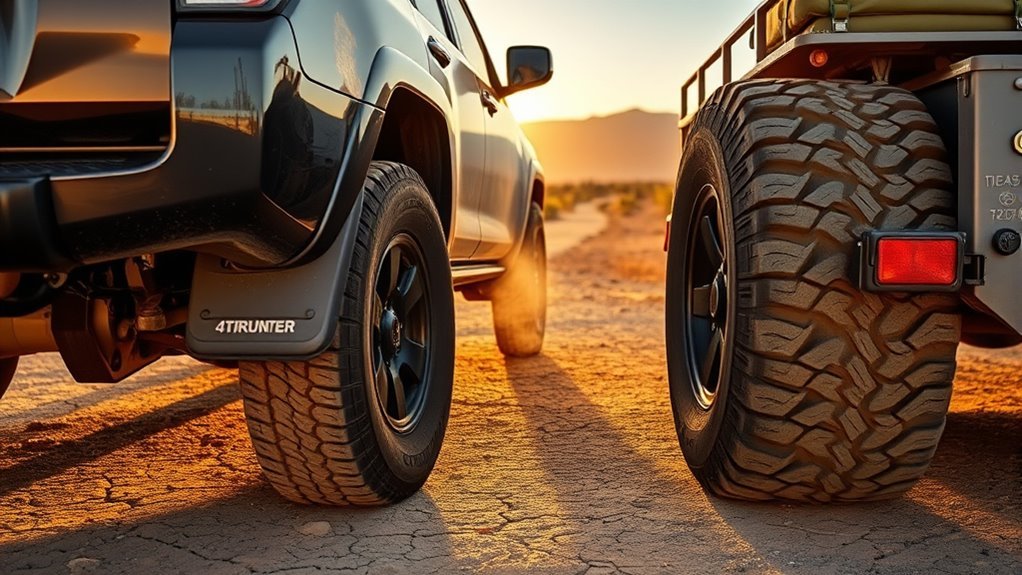
Towing-related tire wear is usually visible before a failure happens. The key is to inspect often enough to catch the pattern early.
| What You See | Likely Cause | What to Do |
|---|---|---|
| Rear tires wearing faster than fronts | Tongue weight, cargo load, missed rotations | Rotate on schedule, verify payload and rear axle weight, check pressure cold |
| Both outer shoulders worn | Underinflation, overloading, aggressive cornering | Check pressure with a reliable gauge and confirm the load is within limits |
| Center tread worn faster | Possible overinflation or tire/load mismatch | Return to correct cold pressure and ask a tire professional if using non-stock tires |
| Feathered edges or one-side wear | Toe/camber alignment issue, worn suspension, load sag | Get a four-wheel alignment and suspension inspection |
| Cupping or scalloping | Imbalance, worn shocks, loose components, poor rotation history | Balance tires and inspect shocks, wheel bearings, and suspension parts |
| Bulges, cracks, exposed cords, or sudden vibration | Possible internal damage, age, impact, overload, or severe underinflation | Stop towing and have the tire inspected or replaced immediately |
How Towing Reveals Hidden Alignment Problems
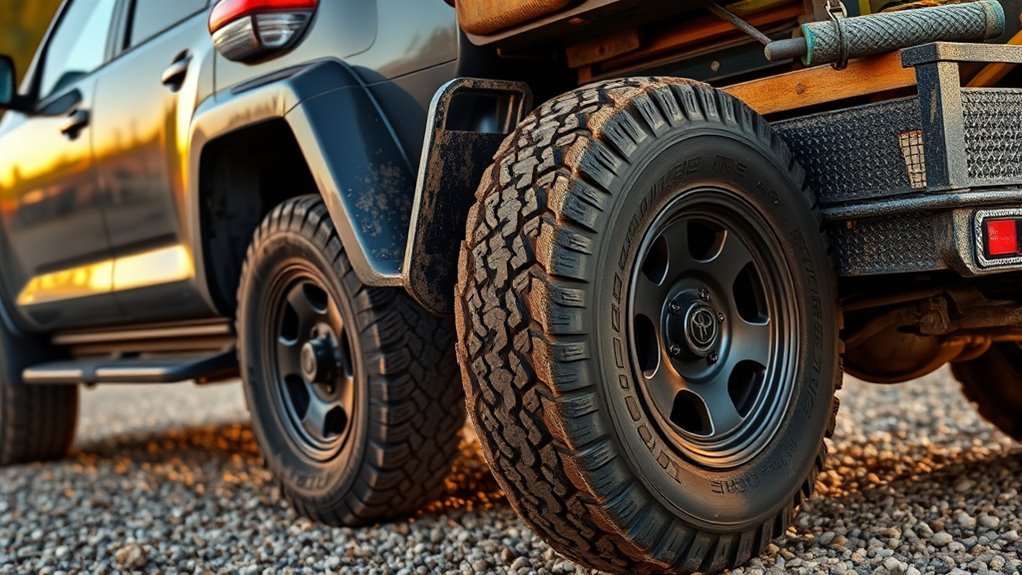
A slight alignment problem may be hard to notice during unloaded daily driving. Add a trailer, cargo, passengers, and highway heat, and the same small issue can show up as fast shoulder wear, feathering, or steering pull.
Watch for these signs after a towing trip:
- One edge of a tire is wearing faster than the other.
- The 4Runner pulls to one side while towing or braking.
- The steering wheel is off-center on a straight road.
- You feel new vibration after loading the trailer.
- The rear tires show cupping, scalloping, or uneven tread blocks.
If you tow often, it is smart to check alignment at least once a year, after a suspension change, after a hard impact, or any time uneven wear appears. A rotation alone will not fix an alignment problem; it only moves the wear pattern to another position.
Pre-Tow Tire Checklist for a 4Runner
Before you hitch up, do a quick tire check on both the 4Runner and the trailer. This takes only a few minutes and can prevent expensive tire damage.
- Check all 4Runner tires cold. Set pressure according to the placard/manual or a tire professional’s load-chart calculation for non-stock tires.
- Check the spare. A flat spare is useless when towing far from help.
- Check trailer tire pressure. Use the trailer tire’s required cold pressure and load rating, not the 4Runner’s pressure.
- Measure tread depth. Use a tread-depth gauge across inner, center, and outer grooves.
- Inspect sidewalls. Look for cuts, cracks, bubbles, bulges, or exposed cords.
- Look for uneven wear. One-sided wear, cupping, or feathering means you should inspect alignment, balance, and suspension.
- Confirm load ratings. Make sure tires, axle ratings, payload, and tow rating are not exceeded.
- Check lug nuts and valve caps. Confirm wheels are properly torqued after tire service, and keep valve caps installed.
Pro Tip: Measure tread depth in three places across each tire before a long towing season. If the inner edge, center, and outer edge differ noticeably, you can catch pressure, alignment, or load problems before the tire is ruined.
[Products Worth Considering]

The Tymate TM3 RV TPMS delivers real-time tire pressure monitoring from 0 to 144 PSI with accurate readings and dependable wireless communication. It includes four external sensors with pre-pairing, six alarm modes for rapid leak, pressure extremes, temperature, and signal loss, plus an easy-reference setup for alert thresholds. Solar and USB-C charging help keep the display powered, while the color LCD and adaptive backlight improve visibility for safer driving and towing.

Secure your parked vehicle quickly with AFA Tooling 4T rubber wheel chocks in a 4-pack for two dual-wheel sets. The ribbed design and textured base grip fast without pounding, so you can chock tires on trailers, RVs, ATVs, and work vehicles with confidence. EZ rustproof handles with rope ties keep the pair together for easy placement and removal, while nylon-reinforced rubber stands up to dirt, ice, salt, and harsh weather.
Maintenance Habits That Prevent Towing-Related Tire Wear
Towing does not have to destroy your tires. The biggest gains come from simple habits done consistently.
1. Rotate Tires on Schedule
Toyota’s 2024 4Runner maintenance guide lists tire rotation at 5,000-mile/6-month service intervals. Follow the maintenance guide for your own model year, and consider staying strict with rotations if you tow often.
2. Inspect Tires Monthly and Before Long Trips
Inspect pressure, tread wear, and damage even if your TPMS light is off. A TPMS warning is not a replacement for a pressure gauge or visual inspection.
3. Keep the Load Within Ratings
Do not judge towing safety by trailer weight alone. Passengers, cargo, roof racks, recovery gear, drawers, bumpers, skid plates, water, fuel, coolers, and tongue weight all eat into payload.
4. Balance and Align When Wear Changes
If you see cupping, vibration, feathering, or one-side wear, schedule service. Towing can amplify problems that were already beginning.
5. Slow Down When Loaded
Speed builds heat. Heat is one of the main enemies of a heavily loaded tire. Follow the speed rating on your tires and trailer tires, and leave more distance for braking and steering corrections.
When Towing Means It Is Time for New Tires
Replace tires before they become a towing safety problem. Do not wait for a blowout or for every tire to be completely worn.
Replace or professionally inspect tires immediately if you notice:
- Tread worn to the built-in wear bars or about 2/32 inch.
- Visible cords, deep cuts, bubbles, bulges, or sidewall cracking.
- Uneven wear that keeps returning after rotation.
- New vibration, thumping, or pulling after an impact.
- Tires that are older, weather-cracked, or past the tire maker’s service-life guidance.
For age, tread is not the only factor. Michelin recommends a professional tire inspection after five years of service and replacement at ten years from the manufacture date as a precaution, even if tread remains. Other tire and vehicle manufacturers may give different guidance, so check the tire maker’s warranty and safety information.
Warning: Do not tow on a tire with a bulge, exposed cord, severe sidewall crack, or damage from running flat. A damaged tire can fail suddenly under towing heat and load.
Frequently Asked Questions
Does towing wear out 4Runner tires faster?
Yes. Towing can wear 4Runner tires faster because the trailer adds load, heat, and stress, especially to the rear tires. The effect is much worse when tires are underinflated, overloaded, misaligned, old, or not rotated on schedule.
What PSI should I run in my 4Runner tires when towing?
Use the cold tire pressure on the driver-door placard and your owner’s manual. If you changed tire size, tire type, or load range, ask a tire professional to use the tire manufacturer’s load/inflation chart. Do not use a random universal towing PSI.
Should rear tire pressure be higher when towing?
Only if Toyota or the tire/load calculation for your setup calls for it. Some vehicles use different front and rear pressures, but you should not guess. Check the placard, manual, and tire load chart for your exact tires and load.
How often should I rotate 4Runner tires if I tow?
Follow your Toyota maintenance guide. For many 4Runner maintenance schedules, tire rotation appears at 5,000-mile or 6-month intervals. If you tow frequently, do not stretch the interval, and inspect for uneven wear between rotations.
Can towing cause a tire blowout?
Towing can contribute to a blowout if the tire is underinflated, overloaded, damaged, overheated, too old, or already worn. A properly loaded 4Runner with healthy tires, correct cold pressure, and regular inspections is much less likely to have a tire failure.
Do trailer tires need the same pressure as 4Runner tires?
No. Trailer tires have their own pressure, load range, and speed rating. Check the trailer tire sidewall, trailer placard, and trailer owner’s information. The 4Runner placard applies to the vehicle tires, not the trailer tires.
Conclusion
Towing does wear 4Runner tires faster when extra load, heat, pressure errors, and alignment problems are ignored. The fix is not to inflate every rear tire to a high number. The fix is to use the correct cold pressure, stay within every load rating, rotate on schedule, inspect tread and sidewalls often, and replace damaged or worn tires before a trip.
If your 4Runner tows regularly, treat tires as part of the towing system. Healthy tires, correct pressure, balanced loading, and good alignment protect your tread life, your trailer, and your control on the road.
Sources
- NHTSA TireWise — cold tire pressure, tire placard guidance, and tire safety basics.
- Toyota Owner’s Manuals and Warranties — official owner’s manual lookup by model year.
- 2024 Toyota 4Runner Warranty & Maintenance Guide — tire rotation and towing/heavy-load maintenance schedule items.
- 2024 Toyota 4Runner eBrochure — 5,000-lb maximum towing capacity statement for 2024.
- Toyota 2026 4Runner Pressroom PDF — 6,000-lb maximum towing capacity statement for 2026.
- Bridgestone Tire Maintenance and Safety Manual — safe loading, inspection, tread depth, tire age, and damage guidance.

Related Articles

When to Switch From All-Season to Winter Tires on a 4Runner
Ineffective all-season tires in cold weather can jeopardize your safety—discover when to make the crucial switch for better traction and handling.
Read More
4Runner Tire Mileage: How Many Miles Should They Last
Curious about how long your 4Runner tires should last? Discover essential tips and factors that influence tire longevity.
Read More
How Long Do Toyota 4Runner Tires Typically Last
How long do Toyota 4Runner tires typically last? Discover the factors that influence tire longevity and essential tips for maintenance.
Read More