4Runner Tire Setup for Camping and Backcountry Roads
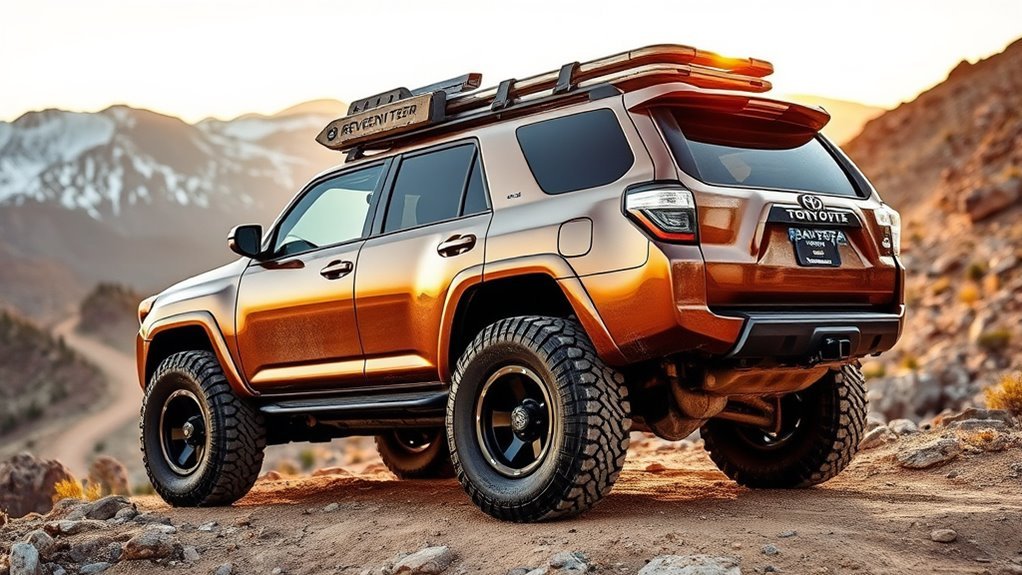
You’ll build a better 4Runner camping setup by choosing tires around your actual vehicle, payload, terrain, and wheel fitment—not by copying one tire size from a forum photo. For most camping-loaded 4Runners, the best setup is an all-terrain or hybrid tire with a load index that meets or exceeds the door placard, a size that clears at full steering lock and suspension compression, and a pressure plan that changes between highway and trail use.
Quick Answer
For most 2010–2024 4Runner camping builds, 265/70R17 is the easy stock-size choice, while 275/70R17, 255/80R17, or 285/70R17 can add clearance if fitment is checked carefully. Choose all-terrain or hybrid tread, match the tire load index to the vehicle placard, carry a real spare and compressor, and reinflate before highway driving.
Key Takeaways
- Start with your 4Runner generation and factory tire placard before choosing a larger size.
- All-terrain tires are best for most camping trips; hybrid tires suit rougher mixed use; mud-terrains are only worth it if your trips are trail-heavy.
- Load Range E is not automatically required. The tire’s load index must meet or exceed the vehicle placard, and your loaded rig should stay within GVWR and axle limits.
- A 285/70R17 can be a strong 5th-gen camping size, but rubbing depends on offset, alignment, suspension, mud flaps, fender liner position, and body mount clearance.
- Airing down helps off-road comfort and traction, but it is for low-speed trail use only. Reinflate before returning to pavement.
At a Glance
| Time Required | 30–60 minutes to plan; 1–2 hours to test-fit and check rubbing after installation |
| Difficulty | Moderate; easy if staying stock size, harder when upsizing to 33-inch or larger tires |
| Tools Needed | Tire pressure gauge, portable compressor, torque wrench, tread-depth gauge, floor jack or shop lift, and a loaded-vehicle scale ticket if possible |
| Cost | Usually $900–$1,800+ for tires only; more if adding wheels, lift, alignment, trimming, or a full-size matching spare |
Start With Your 4Runner Generation, Trim, and Factory Size
Before choosing a camping tire, confirm your model year, trim, wheel size, tire placard, and current suspension. A 2010–2024 5th-gen 4Runner with 17-inch wheels is not the same fitment problem as a 2025+ 6th-gen 4Runner. Toyota’s 2024 4Runner brochure shows 17-inch all-terrain equipment on TRD Pro and lists trim-dependent GVWR values, while Toyota’s 2025 4Runner information highlights 18-inch wheels with 33-inch Toyo Open Country A/T III tires on TRD Pro and Trailhunter grades.
That means a “best 4Runner tire” answer should start with your actual truck. Look at the tire-and-loading placard on the driver-side door jamb, confirm the wheel diameter, and check whether your spare matches the rolling diameter of the four tires on the ground. The NHTSA TireWise guide also recommends choosing the same tire size as the original equipment tire or another size recommended by the vehicle manufacturer unless a qualified tire professional confirms the replacement.
Warning: Do not choose tires only by appearance. Oversized tires can rub brake lines, body mounts, fender liners, upper control arms, or bumper covers. Overloaded vehicles and unsecured roof loads also increase failure risk, especially on rough roads.
Choose the Right 4Runner Tire Type for Your Camping Style
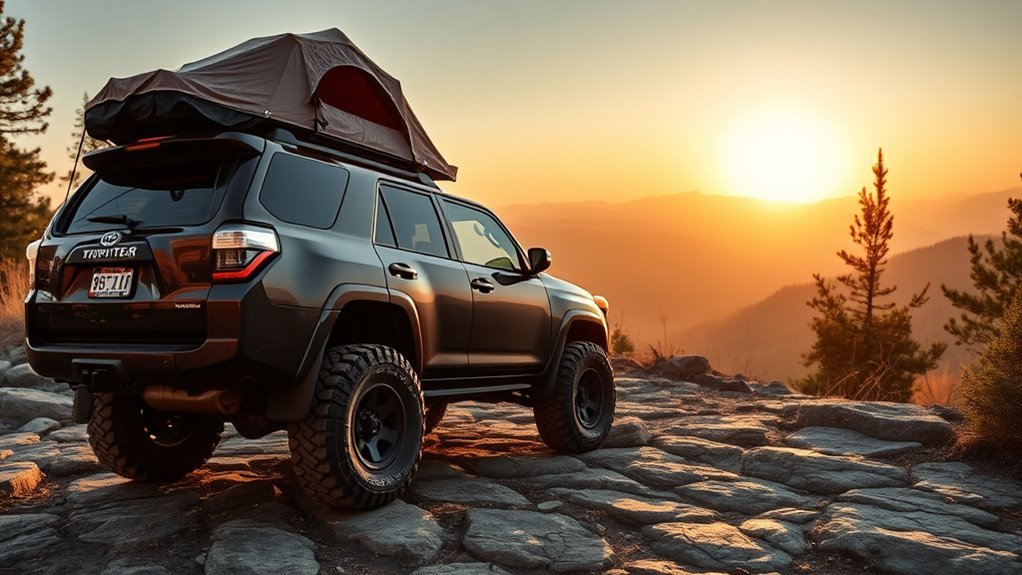
Why settle for a tire that only looks aggressive if it does not match your camping routes? Your tread pattern determines highway noise, wet-road grip, puncture resistance, mud clearing, and how relaxed the truck feels with a fridge, water, recovery boards, and sleeping gear on board.
If your trips are mostly highway, forest roads, desert two-tracks, and graded gravel, an all-terrain tire is the best starting point. It gives you useful sidewall protection and loose-surface grip without turning every interstate drive into a noisy compromise. If you regularly drive rocky trails, wet ruts, or loose climbs, a hybrid tire adds a more open tread and stronger shoulders. If your camping starts where the road is already washed out, a mud-terrain can work, but expect more noise, heavier weight, faster wear, and weaker wet-pavement manners.
| Tire Type | Best Camping Use | Tradeoff |
|---|---|---|
| All-terrain | Highway miles, fire roads, gravel, desert roads, light snow, and mixed daily driving | Less mud clearing than a mud-terrain |
| Hybrid rugged-terrain | Rocky approaches, weekend trail camping, wet ruts, and heavier overland builds | More weight and noise than a mild all-terrain |
| Mud-terrain | Deep mud, loose soil, and trail-dominant travel where self-cleaning tread matters | Noisier, heavier, and usually worse on wet pavement and long highway trips |
| Dedicated winter tire | Cold-weather highway travel, icy campground access roads, and snow-packed passes | Not ideal for hot weather, rock abuse, or year-round use |
Match your rubber to your reality. Tire maintenance matters just as much as tread choice: inspect sidewalls after rocky climbs, rotate on schedule, keep a real gauge in the glove box, and do not rely only on TPMS. Toyota’s 2024 4Runner brochure notes that tire pressure should be checked regularly with a gauge and not only by the tire pressure monitor system.
The best 4Runner camping tire is the one that matches your real terrain, clears your truck at full compression, carries your actual payload, and still drives safely on the highway home.
[Products Worth Considering]

The KUXISA 180PSI portable air compressor delivers three times faster inflation with a high‑efficiency battery and dual LCD screens that show real‑time and preset pressure. It offers four automatic modes for cars, motorcycles, bicycles and balls, plus a manual setting up to 180 PSI, and automatically shuts off to prevent over‑inflation. Its compact cordless design includes a storage pouch, LED light and emergency power bank capability, making it ideal for roadside emergencies and everyday inflating tasks.

The VIAIR 85P is a compact, heavy‑duty 12V tire inflator that delivers up to 60 PSI and includes a built‑in pressure gauge, LED work light, and twist‑on brass chuck. Its 13‑foot hose and included Presta adapter let you inflate car, truck, SUV, motorcycle and bike tires quickly, while the durable carry bag makes storage and transport effortless. With a duty cycle of 20 minutes at 30 PSI and a flow rate of 1.26 CFM, it inflates a standard passenger tire in just over a minute, offering reliable on‑the‑go performance for daily commuting and off‑road adventures.
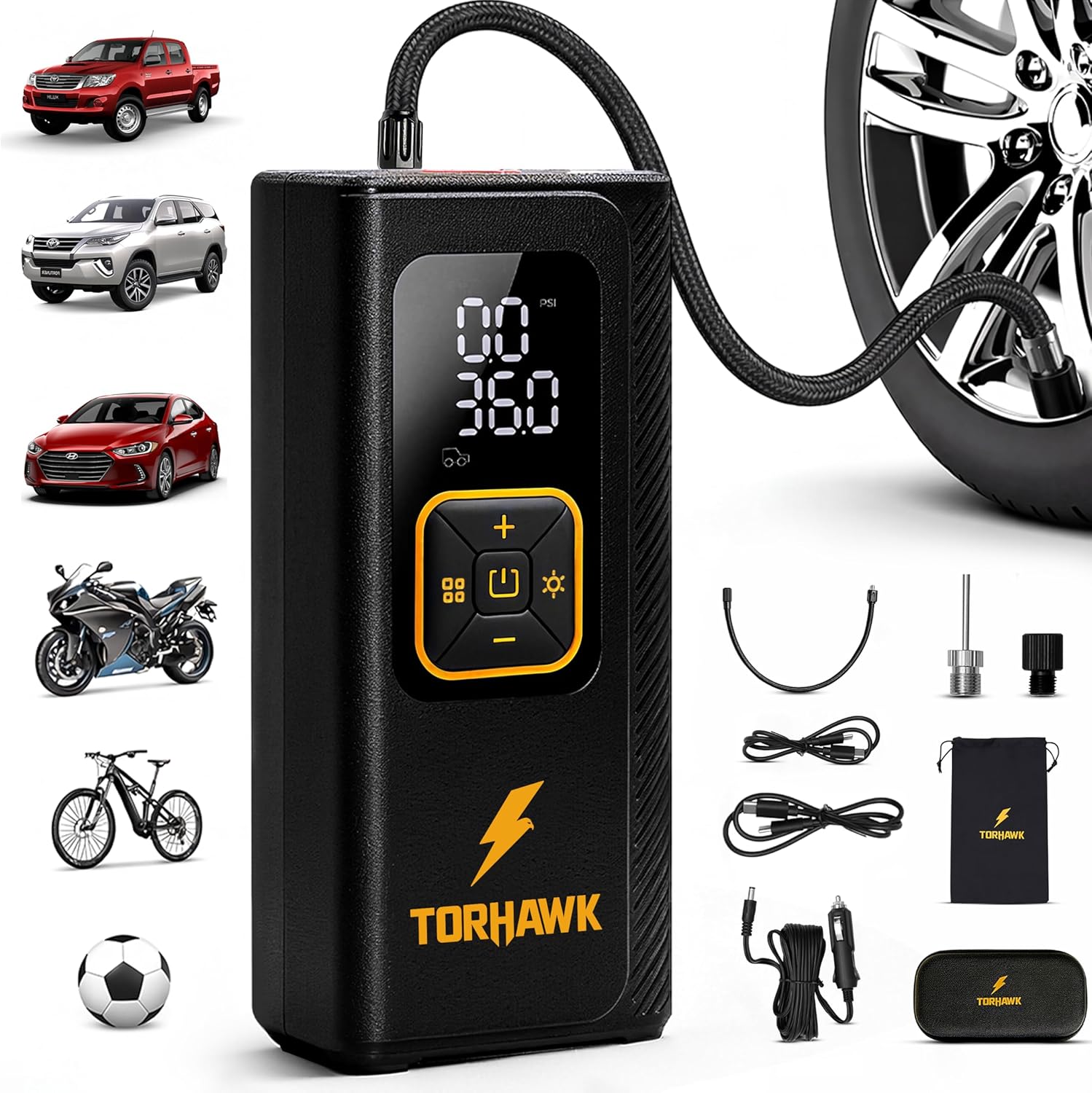
The Torhawk Rugged Dual Cylinder Tire Inflator delivers rapid 160 PSI inflation, up to five times faster than standard pumps, making it ideal for cars, trucks, SUVs, and RVs. It offers dual power options with a 7500 mAh rechargeable battery and 12V DC plug, plus smart presets and auto shut‑off for precise pressure control. Built with a durable 20‑inch hose, LED light, and USB power bank, it’s perfect for roadside emergencies and outdoor adventures.
Build Your Complete 4Runner Camping Setup Around Your Tires
You’ll want to start by selecting a tire size that balances ground clearance, braking, gearing, steering clearance, and gear-hauling capability. A larger tire can help in rocks and ruts, but it also adds weight, changes effective gearing, affects speedometer accuracy, and may require trimming or alignment changes. A camping setup should be dependable first and dramatic second.
Tire Size Selection
For many 5th-gen 4Runner owners, the practical tire-size ladder looks like this:
| Size | Best For | Fitment Notes |
|---|---|---|
| 265/70R17 | Stock-style camping, daily driving, long highway trips, and low-hassle replacement | Usually the easiest 17-inch choice on many 5th-gen trims; confirm your placard and wheel size |
| 275/70R17 | A mild size bump without jumping straight to a full 285 | May still rub depending on wheel offset, alignment, and tire model |
| 255/80R17 | Tall, narrow overland builds that value clearance and snow/mud cutting | Limited tire selection; test-fit carefully because height can still create rubbing |
| 285/70R17 | Popular 33-inch-style camping builds that need more clearance and footprint | Often needs careful offset, alignment, fender-liner adjustment, mud-flap changes, and sometimes trimming |
| 265/70R18 | Many 2025+ 4Runner off-road trims and 18-inch-wheel builds | Use the 2025+ placard, wheel specs, and manual rather than 5th-gen 17-inch fitment rules |
| 35×12.50 | Advanced trail builds, not normal camping setups | Expect significant supporting modifications, trimming, possible gearing/brake considerations, and spare-location planning |
For a balanced camp rig, avoid chasing diameter alone. A stock-size or mild-upsize all-terrain with the correct load index can outperform a heavy oversized tire if your trips include long pavement miles and only moderate trail access.
Terrain Matching Tires
Three common tire categories define where your 4Runner can camp with confidence: all-terrains for mixed-use explorers, hybrid tires for rougher weekend trips, and mud-terrains for trail-dominant rigs.
| Tire Category | Terrain Application | Traction Performance |
|---|---|---|
| 265/70R17 All-Terrain | Forest service roads, gravel, daily driving | Balanced grip, lower noise, easy replacement |
| 275/70R17 or 285/70R17 Hybrid | Rocky trails, wet ruts, mixed overland routes | Stronger shoulder bite and more aggressive tread |
| 35×12.50 Mud-Terrain | Deep mud, loose surfaces, trail-focused builds | Maximum clearing and bite, with major comfort and fitment tradeoffs |
Load Capacity Considerations
Every pound of gear you add to your 4Runner—roof tent, fridge, water, recovery boards, spare fuel, tools, drawers, and passengers—has to be carried by the vehicle, axles, wheels, and tires. Do not solve payload with tire load range alone. Start with the certification label, the tire-and-loading placard, and the owner’s manual.
The correct method is simple: load the 4Runner as you actually camp, including passengers, water, fuel, and recovery gear. Weigh it by axle if you can. Compare that weight to the vehicle’s GVWR and GAWR, then choose tires whose load index meets or exceeds the placard requirement. The U.S. Tire Manufacturers Association notes that the same tire size and load range can have different load indexes and maximum capacities, so the load index is not a detail to ignore.
Pro Tip: If your 4Runner is built for camping, get a scale ticket with the truck fully loaded. A real axle weight is more useful than guessing what your roof tent, fridge, drawers, tools, and water weigh.
Load Range E tires can make sense for rocky travel, heavy accessories, and puncture resistance, but they are not automatically better for every 4Runner. They can ride firmer, weigh more, and require pressure decisions based on load/inflation data. For lighter camping setups, an SL or XL all-terrain with the correct load index may drive better and still meet the vehicle requirement.
Match 4Runner Tire Size to Your Backcountry Terrain
Because your 4Runner’s tire size directly affects where you can—and can’t—venture, align your tire size with the terrain you actually drive most often.
For fire roads, graded trails, and long-distance camping, a stock-size 265/70R17 all-terrain is hard to beat on many 5th-gen 4Runners. It keeps the truck predictable, protects fuel economy better than heavier options, and usually avoids the fitment problems that come with bigger tires.
When terrain demands increase, 275/70R17 or 285/70R17 tires can add useful clearance and footprint. The wider 285 can help in loose dirt and rocky climbs, but it also pushes you into fitment work. Plan on checking fender liners, mud flaps, bumper clearance, body mount clearance, and upper control arm clearance before calling the job done.
For severe routes—boulder fields, deep ruts, and repeated mud—35-inch mud-terrain tires can work, but they belong on a more complete build. Treat them as a system that may include suspension, trimming, alignment, gearing, brake, wheel, and spare-location decisions. For most camping trips, a well-chosen 33-inch-class all-terrain or hybrid tire is the smarter foundation.
Pick Lightweight Wheels That Survive Off-Road Abuse
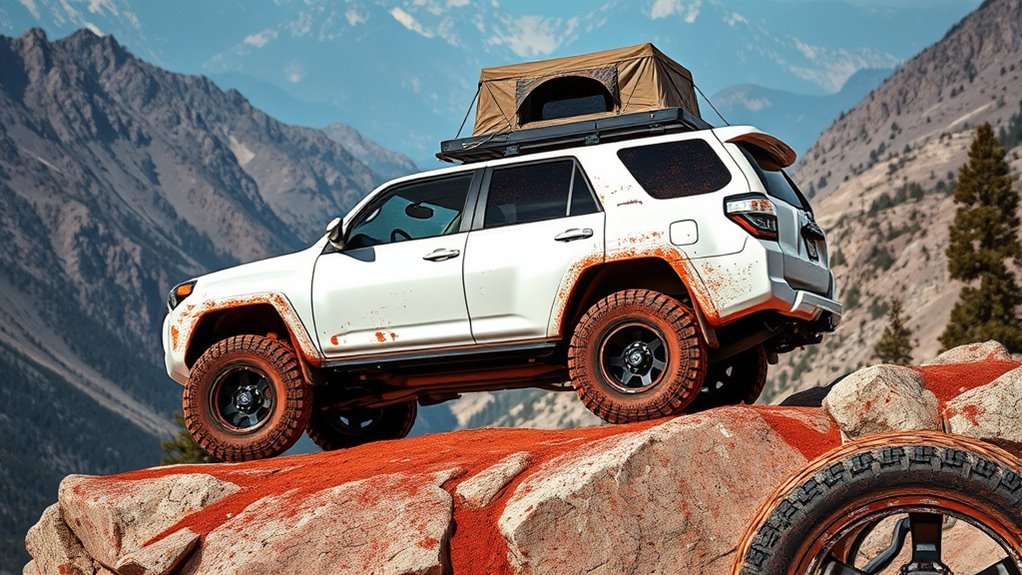
You need wheels that reduce unnecessary unsprung weight without sacrificing strength when the trail gets rough. Aluminum alloy wheels are common for 4Runner camping builds because they balance weight, corrosion resistance, and strength. Flow-formed and forged wheels can add durability, but the right wheel spec matters as much as the manufacturing method.
[Products Worth Considering]

The FORTEM tire inflator delivers fast, reliable inflation for car, truck, SUV, motorcycle and bike tires with up to 150 PSI, powered by any 12V vehicle outlet. Its compact design includes a 14‑foot power cable, LED flashlight for night emergencies, and automatic shut‑off for precise pressure control. Three interchangeable nozzles expand its use to sports balls, air mattresses and other inflatables, making it a versatile roadside companion.

The RYOBI ONE+ Whisper Series inflator delivers fast, quiet inflation for tires, sports balls, air mattresses and more, thanks to its powerful high‑volume motor. Its cordless 18V lithium‑ion design provides portable convenience, while the whisper‑quiet operation keeps noise to a minimum. Compatible with all RYOBI ONE+ batteries, it offers versatile use for camping, road trips, and home garage tasks.

Genuine OEM Toyota
Wheel Material Matters
Three factors dominate your wheel selection when building a 4Runner for backcountry camping: weight, strength, and fitment. A lighter wheel can improve steering feel and suspension response, but a wheel that is too wide or too low in offset can make rubbing worse.
For many 5th-gen 4Runner 17-inch builds, 17×8 to 17×9 wheels are common, but offset must be chosen carefully. Lower-offset wheels push the tire outward and may help upper-control-arm clearance, but they can increase rubbing at the front bumper, fender liner, and body mount. Higher-positive offsets keep the tire tucked in but can create upper-control-arm contact with wider tires.
- Use a wheel diameter that clears your brakes and matches your tire plan.
- Keep width reasonable for the tire manufacturer’s approved rim-width range.
- Confirm hub bore, lug seat type, and lug-nut compatibility.
- Torque lug nuts to the vehicle manufacturer’s specification after installation and after your first drive.
- Make sure your spare wheel and tire can be used safely with the rest of the setup.
Durability Over Weight
Do not buy the lightest wheel you can find just because it looks like an overland upgrade. A camping-loaded 4Runner sees potholes, washboard, rocks, and heat. Choose wheels from a reputable manufacturer, use the correct load rating, and inspect them after hard trail hits.
Beadlock-style wheels look serious, but true beadlocks may not be street legal in all places and are usually unnecessary for mild camping travel. Most drivers are better served by a strong conventional wheel, a good compressor, and sensible off-road pressures.
Fit Larger 4Runner Tires Without Bodywork
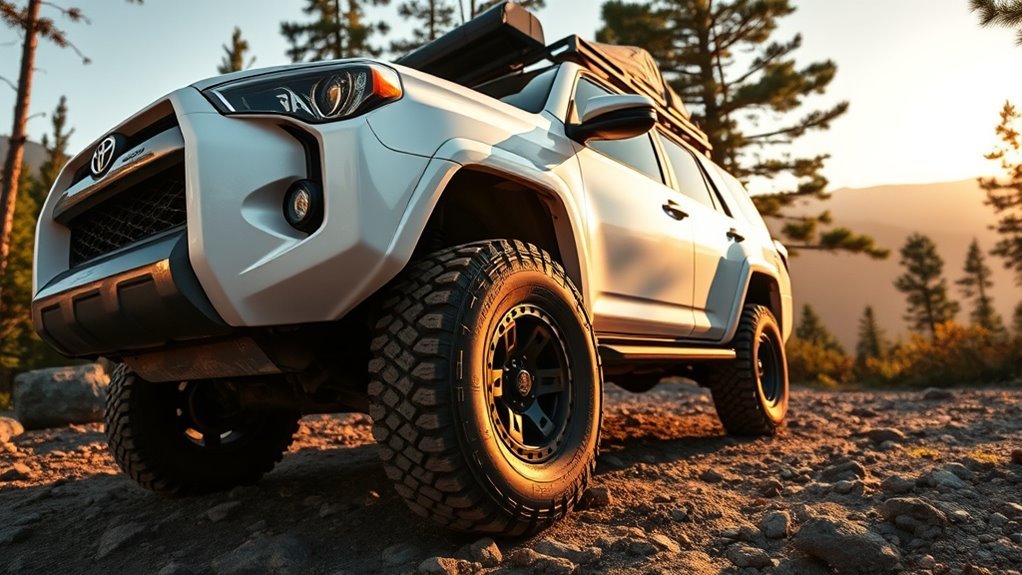
Fitting larger 4Runner tires without major bodywork is possible only if you choose the size, wheel, and alignment carefully. The goal is not just to clear while parked. The tire has to clear while turning, braking, reversing, compressing the suspension, and carrying camping gear.
- Test-fit before committing to a full set if you are moving beyond stock sizing.
- Check clearance at full steering lock in both directions.
- Reverse slowly while turning to reveal bumper and mud-flap rub.
- Cycle the suspension or inspect after trail compression, not just in the driveway.
- Check upper-control-arm clearance with the exact wheel offset and tire model you plan to use.
- Confirm that the spare tire location can hold a matching spare.
- Get an alignment after tire and suspension changes; caster can affect front tire clearance.
A 285/70R17 on a 5th-gen 4Runner is often the edge of what many owners consider a practical camping size. Some trucks clear with small adjustments; others need fender liner movement, mud-flap removal, trimming, or body mount work. Tire model matters too, because one manufacturer’s 285 can be wider or squarer than another’s.
Note: “No rub” claims are only true for a specific truck, alignment, wheel, tire model, suspension, and load. Always test your own 4Runner after installation.
[Products Worth Considering]

Size: 275/65R18, Tire Only - Wheel/Rim Not Included. Single Tire:dimension (inch): 32.09 x 10.98 x 32.09, weight (lbs): 42.5.Max Pressure (psi): 44; Load Index: 116 ( 2765 lbs for single tire).Speed Rating: T (113 mph); Load Range: SL (Standard Load).

Set 4Runner Tire Pressure for Camp-Loaded Highway and Trail Days
Because you’re hauling a loaded rig across changing terrain, tire pressure becomes a tool—but it must be used carefully. For highway driving, start with the cold tire pressure listed on the vehicle tire placard or owner’s manual. NHTSA says the correct pressure is the vehicle manufacturer’s listed cold pressure, not the number molded into the tire sidewall.
When you leave pavement, you can reduce pressure for comfort and traction. On graded forest roads and washboard, many drivers start around 28–30 PSI. On slower rocky or sandy sections, 20–25 PSI may improve grip and ride quality. Go lower only when you understand the risk of heat buildup, sidewall damage, wheel damage, and debeading. Heavy camping loads may require more pressure than an empty vehicle at the same trail speed.
Check pressure before and after every terrain change. Carry a compressor that can reinflate all four tires, and air back up before driving at highway speed. Aired-down tires driven fast on pavement can overheat and fail.
Warning: Off-road tire pressure is not a highway pressure. Reinflate before sustained speed, and recheck cold pressure the next morning after the tires have cooled.
Carry the Right Spare, Compressor, and Repair Kit
A 4Runner camping tire setup is incomplete without a recovery plan for tire damage. Remote campsites often mean sharp shale, embedded nails, sidewall cuts, and long drives back to pavement. A tire upgrade without a matching spare and repair kit is only half a setup.
- Carry a full-size spare that matches the rolling diameter of the other tires.
- Make sure the spare fits under the body or on your chosen carrier.
- Pack a quality tire plug kit for tread punctures.
- Carry a compressor with enough duty cycle to air up four larger tires.
- Bring a real pressure gauge, valve cores, valve caps, and a valve-core tool.
- Inspect the spare’s pressure before every trip; unused spares slowly lose air.
Sidewall cuts usually cannot be safely repaired on the trail for normal road use. A plug kit can save a trip when the puncture is in the tread area, but a damaged sidewall usually means installing the spare and replacing the tire.
Inspect and Maintain Your 4Runner Camping Tires
Camping tires live a hard life. They carry extra weight, run lower pressure off-road, sit in the sun, and take hits from rocks and roots. Build a quick inspection habit before and after each trip.
- Before the trip: check cold pressure, tread depth, valve stems, lug torque, and spare pressure.
- During the trip: inspect sidewalls after rocky sections and remove stones stuck in tread blocks.
- After the trip: look for cuts, bulges, punctures, uneven wear, and missing tread chunks.
- Between trips: rotate tires on schedule and check alignment if wear becomes uneven.
- Before winter: confirm whether your all-terrain tire is suitable for your snow and ice conditions, or switch to dedicated winter tires.
Uneven shoulder wear can indicate alignment issues, low pressure, or aggressive cornering with a heavy load. Center wear can indicate overinflation. Cupping can point toward worn suspension components or poor balance. Fix the cause early and you’ll get more miles from the tire set.
Frequently Asked Questions
Are 4Runners good for overlanding?
Yes, the 4Runner is a strong overlanding and camping platform because it has body-on-frame construction, available 4WD systems, good aftermarket support, and enough interior/cargo space for weekend or multi-day trips. It still has limits, so stay within payload, roof-load, tire, and towing ratings.
Are 33s good for overlanding?
Yes, 33-inch-class tires are a practical overlanding size when they fit correctly. They add clearance and traction without becoming as demanding as 35s. On many 5th-gen 4Runners, 285/70R17 is the common 33-inch-style size, but it may require fitment work.
Is 265 or 275 better for a 4Runner?
Choose 265/70R17 if you want stock-like drivability, easier replacement, and minimal fitment risk. Choose 275/70R17 if you want a mild size increase without jumping straight to a 285. The better size depends on your wheel offset, suspension, terrain, and tolerance for rubbing adjustments.
Do I need Load Range E tires on a 4Runner camping build?
Not always. Load Range E can be useful for heavy, rocky, or LT-focused builds, but it is not automatically required. The important number is the tire load index, which should meet or exceed the vehicle placard requirement. Also confirm that the loaded 4Runner stays within GVWR and axle ratings.
Will 285/70R17 tires fit a 4Runner without rubbing?
Sometimes, but do not assume it. Fitment depends on model year, wheel width, offset, tire model, suspension height, alignment caster, fender liner position, mud flaps, and body mount clearance. Test-fit and check full-lock turning in forward and reverse before your first trip.
What PSI should I run in 4Runner tires while camping?
Use the door placard or owner’s manual cold pressure for highway driving. For low-speed dirt roads, many drivers start around 28–30 PSI, and for slower technical sections around 20–25 PSI. Adjust for load, tire type, terrain, and speed, and always reinflate before highway driving.
Conclusion
The best 4Runner camping tire setup is not the biggest tire you can force under the fenders. It is the tire, wheel, load rating, pressure plan, and spare strategy that works together without surprises. Start with your generation and placard, pick a tread for your real terrain, choose a size that clears under load, and carry the tools to repair and reinflate on the trail.
If you want the safest low-drama setup, stay close to stock sizing with a quality all-terrain. If you want more clearance and trail confidence, step up carefully to a 33-inch-class tire and solve fitment before the first big trip. Adventure favors the prepared—but the best preparation is specific, measured, and honest about your truck’s limits.
Sources
- NHTSA TireWise — tire size, tire pressure, placard guidance, and cold-pressure safety.
- Toyota 2024 4Runner Brochure — 2024 4Runner specifications, GVWR context, off-road warnings, tire-pressure monitor limitation, and load cautions.
- Toyota 2025 4Runner Features — 2025+ generation context, 18-inch wheels, and 33-inch Toyo Open Country A/T III tire information for TRD Pro and Trailhunter.
- U.S. Tire Manufacturers Association Tire Information Service Bulletin — load index, load range, and replacement tire load-capacity guidance.

Related Articles
When to Switch From All-Season to Winter Tires on a 4Runner
Ineffective all-season tires in cold weather can jeopardize your safety—discover when to make the crucial switch for better traction and handling.
Read More
4Runner Tire Mileage: How Many Miles Should They Last
Curious about how long your 4Runner tires should last? Discover essential tips and factors that influence tire longevity.
Read More
How Long Do Toyota 4Runner Tires Typically Last
How long do Toyota 4Runner tires typically last? Discover the factors that influence tire longevity and essential tips for maintenance.
Read More