
How to Read Motorcycle Tire Size: Complete Breakdown

Motorcycle tire size codes look confusing at first, but they follow a readable pattern. Once you know where to find the width, aspect ratio, construction, rim diameter, load index, speed symbol, DOT date, and tube/tubeless marking, you can compare a tire against your owner’s manual and avoid poor fitment, rubbing, unstable handling, or unsafe load ratings.
Quick Answer
To read a motorcycle tire size like 180/55ZR17 73W, read it as 180 mm width, 55% sidewall height, Z-rated radial construction, 17-inch rim diameter, load index 73, and W speed symbol. Then confirm the exact size, load, speed, tube type, and tire position in your motorcycle owner’s manual.
Key Takeaways
- The first number is tire width in millimeters; the second is sidewall height as a percentage of that width.
- The rim diameter must match the wheel bead-seat diameter exactly. A 17-inch tire goes on a 17-inch rim only.
- The service description, such as 73W, tells you load capacity and speed symbol. Match or exceed the motorcycle manufacturer’s specification.
- Check rim width, swingarm, chain, fender, brake, and suspension-clearance limits before changing sizes.
- Inspect DOT date, tread depth, wear bars, sidewalls, valve stems, and inflation pressure before trusting any tire.
At a Glance
| Time Required | 5–10 minutes to read and compare a tire sidewall |
| Difficulty | Beginner |
| Tools Needed | Owner’s manual, tire pressure gauge, tread-depth gauge or penny, flashlight |
| Cost | Free, unless you need a gauge or professional inspection |
Read a Motorcycle Tire Size Code (e.g., 180/55ZR17)
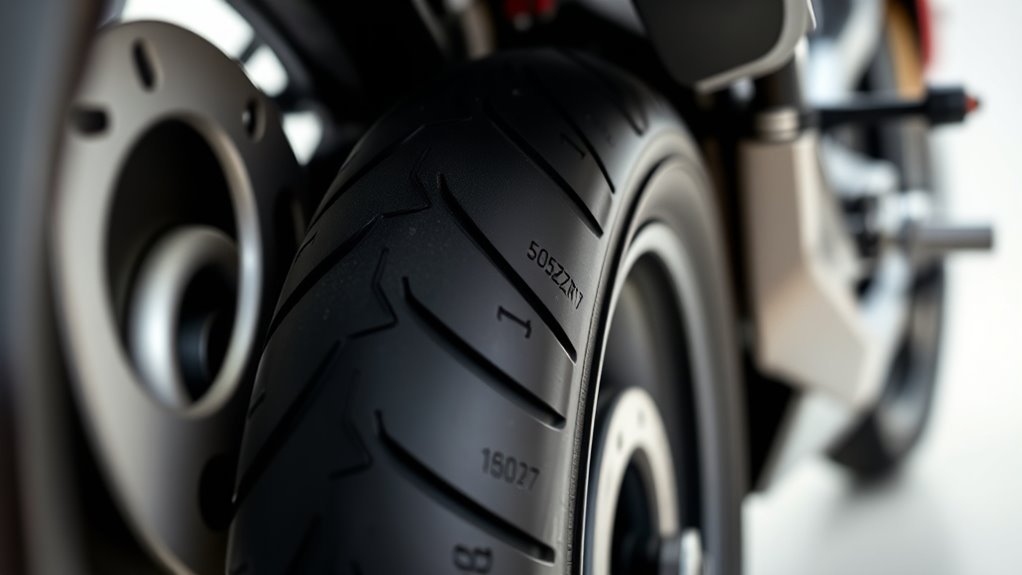
Start by breaking the code into its main parts: width, aspect ratio, construction and speed marking, and rim diameter. In 180/55ZR17, the tire has a nominal 180 mm section width, a sidewall height equal to 55% of that width, a Z-speed radial construction marking, and a 17-inch rim diameter.
The sidewall may also include a service description after the size, such as 73W. In that example, 73 is the load index and W is the speed symbol. Michelin’s tire-marking guide gives 73 as 805 lb / 365 kg per tire, and the Motorcycle Safety Foundation explains that the load index and speed symbol must match the motorcycle’s tire information label or owner’s manual.
| Marking | Meaning | Example |
|---|---|---|
| 180 | Nominal tire section width in millimeters | 180 mm wide |
| 55 | Aspect ratio: sidewall height as a percentage of width | 0.55 × 180 = 99 mm sidewall height |
| ZR | Z-speed category with radial construction; the final speed symbol still matters | Often used on higher-speed sport tires |
| 17 | Wheel bead-seat diameter in inches | Fits a 17-inch motorcycle rim |
| 73W | Load index plus speed symbol | 73 = 805 lb / 365 kg; W = 168 mph speed symbol |
Warning: A speed rating is not permission to ride at that speed. It is a tire test classification under specified conditions. Always follow road laws, tire condition limits, load limits, and your motorcycle manufacturer’s recommendations.
[Products Worth Considering]
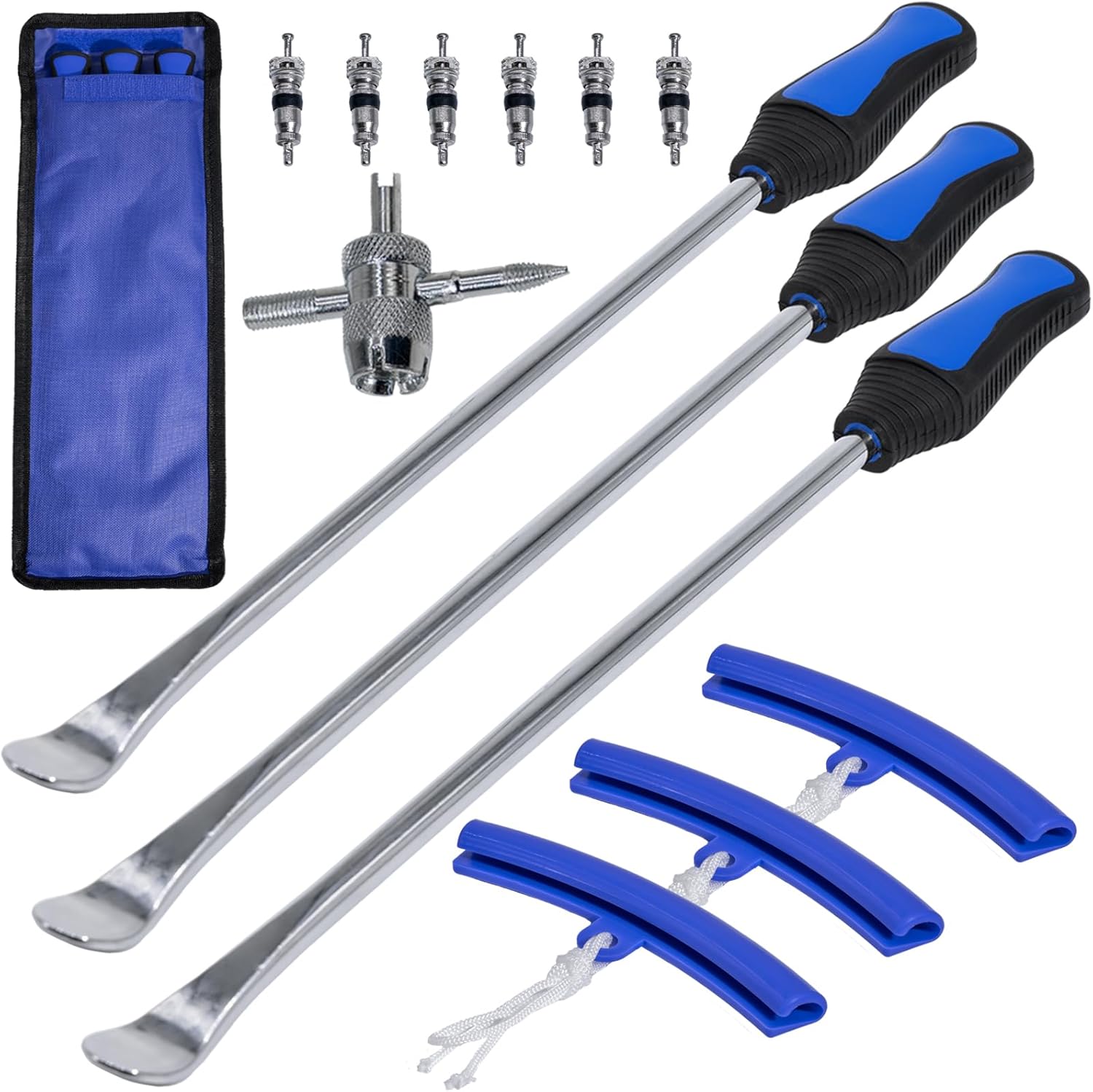
This tire spoon set helps you remove and install motorcycle, dirt bike, lawn tractor, and bicycle tires with extra leverage from a 14.5-inch spoon length. The kit includes tire removal tools, rim protectors, and a valve tool to simplify repairs and help protect rims during changing. Designed for quick, on-the-go service, it’s convenient for garage work, trails, and track-side fixes.

This 4-in-1 tire valve core removal tool helps you deflate, unblock, and remove or install valve cores quickly for easier tire repair. The multifunction design also supports re-taping damaged threads and reaming inside the valve stem for smoother service. Included as a 2-pack, it’s compact for convenient carry and works for cars, bicycles, and motorcycles.

This 20-piece tire changer kit makes motorcycle and bike tire repairs easier with extended 14.5-inch spoons for leverage and access. Built from CrV steel with a corrosion-resistant chrome finish, it helps resist bending while protecting rims and tubes using smooth rounded spoons and included rim protectors. The all-in-one set includes valve removal and accessory tools for faster tire changes across motorcycles, bicycles, ATVs, and lawn equipment.
Width, Aspect Ratio, and Rim Diameter Explained
The three main size values define how the tire fits the wheel and how it changes the motorcycle’s feel. The width affects section width, clearance, and contact-patch shape. The aspect ratio affects sidewall height, comfort, steering response, and overall diameter. The rim diameter must match the wheel exactly because it refers to the bead-seat diameter, not the outside tire diameter.
A wider tire can increase the contact patch under some conditions, but it can also slow steering, pinch or flatten the tread profile if mounted on the wrong rim width, and create clearance problems at the chain, belt, shaft housing, swingarm, fender, or brake caliper. A lower aspect ratio usually gives a shorter sidewall and sharper response, while a taller sidewall can add compliance and raise the tire’s overall diameter.
Pro Tip: Do not choose a tire by width alone. Compare the full size, approved rim-width range, load index, speed symbol, position marking, and tire type before you buy.
Construction, Speed & Load Codes (R, Z, 57W)
After the size numbers, read the letters and service description carefully. These markings tell you how the tire is built and what load and speed range it was designed to support. The most important rule is simple: match the motorcycle manufacturer’s tire specification first. The owner’s manual or tire information label should specify tire size, construction, tube type, load index, speed symbol, and front/rear fitment.
Radial Versus Bias Construction
R means radial construction. Radial tires use casing cords that run across the tire from bead to bead, which helps with heat management, high-speed stability, and modern sport or touring handling. Bias-ply tires use overlapping diagonal plies, often giving a more compliant ride and load-carrying characteristics suited to many cruiser, vintage, scooter, and off-road applications.
| Feature | Typical Effect |
|---|---|
| Radial construction | Better heat dissipation and stability on many modern high-speed bikes |
| Bias-ply construction | Often used for vintage, cruiser, scooter, and certain load-focused applications |
| Mixed construction | Can upset handling unless the motorcycle manufacturer specifically approves it |
| Front/rear design | Front and rear tires are built for different jobs and should not be swapped |
Decoding Speed Ratings
Speed symbols appear in the service description, such as W in 73W. A Z in a size like 180/55ZR17 indicates a high-speed category, but the final service description gives the more specific rating. For example, a W speed symbol is commonly listed at 168 mph / 270 km/h, while a W in parentheses has a different meaning on some tire charts.
Common motorcycle speed symbols include:
- H — 130 mph / 210 km/h
- V — 149 mph / 240 km/h
- W — 168 mph / 270 km/h
- (W) — above 168 mph / 270 km/h when specified by the tire manufacturer
Always compare the tire’s speed symbol with the specification in the owner’s manual. Installing a lower-rated tire can affect safety, insurance, legal compliance, and handling at speed.
Interpreting Load Index
The load index is the number before the speed symbol. It maps to the maximum load the tire can carry under the conditions specified by the tire maker. For example, 73 equals 805 lb / 365 kg per tire. The front and rear tire load indexes may be different, and each must meet or exceed the motorcycle’s requirement.
Do not simply add two load-index numbers and assume the bike is safe. You must account for the motorcycle, rider, passenger, luggage, accessories, and the way weight transfers under braking, acceleration, and cornering. Also keep tire pressure at the recommended cold setting for the load you are carrying.
Note: Some motorcycles list different cold tire pressures for solo riding versus riding with a passenger or cargo. Use the pressure in the owner’s manual or tire information label, not the tire sidewall maximum unless the manufacturer tells you to.
Other Sidewall Markings You Should Check
The size code is only part of the story. Before buying or mounting a motorcycle tire, also check these markings:
- M/C: Means the tire is designed for motorcycle use. Do not mount passenger-car tires on motorcycle rims.
- Front or Rear: Some tires are position-specific. Use them only in the marked position unless the tire maker gives a specific reversible instruction.
- Rotation arrow: Mount the tire so the arrow points in the direction of wheel travel.
- TL: Tubeless tire, used without a tube only on a compatible tubeless rim.
- TT: Tube-type tire, designed to be used with an inner tube.
- DOT/TIN date code: The last four digits show the week and year of manufacture on tires sold for U.S. road use.
The safest tire choice is the one that matches the motorcycle’s approved size, construction, load index, speed symbol, tube type, rim width, and riding use—not simply the one that “looks right.”
Metric vs. Inch Motorcycle Sizing: When to Use Each
Metric sizing, such as 180/55ZR17, is common on modern motorcycles because it states section width in millimeters, aspect ratio as a percentage, construction, and rim diameter. Inch sizing, such as 4.10-19, is still found on many older, vintage, dual-sport, and cruiser applications. Some tires may also use alphanumeric sizing, depending on age and tire category.
| Format | Example | What It Tells You | Best Use |
|---|---|---|---|
| Metric | 180/55ZR17 | Width, aspect ratio, construction/speed category, rim diameter | Most modern street, sport, touring, and adventure bikes |
| Inch | 4.10-19 | Approximate width and rim diameter in inches | Vintage, classic, and some dual-sport motorcycles |
| Alphanumeric | MT90-16 | Letter width code, aspect family, construction, rim diameter | Certain cruiser and older fitments |
You can convert inches to millimeters using 1 inch = 25.4 mm, but conversions are only a starting point. Tire profiles, rim-width approvals, load ratings, and real mounted widths vary by manufacturer, so always use a fitment chart or your motorcycle manufacturer’s approved alternatives before switching formats.
Confirm Fit: Wheel Width, Clearances, and Circumference Effects
A tire that matches the rim diameter can still be the wrong tire. Fitment also depends on rim width, mounted section width, overall diameter, load rating, tire profile, and how much room the motorcycle has throughout suspension movement and steering lock.
[Products Worth Considering]

This tire repair screw set includes self-tapping plugs and a screwdriver to help you quickly complete tubeless tire repairs for many vehicle types. The set provides two...
Rim Width Compatibility
Every tire size has an approved rim-width range. If the rim is too narrow, the tire can pinch into a rounded shape and reduce the intended contact patch. If the rim is too wide, the tire can flatten out and change cornering feel. Either mistake can affect bead seating, steering response, tread wear, and sidewall loading.
Check the tire manufacturer’s rim-width chart, your motorcycle owner’s manual, and any official fitment guide for your model. If the tire is outside the approved rim-width range, choose another size.
Clearance And Fitment
Clearance must be checked both statically and dynamically. A tire may look fine on the stand but rub when the suspension compresses, the tire heats up, the chain moves, or the bike is loaded with a passenger and luggage.
- Measure clearance at the swingarm, chain or belt, driveshaft housing, fender, hugger, brake caliper, and bodywork.
- Check steering lock clearance on the front tire.
- Account for suspension sag and full compression, not just unloaded garage height.
- Confirm the tire is approved for front or rear use as marked.
- Keep valve stems, rim strips, tubes, and TPMS sensors compatible with the wheel and tire type.
Circumference And Gearing
Changing tire diameter changes rolling circumference. A larger circumference can slightly raise effective gearing, reduce indicated speedometer accuracy, slow acceleration, and increase clearance risk. A smaller circumference can do the opposite. On motorcycles with traction control, ABS, linked brakes, or wheel-speed sensors, a large tire-size change can also confuse electronic systems.
Before using a non-stock size, compare the new tire’s overall diameter and circumference against the original tire. Use tire manufacturer data when available, because mounted dimensions vary by brand and rim width.
Warning: Never mount a passenger-car tire on a motorcycle rim. Motorcycle tires and rims are designed for leaning, bead-seat shape, and load behavior that car tires do not match.
Special Cases: Tubes, Spoked Rims, and Mixed Tires
Tubeless tires are marked TL and can run without an inner tube only on rims designed and sealed for tubeless use. Many traditional spoked rims require tubes because spoke nipples pass through the rim well. Some modern spoked rims are built or sealed for tubeless use, but you must verify the rim marking and manufacturer guidance before mounting.
Tube-type tires are marked TT and require a tube. When installing a new tube-type tire, use a new tube and rim strip where applicable. Old tubes can be stretched, creased, chafed, or heat-damaged.
- Use a tube only when the tire and rim combination permits it.
- Never assume a spoked rim is tubeless just because the tire says TL.
- Do not mix radial and bias-ply tires unless the motorcycle manufacturer specifically approves that combination.
- Do not downgrade load index or speed symbol from the motorcycle manufacturer’s requirement.
- Keep front and rear tires matched by model line when the tire maker or motorcycle manufacturer recommends it.
Practical Checks: DOT Date, Tread Wear Indicators, and Replacement Cues
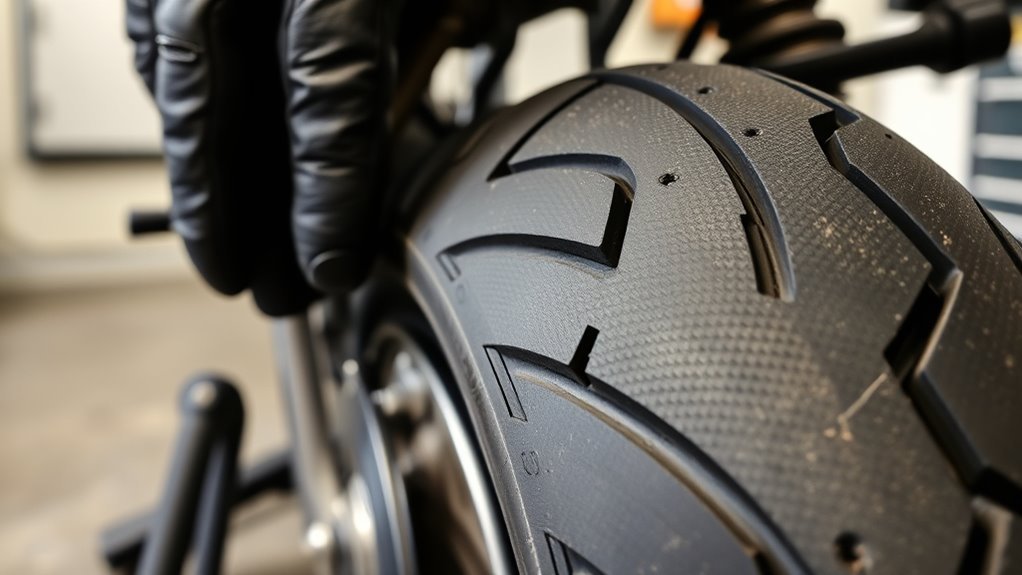
Because motorcycle tires age, wear, heat-cycle, and get damaged, sidewall markings are only the first check. A tire with the right size can still be unsafe if it is old, cracked, underinflated, punctured, worn out, or previously repaired poorly.
Read the DOT Date Code
For tires with a U.S. DOT Tire Identification Number, the last four digits show the production week and year. For example, 4510 means the tire was made in the 45th week of 2010. The full TIN may be on only one sidewall, so check both sides of the tire.
Age guidance varies by manufacturer, storage, climate, use, and tire type. Michelin recommends annual professional inspection after five years of use and replacement by ten years as a precaution. Dunlop gives stricter motorcycle guidance on its own site, saying tires more than six years old should be replaced regardless of wear. When guidance differs, follow the tire manufacturer, motorcycle manufacturer, and your local professional’s inspection advice.
Check Tread Depth and Wear Bars
Motorcycle tires have wear bars molded into the grooves. When tread reaches the wear bars, the tire should be replaced. The Motorcycle Safety Foundation notes that some tire makers recommend replacing tires before the bars are exposed, such as at 2/32 inch or 3/32 inch of remaining tread. That extra margin matters because worn grooves move less water and reduce wet-weather grip.
Inspect Sidewalls and Tread Condition
Replace or professionally inspect any tire with:
- Cracks, dry rot, checking, or sidewall weathering
- Bulges, bubbles, exposed cords, or visible carcass damage
- Cuts, tears, punctures, or embedded objects
- Uneven wear, cupping, flat spots, scalloping, or center wear
- Oil, chemical, or solvent contamination
- Repeated air-pressure loss
- Vibration, wobble, or handling changes
Set Cold Tire Pressure
Check tire pressure when the tires are cold, using a quality gauge. The correct pressure is the motorcycle manufacturer’s recommended cold pressure for the load, not a visual guess. Underinflation builds heat, accelerates wear, and can lead to failure. Overinflation can reduce ride quality, shrink the contact patch, and make the tire more vulnerable to impact damage.
Pro Tip: Make tire checks part of your pre-ride routine: pressure, tread, sidewalls, valve caps, rotation arrows, and obvious damage. Two minutes in the garage can prevent a dangerous surprise on the road.
How to Choose the Right Replacement Size
Use this sequence before buying replacement motorcycle tires:
- Start with the owner’s manual. Write down the approved front and rear sizes, construction, load index, speed symbol, tube type, and pressure.
- Check the current tire sidewall. Confirm size, service description, TL/TT marking, DOT date, and front/rear position.
- Use the tire maker’s fitment chart. Confirm approved rim width and motorcycle fitment.
- Compare ratings. The replacement should meet or exceed the required load index and speed symbol unless the manufacturer allows otherwise.
- Confirm clearance. Check chain, swingarm, fender, brakes, and suspension movement before upsizing.
- Match the riding use. Choose street, sport, touring, cruiser, scooter, track, ADV, dual-sport, or off-road tires based on how the bike is actually ridden.
- Have tires mounted correctly. Balance the wheel, use correct valve parts, follow rotation arrows, and scrub in new tires cautiously.
Frequently Asked Questions
How do you read motorcycle tire size numbers?
Read a code like 180/55ZR17 by separating it into width, aspect ratio, construction/speed category, and rim diameter. The 180 is width in millimeters, 55 is sidewall height as a percentage of width, ZR indicates a high-speed radial marking, and 17 is the rim diameter in inches.
What does 180/55ZR17 73W mean?
It means the tire is 180 mm wide, has a sidewall height equal to 55% of its width, uses a Z-speed radial marking, fits a 17-inch rim, carries load index 73, and has a W speed symbol. Load index 73 equals 805 lb / 365 kg per tire.
Can I use a wider motorcycle tire than stock?
Only if the wider tire is approved for your rim width, clears the motorcycle through suspension movement, meets the required load and speed ratings, and does not interfere with handling or electronics. Wider is not automatically safer or grippier.
What does M/C mean on a motorcycle tire?
M/C means the tire is designed for motorcycle use. It helps distinguish motorcycle tires from other tire types. Motorcycle rims and tires are built for leaning and bead-seat behavior, so passenger-car tires should not be mounted on motorcycle rims.
What is the difference between TL and TT motorcycle tires?
TL means tubeless and can be used without a tube only on a compatible tubeless rim. TT means tube type and requires an inner tube. Many traditional spoked rims require tubes unless the rim is specifically designed or properly converted for tubeless use.
How old is too old for motorcycle tires?
There is no single universal expiration date because use, storage, heat, sunlight, pressure, and damage all matter. Michelin recommends yearly professional inspections after five years of use and replacement at ten years as a precaution. Dunlop gives stricter guidance, recommending replacement after six years regardless of wear.
When should motorcycle tires be replaced for tread wear?
Replace tires when the tread reaches the wear bars, when local legal minimums are reached, or sooner if the tire maker recommends it. Some manufacturers recommend replacement before the bars show, such as at 2/32 inch or 3/32 inch remaining tread, especially for wet-road safety.
Conclusion
You can decode a motorcycle tire by reading the sidewall in order: width, aspect ratio, construction, rim diameter, load index, speed symbol, tube type, position, rotation direction, and DOT date. The code is useful, but it is not the final authority. Your owner’s manual, tire information label, and tire manufacturer fitment chart decide what is safe for your bike.
Get the rim diameter exact, keep load and speed ratings at or above spec, confirm rim width and clearance, and inspect tread, age, pressure, and sidewalls before every serious ride. Motorcycle tires are your only contact with the road, so treat the sidewall markings as safety information—not just numbers molded into rubber.
Sources
- Michelin USA: How to Read a Motorcycle Tire — backs up size markings, load index example, TL marking, and rim diameter reading.
- Motorcycle Safety Foundation: Motorcycle Tire Guide — backs up owner’s-manual fitment, DOT date code, load/speed symbols, tread wear bars, tire pressure, and tire inspection guidance.
- NHTSA Tire Buyers’ FAQ — backs up DOT Tire Identification Number date-code reading and checking both sidewalls.
- Michelin USA: When Should I Change My Motorcycle Tires? — backs up annual inspection after five years of use and ten-year precautionary replacement guidance.
- Dunlop Motorcycle Tires: How Old Is My Motorcycle Tire? — backs up stricter Dunlop age-based motorcycle tire replacement guidance.
- Bridgestone Motorcycle Tire Safety and Maintenance Manual — backs up inflation, tire inspection, failure warning, and maintenance safety guidance.

Related Articles

305 Tire Size Explained: How Big Is It?
I explain how big a 305 tire really is—and why the exact fit can surprise you.
Read More
Tire Ply Rating Explained: What the Numbers Mean
Tire ply ratings reveal more than numbers, hinting at strength, load capacity, and hidden tradeoffs you’ll want to understand before choosing.
Read More
2 Ply Vs 4 Ply Tires: What’s the Real Difference?
I’ll explain the real difference between 2-ply and 4-ply tires, and the choice may surprise you depending on where you drive.
Read More